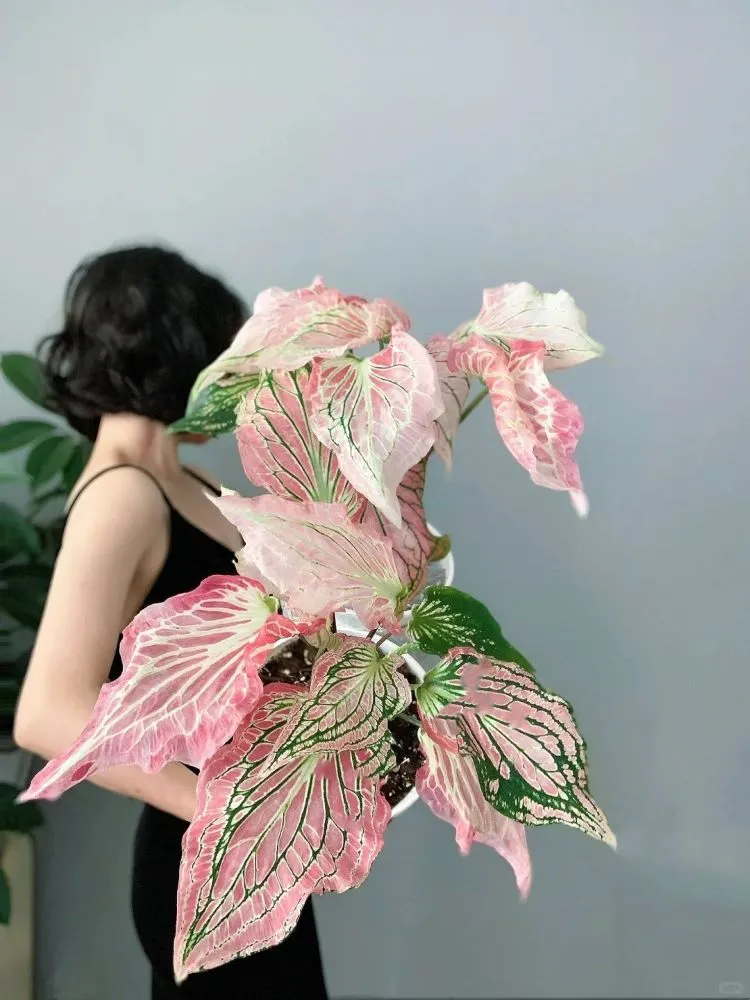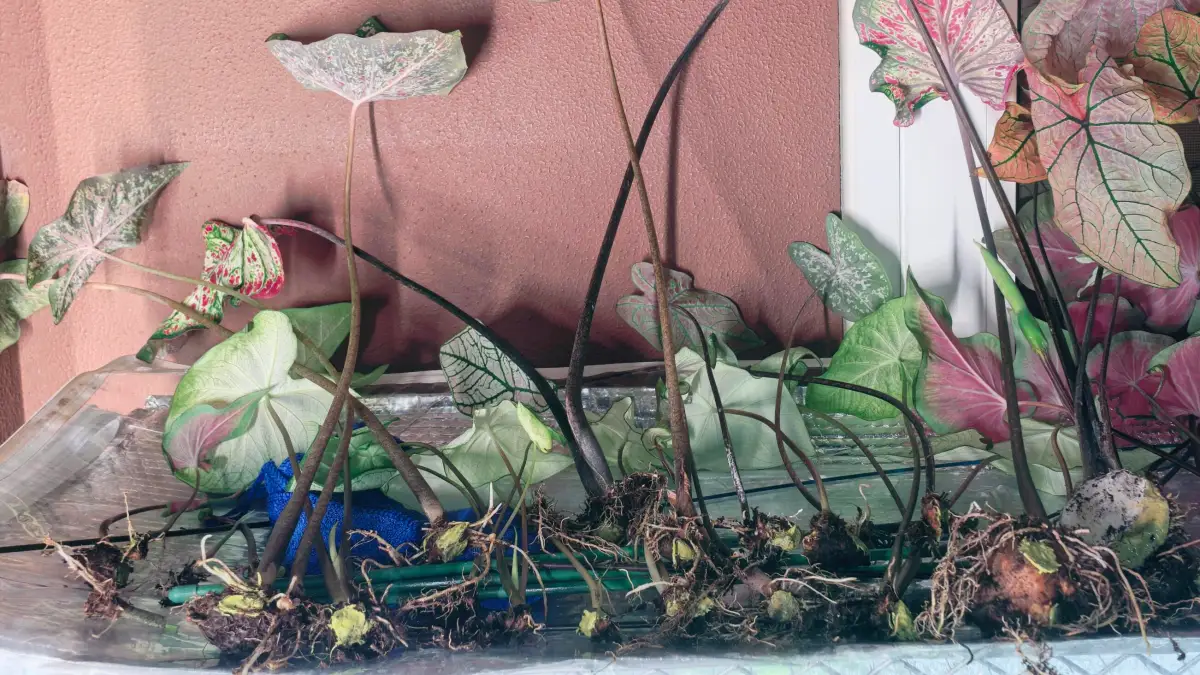
When I first started growing caladiums, one of the things that confused me the most was watching a plant arrive with beautiful pink, red, or white leaves and then slowly lose some of that color.
At first, I thought I had done something wrong. I wondered if the variety had changed, if the color would disappear permanently, or if I was missing an important part of caladium care.
After growing more caladiums indoors, I realized that leaf color is not always fixed. New leaves often reflect the conditions where the plant is currently growing, while older leaves may naturally lose some intensity as they age. Light, temperature, watering, nutrition, and even the age of the leaf can all influence how caladium colors appear.
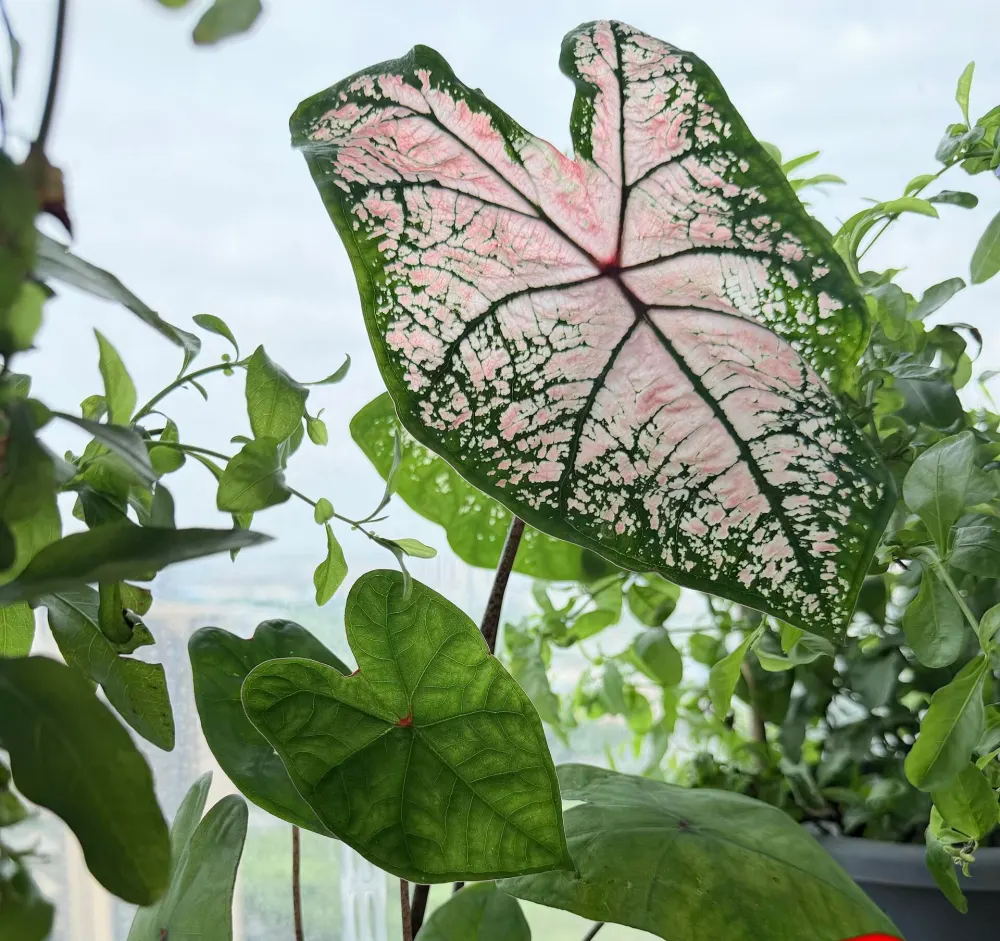
In my home, I notice this especially when seasons change. A spot that gives my caladiums enough light in summer may not provide the same energy during the darker winter months.
If your caladium is becoming greener, losing pink patterns, or producing new leaves that look different from the ones you bought, it does not always mean the plant is unhealthy. Sometimes the plant is simply showing you what has changed.
Why Are My Caladium Leaves Losing Color?
There are several reasons why caladium leaves can become less colorful, but in my experience, the biggest mistake is assuming every color change means there is a problem. When I notice a color change, I first try to understand whether it is happening on older leaves or new growth. Those two situations usually tell me very different stories.
Sometimes an older leaf is simply reaching the end of its cycle. Other times, the plant is responding to a different growing environment than the one it experienced before.
Insufficient Light Can Make Caladiums Look Greener
Light is usually the first thing I check when a caladium starts losing color.
Many people think caladiums need very little light because their leaves can burn under strong sun. But there is a big difference between harsh direct sunlight and bright indirect light.
When a caladium does not receive enough light for a long period of time, I usually notice:
- Pink or red patterns becoming weaker
- Green areas becoming more noticeable
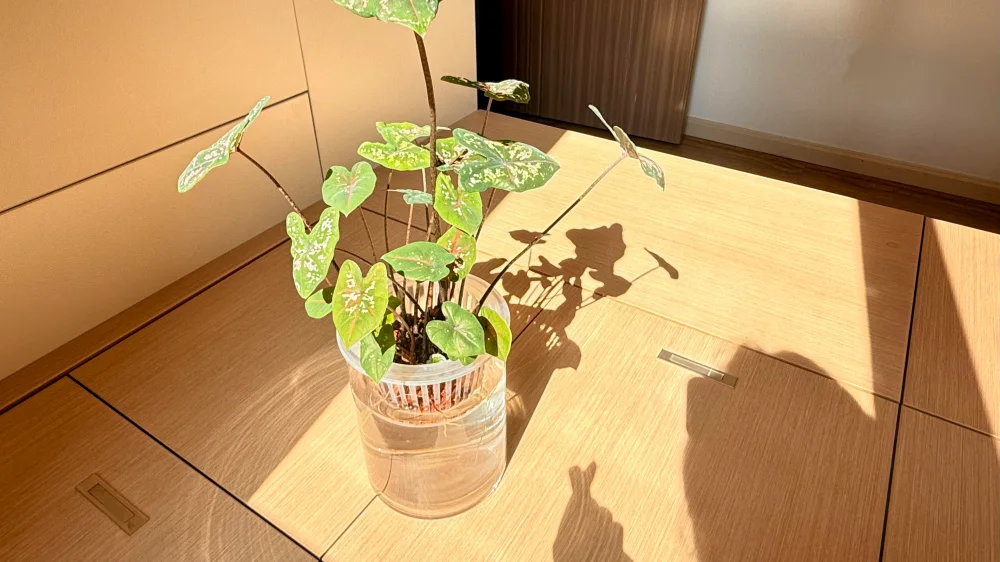
- Leaves looking thinner
- Longer petioles as the plant reaches toward light
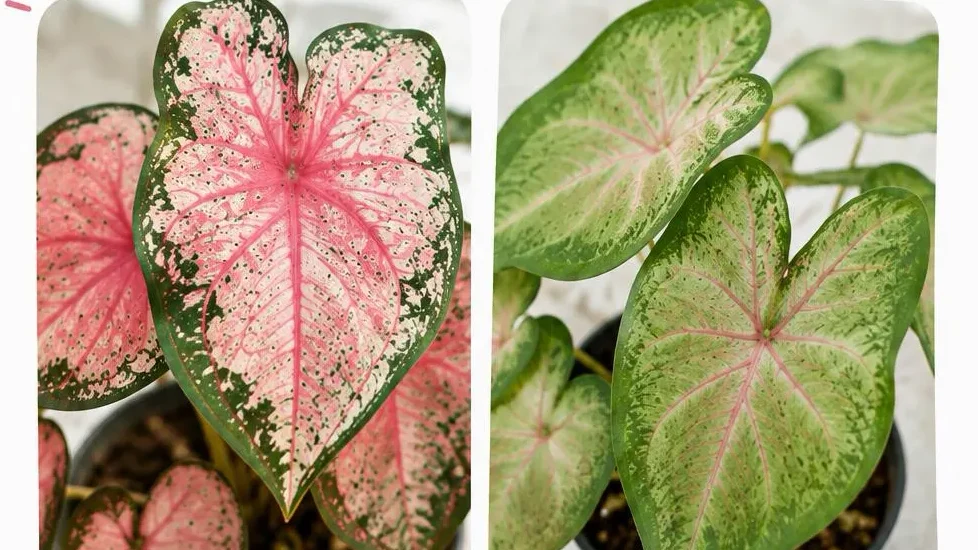
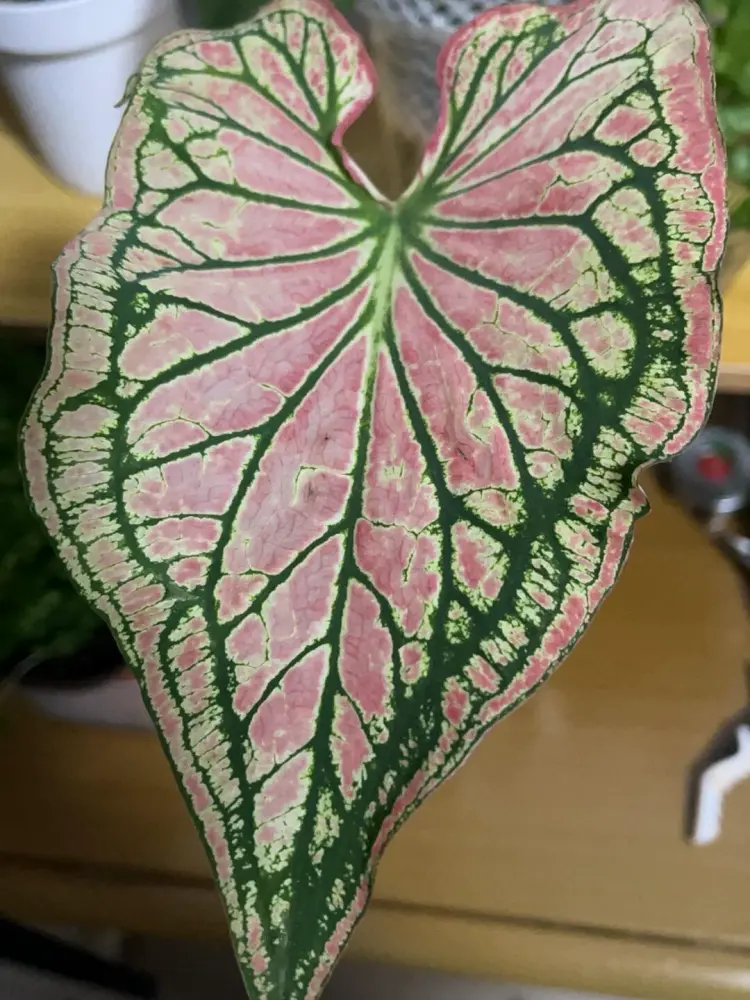
This does not mean the variety has changed. I experienced this with my Pink Splash Caladium. The first leaves had beautiful pink patterns, but later new leaves appeared much greener because my indoor light level was not strong enough.
I experienced this with my Pink Splash Caladium. The first leaves had beautiful pink patterns, but later new leaves appeared much greener. After checking the growing conditions, I realized the problem was not the plant itself — my indoor light level was simply not enough.
Some Color Changes Are Simply Part of Leaf Maturity
Not every fading caladium leaf needs to be fixed.
Some varieties show their strongest colors when the leaf first opens. As the leaf matures, the pink, red, or white areas may soften, and the green parts may become more noticeable.
This is easy to misunderstand when buying caladiums. A plant may arrive with perfect nursery leaves, but those leaves were developed under different conditions before reaching your home.
I now pay more attention to new growth rather than judging the entire plant by one older leaf.
Other Conditions That Can Affect Caladium Color
Light is usually the first thing I check when a caladium loses color, but it is not the only factor.
After growing caladiums indoors for several seasons, I have noticed that color is usually the result of several conditions working together rather than one single problem.
Water Stress Can Affect Leaf Appearance
Watering problems do not always appear as obvious yellow leaves.
When a caladium stays too wet for too long, the roots can become stressed. When the root system is not working well, the plant may struggle to maintain strong growth and healthy-looking leaves.
On the other hand, allowing the soil to dry out too much can also affect leaf appearance. The plant may slow down, and the colors may look less vibrant.
For my indoor caladiums, I pay more attention to how quickly the soil dries rather than following a fixed watering schedule.
A small pot near a bright window behaves very differently from a larger container in a cooler room. This is why I avoid advice like “water every X days.”
My watering approach: How I Changed My Caladium Watering Routine
Too Much Nitrogen Can Make Caladiums Look Greener
Fertilizer can also influence how caladium leaves look.
When a plant receives too much nitrogen, it may push stronger green growth. In some cases, this can make colorful patterns appear less noticeable.
I am especially careful with fertilizer indoors because plants usually grow slower than they would outdoors. A feeding routine that works well in a greenhouse may be too aggressive for a container plant sitting near a window.
Instead of trying to force color with fertilizer, I focus on balanced growth first.
My fertilizer experience: How I Fertilize Caladiums Without Overfeeding Them
Heat Stress and Poor Airflow Can Affect Color
Temperature changes can also affect how caladium leaves look.
In my home, summer heat is not usually the biggest problem, but sudden warm periods without enough airflow can still stress indoor caladiums.
High temperatures, stagnant air, and sudden environmental changes can put stress on the plant. A stressed caladium may not produce the same strong colors as one growing in more stable conditions.
I try to avoid sudden temperature drops, cold drafts, and hot stagnant corners. For indoor caladiums, stability is usually more helpful than chasing a perfect number.
When I Actually Worry About Caladium Color Changes
This is one of the first questions many people ask when their caladium starts looking different.
The answer depends on what is changing.
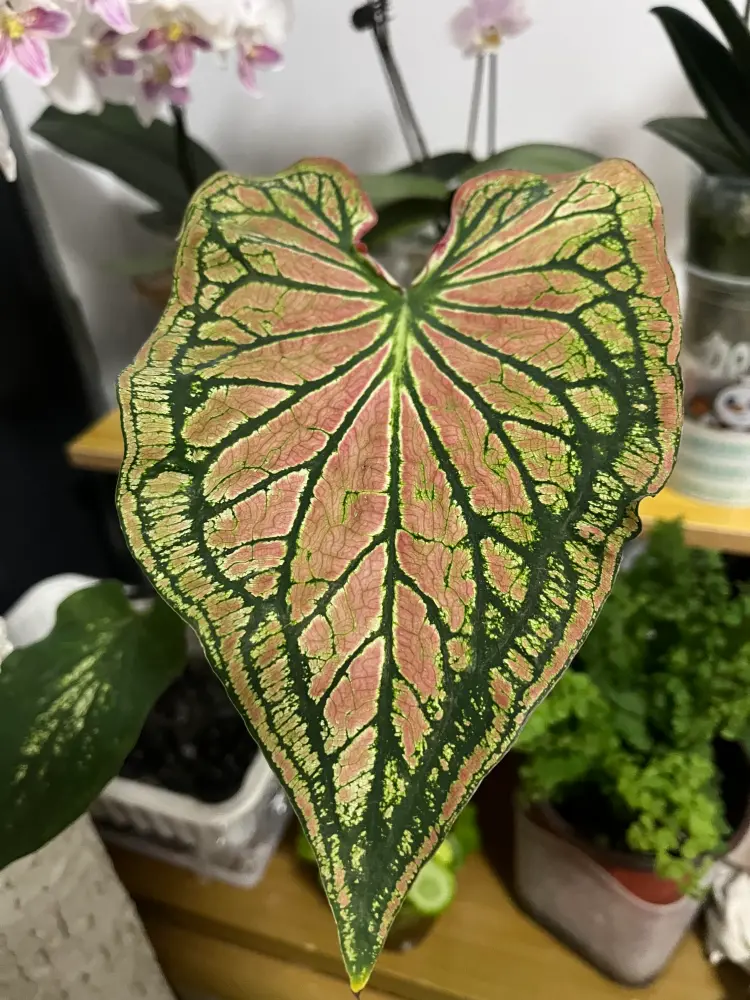
If an older leaf is slowly fading while new leaves are healthy, I usually do not worry. Caladiums naturally move energy toward new growth, and older leaves will not always stay perfect forever.
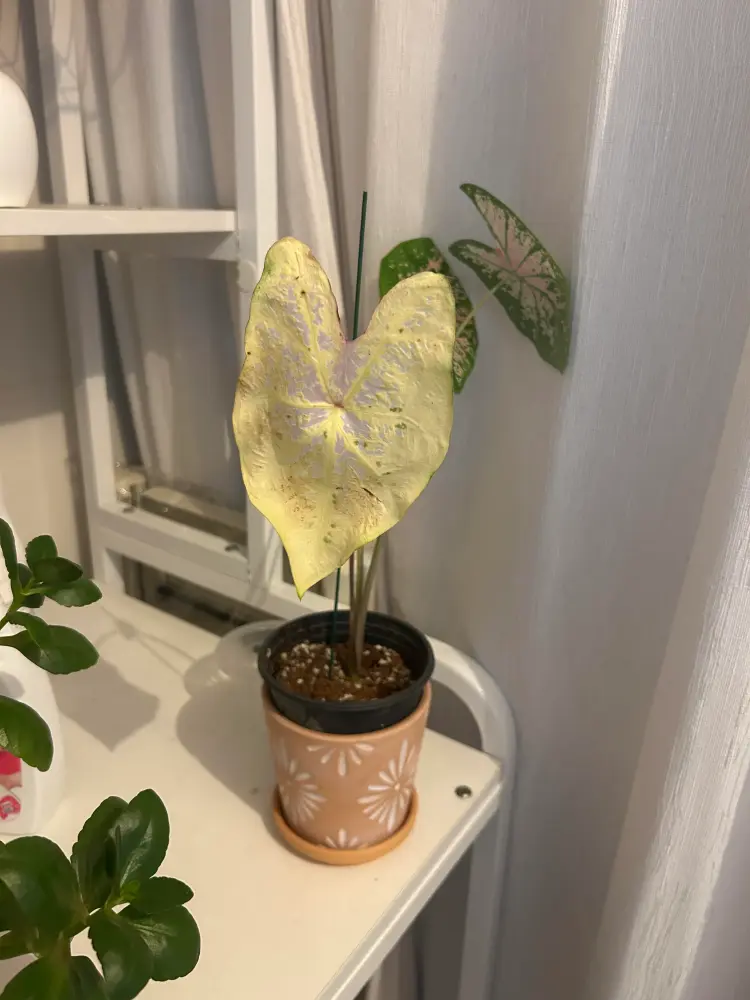
However, I pay closer attention when:
- New leaves are much greener than previous growth
- The plant is producing smaller or weaker leaves
- The stems become unusually long and soft
- The leaves lose color together with yellowing or collapse
If the color change comes with yellowing, soft stems, or leaf collapse, I usually check for other problems first: Common Caladium Problems and Solutions.
Those signs usually tell me the growing environment needs adjustment rather than simply adding more fertilizer.
What I Do When Caladium Color Looks Weaker
I used to think the secret to colorful caladiums was finding the perfect fertilizer or humidity level.
After more failures, I changed my approach. Better color usually comes from creating a more stable growing environment.
Improve Light Before Changing Anything Else
When I notice weaker color on new caladium leaves, light is usually the first thing I adjust.
I do not move the plant directly into stronger sun. Instead, I increase light gradually and watch how the new growth responds.
In my Pacific Northwest home, this is especially important because winter light can be very different from summer light.
When natural light is limited, grow lights can help maintain more consistent growth.
My grow light experience: Do Caladiums Need Grow Lights Indoors?
Keep Temperature Stable
Caladiums are tropical plants, but indoor stability is often more important than chasing exact numbers.
I try to avoid sudden temperature drops, cold drafts, and hot stagnant corners.
Focus on Root Health First
Over time, I have learned that leaf color problems are not always caused by the leaves themselves.
A stressed root system cannot support strong growth, no matter how much light or fertilizer the plant receives.
This is why I pay so much attention to container size, drainage, and soil structure when growing caladiums indoors.
My soil approach: The Indoor Potting Mix I Use for Caladiums
When I Stop Trying to Fix Caladium Color
One thing growing caladiums has taught me is that not every color change needs to be corrected.
When I first started growing them, I always assumed that fading color meant something was wrong. I tried changing fertilizer, moving plants around, and adjusting humidity.
Sometimes those changes helped. But many times, I was simply reacting to a normal part of the plant’s growth cycle.
An older leaf may naturally lose some intensity. A new leaf may emerge with different patterns. A variety may show stronger colors during one season and softer colors during another.
Now I look at the entire plant instead of judging it by one leaf. If the plant is producing healthy new growth, strong stems, and functioning roots, I usually do not try to force a specific color.
I no longer try to make every caladium leaf look exactly like the one I bought. For me, the interesting part of growing caladiums is learning what each change is telling me.