I do not feed caladiums heavily all year. They can use fertilizer well when they are actively growing, especially once they are pushing soft leaves from a healthy tuber. But when they are newly planted, slow, stressed, or starting to head toward dormancy, fertilizer is not the first thing I reach for.
For indoor caladiums, I think timing matters more than using a “strong” fertilizer. The plant has to be warm enough, bright enough, and active enough at the roots to use what I give it. If the room is cool, the potting mix is staying wet, or the tuber has only just started waking up, adding more fertilizer can put extra pressure on the roots instead of helping the plant grow.
So I try to feed according to the stage of growth. Early on, I am cautious. During active leaf growth, I feed lightly but more consistently. Later in the season, I think more about supporting the tuber before the plant slows down. Fertilizer can help a caladium grow fuller leaves and store more energy, but it cannot fix weak light, poor roots, or soil that stays too wet.
Quick Answer: What Fertilizer I Use for Caladiums
For indoor caladiums, I do not use one fertilizer the same way all season. I change the feeding depending on what the plant is doing.
In simple terms, this is how I think about it:
- At planting: a small amount of slow-release fertilizer, placed away from the tuber
- During active leaf growth: a diluted balanced or slightly higher-nitrogen foliage fertilizer
- Later in the season: a lower-nitrogen, higher-potassium fertilizer to support the tuber before dormancy
I use this as a general rhythm, not a fixed rule. A newly planted tuber with few active roots does not need strong liquid fertilizer right away. I would rather give it warmth, gentle moisture, and time to root first.
Once the plant is actively pushing leaves, I feed more consistently but still lightly. Later in the season, if the leaves are still healthy, I shift away from pushing more leaf growth and think more about helping the tuber finish the season well. When the plant clearly starts yellowing or slowing down for dormancy, I stop feeding.
My Simple Caladium Fertilizing Timeline
I do not fertilize caladiums the same way from planting to dormancy. The plant changes a lot through the season, so I change the way I feed it too. A newly planted tuber, an actively growing plant, and a late-season caladium preparing to slow down do not need the same thing.
At planting: I use slow-release fertilizer carefully
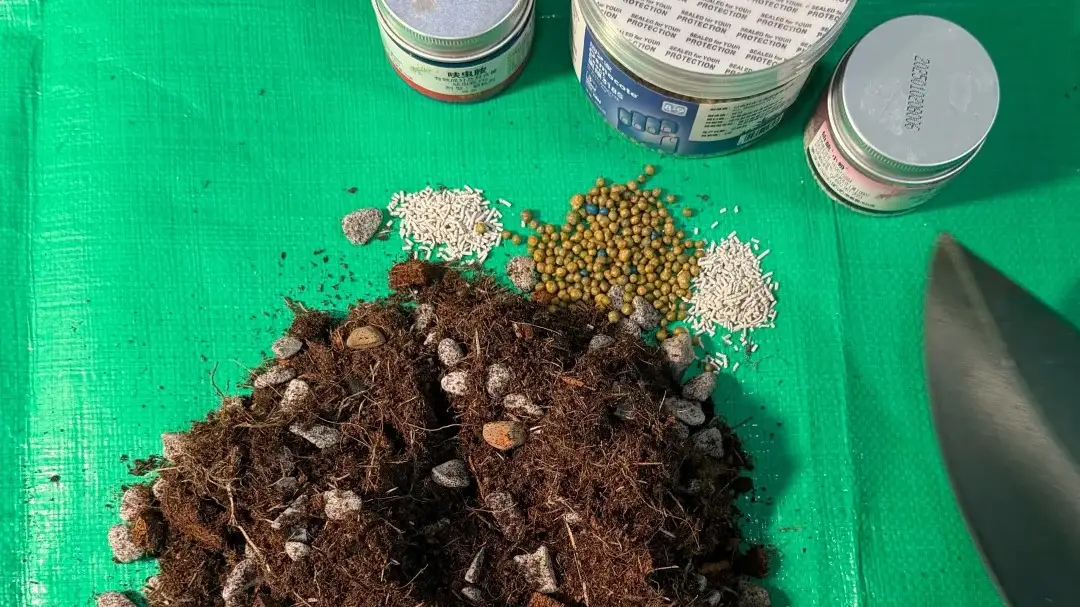
When I plant a caladium tuber, I may add a small amount of slow-release fertilizer to the potting mix, but I use it carefully. I do not place fertilizer directly against the tuber. I keep a layer of soil between the fertilizer and the tuber because fresh roots are still tender at this stage.
My usual way is simple: soil first, then a small amount of slow-release fertilizer, then another layer of soil, and then the tuber. I want the fertilizer available later, when roots grow into that area, not sitting right against the tuber from day one.
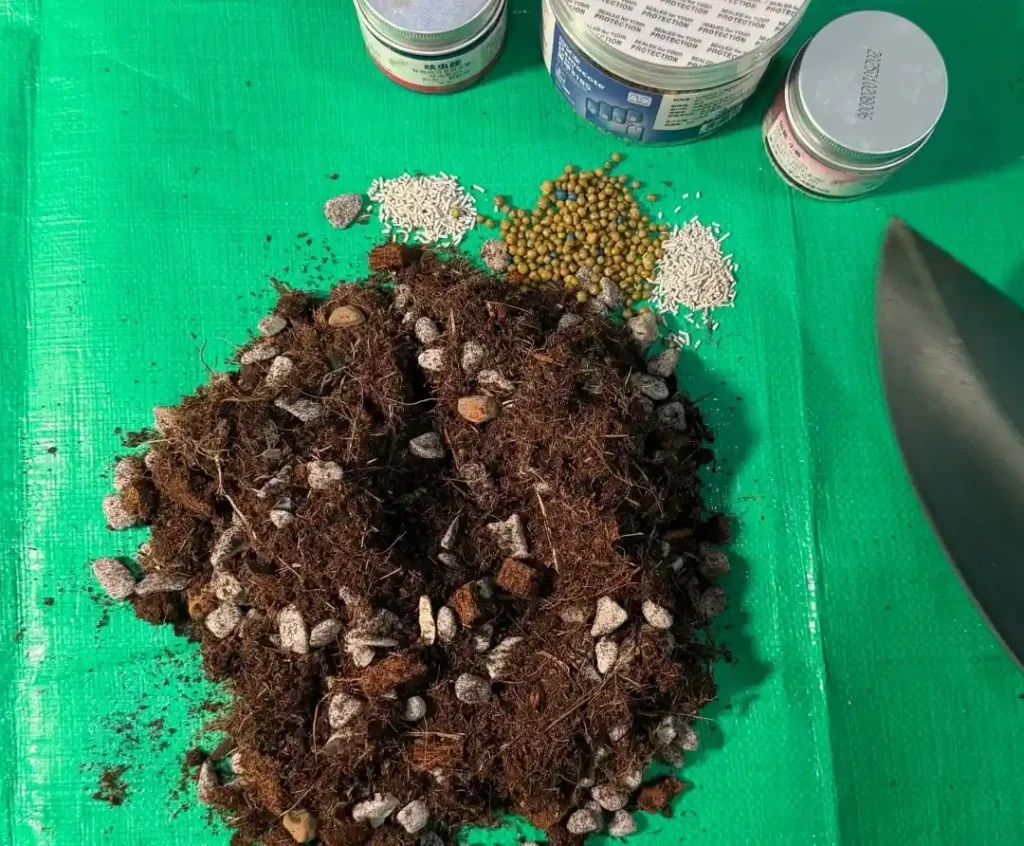
This spacing matters for the same reason planting depth matters. A fresh tuber does better when it is placed gently, not buried too deep or pressed directly against concentrated fertilizer. I cover the basic setup more in my guide on how to plant caladium bulbs.
At this stage, I do not use strong liquid fertilizer to “wake up” the tuber. Warmth, gentle moisture, and an airy mix matter more. If the tuber has not made active roots yet, heavy feeding does not give it a shortcut. I explain the soil side of that setup more in my guide to the best soil for caladiums.
When shoots and leaves start opening
Once the plant is awake and the first leaves are opening, I become more willing to feed lightly. This is when the tuber has started moving, the roots are more active, and the plant can actually use nutrients.
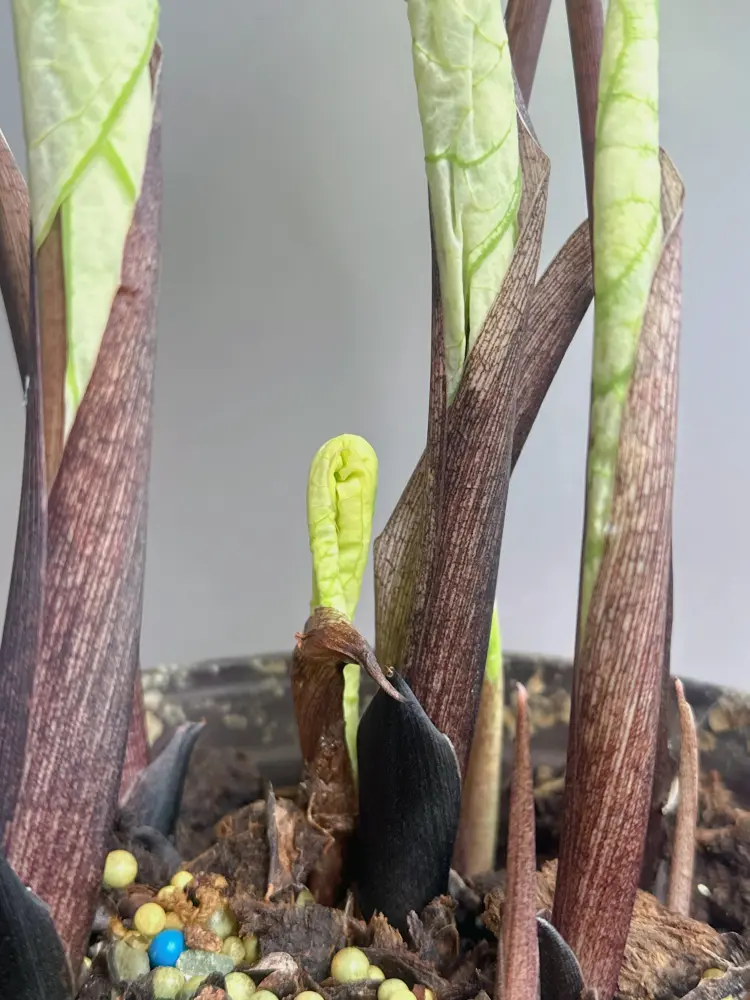
For this stage, I usually choose a diluted balanced fertilizer or a slightly higher-nitrogen liquid fertilizer. The goal is to support leaf growth, not to force the plant. Caladium leaves can size up quickly when the plant is warm and active, but I still keep the feeding gentle.
Before this point, I care more about warmth, moisture, and root activity than fertilizer. If a tuber is slow to sprout, I do not assume it needs food right away. I would check the usual reasons for caladium bulbs not sprouting before adding more fertilizer.
During active summer growth
During strong summer growth, caladiums can use fertilizer more regularly. This is when they are pushing leaves, replacing older ones, and using more water. If the plant is in a bright, warm spot and growing steadily, I may feed every two to four weeks at a diluted strength.
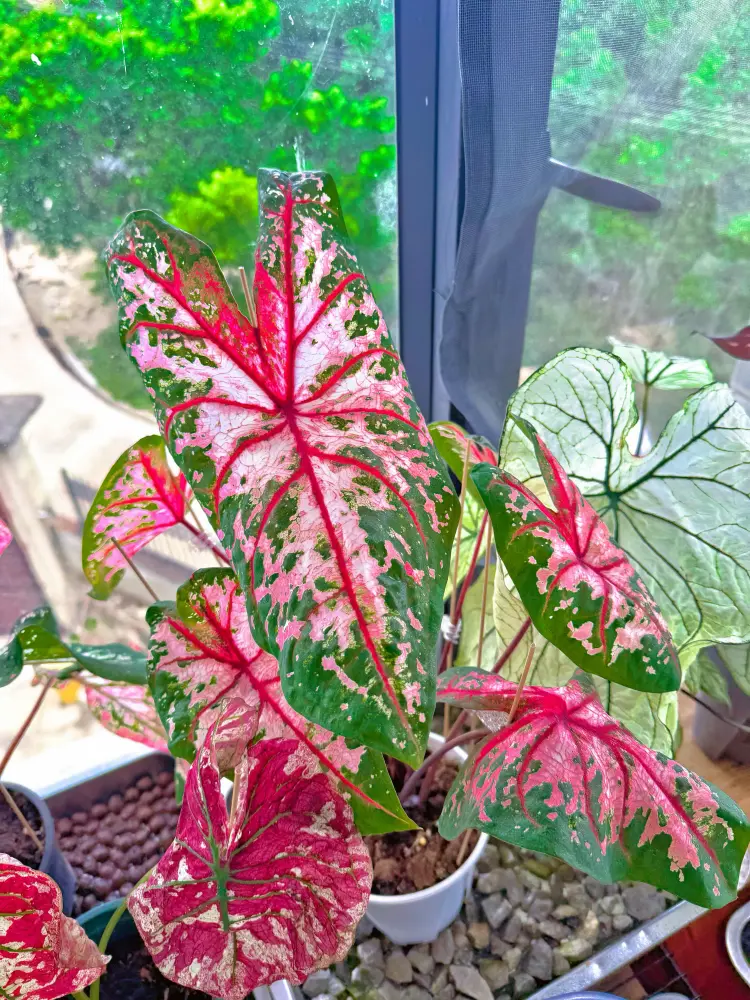
I do not use strong fertilizer just because the plant is growing fast. In indoor pots, salts can build up more easily than they would outdoors, and a stressed root system will not respond well to being pushed harder. I would rather feed lightly and consistently than give one heavy dose.
If the plant is in weaker light, growing slowly, or sitting in soil that dries very slowly, I stretch the interval much longer. A caladium that is not using water quickly is usually not using fertilizer quickly either. This is why I always connect feeding with watering rhythm, which I explain more in my guide on how to water caladiums.
Late season: I shift toward tuber support
Later in the season, if the plant is still healthy and the leaves are still green and active, I stop thinking mainly about bigger leaves and start thinking more about helping the tuber finish the season well. This is when I prefer a lower-nitrogen fertilizer with more potassium.
I do not use this as a way to force the plant to stay in full growth forever. The goal is more modest: support the tuber while the plant is still active, especially in the last four to six weeks before it naturally slows down.
Once the leaves are clearly yellowing, collapsing, or moving toward dormancy, I stop fertilizing. At that point, more feeding will not reverse the season. I would rather let the plant slow down cleanly and protect the tuber for the next growing cycle.
Why I Do Not Use High-Nitrogen Fertilizer All the Time
Nitrogen does help caladiums grow leaves. When a plant is warm, rooted, and actively pushing new growth, a little extra nitrogen can support larger leaves and faster expansion. But I do not use high-nitrogen fertilizer as my main routine all season.
In my indoor setup, too much nitrogen can push the plant in a direction I do not always like. The leaves may grow softer, greener, or less defined in color, especially if the plant is not getting enough light to balance that growth. Caladiums are not only about leaf size for me. I also care about clear patterns, stronger petioles, and a plant that does not collapse every time the room gets warm or the soil stays wet a little too long.
This is why I am careful during hot weather or weaker indoor light. If the plant is growing fast but the leaves are losing contrast, I do not automatically add more fertilizer. I first ask whether the light is strong enough, whether the potting mix is drying at a reasonable pace, and whether the roots are actually healthy enough to use the nutrients. If light is the weak point indoors, a better placement or a grow light for caladiums usually matters more than stronger fertilizer.
Small new leaves are not always a fertilizer problem either. A caladium may make smaller leaves because the tuber is small, the roots are weak, the room is too cool, the light is low, or the soil has stayed too wet. If I add fertilizer before checking those things, I may only make the root zone more stressful.
So I still use nitrogen, but I do not chase it all season. During active growth, I may use a diluted balanced or slightly higher-nitrogen fertilizer. Once the plant is established, I prefer a more balanced routine instead of constantly pushing leaf size. Fertilizer works best when it supports a plant that is already growing well.
Why I Am Careful With Bloom Fertilizers and High-Phosphorus Feeding
I do not use bloom-style fertilizer as my main caladium fertilizer. Caladiums are grown for leaves, not for flowers, so a fertilizer designed mainly to push blooming does not really match the way I grow them indoors.
That does not mean phosphorus is bad. Caladiums still need phosphorus as part of a complete fertilizer. I just do not make high-phosphorus feeding the center of my routine, especially for long periods. For regular indoor care, I would rather use a balanced foliage fertilizer and adjust the feeding based on the plant’s stage.
If a caladium is losing contrast, I do not blame phosphorus first. I usually check light, nitrogen level, temperature, and root condition before deciding the fertilizer formula is the main issue. Leaf color usually depends on more than one thing.
How Often I Fertilize Indoor Caladiums
I do not fertilize indoor caladiums on one fixed schedule all year. The timing depends on how fast the plant is growing, how much light it is getting, and whether the roots are active enough to use the fertilizer.
If the plant is growing fast
When a caladium is warm, bright, and pushing new leaves steadily, I may use a diluted liquid fertilizer every two to four weeks. I still keep the dose gentle. I would rather feed lightly and consistently than give one strong feeding and risk stressing the roots.
If I already added slow-release fertilizer when planting, I use liquid fertilizer less often. I do not want to stack too much fertilizer in the pot just because the plant is growing well.
If the plant is growing slowly
If the plant is slow, I usually reduce feeding or pause it for a while. Slow growth does not always mean the caladium is hungry. It may be reacting to weak light, cooler temperatures, a small tuber, root stress, or soil that is staying wet for too long.
Before I add more fertilizer, I check the growing conditions first. If the plant is not using water quickly, it probably is not using fertilizer quickly either.
If the plant is newly potted or recently divided
I do not rush liquid fertilizer on a newly planted tuber or a recently divided caladium. At that stage, I want the plant to settle, root, and start moving on its own first.
Once I see new leaves opening more steadily, or the division looks firm and active, I may begin with a weak feeding. But I do not use fertilizer to force a fresh tuber or small division to wake up faster. Warmth, moisture balance, and root recovery matter more at the beginning.
If the plant is entering dormancy
When a caladium starts clearly slowing down, yellowing, or preparing for dormancy, I stop fertilizing. I do not try to hold the leaves in place with more food.
At that point, the plant is no longer in its main growth phase. More fertilizer will not reverse the season, and it can leave extra salts in the potting mix while the roots are becoming less active. I would rather let the plant wind down cleanly and focus on keeping the tuber healthy for the next cycle.
Signs I May Need to Adjust Fertilizer
I do not read every caladium problem as a fertilizer problem. Fertilizer can help when the plant is already growing well, but it is easy to overuse it when the real issue is light, roots, temperature, or soil moisture. I usually look at the whole plant before changing the feeding routine.
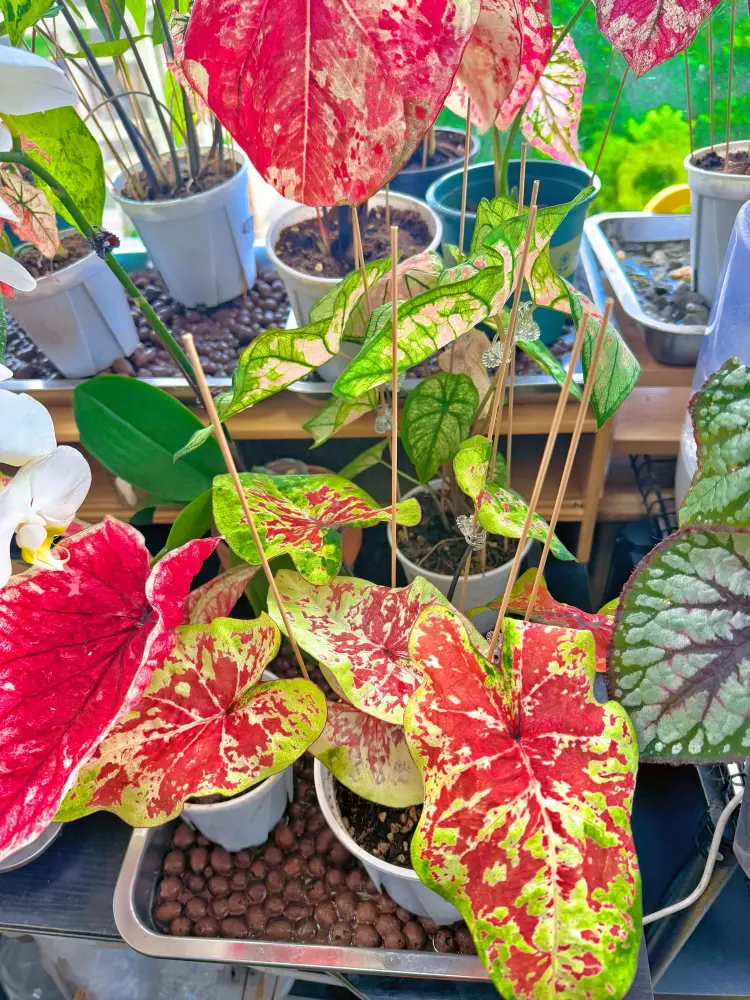
New leaves stay small
Small new leaves can mean the plant needs more nutrients, especially if it has been growing strongly for a while and has not been fed at all. But I do not assume that first.
A small tuber may naturally produce smaller leaves, which is why I do not judge leaf size by fertilizer alone. I wrote more about that in my guide to caladium bulb size and leaf size. Weak roots can also limit leaf size, even if the fertilizer is fine. Low light, cool temperatures, or a potting mix that stays too wet can all slow the plant down. If the caladium is still waking up, I also do not expect full-sized leaves right away.
So before I increase fertilizer, I check whether the plant is warm, rooted, and actively growing. If those parts are not working, stronger feeding usually does not fix the leaf size.
Leaves are large but the petioles feel weak
If the leaves are sizing up but the petioles feel soft, thin, or floppy, I do not immediately treat it as a simple potassium problem. A fertilizer with enough potassium can help support stronger growth, but weak petioles can also come from low light, overly soft growth, or soil that stays wet around the roots.
In this situation, I may shift toward a more balanced fertilizer or one with enough potassium, but I also check the placement and potting mix. If the plant is stretching in weak light, fertilizer alone will not make the petioles stronger.
Leaves look greener with less contrast
When caladium leaves start looking greener or less defined, I look at light first. Many colorful caladiums need enough brightness to hold better contrast, and weak indoor light can make the pattern look flatter.
I also think about nitrogen. Too much nitrogen, especially when the plant is growing fast in warm conditions or sitting in lower light, can push softer green growth. That does not mean nitrogen is bad, but it is not something I want to chase all season.
If the color looks off, I usually adjust light and reduce heavy nitrogen before changing everything else.
Growth slows late in the season
Late-season slowing is not always a problem to correct. Caladiums naturally move toward dormancy when the season changes, especially in indoor homes where light becomes weaker and temperatures are less consistently warm.
If growth slows while the older leaves begin yellowing, I do not try to push the plant with more fertilizer. At that point, I would rather stop feeding and let the tuber finish the season cleanly. Fertilizer is useful during active growth, but it is not a way to cancel dormancy.
Fertilizer Helps Only When the Setup Is Already Working
Fertilizer can make a healthy, actively growing caladium stronger. It can help the plant support larger leaves, steadier growth, and a stronger tuber by the end of the season. But it cannot replace the basics: enough light, steady warmth, healthy roots, and a potting mix that does not stay wet and heavy for too long.
That is why I do not use fertilizer as my first response to every problem. If the plant is warm, rooted, and pushing leaves, I feed lightly and consistently. If it is newly planted, recently divided, slow, stressed, or already moving toward dormancy, I back off.
A caladium has to be actively growing before fertilizer can really help. When the roots are weak or the plant is barely moving, more feeding can make the root zone more stressful instead of helping the plant recover.
For me, caladium fertilizer is not about pushing the plant harder. It is about supporting the stage the plant is already in.
FAQ
Still unsure how to care for your caladiums overall?
If questions about watering, sprouting, bulb health, or leaf behavior keep coming up, I’ve gathered all my real-world care observations in one place — organized by growth stage and common problems.
Explore the Caladium Care Guide →