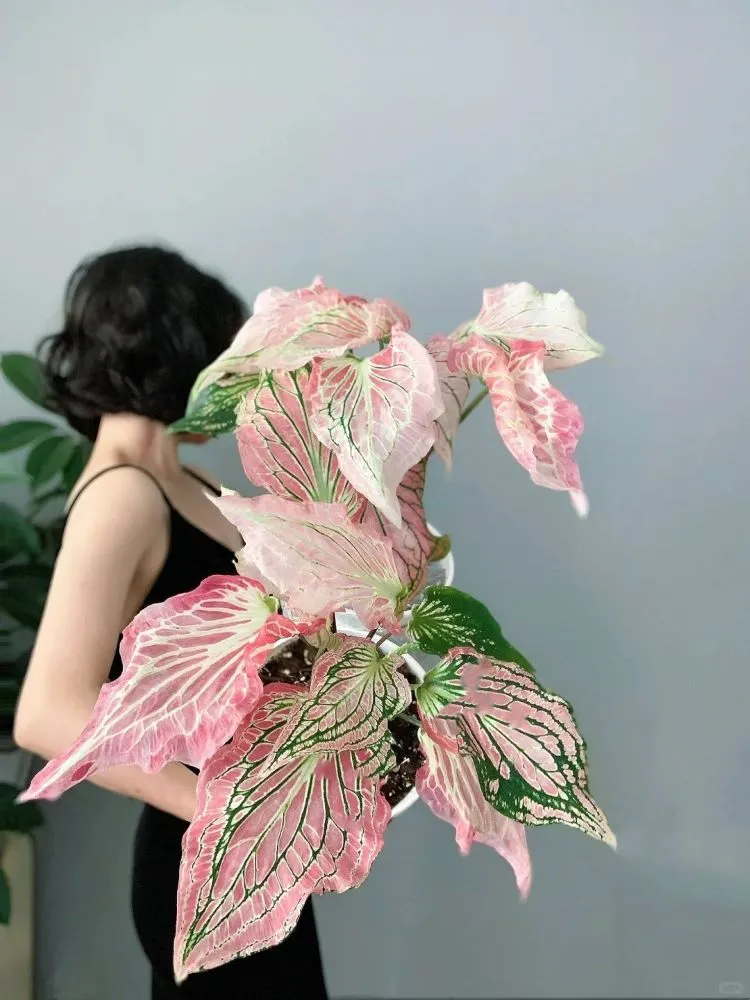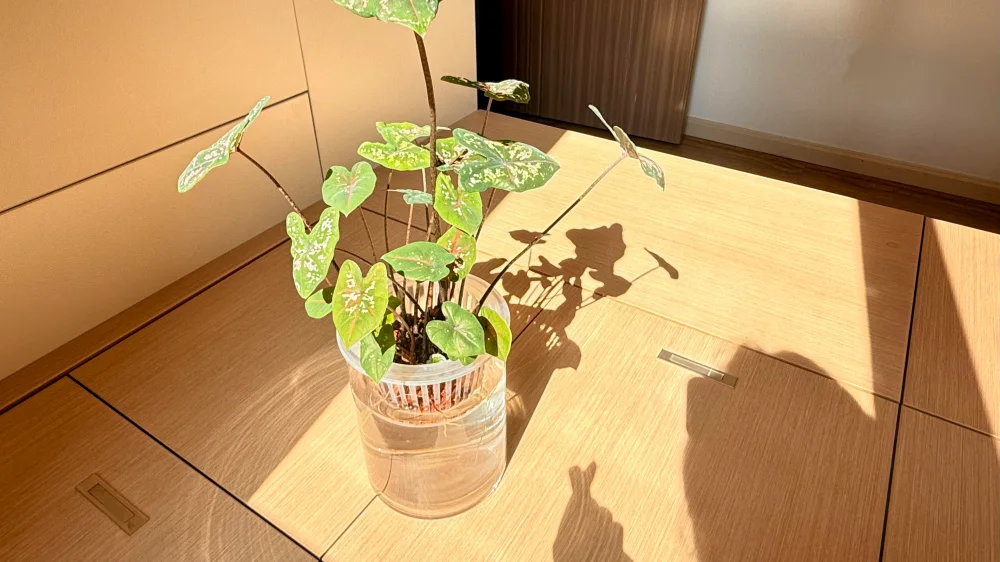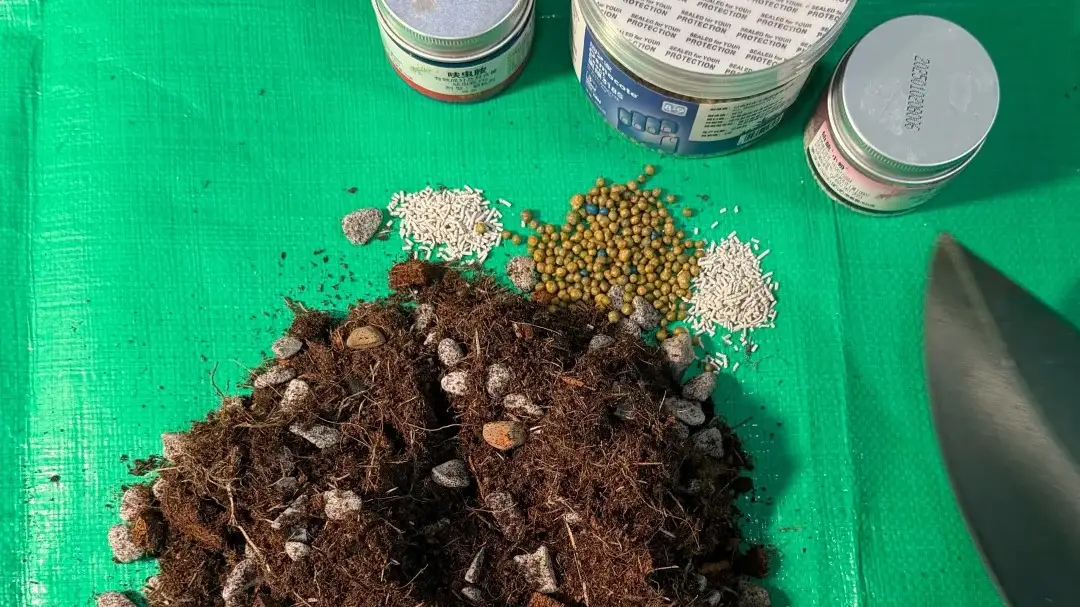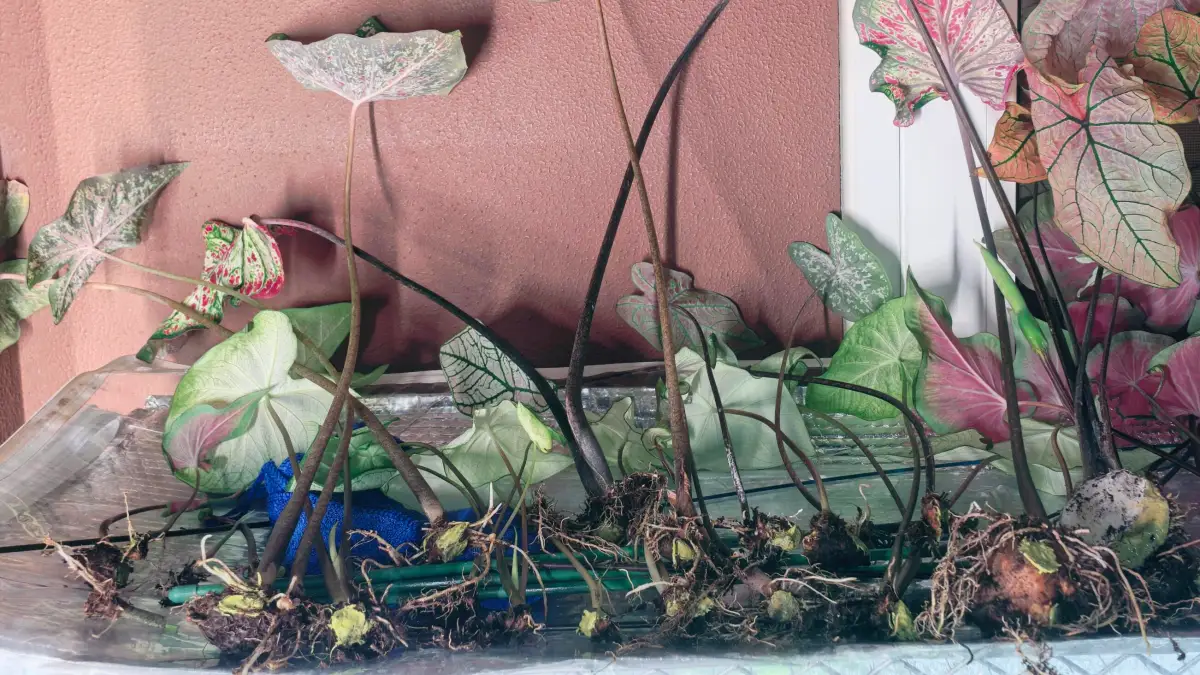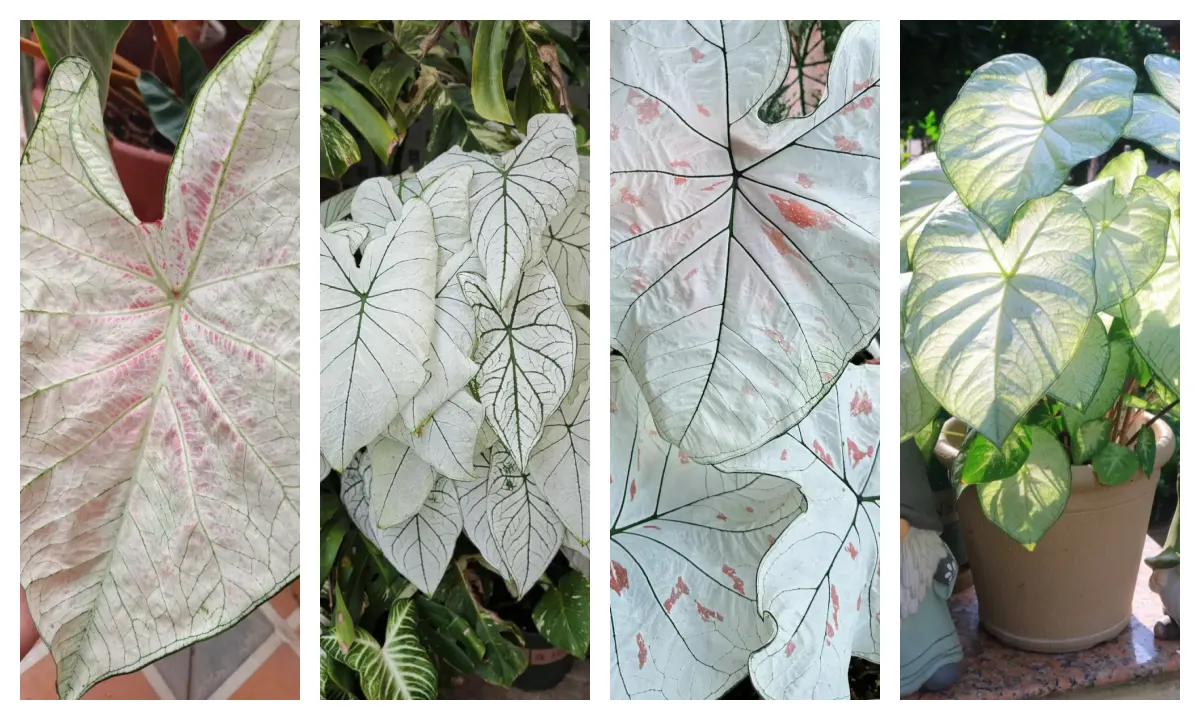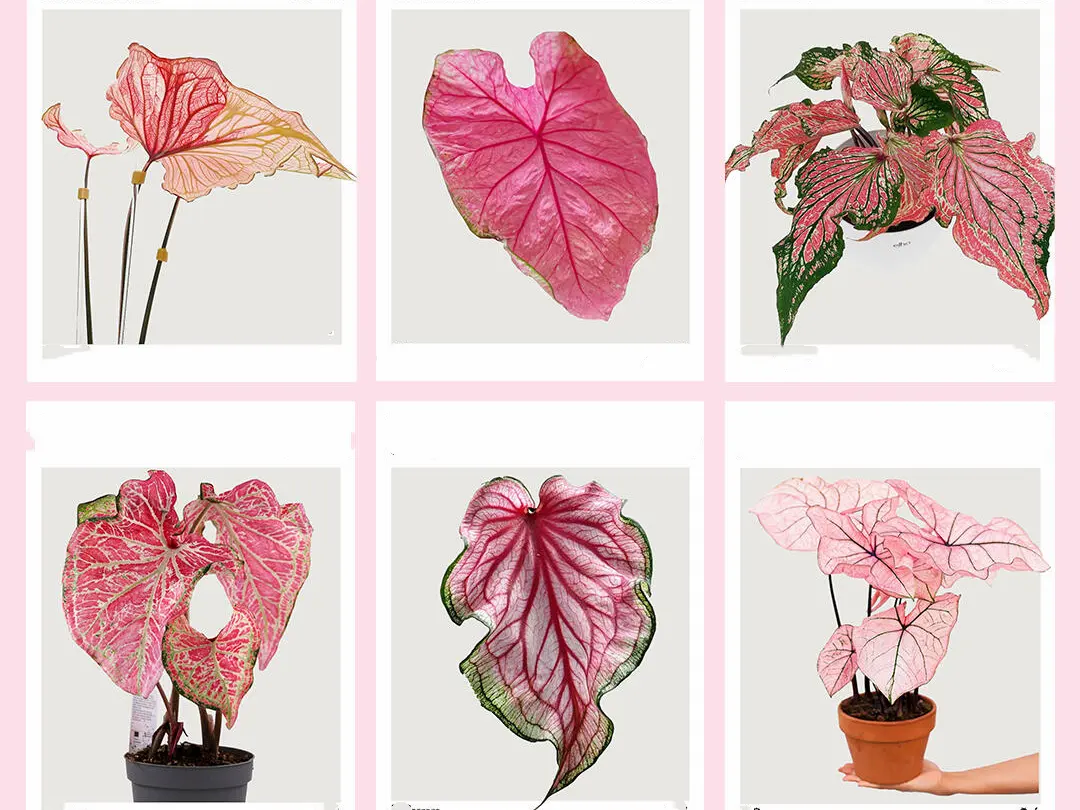
Growing caladiums indoors wasn’t difficult in the way I expected. They grew. They produced leaves. Nothing outright failed. And yet, something always felt off. The plants looked healthy enough, but the colors were dull, washed out, or slowly drifting toward green instead of holding the contrast I’d seen in photos and nurseries.
At first, I assumed the answer was simple: more light. Whenever the sun came out, I moved them closer to the window. When it didn’t, I worried they weren’t getting enough. Some days were bright, others were overcast, and my caladiums reacted to every shift. Leaves that looked fine one week would fade or scorch the next. It wasn’t a lack of light that caused the problem — it was the constant fluctuation.
What finally became clear was that caladiums don’t respond well to extremes or inconsistency. Color didn’t improve when I chased brighter sun. It improved when the light stopped changing so dramatically.
I didn’t fix my caladiums by chasing more light — I fixed them by controlling light intensity.
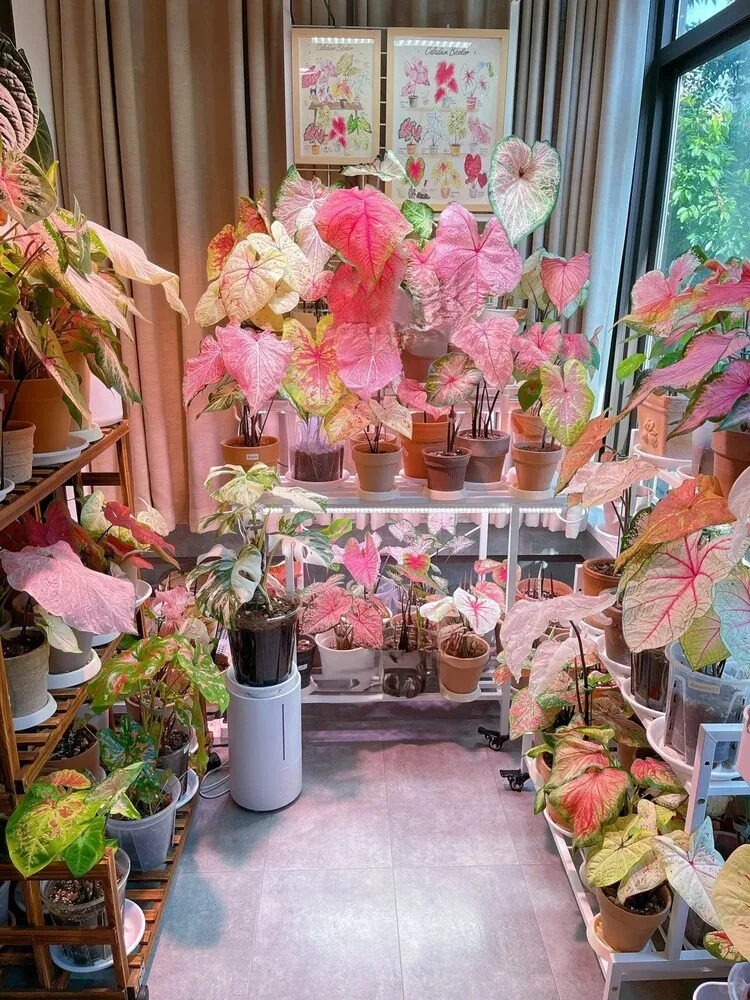
How I Learned to Read Light Through the Leaves (Not the Sun)
I stopped trying to judge light by looking out the window and started paying attention to what the leaves were telling me. Weather can be misleading indoors. A room can look bright to us and still deliver wildly inconsistent light to a plant. The leaves, on the other hand, respond honestly — often before any real damage shows up.
The first signal I noticed was fading color. When caladium leaves slowly lost contrast or shifted greener, it wasn’t always because there wasn’t enough light overall. It was usually because the light wasn’t stable. Bright mornings followed by dull afternoons, or sudden sunny days after a stretch of gray, seemed to confuse the plant. Color didn’t disappear overnight, but it never fully developed either.
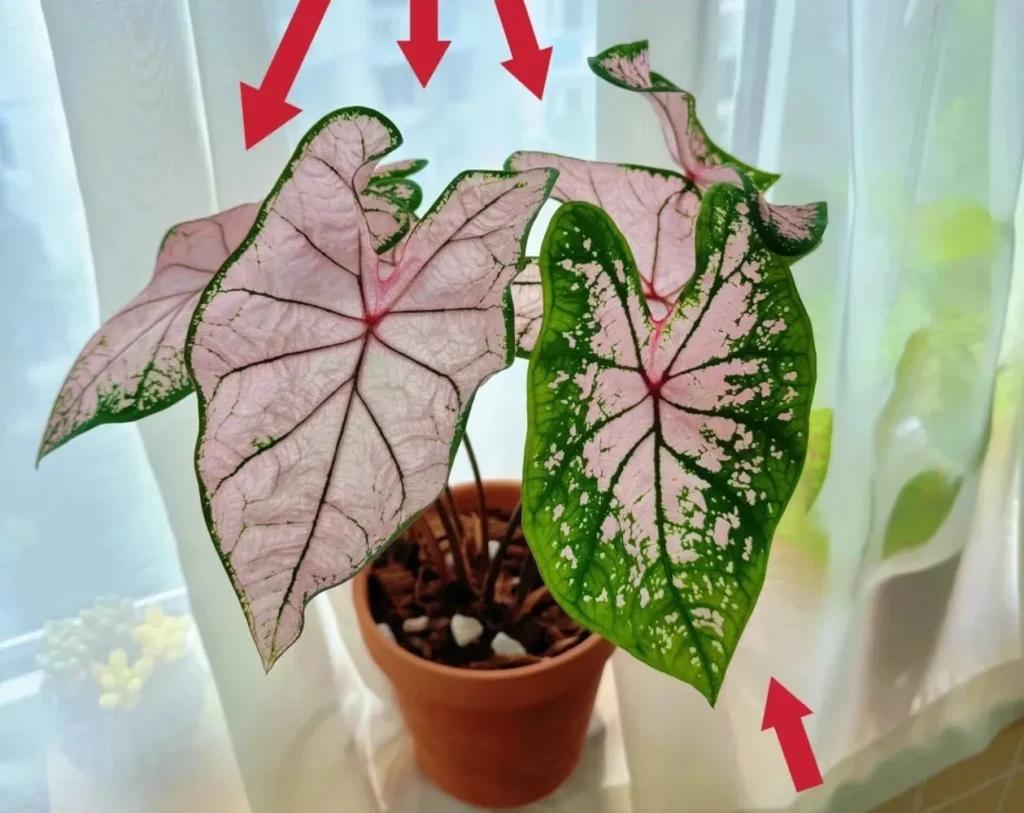
The leaf survives, but its pigment development is permanently affected.
Sun scorch was the opposite message. When patches or crisp edges appeared, it wasn’t simply “too much sun.” It was strong light paired with water and airflow that couldn’t keep up. The leaves told me that intensity had crossed a line the plant couldn’t balance anymore, even though everything else looked fine the day before.
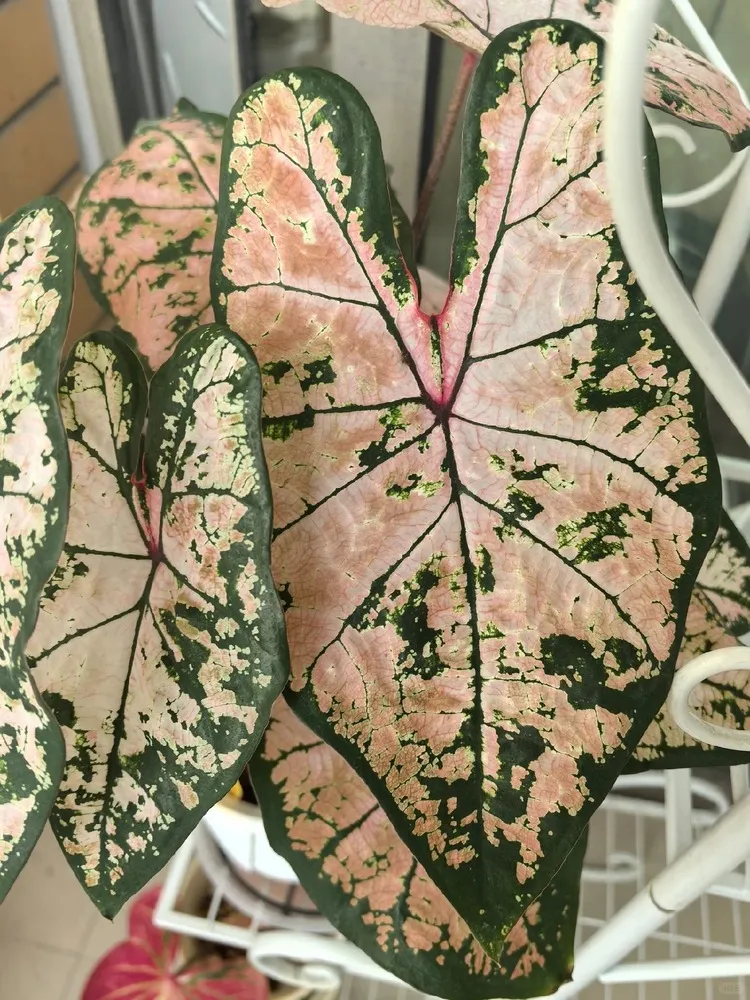
This isn’t just “too much sun” — it’s a mismatch between light, water, and ventilation.
Then there were times when the plant looked healthy but disappointingly green. No damage, no drooping — just leaves that refused to color up. That was my cue that the light wasn’t ineffective, not absent. The plant was surviving, not expressing itself.
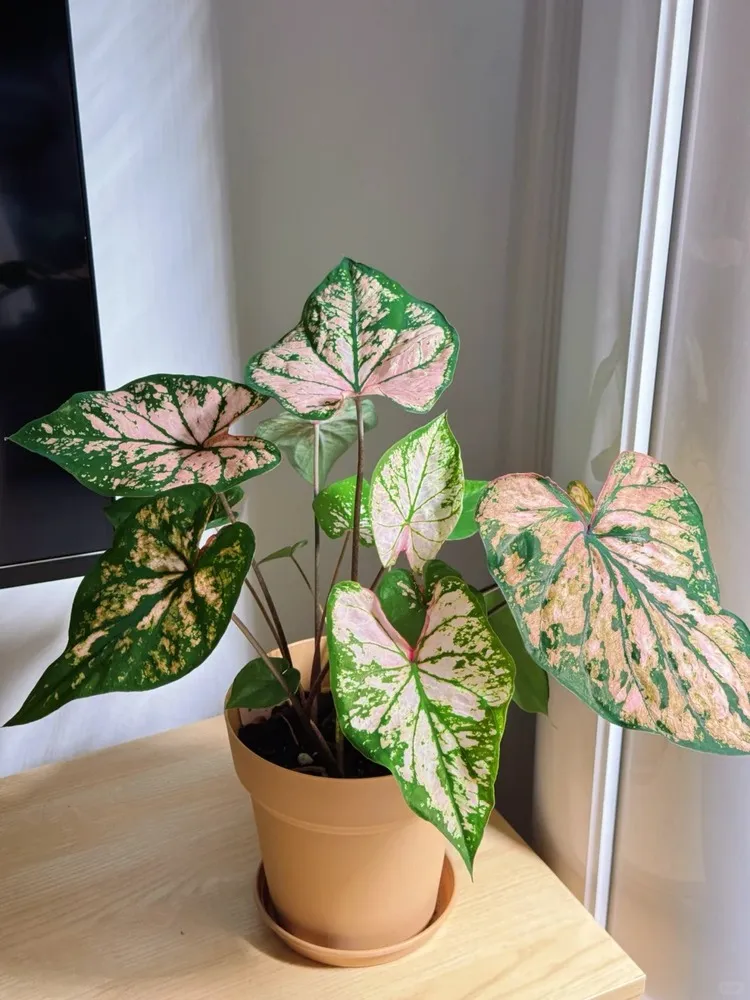
The plant stays alive, but the color expression fades first — long before growth actually slows.
What all of these moments taught me was simple but important:
the leaf tells the truth long before the plant fails.
My Practical Indoor Light Range (And Where Things Go Wrong)
After growing caladiums indoors for multiple seasons, I stopped thinking about light as “bright” or “dim.” What actually matters is whether the plant can keep up with the light it’s getting.
For most indoor setups, I’ve found that a moderate, stable light level works best. Around 10,000 lux, caladiums stay colorful, leaves hold their structure, and growth feels predictable rather than reactive. This is the range where I see the least stress — no sudden fading, no burn marks, and no constant need to adjust watering just to compensate for light.
Problems usually start once light intensity climbs higher, especially above 15,000 lux in summer. At that point, light itself isn’t the enemy — imbalance is. Strong light only works when water, airflow, and long-term adaptation are all in place. Without those, the plant can’t regulate transpiration fast enough, and damage shows up quickly as sun spots, edge burn, or sudden color collapse. This is also when drooping suddenly starts showing up.
Another thing I’ve learned the hard way is that not all caladiums react to light the same way. Some cultivars clearly tolerate stronger light and warmth better, rewarding it with deeper reds or more saturated patterns rather than stress. Others do the opposite — under higher temperatures, they gradually shift greener, even if the light level seems “correct” on paper. In those cases, pushing brightness only accelerates the loss of color instead of improving it.
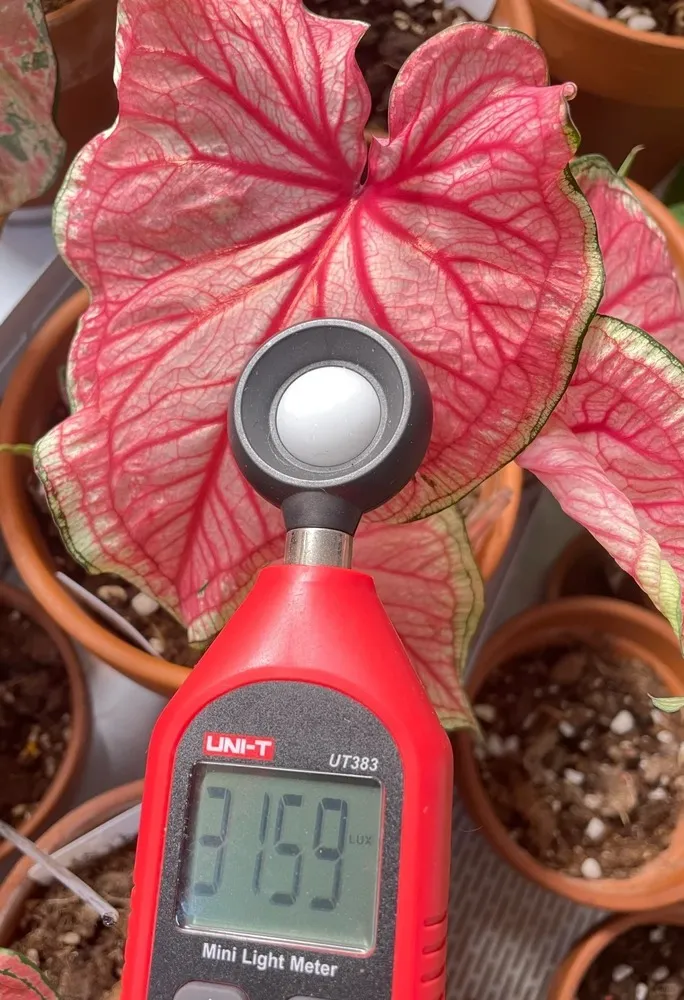
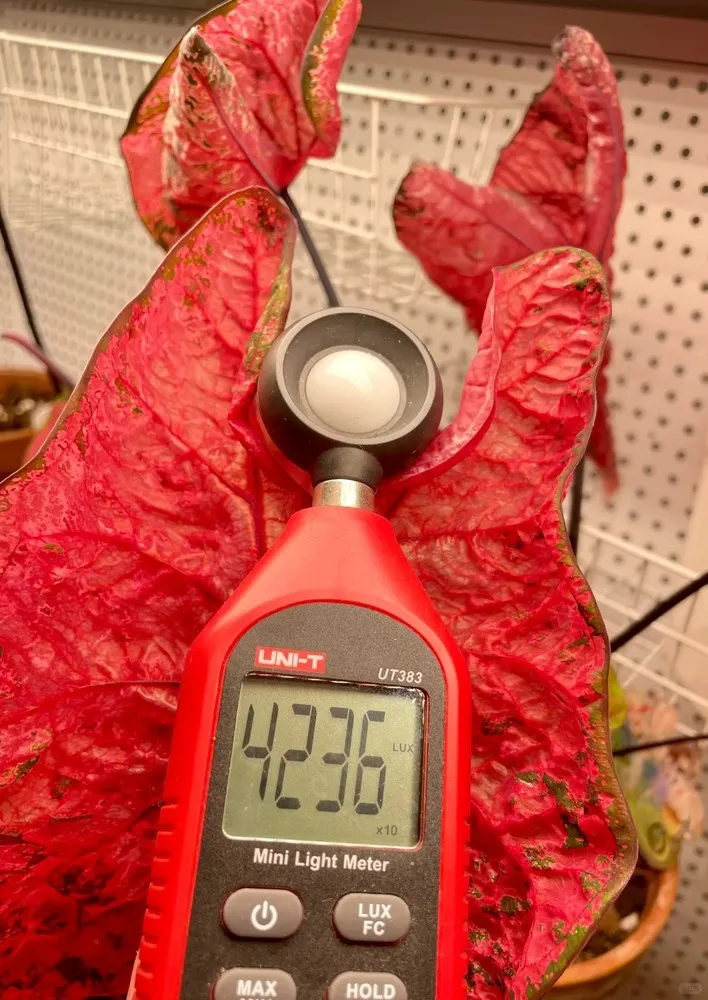
This is where many indoor growers get stuck. The plant looks healthy, so they add more light — but the color keeps fading. What’s actually happening isn’t a lack of light, but a mismatch between temperature response and light intensity. Once I started factoring heat into the equation, a lot of “mystery problems” suddenly made sense.
The biggest takeaway for me is this: light doesn’t exist in isolation. Indoors, it’s part of a system. When light increases without enough water uptake, airflow, or adaptation time, caladiums don’t slowly decline — they react fast. But when intensity stays within a range the plant can support, everything stabilizes, including color.
That’s why I no longer chase the brightest window or the strongest setting. I aim for a range the plant can actually live in — not just survive, but stay consistent in.
Why Direct Sun Before Sprouting Gave Me the Best Color
This was one of those observations I didn’t learn from guides — I learned it by accident. Before a caladium sprouted, while it was still just a bulb in the soil, I found that it could handle much stronger direct sun without any visible downside. There were no leaves to scorch, no surface area losing moisture, and no urgency in water demand. At that stage, light simply translated into stored energy.
Everything changed the moment a leaf began to unfold. The same light that felt completely safe a week earlier suddenly became risky. Once a leaf exists, it starts transpiring immediately, and its tolerance drops sharply. What mattered wasn’t the plant as a whole — it was the timing of that exposure.
That’s when a pattern became impossible to ignore. Leaves that emerged under strong, stable light developed richer color from the start. Leaves that unfolded during unstable or overly intense light either burned early or stayed washed out, even if conditions improved later. Recovery was limited.
My takeaway became very clear:
the moment a leaf unfolds is the moment its future is set.
That’s why I now think about light differently around sprouting. Before emergence, stronger sun can be an advantage. After emergence, that same light has to be controlled carefully — because at that point, the leaf isn’t learning to tolerate light. It’s being defined by it.
Indoor Reality: When Grow Lights Become Necessary (Not Optional)
Everything I’m sharing here is based on indoor growing, not greenhouse or outdoor conditions. And this distinction matters more than most advice admits.
If you live in a city apartment, a place with frequent overcast days, or a climate where winter daylight is short and weak, waiting for the sun is not a strategy — it’s a gamble. Some weeks you get bright days, others you don’t. The plant experiences that inconsistency long before you notice anything is wrong.
For a long time, I resisted using grow lights. It felt like admitting my space wasn’t “good enough,” or like I was replacing something natural with something artificial. In reality, the opposite was true. Grow lights didn’t remove nature from the process — they removed uncertainty.
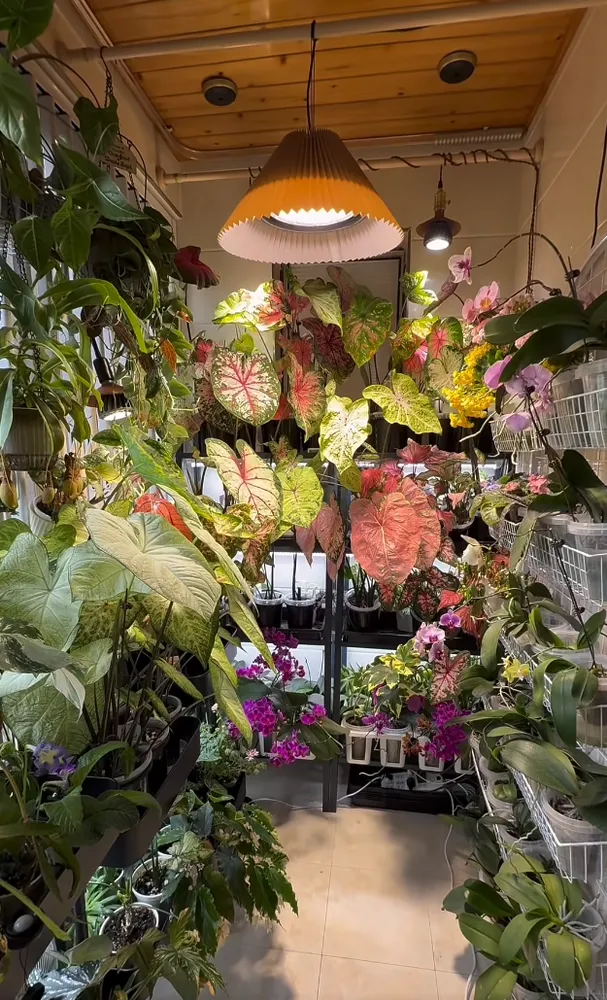
What changed everything for me was stability. With a grow light, intensity stops swinging wildly from day to day. Leaves don’t have to adjust constantly. Color develops more evenly, and growth becomes easier to read instead of stressful to anticipate.
Once I stopped waiting for the sun and started controlling light, caladium care became predictable.
For indoor growers, grow lights aren’t a shortcut. They’re often the only way to give caladiums what they actually need: consistent, controllable light that doesn’t depend on weather, season, or luck.
What I’d Recommend to Beginners Growing Caladiums Indoors
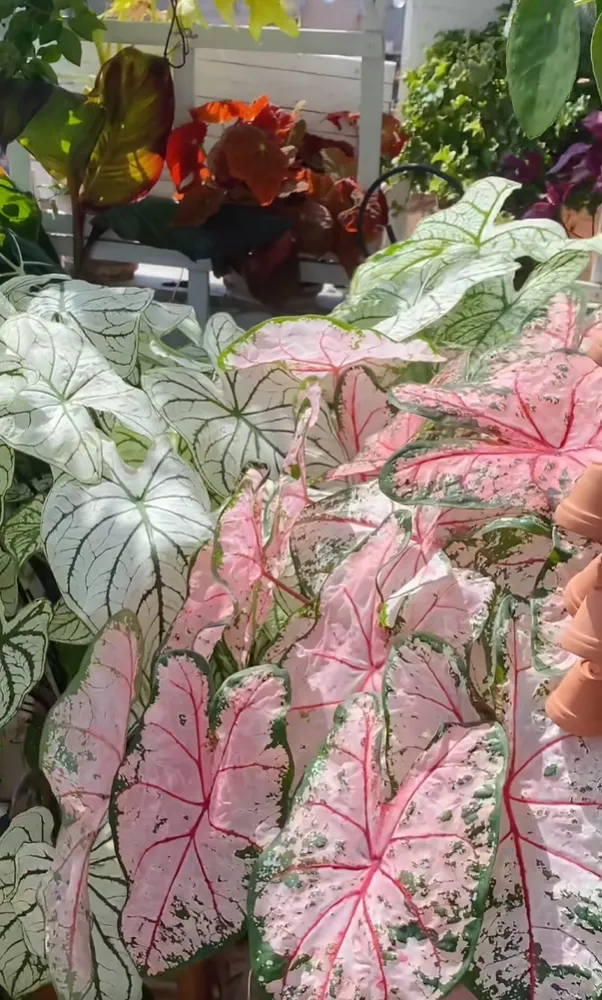
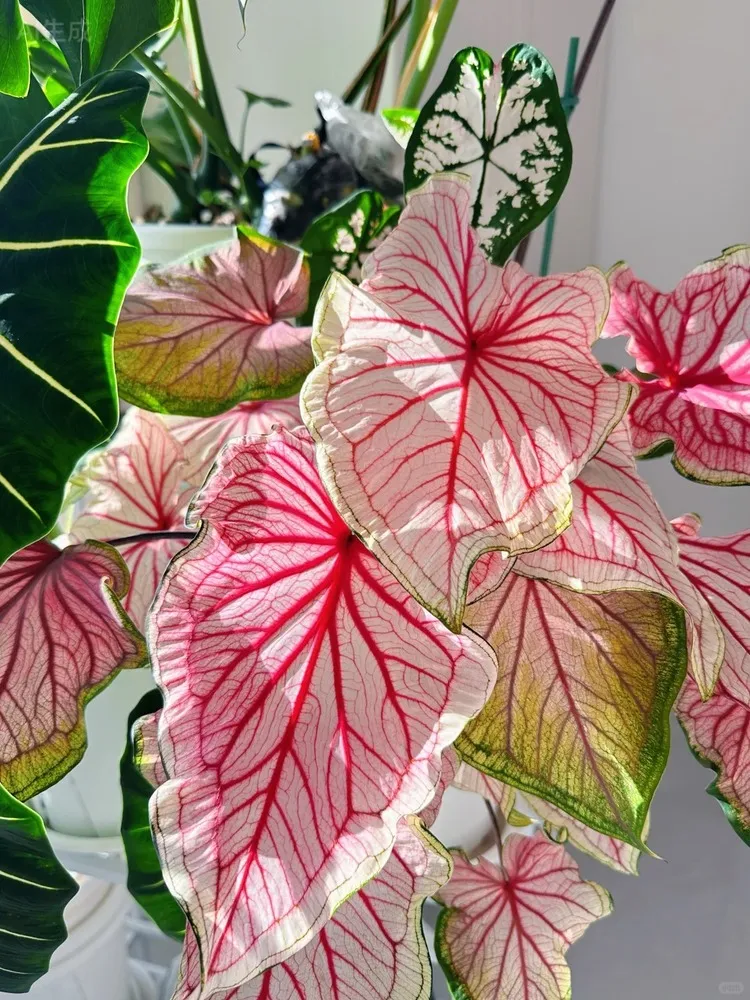
If you’re growing caladiums indoors, I don’t think the goal should ever be maximum light. It should be consistent, readable light — the kind your plant doesn’t have to keep adapting to.
If your home doesn’t get enough natural light, use a grow light without guilt. Waiting for sunny days only creates uneven conditions, and caladiums respond poorly to that kind of stop-and-go exposure.
If your plants receive strong direct sun in summer, shade comes first. Diffusing light is usually safer than trying to “balance it out” later with more water or fertilizer.
If leaf color starts fading but the leaves are still firm and healthy, adjust light intensity before you panic. This is usually a signal to fine-tune, not to overhaul everything at once.
If you see sun spots or scorch marks, reduce light first, then reassess watering. Strong light only becomes damaging when the plant can’t keep up with transpiration.
Through all of this, the principle I rely on most is simple:
Stability matters more than brightness.
Once your caladium experiences steady light — not spikes, not drops — the rest of its care becomes much easier to understand and manage.
Caladium Color Comes from Balance, Not Brighter Sun
Caladiums aren’t afraid of light. What they struggle with is sudden intensity and light that doesn’t match water and airflow.
Once I stopped treating sunlight as something to chase — and started treating it as something to manage — growing caladiums indoors became far less stressful. Color improved, damage decreased, and the plants became easier to read.
When light is stable and intentional, everything else falls into place.
Once the light is right, everything else becomes easier.
FAQ
Still unsure how to care for your caladiums overall?
If questions about watering, sprouting, bulb health, or leaf behavior keep coming up, I’ve gathered all my real-world care observations in one place — organized by growth stage and common problems.
Explore the Caladium Care Guide →