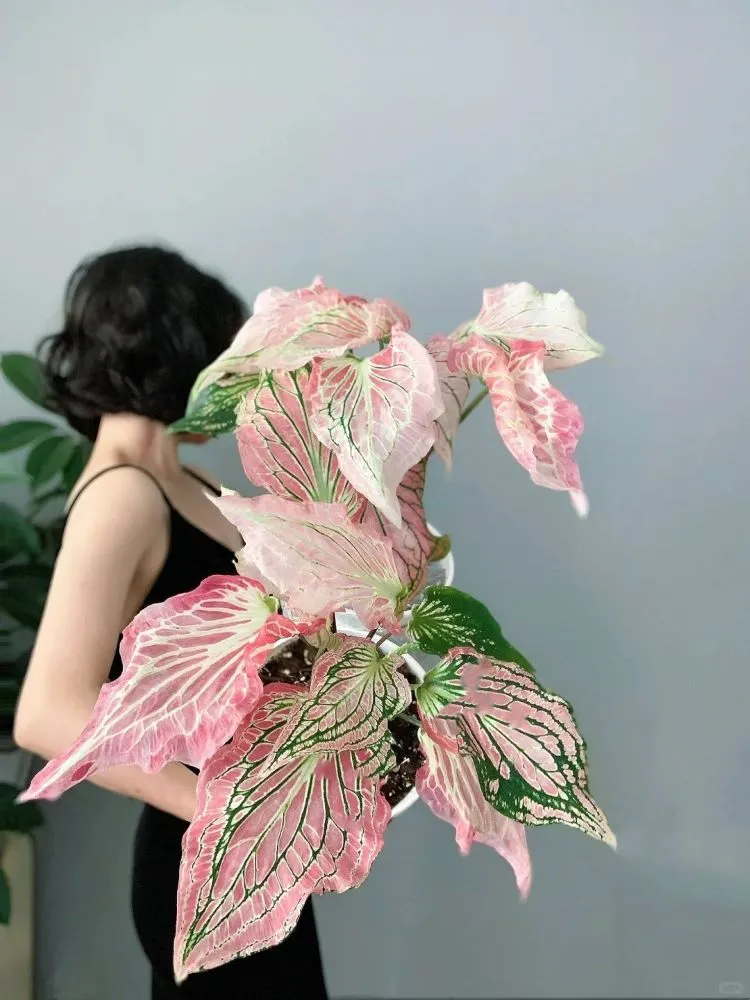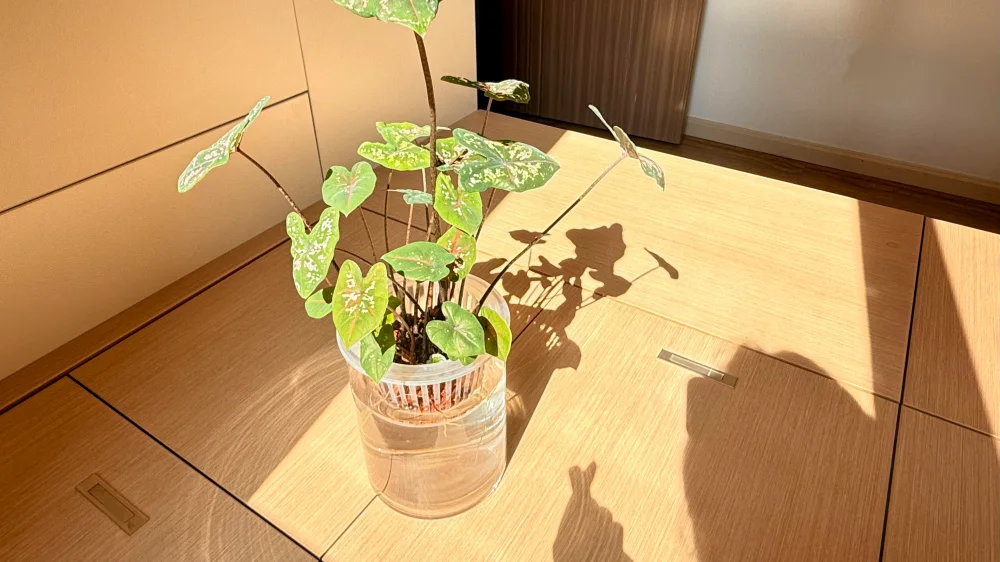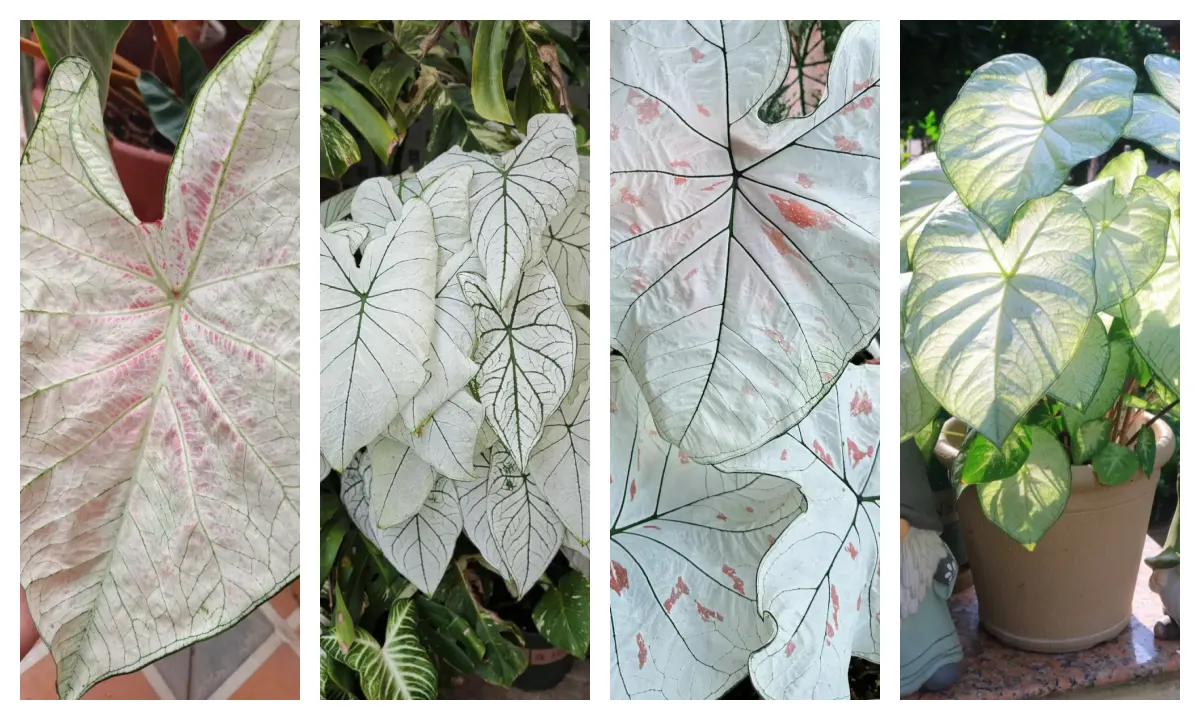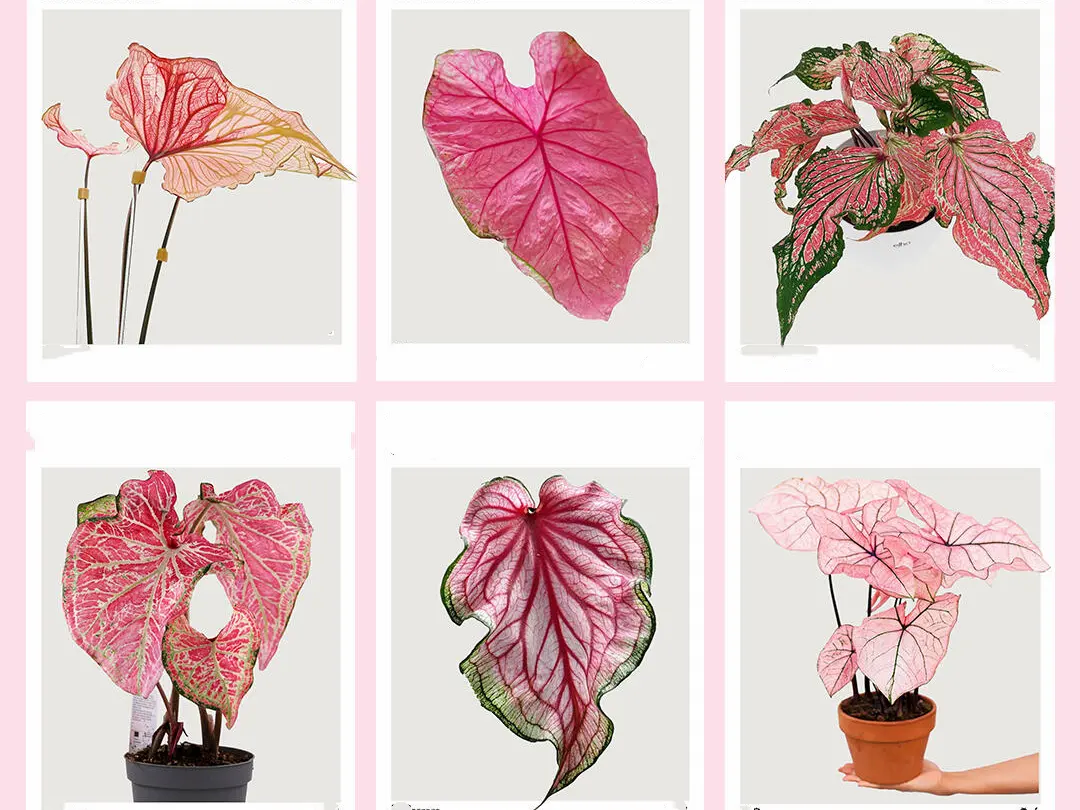
When I first started growing Pink Symphony, a variety often sold as Thai Beauty Caladium in the English plant trade, it began as a caladium bulb that had just started sprouting — the same early stage I talked about in my guide to caladium bulbs not sprouting. When the first leaves appeared, they were bright pink, and I assumed that was simply how this variety would always look.
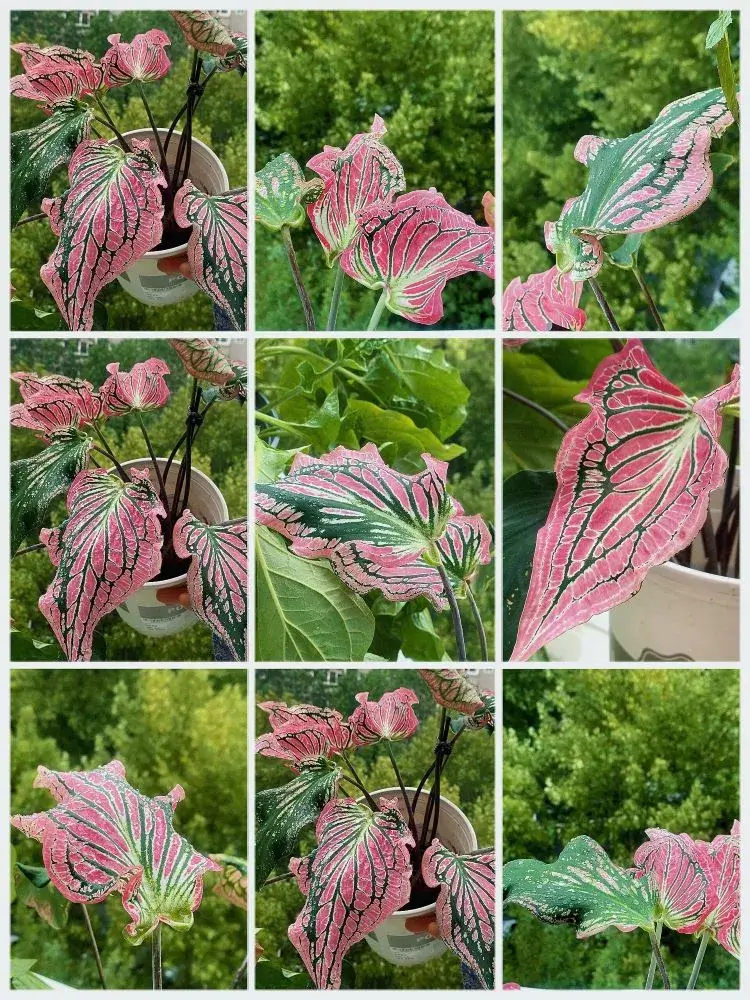
After growing it through two summers, I realized the plant could actually look quite different at different times of the season. During the hottest part of summer, the foliage sometimes appeared much greener than expected. At first I thought something was wrong with the plant.
Later I learned that this can be quite normal for some pink caladium varieties. As the plant continues growing, newer leaves often develop stronger color again, and the pink tones usually return later in the season.
Because of this, I started paying closer attention to how Pink Symphony actually grows. Over the past two years, I documented two observations: how a single leaf develops from emergence to maturity, and how the whole plant behaves during peak summer growth.
Is Pink Symphony the Same as Thai Beauty?
In many English plant listings, Pink Symphony is also sold as Thai Beauty Caladium. I treat them as the same name group when the plant shows the same narrow pink leaves, green veins, and gradual color change from green young leaves to stronger pink mature leaves.
I still pay attention to the actual leaf pattern rather than the name alone, because caladium names can be used loosely by different sellers. But if you bought a plant labeled Thai Beauty and the new leaves start green before turning pink, this growth pattern is very similar to what I observed on my Pink Symphony.
July Growth Observation
In July, the plant was growing very actively, so I decided to document the development of one new leaf over the course of about a week. Watching it from the tightly folded stage also reminded me how different normal leaf development looks from cases where new caladium leaves stay curled and do not open.
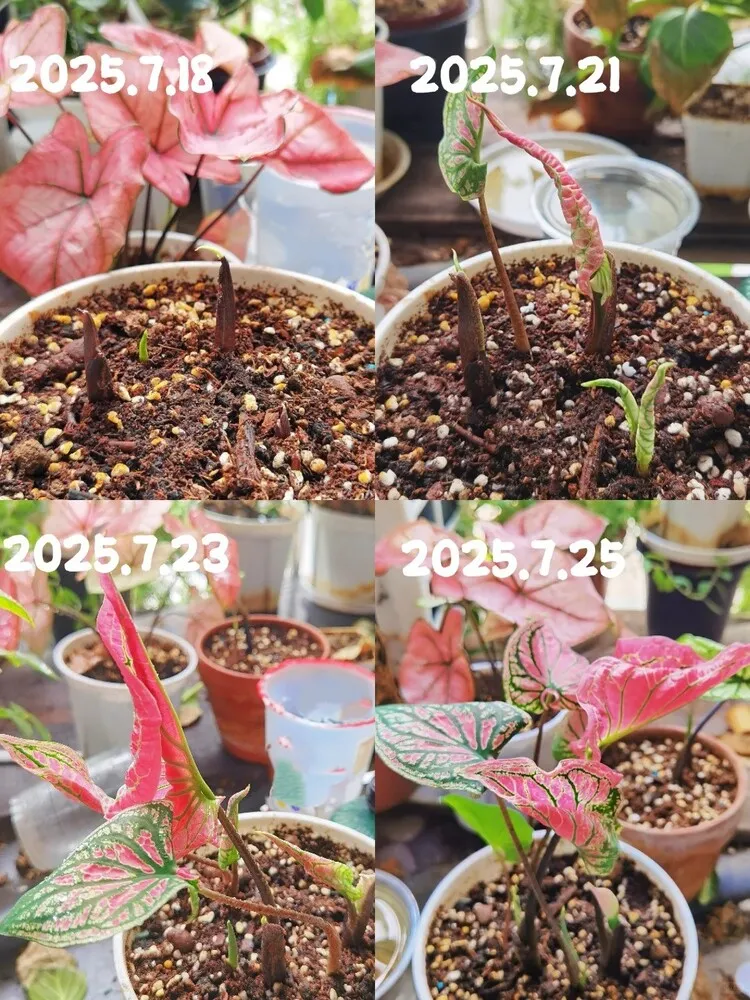
July 18
At this stage, the new leaf had just started emerging from the soil. It was still very small and tightly folded, and the color looked mostly green. If I had only seen the plant at this moment, I would never have guessed that the leaf would later turn pink.
July 21
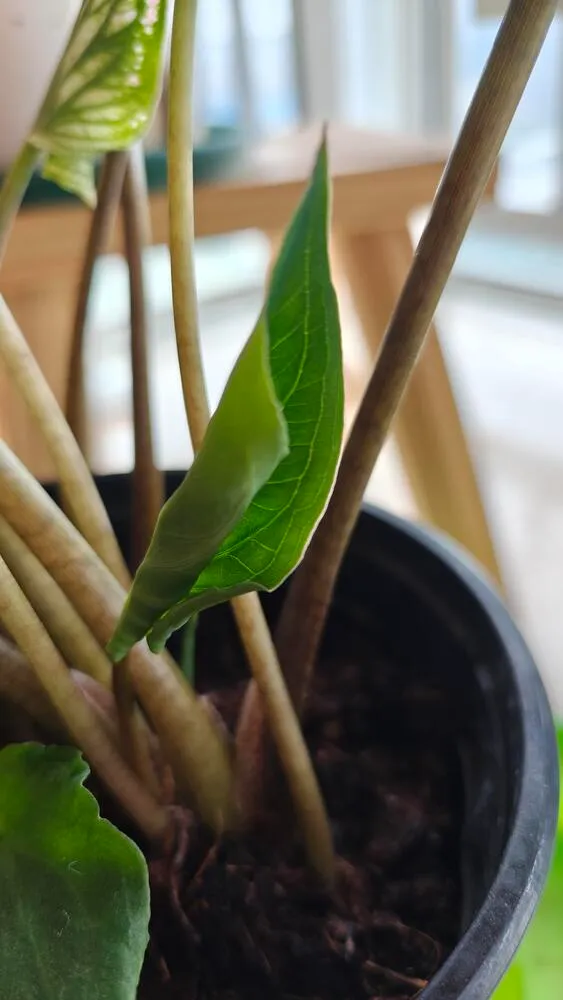
A few days later, the leaf had already grown much taller and started to unfold. This is when the first pink tones began to appear along the veins and inner areas of the leaf. The color change was subtle at first, but clearly visible compared with the earlier stage.
July 23
As the leaf continued expanding, the pink color became much stronger. The inner parts of the leaf were now clearly pink, while the green areas started shifting toward the edges. The overall pattern of Pink Symphony was beginning to show.
July 25
By this point, the leaf had opened much wider and the characteristic pink pattern was fully visible. What started as a mostly green emerging leaf gradually transformed into a leaf dominated by pink tones.
Watching this process helped me realize something important about this variety: Pink Symphony doesn’t start pink — it becomes pink as the leaf matures.
A Full Leaf Growth Timeline
After noticing how the color of Pink Symphony can change during the season, I started paying closer attention to how each new leaf develops. Instead of only looking at the plant when the leaves were fully grown, I followed the growth of a single leaf from the moment it first appeared.
Watching this process made it clear that the final color of the leaf doesn’t appear immediately. The leaf goes through several stages before reaching its mature look.
Early Emergence
When a new leaf first pushes out of the soil, it is usually very small and tightly folded. This is also the stage many growers are waiting for when they worry about caladium bulbs not sprouting.
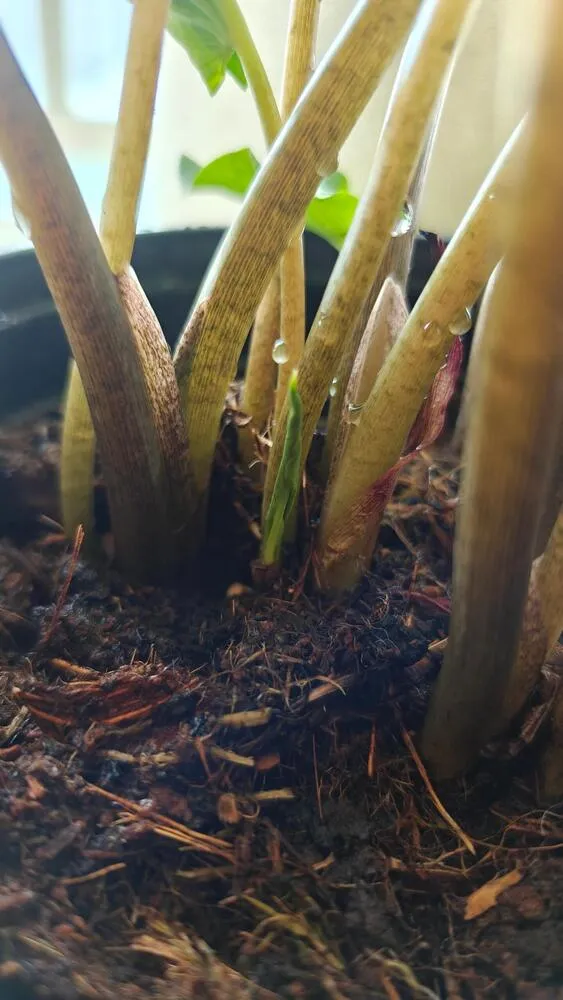
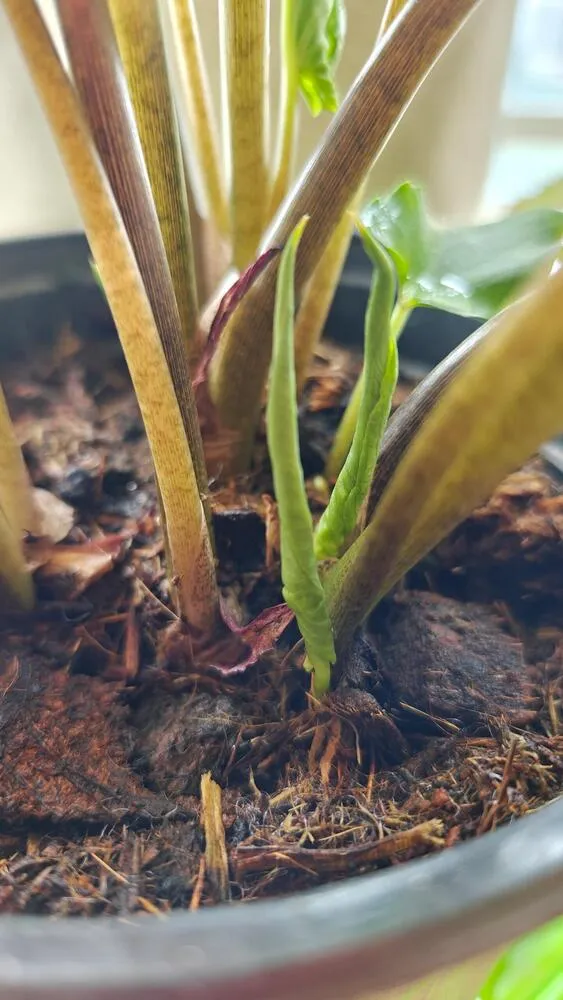
The leaf also looks much thicker and more compact because it hasn’t started expanding.
Leaf Expansion
As the leaf grows taller and begins to unfold, the shape becomes clearer. This is when the first pink tones start to appear, usually along the veins and inner areas of the leaf.
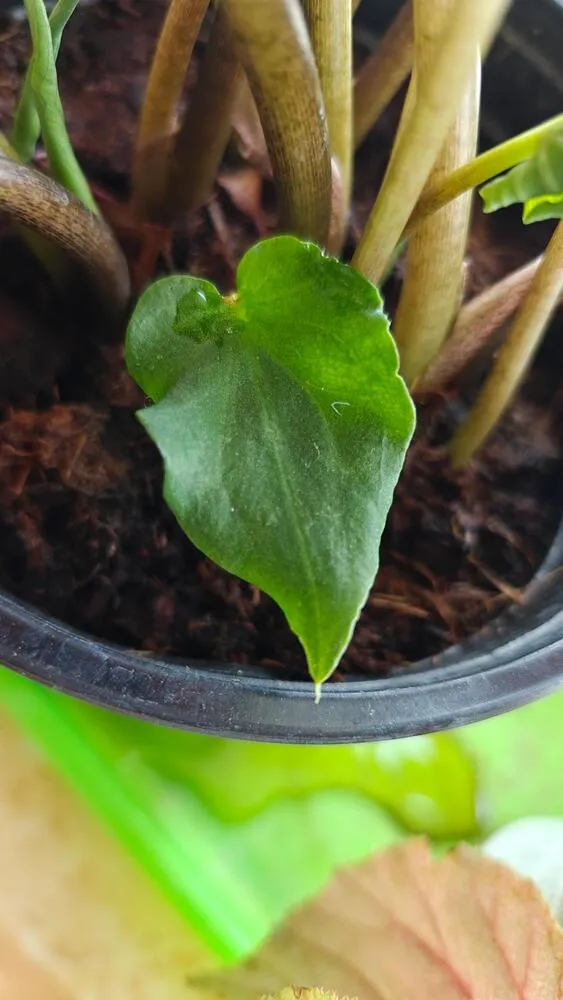
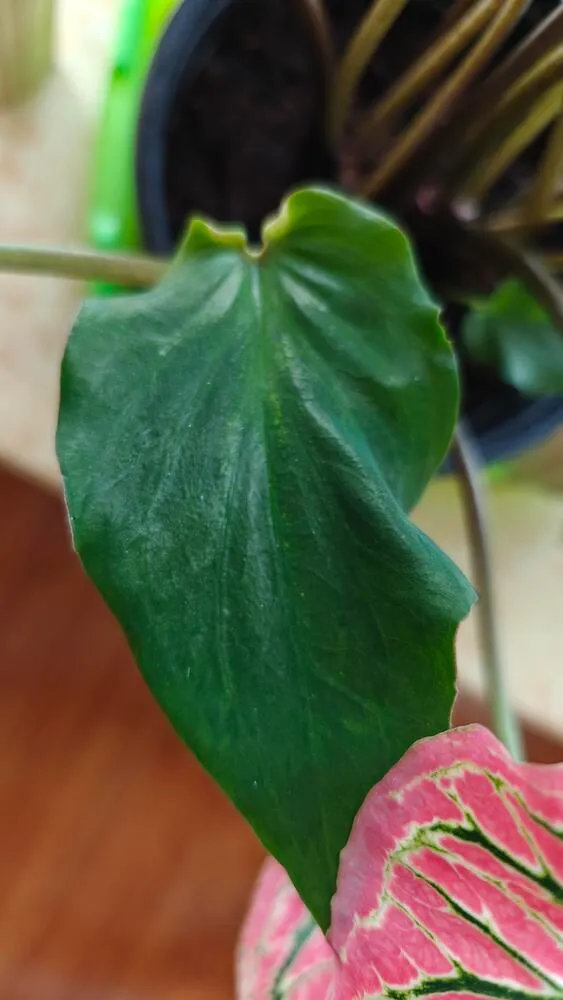
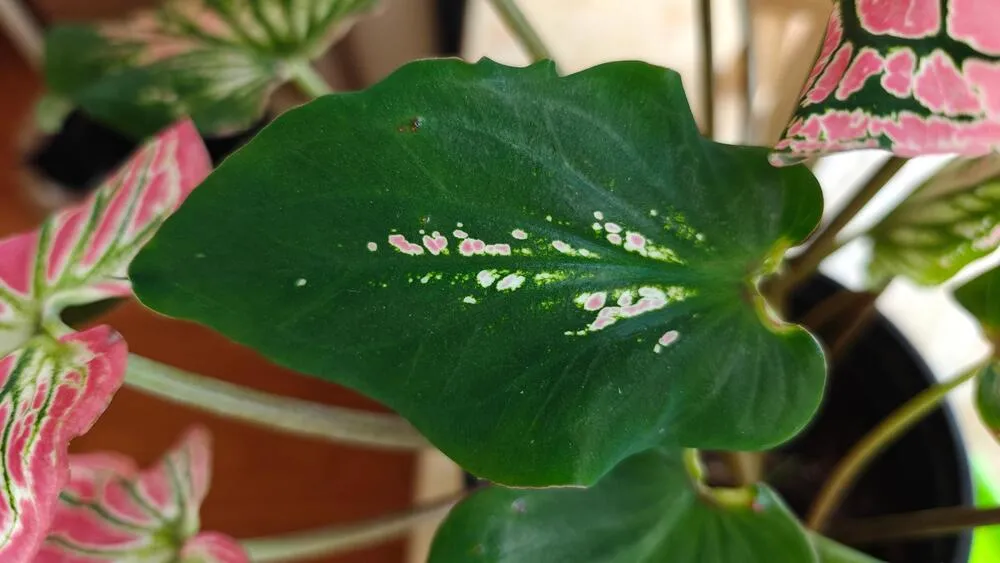
During this phase the leaf expands very quickly. Within just a few days, the surface area can increase dramatically as the leaf opens.
Color Development
Once the leaf opens further, the pink coloration becomes stronger. The inner part of the leaf gradually turns pink while the green areas shift toward the margins.
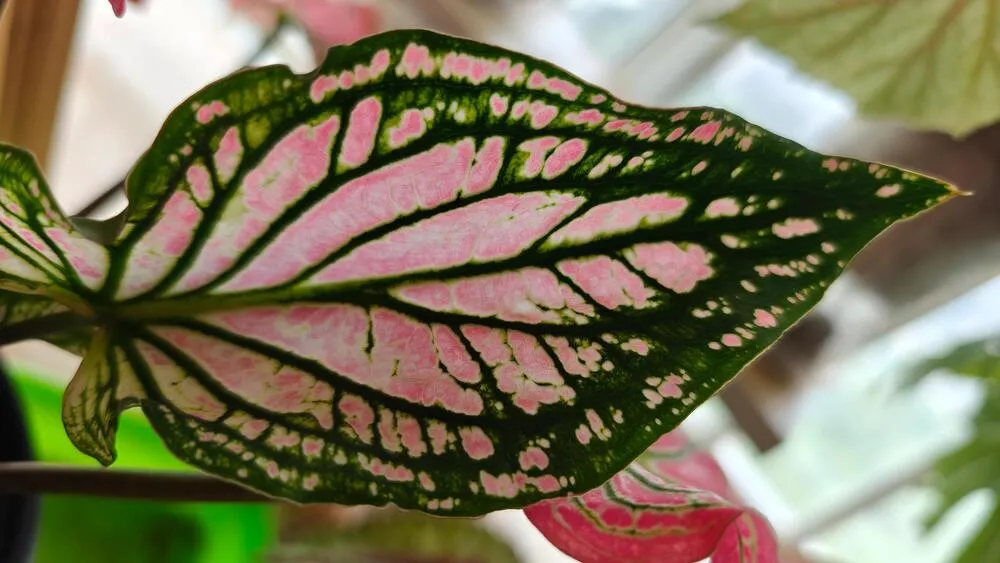
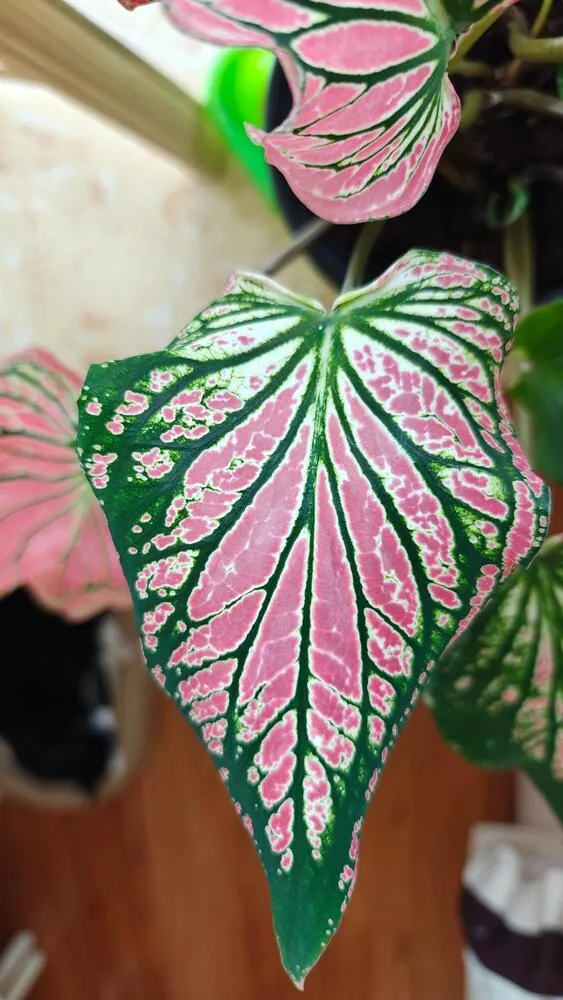
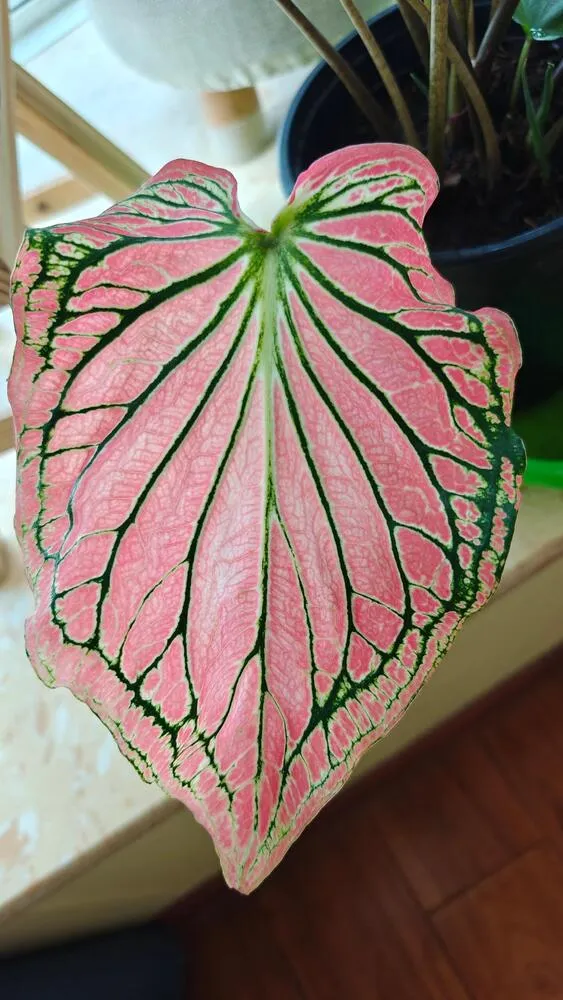
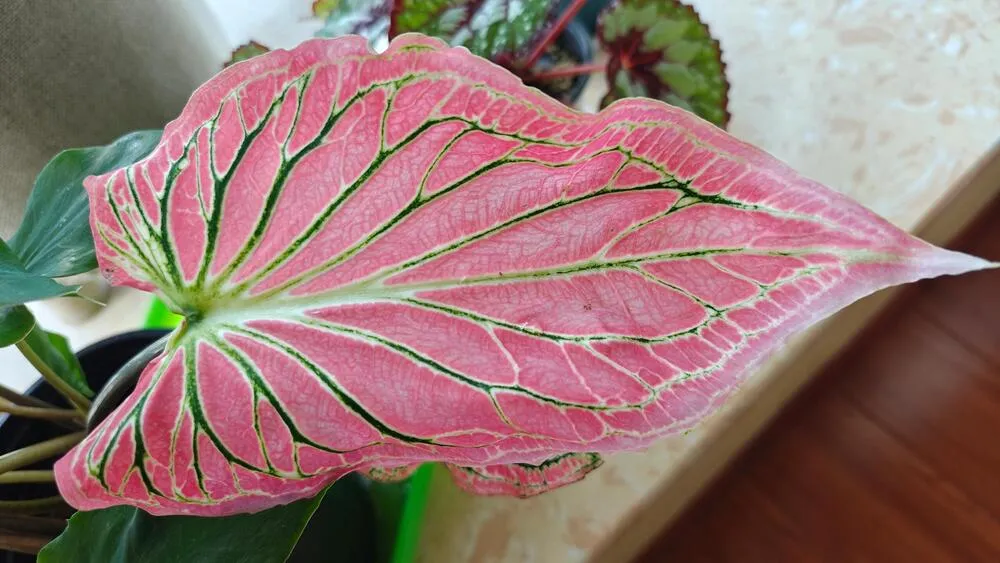
At this stage the plant finally begins to look like the Pink Symphony or Thai Beauty type people expect — a soft pink caladium with green veins instead of a mostly green young leaf.
Mature Leaf
After the leaf reaches its full size, the pattern stabilizes. The pink tones are now clearly visible and the leaf looks similar to the older leaves on the plant.
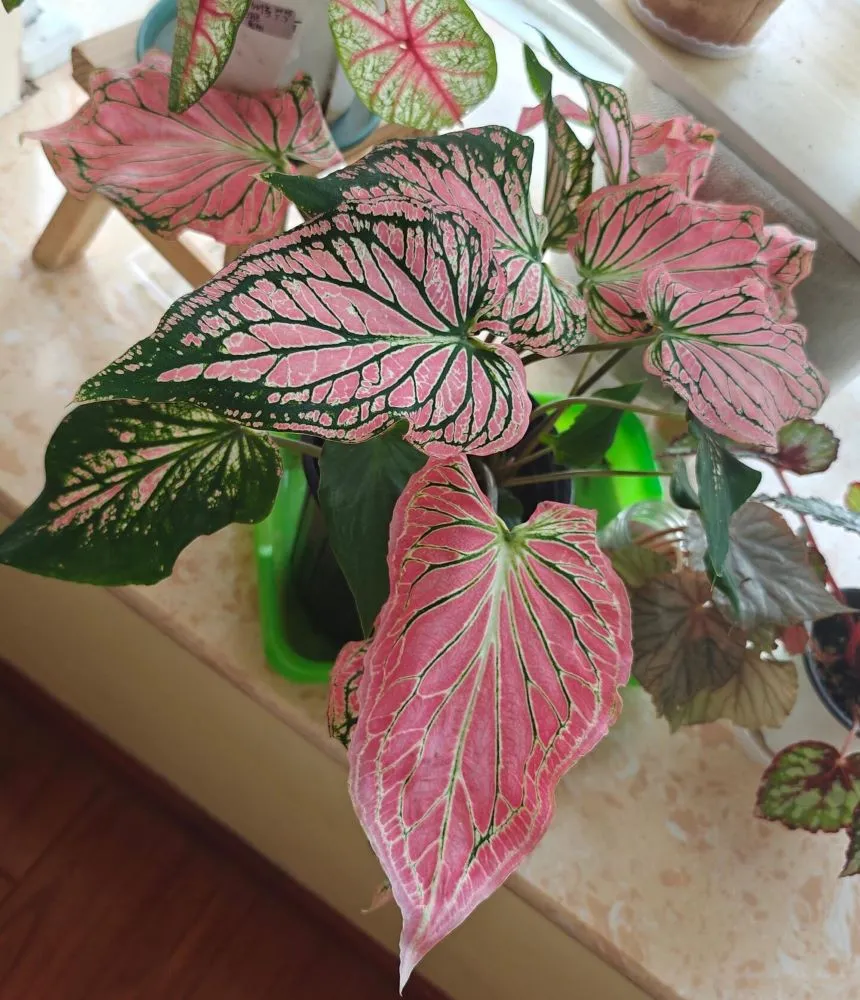
Compared with the early green stage, the difference is quite striking.
What started as a small, mostly green emerging leaf eventually becomes a fully developed pink leaf. Observing this process helped me understand that the color of Pink Symphony develops gradually as the leaf matures rather than appearing immediately when the leaf emerges.
What I Learned From Growing Pink Symphony
After growing Pink Symphony for nearly two years, I’ve come to realize that this variety is more dynamic than it first appears. When I first bought the plant, I assumed the leaves would stay pink all the time. But watching it through different seasons showed me that the color can change quite a bit during its growth cycle.
New leaves often start out mostly green, especially when they first emerge. As the leaf expands and matures, the pink pattern gradually develops and becomes more visible. Seeing this transformation step by step made the growth of this plant much more interesting to observe.
Seasonal conditions also seem to influence the color. During the hottest part of summer, some leaves may appear greener at first. But with healthy growth and regular feeding, later leaves often develop stronger color again, and the pink tones tend to return as the season cools.
For me, that gradual change is actually part of what makes Pink Symphony enjoyable to grow. Once you understand that the pink color develops over time, those early green leaves no longer feel like a problem — they’re simply the beginning of the next leaf’s transformation.
FAQ
Want to Explore Other Caladium Varieties?
Understanding caladiums starts with seeing how each variety behaves.
Browse All Caladium Varieties →