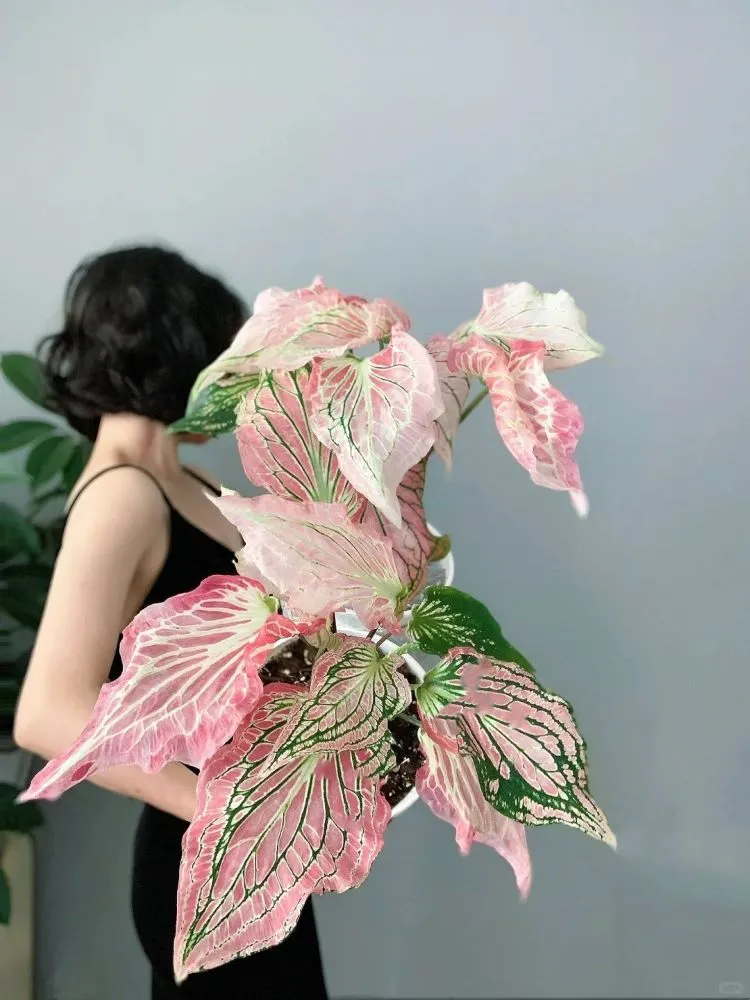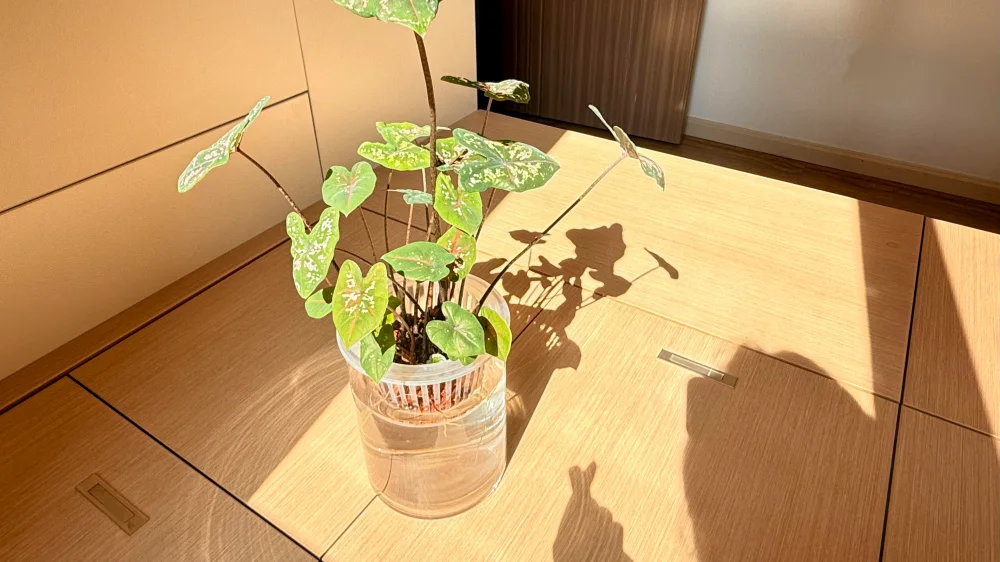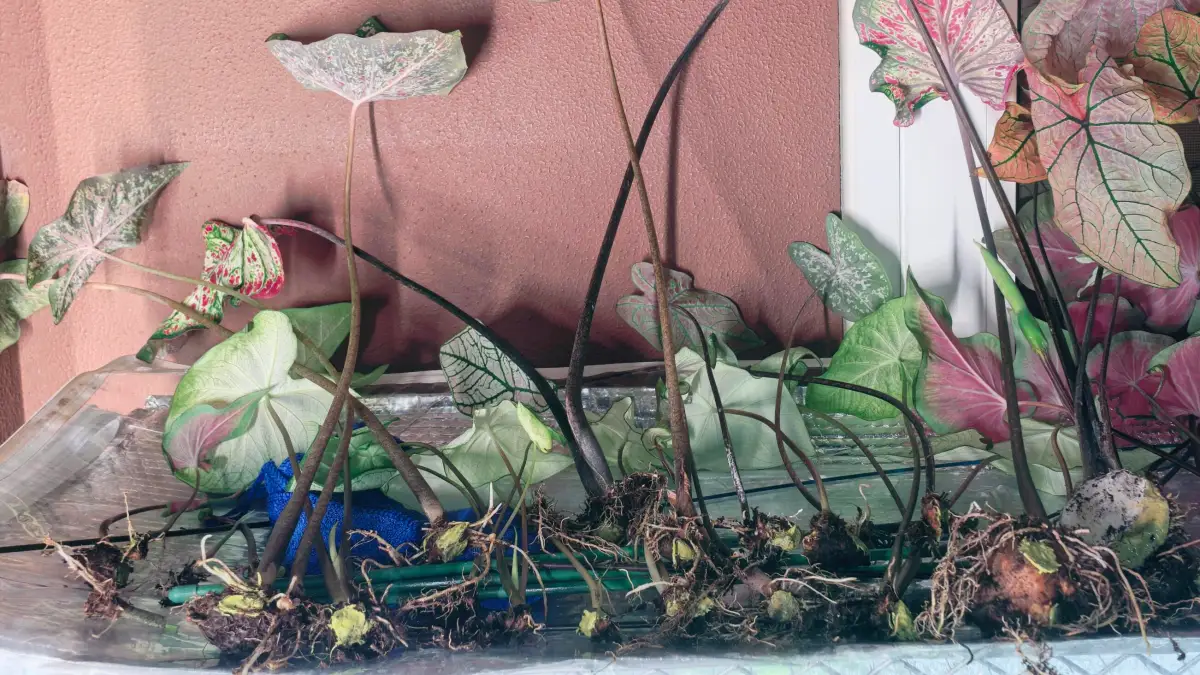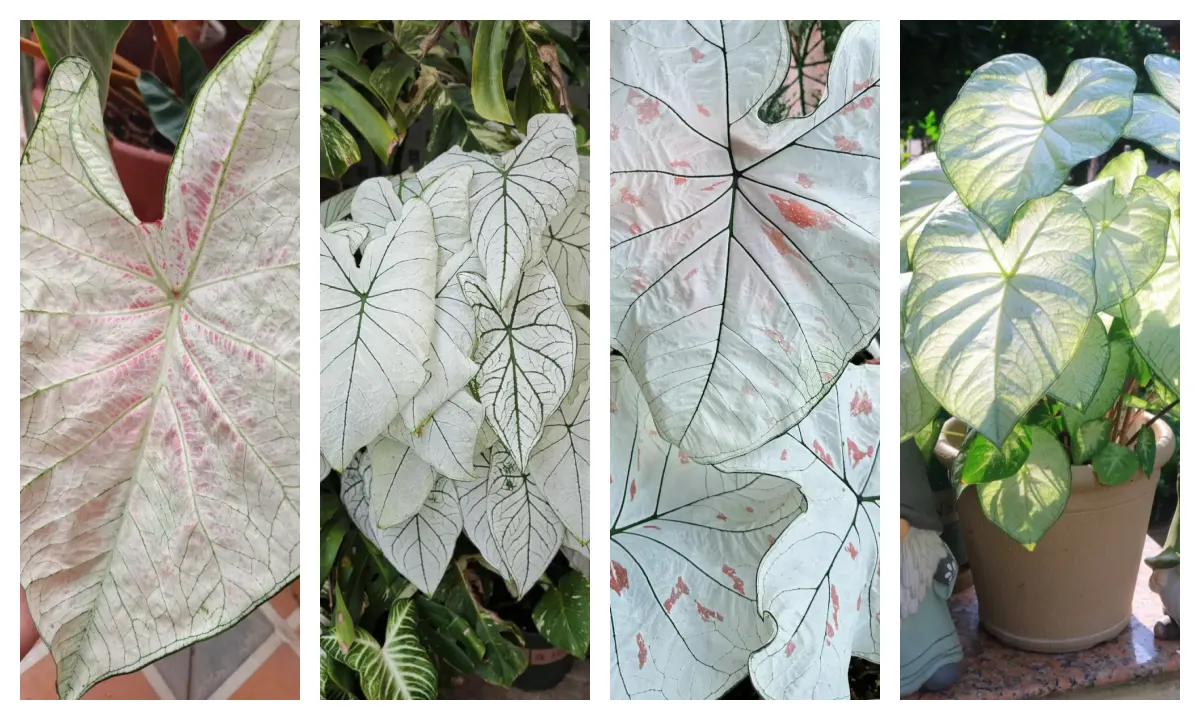
White caladiums look simple at first. Compared with the red, pink, and dark-veined types, they seem easier to understand: pale leaves, green veins, maybe a little red or pink in the center. But once I put different white caladiums side by side, the group becomes much less simple.
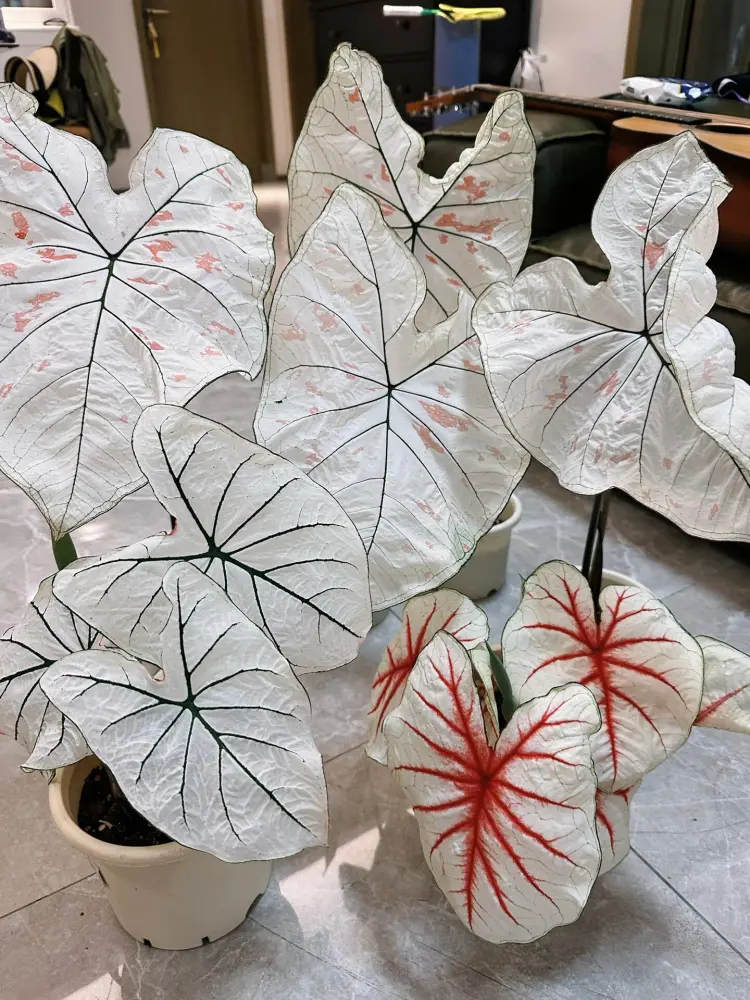
A Candidum-type leaf does not give the same feeling as White Christmas. June Bride and Florida Moonlight can both look soft and pale, but they do not read exactly the same in a pot. White Queen, Fiesta, and Florida Fantasy may all be white-based, yet the red or pink veins completely change their mood. Even Strawberry Heart sits on the edge of white and pink rather than fitting neatly into either group.
That is why I do not think of white caladiums as one clean category anymore. Some are quiet and classic. Some are crisp and strongly veined. Some feel moonlit and soft. Others are really white-based patterned caladiums rather than calm white plants.
In my indoor containers, these differences matter more than the name alone. A white caladium that looks bright and clean in one photo may look greener, softer, or more marked once it grows through a few mature leaves. So for this guide, I am not trying to rank which variety is the whitest. I am trying to separate the different kinds of white that actually show up when these plants grow side by side in containers.
“White” Can Mean Several Very Different Leaves
When I call a caladium “white” in this guide, I do not mean every leaf has to be pure white. Very few white caladiums stay completely white in a real pot. Most of them still carry green veins, green margins, red veins, pink blush, or pale cream tones.
For me, a white caladium is a variety where the leaf still reads as white or white-based at first glance. That can mean a classic white leaf with green veins, like Candidum. It can mean a brighter, more patterned white leaf, like White Christmas. It can also mean a white base with red veins, like White Queen, or a softer pale leaf that feels more moonlit than crisp white, like Florida Moonlight.
I also try to separate real variety names from loose labels. For example, I would not treat Angel Wings as one specific white caladium variety by itself. It is often used more like a common name around caladiums, while the actual cultivar name matters much more when I am trying to compare plants accurately.
The Eight Names I Would Keep in the White Group
For this guide, I would keep these eight names in the white caladium group. They are not all “pure white,” but each one gives a white or white-based impression in a different way.
| Variety | White Type | Why I Keep It Here |
|---|---|---|
| Candidum | Classic white with green veins | This is the baseline white caladium for me. It has that old, clean white-and-green look that makes it useful as a reference point. |
| White Christmas | White with stronger green veining | It feels more patterned than Candidum. The green veins are part of the look, not just a small detail. |
| June Bride | Soft clean white | I would place this in the quieter white group. It has a softer, bridal-white feeling rather than a high-contrast pattern. |
| Florida Moonlight | Pale moonlight white | This feels lighter and airier to me, closer to a calm moonlit white than a heavily veined white leaf. |
| White Queen | White base with red veins | The white leaf base keeps it in this group, but the red veins make it much more dramatic than a quiet white caladium. |
| Fiesta | White-based with red veins and green webbing | I would keep it here as a white-based patterned type, not as a clean white variety. |
| Florida Fantasy | White base with pink-red veins and green edge | It belongs near White Queen and Fiesta, but I would compare mature leaves carefully because the red-pink veining changes the whole mood. |
| Strawberry Star | Soft white-pink / blush white | This sits on the edge of white and pink. I would not call it a clean white caladium, but it still belongs in the pale white-based group. |
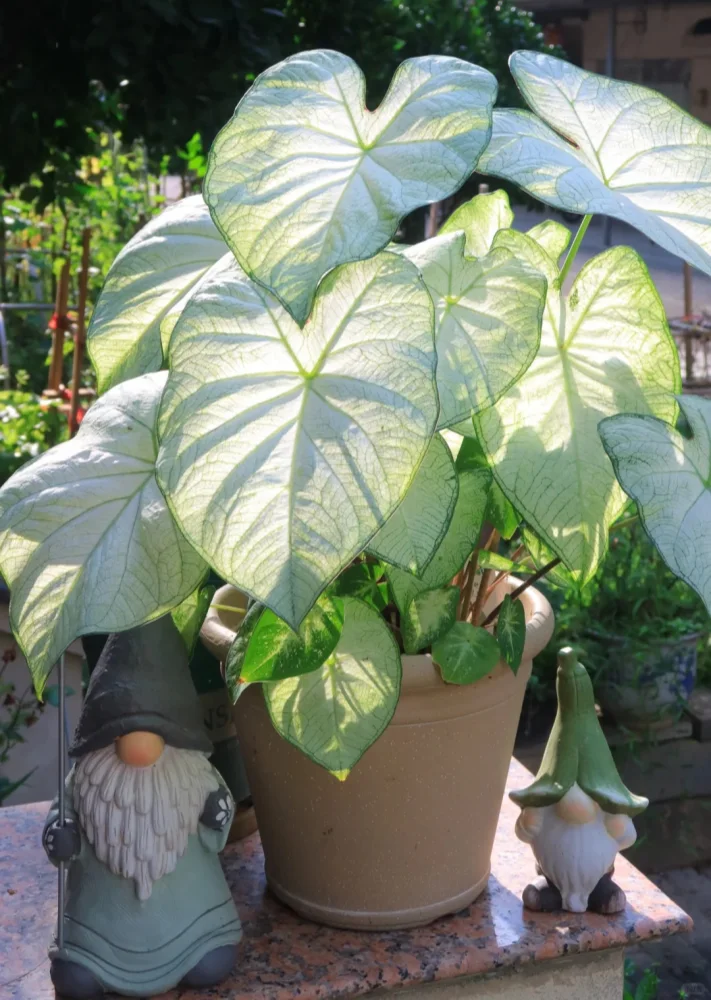
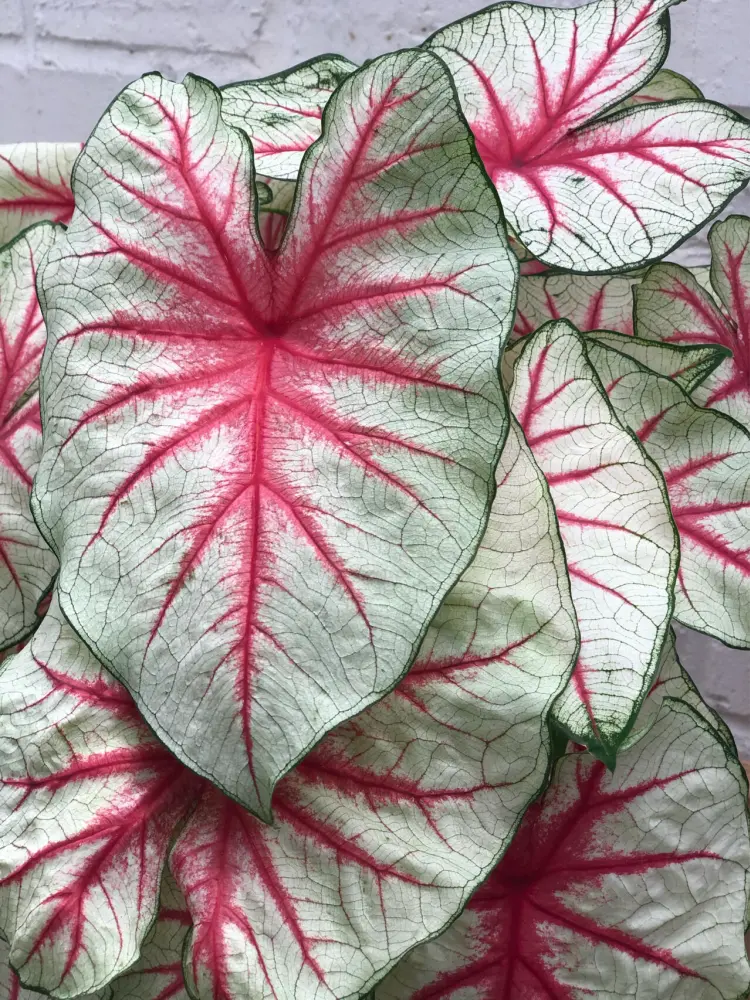
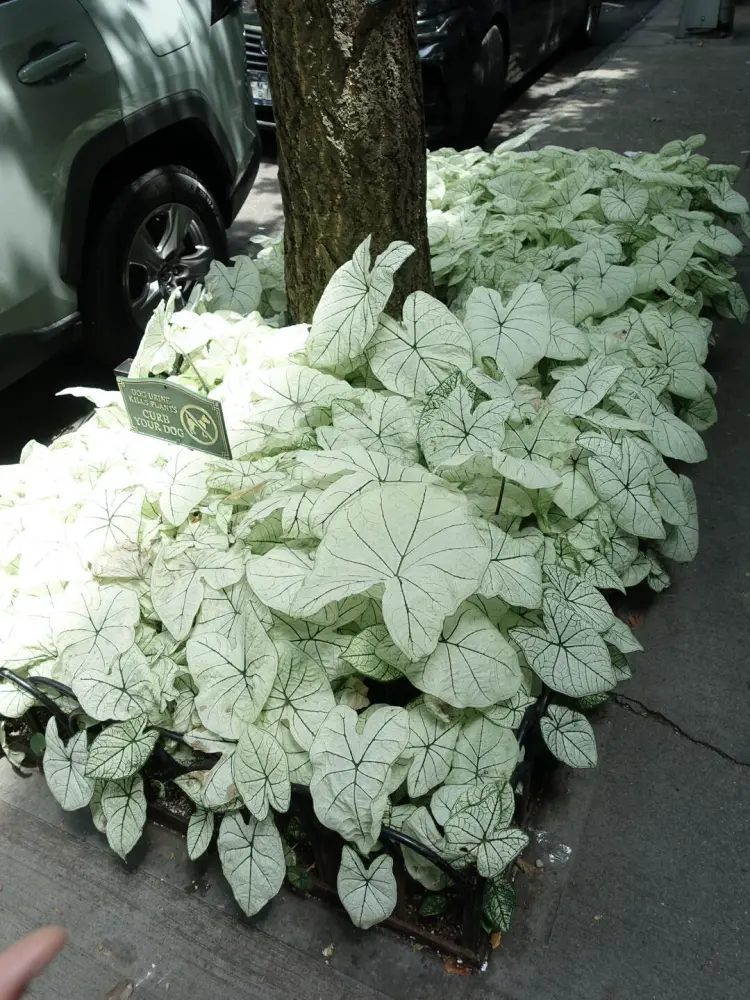
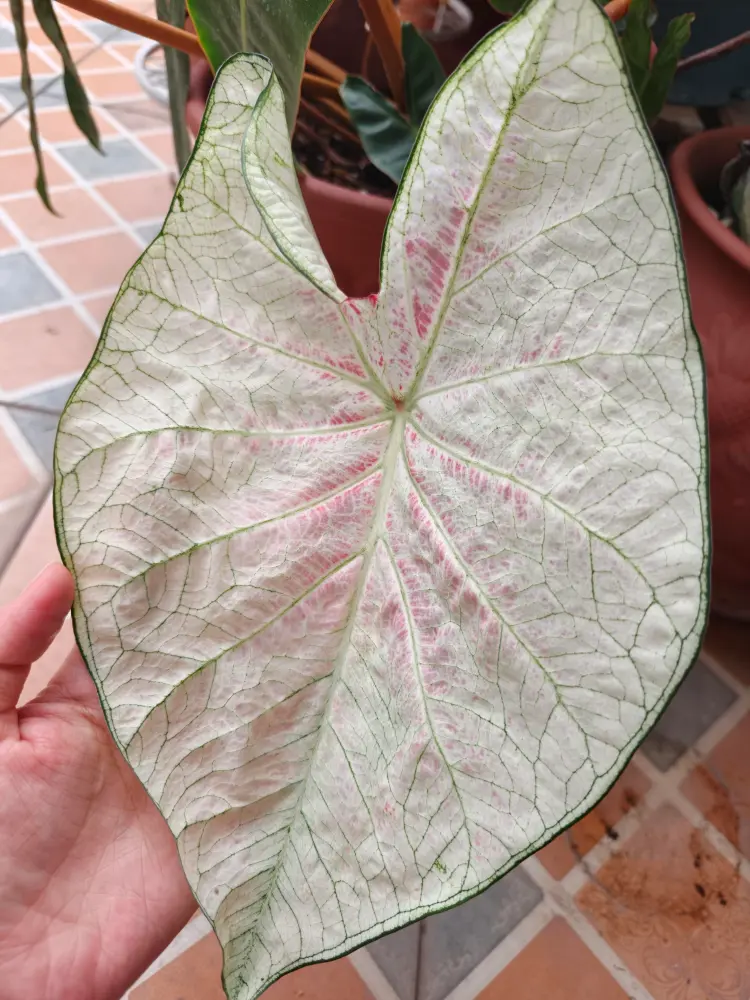
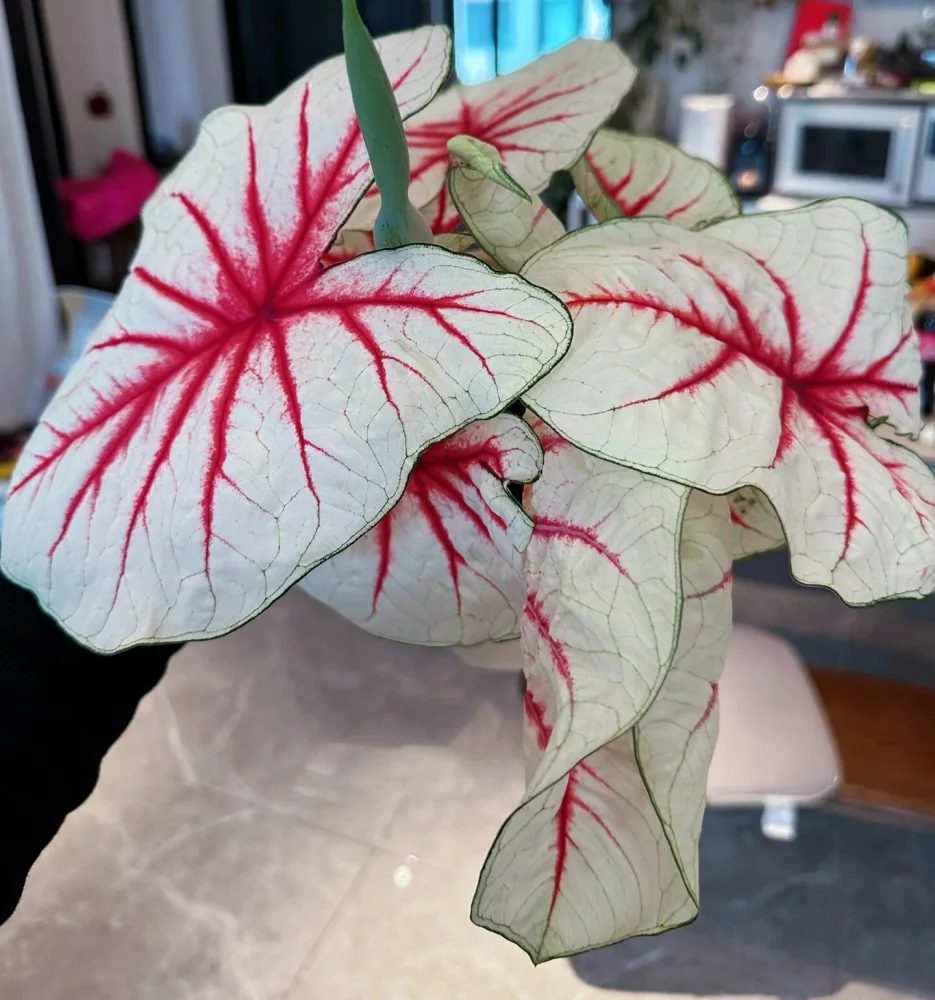
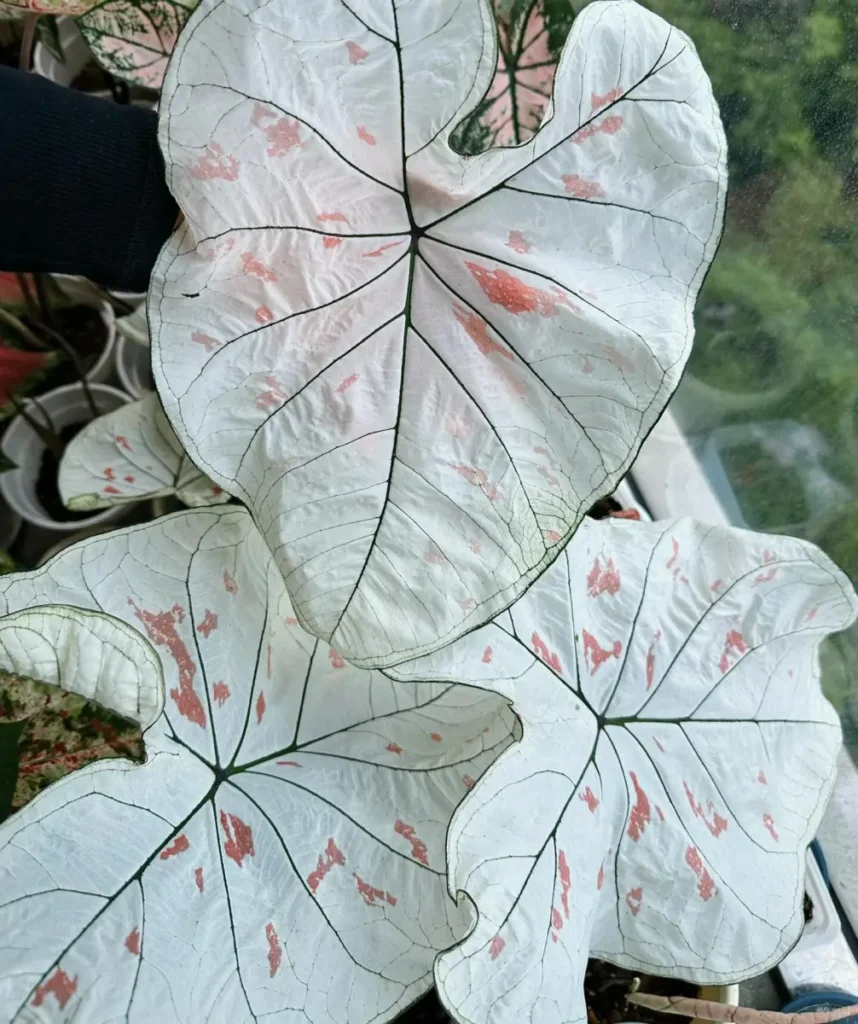
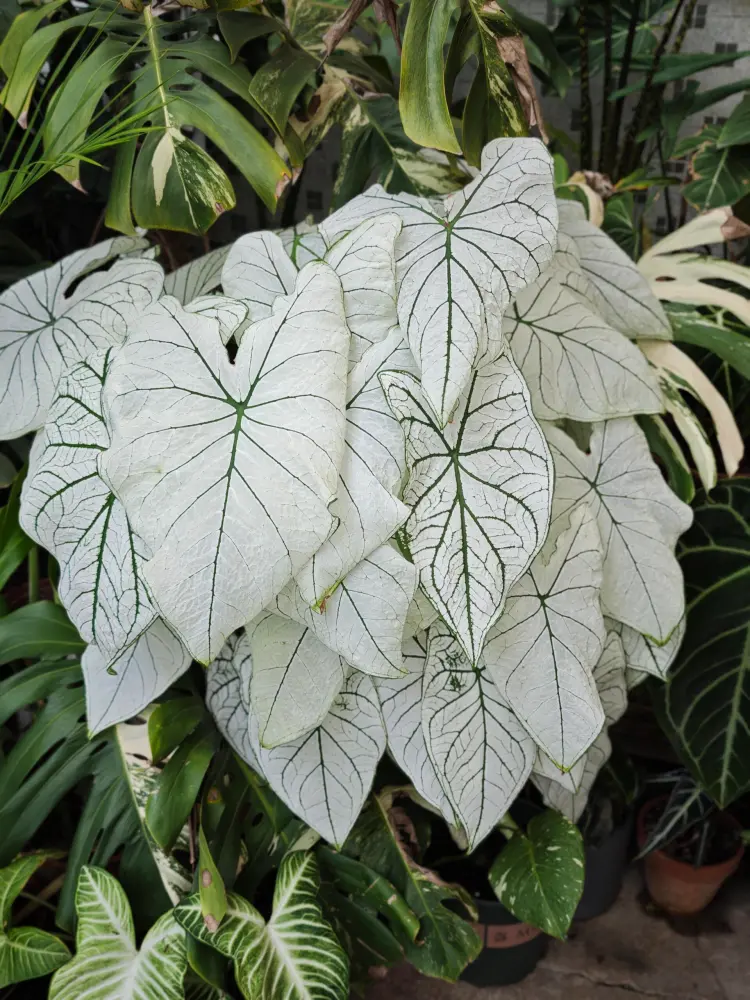
For me, this list only works if I compare the role each white plays: classic, soft, moonlit, veined, patterned, or blush-toned.
The Names That Could Easily Send Me in the Wrong Direction
White caladiums are easy to misread because the names often sound cleaner than the leaves actually look. A name may suggest a simple white plant, but the real leaf may have strong green veins, red veins, pink blush, or a wider green edge than I expected.
The first name I would be careful with is Angel Wings. I would not treat Angel Wings as one specific white caladium variety by itself. It is often used more like a common name for caladiums, or attached to different cultivars. If I see “Angel Wings” in a listing, I would still look for the actual cultivar name before comparing it with White Queen, June Bride, or Florida Moonlight.
I would also be careful with Candidum and White Christmas. Both can look like classic white-and-green caladiums at first glance, but they do not feel the same to me. Candidum is the older, cleaner white-green reference point, while White Christmas usually has a stronger green-veined pattern. If I wanted a calmer white leaf, I would not choose between them from one photo alone.
June Bride and Florida Moonlight are another pair I would compare slowly. They both belong to the softer white side, but Florida Moonlight often feels lighter and more airy, while June Bride has more of a soft bridal-white impression. The difference is subtle, so I would rather compare mature leaves than rely only on a seller description.
For the red-veined white types, White Queen, Fiesta, and Florida Fantasy can also be confusing. They all sit in the white-based group, but the red or pink veining changes their whole personality. White Queen feels more classic and direct to me. Fiesta has more pattern and movement. Florida Fantasy can feel softer and more blended. If I wanted a quiet white caladium, I would not treat these as the same kind of white.
Pale Leaves Show Problems Faster in My Indoor Setup
White caladiums are beautiful, but they are not very forgiving visually. On a red or dark caladium, a small dry edge or uneven patch may disappear into the color. On a pale leaf, every mark shows. A brown tip, a thin dry edge, a gray cast, or a dull green area can make the whole plant look tired much faster.
In my indoor setup, white caladiums need enough brightness to keep that clean look. If the light is too weak, the leaves may not look softly white. They can look flat, slightly greenish, or less clear than I expected. In darker rooms or during the dim part of the year, a caladium grow light indoors can be more useful than trying to force the plant closer to a hot window.
At the same time, I do not treat strong sun as a simple solution. Pale caladium leaves can show heat and sun stress quickly, especially near glass. If the leaf surface gets too hot, the edges can dry, the white area can look faded, and small damaged spots become very obvious.
Temperature also matters. In the Pacific Northwest, my indoor light drops noticeably outside the main growing season, and rooms can feel cooler near windows. When a white caladium is not actively growing, the leaves often look less crisp. The plant may push smaller leaves, hold onto older marked leaves longer, or simply lose that fresh, bright look.
So with white caladiums, I watch the whole plant more than the whiteness alone. A clean pale leaf only works when the plant is still warm, active, and not sitting in a pot that stays wet for too long.
What I Look at Before I Trust a White Caladium Photo
White caladium photos can be very tempting, especially when the leaf looks almost pure white. But I would be careful with any photo where the plant looks too perfect, too bright, or too clean without showing the whole plant.
The first thing I look at is the vein color. Green veins, red veins, and pink veins create very different kinds of white caladiums. A Candidum-type white leaf with green veins feels calm and classic, while a White Queen-type leaf with red veins feels much more dramatic. If I only look at the white background, I miss the part that actually defines the leaf.
Then I look at the margin. A narrow green edge can make a white leaf look crisp, but a wider green border can make the plant feel less white overall. This matters especially when the seller photo focuses on one very pale leaf. The next leaf may show much more green.
I also want to see whether the white area is truly the main color, or whether the photo is simply brightened. Some pale caladiums look extra white because of strong light, high exposure, or a very clean background. That does not mean the plant is fake, but I would not trust one overexposed-looking photo as the full story.
The last thing I look for is the whole plant. One clean white leaf can be misleading. I want to see whether the same brightness, margin, and vein pattern hold across several mature leaves.
I Do Not Choose White Caladiums Just for Whiteness
I used to think white caladiums were the simplest group. Now I think they are one of the easiest groups to misunderstand. A clean Candidum-type leaf, a soft Florida Moonlight leaf, and a red-veined White Queen leaf may all be called white, but they do not play the same role in a pot.
For my indoor containers, I would not choose a white caladium only because the seller photo looks bright. I would first ask what kind of white I want: quiet and classic, soft and moonlit, strongly veined, patterned, or slightly blush-toned.
White caladiums are beautiful because they bring light into a collection, but they also make small differences more visible. The best one for me is not always the whitest one. It is the one that still looks balanced, clean, and alive after several leaves have grown in my own space.
FAQ
Want to Compare More Caladium Varieties?
If you want to compare color groups beyond white, you may also like my guide to pink caladium varieties and red and black caladiums. For a wider overview, the Caladium Varieties page groups caladiums by leaf type, color pattern, size, and growth habit.
Browse All Caladium Varieties →