
Caladium Varieties
Caladium varieties are often grouped in ways that look tidy on paper, but feel confusing in real life. Leaf shape, color patterns, size, and light tolerance overlap more than most labels suggest — especially when plants are grown indoors or in containers.
This page is not a definitive catalog. It’s a way to explore caladium varieties by how they’re commonly recognized and experienced: what they look like, how they tend to grow, and what stands out after living with them for a while. Photos, quick IDs, and short care snapshots are included to help you compare — not to lock you into a single “right” choice.
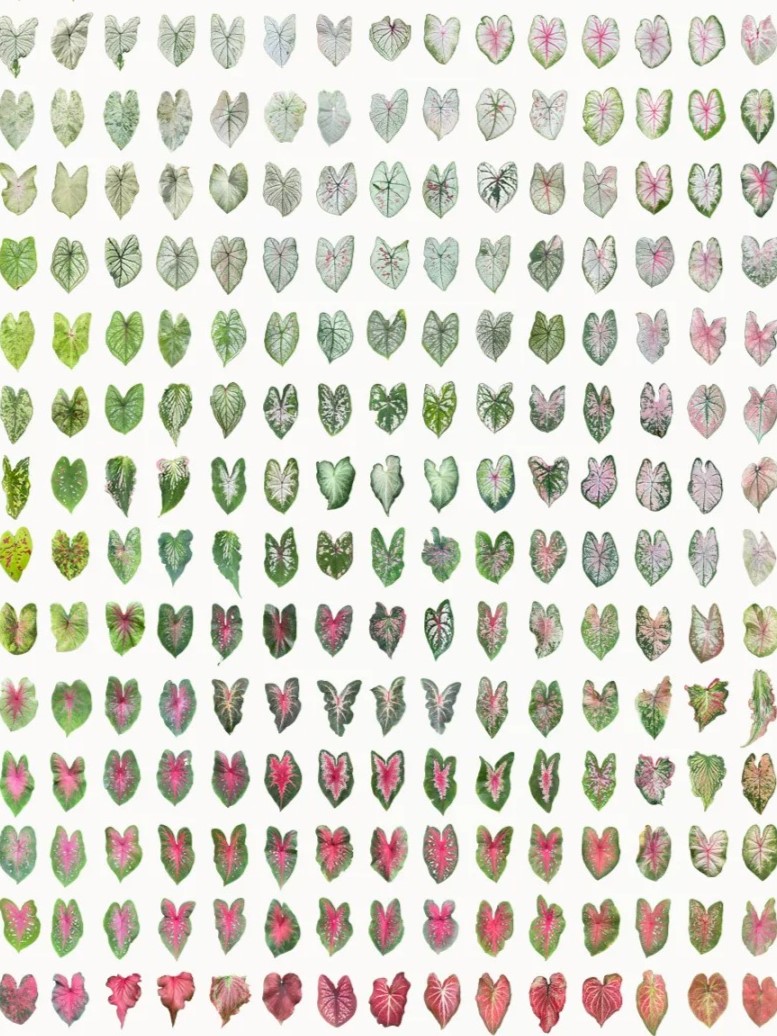
Caladium Varieties Chart: A Quick Way to Compare Common Types
I use this chart as a starting point, not as a final identification tool. Caladium leaves can change with light, leaf age, tuber size, season, and growing conditions. In containers, the same variety may look softer, smaller, darker, or more patterned than it does in seller photos.
The easiest way for me to compare caladium varieties is to look at four things together: main color, leaf shape, growth size, and how the plant behaves in a pot. Names help, but the mature leaves usually tell me more.
| Variety | Main Look | Leaf / Growth Type | What I Notice in Containers |
|---|---|---|---|
| Candidum | White with green veins | Fancy-leaf, classic white type | Best judged by mature leaves; can look softer indoors. |
| White Christmas | White with stronger green veining | Fancy-leaf | More patterned than a plain white caladium. |
| White Queen | White with red veins | Fancy-leaf | More dramatic than quiet white varieties. |
| Aaron | White center with green edge | Fancy-leaf | Clean, structured, and usually easy to recognize. |
| Florida Moonlight | Soft white to pale green | Fancy-leaf | Calmer and less contrast-heavy than many white types. |
| Pink Symphony | Soft pink | Strap-leaf, compact | Useful for small spaces and softer color. |
| Pink Splash | Pink and green splash pattern | Fancy-leaf | More movement and pattern than a plain pink variety. |
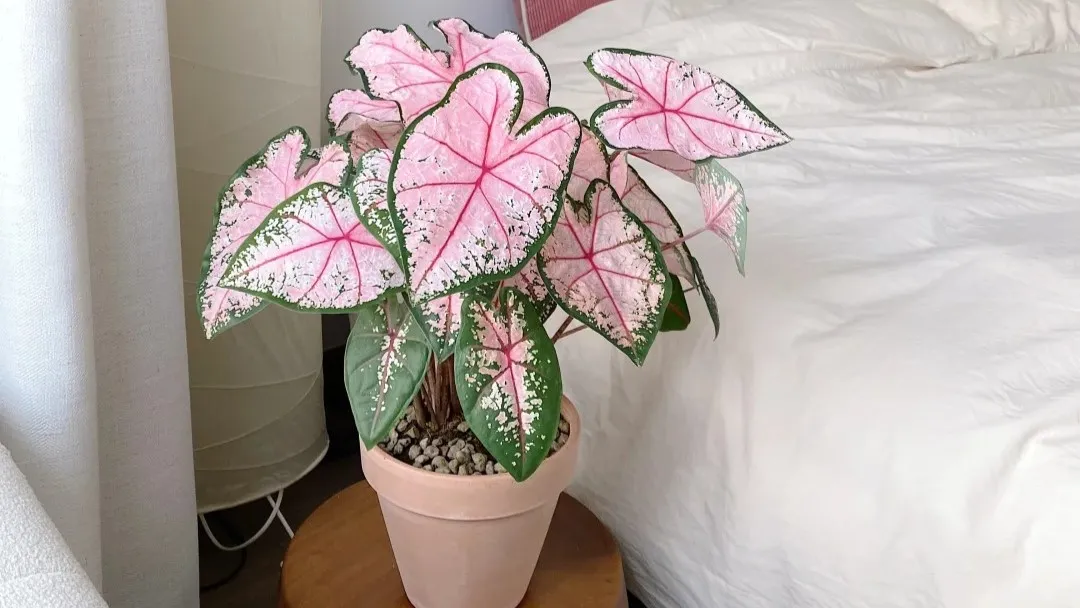
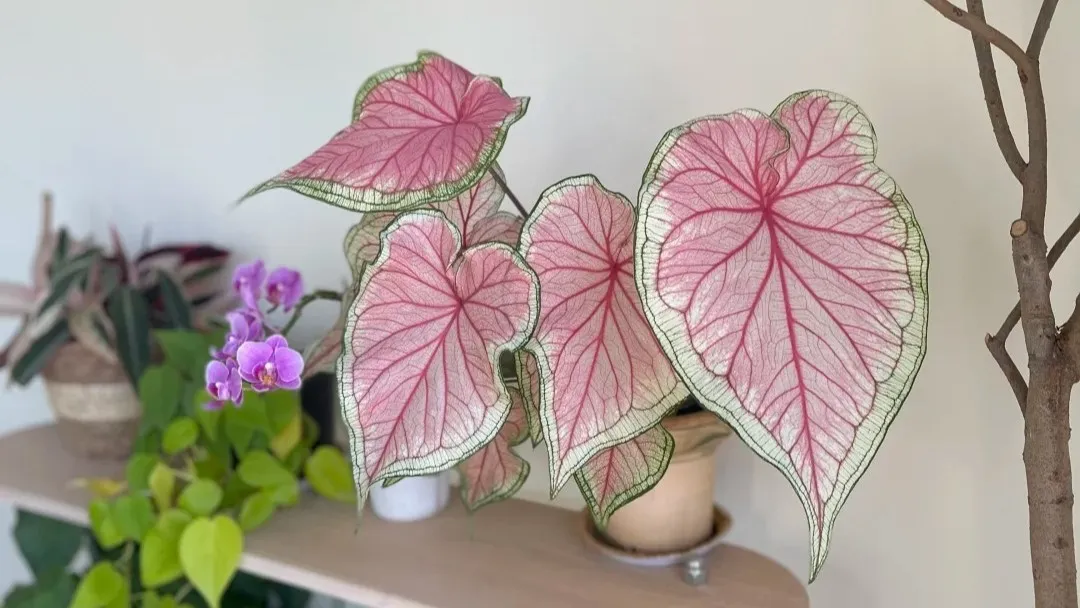
| Pink Beauty | Soft translucent pink | Fancy-leaf | Can look gentle rather than bold; better with enough light. |
| Florida Sweetheart | Bright pink | Strap-leaf, compact | Good for smaller pots and tighter spaces. |
| Carolyn Whorton | Pink with stronger red veins | Fancy-leaf | Usually has a bigger, stronger visual presence. |
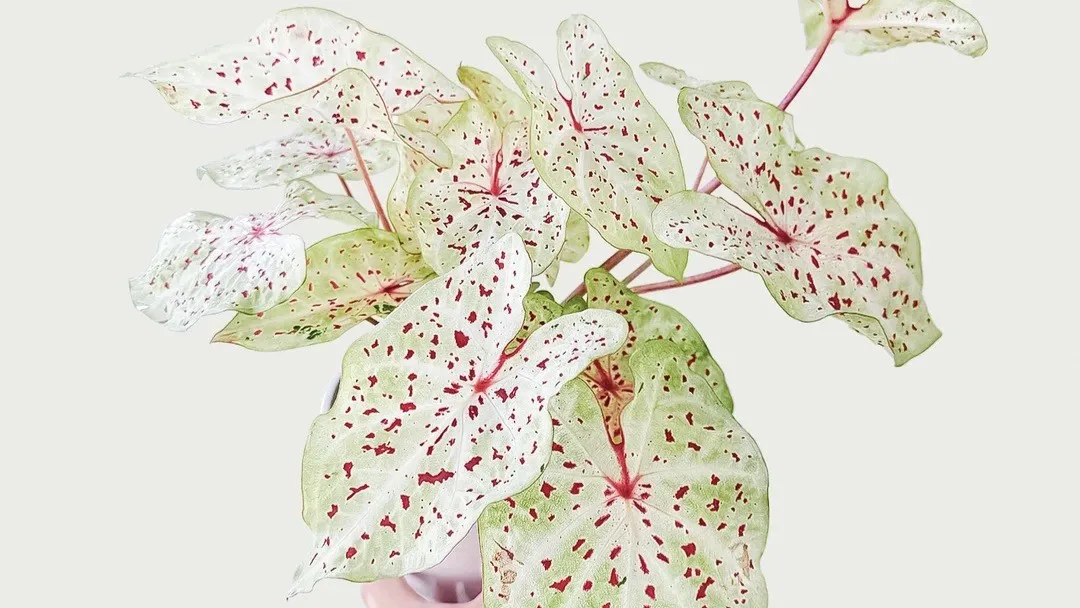
| Strawberry Star | White with pink speckles | Fancy-leaf | Pattern can vary from leaf to leaf. |
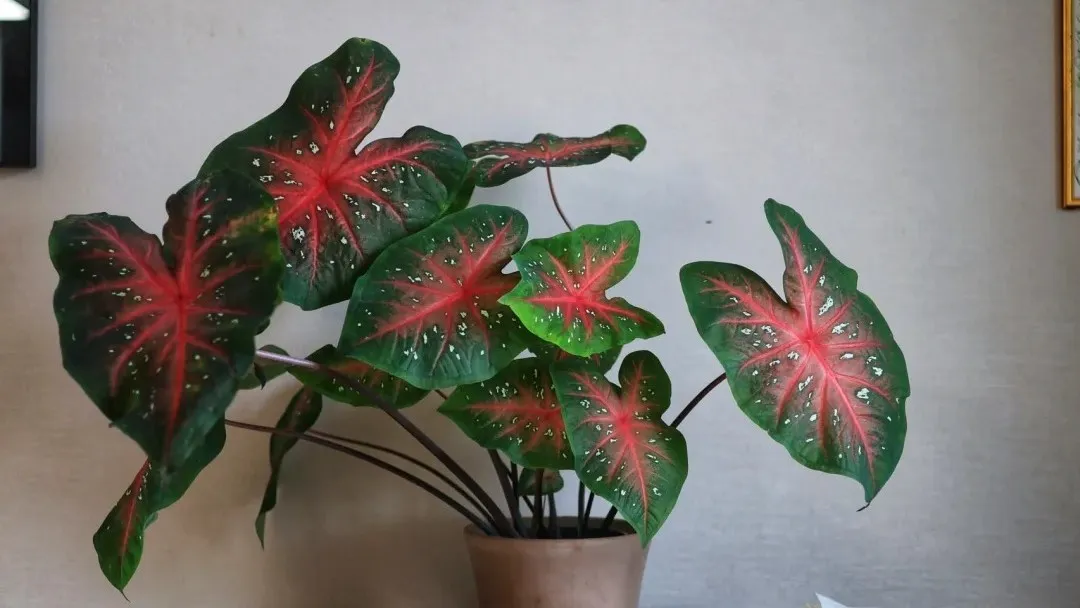
| Red Flash | Bold red with green and speckles | Fancy-leaf, large presence | One of the stronger red caladiums in containers. |
| Red Ruffles | Red, smaller leaves | Strap-leaf, compact | Better for small-space red color than larger red types. |
| Postman Joyner | Deep red with green edge | Fancy-leaf | Can look darker and more mature as leaves age. |
| Frieda Hemple | Clean red center with green margin | Fancy-leaf | Classic red-and-green look; cleaner than darker red types. |
| Miss Muffet | Green with red speckles | Compact / strap-like impression | Small, playful, and useful as a contrast plant. |
| Frog in a Blender | Green speckled pattern | Unusual patterned type | More about texture and pattern than bright color. |
By Leaf Type
Leaf shape is one of the easiest ways to compare caladiums at a glance, but I do not treat it as a strict care rule. Indoors, pot size, light, and tuber strength can change the way a variety looks just as much as its label.
Fancy Leaf Caladiums
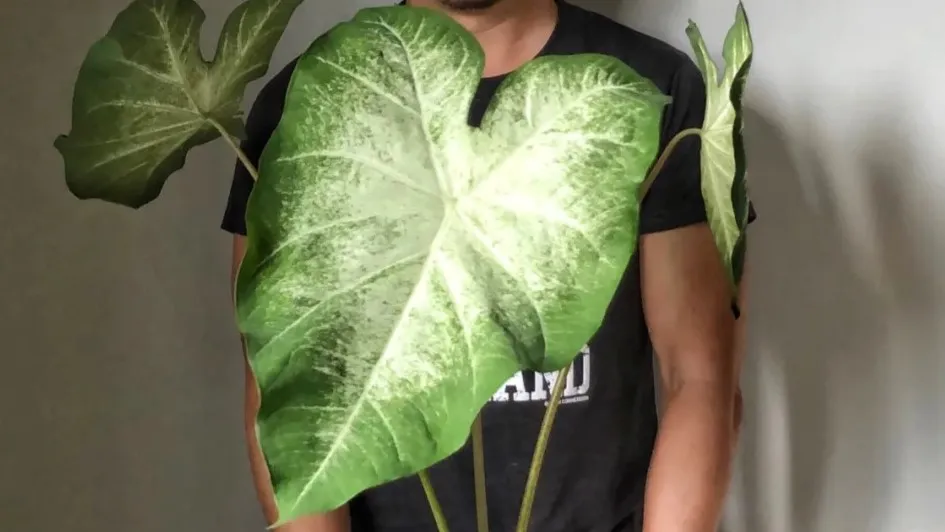
Fancy leaf caladiums usually have broader, heart-shaped leaves and often create a fuller, more dramatic look in containers. I pay attention to mature leaf size, how upright the petioles stay, and whether the plant still looks balanced after several leaves open.
Strap Leaf Caladiums
Strap leaf caladiums usually have narrower leaves and a more compact, layered habit. I like comparing them for smaller pots, tighter shelves, and places where a large fancy leaf type would take up too much space.
Large-Growing Caladiums
By Color Pattern
Color is often what draws people to caladiums first, but it’s also where variation shows up most. These groupings highlight dominant color patterns to make visual comparison easier.
Red and Black Caladium Varieties
Dark red and black caladiums are not always truly black. Many look burgundy, smoky red, purple-black, or dark-veined depending on light, leaf age, and seller photos. This guide compares 18 dark caladium names and explains what I would check before buying one.
Explore Red and Black Caladiums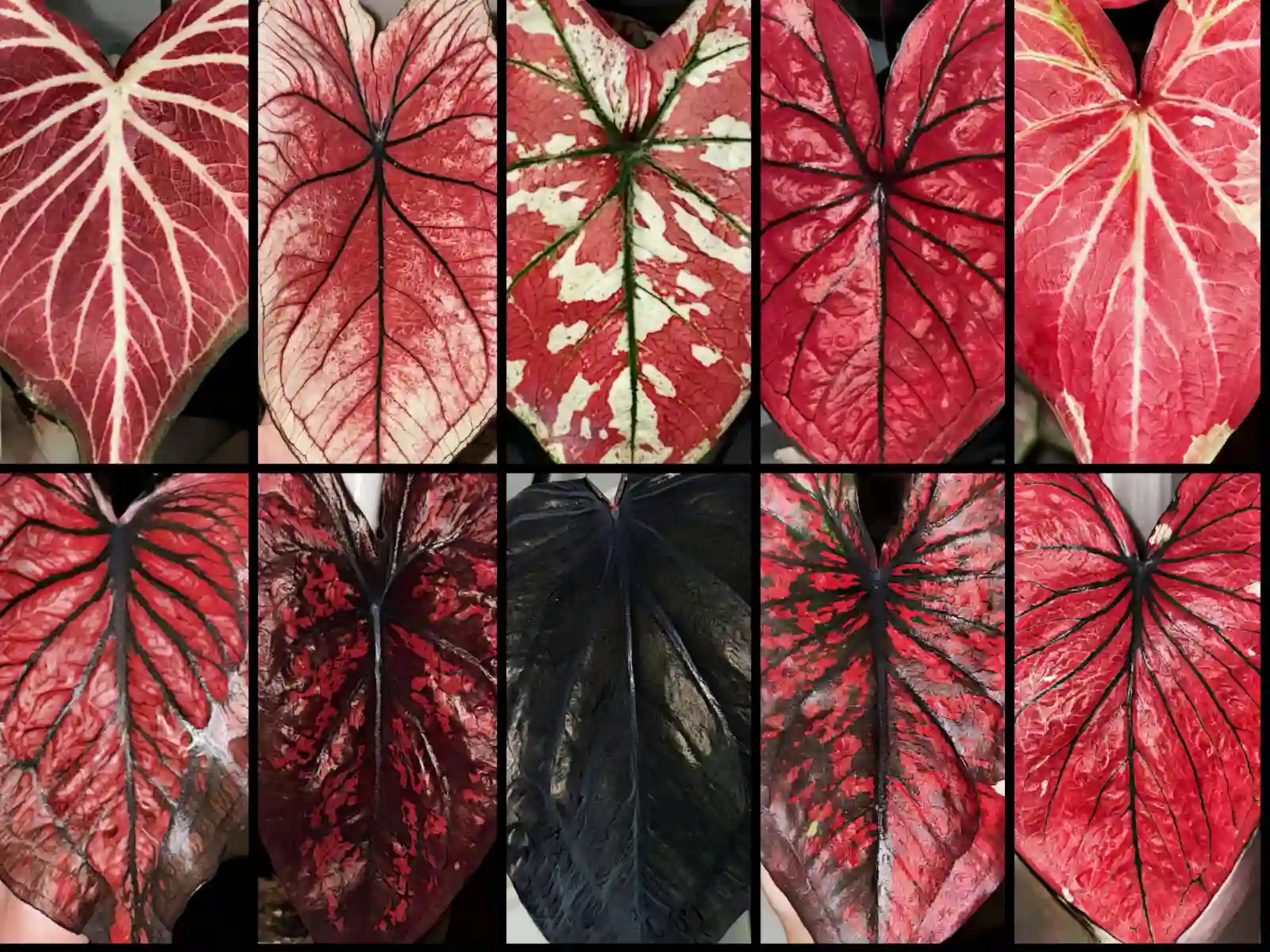
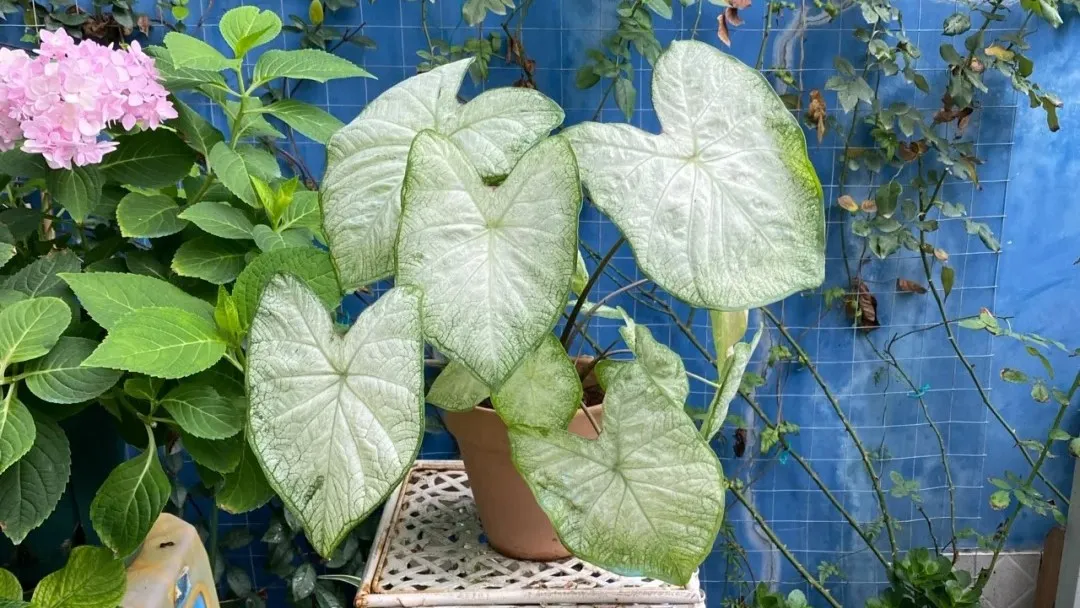
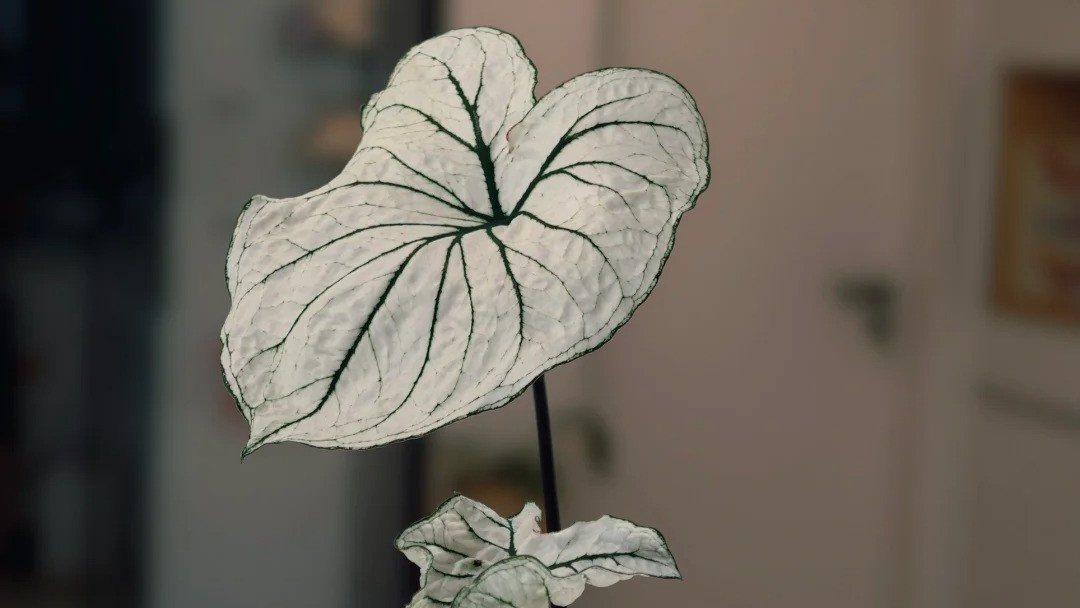
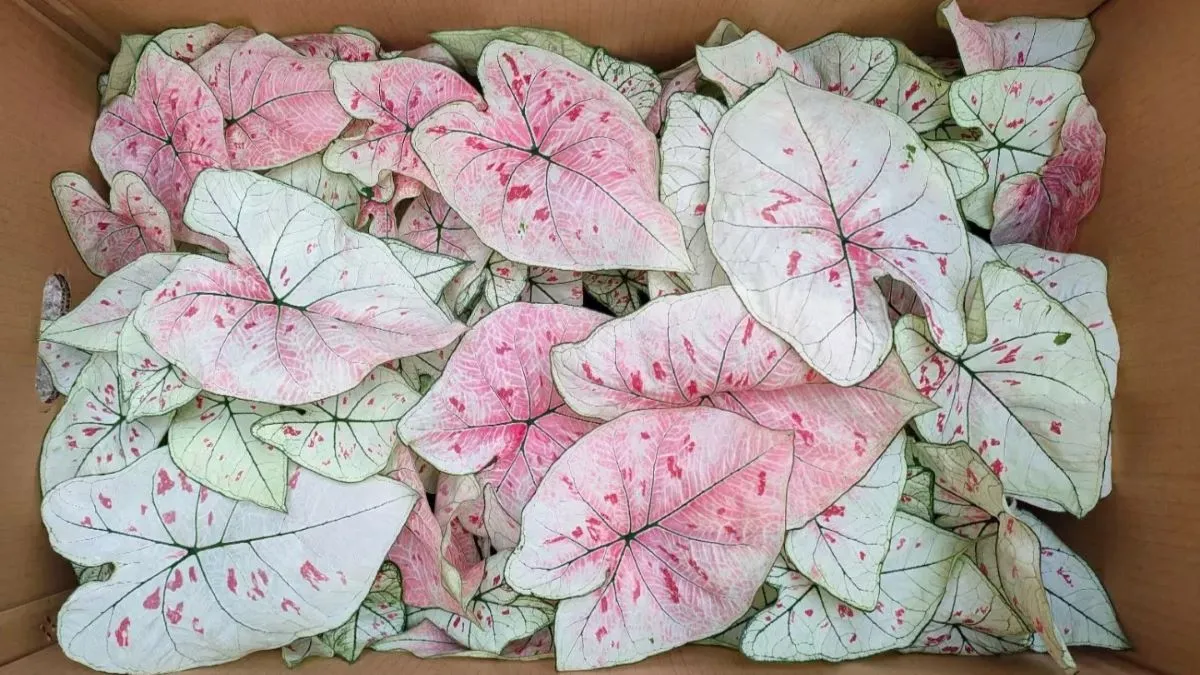
White Caladium Varieties
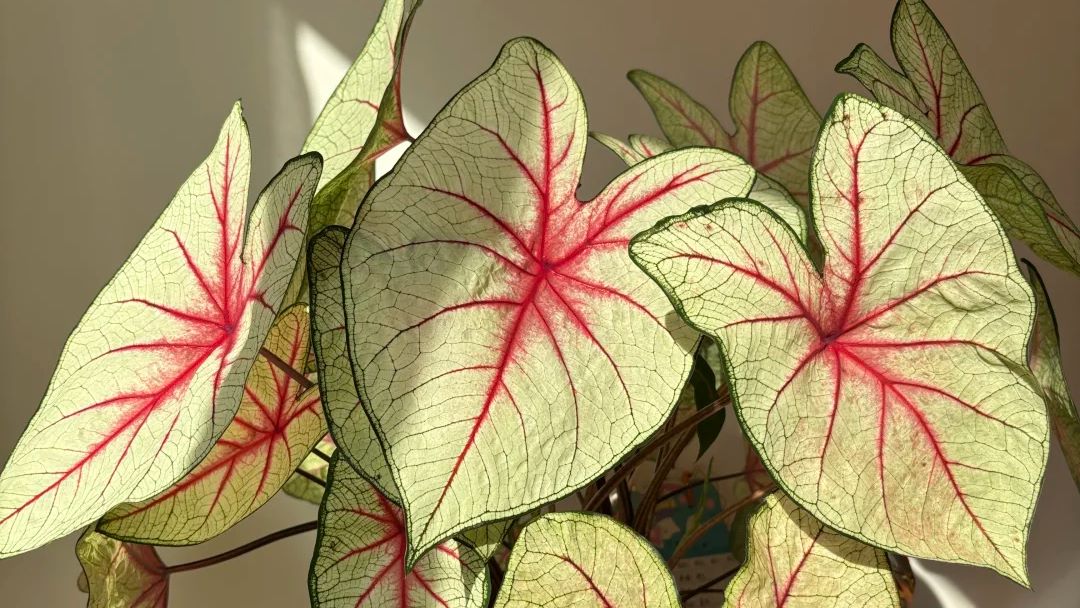
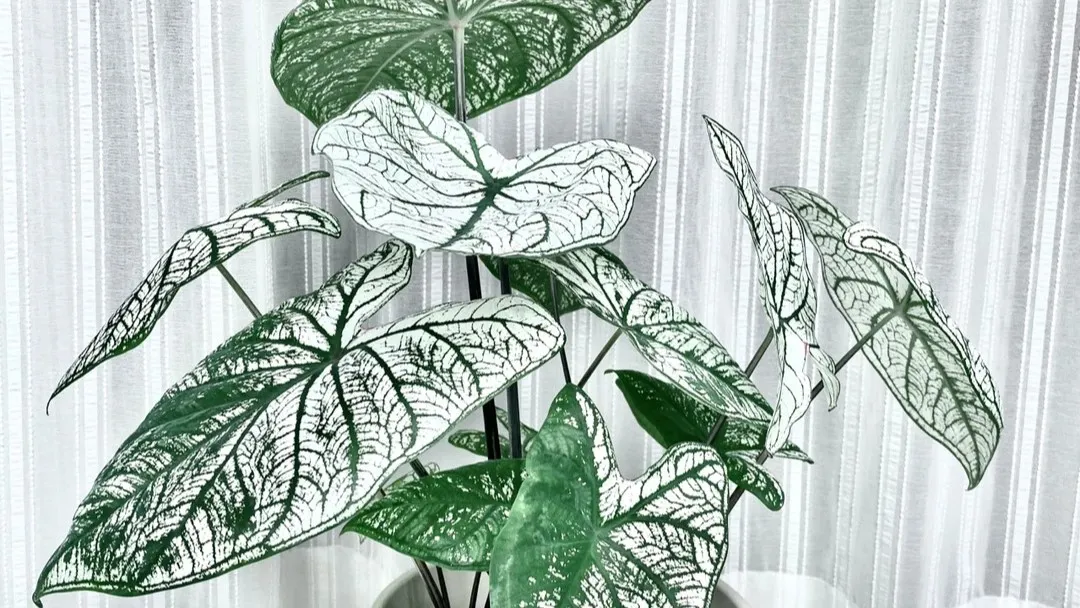
White caladiums are not just “white leaves.” Some are crisp and green-veined, some look creamy, and some carry soft pink marks or translucent patches. I compare them by more than color alone, especially how their pale leaves behave indoors under real light, watering, and seasonal changes.
Explore White Caladiums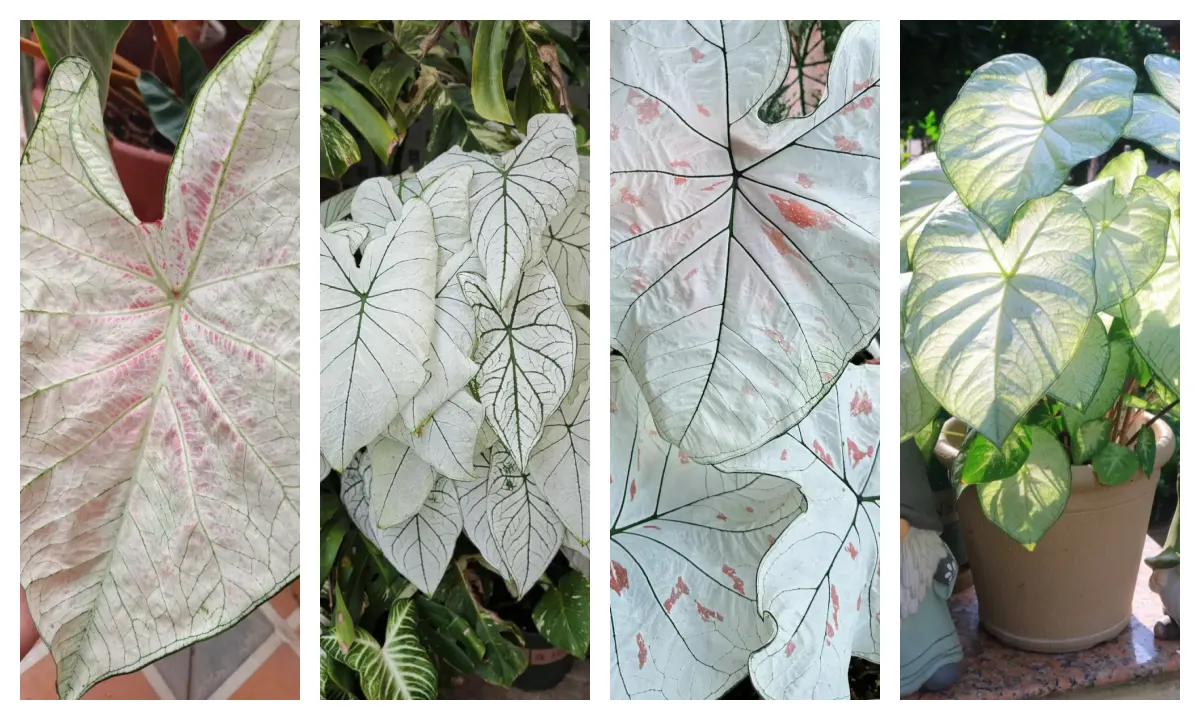
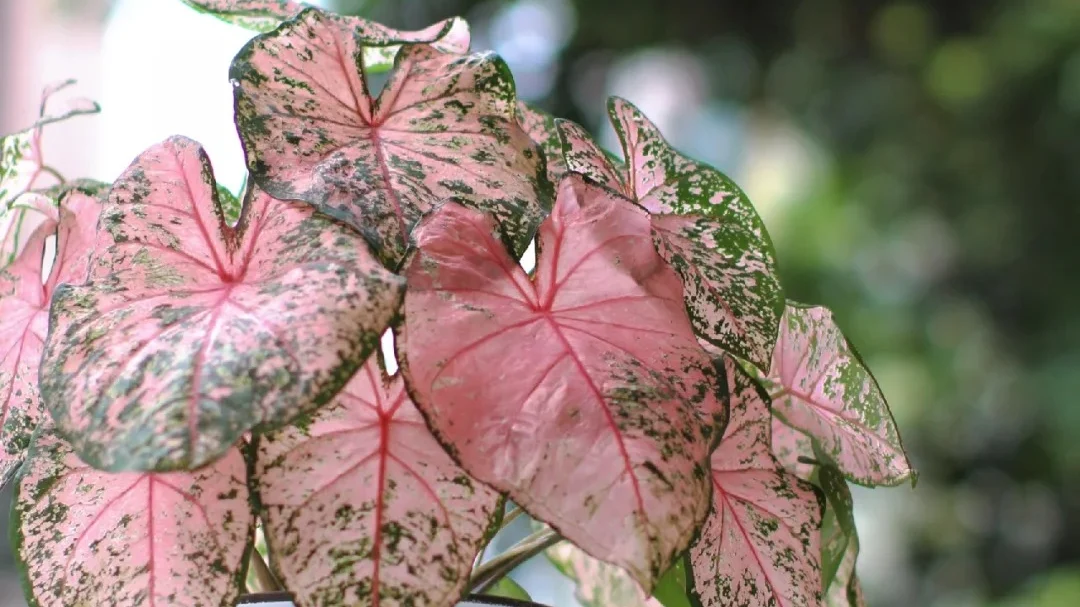
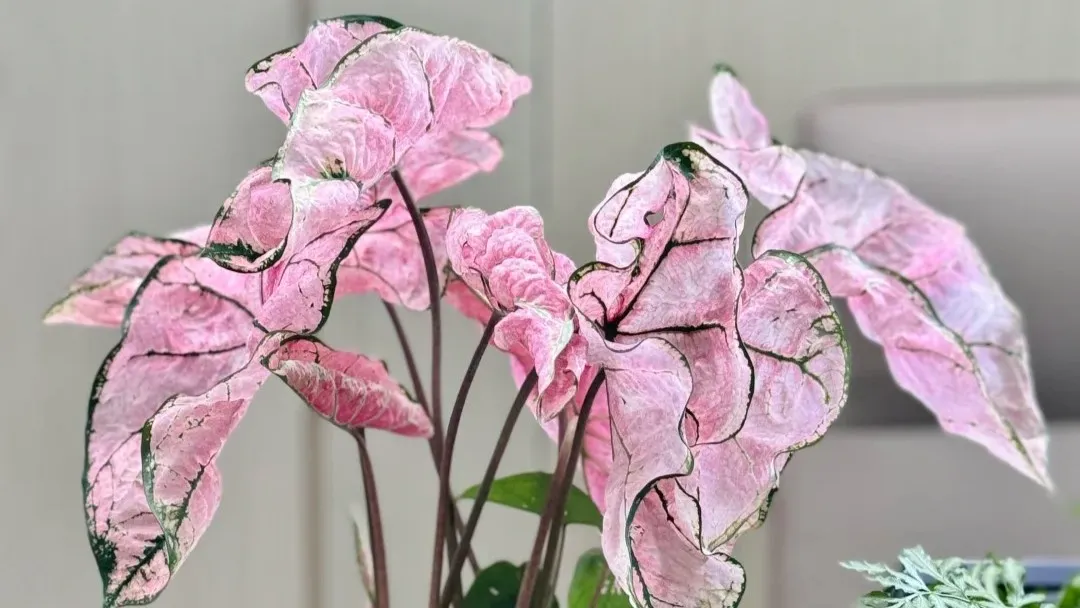
Pink Caladium Varieties
Pink caladiums are not all soft pastel plants. Some stay pale and delicate, while others turn bright pink, red-pink, or heavily speckled as the leaves mature. I compare them by color, pattern stability, leaf strength, and how well they hold their look indoors.
Explore Pink Caladiums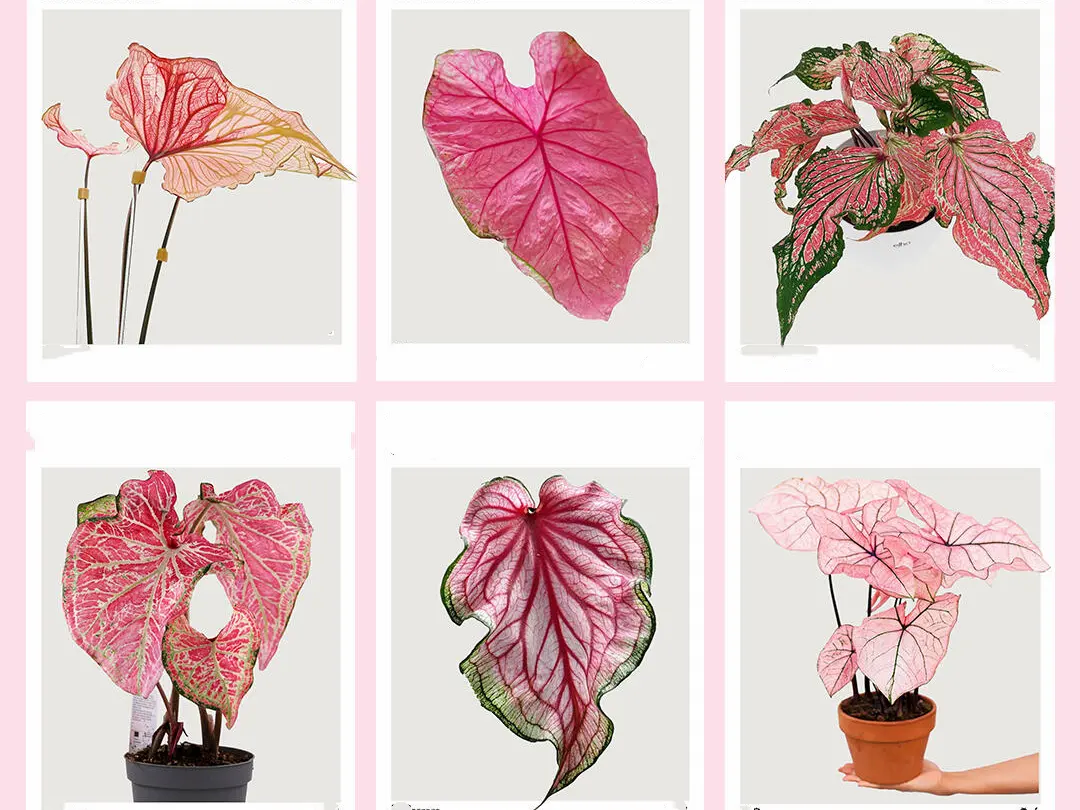
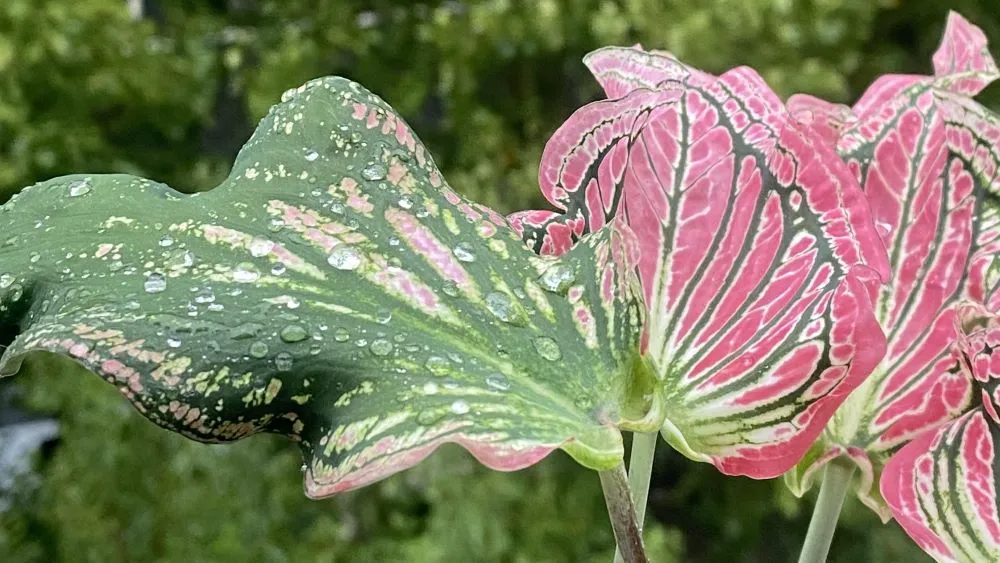
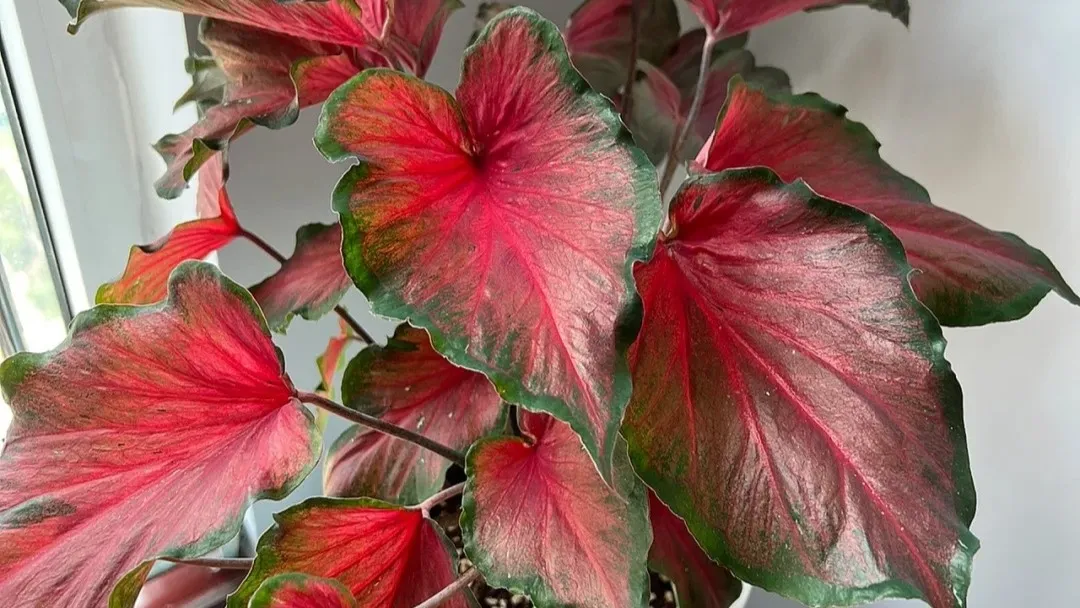
Red Caladium Varieties
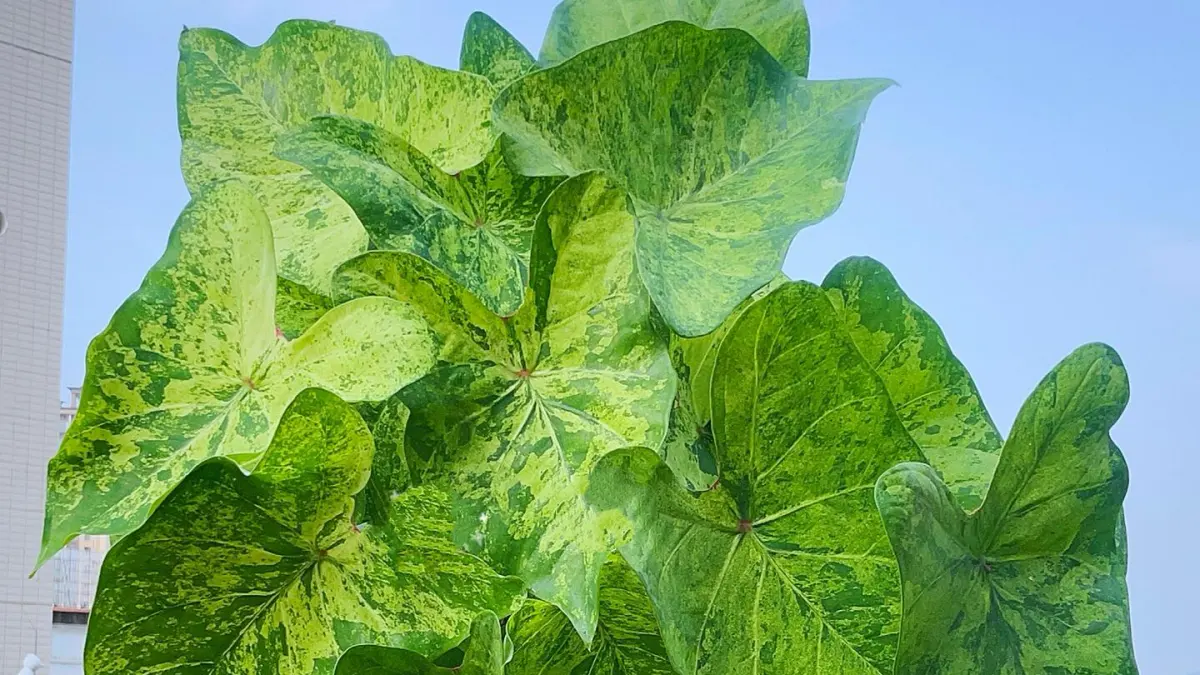
Green and Speckled Caladium Varieties
Classic & Popular Cultivars
Some caladiums appear again and again for a reason. This section groups widely grown cultivars for quick reference rather than ranking or recommendation.
Sun Tolerance & Growth Habit
I am careful with the phrase “sun-tolerant” because it can mean different things in different homes. A caladium that handles bright outdoor shade or morning sun may still scorch behind hot glass indoors. In containers, I judge light tolerance by how the leaves hold color, whether the edges burn, and whether the plant keeps producing new growth.
For indoor growing, I care more about stable bright light than harsh direct sun. If natural light is weak, I would rather compare placement and supplemental lighting than push a caladium into a hot window. I explain that indoor side more in my guide to using a grow light for caladiums.
Shade-Loving Caladiums
Compact vs Large Caladiums
FAQ
Quick answers to common questions about caladium varieties and naming.