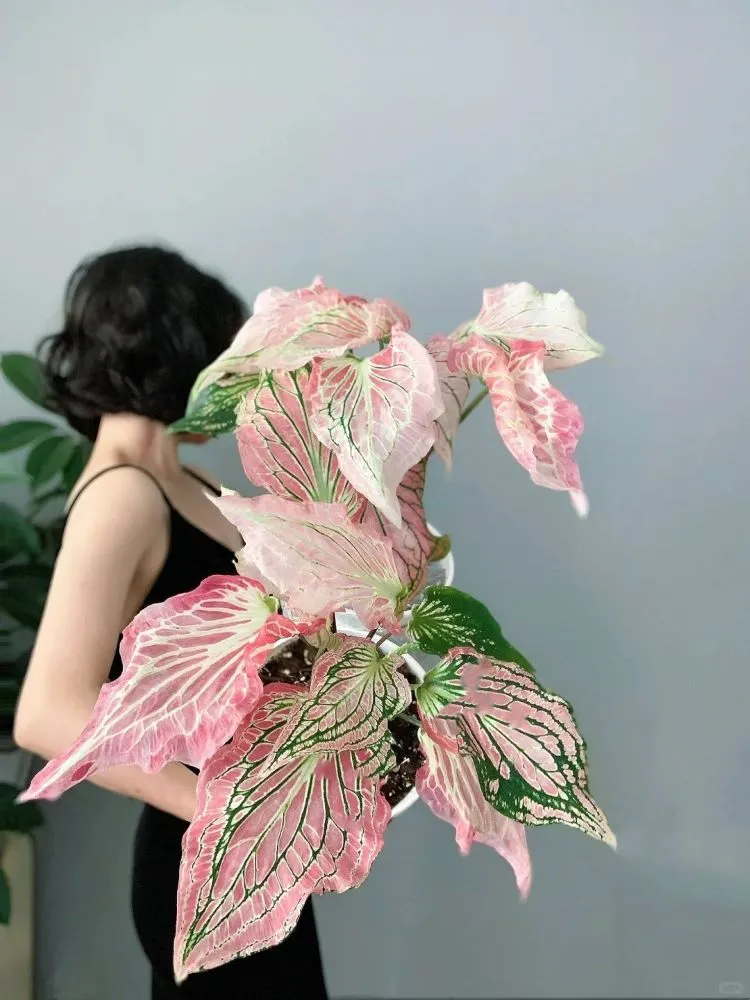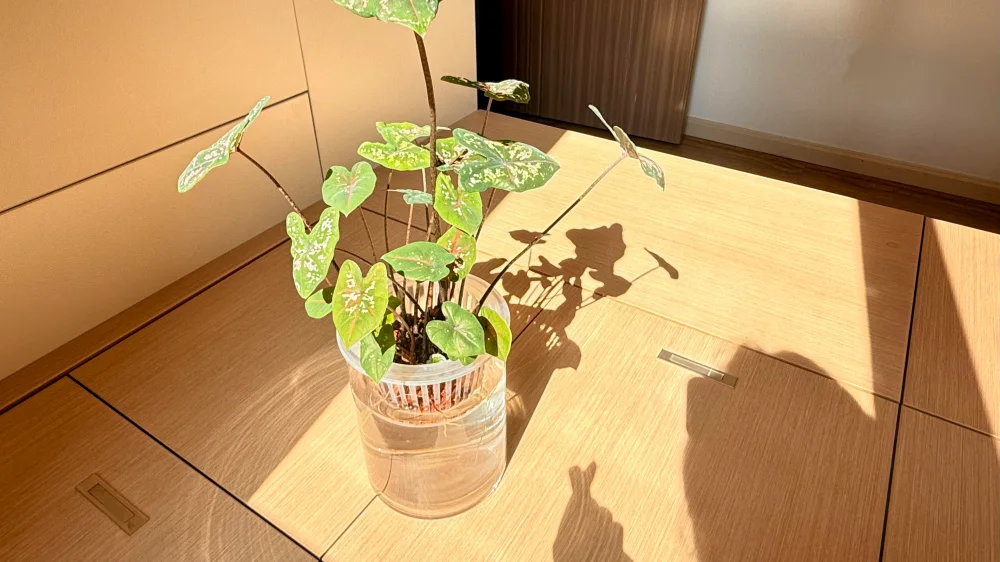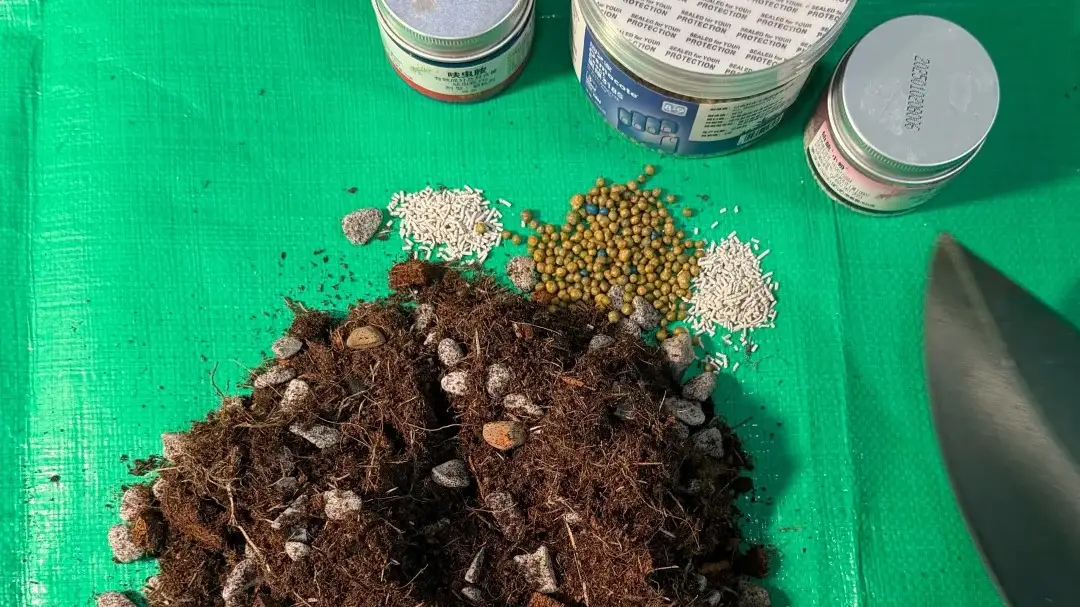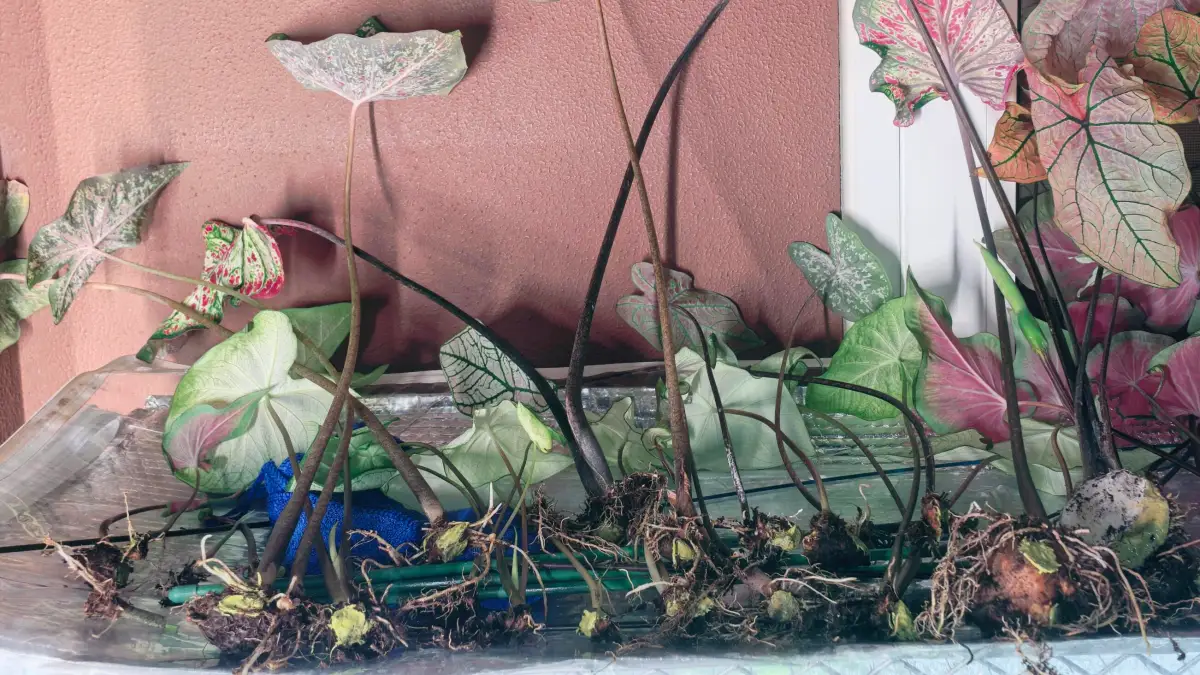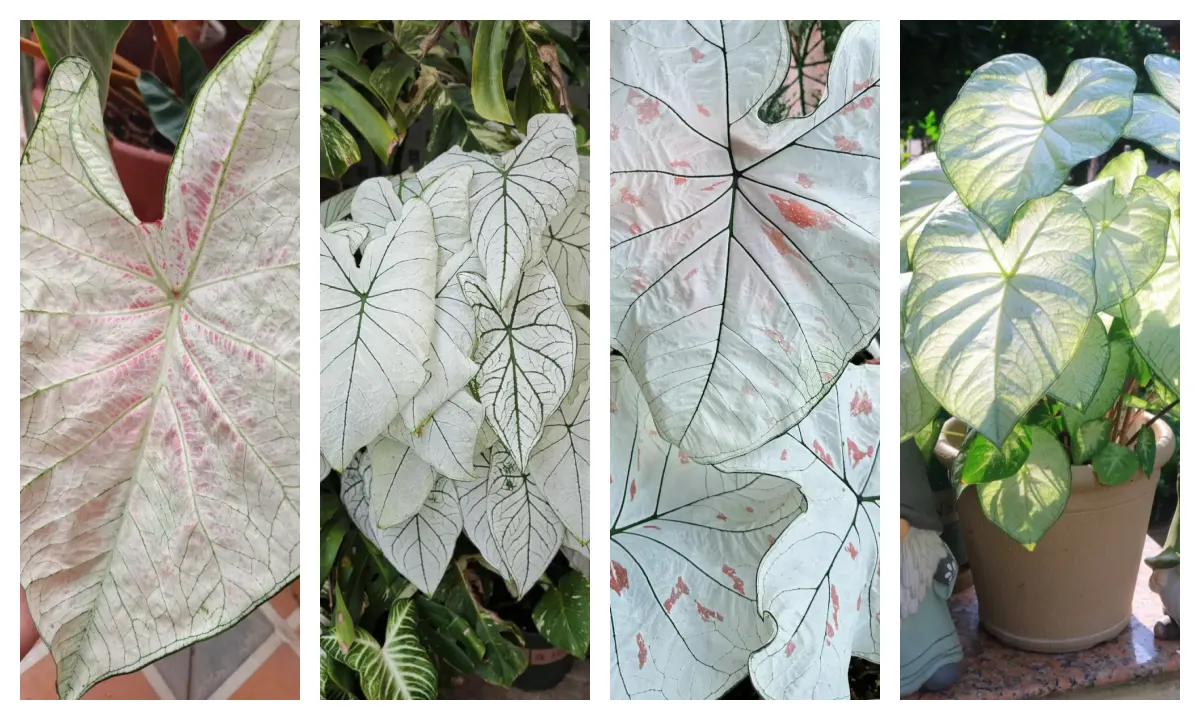
Last June, I came across a plant post on TikTok almost by accident. What caught me was not just the styling or the photos themselves, but one caladium in particular — Candidum. Its leaves looked almost translucent, with soft white surfaces and fine green veins that gave the whole plant a cool, weightless feeling. It did not look loud or dramatic. It just looked fresh in a way that immediately made sense to me.
At that point, I only knew that it looked beautiful. I did not yet realize that Candidum was not just a classic white caladium, but one of the older varieties behind many related cultivars I kept seeing later.
So this is not a standard care guide or a formal variety profile. It is my own way of understanding Candidum itself, the family that grew out of it, and the specific mistakes that taught me how this plant actually behaves in a pot.
What this article will help you understand
- Why Candidum still matters among white caladiums
- Why its relatives are so easy to confuse
- The three mistakes that taught me how it actually behaves
- Why light, airflow, and seasonal rhythm mattered more than I expected
Why Candidum Feels Like One of the Foundational Caladiums
Candidum feels foundational to me not simply because it is old, but because its influence keeps showing up once you start looking closely at white caladiums.
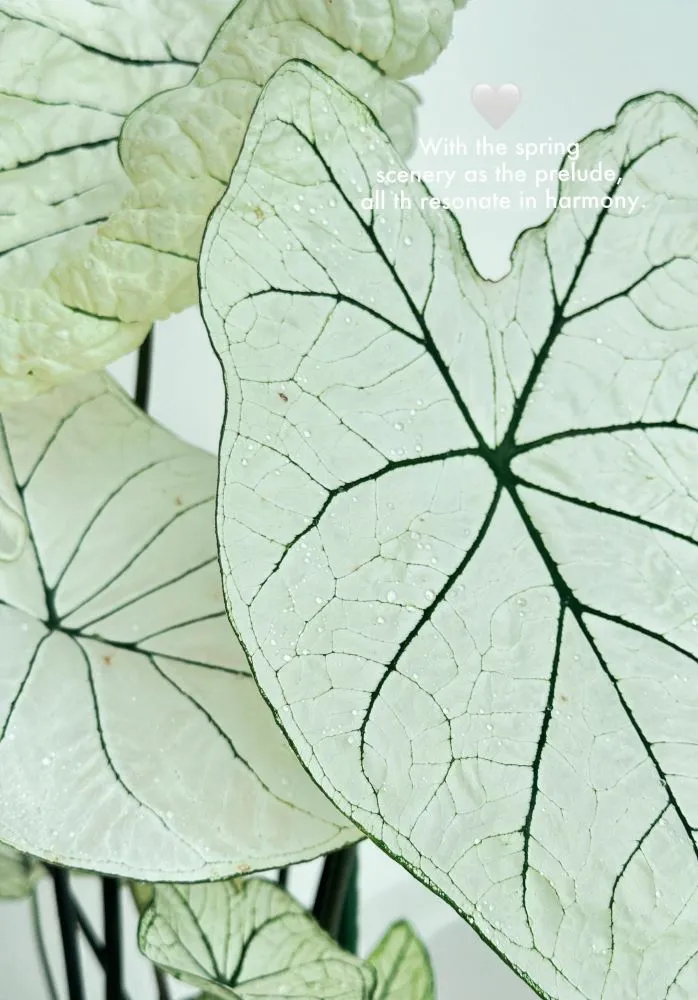
Candidum is generally treated as one of the earlier white caladium cultivars, likely introduced around the 1880s by a French nurseryman. Even the name itself points in that direction. Candidum comes from Latin and carries the sense of something white or pure, which suits this variety unusually well. It is not a flashy name, but it fits the plant’s character better than many newer cultivar names do.
In China, this is also one of those classic large white caladiums that many growers have already seen, even if they do not always know the breeding background behind it. It has been grown and circulated for so long that it no longer feels like a rare collector plant. In fact, that familiarity is part of why I find it easy to underestimate at first. Because it has been around for so long, it can also be easy to underestimate.
But the longer I looked at the Candidum family, the more I felt that this variety has a kind of ancestor presence. Not because every later white cultivar looks exactly like it, but because so many of them seem to begin from the same visual language: a pale leaf surface, green venation, and that cool translucent quality that makes the foliage feel almost lit from within.
That is why I no longer see Candidum as just an old white variety. It feels more like one of the reference points that makes many later white, pink-veined, and shape-shifted caladiums easier to understand.
Why the Candidum Family Confuses So Many Growers
The biggest challenge with the Candidum family is not that the plants are unattractive. It is that too many of them look similar enough to blur together, especially when you first start paying attention to white caladiums.
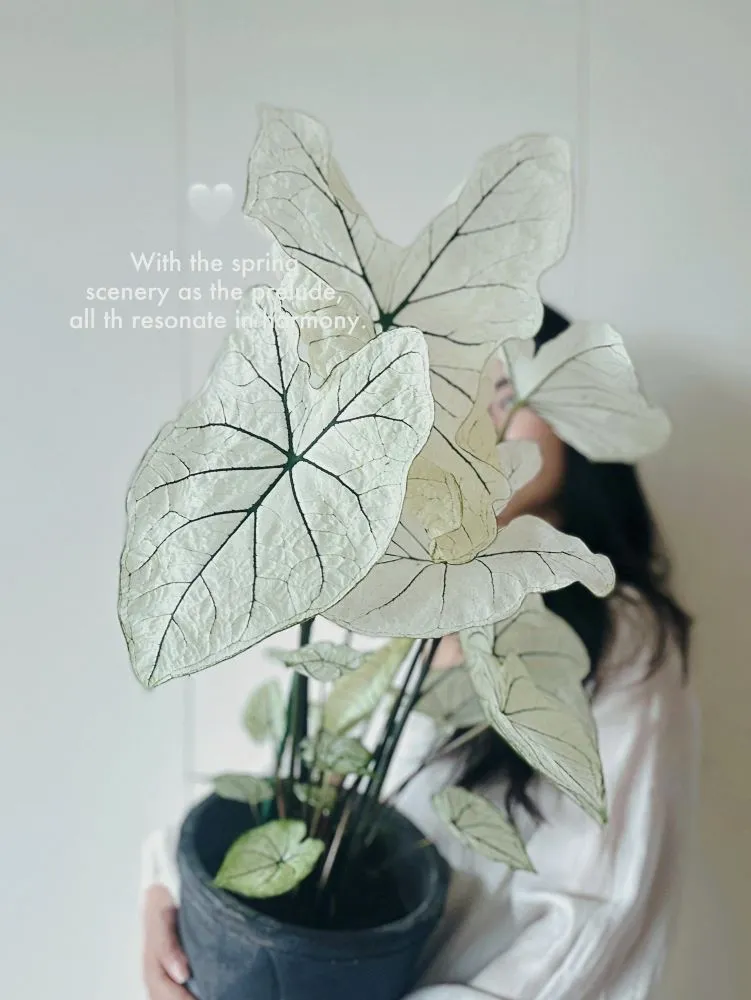
I do not think growers get confused because they are careless. A name tag alone does not always help much when the overall impression is still “white leaf, green veins.”
That is why memorizing names has never helped me as much as looking at what actually changed from one branch to another.
Once I started looking at the family that way, it became easier to read. Some varieties move toward being whiter, while others feel more translucent. Some have finer veins, while others push toward thicker, heavier veining. In some, the green margin becomes more obvious; in others, the white center expands and takes over more of the leaf. Some branches begin introducing pink or red tones, which changes the whole mood of the plant even when the structure still feels related. And once leaf shape starts shifting as well, the family resemblance becomes even harder to catch unless you already know what to look for.
That is still the simplest way I read this family now: not by trying to memorize labels, but by asking what visual decision changed from one plant to the next.
The Core Branches That Help Me Understand the Candidum Family
When I look at the Candidum family, I do not try to remember every name at once. What helps me more is identifying a few core branches that make the rest of the family easier to read. Once these become clear, the later white and pink-related cultivars stop feeling completely random.
Candidum, Candidum Junior, and Candidum Senior
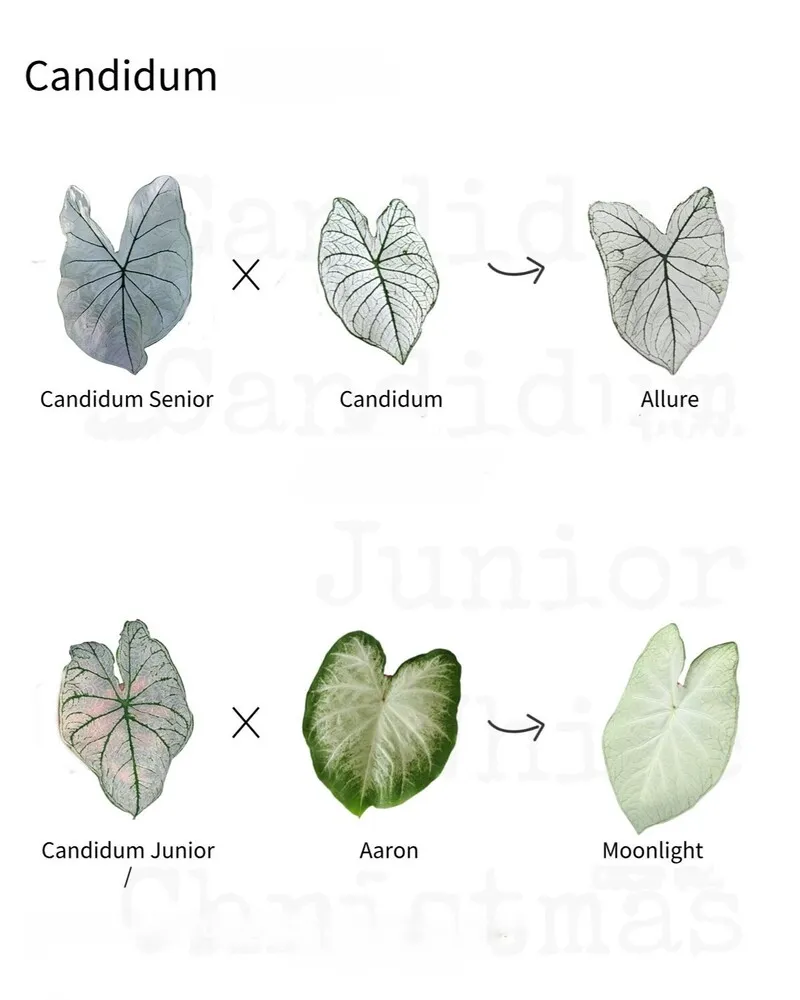
For me, Candidum is still the basic reference point. It has the classic white leaf surface with green veins, and the overall effect feels clean, cool, and slightly translucent. It is not the most dramatic caladium, but it is the one that helps me understand where many other white types begin.
Candidum Junior feels like a lighter, smaller variation on that idea. It tends to stay shorter and looks more translucent, almost as if the whole plant has been visually softened. When I think of it, I do not think of a completely different plant. I think of a more delicate version of the same white-and-green structure.
Candidum Senior moves in a slightly different direction. To me, it looks whiter and more refined, with finer veins and a more polished kind of translucence. If Junior feels lighter and more compact, Senior feels like the branch that pushed the original type toward something cleaner and more elegant.
Together, these three give me the basic scale of the family: original, lighter, and more refined.
Allure, White Christmas, and Aaron
The next group makes the family easier to separate visually, because each one pushes the white theme in a clearer direction.
Allure is the one I personally like more. Compared with the older Candidum forms, it feels stronger in character. The darker green veins make the contrast more defined, and the black stems give it a presence that stands out immediately. It still belongs to the same family, but it does not disappear into the background the way some white cultivars can. To me, it feels like one of the most successful examples of keeping the Candidum lineage while giving it a clearer personality.
White Christmas is important for a different reason. Its veins are noticeably thicker, which makes the leaf read less like a soft translucent wash and more like a structured white type with stronger internal lines. It still clearly belongs to the same white lineage, but it represents a more assertive branch of that look.
Aaron is probably one of the easiest white cultivars to tell apart. The green edge and white center are much more defined, so even growers who find the Candidum family confusing can usually separate Aaron from the rest without too much trouble. That is what makes it useful in this family: it proves that not every white caladium is just a renamed version of the same leaf.
This is the point where the family stops feeling like a pile of similar labels and starts feeling like a set of real visual choices.
How the Family Expanded: More White, More Pink, More Shape Changes
Once I had a few of the early branches clear in my head, the larger Candidum family started to make more sense. What looked confusing at first did not feel quite so random anymore. I could begin to see that the family did not just expand by producing endless copies of the same white leaf. It expanded by pushing that white foundation in different directions — sometimes through more white-on-white variation, sometimes by adding color, and sometimes by changing the leaf shape enough that the original family resemblance became much less obvious.
1. Crossing White Types with Each Other
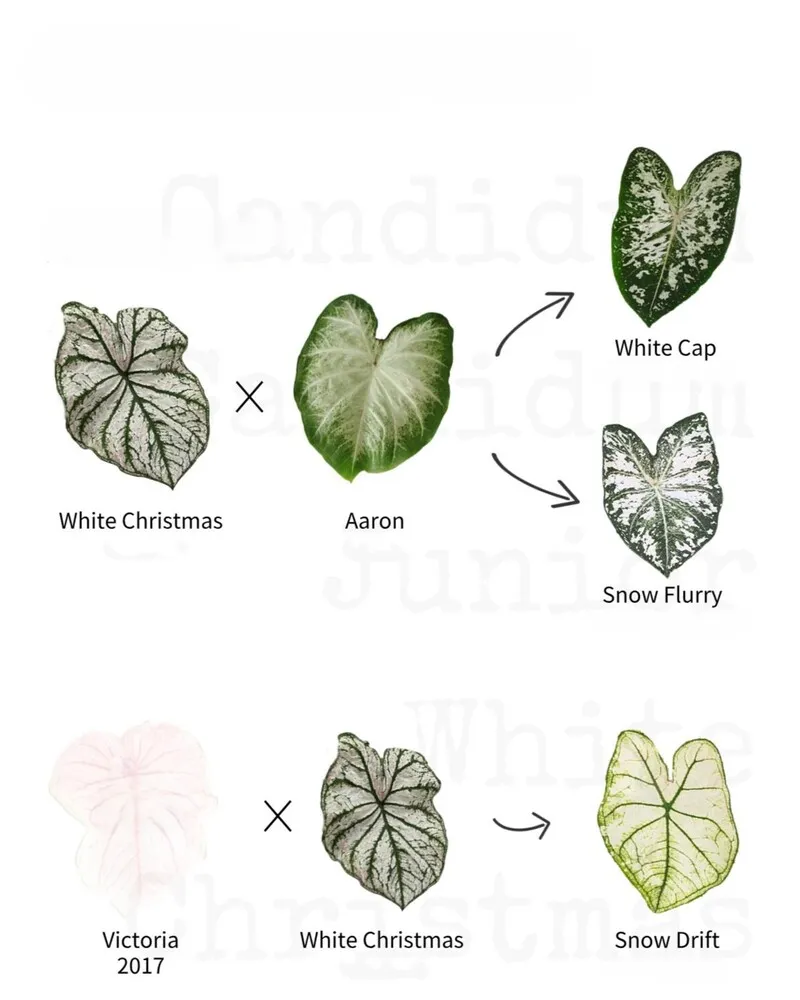
One way the family became more complex was simply by continuing to work within the white branch itself. Cultivars like White Cap, Snow Flurry, and Snow Drift make the white lineage feel more crowded, but they also make it more interesting.
This is where the white branch becomes more complex. The differences are no longer just about being white or green-veined, but about how the white surface and internal patterning are distributed across the leaf.
2. Adding Pink and Other Colors
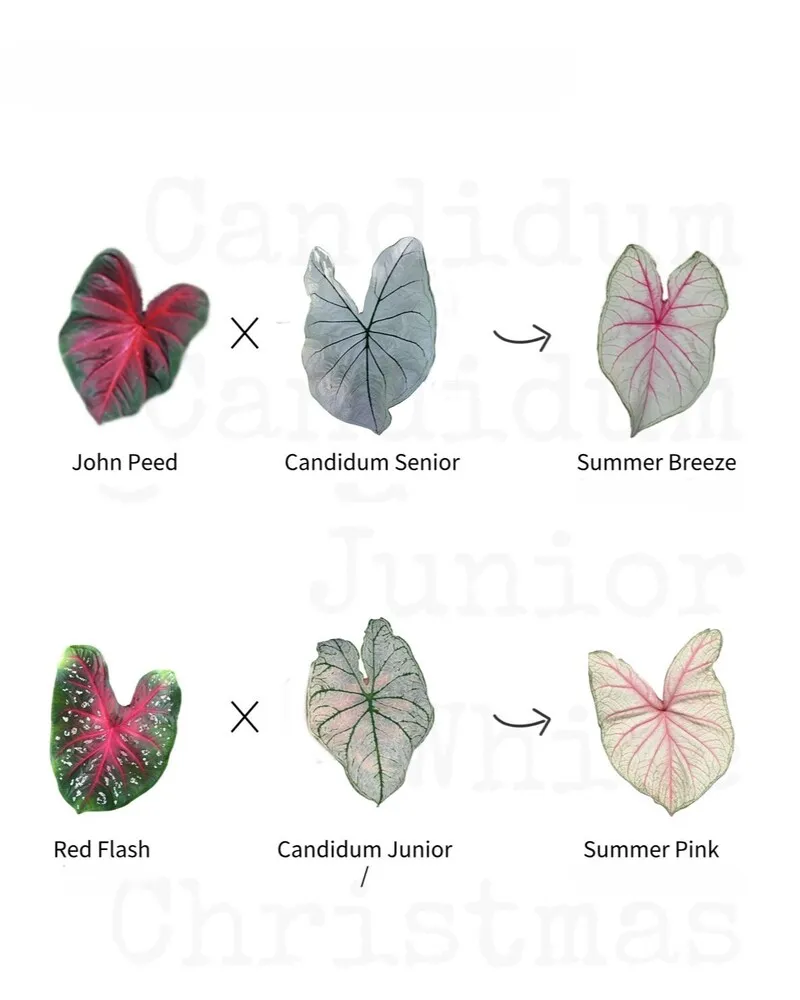
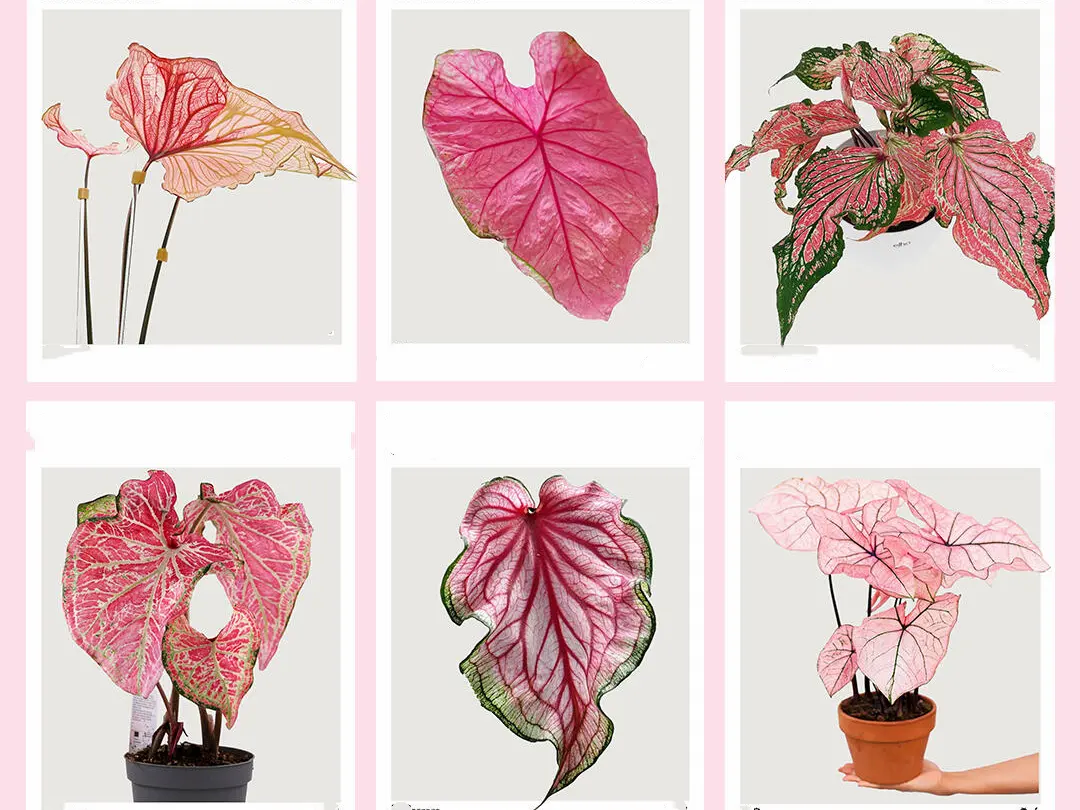
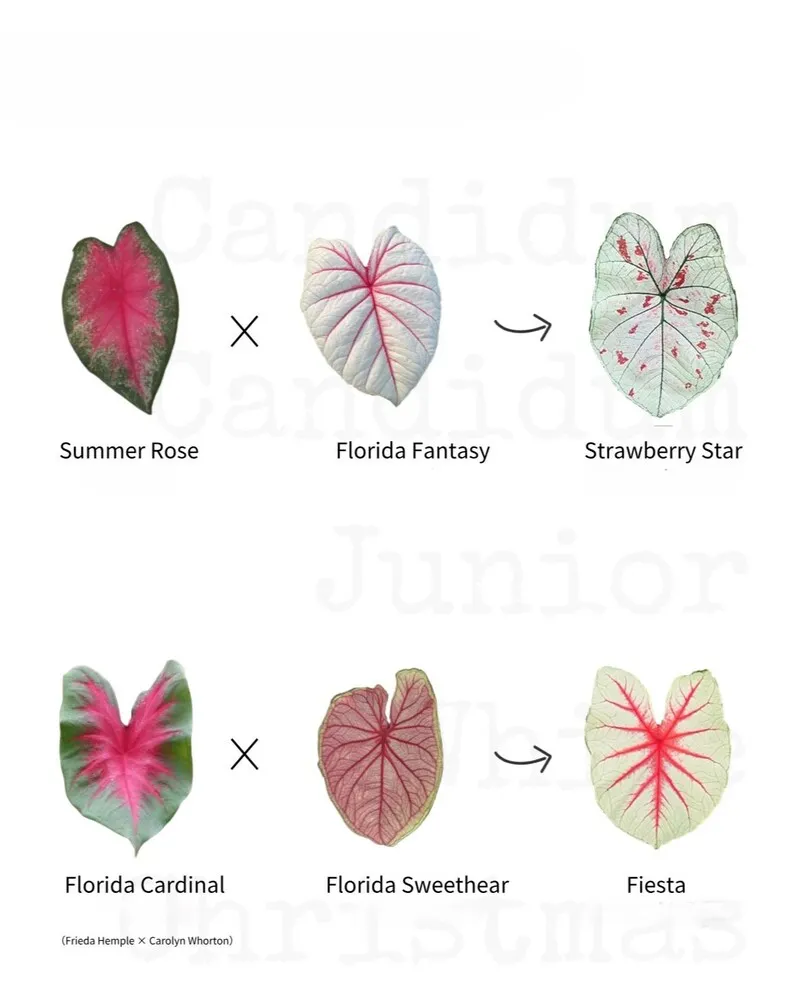
Another major expansion happened when breeders began introducing pink and other colors into that white-based structure. This is where the family starts producing plants like Summer Breeze, Summer Pink, Florida Fantasy, and Florida Sweetheart.
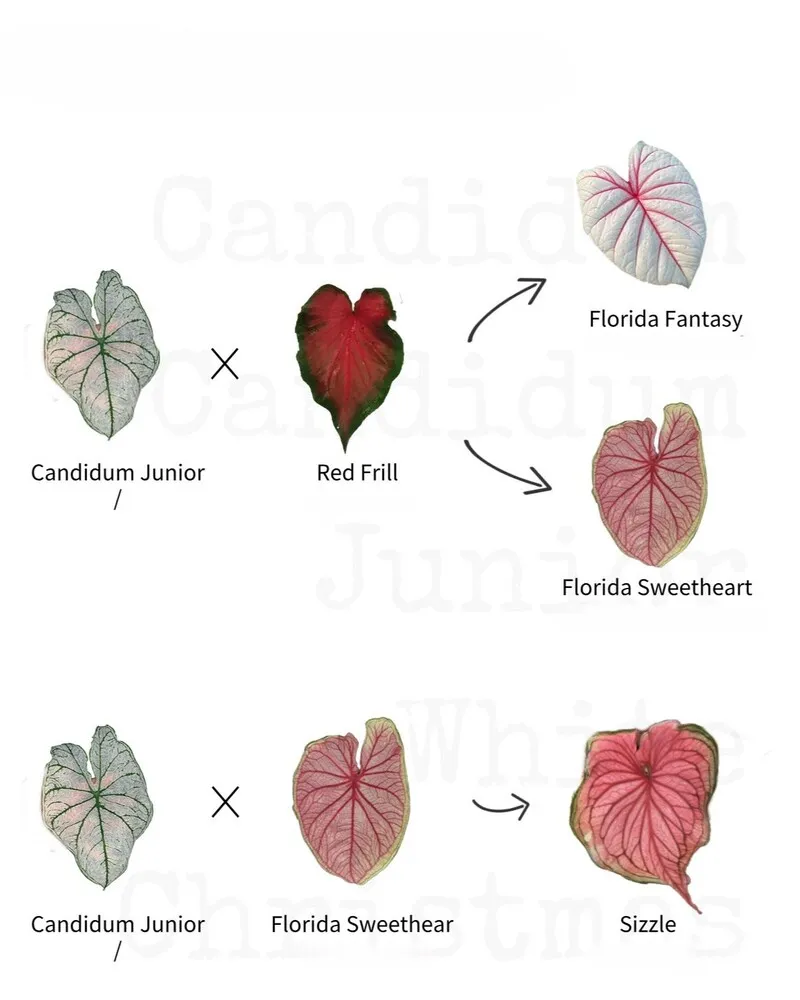
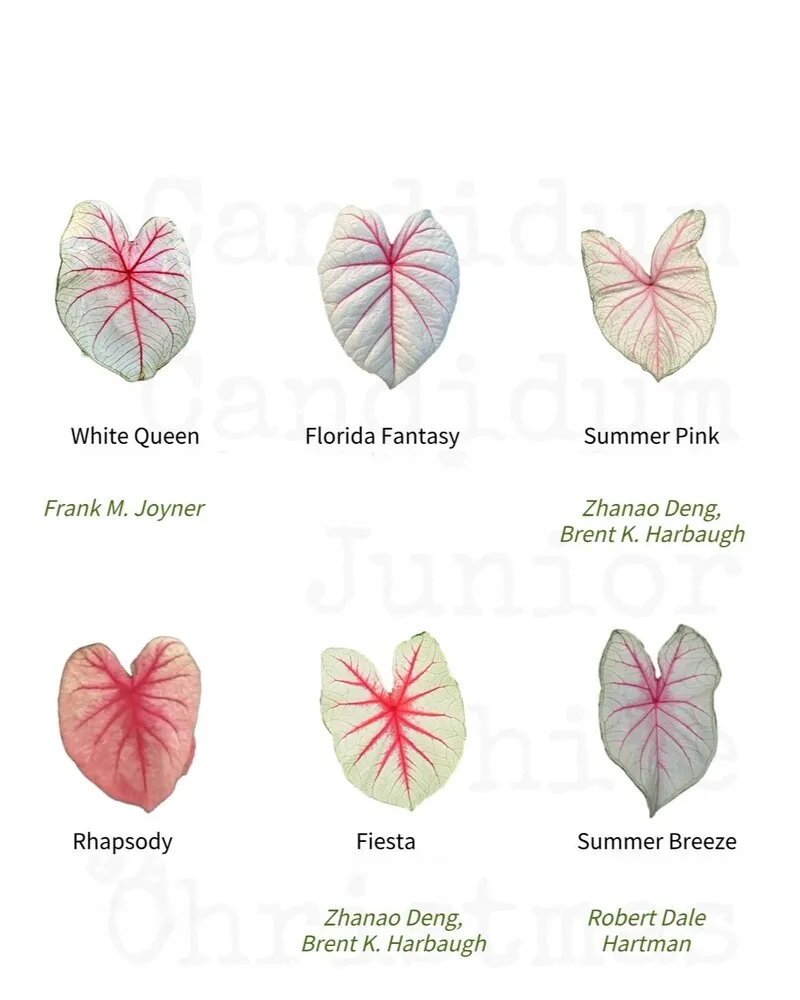
Different breeders, in different decades, can end up producing cultivars that feel surprisingly close to one another in photos. The overall effect can still trace back to that pale Candidum-like framework, but now the leaf carries blush, pink veining, or a more decorative center, which changes the mood entirely.
Out of this group, Summer Pink stands out the most to me. Its veins do not read like a standard bright pink. They have a softer, grayer pink tone that feels unusually muted and distinctive. That subtle gray-pink quality is what makes it memorable in a family where a lot of pink-veined types can otherwise start running together.
3. Changing the Leaf Shape
Once leaf shape changes too, the family stops feeling like a series of small edits to the same white leaf.
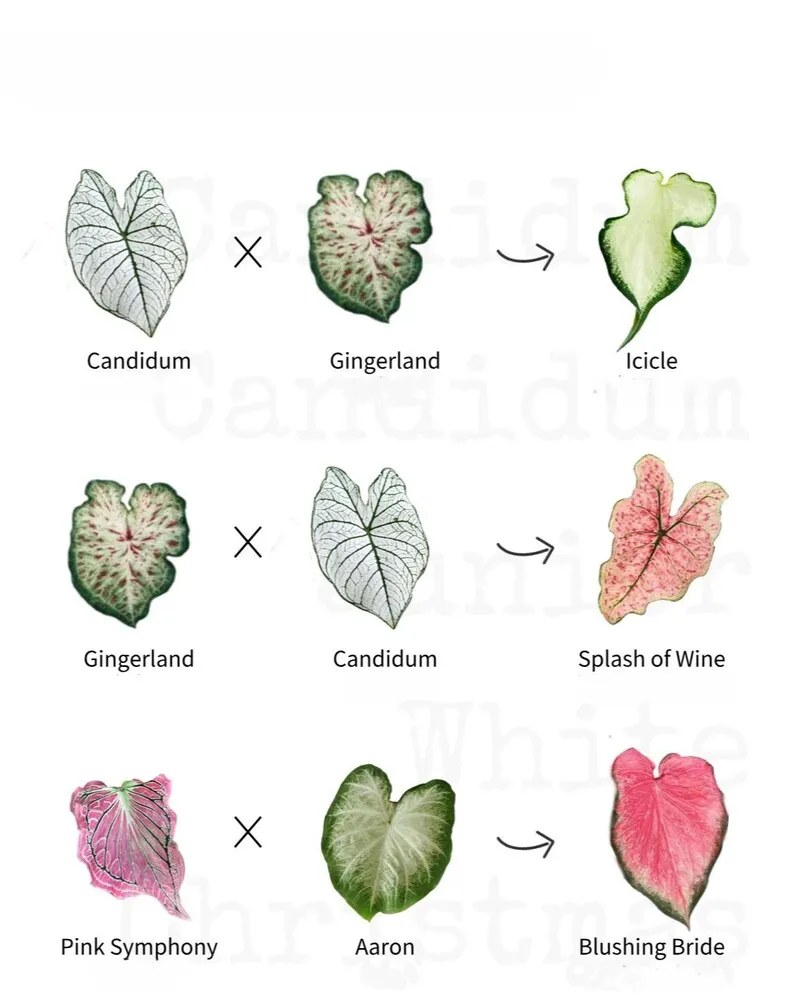
Cultivars like Icicle and Splash of Wine make that especially clear. Even if the lineage still connects back to the Candidum side of the family, the altered leaf form changes the whole impression of the plant. At that point, the family resemblance becomes less immediate. You are no longer just comparing vein thickness or the balance between white and green. The silhouette itself is doing different work.
To me, this is one of the most interesting parts of the family. It shows how breeding can stretch a familiar lineage until the connection is still there, but no longer obvious at first glance.
4. When the Family Gets Too Busy
There is also a point where the family starts feeling too visually crowded for my own taste. This is where cultivars like Tapestry, Carousel, Celebration, and Bottle Rocket come in — many of them descending through the White Christmas side of the family, where the leaf pattern becomes increasingly busy and decorative.
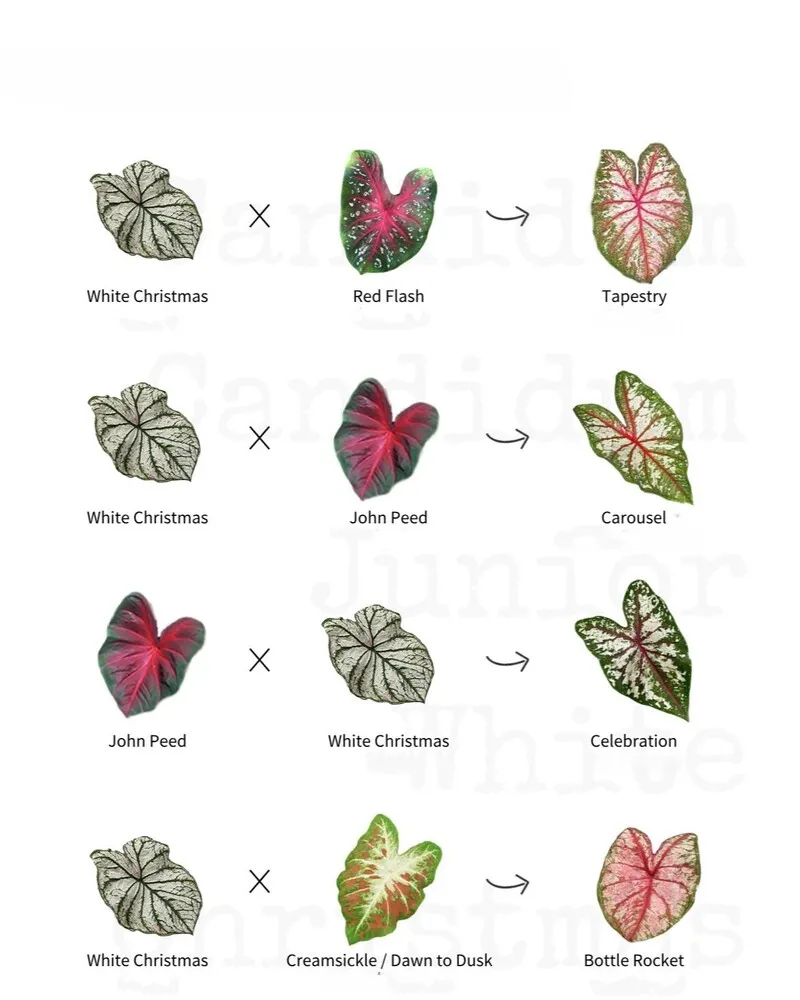
I do not dislike these cultivars because they are badly bred. They just move away from what I personally love most about Candidum. What first drew me to the original white branch was the sense of openness in the leaf — the breathing room, the coolness, the quiet balance between white surface and green structure. Once a leaf becomes too packed with pattern, I start losing that feeling.
So for me, these later, more elaborate descendants are where the family becomes less appealing, even if they are visually impressive in their own way. That is probably the clearest line in my own taste: I like this family best when the leaf still feels like it has room to breathe.
What Growing Candidum Actually Taught Me
Before I actually grew Candidum myself, I thought what I loved most about it was the color. After living with it for a full season, I realized I was really learning something else: how to read its rhythm.
Candidum can look simple in photos, but in my own pots it reacted very clearly to small changes in moisture, airflow, light, and season.
That is also why I no longer think of Candidum as just a “beautiful white caladium.” For me, it became one of those plants that teaches by reaction. When I overwatered, it showed me quickly. When the summer light was too harsh, it showed me differently. When winter arrived and growth started slowing down, I had to learn not to panic and misread that change as failure.
What taught me the most was not the pedigree, but the three mistakes that made me read the plant differently: overwatering, sun stress, and winter slowdown.
My First Mistake: I Thought Drooping Meant Thirst
About two weeks after I brought Candidum home, I ran into the first problem: the leaves started leaning and flopping, and I misread the drooping as thirst.
So I watered heavily.
Instead of recovering, the plant looked worse. The foliage became softer and more lifeless, and that was when I finally realized I had misread the situation completely. The issue was not dryness at all. The pot was still staying heavy and damp, which is exactly why I no longer trust a fixed watering rhythm without first reading the pot properly. The potting mix was staying too wet, and what I was seeing was not thirst but stress from excess moisture around the roots.
Once I understood that, the fix was surprisingly simple, though I wish I had recognized it earlier. I stopped watering for a few days, improved airflow around the plant, and gave it stronger light. After that, the plant gradually stabilized.
That mistake taught me that Candidum can take generous watering during active growth, but only when light, warmth, and ventilation are strong enough to keep the pot from staying wet too long. Otherwise, what looks like care turns into root stress very quickly.
My Second Challenge: Summer Sun Burned the Leaves Faster Than I Expected
The second challenge came in August, when the plant started losing the look that had drawn me to it in the first place. The leaf edges began to dry out and curl, and the whole plant suddenly looked much rougher and less elegant. It was not an immediate collapse, but the ornamental quality dropped fast enough that it felt alarming.
That was when I realized something I had not understood earlier: Candidum is not exactly a plant that cannot take sun, but it is definitely not a plant I would move straight from bright indirect light into harsh balcony exposure without a transition.
I think this is where a lot of new growers get caught off guard. Many caladiums are purchased after being grown in softer light, where the leaves stay thin, fresh-looking, and visually clean. If a plant like that is suddenly pushed into strong summer sun, especially on a bright balcony, the foliage may not adapt gracefully. Instead, the plant starts burning energy trying to cope. Leaves droop, edges crisp, the surface loses that translucent beauty, and the whole thing can look so tired that a beginner might honestly think the plant is dying.
That was very close to how it felt for me.
What helped was not forcing it to “toughen up,” but backing off. I moved it back into bright indirect light, let it recover in a gentler setup, and removed the older leaves once they were clearly past their best. After that, I waited for new growth instead of trying to preserve damaged foliage that was no longer going to look good again.
That experience changed how I think about this plant. I no longer read “sun tolerant” as meaning “safe to expose directly without consequences.” For Candidum, the question is not just whether it can survive stronger sun, but whether it will still look good under that kind of exposure. And for me, that is a different standard.
For me, bright indirect light has been much more reliable indoors than sudden full summer exposure. That does not make it weak. It just means that good display quality and brute survival are not always the same thing.
What I Learned About Dormancy in Winter
The third challenge was winter, and this was probably the point when I finally understood that not every caladium problem is actually a problem. Sometimes the plant is simply changing seasons before you are emotionally ready for it.
How I Realized It Was Slowing Down for Winter
Once temperatures started dropping below about 20°C, Candidum gradually stopped behaving like it had in summer. The growth rate slowed first. Then by late December, it was no longer producing meaningful new growth at all. The older leaves began to lose tension, lean outward, and collapse more easily. The whole plant looked looser and less committed, as if it were quietly stepping away from the growing season.
At first, that kind of change can feel unsettling, especially if you are still thinking in summer terms. A plant that stops pushing new leaves and starts looking weaker is easy to read as decline. But this time I understood it differently. It was not necessarily failing. It was moving into its winter dormancy rhythm, which looked very different from summer growth.
That shift in understanding mattered a lot. Once I stopped expecting active growth in the middle of winter, the plant’s behavior became much easier to read.
What I Do Instead of Forcing It to Keep Growing
Now, when I can see that Candidum is clearly entering its winter slowdown, I do much less.
I keep it in a dry, well-ventilated spot and become much more careful with water. I do not try to maintain the same watering rhythm I would use during active growth, because that is exactly where winter problems begin. When the plant is no longer growing properly, cold wet soil becomes much more dangerous than slight dryness.
That is the main thing I trust now: once Candidum is obviously heading into dormancy, I stop watering it like a summer plant. I do not want the potting mix staying wet for long periods, and I definitely do not want low temperatures and trapped moisture working together around the tuber.
For me, the biggest winter risk is not that the plant rests. The biggest risk is that I panic when it rests and keep treating it as if it still needs active-season care.
So my winter approach is simple: less water, more airflow, and no pressure for the plant to keep performing. Once I accepted that dormancy is part of its rhythm rather than a sign of failure, winter became much less confusing.
When Candidum Finally Took Off Again
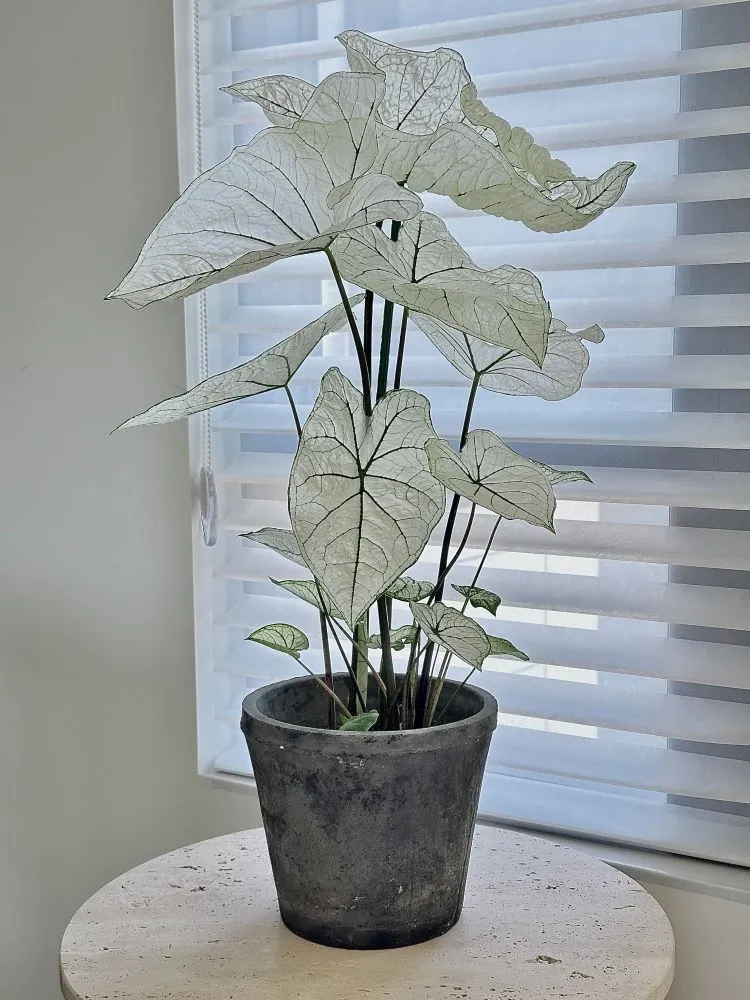
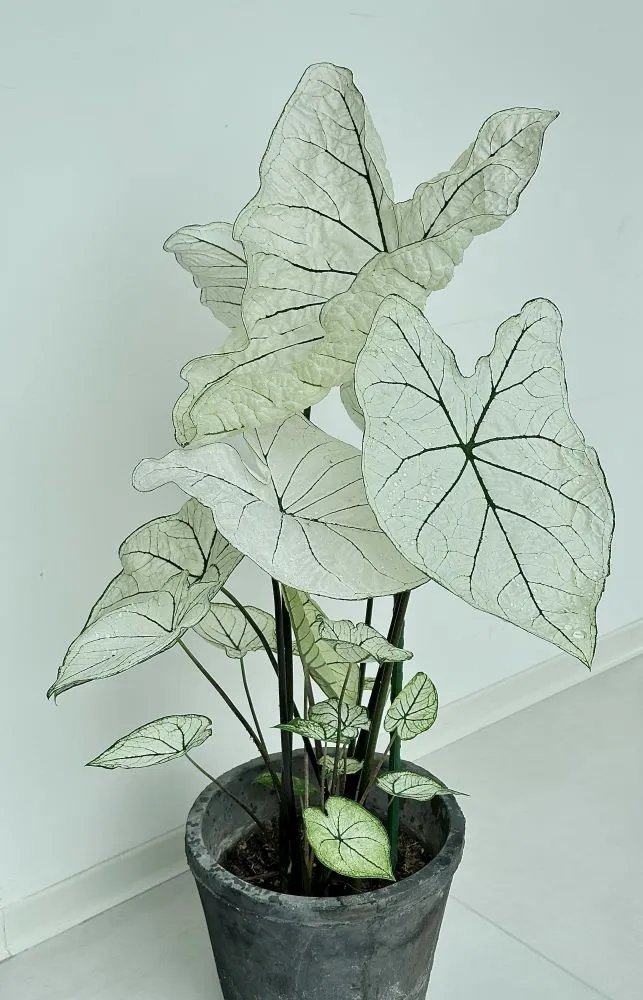
What made all of that earlier trial and error feel worth it was what happened later. In February, it was still just a small plant with only two tender new leaves. Then, little by little, it began filling out until the whole pot finally gave me the effect I had wanted from the beginning — a full, cool-white canopy that felt almost like a small waterfall of pale leaves.
That was the moment when I felt I finally understood this variety a little better. Candidum did not reward me for doing more. It responded when I started giving it the right things more consistently. For me, that came down to three basics: give it light, give it food, and give it room.
Give It Light
The first change was light. I pulled back the balcony sheer curtain and let it enjoy softer but stronger light instead of keeping it in a dimmer spot for too long. That was enough to make a real difference. Candidum does not seem to enjoy staying dark and stagnant. It looks much better when the light is bright enough to keep growth moving, even if that light still needs to stay relatively gentle.
Give It Food
Once active growth started again, regular feeding mattered too. With nutrients in place, the leaves became noticeably larger, fuller, and quicker to develop. The plant no longer looked like it was merely recovering. It started looking like it had momentum.
Give It Room
The last piece was space. Once the pot gave the roots enough room, the whole plant changed in scale. The leaves expanded, the overall mass increased, and the plant finally stopped looking like a pretty white variety I was trying to preserve. It started looking like a plant with real presence.
That was when I understood why people stay attached to Candidum. At its best, it does not just look clean or delicate. It becomes generous.
Is Candidum Still Worth Growing Today?
I think it is — especially if what you love in caladiums is not loud contrast or instant drama, but that cooler, quieter kind of beauty that white foliage can carry when it is done well.
Candidum is not the sort of variety that tries to impress through extreme color. It does not rely on hot pink centers, heavy patterning, or sharp visual contrast to catch your eye from across the space. What it offers instead is something softer: translucence, breathing room, and a sense of calm that many newer varieties do not always keep.
Its beauty depends on balance. When it is grown well, it feels clean and open in a way that is hard to replace. But it is not a plant you can ignore and expect to stay perfect.
For me, the real difficulty with Candidum is not simply keeping it alive. It is learning not to misread it. Do not water blindly when it droops. Do not rush it into harsh summer sun and expect the leaves to stay beautiful. Do not panic in winter and keep treating a resting plant like one that is still actively growing.
If you are willing to pay attention to its rhythm, Candidum still feels deeply convincing today. It may not be the most fashionable caladium, but it remains one of the clearest reminders I have found that older varieties are not outdated at all.
FAQ
Want to Explore Other Caladium Varieties?
Florida Sweetheart is just one of many caladium varieties that behave differently in containers. If you’re curious how other types compare, you can browse the full collection of varieties below.
Browse All Caladium Varieties →