When caladium leaves start drooping, the reaction is almost automatic. Something must be wrong. The plant looks sick. I probably messed up. I need to fix this — now. Drooping feels urgent in a way yellowing doesn’t, because it changes the plant’s shape so quickly.
After growing caladiums for a full year — starting from small seedlings and tubers — I learned that drooping is one of the most common stages people encounter, especially indoors. It shows up early, shows up suddenly, and shows up in ways that look alarming even when the plant is still doing fine.
What changed my approach was realizing that drooping isn’t a single problem. It’s a result. Depending on the situation, it can mean very different things — from temporary adjustment, to natural leaf turnover, to a sign that something deeper needs attention. This article isn’t about reacting fast. It’s about learning how to read what that drooping actually means before doing anything at all.
What I Changed After Making the Wrong Assumptions
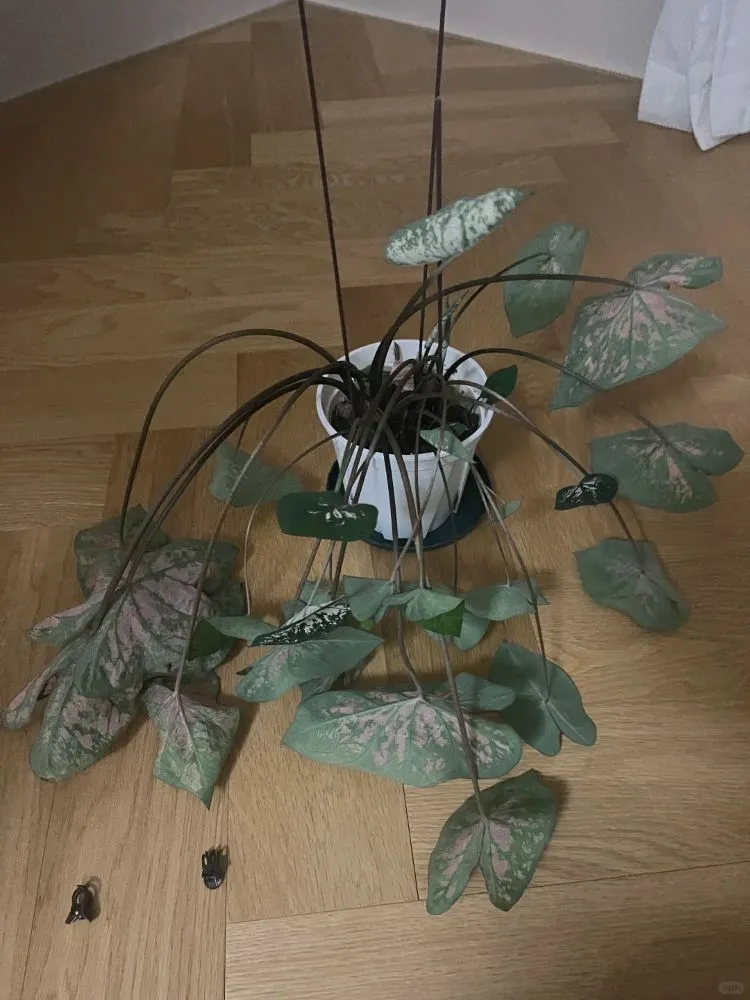
When I first started growing caladiums, I treated them like every other tropical houseplant I’d owned. I brought my first one home from Walmart as a small plant, noticed the soil felt dry, and watered it right away — because that’s what I would’ve done with almost anything else.
A couple of leaves drooped soon after. The rest of the plant still looked upright and perfectly fine, so I assumed it was just a small adjustment and nothing to worry about. A week passed and everything seemed stable. In my mind, the situation had “resolved.”
Then I made the next move based on the same borrowed instincts: airflow. I’d learned from other plants that fresh air can prevent issues, so I placed the caladium outside on my balcony for a couple of hours. There was no direct sun — it was a shady spot — but the wind was stronger than I expected. When I checked on it, the leaves had started growing sideways, pulled into a horizontal posture by the constant movement.
I carried it back inside immediately, thinking it would bounce back the way other plants do. Instead, it didn’t. The leaves didn’t “recover” — they stayed limp, as if the plant had lost its ability to hold itself up. That moment stuck with me because it wasn’t dramatic in the usual way. Nothing snapped. Nothing turned black overnight. It simply… stopped standing.
Looking back, the mistake wasn’t one specific action. It was the assumption behind it — the idea that what works for my other plants should automatically work for caladiums too.
Caladiums don’t respond well to borrowed logic.
They need their own rules, their own rhythm, and a more intentional indoor environment — not just a window spot and a routine copied from somewhere else.
Drooping Is a Symptom, Not a Diagnosis
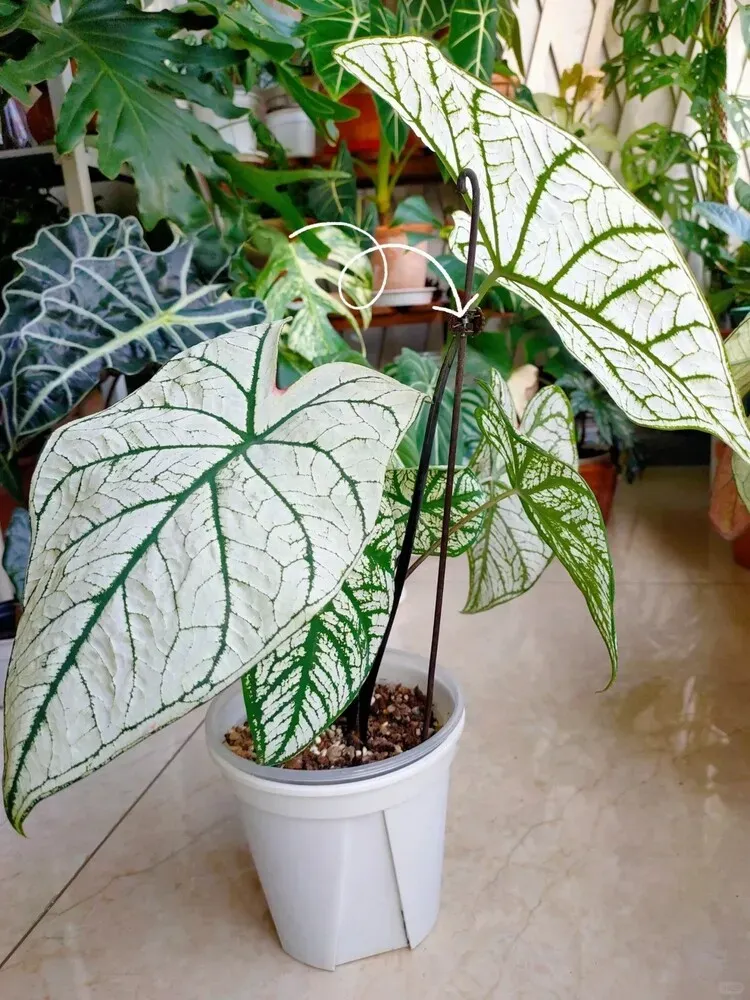
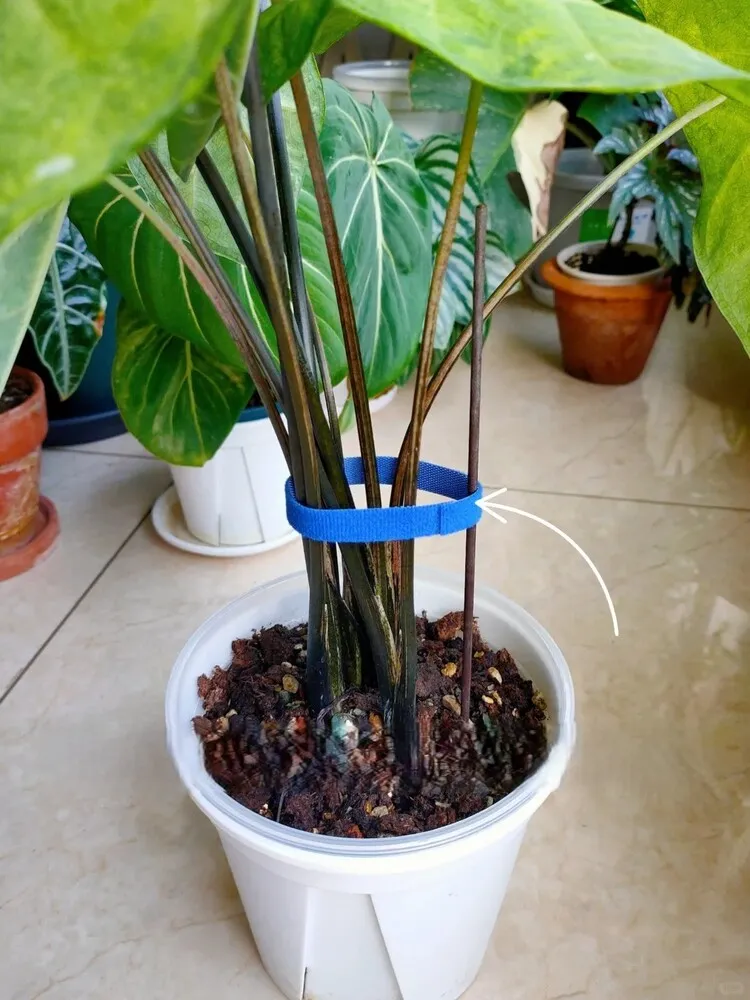
One of the biggest mistakes I made early on was treating drooping as a problem that needed an immediate solution. Over time, I realized that drooping by itself doesn’t tell you what’s wrong — it only tells you that something has shifted.
A drooping caladium isn’t automatically unhealthy. And just as importantly, not every drooping leaf needs to be corrected. Reacting too quickly often creates more stress than the drooping itself, especially when the plant is still structurally sound.
What helped me slow down was learning to look for a few specific signals before doing anything. I don’t start with causes or fixes. I start by observing:
- Is the petiole soft or firm?
Softness usually points to water or root-related issues, while firm petioles often indicate light or positioning adjustments rather than decline. - Does the leaf still look healthy?
Color, texture, and thickness matter. A leaf can lean and still be fully functional, or it can stay upright while already failing. - Is the drooping happening on new growth or older leaves?
New leaves collapsing send a very different message than older leaves stepping aside.
Once I began asking these questions, drooping stopped feeling like an emergency. It became a signal — one that needed to be read before it needed to be answered.
When Drooping Is Easy to Read
Some types of drooping are surprisingly straightforward once you know what to look for. They tend to follow clear patterns, show up without additional warning signs, and resolve without much intervention. These are the situations where observation matters more than action.
Underwatering: Soft, But Still Healthy
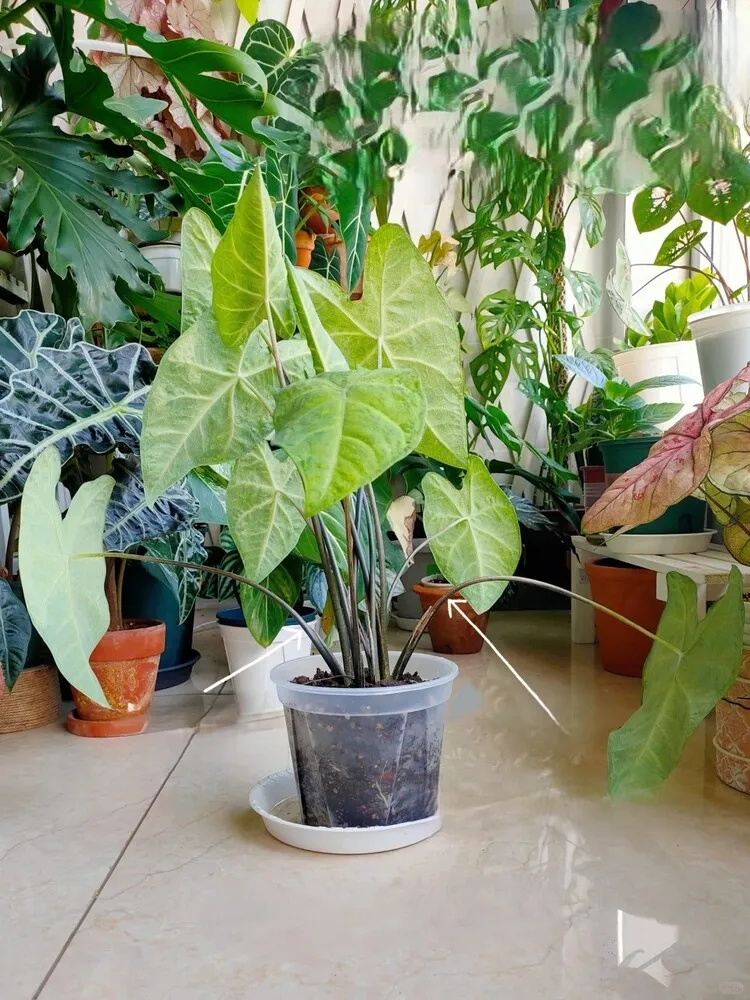
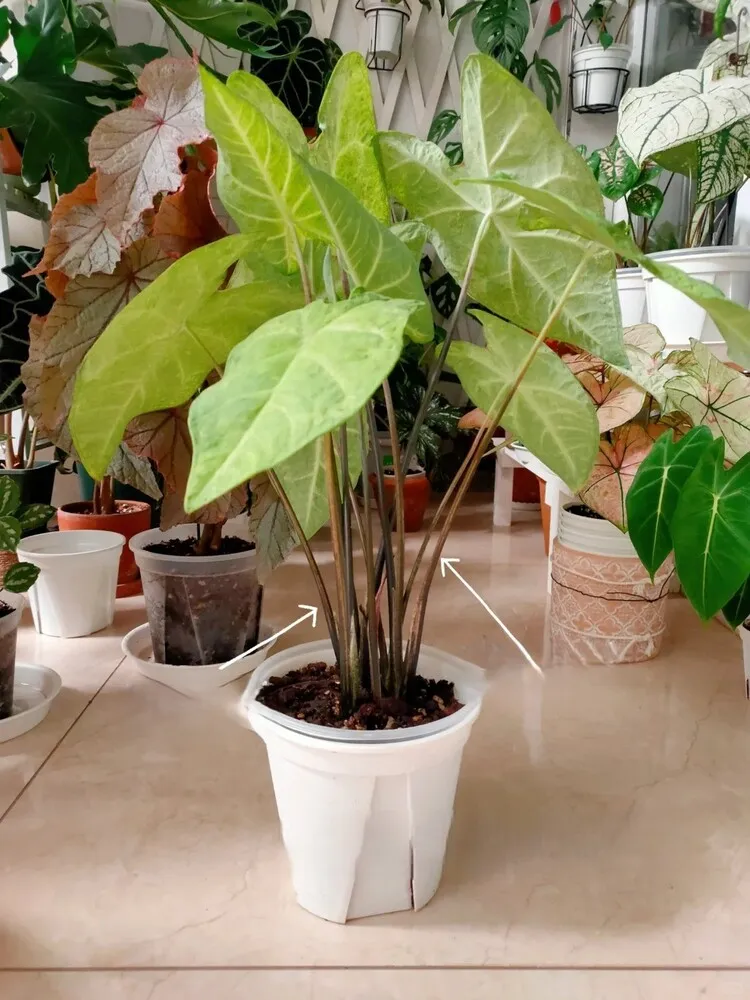
This kind of drooping is usually the easiest to identify. The pot feels light. The soil is clearly dry. Both the petioles and the leaves soften at the same time, but the leaf surface still looks intact — no discoloration, no blotches, no signs of collapse.
What stands out is how quickly the plant responds. Once watered, the leaves regain their structure in a short period of time, often within hours. Nothing lingers. Nothing worsens.
This type of drooping isn’t complicated. It’s temporary, reversible, and doesn’t point to deeper issues. In these cases, the plant isn’t struggling — it’s simply asking for water.
Light-Seeking Droop: Firm Stems, Clear Direction
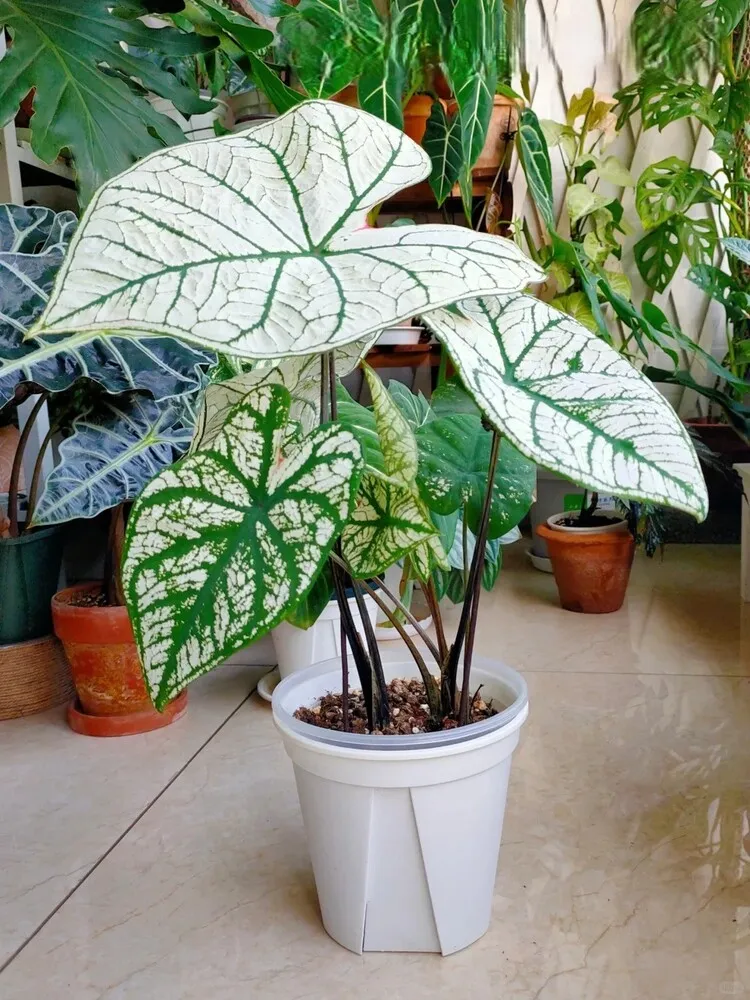
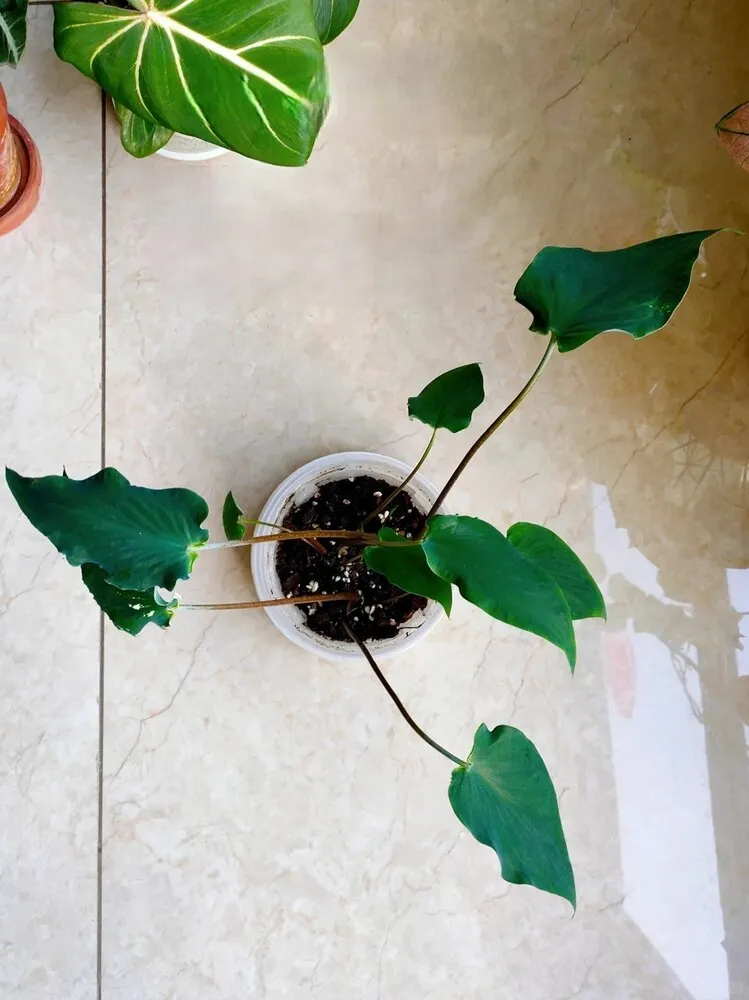
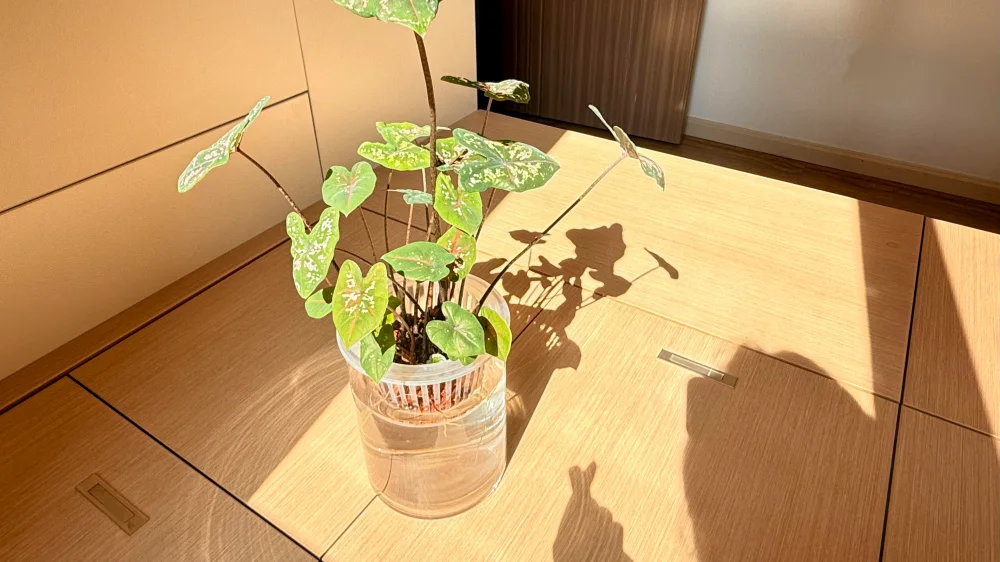
Light-related drooping looks very different. The petioles stay firm, the leaves remain healthy and well-colored, but the plant starts leaning instead of standing upright. The direction of that lean tells you almost everything.
When the light source comes consistently from one side and the pot isn’t rotated, the leaves tend to lean in the same direction. The posture looks intentional, as if the plant is reaching rather than collapsing.
When light is too distant or positioned too high, the pattern changes. Leaves begin to lean at different angles, spreading outward instead of toward a single point. The structure is still strong, but the plant is searching rather than settling.
In both cases, the message isn’t that something is wrong. It’s that the environment is incomplete. The plant is responding to what’s available, not failing under poor care.
When Drooping Is Part of the Plant’s Timing
Leaf Consumption: Drooping That Belongs to Older Leaves
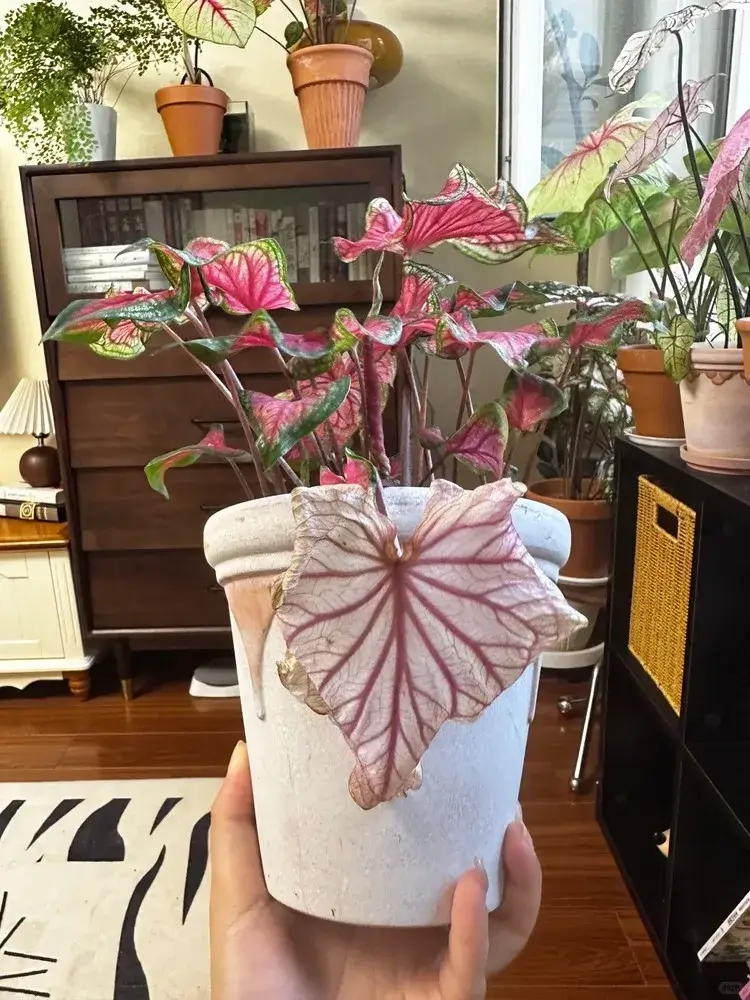
Not all drooping points to stress. Sometimes it simply marks the end of a leaf’s role. With caladiums, this type of drooping almost always shows up on the oldest leaves first — the ones that have already done most of their work.
I notice it more often when temperatures start to dip or growth naturally slows — especially when the plant looks like it’s not growing at all. The leaf gradually thins, becomes slightly translucent, and loses its structure before folding downward. There’s no sudden collapse, no spreading damage — just a quiet retreat.
In these cases, the drooping isn’t a warning. It’s a transition.
You can remove the leaf if you prefer, or you can leave it alone and let it finish on its own. Neither choice is urgent, and neither will harm the plant. What matters is recognizing that this kind of drooping doesn’t require correction. It’s part of the plant’s internal timing, not a sign that something has gone wrong.
When Drooping Means the Plant Is Struggling
Not all drooping is harmless. In some cases, it’s the plant signaling that the environment isn’t supporting its structure anymore. These are the situations where pausing isn’t enough — awareness matters.
Low Light Indoors: Soft Stems and Washed-Out Color
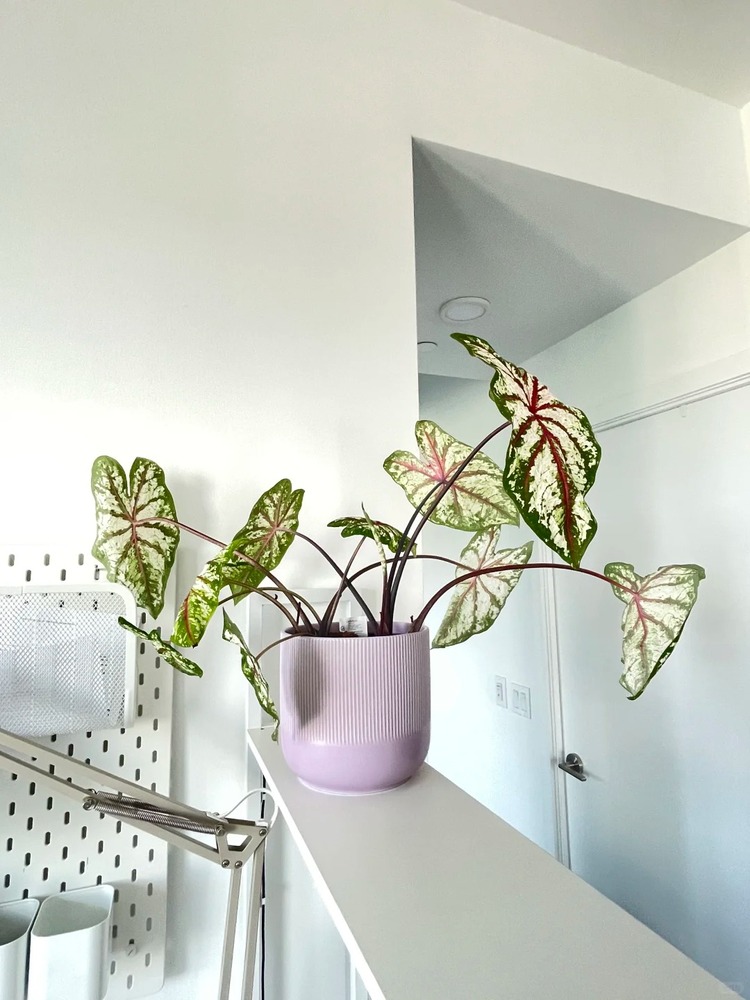
One common misunderstanding is assuming that caladiums tolerate low light because they’re often kept indoors. In reality, they are light-loving plants. A closed balcony or interior space doesn’t automatically provide what they need, even if it feels bright to us.
When light is insufficient, the drooping looks different from water-related changes. Petioles become thin and soft. Leaf color loses clarity and depth. The entire plant feels less supported, as if it can’t hold itself up properly.
Placing caladiums near a window can help, but there’s an important boundary. Leaves shouldn’t rest directly against the glass. Midday window glass can heat up far more than expected, and contact can lead to heat damage even without direct sun exposure.
Root Stress: When the Base Starts to Give Way
This is the kind of drooping I take seriously — the kind that makes you wonder if your caladium is dying.
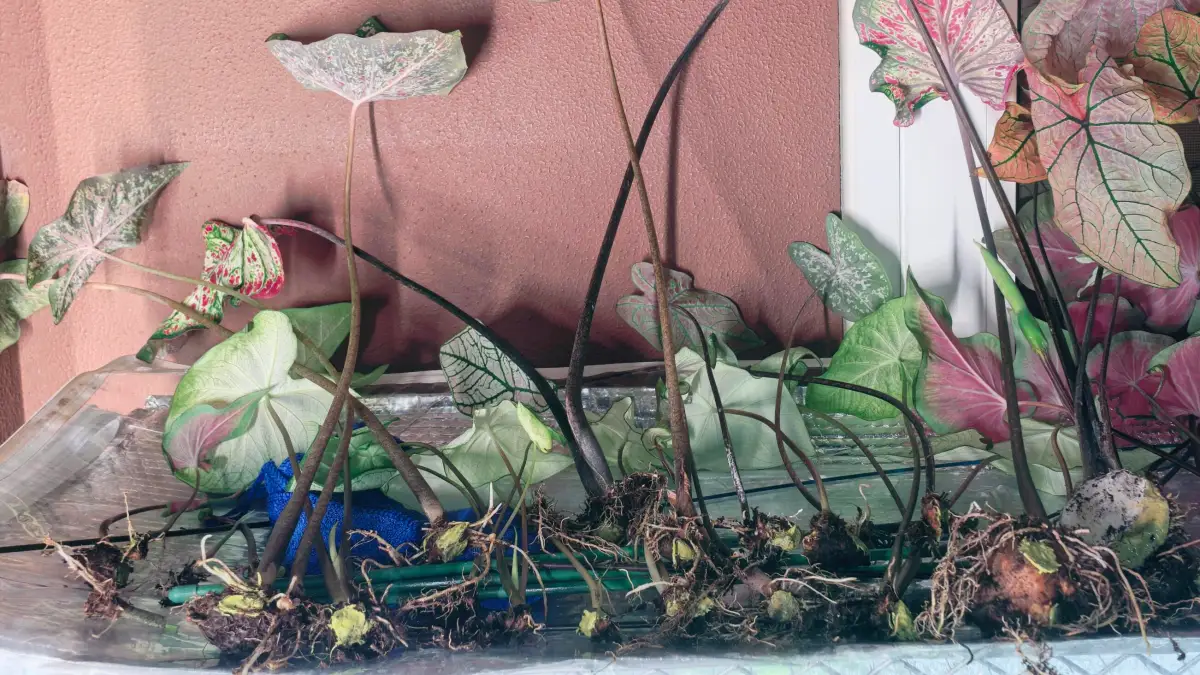
Here, the leaf doesn’t fail from the top down. The petiole softens near the soil line first, sometimes developing a water-soaked texture. Once that support weakens, the entire leaf collapses.
This pattern is usually tied to what’s happening below the surface — compacted soil, poor aeration, overly frequent watering, or watering during hot periods when roots are already under stress.
At this point, the issue is no longer about the leaf itself.
This is not about the leaf anymore. It’s about the roots.
What Actually Keeps My Caladiums Upright Indoors
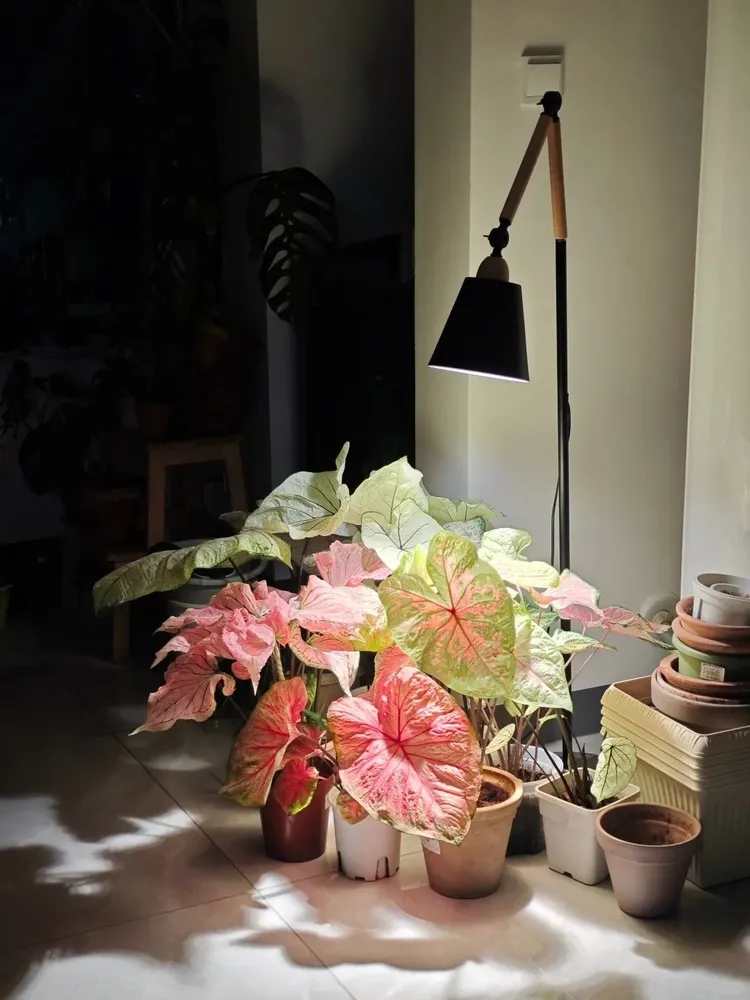
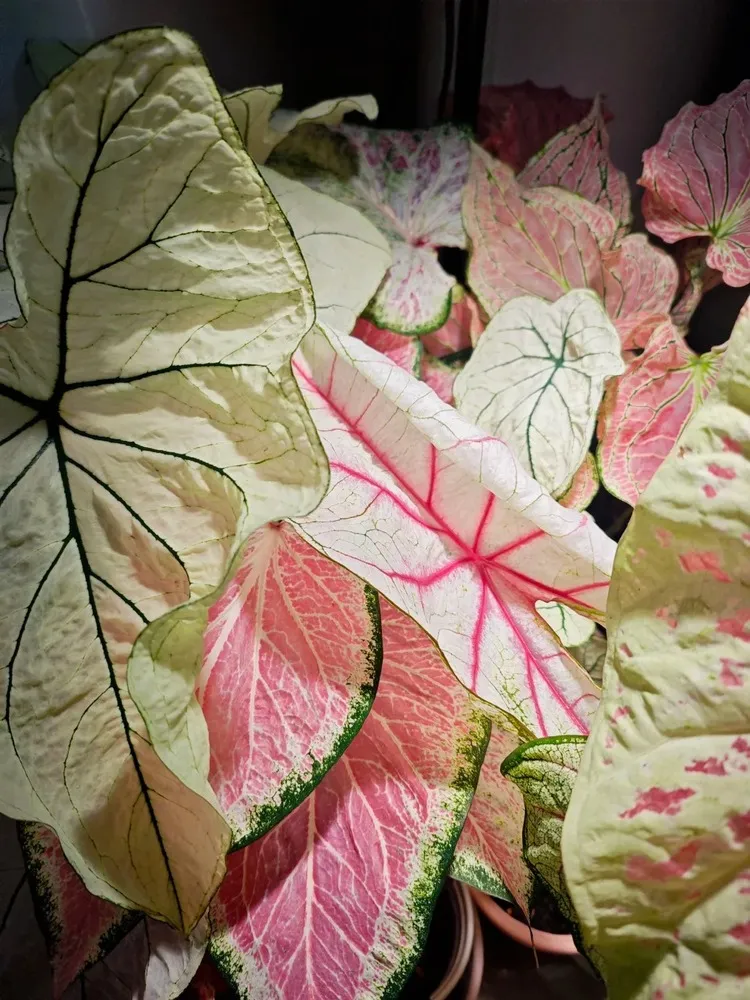
After a year of trial, mistakes, and small adjustments, I stopped looking for a single fix. What made the biggest difference wasn’t doing more — it was paying attention to a few conditions that kept drooping from becoming a constant issue in my space.
Adequate light was the first shift. Indoors, that often means accepting that a bright room isn’t always bright enough. When natural light falls short, a grow light fills in what the environment can’t provide. The goal isn’t intensity for its own sake, but giving the plant enough support to hold its structure.
Watering came next, but not as a schedule. I stopped watering because the calendar said so and started watering when the pot itself gave clear signals — weight, dryness, and how quickly it dried last time. That change alone eliminated a lot of unnecessary stress.
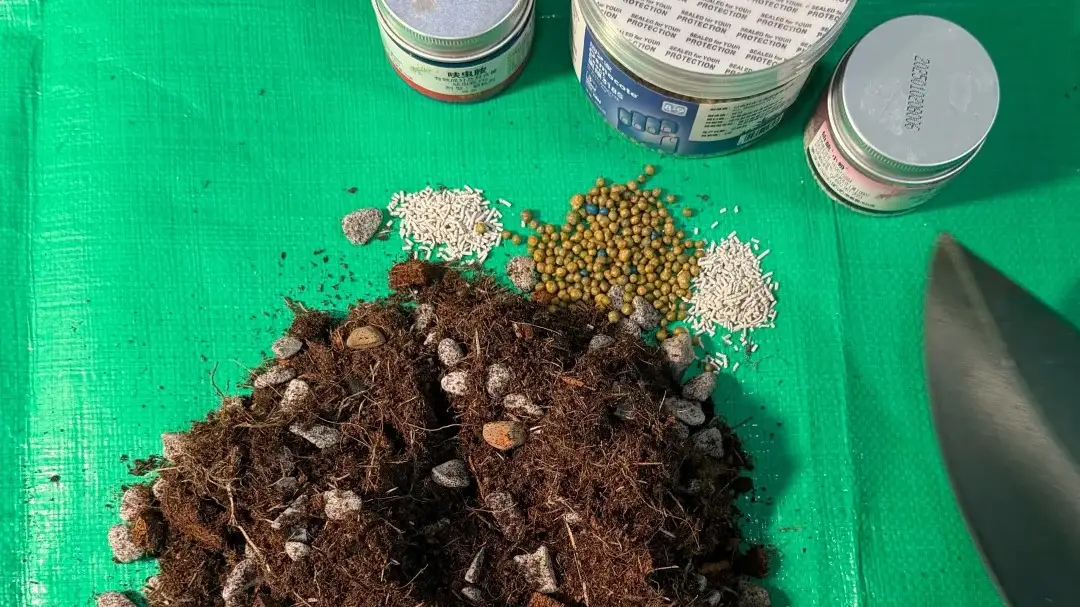
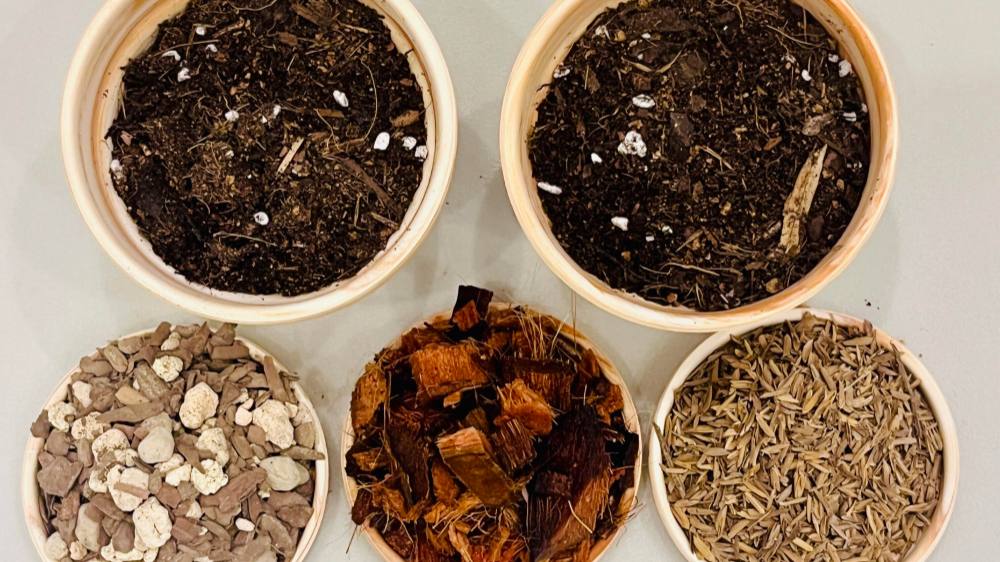
The last piece was preventing suffocated roots. Good airflow around the pot, breathable soil, and resisting the urge to water during hot periods mattered more than any single adjustment. When roots can breathe, everything above them behaves differently.
None of this guarantees that caladiums will never droop. But together, these shifts are what stopped drooping from becoming a constant issue for me. Indoors, stability doesn’t come from control — it comes from creating conditions the plant can work with.
FAQ
Still not sure what your plant is telling you?
If yellowing, drooping, or root issues keep showing up across different plants, I’ve organized my real-world observations and fixes in one place.
Go to Problems Hub →