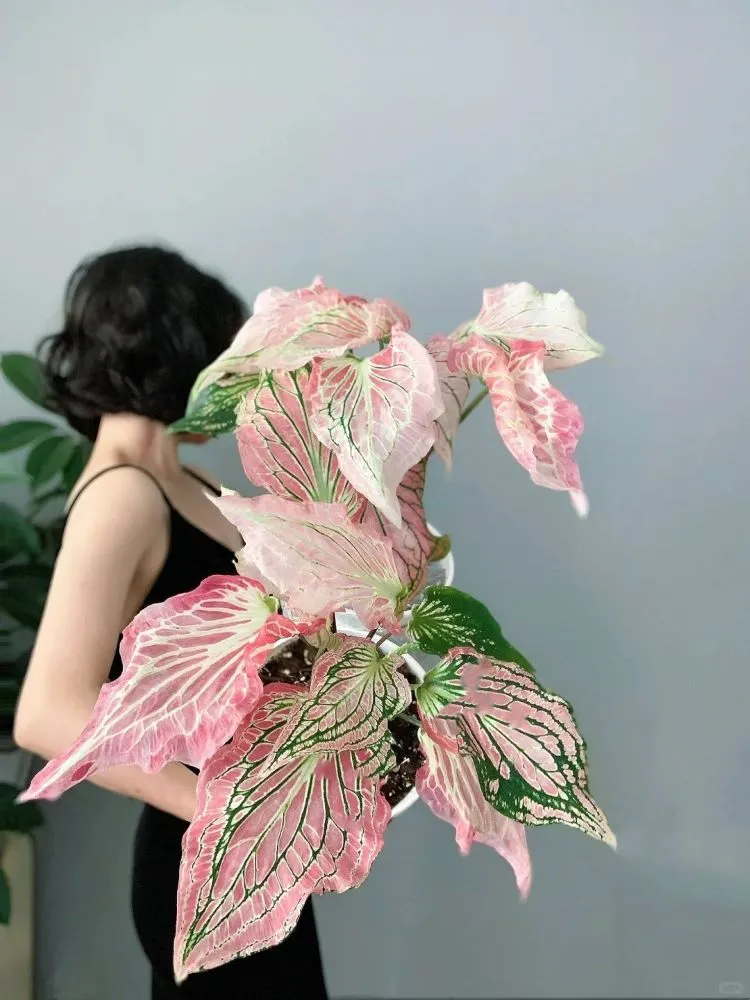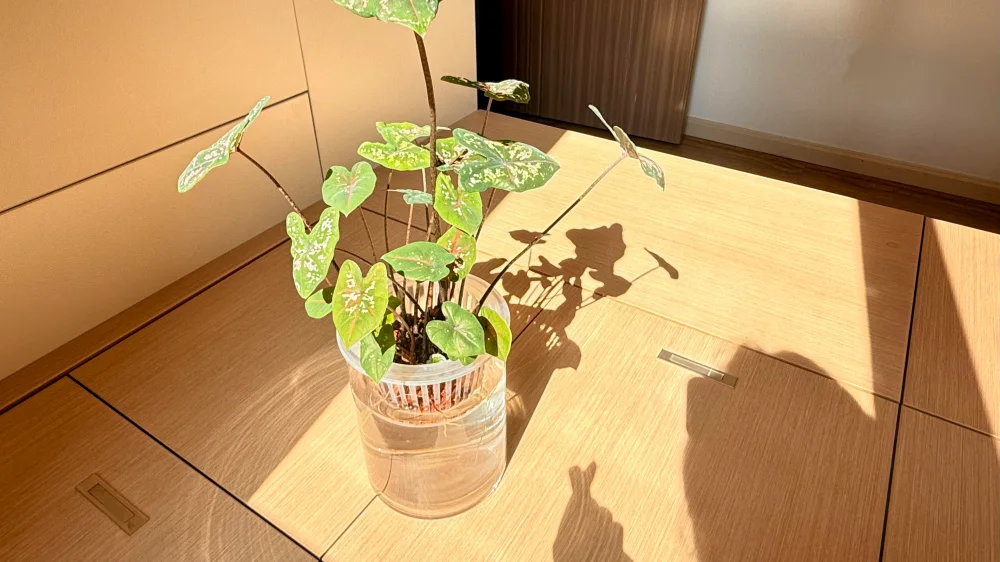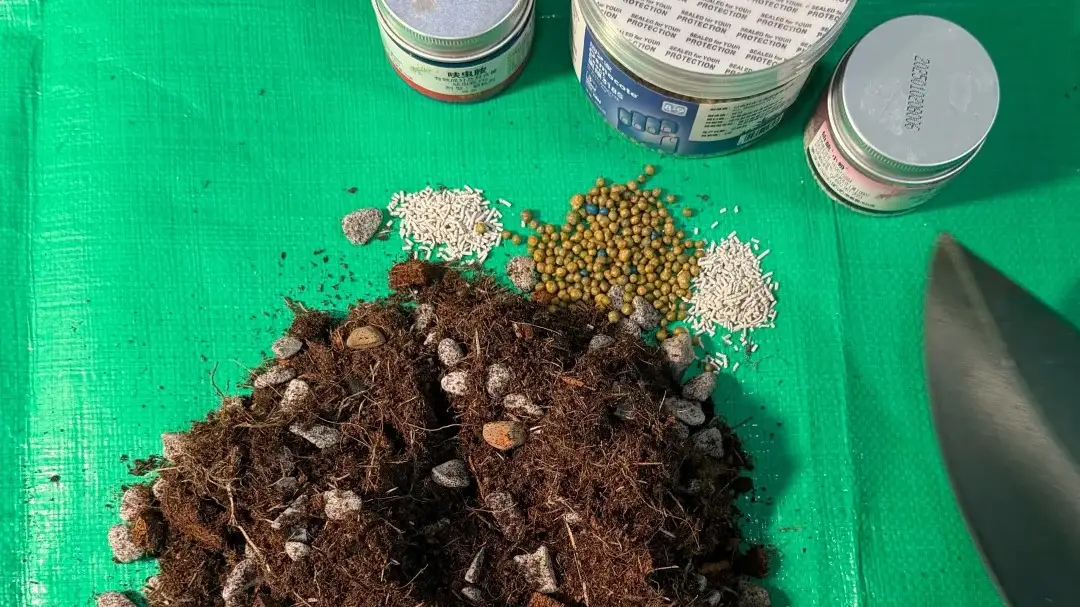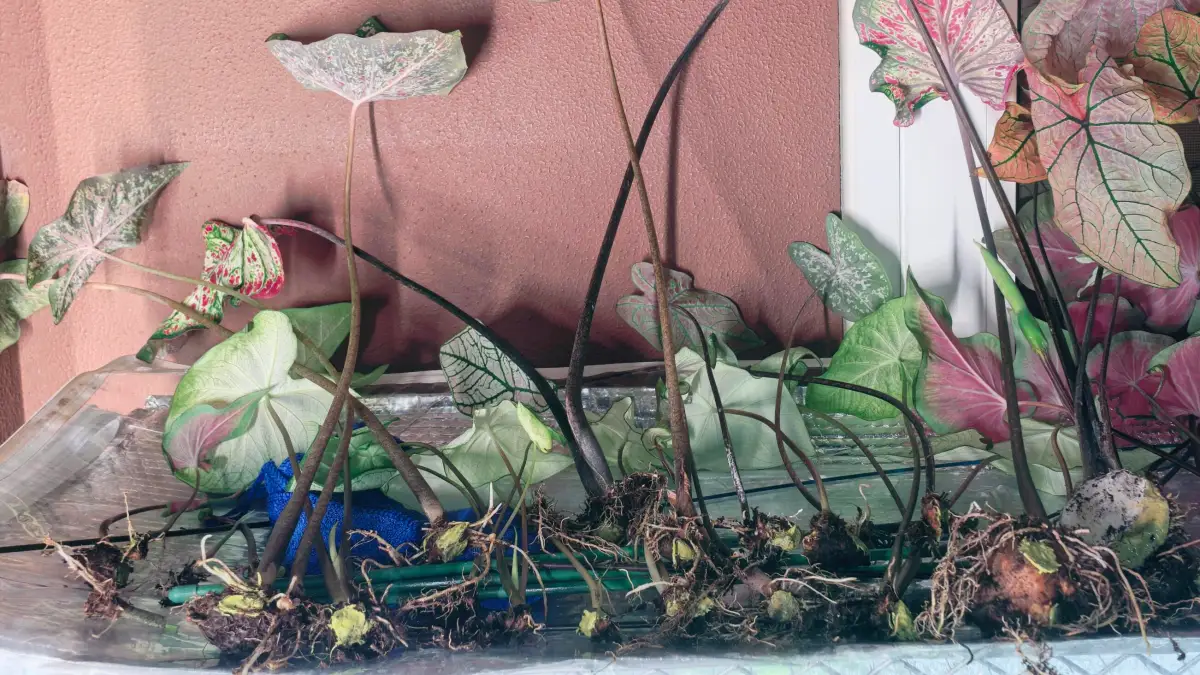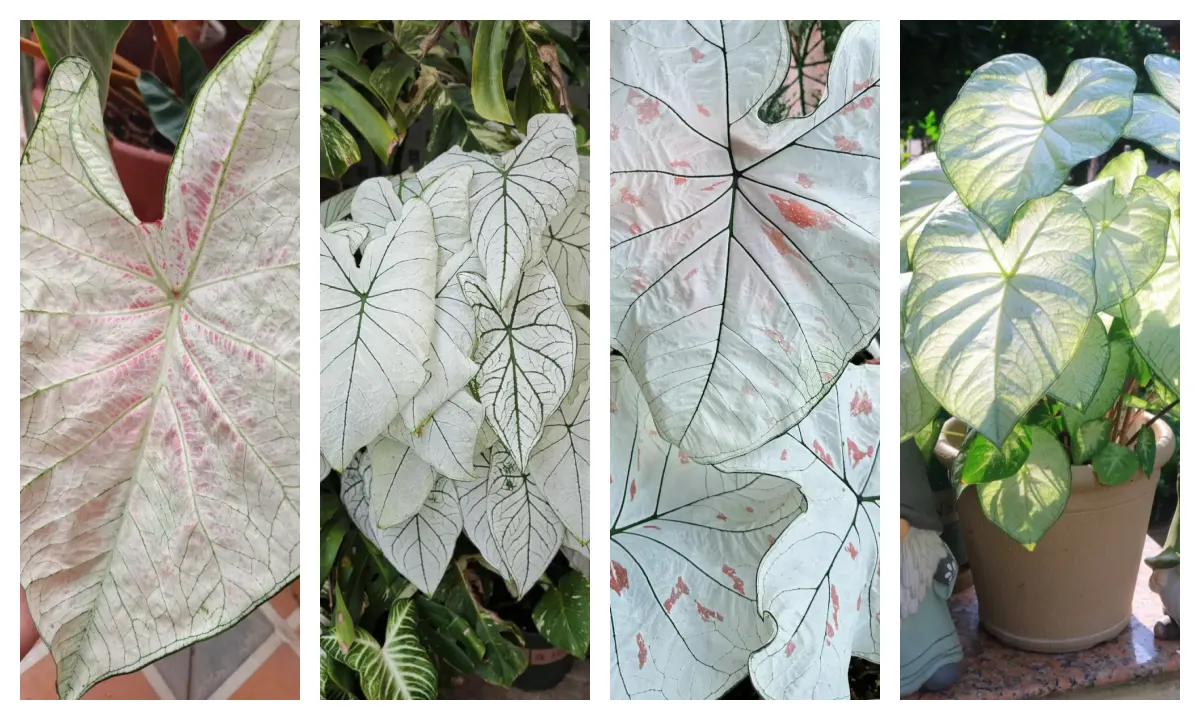
At first glance, Aaron looks like one of the simplest caladium varieties you can grow.
Clean white leaves, defined green veins, minimal pattern. It gives the impression of stability and elegance — almost understated compared to heavily speckled or pink-centered varieties. Because of that, many growers assume it’s easy.
My experience started very differently.
When I first brought Aaron home, it was weak. The leaves drooped constantly. No matter how I adjusted watering, it never fully stood upright. The plant looked soft, unstable, and slightly defeated — not dramatic, just persistently underwhelming.
It didn’t look like a giant-leaf variety.
It looked like a plant struggling to hold itself up.
That’s when I made a decision that changed everything: I cut it back completely.
What followed over the next two seasons — especially after a month of strong direct sun — forced me to rethink what Aaron actually is. The same plant that once bent downward began producing massive, upright leaves. Growth accelerated. The canopy expanded so aggressively that I eventually had to move it into a 7-gallon container.
Aaron, I learned, is not a delicate white variety.
It is a light-driven plant with enormous structural potential — but only if the environment is strong enough to unlock it.
This article documents that shift: from drooping weakness, to hard reset, to sun-triggered explosion — and what it taught me about how Aaron really behaves.
First Impression – Why Aaron Looks Easy (But Isn’t)
Aaron is one of those caladium varieties that looks deceptively simple.
At first glance, it appears clean and minimal — broad white leaves, defined green veins, and very little visual noise. Compared to heavily patterned or bright pink cultivars, Aaron feels calm and balanced. It doesn’t scream for attention. It looks refined.
That visual simplicity creates a common assumption: if a plant looks clean and stable, it must be easy.
Many growers, especially beginners, gravitate toward Aaron for exactly that reason. The white base suggests brightness without complexity. The pattern looks structured rather than chaotic. There are no dramatic speckles or unstable color transitions to manage.
But visual minimalism does not equal environmental tolerance.
White-based caladiums, by nature, contain less chlorophyll in their leaf surface. That means they rely more heavily on proper light balance to maintain structure and strength. Too little light, and the plant weakens. Too much harsh exposure without acclimation, and stress shows quickly.
Aaron’s simplicity is aesthetic — not physiological.
It may look like a beginner-friendly white variety, but in reality, it is highly responsive to its growing environment. Its performance depends less on basic watering and more on precise light positioning.
The calm appearance hides a plant that reacts quickly — and sometimes dramatically — to placement.
And that’s where my own experience began to diverge from first impressions.
A Weak Start – The Drooping Problem
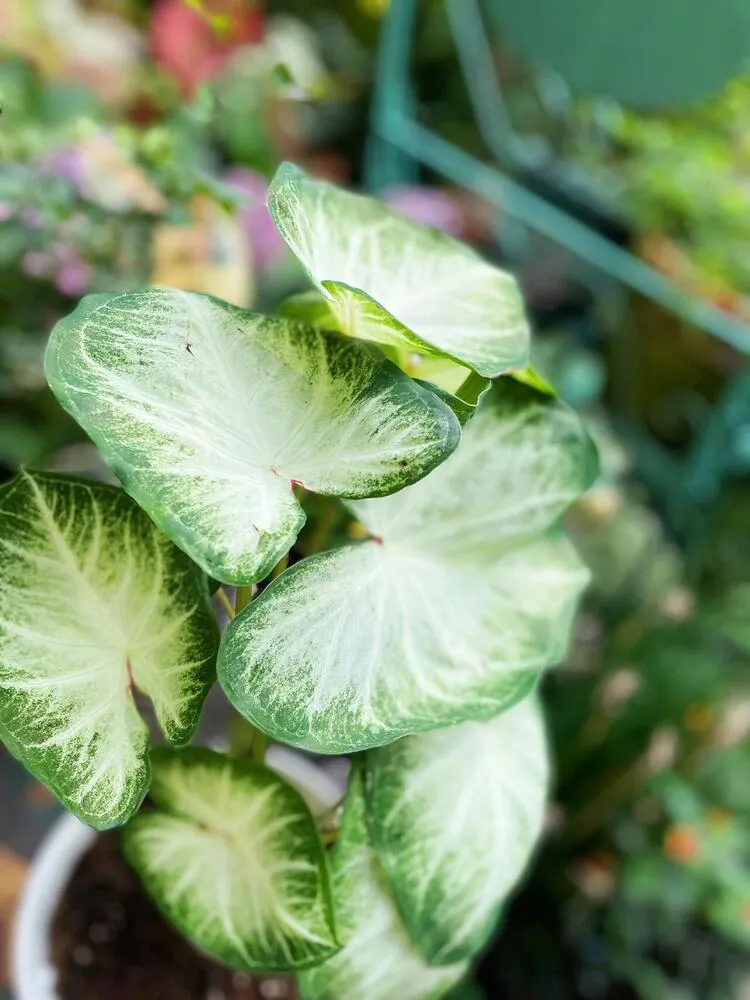
When I first brought Aaron home, it didn’t look refined. It looked unstable. The leaves hung downward, and the petioles felt softer than they should.
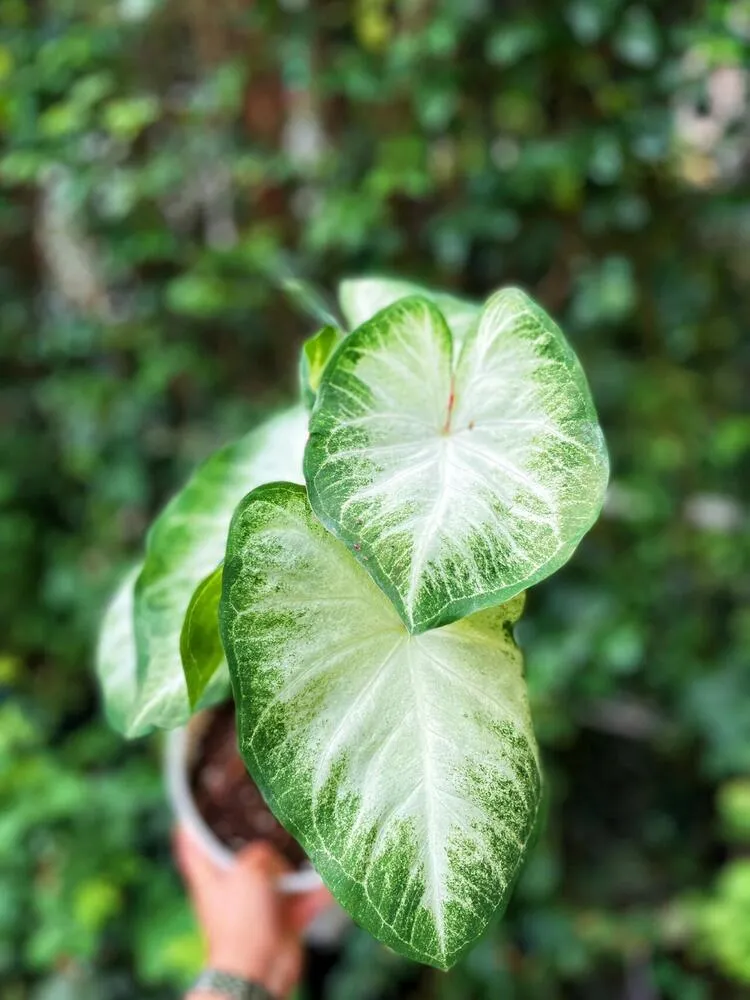
It wasn’t dramatic collapse. The plant simply never stood upright. Even when the soil moisture was appropriate, the posture stayed weak.
My first instinct was root trouble. Drooping usually points underground. I checked drainage and watering rhythm, but nothing was obviously wrong — which forced me to reconsider what drooping actually means indoors.
That’s what made it confusing.
It wasn’t dying. It just wasn’t strong. At that point, I reviewed my usual watering pattern to make sure moisture wasn’t the hidden cause.
Only later did I realize the issue wasn’t below the soil. It was above it.
The Hard Reset – Cutting Everything Back
Eventually, I stopped adjusting and made a harder decision. I cut everything back, essentially forcing the tuber to restart under different conditions. All the old leaves were removed.
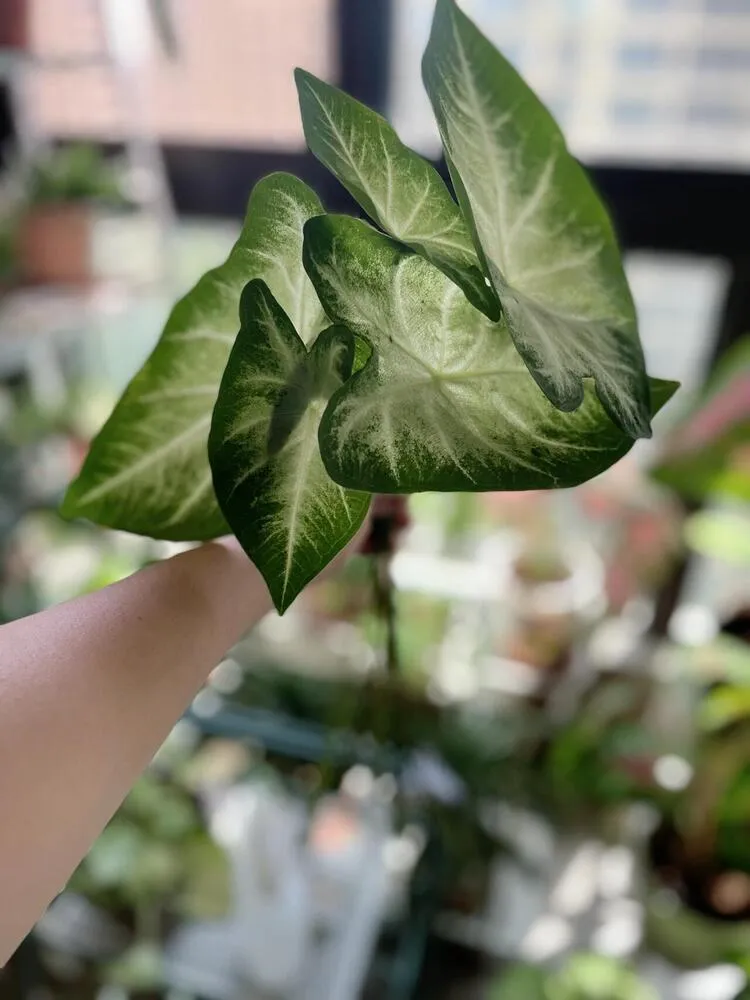
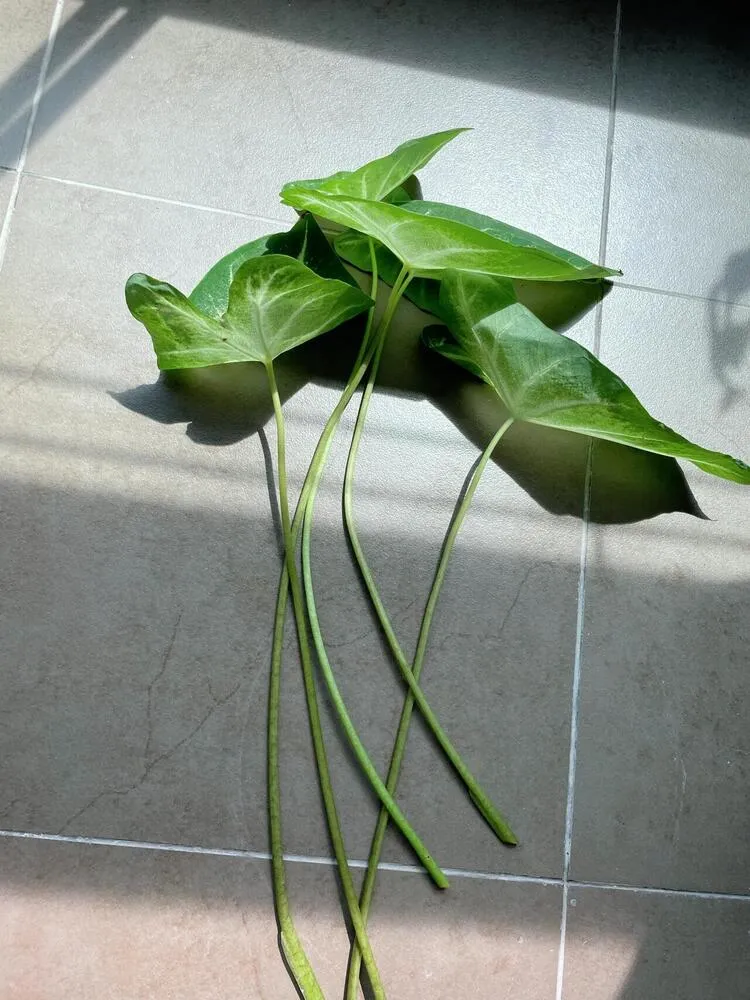
The plant looked bare overnight. Just soil and the central tuber. No foliage at all.
This wasn’t emotional pruning. It was structural reset.
I wanted to eliminate weak tissue and force new growth under better conditions. If the drooping was environmental, the next flush would reveal it.
Then I waited.
When the first new leaf emerged, it stood upright. The petiole was firmer. The posture was noticeably stronger than before.
That’s when I understood something important.
The weakness wasn’t permanent. It was conditional.
And once the plant restarted under stronger light, the structure corrected itself.
The One-Month Sun Test – When Everything Changed
After the hard reset, I changed one variable decisively. I moved Aaron into strong direct sun — far brighter than what most indoor setups provide.
For nearly a month, it received consistent exposure. I expected burn or stress at some point.
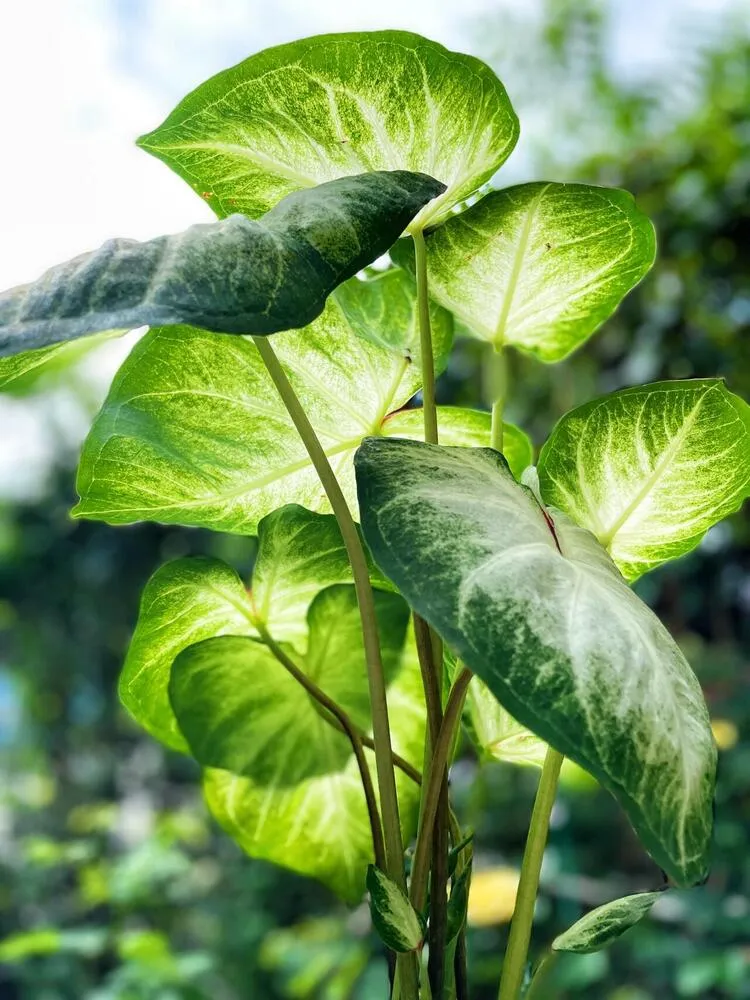
It didn’t happen.
Instead of scorching, the plant strengthened. New leaves emerged thicker and more upright than before.
Then growth accelerated.
Leaf size increased noticeably. The canopy expanded faster than I anticipated. What had once looked fragile now looked structural.
Within weeks, the plant was producing leaves in quick succession. Not just more leaves — larger ones.
That was the turning point.
Aaron wasn’t a weak white variety. It was a light-driven giant that had simply been underpowered.
And once the environment matched its capacity, the response was immediate.
When Aaron Turns Into a Giant
The most surprising change wasn’t posture. It was scale.
Once light conditions stabilized, the leaves began expanding beyond what I initially expected. Each new flush came larger than the last.
The plant stopped looking delicate. It started looking architectural.
Leaf surface area increased noticeably. Petioles thickened. The canopy widened enough that spacing became an issue.
Eventually, I had to repot into a 7-gallon container.
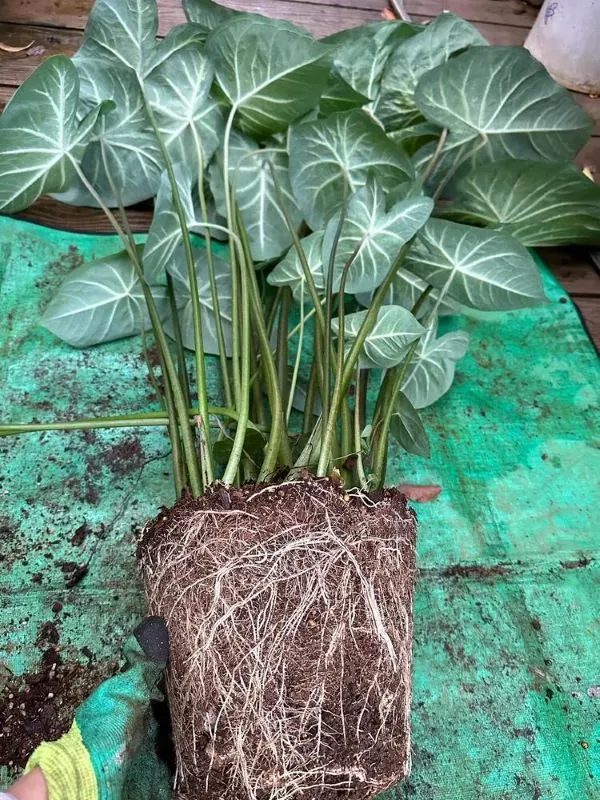
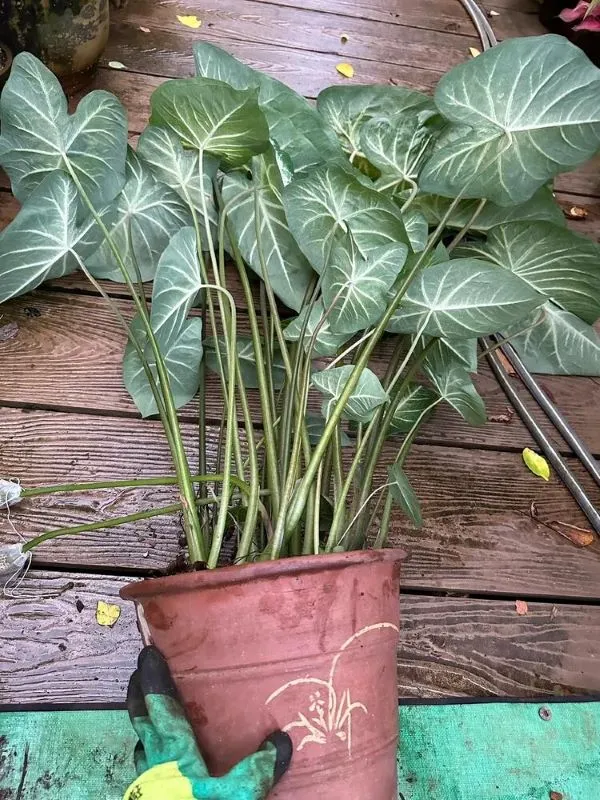
This wasn’t cosmetic. The root system was clearly pushing for more volume. Growth rate and leaf size both indicated that the plant had outgrown its previous pot.
That’s when I understood Aaron’s real category.
It isn’t a compact white accent plant. It’s a true large-leaf caladium that requires strong light and sufficient root space to reach its full size.
Underpowered, it droops.
Properly driven, it scales.
And once it scales, it needs room.
Aaron Is Not Weak, Just Underlit
Aaron is not a fragile white caladium.
It only looks weak when light is insufficient. Underpowered conditions exaggerate its softness and make the drooping appear structural.
Once placed in strong light, the response is immediate and visible. Leaves stand upright, size increases, and growth accelerates without hesitation.
This variety reacts sharply to environmental strength. It doesn’t tolerate low energy — it reflects it.
In the right conditions, Aaron is not delicate at all.
It is a large-leaf, high-potential cultivar that simply requires enough light to unlock its structure.
Underlit, it bends.
Properly lit, it scales.
And when it scales, it becomes something entirely different from that first impression.
FAQ
Want to Explore Other Caladium Varieties?
Understanding caladiums starts with seeing how each variety behaves.
Browse All Caladium Varieties →