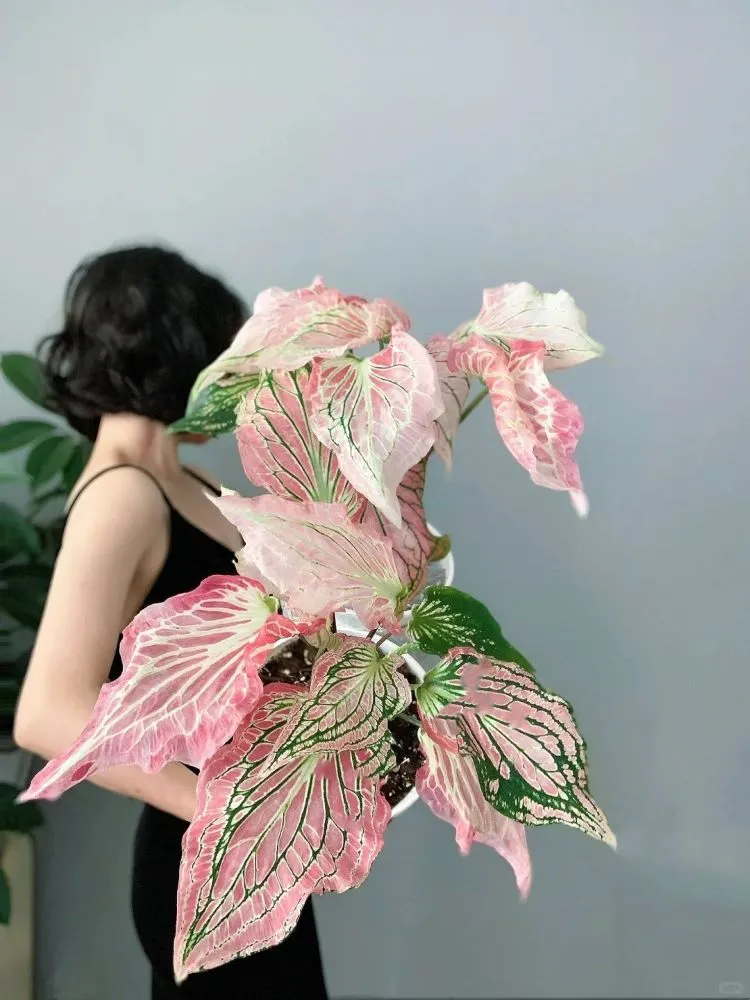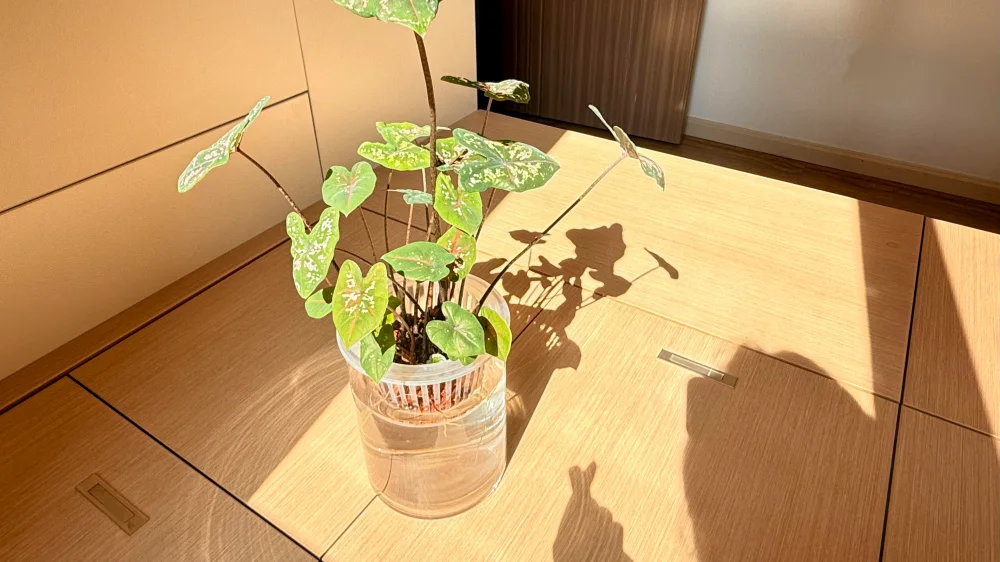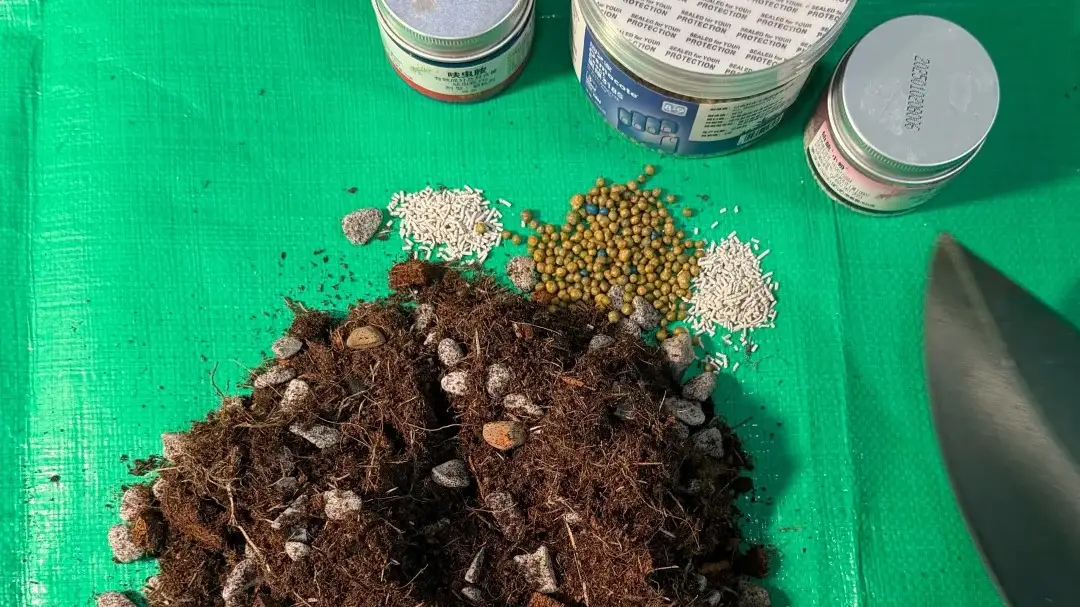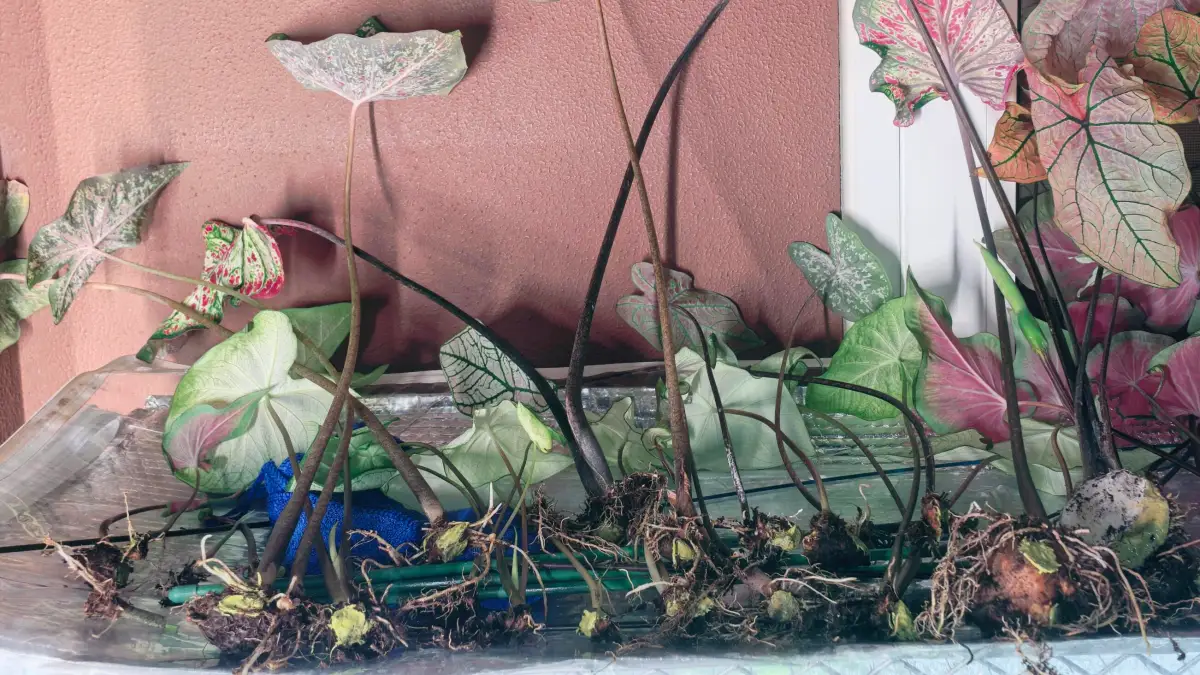
When caladiums don’t seem to grow, the question is rarely just about size. Sometimes there are no new leaves at all. Other times new leaves keep appearing, but everything still looks the same — the plant doesn’t feel any bigger, fuller, or more established than before.
I’ve run into both situations. I’ve grown caladiums from small tubers and kept fully grown store-bought plants. I’ve watched leaves shrink over time, growth slow to a crawl, and — in some cases — suddenly take off once conditions changed. None of those shifts happened in a straight line.
What I’ve learned is that “not growing” is often misunderstood. In caladiums, growth doesn’t always disappear when conditions aren’t ideal — it gets redistributed. Energy moves, priorities change, and what the plant produces reflects that internal balance. If your plant also looks weaker week by week (not just smaller), this is how I tell when waiting stops being safe.
So when a caladium isn’t getting bigger, the question usually isn’t whether growth exists. It’s where that growth is being allocated, and why. If you want the full map of symptoms, I keep everything organized in my Problems Hub.
When “Not Growing” Actually Shows Up in Two Patterns
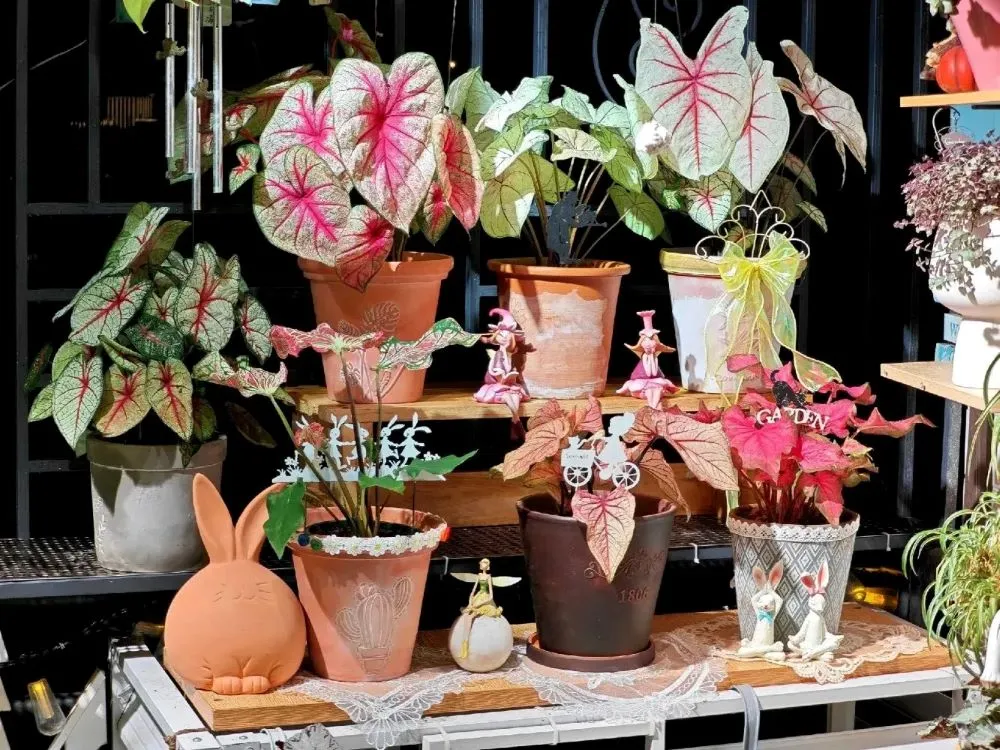
Different colors, different leaf shapes, all sharing the same quiet rhythm of light and care. For anyone who truly loves caladiums, this kind of shelf isn’t decoration — it’s a destination.
When caladiums don’t grow, it usually shows up in one of two ways — and they mean very different things. The key is that both can look like “nothing is happening,” even though very different processes are underway. If the plant also can’t hold itself up, start here first.
In the first pattern, no new leaves appear while older ones continue to fade and exit. The plant isn’t expanding or replacing what it loses. On the surface, it feels stalled, but underneath, it’s reducing its footprint rather than preparing to grow.
In the second pattern, new leaves keep coming, but each one is smaller than the last. Growth is technically ongoing, yet the plant never looks larger or more established. It’s maintaining activity without increasing scale.
These patterns aren’t about causes or fixes. They’re about recognizing how growth is behaving. Once you can tell which pattern you’re seeing, everything else becomes much easier to interpret.
Pattern One: No New Leaves, While Old Leaves Keep Fading
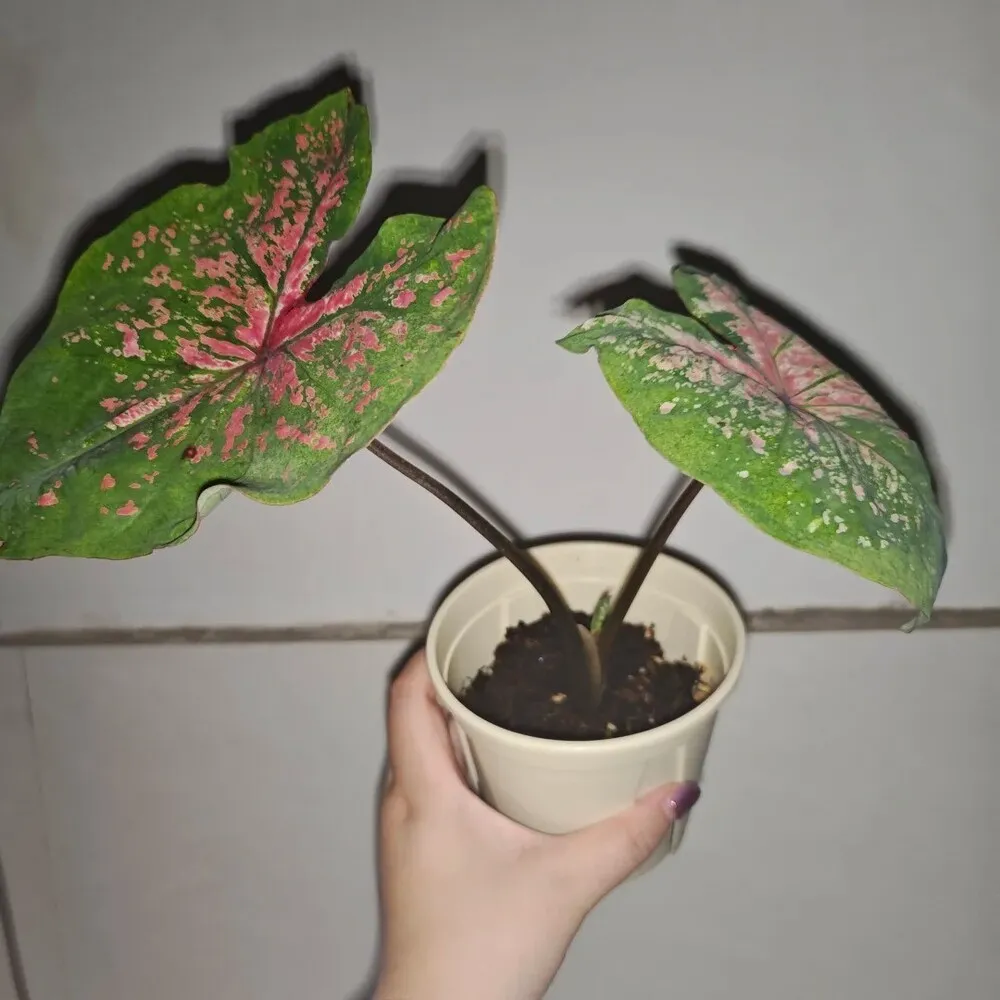
This isn’t paused growth. It’s controlled retreat.
In this pattern, older leaves continue their natural exit, but nothing new steps in to replace them. One leaf fades, then another, and the plant slowly carries less foliage than it did before. There’s no sudden collapse — just a quiet reduction in what’s visible above the soil.
What’s easy to miss here is that this loss isn’t always happening because the plant is running out of energy.
In several of my own plants, I didn’t see new leaves for weeks. If you’re earlier in the season and you’re still stuck at “nothing is sprouting,” this guide helped me most. Old leaves kept aging out, and visually the plant looked like it was shrinking. But when I eventually lifted the plant and checked the corm, the story underneath was completely different.
The tuber had grown — sometimes dramatically.
Not slightly thicker, but several times larger than when I first planted it.
That’s when it clicked for me:
growth doesn’t only go upward.
A caladium doesn’t distribute energy to everything at once. At any given stage, growth is being allocated somewhere — and sometimes that “somewhere” is neither new leaves nor existing foliage, but the root system itself.
In this phase, the plant isn’t trying to expand its canopy. It’s reducing surface area while investing below ground. Leaf count goes down. Visual mass shrinks. Yet the plant is quietly building capacity rather than momentum.
This is also where many growers assume they’ve failed — that something must be corrected immediately. But in my experience, this pattern often isn’t about having done something wrong. It’s more often a sign that the environment is only sufficient for maintenance and storage, not for visible expansion.
Understanding this distinction matters.
A caladium in controlled retreat isn’t stuck — it’s reallocating. And until conditions improve, no amount of urgency will redirect that energy back into new leaves.
Pattern Two: New Leaves Keep Coming, But Each One Gets Smaller
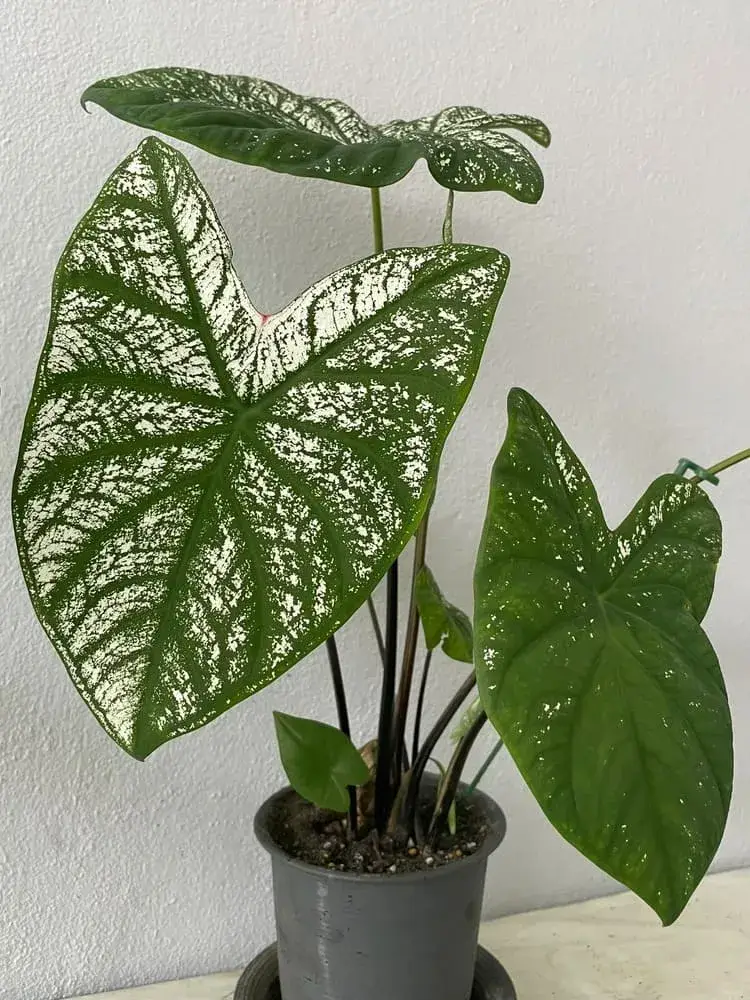
The plant is growing, but it isn’t advancing.
This is the pattern that’s easiest to misread. New leaves keep appearing, so it feels safe to assume everything is fine. Growth hasn’t stopped — it’s visible. And yet, when you step back, the plant doesn’t look any bigger than before. Sometimes it even looks lighter, less substantial.
What changes quietly is scale. Each new leaf arrives slightly smaller than the last. Petioles may stretch, but the canopy never thickens. The plant stays busy without actually building presence. When smaller leaves come with a quiet loss of vigor, I treat it as a root signal — not a light issue.
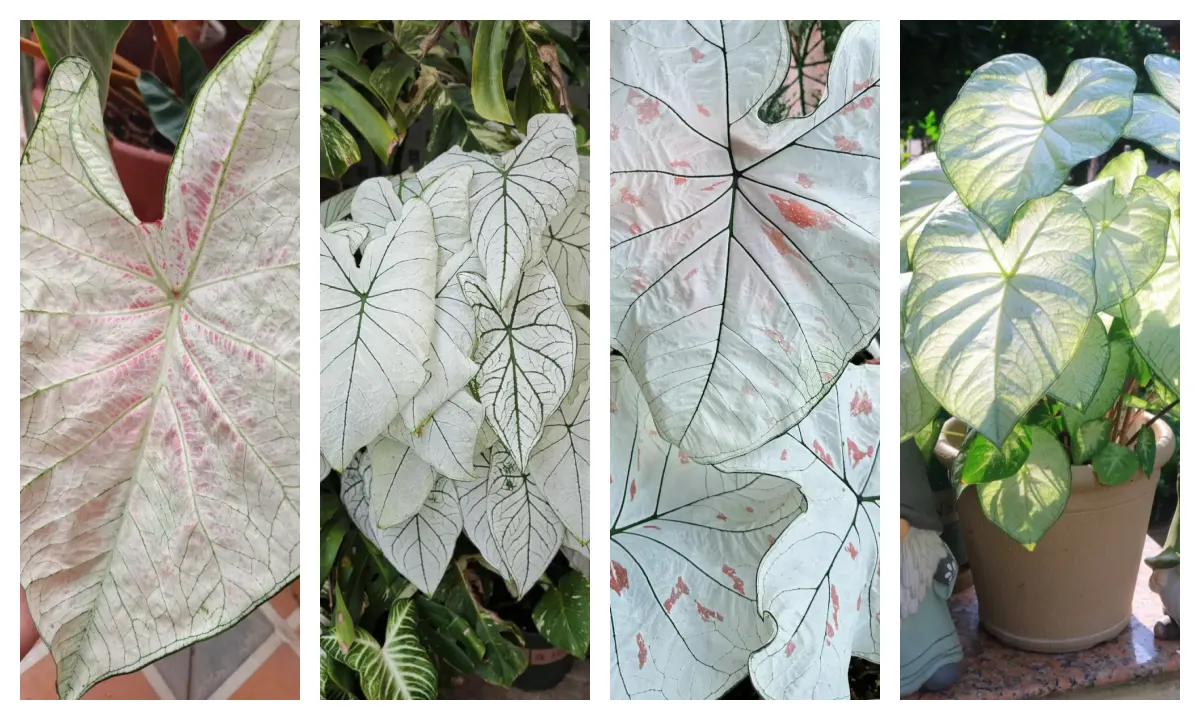
I noticed this most clearly last year with a White Christmas caladium. Early on, the leaves were large and confident. Over time, though, each new leaf came in smaller, even though the plant was producing more of them. At first, it looked like decline. But nothing was damaged. The plant was simply spreading its resources too thin.
When I divided it in early spring, one pot became two. The difference was immediate and telling: the pot with fewer leaves started producing noticeably larger ones. Less competition allowed the plant to concentrate its energy instead of distributing it across too many growth points.
That experience shifted how I judge progress. A caladium can look active without actually getting stronger. Leaf count alone doesn’t tell the story.
Leaf size often tells you more than leaf count.
Once I started paying attention to that, this pattern stopped feeling confusing — and started feeling readable.
What Leaf Size Taught Me About Energy Distribution
For a long time, I treated things like fertilizing, adding a grow light, or dividing a plant as separate actions — individual “fixes.” What I eventually realized is that they all affect the same underlying question: how much energy the plant has, and how thinly that energy is being spread.
I saw this clearly with a mature, store-bought caladium I brought home early on. The first leaves it produced in my space were noticeably small. Nothing looked wrong, but the plant felt underpowered. After I added a grow light and fed more consistently, the change wasn’t immediate — but the next leaves told the story. Each new leaf came in larger than the last, and the plant finally started to look like it was building mass instead of just replacing parts.
That shift wasn’t about forcing growth. It was about finally meeting the energy cost of producing larger structures. Once the plant had enough input, it stopped compromising on size.
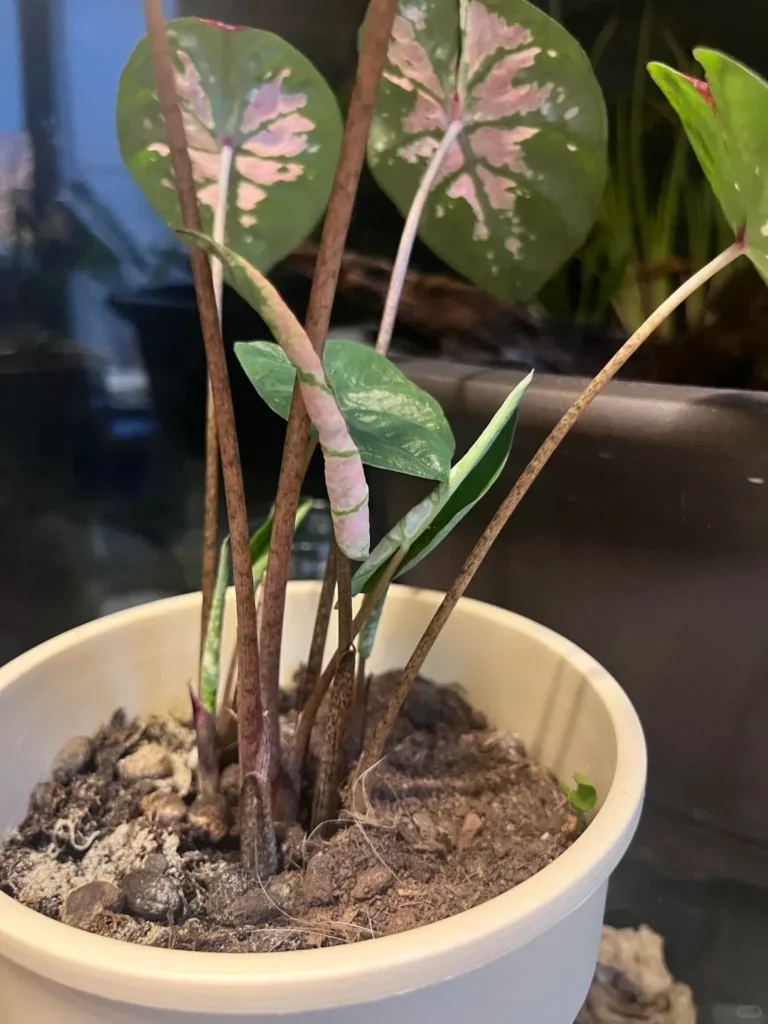
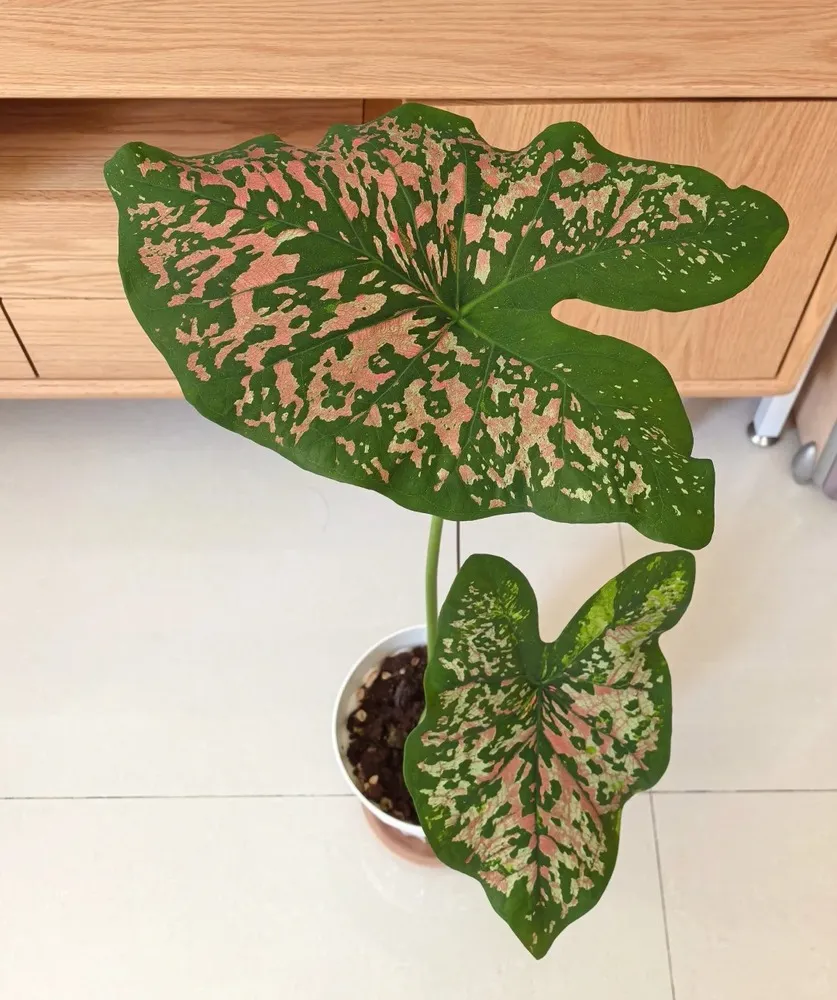
I noticed the same logic at work when watching how many growth points a plant was supporting. When a caladium pushes multiple buds at once, the result is often more leaves — but smaller ones. Energy gets divided, margins get thinner, and no single leaf reaches its full potential. When there’s only one dominant growth point, the opposite happens. Fewer leaves, but noticeably larger and more confident.
That’s when it clicked for me. Growth isn’t just about activity — it’s about allocation.
More leaves don’t always mean more growth. Sometimes they mean thinner margins.
Once I started reading leaf size as a reflection of energy distribution, a lot of confusing “not growing” moments suddenly made sense.
When Smaller Leaves Point to Root Limits, Not Light or Fertilizer
Not every case of shrinking leaves is about energy input. Sometimes the plant isn’t struggling to distribute resources — it’s struggling to absorb them.
I saw this with a White Lover caladium after it went through summer. Over time, the plant produced fewer compound leaves, and new growth stopped recovering its previous size. Nothing looked obviously wrong above the soil. The leaves weren’t collapsing, and there were no dramatic warning signs. But the plant felt tired, as if it was slowly losing capacity.
When I finally checked the roots, the picture changed completely. Most of the root system had turned dark and unhealthy. Only a small portion of white, functional roots remained. At that point, leaf size wasn’t a lighting or feeding issue anymore.
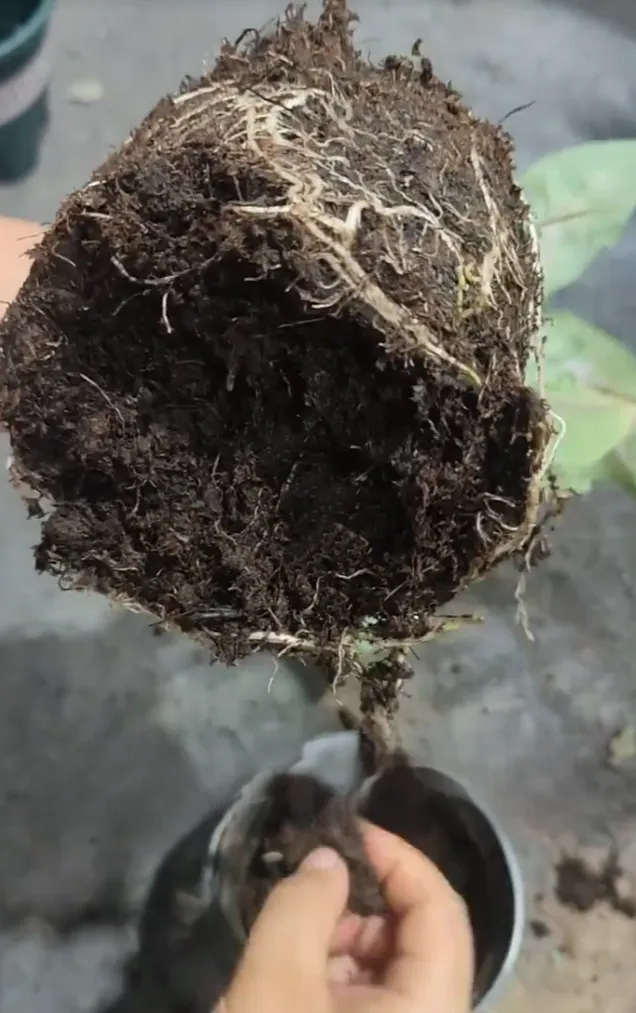
At this point, leaf size is no longer the issue.
The root system has lost its ability to support growth.
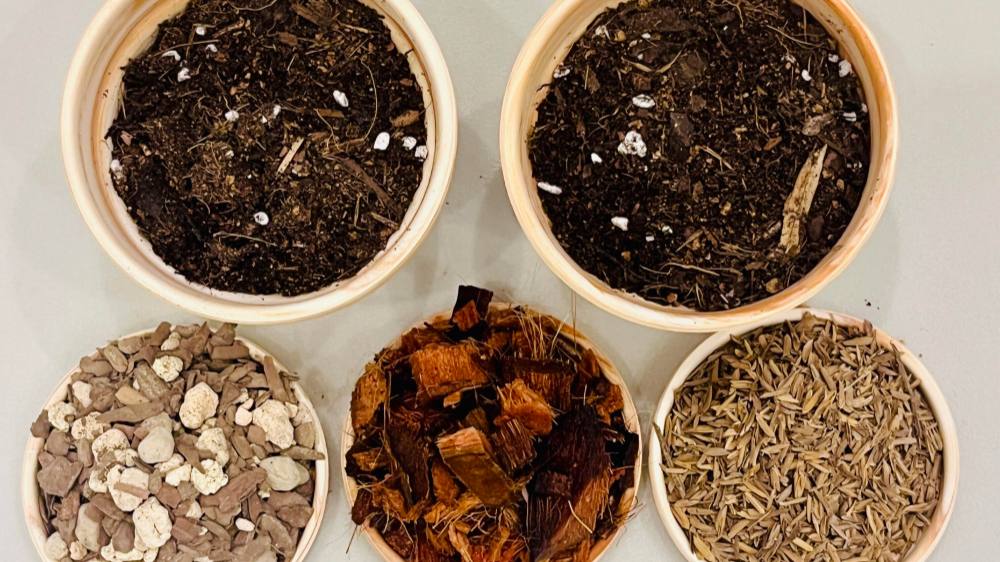
This is the moment where waiting no longer helps. Removing damaged roots, switching to a more breathable mix, and repotting into a container that suits the remaining root mass becomes a reset — not an upgrade. The fastest improvement I usually see comes from fixing wet cycles first. With caladiums, roots are delicate. Even slight compaction or poor airflow can tip them into decline.
The key shift for me was recognizing the threshold. Smaller leaves can tell many stories, but when they’re paired with a quiet loss of vigor, they’re often pointing downward — not upward.
What Actually Helped My Caladiums Grow Bigger Again
What ultimately changed my results wasn’t finding a way to make caladiums grow faster. It was learning how to stop working against their limits.
When energy could stay concentrated instead of being stretched thin, leaf size followed. When roots had enough air and space to function, growth stopped feeling strained. And when the plant wasn’t forced to support more leaves than its system could handle, size came back naturally.
None of this happened through shortcuts. There was no single adjustment that fixed everything overnight. What mattered was alignment — matching light, root capacity, and leaf density so the plant wasn’t constantly compensating.
Once I stopped counting leaves and started watching size, caladium growth finally made sense.
FAQ
Still not sure what your plant is telling you?
If yellowing, drooping, or root issues keep showing up across different plants, I’ve organized my real-world observations and fixes in one place.
Go to Problems Hub →