Does a bigger caladium bulb produce bigger leaves?
Not always.
Larger tubers do store more energy, and under warm, stable growing conditions they often produce stronger early growth. But in my indoor setup in the Pacific Northwest, bulb size didn’t translate into leaf size as directly as I expected.
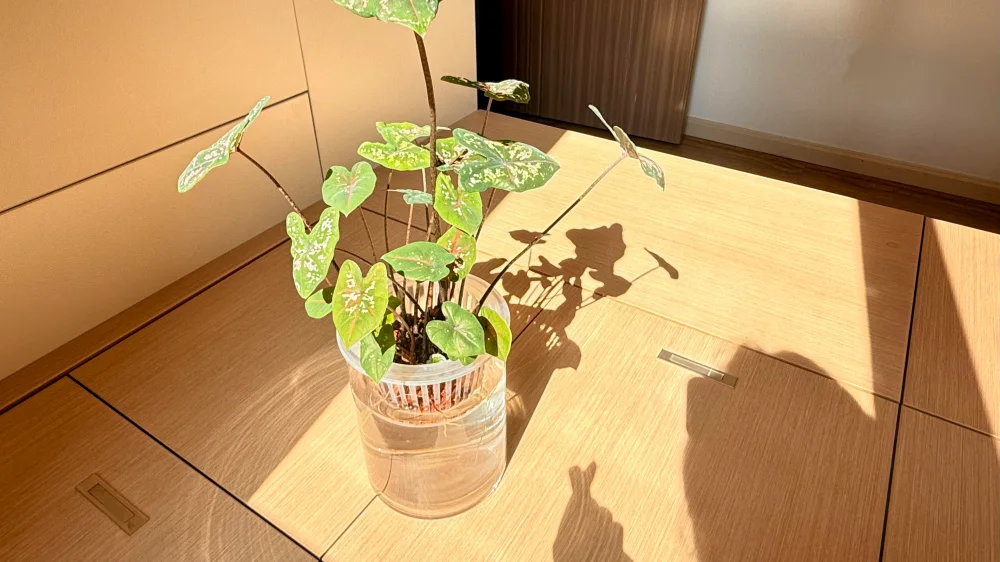
When I compared small 1.5–2 cm bulbs with a 6 cm tuber side by side, the results surprised me. The large bulb pushed out multiple shoots. The smaller bulbs each produced only one leaf — but those single leaves were noticeably larger than any individual leaf from the multi-shoot plant.
That was when I realized something important:
Bulb size increases potential. It doesn’t guarantee bigger leaves.
Leaf size depends on how many buds activate, how energy is distributed, the variety itself, and whether light and temperature are strong enough to support large foliage indoors.
In this article, I’ll break down what actually changed when I grew different bulb sizes in containers — and where size truly mattered, and where it didn’t.
Why This Question Isn’t As Simple As It Sounds
If you spend any time reading bulb listings or plant descriptions, the message is usually clear: larger caladium bulbs produce larger plants. The logic seems straightforward. A bigger tuber stores more carbohydrates, which should support stronger growth and bigger foliage.
But that conclusion quietly assumes something.
It assumes warm temperatures, a long and stable growing season, and often outdoor planting in consistently bright conditions. In places like Florida or other subtropical climates, those assumptions make sense. The plant has months of uninterrupted heat and light to convert stored energy into sustained top growth.
Indoor container growing is a different situation.
In my Pacific Northwest setup, spring arrives slowly. Night temperatures can linger in the mid-teens Celsius, natural light is inconsistent, and growth often starts under less-than-ideal conditions. Even during summer, light intensity indoors rarely matches outdoor tropical exposure.
Under these conditions, stored energy doesn’t automatically translate into larger leaves. It first has to overcome environmental limits — temperature, light strength, container size, airflow, and how many buds activate at once.
That’s why I’ve stopped treating bulb diameter as a guaranteed outcome.
In my environment, bulb size influences potential — not the final result.
The Bulb Sizes I’ve Actually Grown (And Compared)
Before forming any opinion about bulb size, I had to grow them side by side.
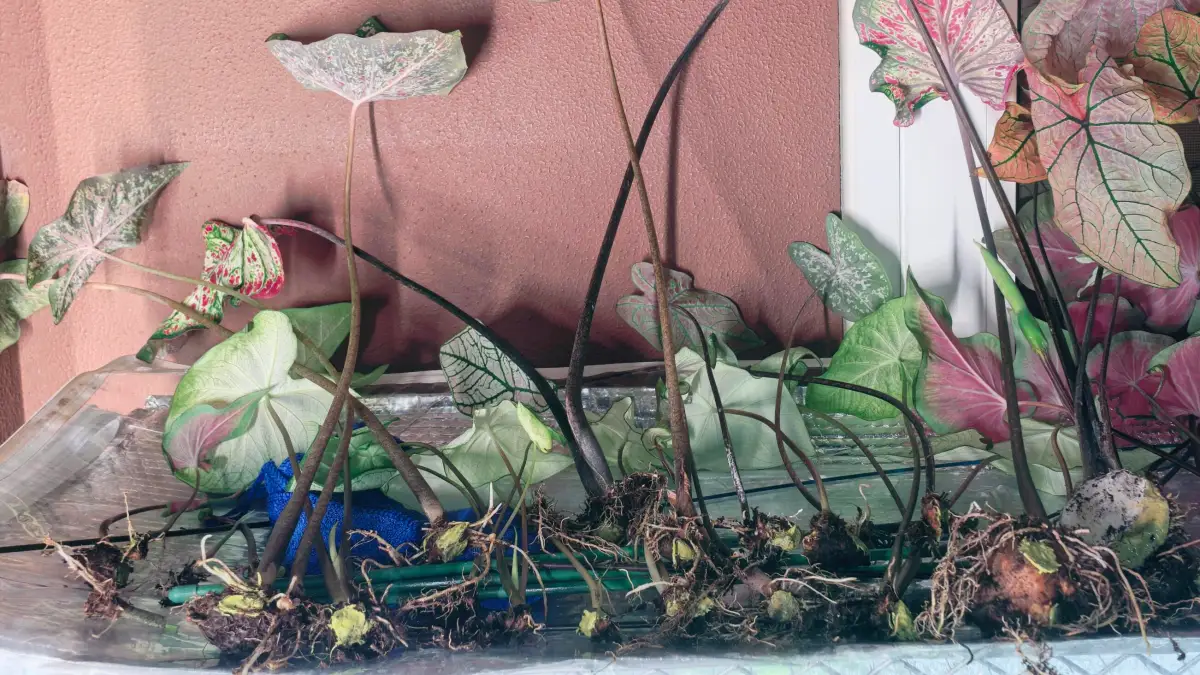
Over the past few seasons, I’ve planted caladium tubers ranging from very small — around 1.5 cm — to medium sizes at 2–4 cm, to larger bulbs around 6 cm and above. At one point, I even tried a tuber close to 10 cm in diameter, simply because I was curious what “jumbo” would actually look like in a container.
These weren’t all purchased at once, and they didn’t all come from the same source.
Some were ordered online, where bulb size was clearly labeled and graded.
Some came from local nurseries, where the sizing was less formal and more visual.
Others were overwintered tubers that I had saved myself, which gave me a chance to observe how size changed from one growing season to the next.
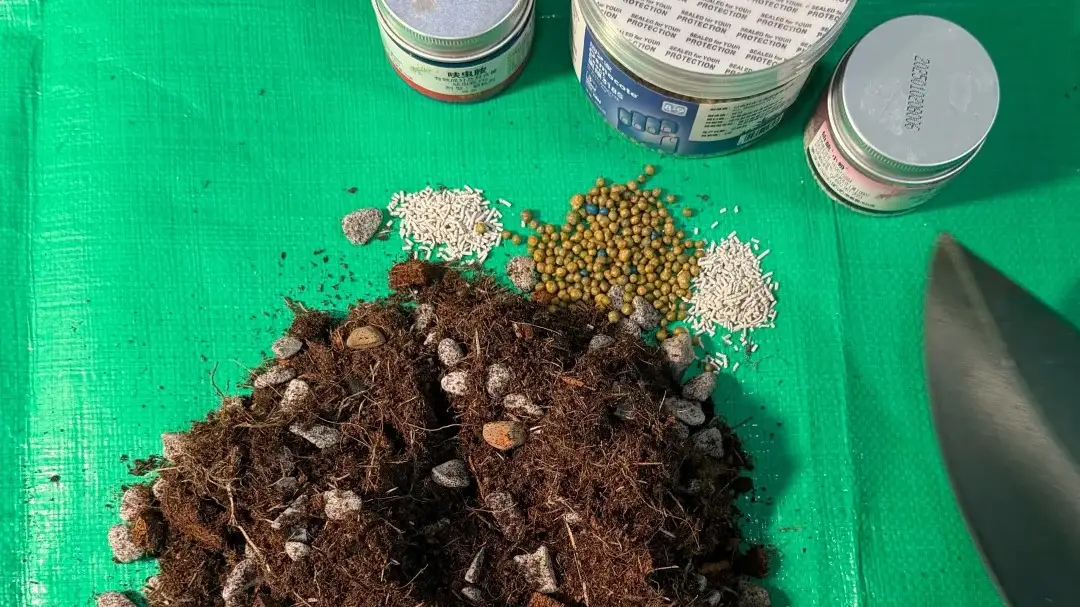
What mattered to me wasn’t just how big they looked when dry on the table — it was how they behaved once planted in the same type of potting mix, under the same indoor light conditions, during the same Pacific Northwest spring.
Growing them in parallel removed guesswork. When conditions were controlled — same soil structure, similar container size, same placement near my indoor light source — the outcomes didn’t always match the “bigger equals better” narrative I had expected.
That’s where the real comparison began.
What Actually Changed With Size
After growing different bulb sizes under the same indoor conditions, I started noticing patterns. Not dramatic, universal rules — but tendencies.
Some differences were clear. Others depended heavily on the environment.
Sprouting Timing
Under stable warmth — especially when indoor temperatures stayed above 20°C — larger bulbs generally initiated growth faster. They seemed to have enough stored energy to push through the first stage without hesitation.
But early spring in the Pacific Northwest rarely offers stable warmth.
When night temperatures were still cool and indoor air wasn’t consistently warm, larger bulbs sometimes sat longer than expected — which is also why I wrote a separate note on caladium bulbs not sprouting. They didn’t rot. They just… waited. Almost as if they were conserving energy until conditions improved.
Interestingly, smaller bulbs under supplemental warmth (near a heating source or warmer indoor zone) sometimes sprouted just as quickly — or even slightly faster. They seemed less “cautious.”
That was the first reminder that stored energy only matters if the environment allows it to be used.
Leaf Size vs. Leaf Count (Energy Allocation)
This was the most surprising difference.
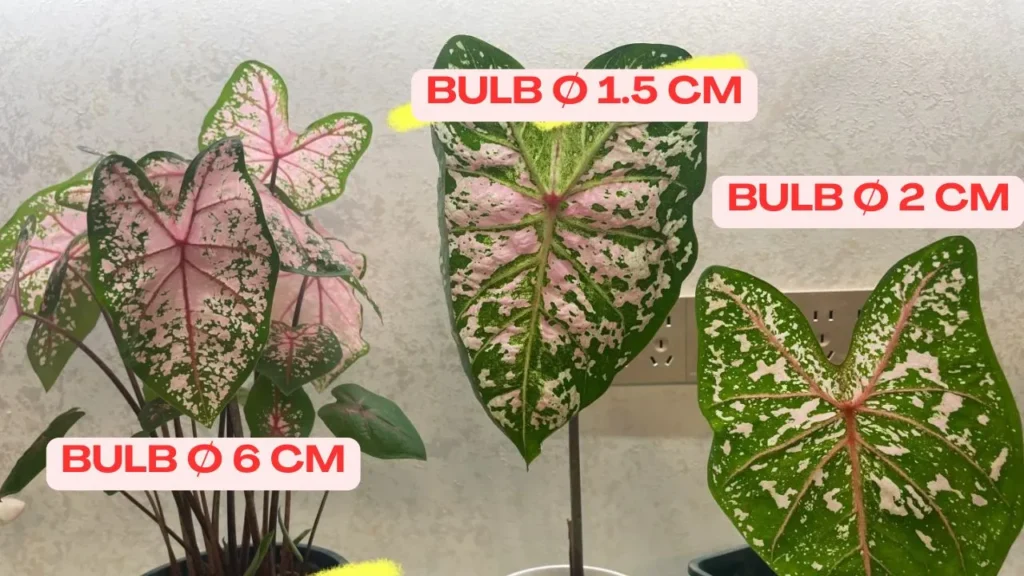
In one side-by-side comparison:
- A 1.5 cm bulb produced one leaf.
- A 2 cm bulb produced one leaf.
- A 6 cm bulb produced multiple shoots.
At first glance, the large bulb looked more vigorous. It had more growth points active at once.
But when the leaves fully expanded, the single leaves from the smaller bulbs were noticeably larger than any individual leaf from the multi-shoot plant.
That was when the pattern became clearer:
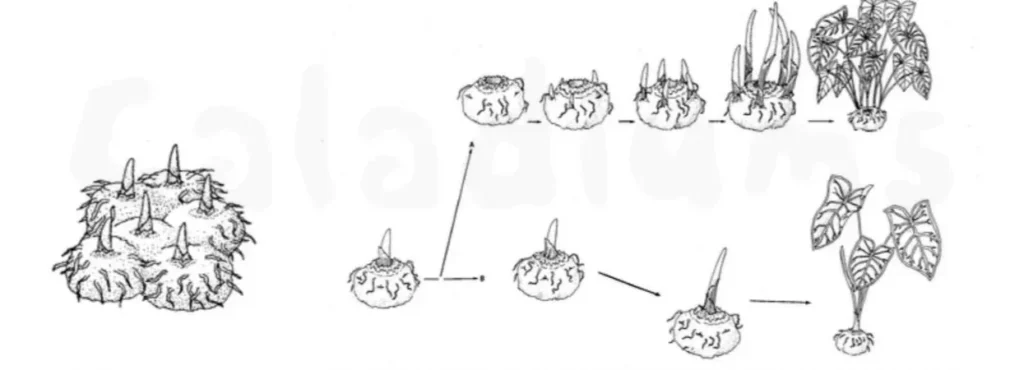
A larger bulb increases the probability of multiple bud activation.
It does not guarantee the largest individual leaf.
When multiple shoots activate at once, the stored energy is divided. Each leaf receives a portion of the available resources. In contrast, a single active bud can direct nearly all stored energy into one leaf.
It’s not just about size — it’s about distribution.
Bud Points Matter More Than Diameter
Over time, I stopped looking at diameter first.
Now I turn the bulb and look for bud points.
How many are visible?
Are they firm and healthy?
Are they evenly spaced or clustered?
Two bulbs of similar size can behave completely differently depending on how many buds activate.
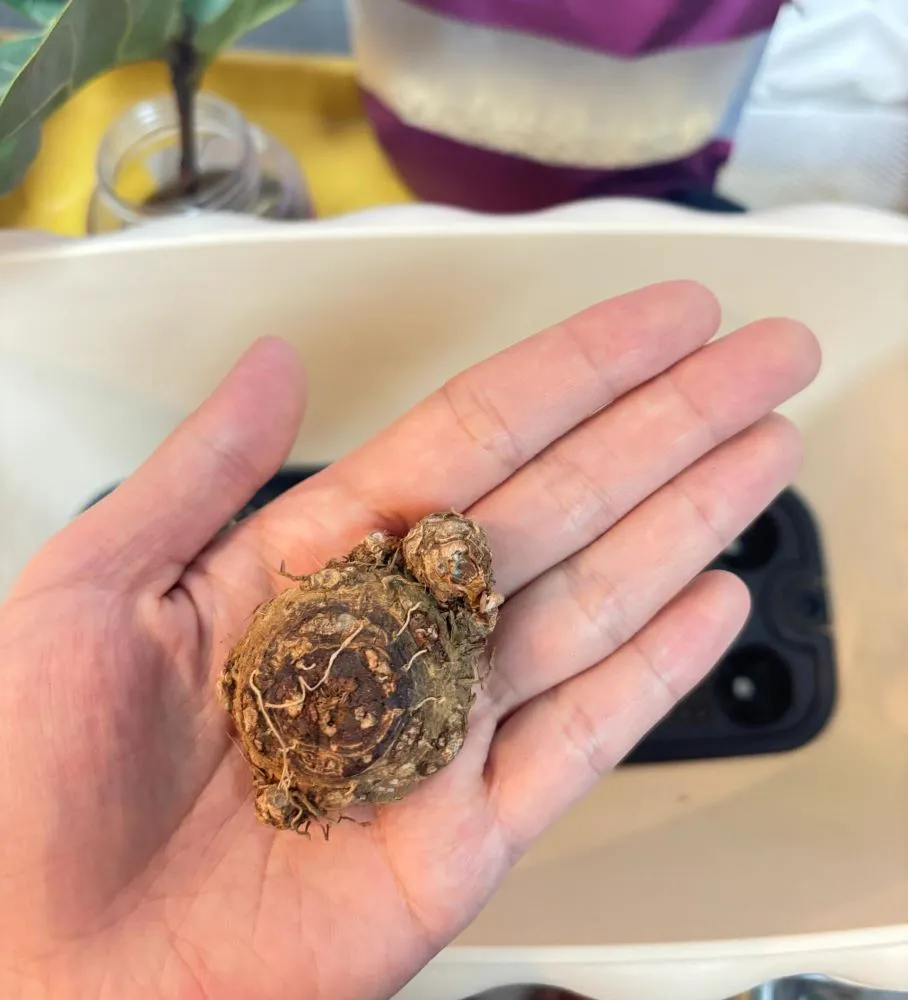
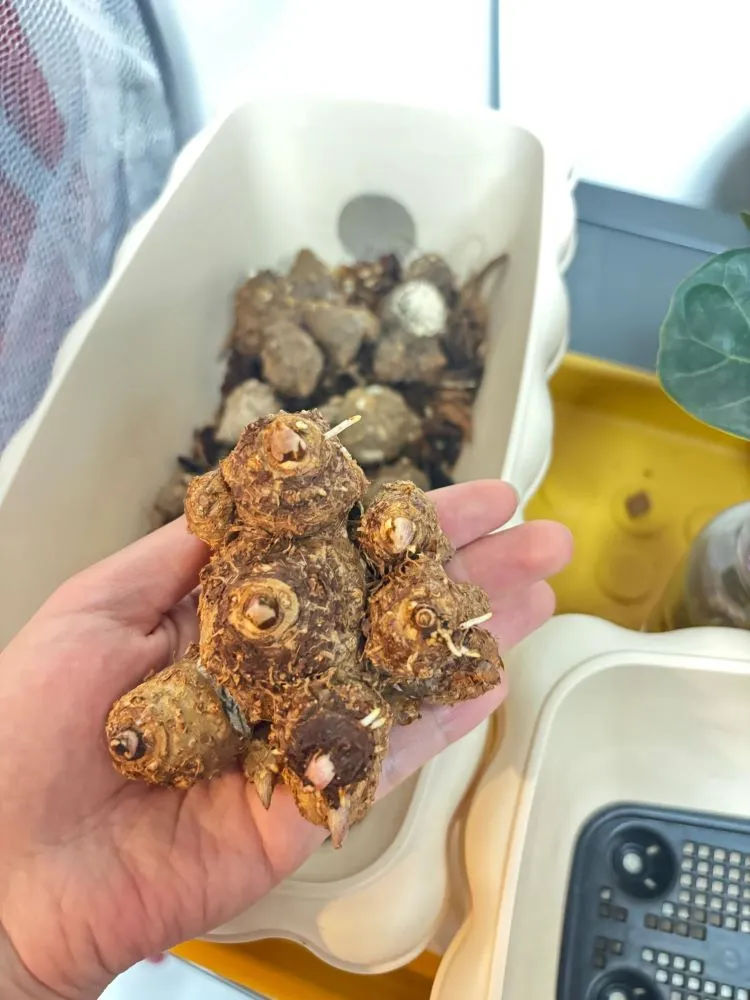
A single-bud bulb often produces fewer but larger leaves.
A multi-bud bulb produces more stems, creating density — but sometimes at the expense of individual leaf size.
That shift in attention — from diameter to bud structure — changed how I evaluate bulbs entirely.
Variety Overrides Size
Another thing that became obvious over multiple seasons: some varieties are genetically predisposed to produce larger leaves, regardless of bulb diameter.
Large-leaf cultivars will stretch. Compact cultivars stay compact.
Even a very large bulb cannot turn a naturally small-leaf variety into a giant foliage plant. And under indoor light conditions — especially in the Pacific Northwest where light intensity is moderate for much of the year — genetic limits show up quickly.
In lower light, plants don’t express their full outdoor potential. In that setting, variety often matters more than size.
Bulb diameter doesn’t rewrite genetics.
Root System Behavior in Containers
This is where container growing changes the equation.
Larger bulbs tend to initiate root growth more aggressively at the start of the season. In a sufficiently sized pot with well-structured mix, they can fill the container quickly.
Smaller bulbs develop roots more gradually and often appear more restrained.
But here’s the catch: container size limits everything. If you’re still dialing in pot size and planting depth, my step-by-step notes on how to plant caladium bulbs may help.
In a pot that’s too small, a large bulb cannot fully express its potential. The root system hits the boundary early, and top growth reflects that limitation. In some cases, the difference between a medium and large bulb becomes negligible once the pot becomes the bottleneck.
In containers, the pot size often controls performance more directly than bulb diameter.
That was one of the more humbling realizations.
Where Larger Bulbs Truly Helped Me
After all the nuance, I don’t want to give the impression that larger bulbs don’t make a difference.
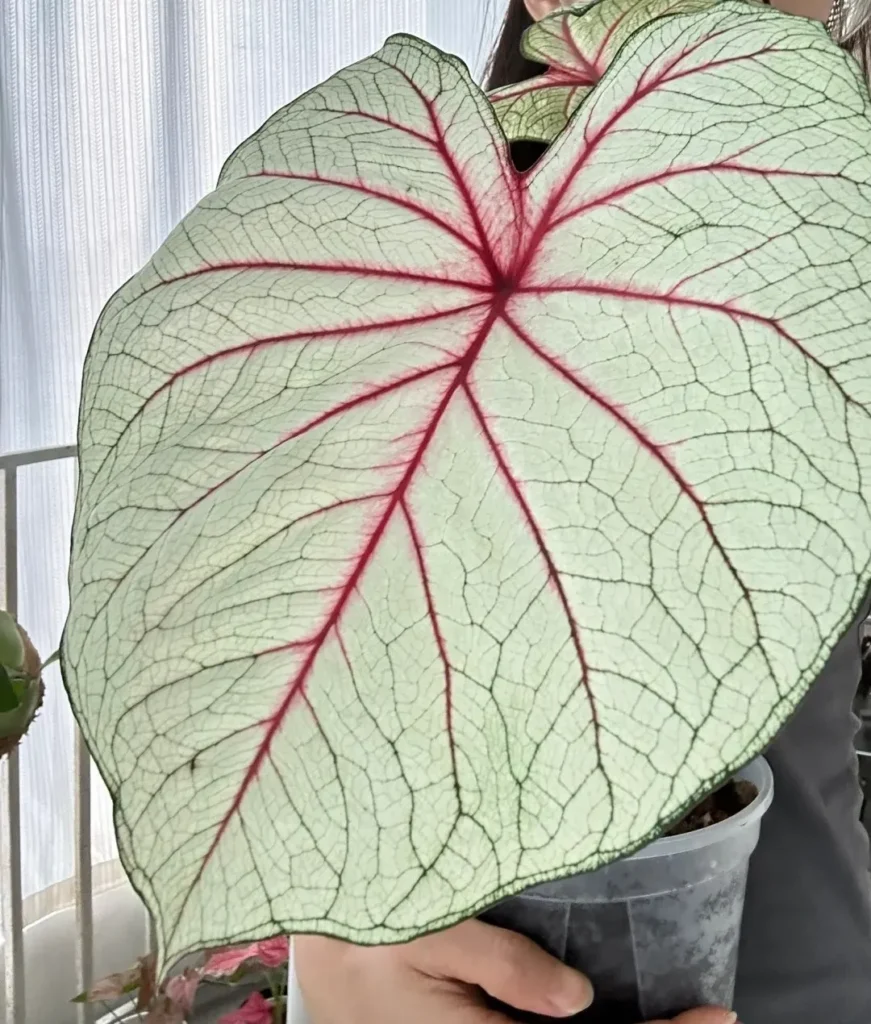
The first time I planted a bulb close to 10 cm in diameter, I genuinely underestimated what it would do. I expected something respectable — maybe a leaf the size of my palm.
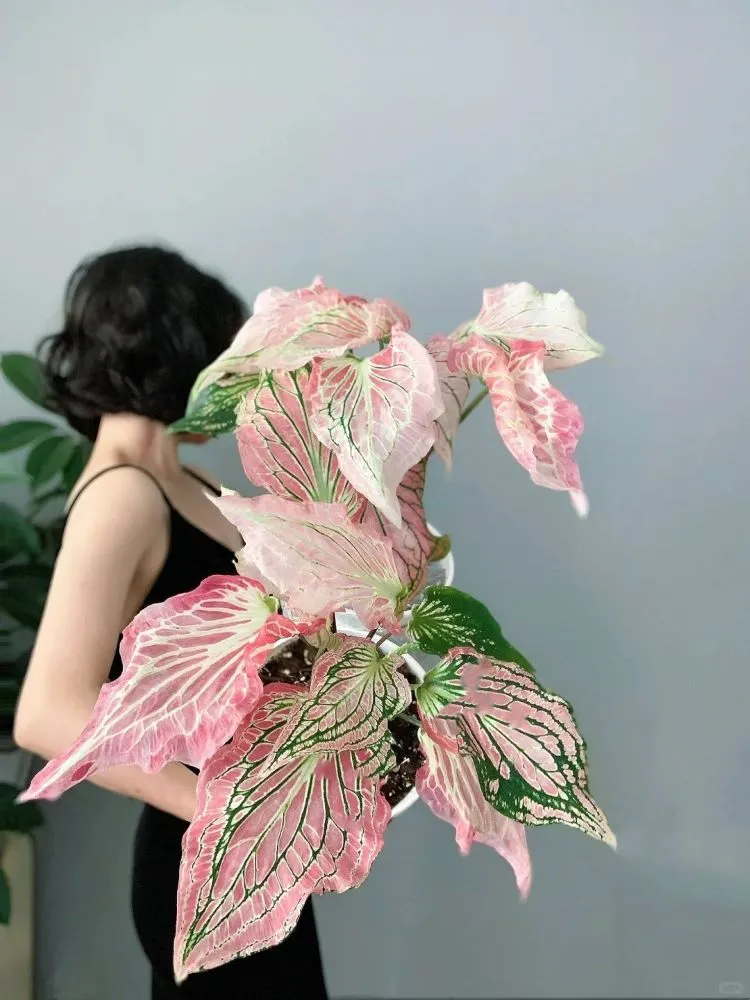
Instead, the first leaf that unfurled was far larger than I had imagined. Thick, wide, and dramatically proportioned for an indoor plant. It didn’t feel incremental. It felt explosive.
But that performance didn’t happen in early spring.
It happened in stable warmth — indoor temperatures consistently above 20°C, longer daylight hours, and a pot large enough to let the roots expand without restriction.
Under those conditions, the larger bulb showed three clear advantages:
Stronger initial momentum.
It didn’t hesitate once growth began. Root development was fast, and foliage followed quickly.
Faster visual impact.
If the goal is to create a full, showy plant early in the season, a large bulb shortens the waiting period dramatically.
Greater resilience during active growth.
In stable warmth with well-draining mix, the larger bulb tolerated minor watering inconsistencies better than smaller ones. Not because it was indestructible — but because it had more internal reserves to buffer small mistakes.
What I’ve learned, though, is that these advantages only show up when three things are true:
- Temperatures are consistently warm
- Light is strong enough to support large foliage
- The container size doesn’t limit root expansion
Without those, the “jumbo effect” fades quickly.
When the environment cooperates, larger bulbs can feel dramatically stronger. When it doesn’t, they behave much more like everything else — just bigger in potential, not necessarily in outcome.
That distinction matters more than I expected.
Where Size Didn’t Matter (Or Even Complicated Things)
There was a time when I assumed underperformance meant the bulb simply wasn’t big enough. Growing different sizes indoors changed that assumption.
Large leaves are harder to support in moderate indoor light. In my room, that “leaning” can look a lot like caladium leaves drooping, even when the bulb itself is fine.
When light isn’t strong, oversized leaves tend to stretch and lean. They look dramatic at first, but stability becomes an issue a few weeks later.
Multiple buds create fullness, not necessarily bigger leaves.
Large bulbs often activate several shoots. The plant looks denser, but individual leaves may be smaller because energy is divided.
In small spaces, scale can feel unbalanced.
A large bulb in a compact container quickly becomes top-heavy. The plant may be healthy, but visually disproportionate for the pot or room.
Without enough light, potential stays theoretical. Indoors, I’ve had to treat light as a limiting factor first — I wrote more detail on caladium grow lights indoors here.
Stored energy can push a strong first leaf, but long-term growth depends on light. If light is limited, large bulbs don’t sustain oversized foliage.
That’s when I stopped thinking in terms of “maximum size” and started thinking in terms of balance.
Bulb diameter sets potential.
Indoor conditions decide how much of that potential is expressed.
A More Realistic Buying Guide (For Indoor Growers in Cooler Climates)
After comparing different sizes indoors, I no longer think in terms of “biggest is best.” I think in terms of fit.
If you’re new to growing caladiums indoors, a medium-sized bulb is often the most balanced choice. It has enough stored energy to establish well, but it’s less likely to create scale or light challenges in a typical room setup.
If your goal is a bold, showpiece plant early in the season, a large bulb can absolutely deliver — but only if temperatures are consistently warm and light is strong enough to support larger foliage. Without that, the extra potential may not fully translate into performance.
For smaller spaces, compact containers, or softer light conditions, small to medium bulbs often produce plants that feel more proportionate and easier to manage over time.
In cooler climates, especially in places like the Pacific Northwest where spring warmth and light arrive gradually, bulb size changes the starting point — not the outcome.
Choosing the right size isn’t about maximizing growth.
It’s about matching potential to environment.
And indoors, that match matters more than diameter.
FAQ
Still figuring out what’s happening with your caladium bulbs?
If sprouting delays, orientation confusion, or root issues keep coming up, I’ve organized all my real-world bulb observations in one place — from planting direction to recovery strategies.
Explore the Caladium Bulbs Guide →