Most people search “caladium leaves turning yellow” with the same quiet assumption: something is wrong, and it needs to be fixed — quickly. Yellow leaves tend to trigger panic, especially with plants that already feel delicate. The instinct is to look for a cause, then look for a solution, and act before it’s “too late.”
What I’ve learned from growing caladiums is that yellow leaves don’t all mean the same thing. In many cases, yellowing is not the problem itself, but the result of something already decided. Some yellow leaves are simply an ending — an old leaf finishing its role as the plant moves on. Others are warnings, early signals that something below the surface isn’t quite right. Treating both situations the same way usually leads to more harm than help.
This isn’t a step-by-step fix-it guide. It’s a record of how my understanding changed once I stopped reacting to every yellow leaf and started watching what the plant was actually doing. Over time, observation turned out to be far more useful than intervention — and my caladiums responded better because of it.
When Yellow Leaves Are Just Part of the Plant’s Cycle
One of the first things I had to accept when growing caladiums is that their leaves are not permanent structures. A beautiful leaf doesn’t exist to be preserved indefinitely — it exists to do its job for a period of time. New leaves emerge, old ones step aside, and that transition is built into how the plant grows.
This is where many beginners, including my past self, get it wrong. It’s easy to read every yellowing leaf as a sign of failure, as if the plant is reporting a mistake I’ve made. But in reality, leaf replacement is normal. Not every yellow leaf is asking to be fixed. Some are simply finishing their role as the plant reallocates energy elsewhere.
Understanding this distinction took a lot of pressure off my care routine. Once I stopped treating natural leaf turnover as a problem, my decisions became calmer — and more accurate.
What a Consumed Leaf Actually Looks Like
What helped me most was learning to read form, not just color. A consumed leaf doesn’t look random or chaotic. It follows a pattern, and over time I noticed two very consistent ones.
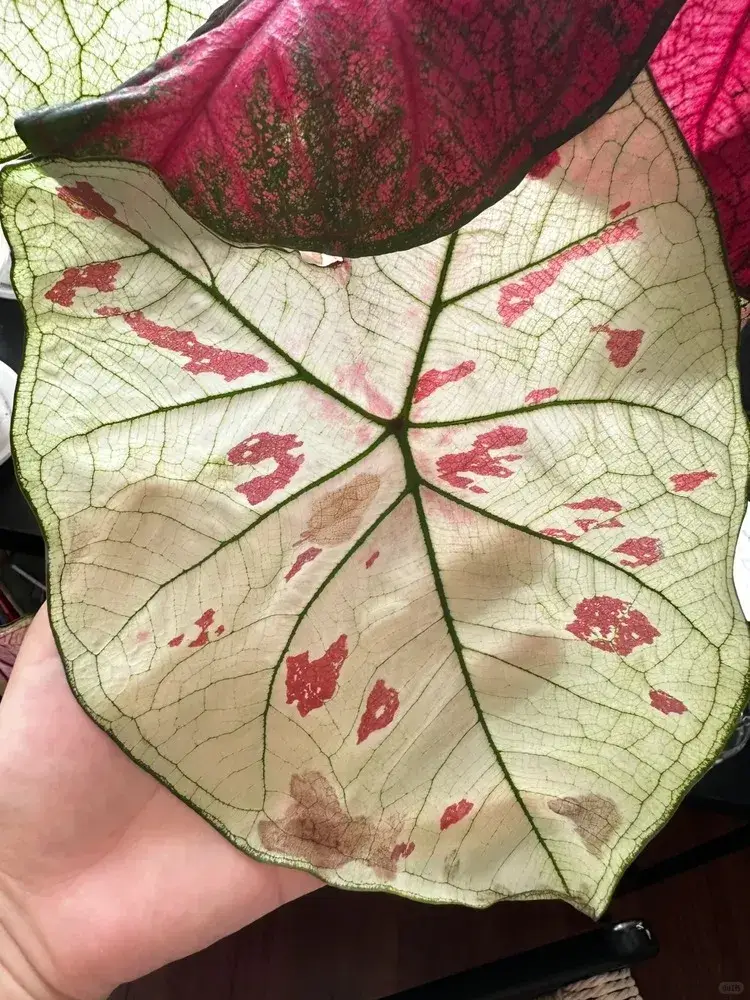
Type 1: Patchy Yellowing with Structural Separation
In this case, yellowing appears in large, defined patches, either along the edges or toward the center of the leaf. The leaf itself may start to droop slightly, and the petiole begins to feel less integrated with the main stem — not snapped or damaged, just quietly disengaging.
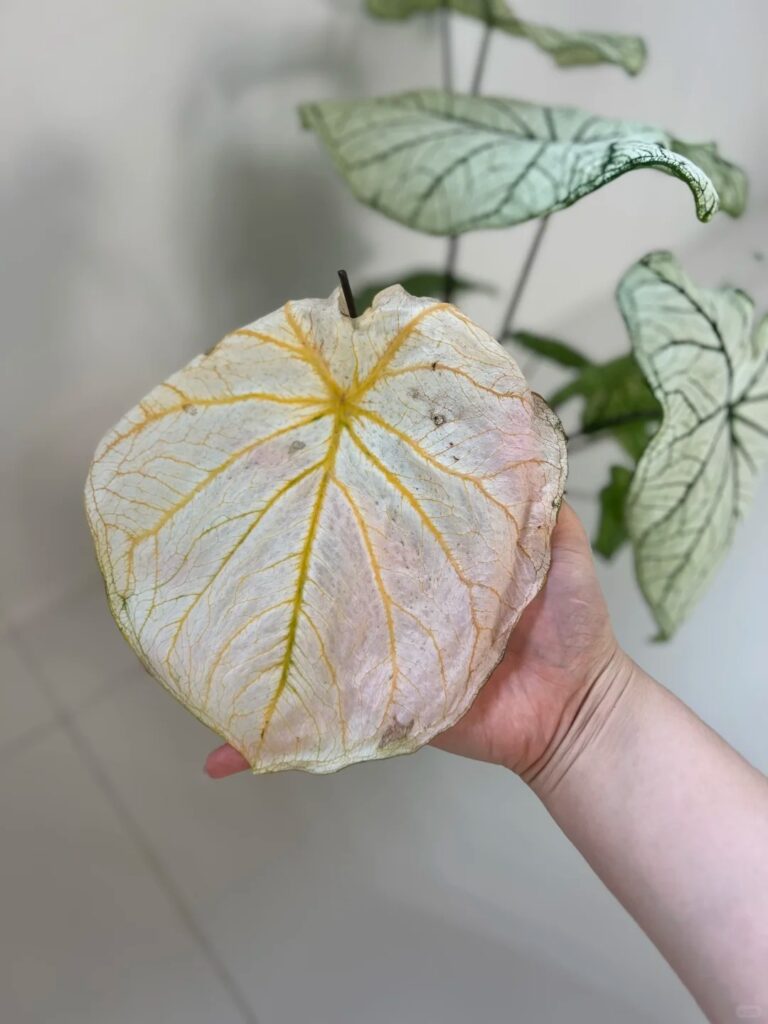
Type 2: Fading Without Spots
This type is more subtle. There are no obvious blotches or burned areas. Instead, the leaf slowly loses intensity. Bright colors dull, green tones creep in, then yellowing follows. The leaf softens, the petiole weakens, and eventually the whole leaf settles downward.
In both cases, the key is consistency. These changes unfold gradually, not overnight. When I see these patterns, I don’t read them as injury or stress.
These leaves are being consumed, not damaged.
Why I Don’t Interfere with These Leaves
Because of that, I don’t rush to intervene. I don’t cut leaves simply to keep the plant looking tidy, and I don’t treat an unattractive leaf as something that needs immediate correction. For me, appearance comes second to what the plant is actually doing.
When I interfere too early, I’m not helping — I’m interrupting a process that’s already underway.
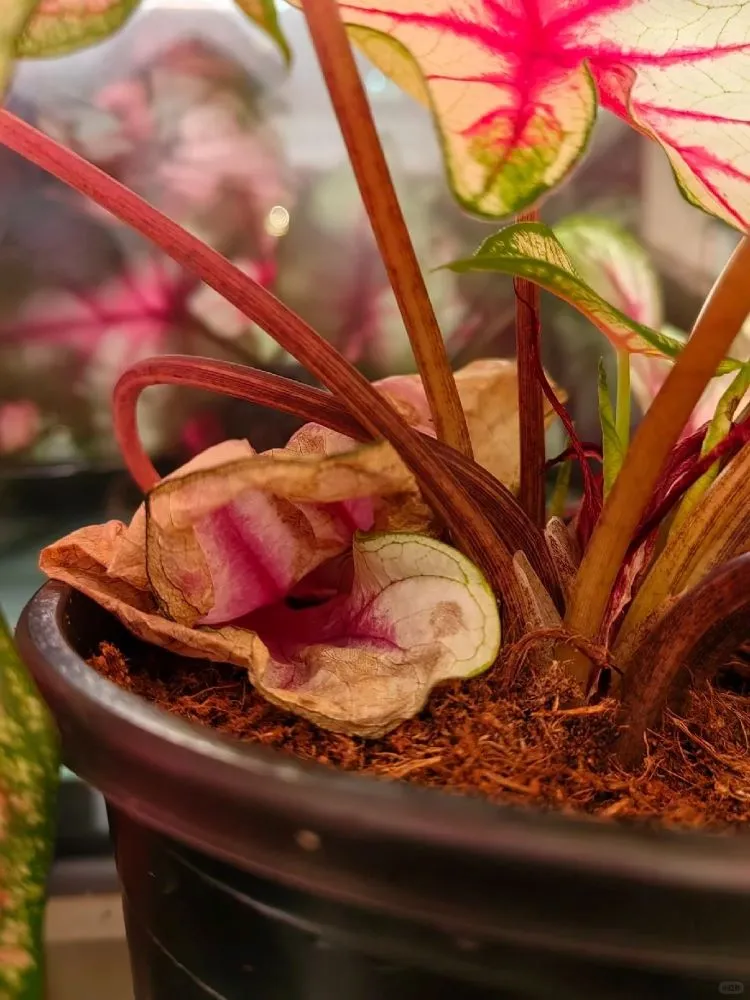
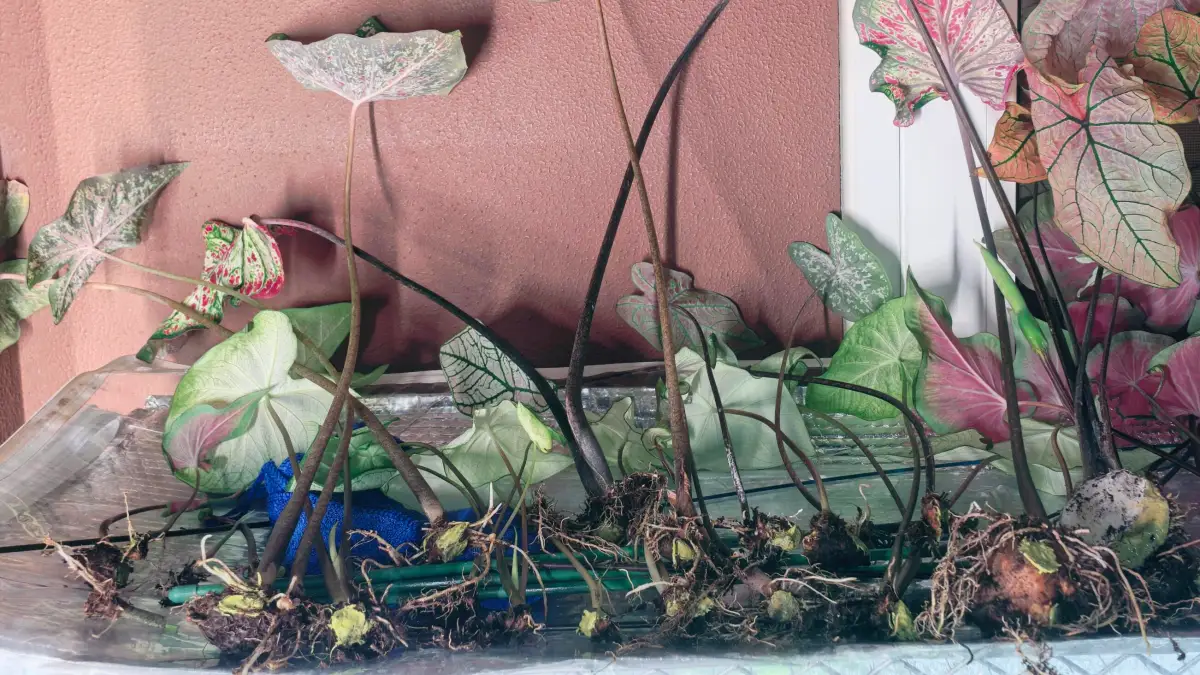
It softened, folded, and settled on its own as part of normal consumption. When a leaf reaches this stage, intervening doesn’t support the plant — it only interrupts a process that’s already complete.
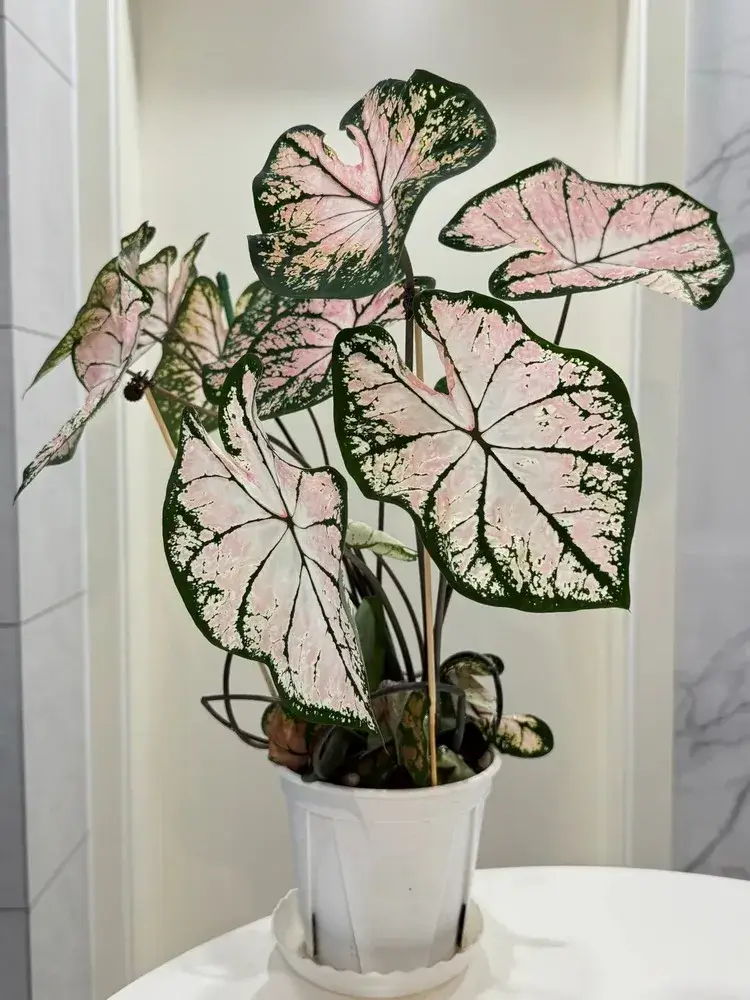
Over time, I noticed that leaving consumed leaves alone often leads to stronger growth — especially if you’ve been feeling stuck in that caladium not growing phase. The tuber gradually builds strength, and new leaves emerge larger and more stable. Removing aging leaves may feel proactive, but it doesn’t necessarily support the plant’s long-term rhythm.
If a leaf looks messy, I sometimes fold it back into the pot instead of cutting it. And when I do remove one later, it’s a calm decision — not a reaction. The key shift for me was simple: consumed leaves don’t need management. They need time.
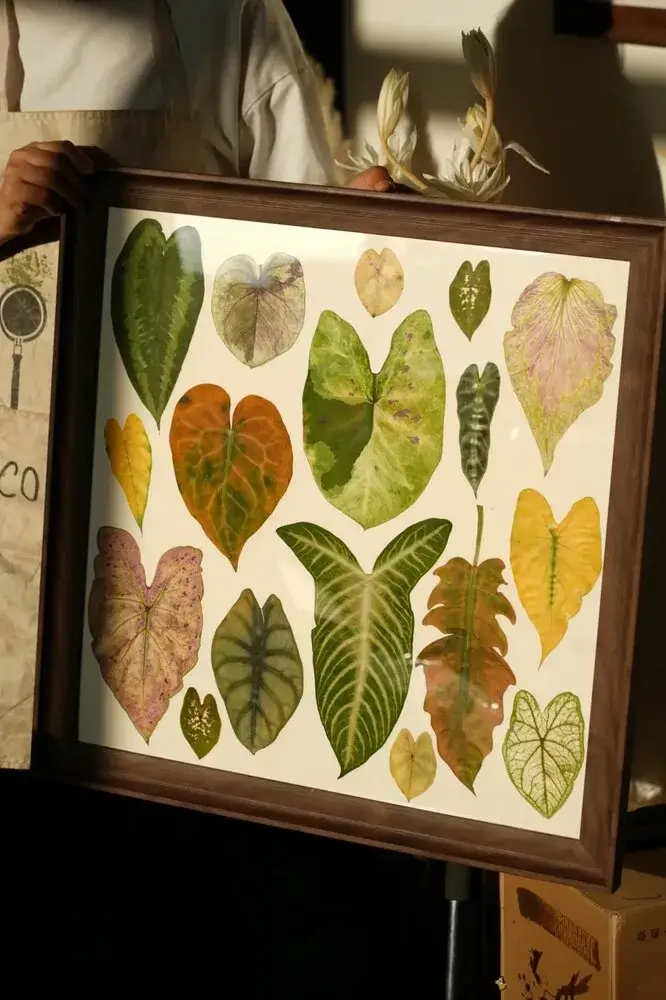
Pressed leaves can become a quiet record of a plant’s growth — a reminder that not every aging leaf needs to be managed or erased.
When Yellow Leaves Signal Root Stress
If there is one issue that has consistently challenged me while growing caladiums, it’s root stress. Even now, it’s the problem I pay the closest attention to. Healthy leaves are never independent — they are always a reflection of what’s happening below the soil. When the roots are strong, the leaves follow. When the roots struggle, the leaves are usually the first to tell you.
What makes root problems difficult is that they don’t appear all at once. Root stress is gradual. It builds quietly over time, often while everything above the soil still looks acceptable. By the time the plant shows obvious decline — and you start wondering if your caladium is dying — the roots have usually been under pressure for much longer than we realize.
Learning to notice these early signals changed how I respond. Yellow leaves, in this case, aren’t an ending. They’re a message.
What “Suffocated Roots” Look Like Above the Soil
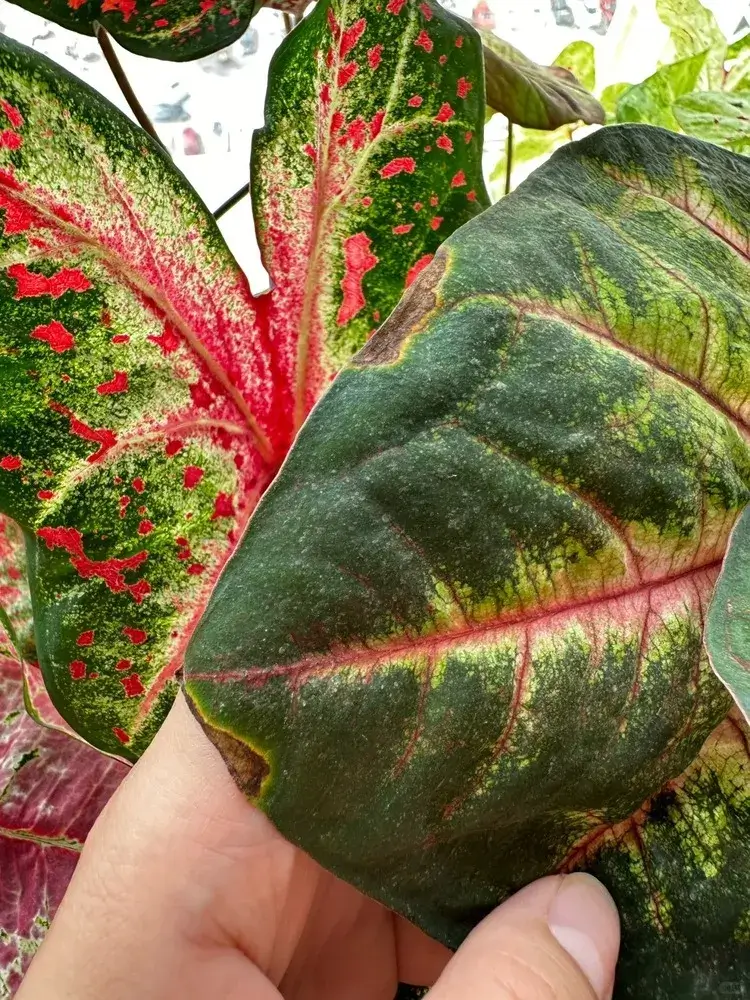
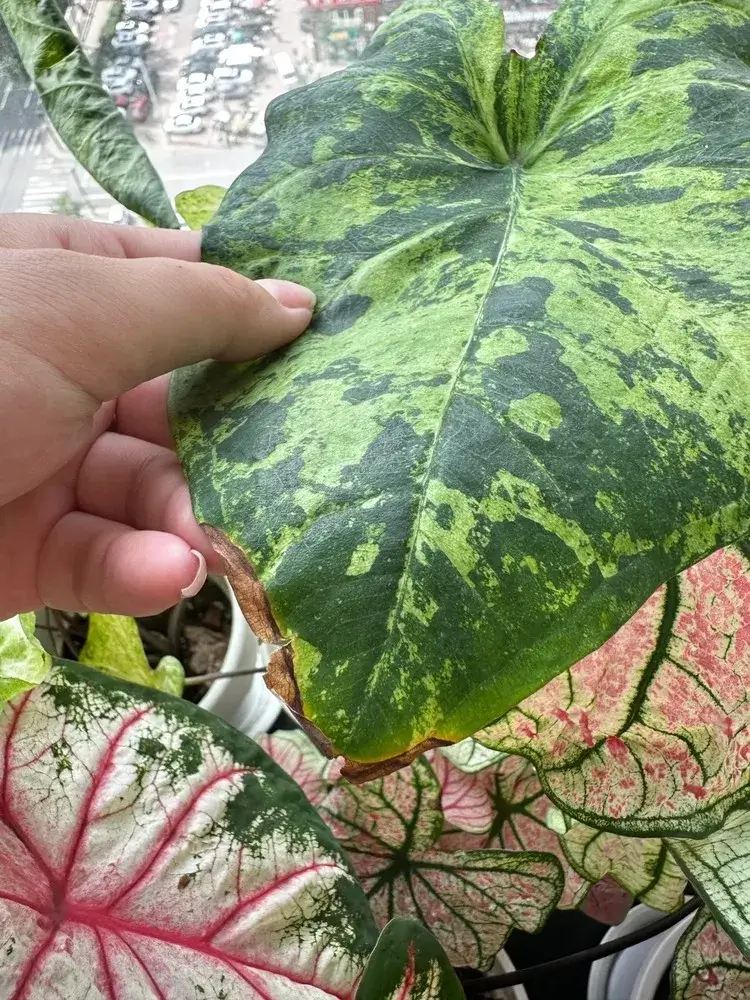
When root stress starts to show itself, the yellowing pattern is very different from normal leaf consumption. The change is no longer scattered or slow. Instead, it follows a clear direction.
The first sign I watch for is yellowing along the leaf edges or at the tips, forming closed, defined borders. The discoloration advances from the margins inward, rather than appearing randomly across the leaf surface. At this stage, the leaf may still be upright and structurally intact, but something about it feels off — less responsive, less stable, even if it hasn’t fully collapsed.
This pattern is subtle but consistent. Once I learned to recognize it, I stopped confusing it with natural aging.
This is no longer normal leaf aging. This is a root issue showing itself.
Learning to Read Leaves Instead of Fixing Them
Over time, I realized that leaves aren’t instructions — they’re signals. And not every signal is asking for a response. Some are simply telling you where the plant is in its cycle, not what you need to do next.
I used to feel responsible for every imperfect leaf, as if saving the plant meant saving each individual one. But caladiums taught me something different. You don’t need to rescue every leaf to grow a healthy plant. Sometimes the most helpful thing you can do is nothing at all.
Letting a leaf complete its process — fading, softening, and eventually stepping aside — is not neglect. It’s part of how the plant reallocates energy, strengthens its tuber, and prepares for what comes next. If nothing comes next for weeks, that’s when I start thinking about bulbs not sprouting. In that sense, a leaf finishing its role isn’t a failure. It’s contribution.
Once I stopped trying to fix every yellow leaf, my plants became easier to understand — and healthier because of it. Observation replaced urgency. Patience replaced panic. And growth, when it came, felt quieter but more stable.
FAQ
Natural leaf aging usually happens slowly and predictably, either through patchy fading or overall dulling before the leaf droops. Root-related issues, on the other hand, often show up as defined yellowing along leaf edges or tips that moves inward. Learning to read how a leaf changes is more useful than reacting to the fact that it’s yellow.
Still not sure what your plant is telling you?
If yellowing, drooping, or root issues keep showing up across different plants, I’ve organized my real-world observations and fixes in one place.
Go to Problems Hub →