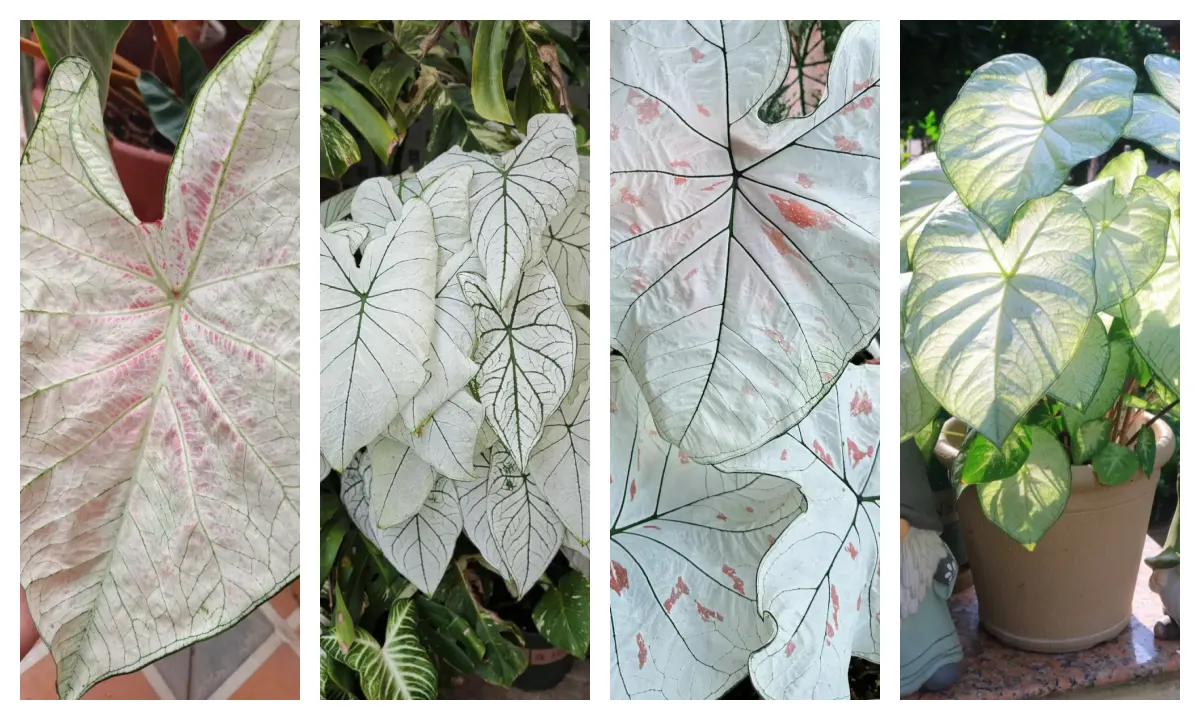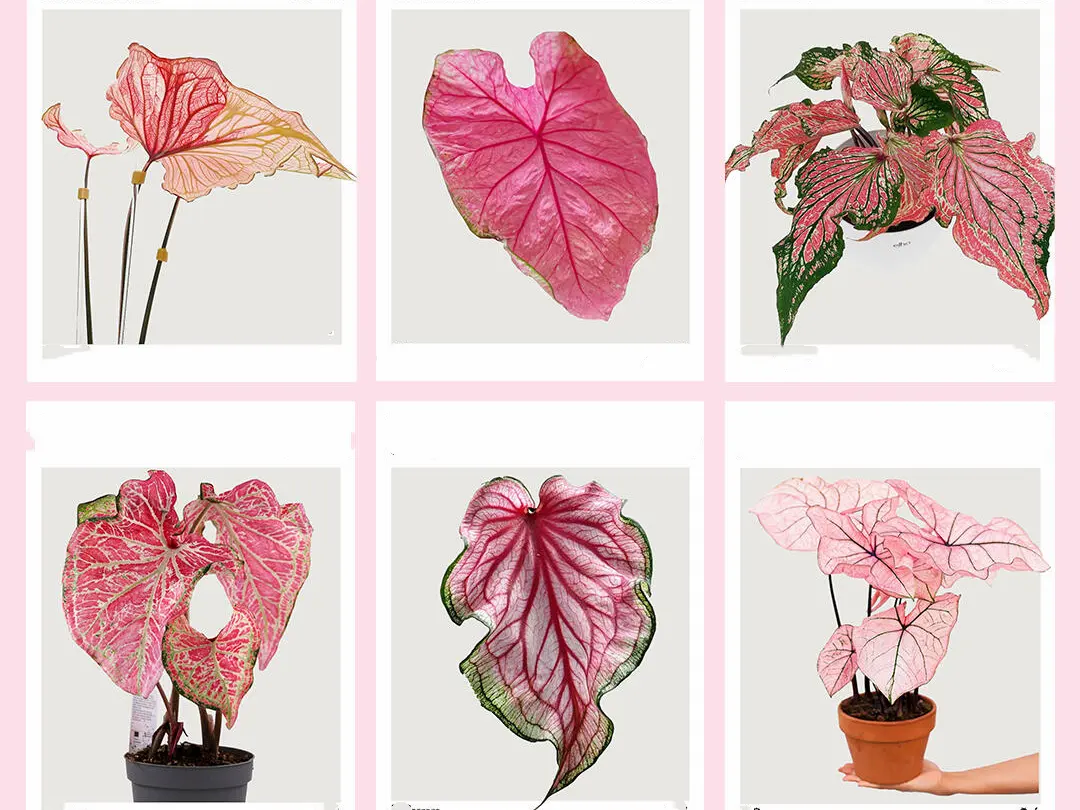
When people search “Is my caladium dying?”, they’re usually not looking for general care tips. They’re trying to answer a much sharper question: is this still something I can wait on, or do I need to act right now? If you’re looking for the full map of caladium issues, I keep them organized here.
I’ve asked myself that same question more than once. I’ve grown caladiums from small tubers and kept mature plants that looked perfectly fine — until they didn’t. I’ve waited when I shouldn’t have, and I’ve also panicked over symptoms that turned out to be harmless. The difference wasn’t experience. It was knowing which patterns actually mattered.
With caladiums, true decline doesn’t usually show up as one dramatic sign. It shows up as a combination — leaves behaving in ways that don’t match the season, growth slowing even when conditions are good, and soil staying wet far longer than it should. Miss that pattern, and the plant can slip past the point where waiting still works.
This article isn’t about every yellow leaf or every drooping stem. It’s about recognizing the moments when not acting becomes the real risk — and knowing how to tell those apart from situations that simply look scary but aren’t.
When You Should Stop Waiting and Take This Seriously
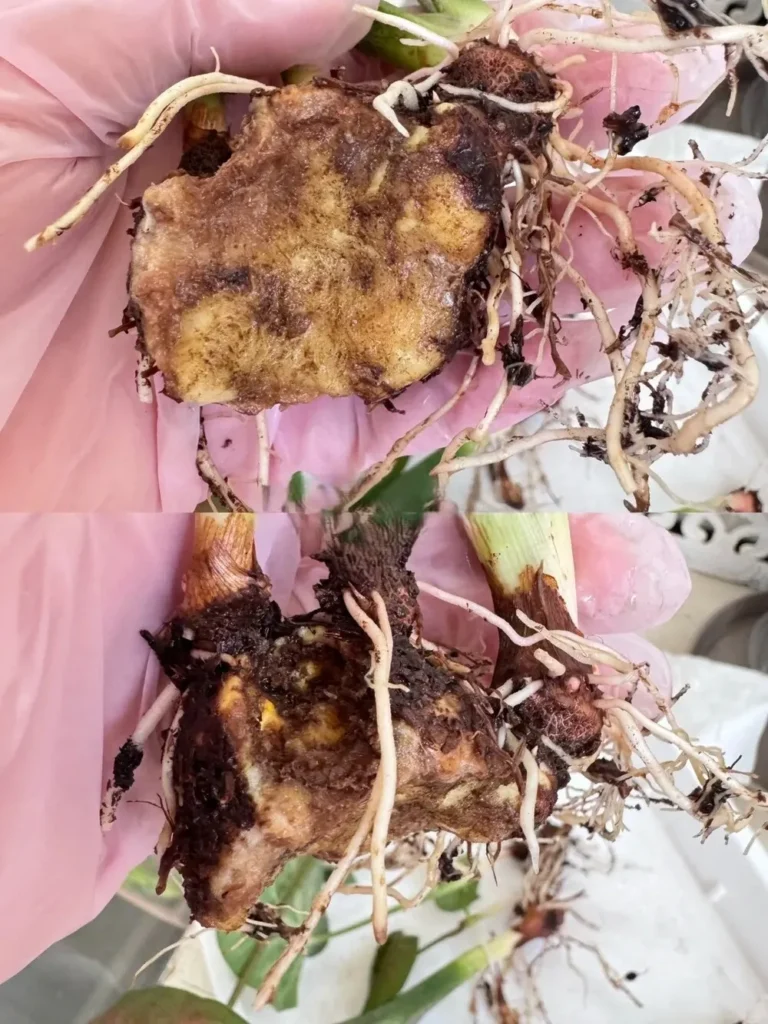
When the root system can no longer support energy flow, decline becomes structural rather than cosmetic.
Waiting is often the right move with caladiums — until it isn’t.
One of the hardest parts of growing them is knowing when patience is still helpful, and when it quietly becomes the thing that makes recovery impossible. Caladiums can tolerate a lot of hesitation, but they don’t tolerate being ignored once certain lines are crossed.
What makes this tricky is that early decline rarely looks dramatic. There’s usually no sudden collapse, no instant failure. Instead, the plant keeps going — just not forward. Leaves fade without clear cause. Growth slows even though temperature and light seem fine. The soil stays wet longer than it should — especially if your watering routine hasn’t changed. Each of these on its own can feel manageable.
The problem is when they start appearing together.
At that point, waiting doesn’t buy the plant time — it uses it up.
This is the moment when observation alone stops being enough. Not because the plant is already gone, but because caladiums don’t reverse root decline on their own. Once the underground system loses function, everything above it is running on borrowed energy.
This section isn’t about panic. It’s about recognizing the threshold where “let’s see what happens” quietly turns into “I should have acted earlier.”
The Pattern That Actually Signals Trouble
Sign 1: Leaves Are Being Consumed
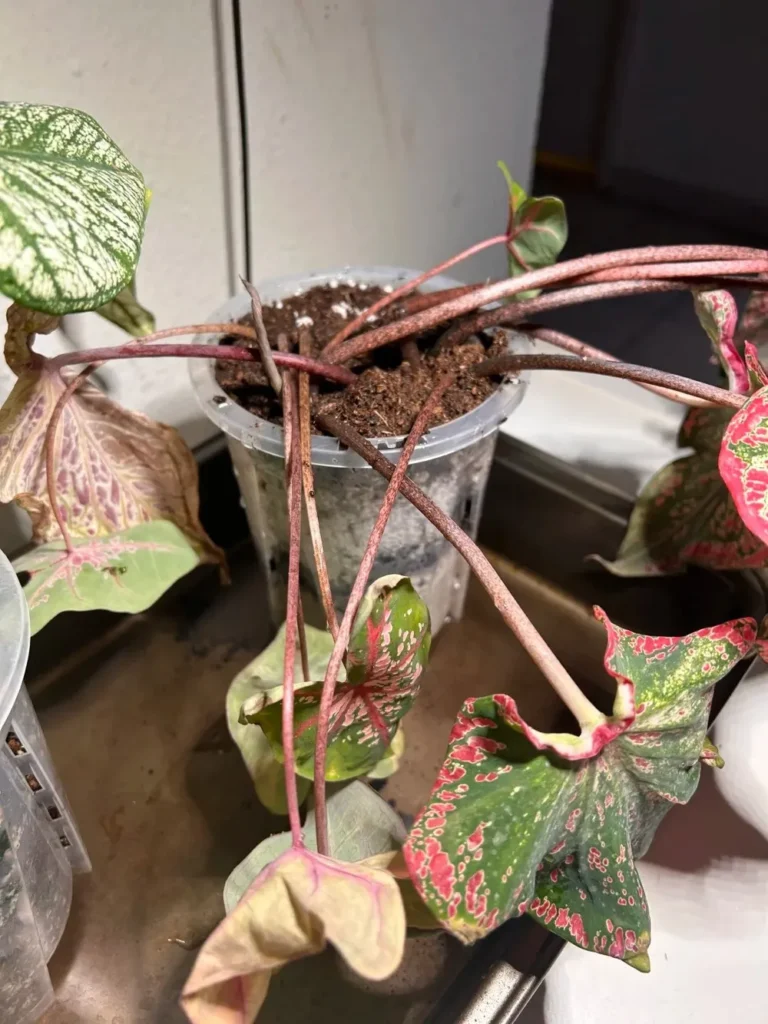
This isn’t about the oldest leaf aging out. The warning sign is when multiple leaves begin to fade without a clear trigger — edges scorch, tissue thins, or structure weakens even though nothing obvious has changed. The plant isn’t shedding selectively. It’s drawing back across the canopy.
Sign 2: Growth Stalls Despite Good Temperature
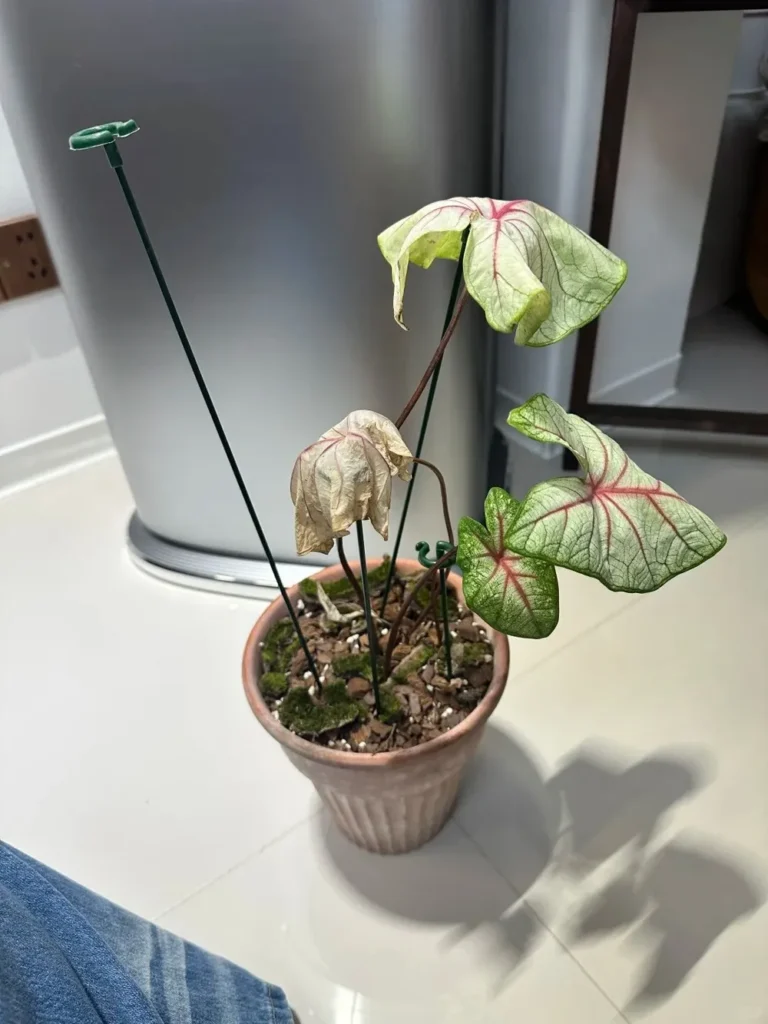
Caladiums slow down when it’s cold — that’s expected. What raises concern is when temperatures are stable and warm enough, yet new growth hesitates. Buds take unusually long to move. Leaves emerge smaller or weaker, or not at all. The plant has the conditions to grow, but doesn’t act on them.
Sign 3: Soil Stays Wet Far Too Long
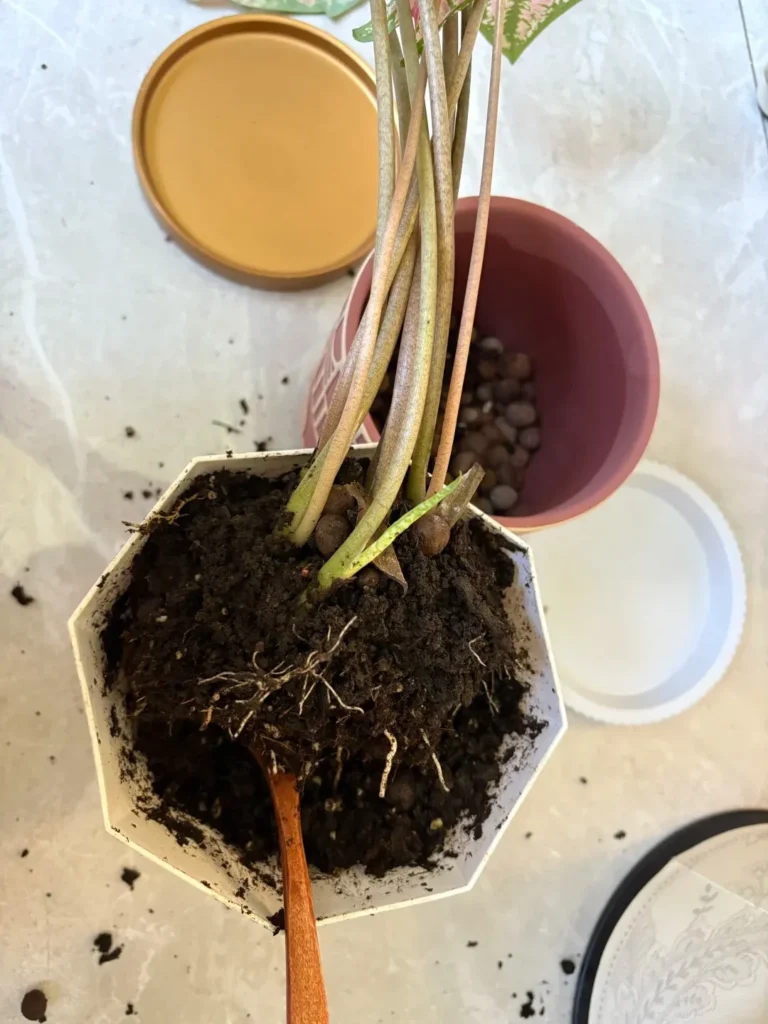
This is often the easiest sign to overlook. After watering, the pot remains heavy for days longer than it used to. The surface may look dry, but the core stays damp. When roots can’t process moisture at a normal pace, everything else starts running on delay.
When all three appear together, this is no longer a “watch and wait” situation.
At that point, the plant isn’t adjusting — it’s struggling to sustain itself. And hesitation doesn’t buy time. It quietly costs it.
What This Combination Usually Means
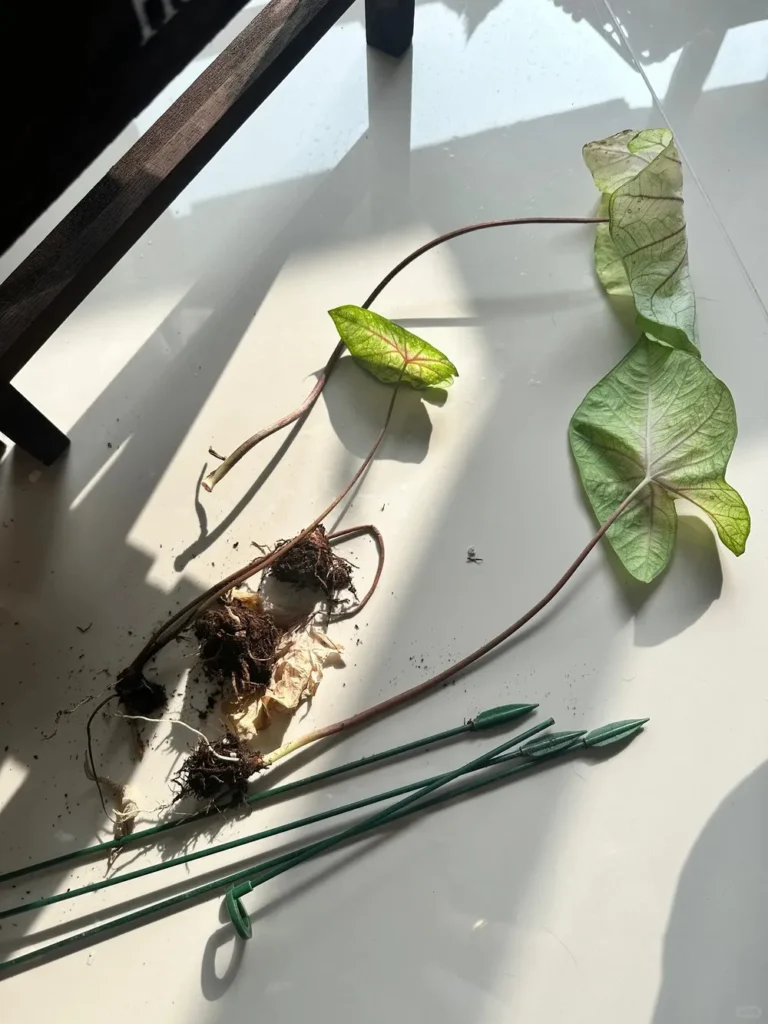
When those three signs appear together, they’re not separate problems. They’re different symptoms of the same breakdown happening underground.
If all three are present —
leaves being consumed beyond normal aging, growth stalling despite good temperature, and soil staying wet far too long — the likelihood of a compromised tuber is high. If your concern is earlier in the timeline — the bulb isn’t even sprouting — I wrote a separate breakdown here. At this stage, the plant isn’t just stressed. The core storage system is already failing, and waiting rarely improves the outcome.
If only one of the signs shows up, the picture changes.
A single consumed leaf, especially among older foliage, is often part of the plant’s normal cycle. Even a brief growth pause can happen after environmental shifts. On their own, these don’t signal collapse. What they usually point to instead is early root suffocation — a condition where airflow and moisture balance are off, but the system hasn’t broken yet.
This is where observation still works. Adjustment still helps.
And if what you’re seeing is just yellowing, without stalled growth or abnormal soil behavior, the situation is rarely urgent. Caladiums shed leaves for many reasons. Not every yellow leaf is a warning, and treating it like one often causes more harm than good.
The difference isn’t how dramatic the symptoms look.
It’s whether they’re appearing together, and whether they’re moving in the same direction.
Once you understand that, the line between “this can wait” and “this needs action” becomes much easier to see.
What I Did the Moment I Realized This
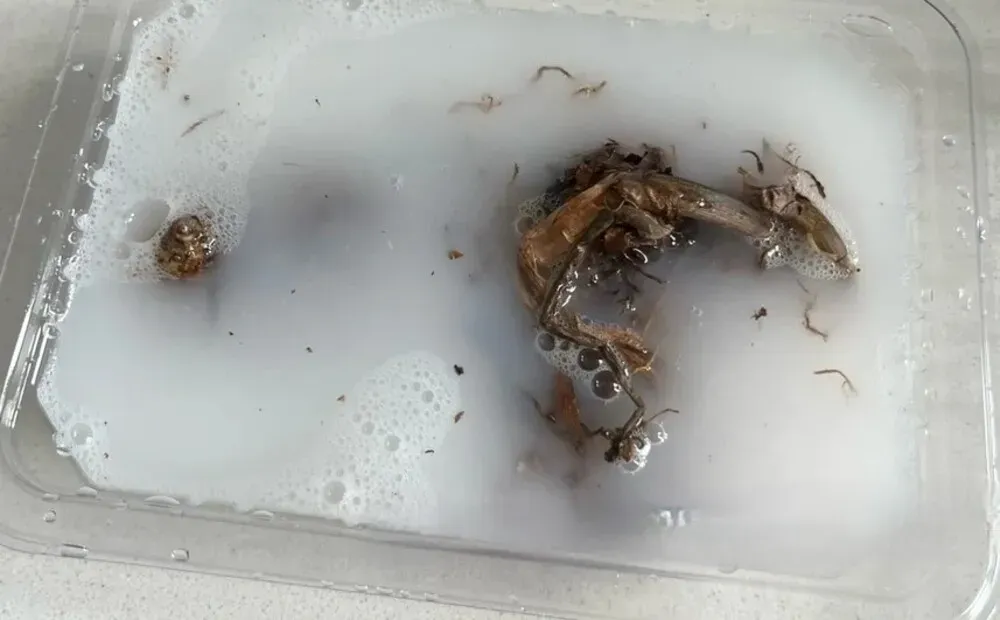
This step matters more than fertilizing or light when root damage is involved.
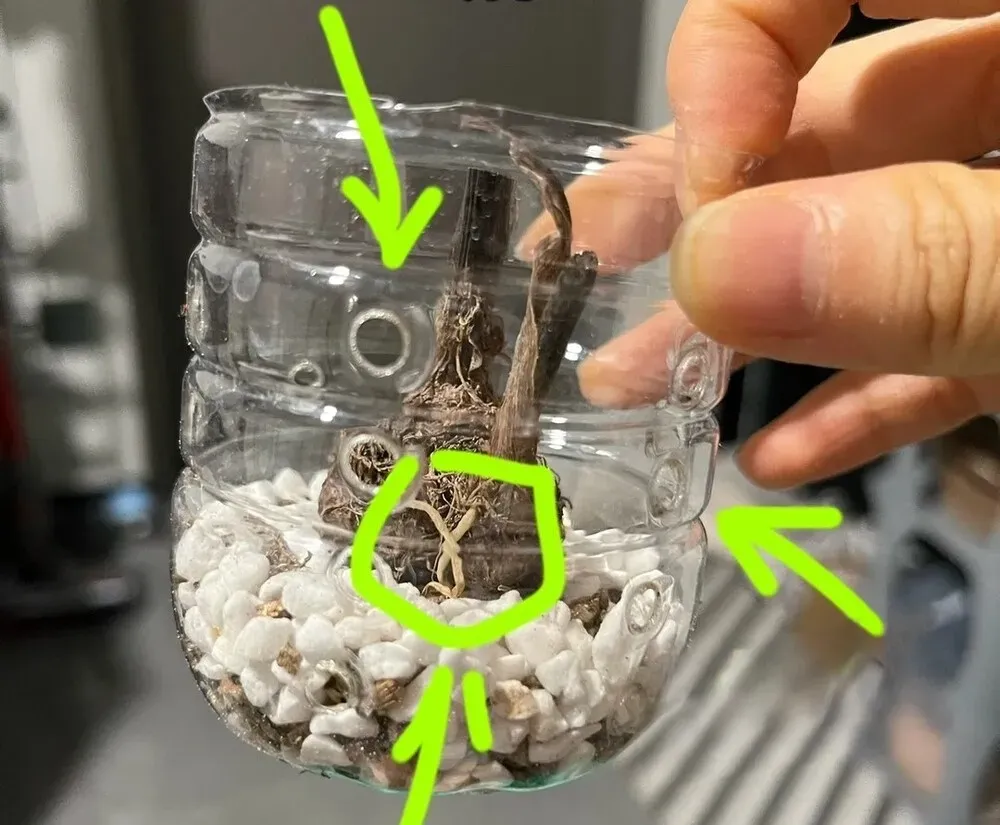
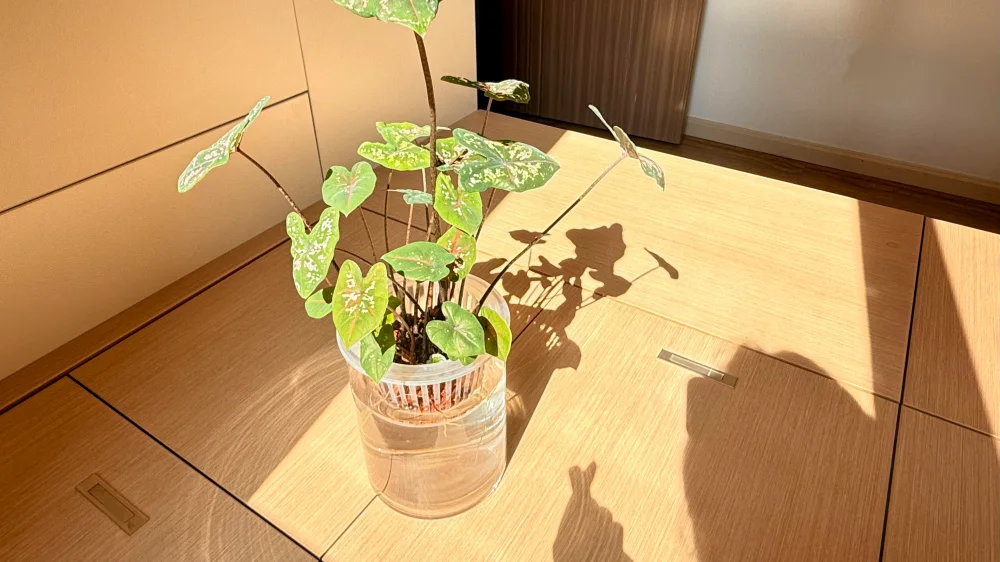
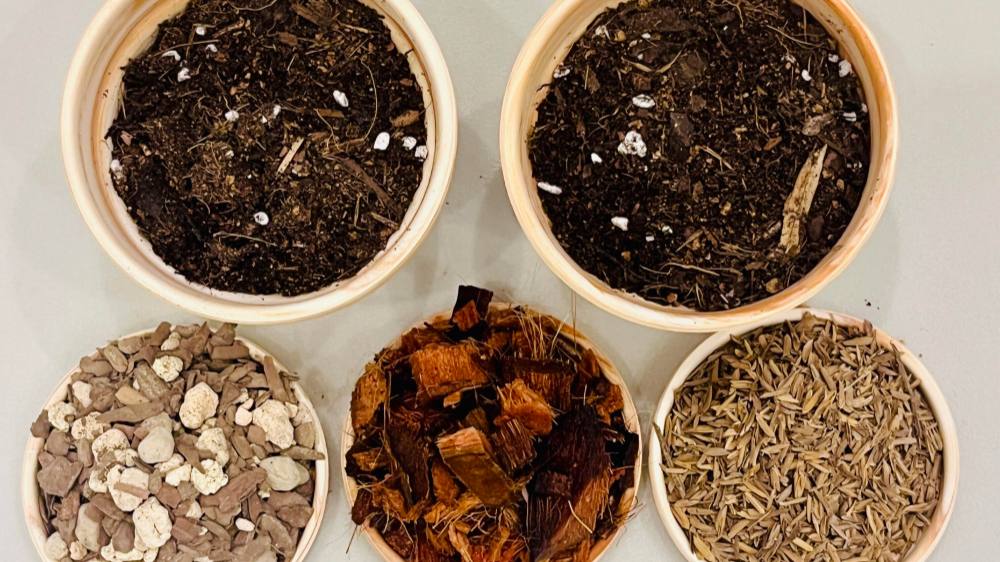
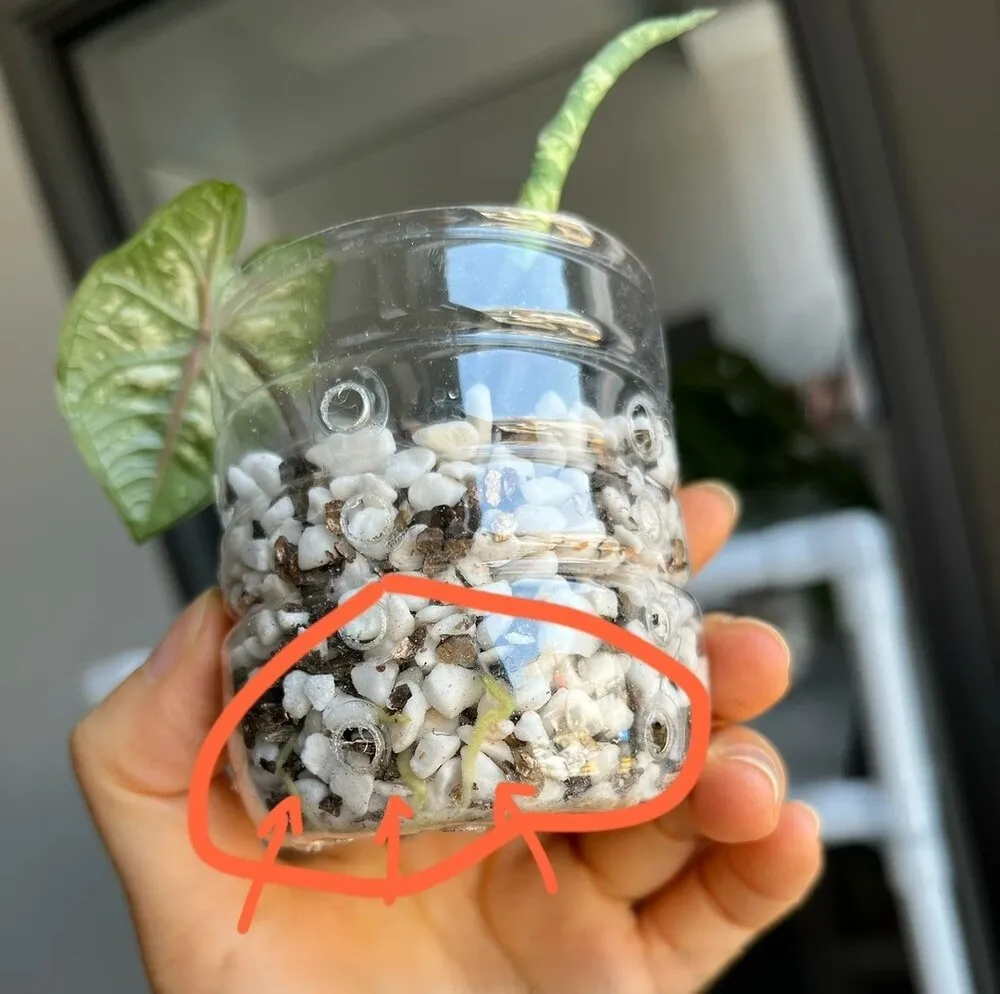
I used a DIY plastic bottle with multiple ventilation holes to maximize airflow around the tuber.
At this stage, the goal isn’t growth — it’s giving the roots oxygen and space to recover.
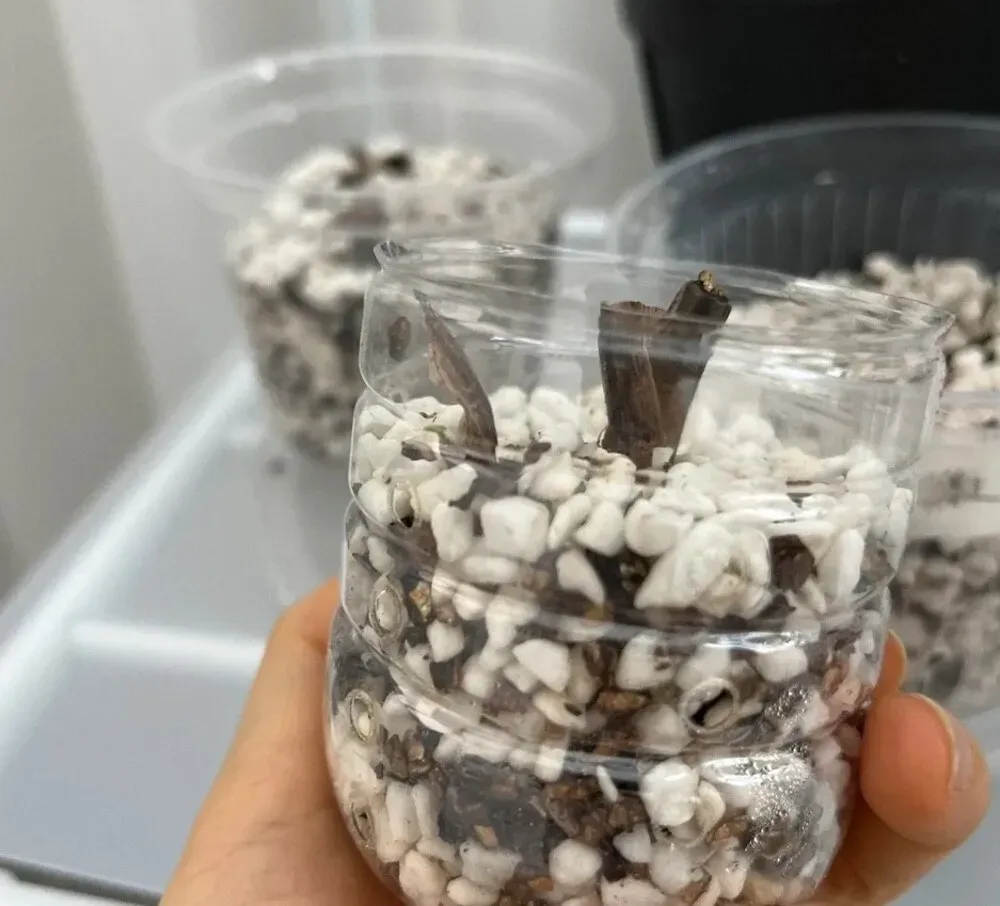
At this stage, recovery depends on oxygen access and root regrowth — not pot size or fast growth.
Once it became clear that waiting was no longer helping, I stopped observing and acted.
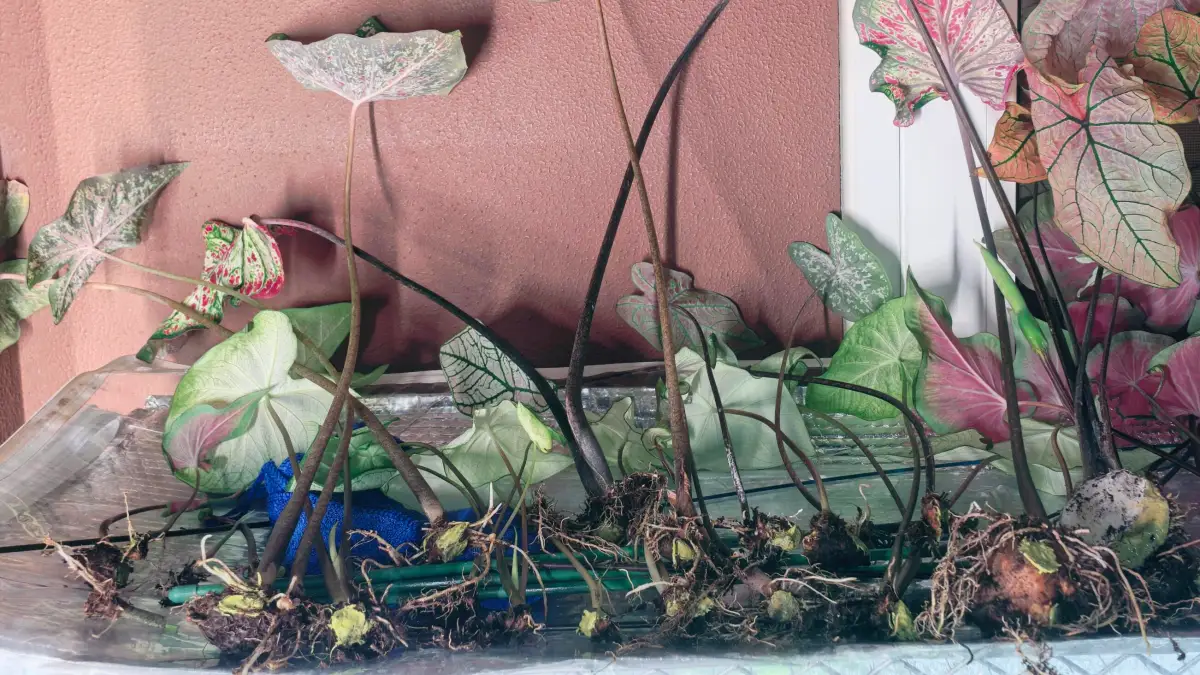
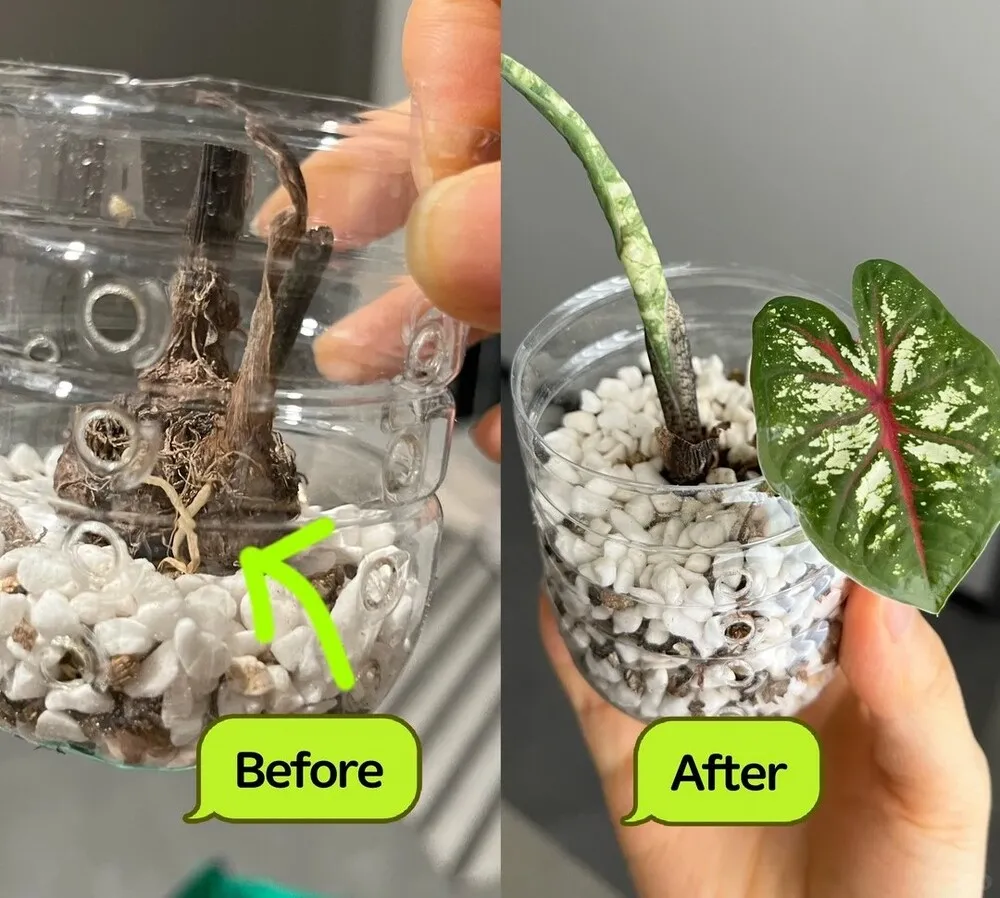
I took the plant out of the pot, not gently, but decisively. At that point, preserving appearances didn’t matter — seeing the tuber did. What came out confirmed the pattern I’d been watching above the soil. Soft tissue. Darkened areas. Sections that no longer felt firm or alive.
I removed what had already failed. Not aggressively, but without hesitation. Anything that was clearly compromised wasn’t something the plant could recover from, and leaving it in place would only drag the rest down with it.
After that, I didn’t rush to replant. I treated what remained as something that needed to reset, not continue as if nothing had happened. The goal wasn’t growth. It was survival. Recovery comes later.
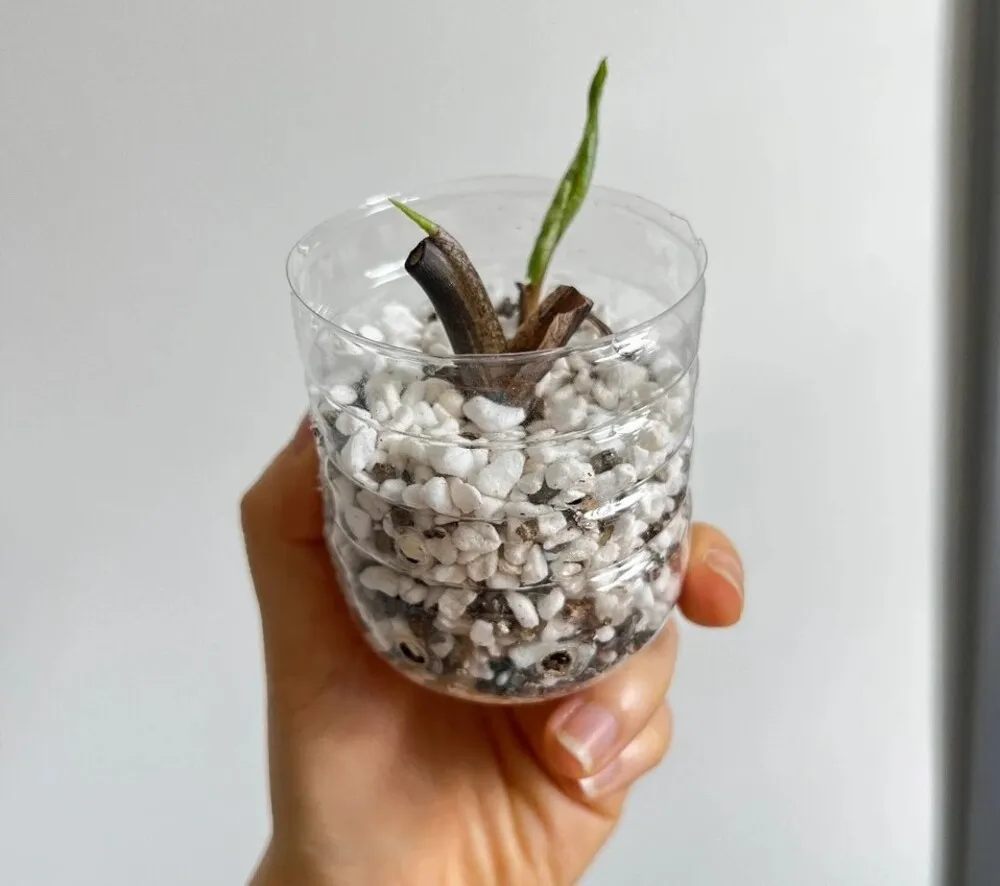
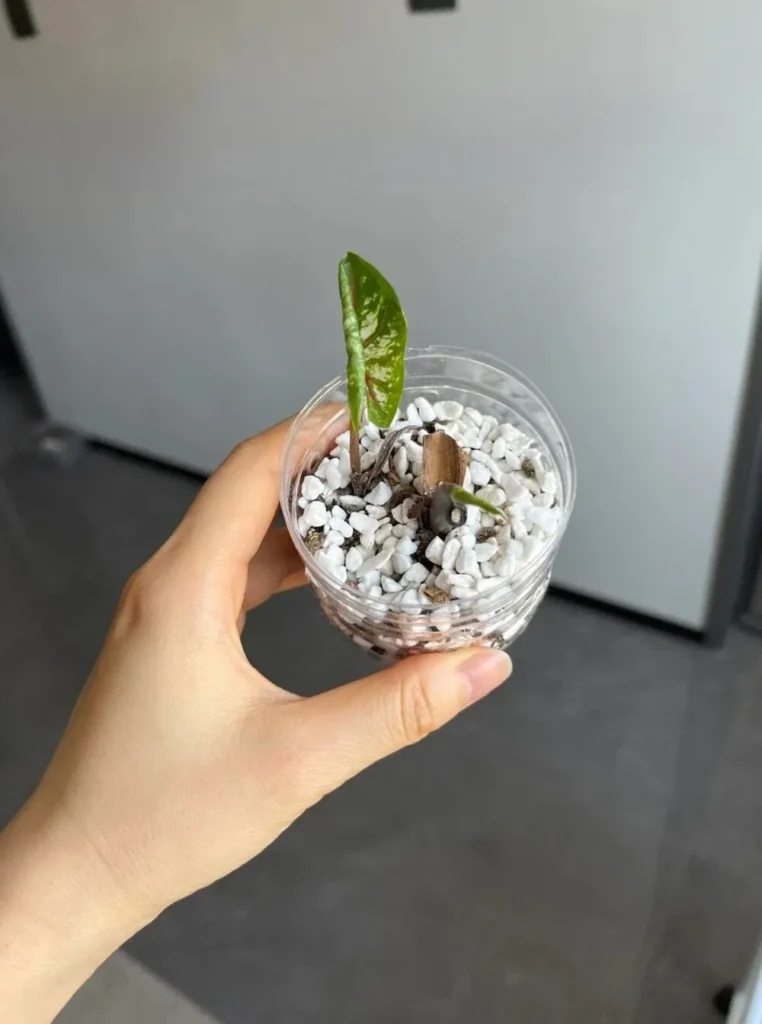
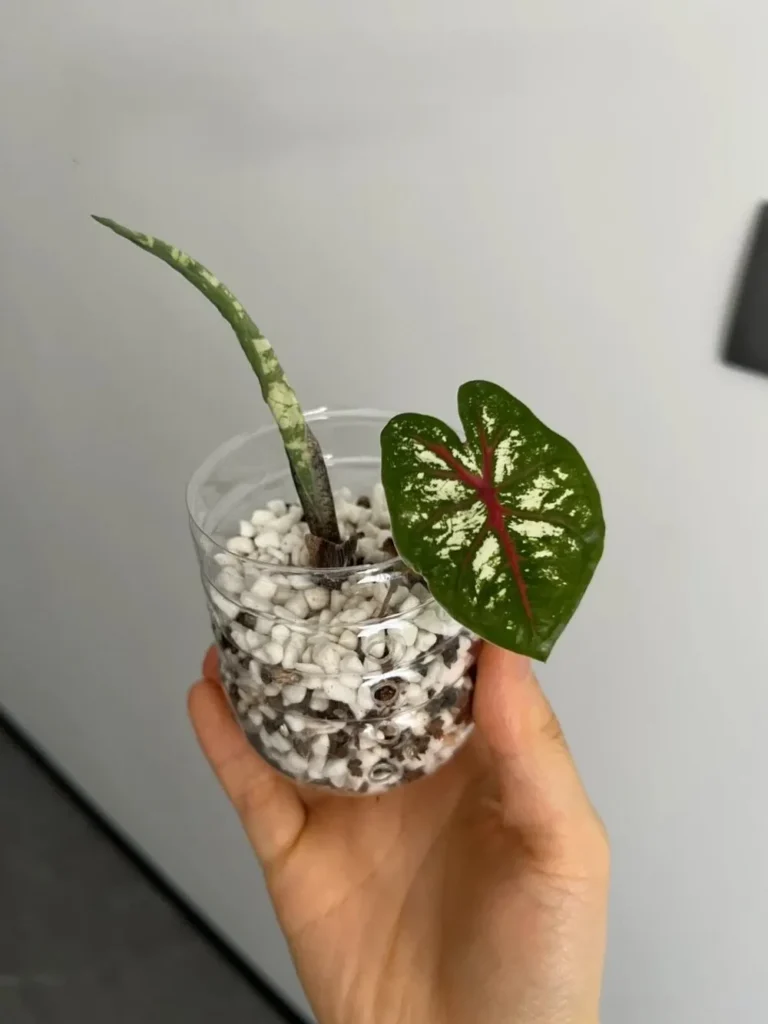
When I planted it again, I went smaller — not because the plant was small, but because what was left of it needed control. Less volume, more airflow, faster feedback. A large pot would have hidden problems. A small one forced clarity. If you’re replanting and unsure about orientation, this is how I decide which side goes up.
That moment changed how I respond to caladium decline. Once roots are involved, hesitation isn’t patience anymore. It’s risk.
One Thing That Determines Whether a Caladium Survives
Once a caladium reaches this point, almost everything comes down to one thing: the roots.
Leaves are what we notice first, but they’re not what decide survival. A caladium can lose foliage and still recover. It can look weak above the soil and still rebuild. What it can’t survive is a root system that no longer functions. When roots fail, leaves are just the last to know.
This is also where pot size starts to matter in a way that isn’t obvious at first. A large pot looks generous, even kind — more space, more soil, more room to grow. But when roots are compromised, extra volume doesn’t help. It delays drying, limits airflow, and hides problems instead of correcting them. The plant ends up sitting in moisture it can’t use.
A smaller pot does the opposite. It forces balance. Moisture cycles faster. Air reaches the roots more easily. Changes in weight and dryness become readable again. It’s not about restricting the plant — it’s about giving damaged roots an environment where they can function at all.
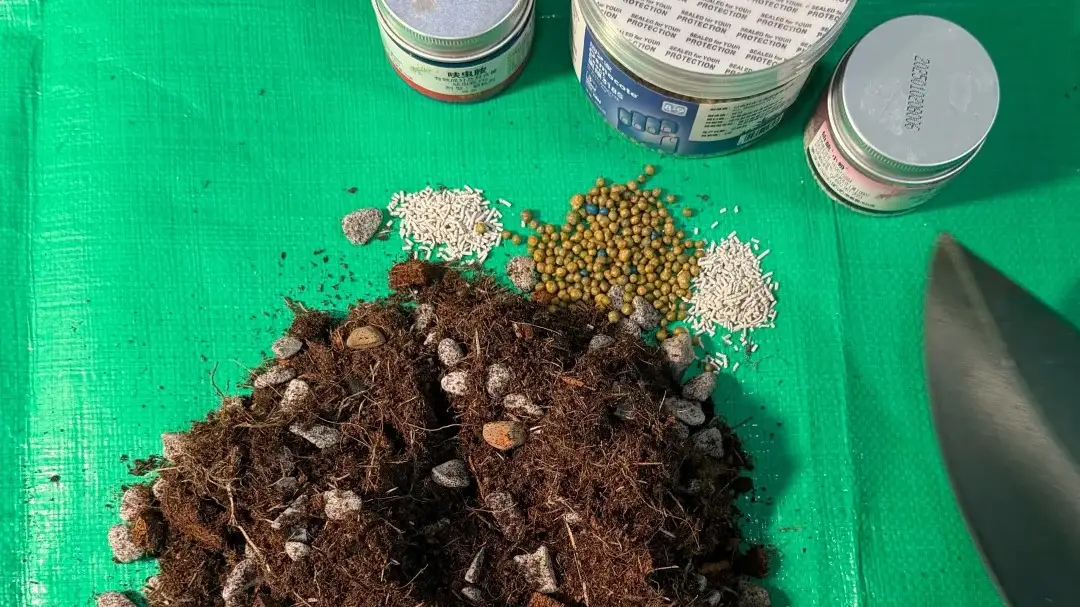
That’s also why changing the soil matters so much in these situations. This isn’t about upgrading nutrients or switching brands. It’s about restoring oxygen. Caladium roots are delicate, and once the soil stops breathing, everything above it starts compensating. New leaves get smaller. Growth slows. Energy gets diverted just to staying alive.
When recovery works, it doesn’t start with leaves looking better. It starts underground — with roots that can breathe, dry, and respond again.
That’s the shift that changed how I think about caladium decline.
Leaves tell you what’s happening.
Roots decide whether the plant gets another chance.
If Your Caladium Is Drooping or Yellowing, But Otherwise Stable
Not every caladium that looks off is dying.
If the plant is still holding structure, responding to watering, and cycling leaves in a recognizable way, you’re not in a critical situation. Drooping and yellowing can look dramatic, but on their own they don’t usually signal collapse.
If what you’re seeing fits those patterns, you don’t need emergency measures. You need clarity.
I’ve broken those situations down in detail here:
👉 Caladium Leaves Drooping: How to Tell What It Actually Means
👉 Caladium Leaves Turning Yellow: When to Watch and When to Wait
True decline shows up when multiple systems fail at once. If that’s not what you’re seeing, step back. Waiting isn’t dangerous — and sometimes it’s exactly what the plant needs.
FAQ
Still not sure what your plant is telling you?
If yellowing, drooping, or root issues keep showing up across different plants, I’ve organized my real-world observations and fixes in one place.
Go to Problems Hub →