Most beginners don’t lose caladiums because they ignore them. They lose them because they try too hard. I’ve seen the same two extremes play out over and over again—either the plant gets forgotten and slowly collapses, or it gets watered so frequently that the bulb suffocates and rots before it ever has a chance.
The advice online doesn’t help. “Keep the soil moist” sounds simple, but it’s vague to the point of being misleading. For someone new, that phrase can mean anything from light, occasional watering to constant saturation—and caladiums respond very differently to each.
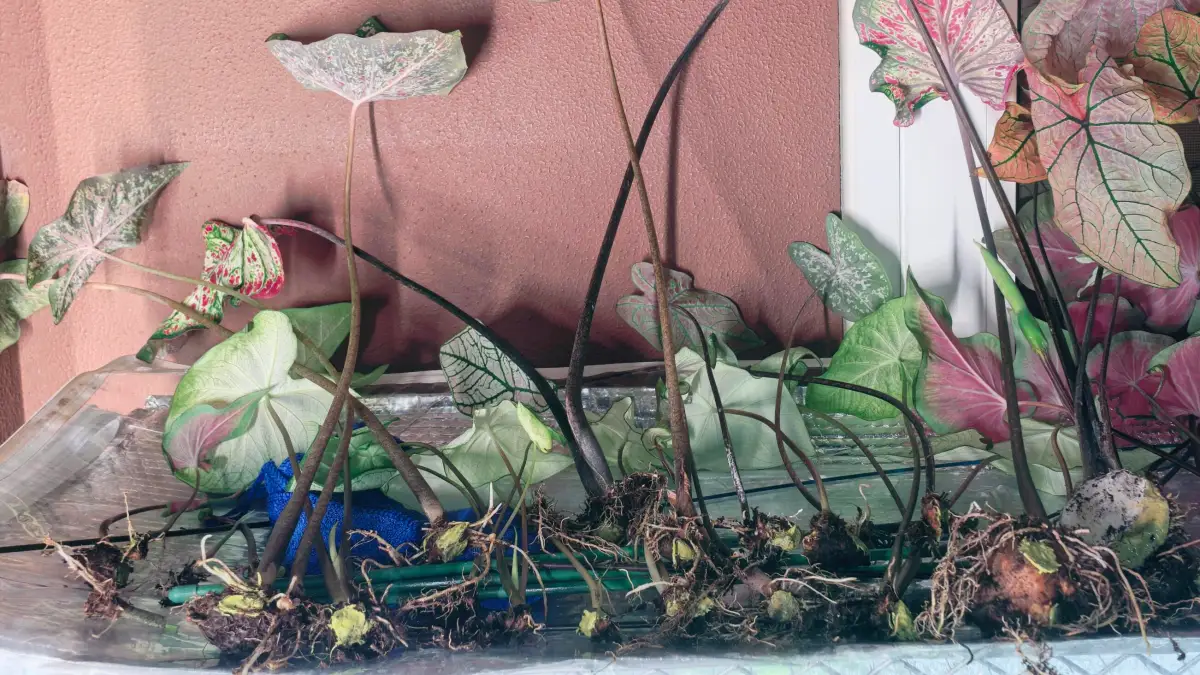
I learned this the hard way. I didn’t start with one plant; I brought home many. That meant mistakes showed up fast, and the cost of guessing wrong was high. After losing bulbs both to dryness and to rot, it became clear that the issue wasn’t how much water I used. It was when I used it.
Once I stopped watering by habit and started watering by growth stage, everything changed.
The One Rule Before Any Watering Decision
Caladiums do like moisture, but they hate being wet for long stretches. That contradiction is what traps most beginners. Water itself isn’t the problem—constant moisture around the bulb is.
Another mistake is treating watering as something you do for the leaves. It isn’t. Watering is always a root decision. Healthy roots tolerate moisture well; stressed or undeveloped roots don’t.
So I now keep just one rule as a safety net: only start thinking about watering when the top 1–2 cm of soil feels dry. If the surface is still damp, I don’t negotiate with myself—I wait. That single pause has prevented more rot than any “watering schedule” ever did.
Stage 1: Watering Caladium Bulbs (The Bulb Stage)

At the bulb stage, the goal isn’t visible growth. It’s safe root formation. If you push moisture too hard here, you don’t get faster leaves—you get rot. If you’re still unsure about bulb orientation, this matters more than people think.
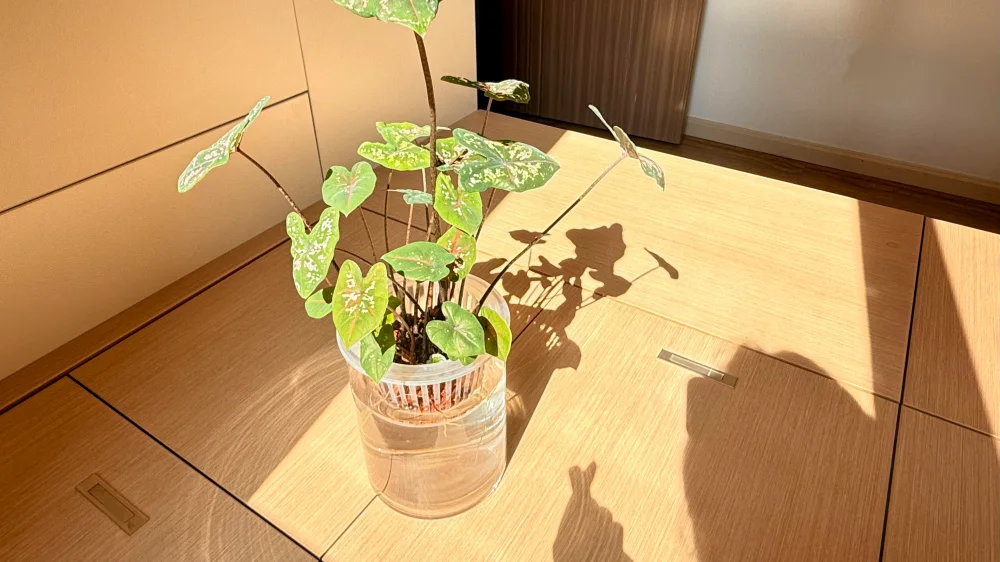
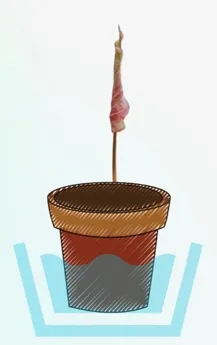
This is why I rely on bottom watering during this phase. I usually use a transparent pot, which makes it much easier to read what’s happening below the surface instead of guessing from the top. The pot sits in a tray with a shallow water level—just enough to let moisture rise slowly from the bottom.
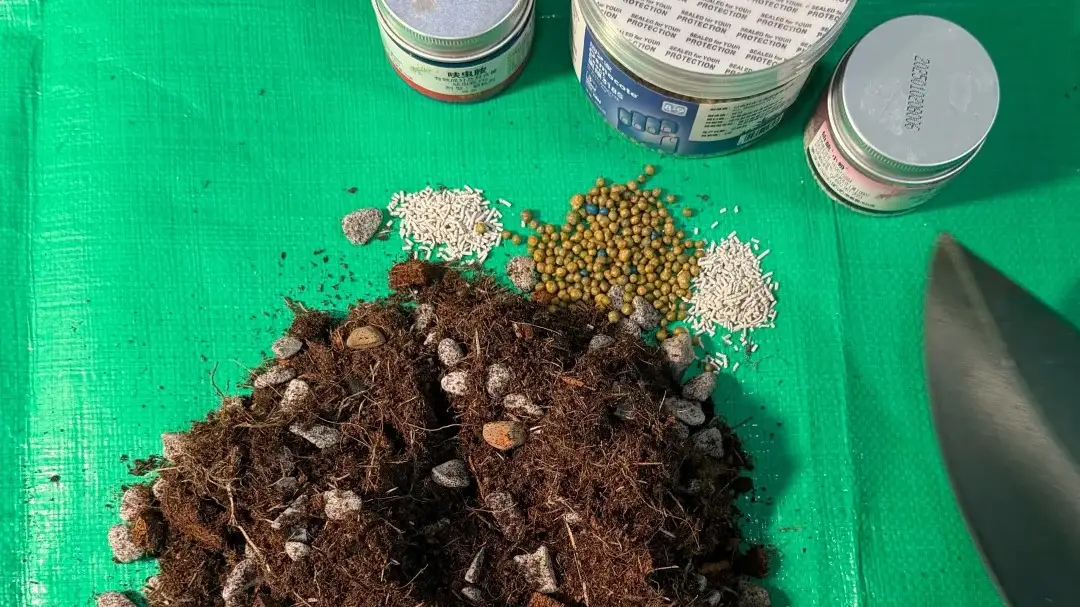
I stop as soon as roughly the lower third of the potting mix feels evenly damp. That usually takes around half an hour. The soil should feel hydrated, not soaked— especially in a breathable mix. At this stage, I’m deliberately avoiding full saturation.
What matters even more than how you water is when. I don’t repeat this until the pot has dried out completely again. If there’s any lingering moisture, I wait. There is no benefit to “keeping it moist” before roots are established.
One warning that’s worth stating plainly: watering through the pot at this stage is high risk. A rotting bulb ends the entire growing season before it starts. In the bulb stage, restraint is what keeps everything alive.
Stage 2: Watering During New Sprout Growth
Once new shoots appear, it feels like the danger has passed. In reality, this is still a fragile phase. The plant has committed to growth above the soil, but the root system underneath is only just beginning to form.
My watering approach doesn’t change yet. I continue with bottom watering, not because the plant needs more water, but because I want to encourage roots to grow downward, not sit near the surface where moisture is easiest to find.
This is the stage where many beginners run into trouble. Seeing a sprout often triggers the instinct to water from the top, as if the plant has “earned” it. Unfortunately, this is also when roots are most vulnerable. Surface watering keeps the upper soil layers wet for too long, while the lower part stays uneven, creating the perfect conditions for suffocated roots.
At this point, restraint still matters more than enthusiasm. Until the root system can actually support what’s happening above the soil, watering too generously doesn’t help the plant grow—it makes it unstable.
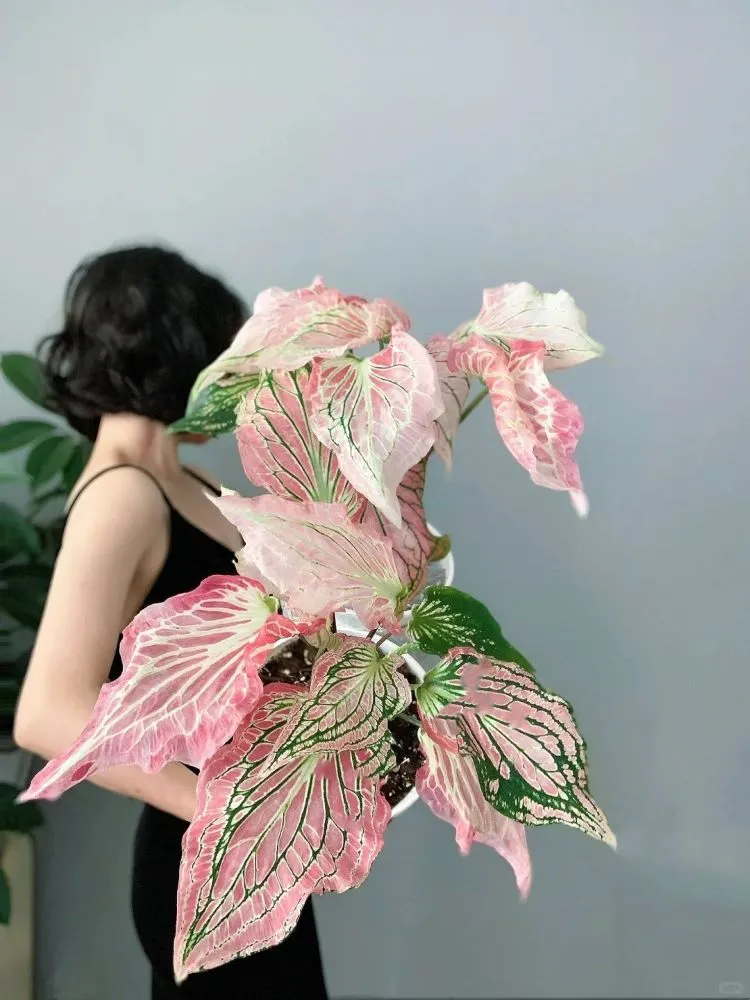
Stage 3: Watering Mature Caladiums (Large Leaves Stage)
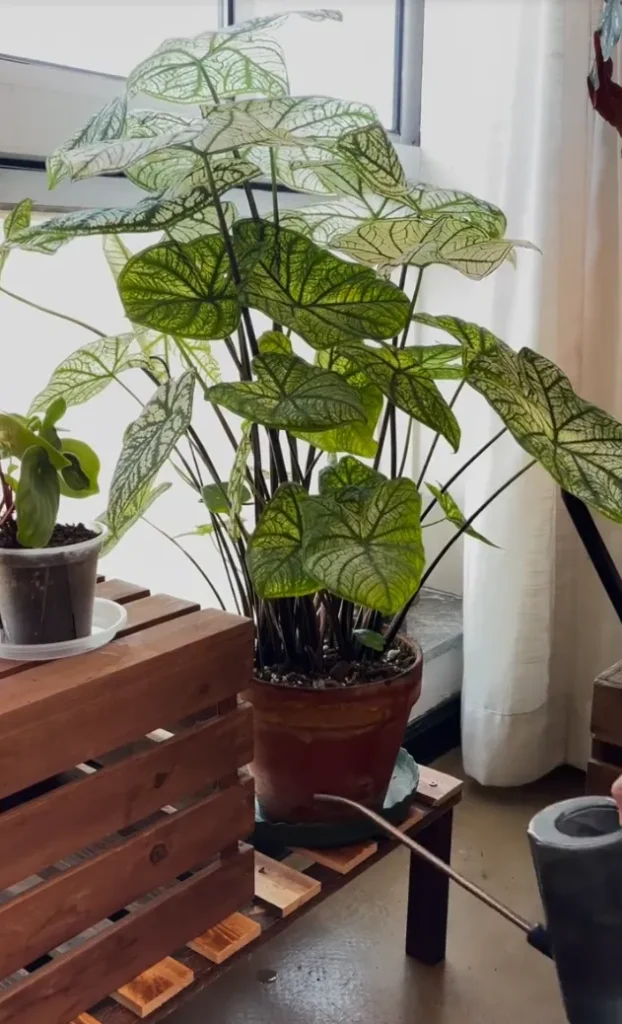
After testing different watering methods for about two months, I came to a very clear conclusion: when caladiums start drooping, the problem is almost always how they’re watered, not how much water they get. In my experience, at least 90% of drooping issues in mature plants are tied to watering rhythm, not drought.
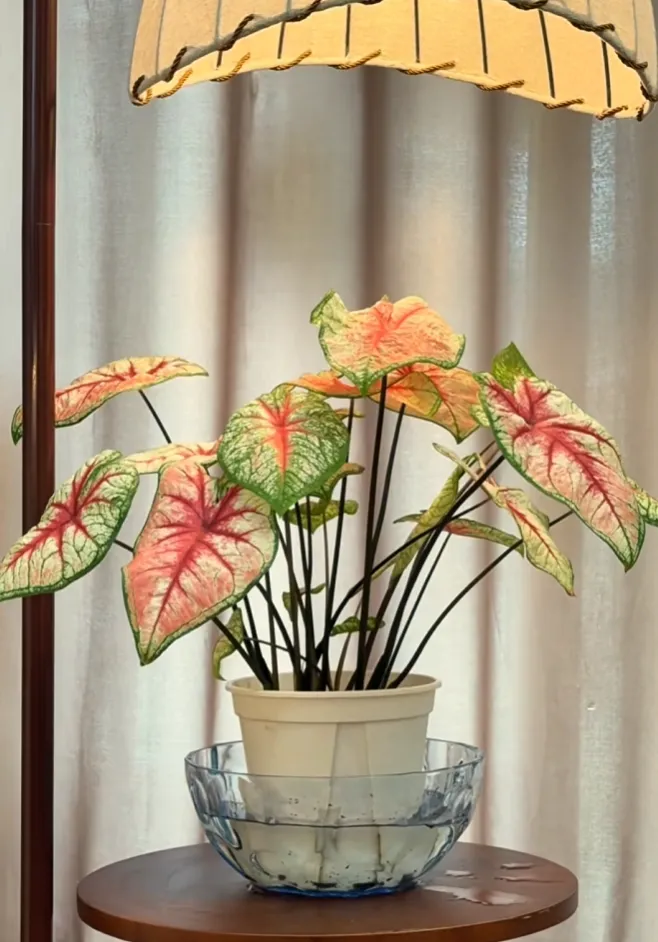
Once the plant is established and carrying large, mature leaves, my strategy becomes very consistent. I place all my caladiums on trays and add water only to the tray, never directly from the top. I also stopped trying to “water thoroughly” in one go. Instead, I let the plant take up moisture gradually from below.
The signal for the next watering is simple and visual. When the soil surface looks dry and starts turning pale rather than dark, that’s when I add water to the tray again. No soaking, no flooding—just enough to reintroduce moisture from the bottom.
The difference was obvious. New leaves emerged faster and with better structure, older leaves stopped being consumed as quickly, and most importantly, drooping became far less frequent. The plants didn’t just look better—they behaved more predictably. At this stage, stability comes from consistency, not generosity.
Watering Caladiums Is About Timing, Not Quantity
Caladiums aren’t difficult plants to grow. What makes them feel difficult is using the wrong watering approach at the wrong stage. Too much care, applied too early or too aggressively, often causes more damage than neglect.
Once you clearly separate the plant’s life into three phases—the bulb stage, the sprouting stage, and the mature leaf stage—watering stops being confusing. Each stage asks for a different rhythm, not a different amount of water.
When timing comes first, watering becomes the easiest part of caladium care.
FAQ
Still unsure how to care for your caladiums overall?
If questions about watering, sprouting, bulb health, or leaf behavior keep coming up, I’ve gathered all my real-world care observations in one place — organized by growth stage and common problems.
Explore the Caladium Care Guide →