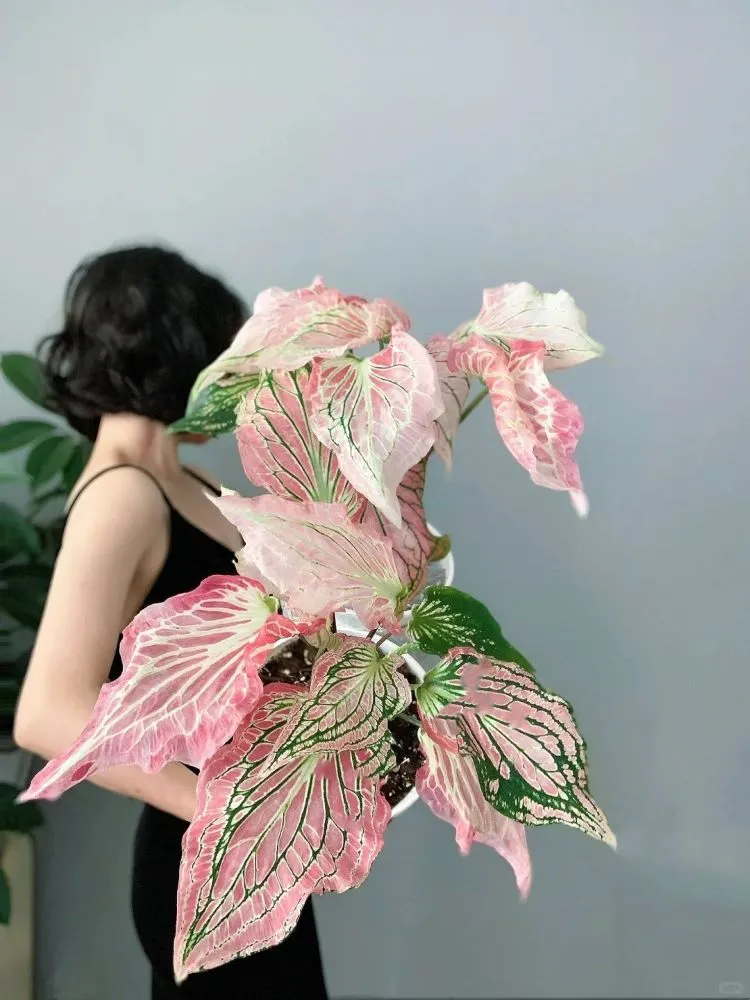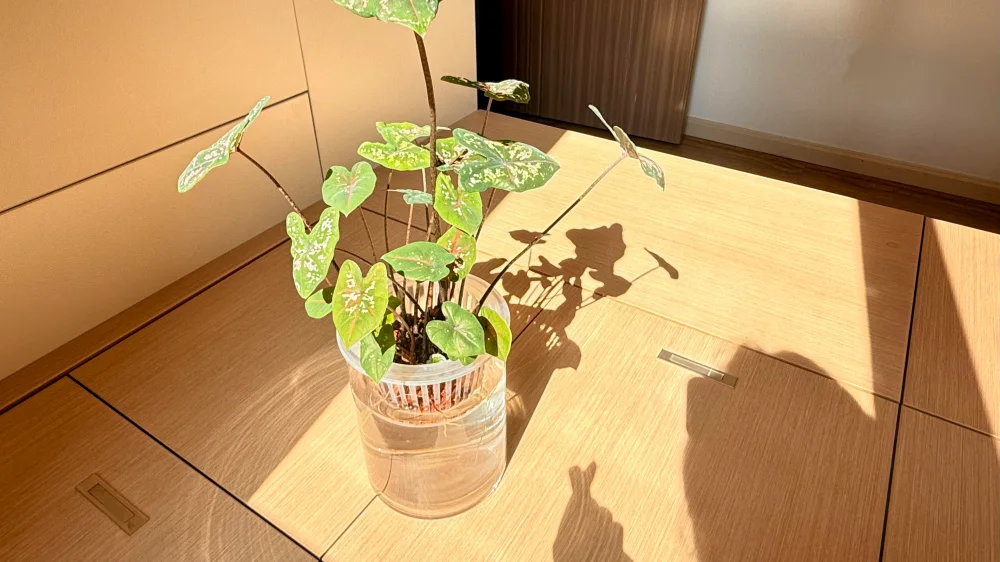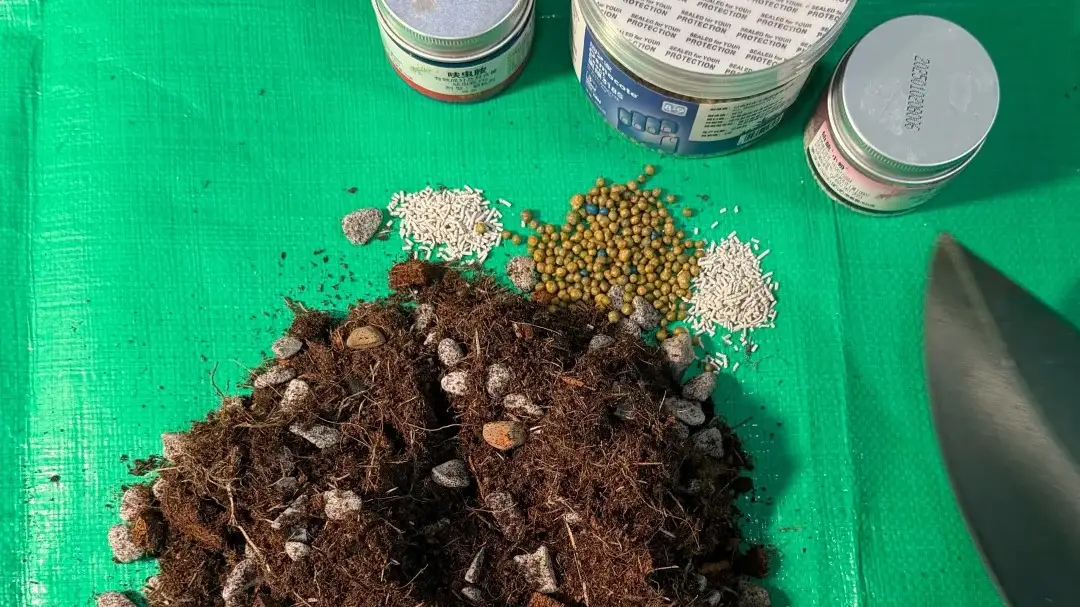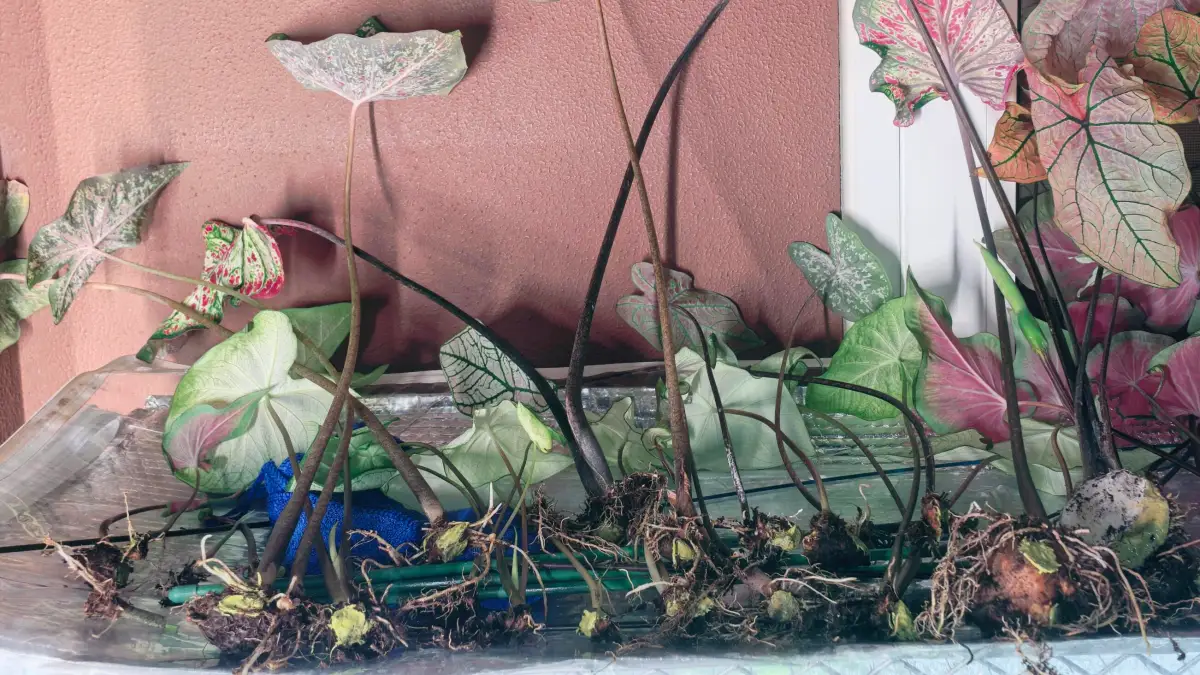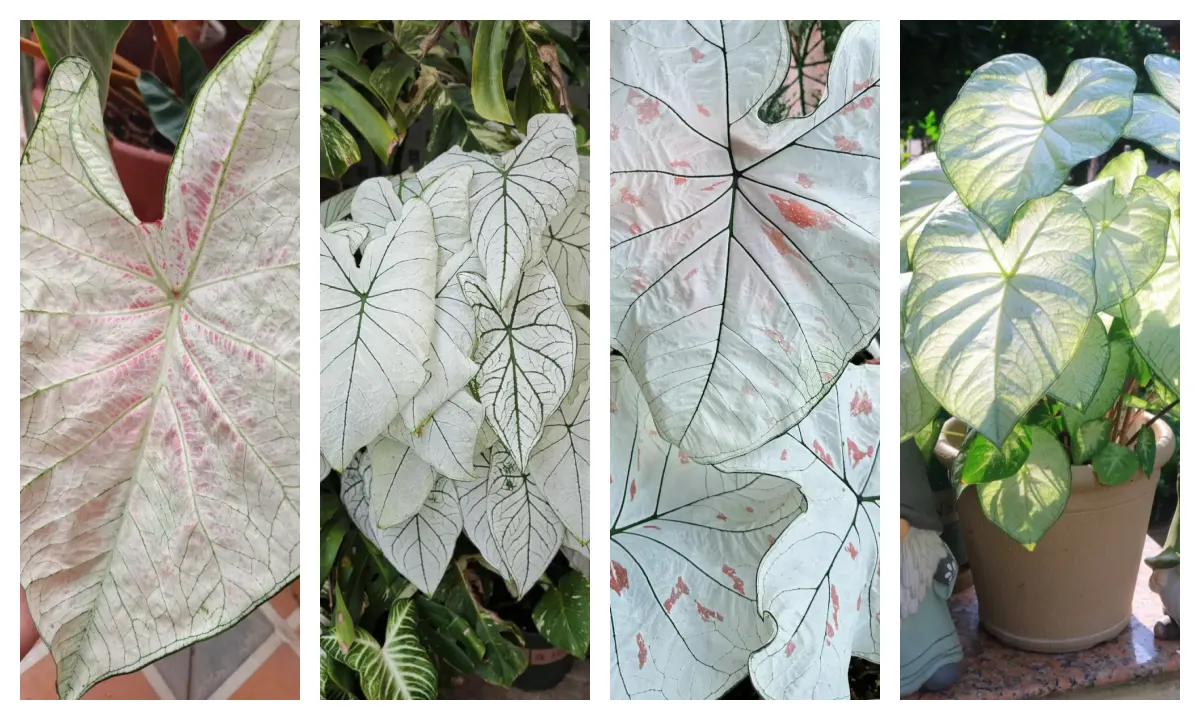
When I first brought Carolyn Whorton home, I didn’t expect it to become my most reliable caladium. It already looked strong under the previous owner’s care — thick leaves, compact growth, and solid pink areas that didn’t appear translucent at all. It had been grown in direct sun, and the structure reflected that.
But once it moved to my south-facing balcony, everything began to shift.
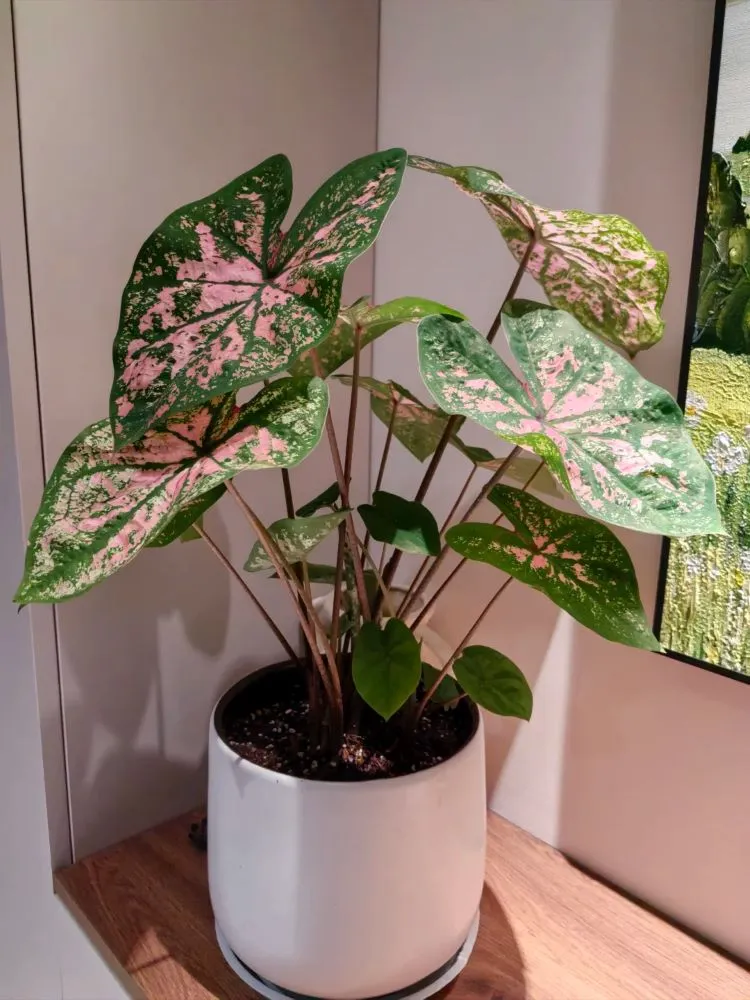
The pink sections gradually became more translucent and expanded in size. The leaves grew thinner. The plant stretched taller. Growth accelerated so quickly that I sometimes felt like I was looking at a different plant every few days. In peak heat, it seemed to produce leaves faster than I could process them — while also shedding several at the same time.
That’s when I realized something important: Carolyn Whorton doesn’t just “like light and water.” It responds dramatically to environment. And once I understood how it behaved in my space — from watering rhythm to fertilizer timing to heat tolerance — it became the easiest and most forgiving caladium I’ve grown.
This isn’t a catalog description. It’s what actually happened on my balcony.
Growing Context (Why Environment Changes Everything)
Before talking about the variety itself, I have to talk about environment.
Carolyn Whorton didn’t behave the same way in two different homes — and that difference explains almost everything about its color, structure, and growth speed.
Previous Owner vs. My Balcony
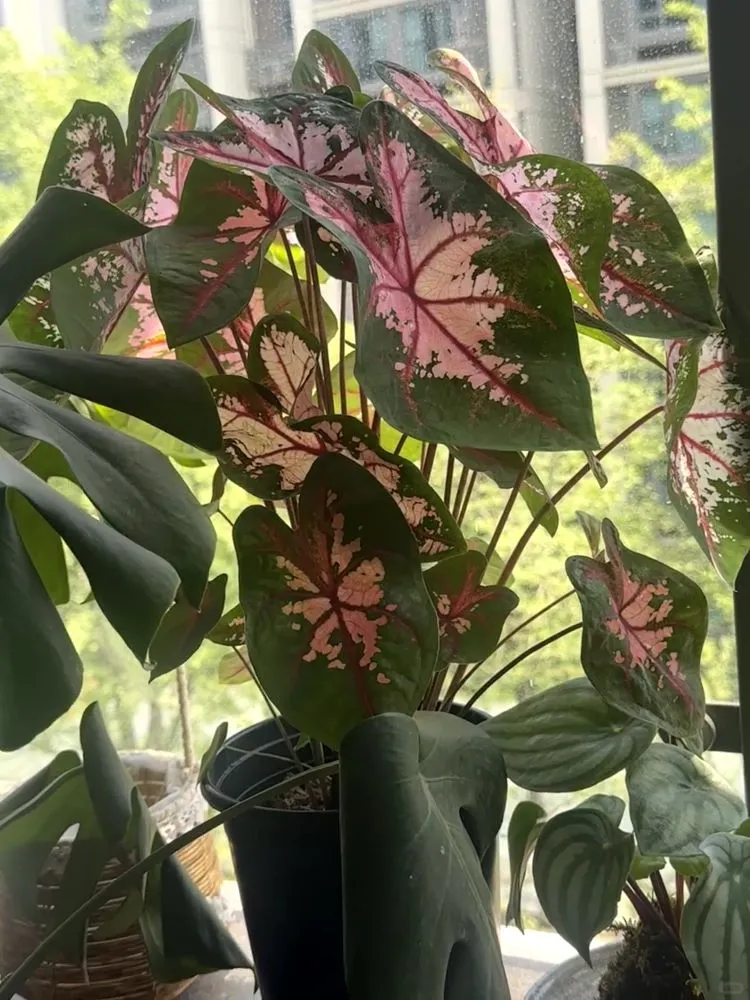
When I first received this plant, it had been grown in full direct sun.
The leaves were noticeably thick and firm. The pink sections were solid and opaque — not translucent at all. The pink areas were also more controlled in size, framed clearly by green. Overall, the plant looked compact and sturdy, almost tight in its structure.
Then it moved to my home.
My setup is a south-facing balcony with some west exposure. It gets bright light, but I intentionally avoid harsh direct afternoon sun hitting the leaves. Recently, temperatures have been quite high, and during peak heat I water every 2–3 days to keep the soil from drying too aggressively.
My fertilizer routine is fairly simple:
- Monopotassium phosphate (MKP) every two weeks
- A diluted balanced fertilizer about once every two months
- Edge watering, following a “dry thoroughly, water thoroughly” rhythm
The light is still strong — but not as intense as full overhead sun. And that subtle difference changed how Carolyn Whorton expressed itself.
Under my care, the plant became taller, thinner, and more dynamic. The pink expanded and turned more translucent. Leaf production accelerated dramatically. It didn’t look weaker — but it definitely looked different.
That contrast is what made me realize: this variety doesn’t just “like light.”
It responds visibly and quickly to how much light, heat, and water it receives.
How the Plant Changed in My Care
Once Carolyn Whorton settled into my balcony environment, the changes didn’t happen gradually — they happened visibly. Within weeks, the plant began expressing itself in ways that were very different from when I first received it.
Leaf Structure Shift
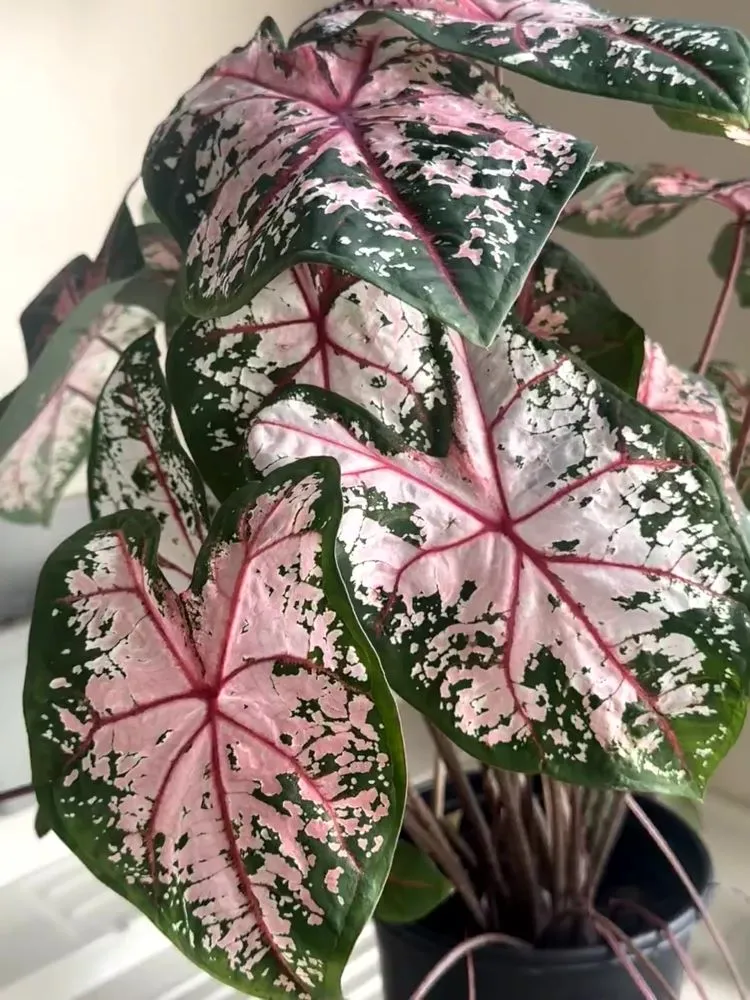
The first thing I noticed was the texture.
The pink sections, which had been dense and solid under stronger sun, gradually became more translucent in my setup. Instead of looking matte and compact, the pink began to glow slightly when backlit. At the same time, the pink areas expanded, occupying more surface space across each leaf.
The leaves themselves became thinner. They were still healthy — not weak — but structurally lighter. The plant also grew taller, with longer petioles lifting the foliage upward.
This wasn’t decline. It was adaptation.
Under softer light, the leaves became thinner and less compact. More available water and heat meant faster cell expansion. The plant didn’t struggle — it accelerated.
Growth Speed Explosion
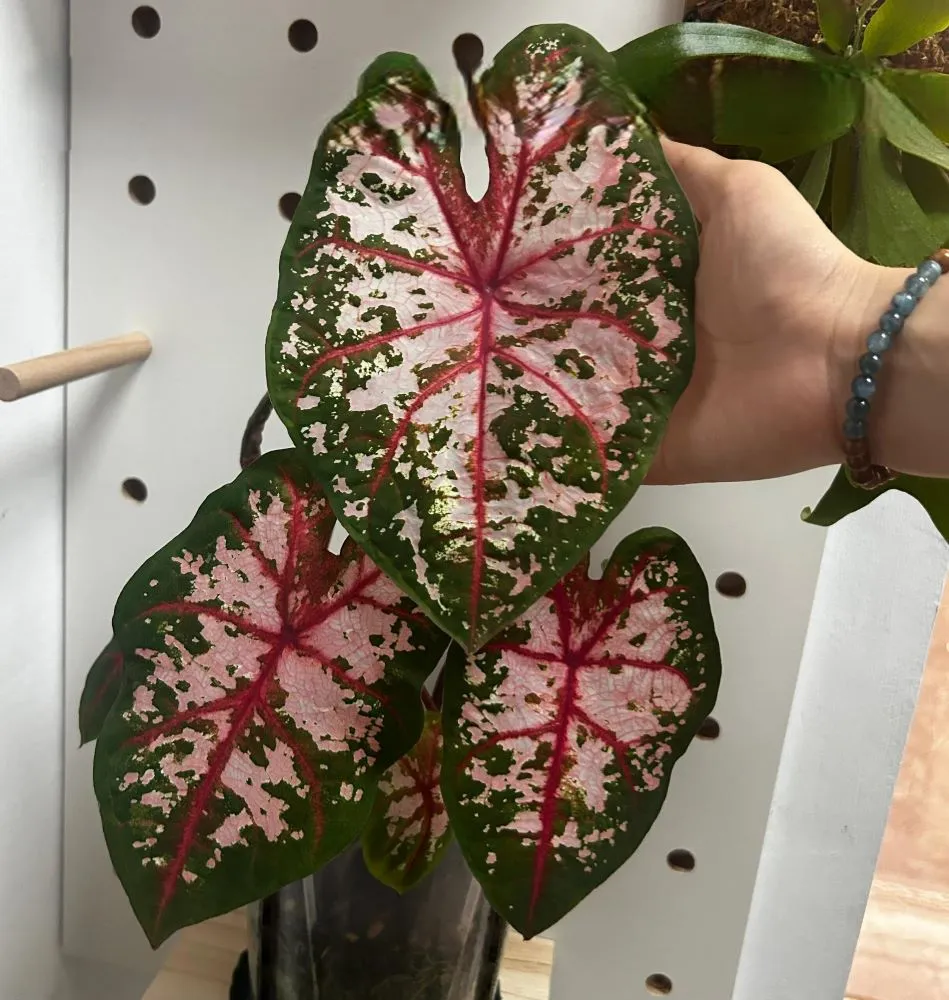
Then came the growth phase that genuinely surprised me.
At one point, the entire pot had only a single small leaf. Within a week, three large pink leaves had emerged. Some leaves seemed to complete expansion in just two days. I would step outside in the morning and feel like I didn’t quite recognize it anymore.
High temperatures, frequent watering, and regular phosphorus support created an environment where the plant responded almost immediately. The feedback loop was fast. Water went in, growth followed.
The “Too Many Leaves” Reality
But there was a trade-off.
With rapid leaf production came crowding. The plant began producing so many leaves that spacing became tight. At the same time, four or five older leaves would yellow and dry almost simultaneously.
At first, I thought this meant something was wrong — maybe nutrient imbalance or root stress. I ended up writing a separate breakdown on how I tell normal turnover from actual decline.
Later, I realized it was simply a trait of this variety.
Carolyn Whorton tends to produce many leaves rather than maintaining a small, stable canopy. It pushes new growth aggressively and lets older foliage cycle out just as quickly. The plant wasn’t unstable — it was operating at a high turnover rate.
Understanding that changed how I interpreted the yellowing.
It wasn’t failure. It was rhythm.
Water & Fertilizer — What Actually Drove the Growth
Once I understood how dramatically Carolyn Whorton responds to light and heat, I realized water and fertilizer were the real accelerators behind its growth pattern. In my balcony setup, growth wasn’t random — it followed rhythm.
Watering Rhythm
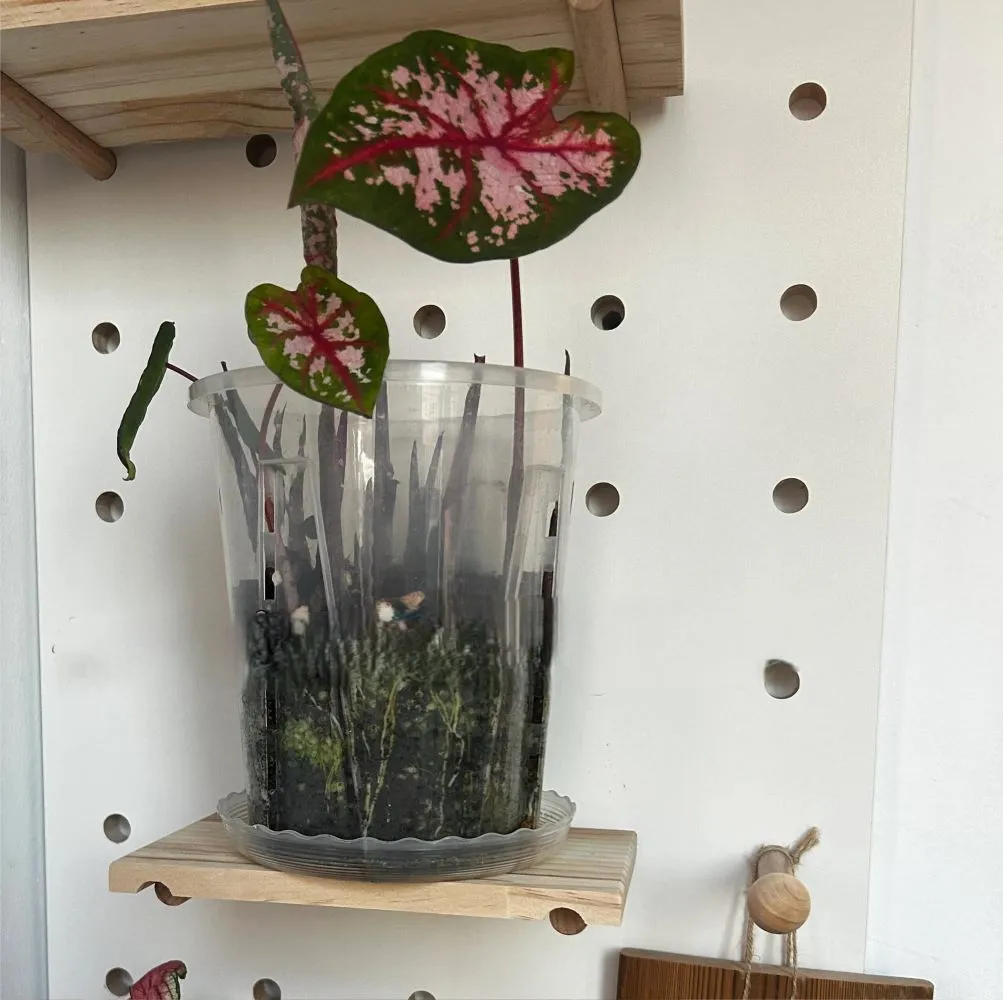
I follow a simple principle: dry thoroughly, water thoroughly.
During high heat, this usually means watering every two to three days. I don’t water on a fixed calendar — I water based on how quickly the soil actually dries. When temperatures rise, the pot dries faster, and the plant consumes water aggressively.
One signal I pay close attention to is leaf-tip guttation — when small droplets form at the edges of the leaves. Whenever I see that, I know root pressure is strong and hydration is sufficient. It feels like the plant is actively pushing water upward rather than passively absorbing it.
That said, I don’t interpret guttation as “add more water.” I see it as confirmation that the previous watering cycle was appropriate.
In peak growth, consistent moisture combined with strong warmth creates rapid expansion. But the key is allowing the soil to dry between cycles. Saturation without oxygen would produce very different results.
Fertilizer Strategy
My fertilizer routine is intentionally moderate but consistent.
Every two weeks, I apply monopotassium phosphate (MKP). I’ve found that phosphorus and potassium support root strength and flowering energy, even though I’m primarily growing this plant for foliage. Under heat, MKP seems to stabilize color expression rather than overstimulate it.
About once every two months, I add a diluted balanced fertilizer to maintain baseline nutrients. I avoid heavy feeding because rapid leaf production already creates natural turnover.
I also water along the edge of the pot rather than directly at the crown. This encourages roots to expand outward and prevents the central tuber area from staying constantly wet.
In cooler indoor rooms, this frequency would likely be excessive. It works in my environment — a bright, warm balcony where soil dries quickly and growth is aggressive. In a cooler indoor room, the same frequency would likely be excessive.
But in my case, the combination of heat, regular hydration, and light phosphorus support is what pushed Carolyn Whorton into that explosive growth phase.
Why I Think Carolyn Whorton Is One of the Easiest Caladiums
After growing several caladium varieties in the same balcony conditions, I’ve learned that not all of them respond with the same resilience. Some are dramatic. Some are delicate. Some perform beautifully but require careful adjustments.
Carolyn Whorton, in contrast, has consistently felt forgiving.
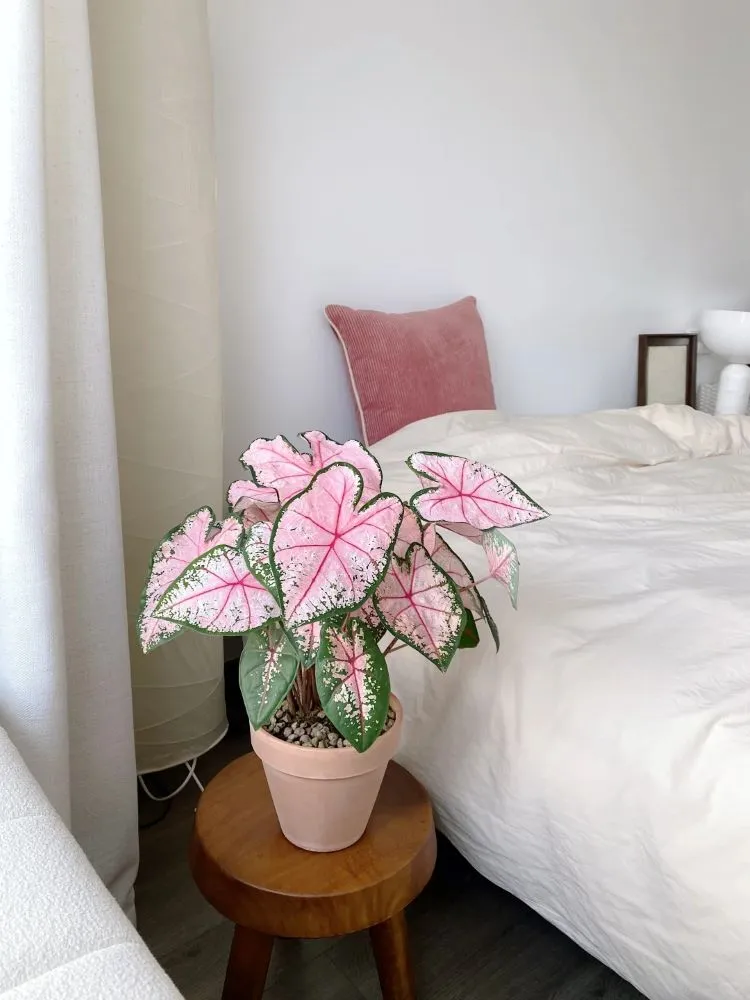
Compared to My Other Varieties
Most of my other caladiums enter full dormancy as temperatures drop. Leaves yellow quickly, the canopy disappears, and growth stops entirely.
Carolyn Whorton behaves differently.
While it eventually slows down like the others, it tends to keep pushing leaves longer into the season. Even when other pots look empty, this one often still holds a few active leaves. It doesn’t fight dormancy, but it doesn’t rush into it either.
In spring, it also wakes earlier. When soil warms and watering resumes, this variety responds quickly. I’ve noticed new shoots appearing while some of my other caladiums are still dormant and quiet.
That early restart makes a real difference. It shortens the “waiting” phase and gives visible momentum at the beginning of the season.
Forgiveness Level
Ease of care, to me, isn’t about perfect appearance. It’s about how a plant responds when conditions aren’t ideal.
Carolyn Whorton handles heat surprisingly well. Even during high-temperature periods on my balcony, it continues producing foliage rather than shutting down. The leaves may thin slightly or grow taller, but the plant doesn’t collapse.
It also recovers well after repotting. When I moved it to a larger container, growth didn’t stall — it accelerated. That’s not something every caladium does.
Most importantly, it doesn’t fall apart easily. If watering timing shifts slightly or light changes with the season, the plant adjusts rather than deteriorates quickly. That adaptability is what makes it feel stable.
I hesitate to call any plant “the best,” because performance always depends on environment. But in my space — bright, warm, and seasonally variable — Carolyn Whorton has been the most predictable and least stressful caladium I grow.
For me, that consistency is what defines an easy plant.
FAQ
If the leaves are still firm and upright, translucency alone is not a problem. It’s expression, not decline.
During peak growth, I’ve seen four or five older leaves yellow at the same time that several new leaves were emerging. At first, I thought it was stress. Later, I realized it’s simply how this variety cycles energy.
If new leaves are consistently appearing, simultaneous yellowing is often part of the rhythm rather than a warning sign.
In stronger direct sun, my plant stayed compact with thicker leaves. In bright but indirect light, petioles lengthened and the plant stretched upward slightly. It wasn’t weak — it was adjusting its structure to capture light more efficiently.
If elongation is extreme and leaves feel fragile, light may be insufficient. But moderate height increase is normal adaptation.
In my setup, moderate but consistent feeding worked better than aggressive feeding. I use monopotassium phosphate every two weeks and a diluted balanced fertilizer every two months. Overfeeding can create excessive leaf production without structural support.
Heat and watering rhythm played a larger role in growth speed than fertilizer strength alone.
Want to Explore Other Caladium Varieties?
Understanding caladiums starts with seeing how each variety behaves.
Browse All Caladium Varieties →