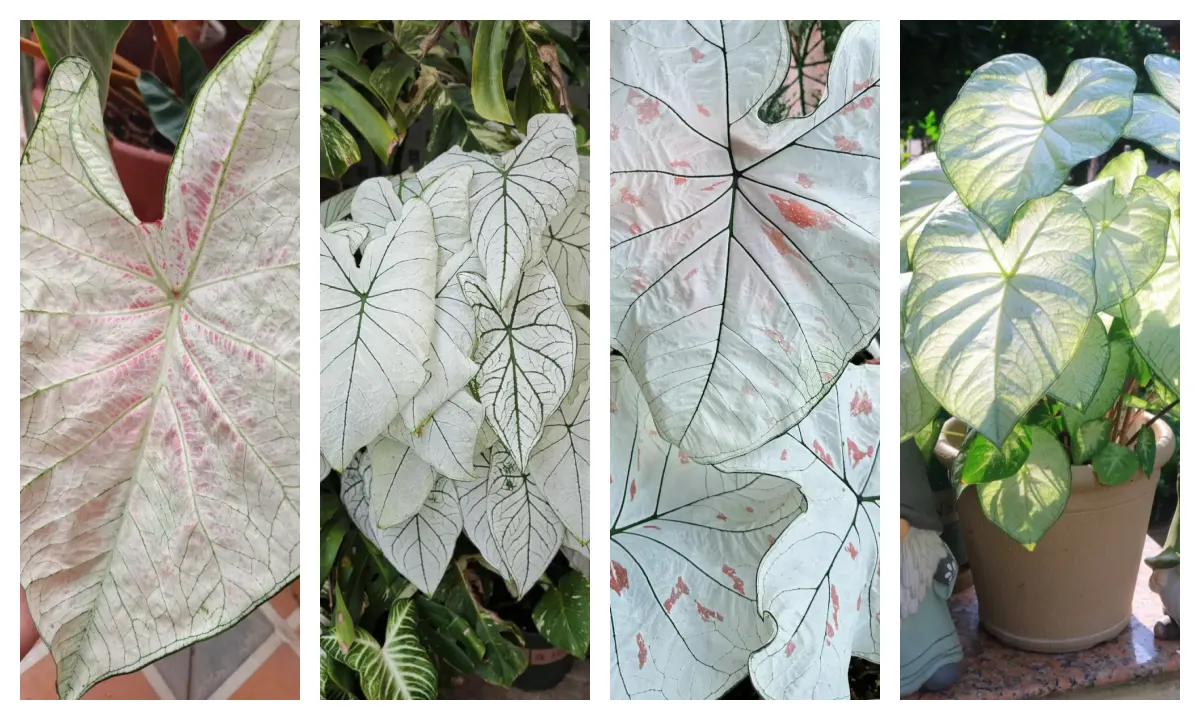
If your caladium leaves have already opened fully but then start curling downward along the edges — or even across the entire leaf — this article is about that exact situation.
This type of curling often looks different from leaf drooping or wilting. The leaves may still feel firm, the petioles remain upright, and the plant continues growing (if yours isn’t, see caladium not growing). What changes is the leaf shape: instead of staying flat, the edges roll downward or the leaf cups toward the floor.
This is commonly misread as a problem with new leaves failing to open, or as an early sign of disease or root rot. In most indoor cases, it is neither.
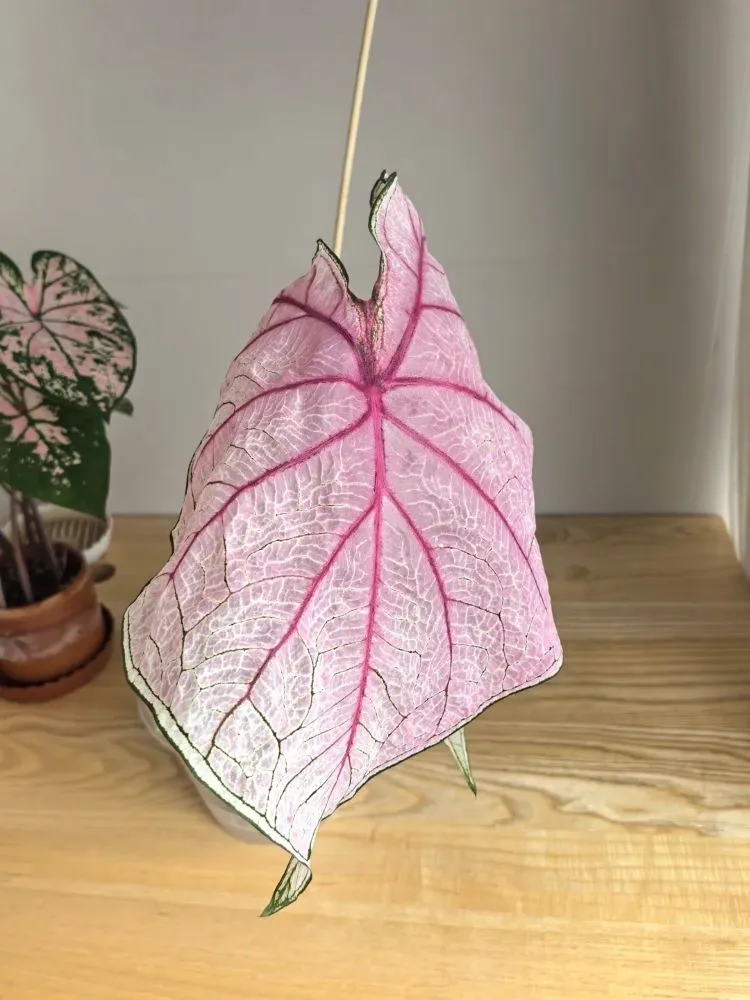
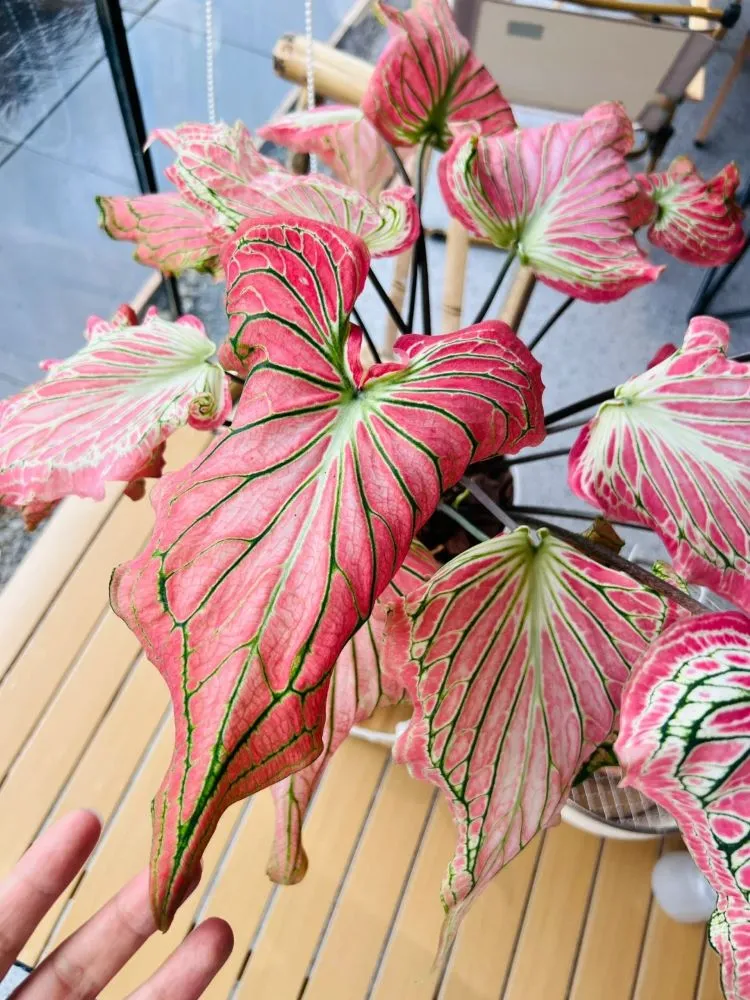
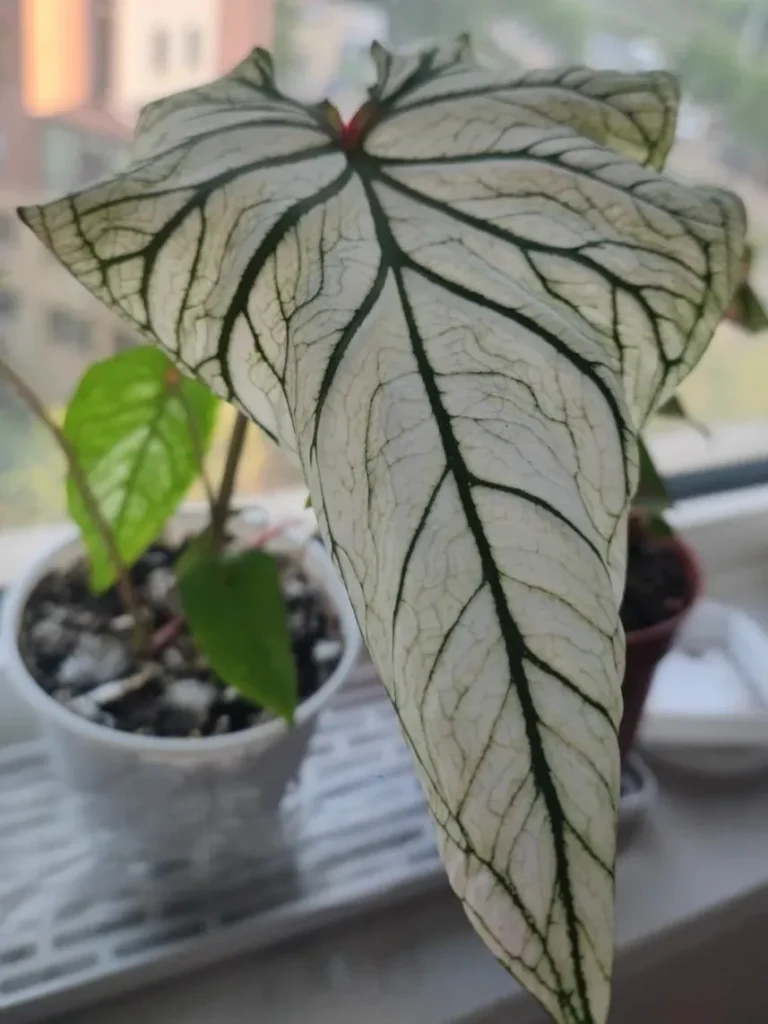
Here, we are not talking about leaves that never unfurled. We are also not focusing on severe decline, mushy stems, or collapsing foliage. The leaves in question have already completed their opening stage.
I’ve run into this pattern many times across different caladium varieties. The leaves open normally, look healthy at first, and then gradually start curling downward under certain conditions. Because the plant itself may otherwise appear fine, this behavior can be confusing and easy to misdiagnose.
In this article, I’ll walk through four common indoor situations that can cause fully opened caladium leaves to curl downward, so you can match what you’re seeing with the most likely trigger — without assuming the plant is failing or reaching dormancy.
What “Downward Curling” Actually Means in Caladiums
Downward curling does not mean a caladium leaf has failed.
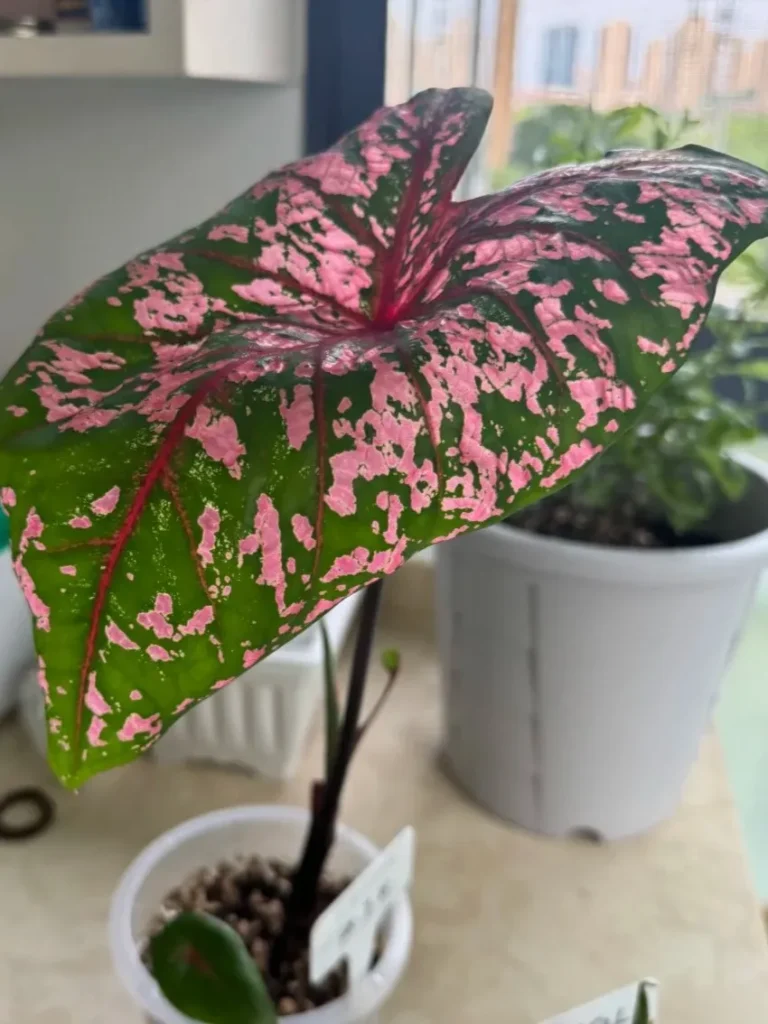
When a leaf curls downward after fully opening, it is usually responding to environmental pressure, not damage or decline. The leaf is already formed and functional — it is adjusting its shape rather than breaking down.
This type of curling is dynamic, not permanent. As conditions change, the same leaf may flatten again or curl more deeply. The shape reflects what the plant is dealing with right now, not a past mistake.
Understanding this helps separate temporary stress responses from true problems — and sets the stage for identifying what is actually triggering the curl.
The Most Common Situations That Cause Downward Curling
High Transpiration Pressure (Not Just “Underwatering”)
This is the most common reason indoor caladium leaves curl downward.
It usually shows up when light intensity increases and the air is dry. Temperatures rise, the leaves lose moisture faster, but the roots can’t supply water at the same speed. The soil may still be moist — this is not always true underwatering.
In response, the leaf curls downward to reduce surface area and slow water loss. Adding more water alone often doesn’t fix this and can make things worse.
Sudden Environmental Changes
Downward curling often appears after a change in environment rather than gradually.
Common triggers include moving the plant to a brighter or more open spot, moving it from a high-humidity area to a normal room, or seasonal shifts that increase day–night temperature differences.
The curl usually doesn’t happen immediately. It often shows up one to three days later, once the plant starts adjusting to the new conditions.
Root Uptake Lag (Roots Are Behind the Leaves)
Sometimes the leaves are ready, but the roots are not.
This happens when the pot is small and root-bound, right after repotting, or while the root system is still recovering. Water is present in the soil, but the roots can’t move it upward efficiently.
Downward curling reduces demand and helps the plant cope while the root system catches up.
Long-Term Light Stress Without Visible Burn
Not all light stress causes scorch marks.
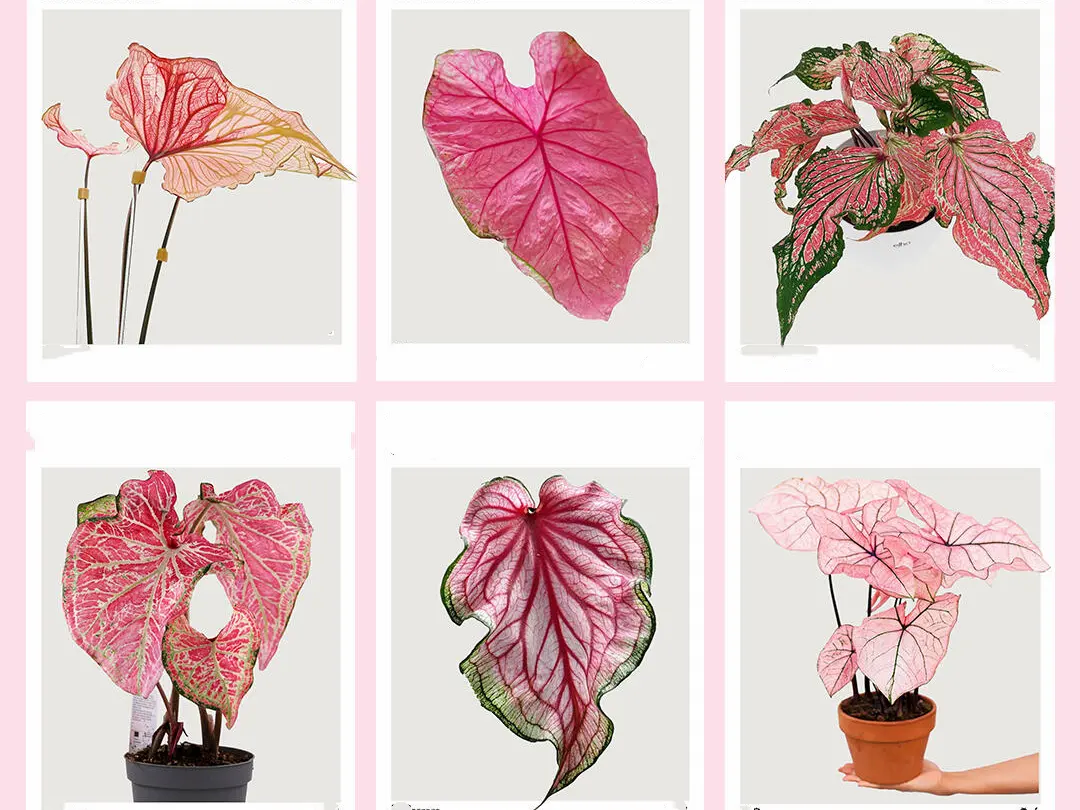
Under prolonged bright light, caladium leaves may curl downward at the edges without showing burn or damage. Color can fade slightly, especially in pink or light-colored varieties.
This type of curling develops slowly and tends to persist as long as light levels remain high.
When Downward Curling Is a Warning Sign
Downward curling by itself is usually a stress response, not a serious problem. It becomes a concern only when it appears together with other symptoms.
Pay closer attention if you see downward curling combined with:
- Noticeably soft or weakening petioles
- Ongoing yellowing or repeated leaf drop
- Soil that stays wet and cold for extended periods
This combination suggests the issue may no longer be limited to the leaves. When water is consistently present in the soil but the plant continues to weaken, root function may be compromised.
In these cases, checking the root system makes sense. Without these additional signs, downward curling alone is rarely a reason to assume root rot or major failure.
What This Article Is Not About
This article focuses only on downward curling in fully opened caladium leaves.
It does not cover situations where a new leaf grows to full size but never opens, or cases where a curled leaf becomes permanently fixed in that shape from emergence. Those patterns follow a different process and should be evaluated separately.
If your caladium leaf stayed rolled from the beginning and never unfurled, that is not downward curling — it is an unfurling failure.
For that situation, see:
Why New Caladium Leaves Stay Curled and Won’t Open
Keeping these cases separate helps avoid misdiagnosis and makes it easier to understand what your plant is responding to, rather than applying the wrong explanation to the wrong symptom.
FAQ
Still not sure what your plant is telling you?
If yellowing, drooping, or root issues keep showing up across different plants, I’ve organized my real-world observations and fixes in one place.
Go to Problems Hub →