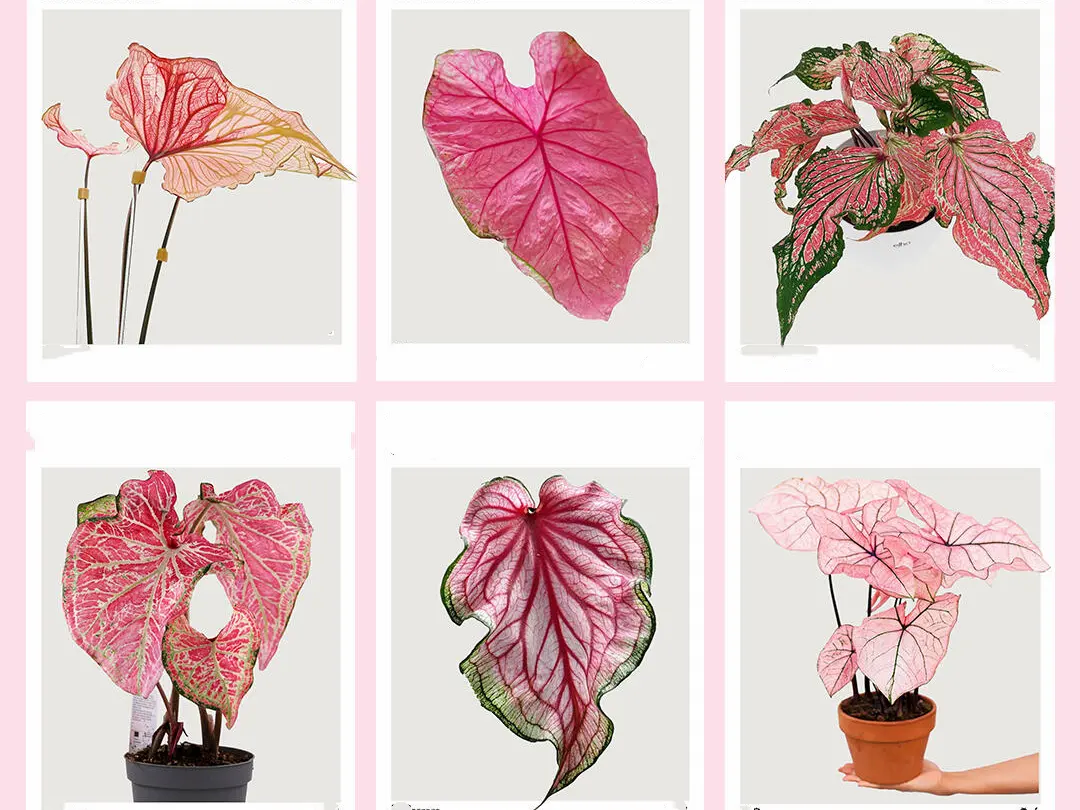
Pink Beauty did not first impress me because it looked rare or dramatic. It impressed me because it started growing so quickly. I planted a large tuber, and in less than two weeks, it had already pushed out fresh roots and new leaves. With caladiums, that kind of early response always makes me pay closer attention.
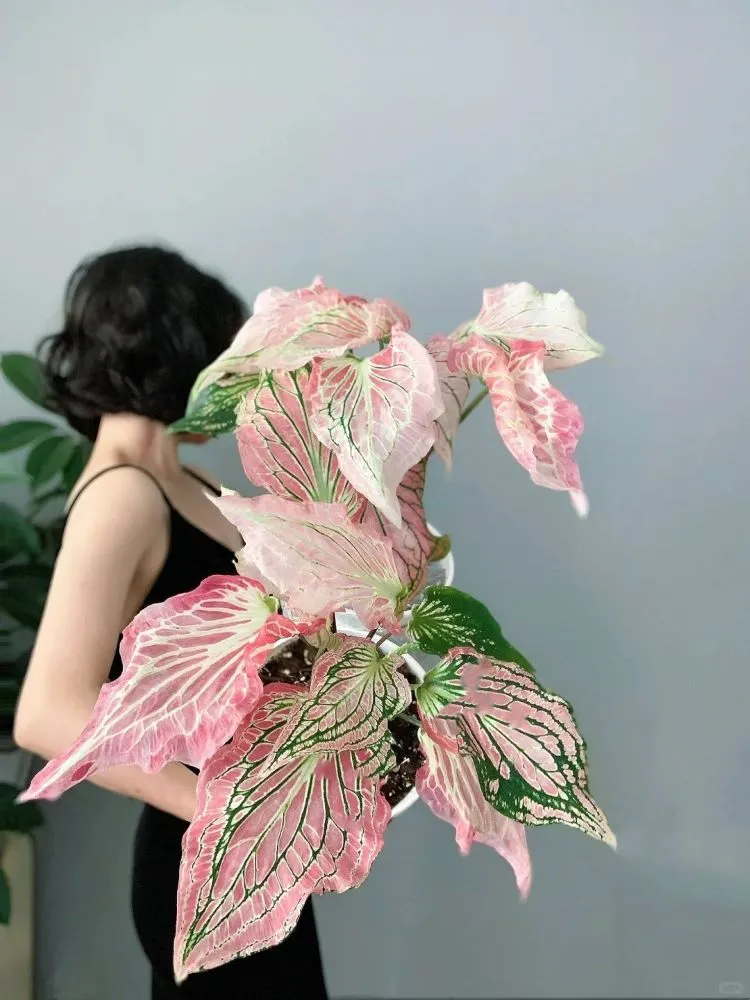
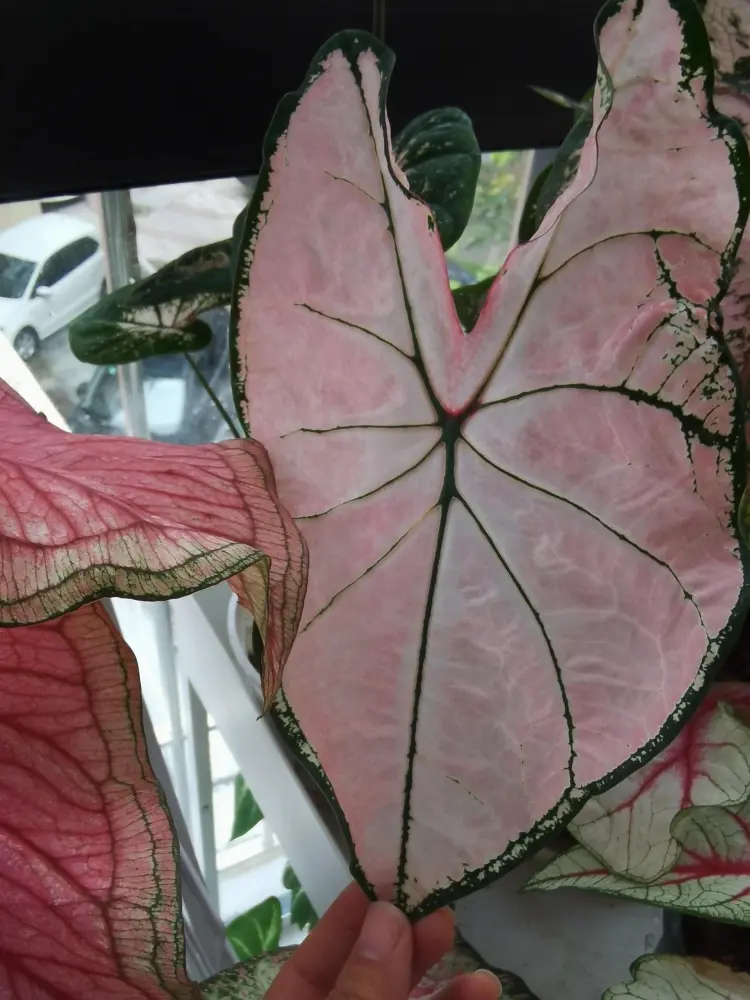
The color was also softer than I expected. Pink Beauty is not a loud, neon-pink caladium in my pot. The leaves have a gentle, translucent pink look, almost as if the color is glowing through the leaf instead of sitting heavily on top of it. It feels more delicate than bold, which is part of its charm.
This is only my observation from growing Pink Beauty in a container, under my own indoor and seasonal growing conditions. I would not treat it the same way as a caladium growing outdoors all year in a hot, humid climate. But in my setup, it gave me one of the most satisfying early starts among the pink caladiums I have grown.
Quick Profile: Pink Beauty Caladium
| Feature | My Notes |
|---|---|
| Variety | Pink Beauty Caladium |
| Leaf type | Fancy-leaf / heart-shaped |
| Main color | Soft translucent pink with green markings |
| Growth impression | Fast and responsive from a large tuber |
| Similar variety | Pink Splash |
| Best for | Growers who like gentle pink caladiums with an airy, soft-looking shape |
What Pink Beauty Looks Like in Real Life
The pink on Pink Beauty is not a heavy rose pink or a strong hot pink. At least on my plant, it looks softer and more translucent, especially when the leaves are fresh and well hydrated. The color seems to glow through the leaf a little, rather than sitting on the surface as a flat block of color.
There is also enough green in the pattern to keep the leaves from looking too plain. Some leaves show green markings near the edge, while others have scattered green splashes across the pink area. That mix of pink and green makes the plant look light and airy instead of overly sweet.
The most memorable thing about Pink Beauty, though, was not only the color. It was the way the leaves held themselves once the plant was properly hydrated. Instead of hanging flat or looking tired, the leaves lifted and opened with a gentle angle. That gave the whole plant a soft skirt-like shape.
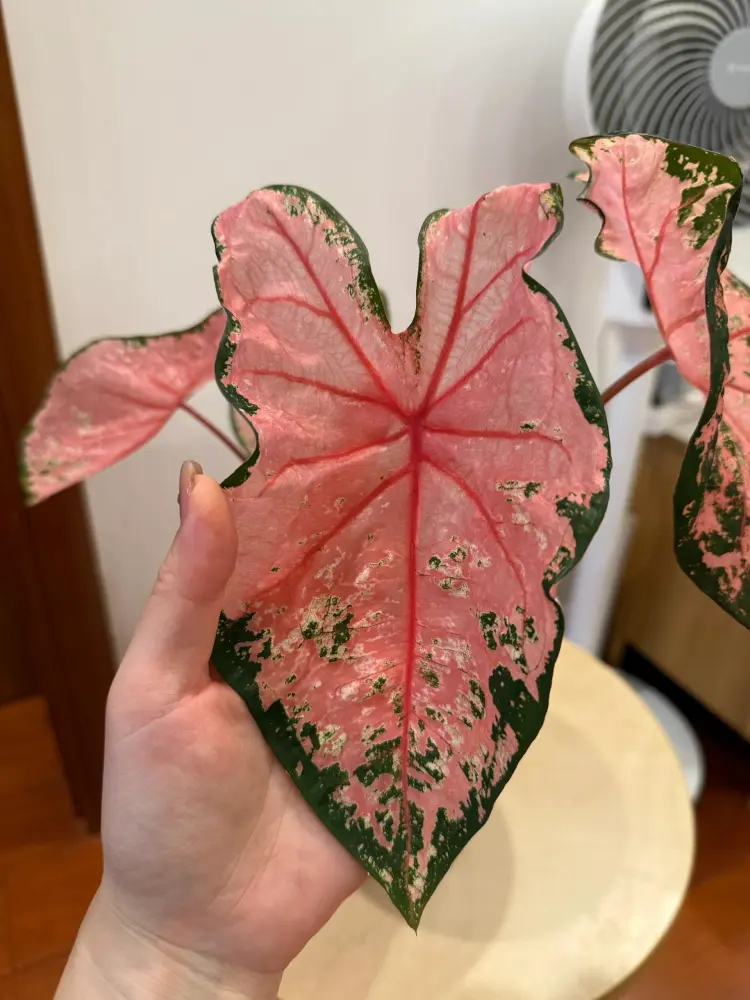
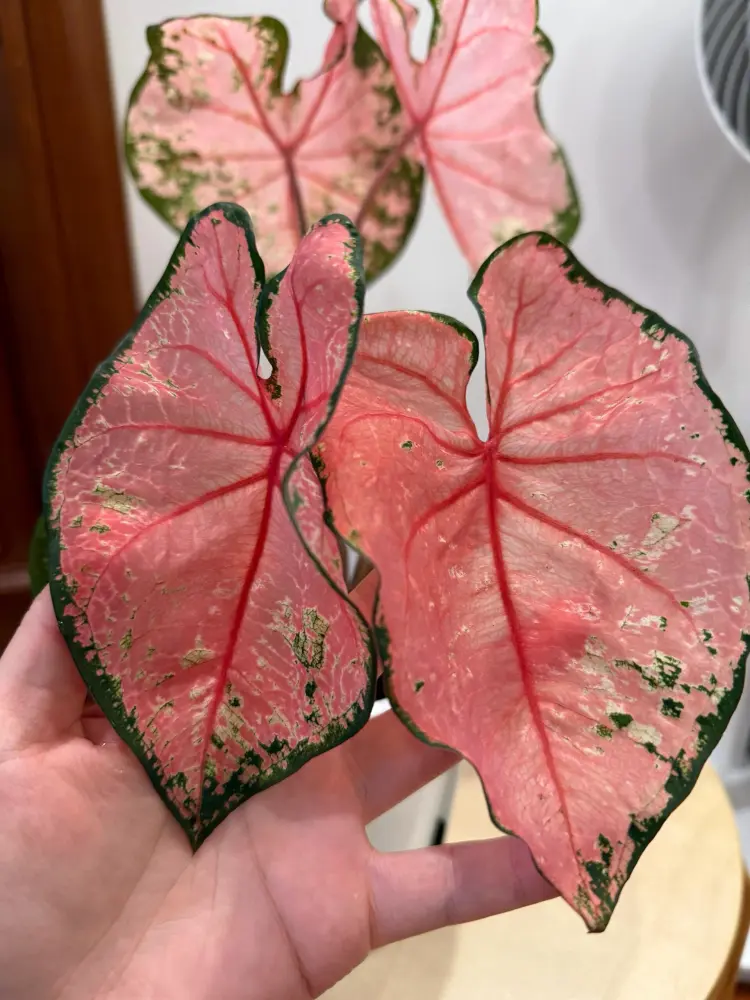
I do not want to over-romanticize it, because it is still just a young caladium growing in a pot. But this was the visual detail that made me stop and look at it more than once. Each leaf seemed to stand a little proudly, almost like a tiny ballet dancer, and that posture made the soft pink color feel even more alive.
My First Growth Result: Roots and Leaves in Less Than Two Weeks
The strongest reason Pink Beauty caught my attention was its first growth response. I planted a large tuber, and in less than two weeks, it had already made visible fresh roots and new leaves. That is not something I take for granted with every caladium.
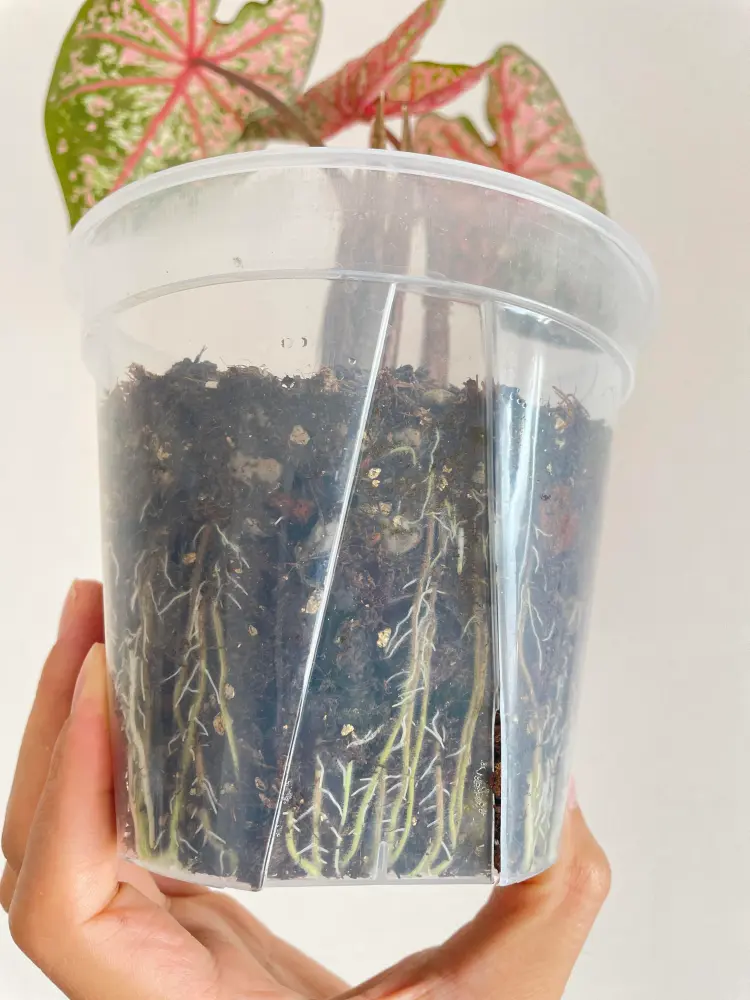
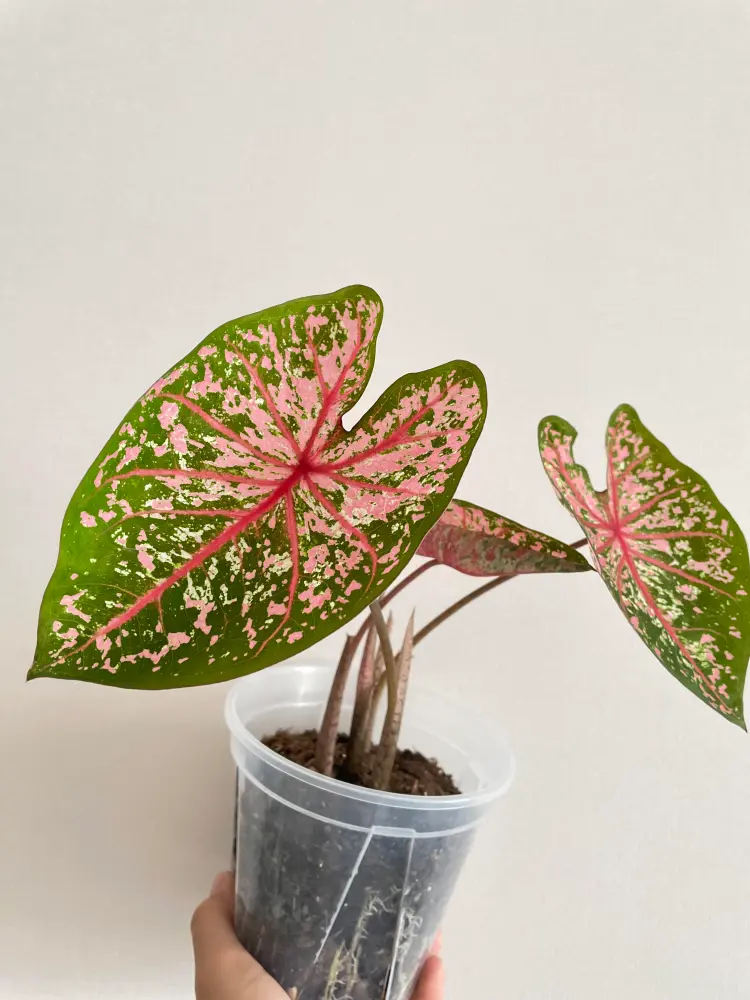
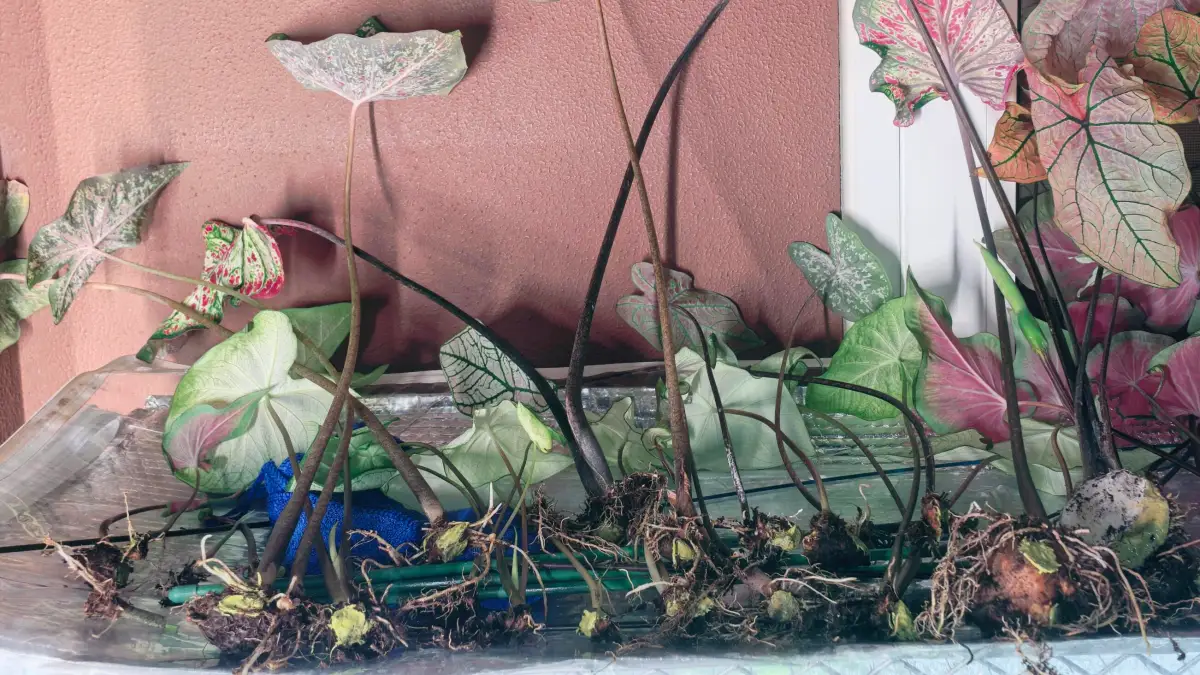
This early stage also reminded me how much the starting tuber matters. A stronger tuber usually has more stored energy to work with, so caladium bulb size can affect the first stage of growth. With Pink Beauty, the large tuber seemed to wake up quickly and push growth without much hesitation.
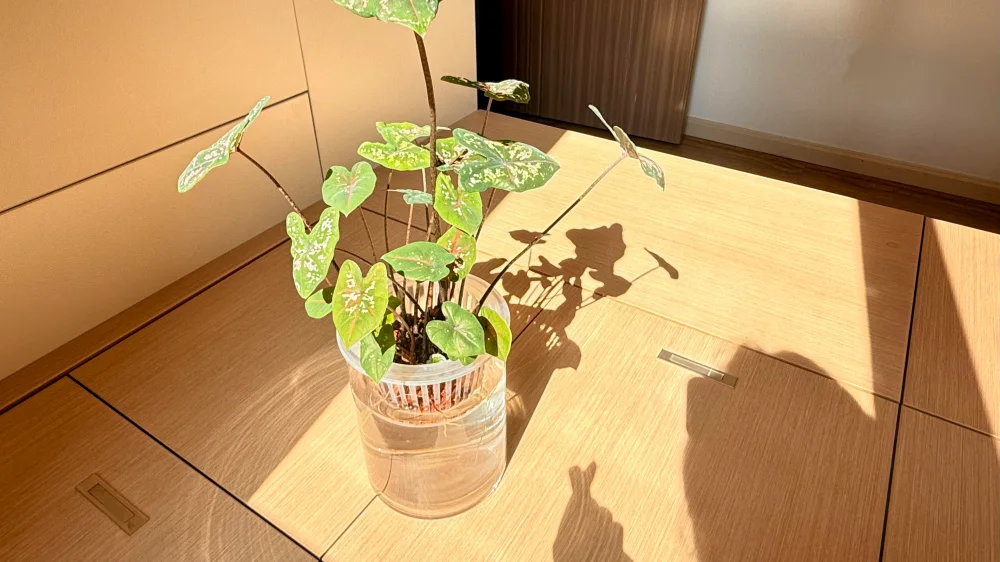
I planted it the same way I usually handle new tubers, following how I plant caladium bulbs in containers. I kept the setup warm and did not treat the pot like an outdoor tropical bed. In my indoor growing conditions, temperature, pot moisture, and timing all mattered.
So I would not say Pink Beauty is always a fast caladium in every home or every season. A smaller tuber, a cooler room, or weak early-season light could easily slow it down. But in my setup, from a large tuber, Pink Beauty responded quickly enough that I noticed it almost right away.
Pink Beauty vs Pink Splash: The Difference I Notice First
Pink Beauty and Pink Splash can look very similar at first glance. Both sit in that soft pink caladium range, and if I only saw one young leaf in a photo, I would be careful about making a confident identification.
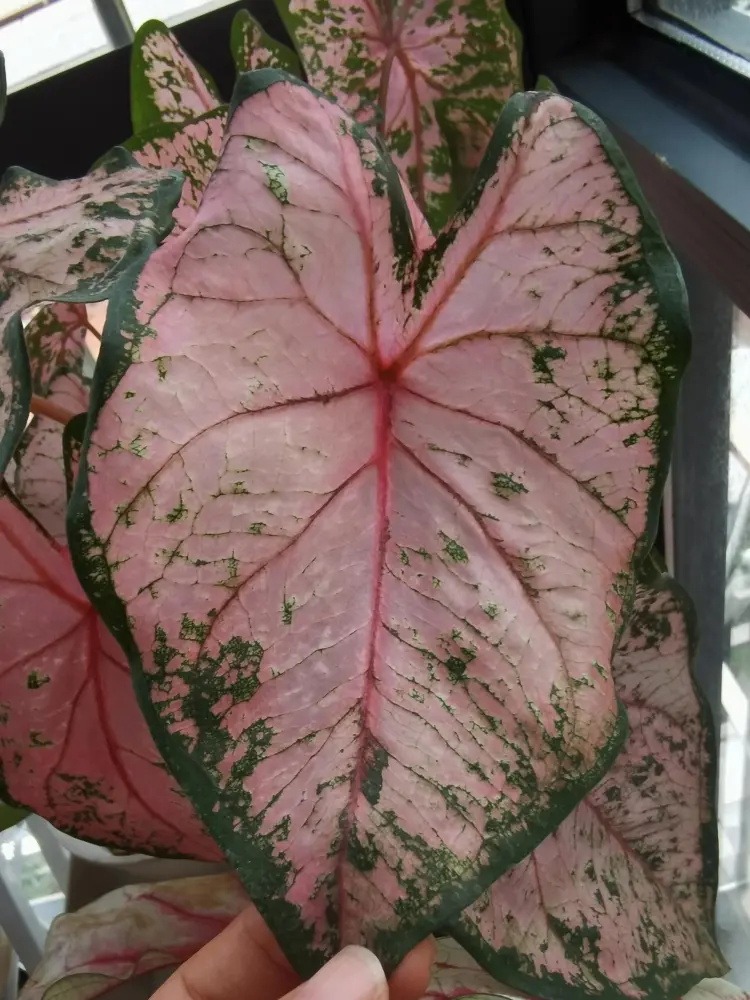
The first difference I noticed was the vein color. On my Pink Beauty, the overall look felt softer and more translucent, while Pink Splash seemed to have a slightly stronger contrast between the pink area, green markings, and veins. I would not use this as an absolute rule, because caladium color can shift with light, leaf age, and growing conditions. But side by side, the vein tone was the detail that helped me separate them.
| Feature | Pink Beauty | Pink Splash |
|---|---|---|
| Overall look | Softer and more translucent | More splashy and defined |
| Vein color | The easiest difference I noticed | Usually looks different beside Pink Beauty |
| Leaf mood | Gentle, glowing pink | More patterned and contrast-heavy |
| Best way to compare | Side-by-side leaves | Side-by-side leaves |
For me, Pink Beauty feels quieter and more airy. Pink Splash has a more obvious patterned look. They are close enough that I would not judge them by name alone, especially if the plant came from a seller with unclear labeling. The safest way is still to compare mature leaves under the same light, preferably on plants growing in similar conditions.
How I Would Grow Pink Beauty Indoors
So far, Pink Beauty does not feel like a difficult caladium to me, but I would not separate that impression from how it was grown. It started from a strong tuber, stayed warm, and grew during an active part of the season.
For a soft pink variety like this, I would be careful with weak light. Pink leaves can look delicate and pretty, but they still need enough energy behind them. In my indoor setup, I would give Pink Beauty bright indirect light, or use a caladium grow light indoors if the room becomes too dim. Without enough light, the plant may still survive, but the leaves can lose that lifted, clear look that makes the variety attractive.
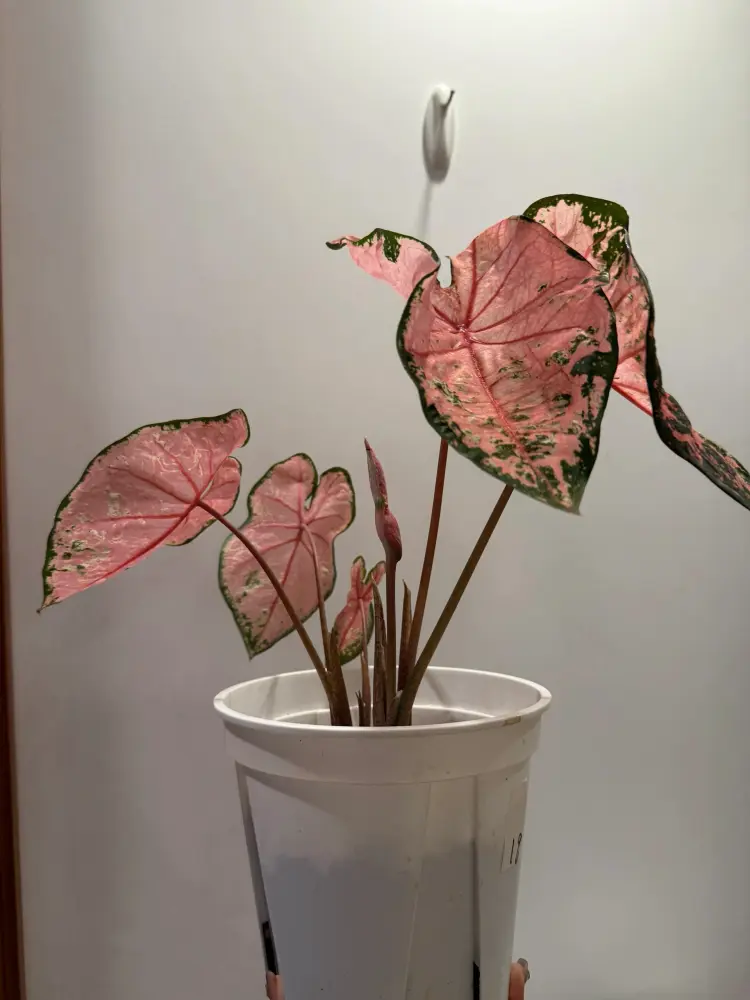
Watering is where I would stay observant rather than follow a fixed schedule. Pink Beauty’s leaf posture can tell me something, especially when the leaves look softer than usual. But I would not water only because the leaves look a little tired. I still check the pot, the soil moisture, and how long it has been staying wet. That is closer to how I water caladiums indoors now.
If the leaves soften while the soil is already dry, the plant may simply need water. But if the leaves are drooping while the soil still feels wet, I would not keep adding more water. That is when I start thinking about root stress instead. With caladiums, caladium leaves drooping can mean thirst, but it can also mean the roots are not working well enough to support the leaves.
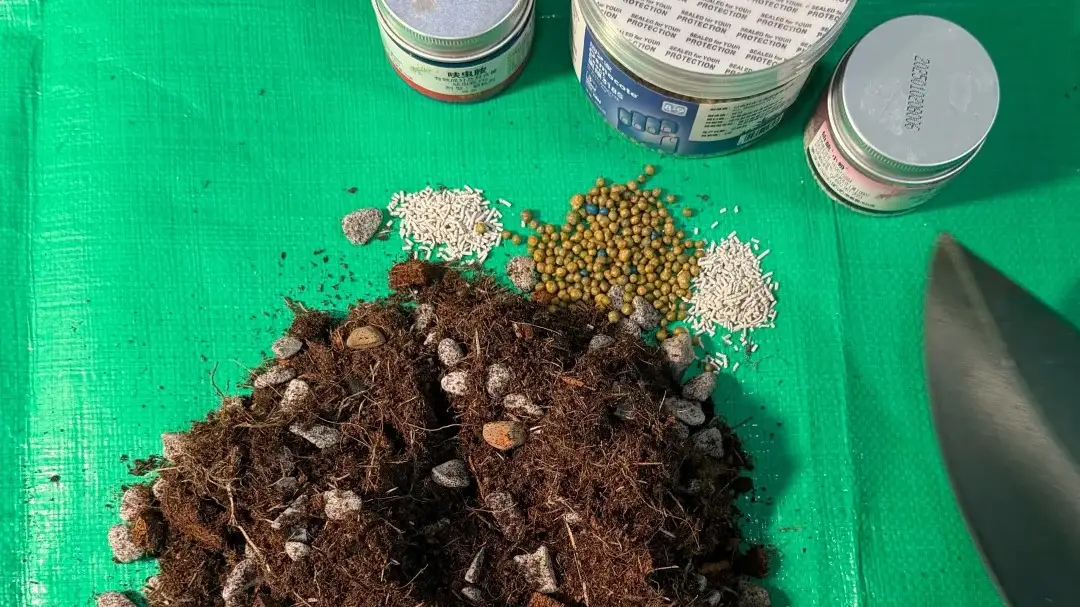
So my approach to Pink Beauty would be simple: warm conditions, bright indirect light, a potting mix that does not stay heavy for too long, and careful watering based on the whole plant rather than one soft leaf. Under those conditions, it seems like a very rewarding pink caladium to grow indoors.
My Take After Growing Pink Beauty
Pink Beauty is not the rarest pink caladium I have grown, and I do not think rarity is the reason I like it. What made it memorable was how quickly it woke up and how clearly it responded once it started growing.
I liked it more because it gave me visible feedback while I was growing it. It was not a caladium that only looked good in one perfect photo. From the first signs of movement to the way the leaves reacted after watering, it kept giving me small reasons to check on it again.
What stayed with me was the overall mood of the plant. It did not try to be the brightest pink caladium in the room, but it had a quiet, cheerful presence that made the pot feel fresh every time I looked at it.
For me, Pink Beauty is worth keeping because the growing process itself was satisfying. It gave me roots to check, new leaves to watch, and enough small changes to make the plant feel rewarding from the beginning.
FAQ
Want to Explore Other Caladium Varieties?
If you are drawn to softer pink caladiums, Pink Symphony Caladium is another variety I would compare with Pink Beauty, though the two do not give the same first impression in the pot.
Browse All Caladium Varieties →