Frog in a Blender first caught my attention because of its strange name, but that is not the reason I remember it now. After growing it for a while, I started to think of it as one of the faster and more forgiving caladiums in my collection.
It did not give me many pest problems, and once it was actively growing, it responded well to regular care. But the part that changed how I saw this variety came from a damaged plant. One Frog in a Blender arrived with the root area badly broken during shipping. I did not expect much from it at first, so I placed it in water just to see whether it still had enough life left to root.
To my surprise, it did. After about two weeks, the roots had grown enough for me to move it back into soil. The plant did not look impressive above the surface after that. It only made one leaf over the next couple of months. But underneath, it quietly formed a small, flat tuber.
That recovery made me like Frog in a Blender more than I expected. It reminded me that caladiums are not only about beautiful leaves. Sometimes the most interesting part is watching a plant rebuild itself slowly, especially when it looked almost beyond saving at the beginning.
Quick Profile: Frog in a Blender Caladium
| Feature | My Notes |
|---|---|
| Variety | Frog in a Blender Caladium |
| Main impression | Fast-growing, resilient, and surprisingly forgiving |
| Leaf type | Fancy-leaf / patterned caladium |
| Growth habit | Active once established, with faster visible progress than some slower caladiums |
| Pest issues | Very few in my experience so far |
| Best for | Beginners who want a lively caladium that gives visible feedback |
| Most interesting trait | Most interesting trait May recover from damage if the base still has enough firm, healthy tissue |
| My caution | Do not fertilize heavily when roots are weak, broken, or newly moved from water to soil |
What Frog in a Blender Looks Like
Frog in a Blender is not a quiet-looking caladium. The name already gives a hint of what the plant feels like visually: mixed, speckled, playful, and a little strange in a good way.
The leaves have a busy pattern rather than a clean single-color look. On my plant, the green areas and lighter markings made the foliage feel lively, almost like the pattern had been splashed across the leaf instead of arranged too neatly. It does not have the soft romantic feeling of a pale pink caladium or the dramatic contrast of a deep red one. Its charm is more casual and energetic.
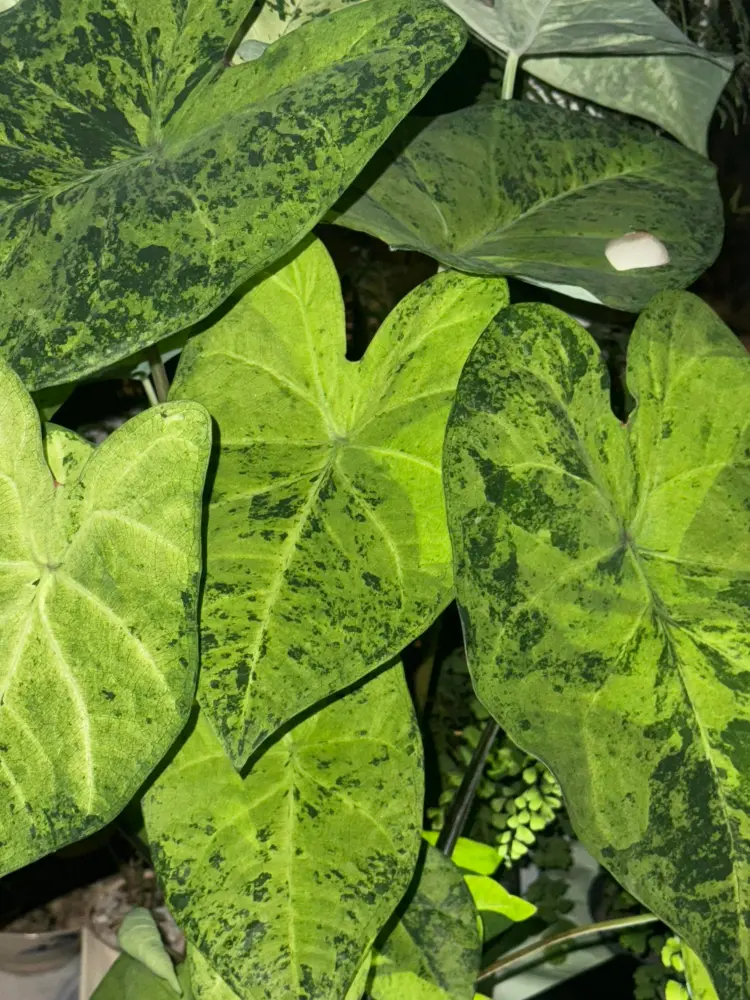
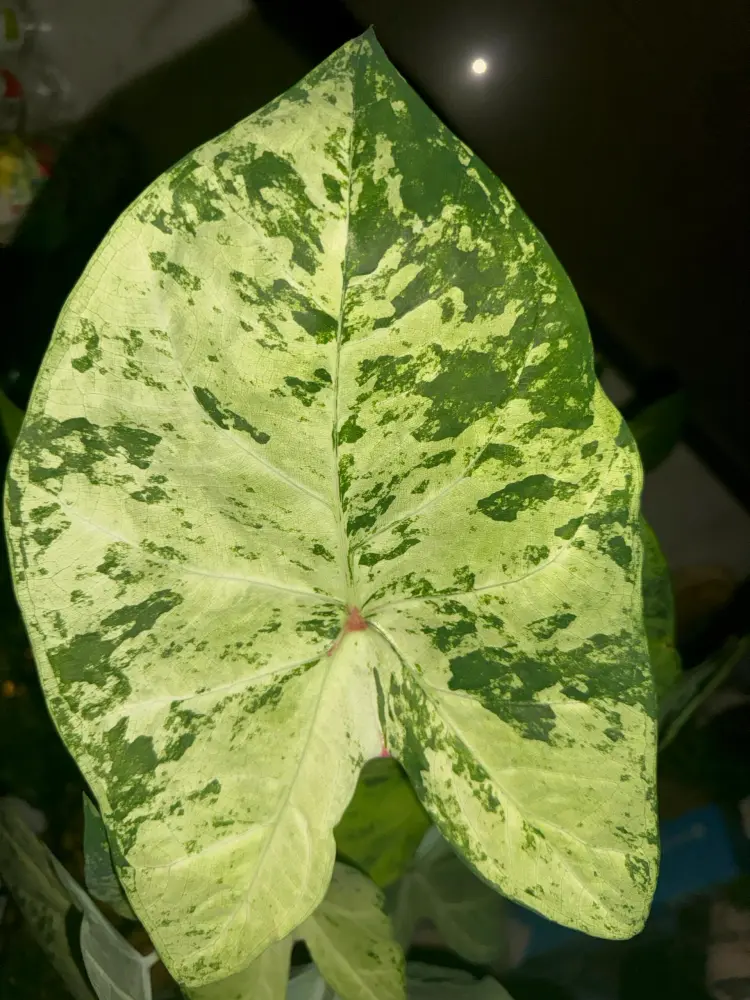
That is why I think the name fits surprisingly well. “Frog in a Blender” sounds odd at first, but when I look at the mottled green pattern, it makes sense. This is the kind of caladium that adds movement to a collection. It may not be the most elegant variety in the room, but it is hard to ignore once it starts growing.
Why I Think It Is One of the Faster Caladiums I Grow
Frog in a Blender has felt faster than many of my other caladiums, at least in my container setup. Once it settles in, it does not seem to sit still for too long. The plant gives visible feedback, and that makes it much easier to understand than a variety that stays quiet for weeks.
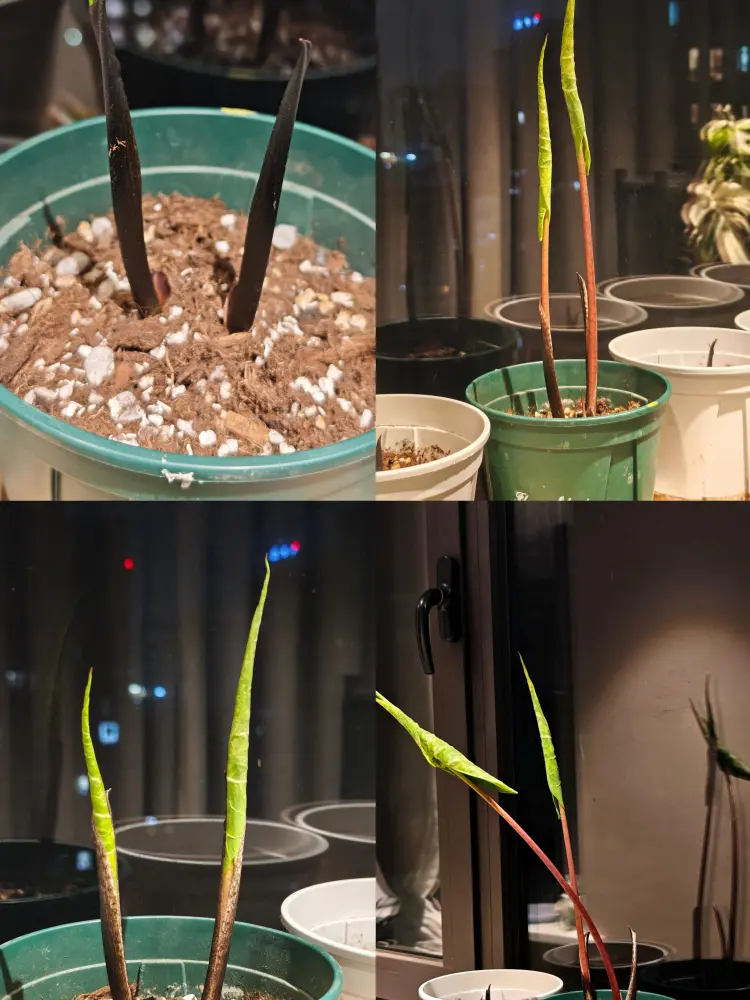
I would not separate that growth from the conditions around it. Like most caladiums, it still needs warmth, enough light, and a pot that does not stay cold and wet for too long. If my indoor light is not strong enough, I would rather adjust the placement or use a caladium grow light indoors than expect the plant to stay fast in weak light.
That is one reason I think beginners may enjoy it. A slow caladium can make you second-guess everything: the bulb, the soil, the watering, the light. If you have dealt with a caladium not growing for weeks, a variety that shows clearer progress can feel much more reassuring. Frog in a Blender does not mean the plant can handle every mistake, but it does seem to give more chances than some slower, fussier varieties.
My Broken Plant Recovery: From Water Roots to Soil
One Frog in a Blender arrived in rough condition. The shipping had clearly been too hard on it, and the root area was already broken when I received the plant. At that moment, I did not think of it as a proper “planting” project. I treated it more like a small experiment.
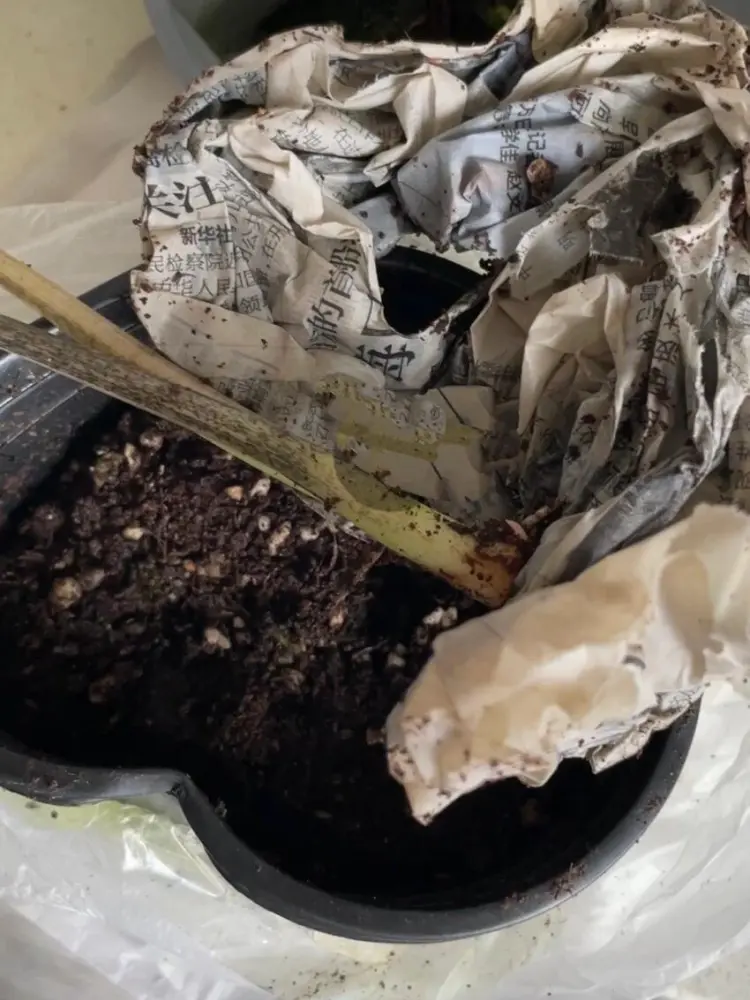
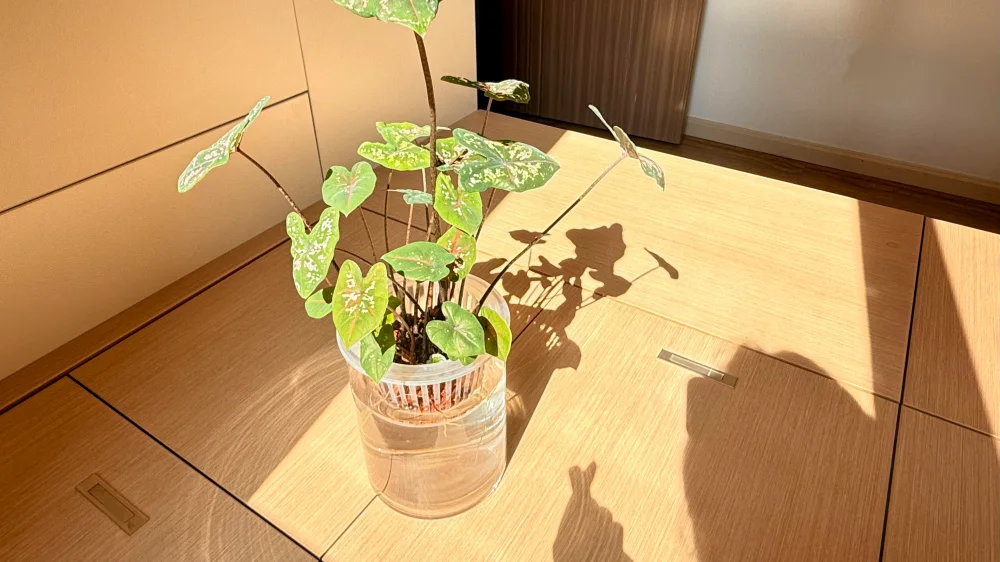
Instead of throwing it away, I placed the broken piece in water so I could watch what happened. I was not trying to grow it in water permanently. I just wanted a clear way to see whether the base still had enough life left to produce roots.
After about two weeks, the roots had grown much more than I expected. That was the point when I felt it was worth moving back into soil. I treated this step more carefully than a normal tuber planting, but the basic idea was similar to how I plant caladium bulbs: use a container setup that lets the plant settle without staying too wet. I transferred it into a pot and then left it mostly alone. I did not keep pulling it out to check, and I did not treat it as a plant that needed heavy feeding right away.
This part matters because a broken caladium is not always dead. If you are trying to decide whether a damaged plant is still worth saving, I would look at the base before assuming the caladium is dying. If the base is still firm and there is healthy tissue left, it may still be able to restart. But I would not expect the same result from a piece that is already mushy, blackened, or sour-smelling. In that case, the problem is no longer just breakage — it is probably rot.
For this Frog in a Blender, water rooting worked as a temporary recovery step. Once the roots appeared, soil made more sense again. The goal was not to keep it in water forever, but to give the plant a chance to prove it could rebuild before I committed it back to a pot.
The Small Tuber Changed How I Judged Its Recovery
After I moved the rooted piece back into soil, the plant did not look very impressive from above. Over the next two months, it only grew one leaf. If I had judged the recovery only by the number of leaves, I probably would have thought it was barely doing anything.
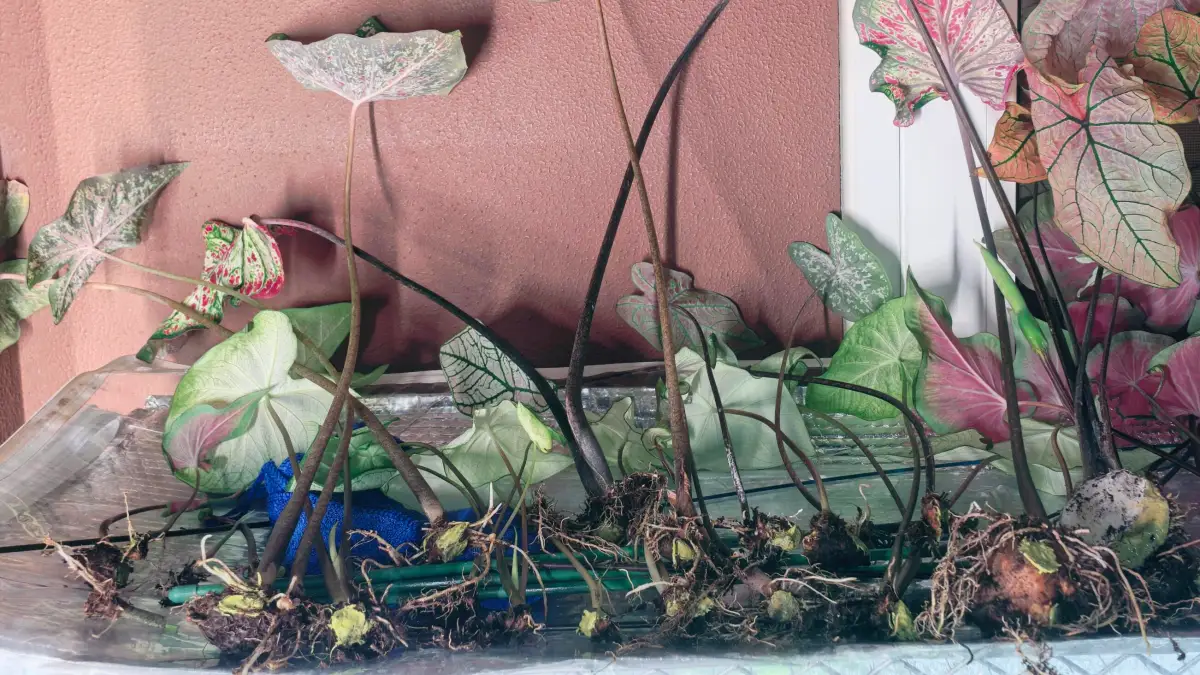
But one day, I accidentally knocked it loose from the soil, and that changed how I saw the whole recovery. Under the surface, it had formed a small, flat tuber. It was not big, but it was there, and that felt more important than the single leaf.
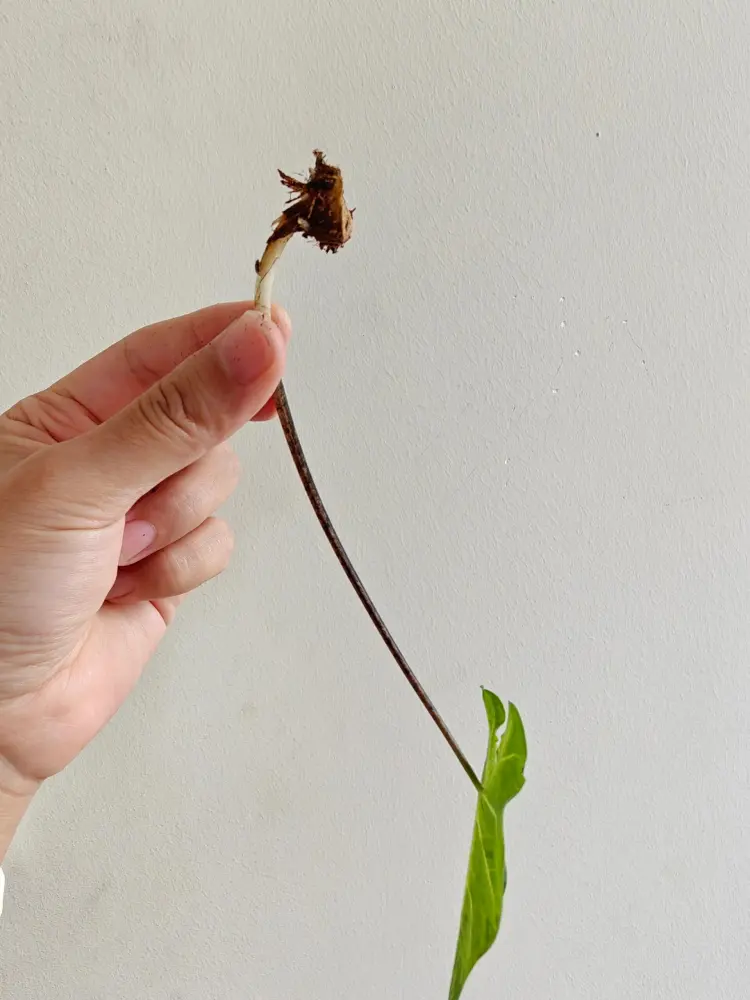
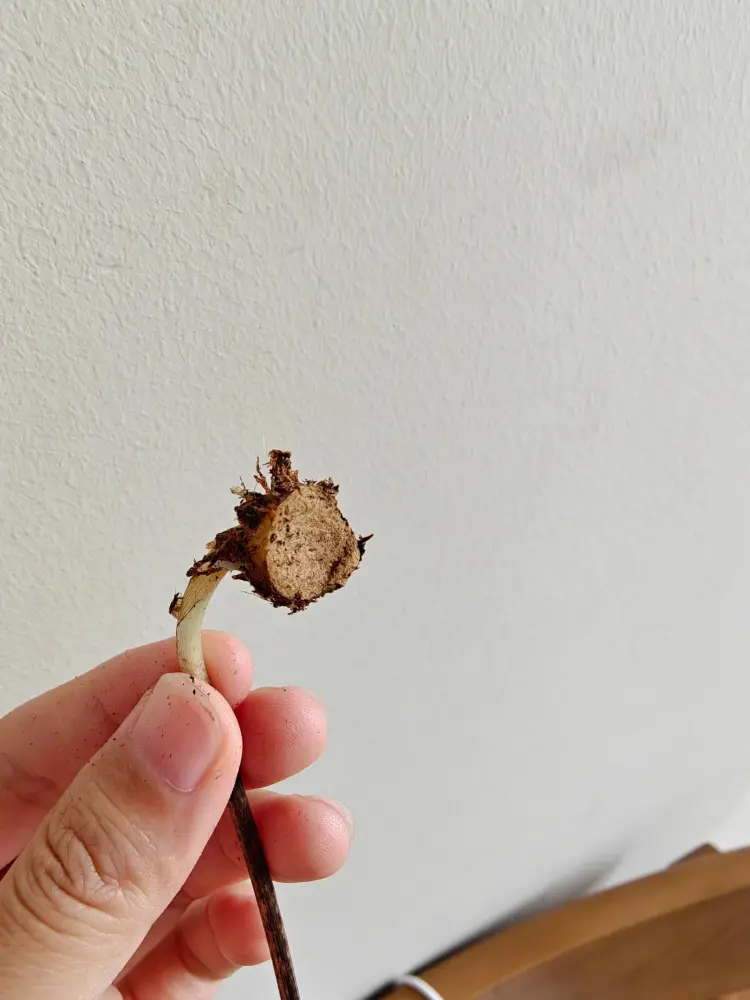
That little tuber told me the plant had not just survived. It had started storing energy again. For a recovering caladium, that matters, because the underground storage base affects what the plant can support later. This is also why I pay attention to caladium bulb size and leaf growth instead of judging only the leaves above the soil. Sometimes the plant may look slow because it is rebuilding roots or forming a new storage base below the surface.
This is also part of what makes growing caladiums interesting to me. They are not only foliage plants. The leaves are the visible part, but the real progress often happens underground. With this Frog in a Blender, the small tuber made me feel much more confident that the plant had truly recovered.
My Fertilizing Approach: Only After the Plant Is Growing
With Frog in a Blender, I only think about fertilizing after the plant is clearly active. I do not use fertilizer as a way to force a weak plant to recover, especially if the roots are broken, newly formed, or just moved from water back into soil.
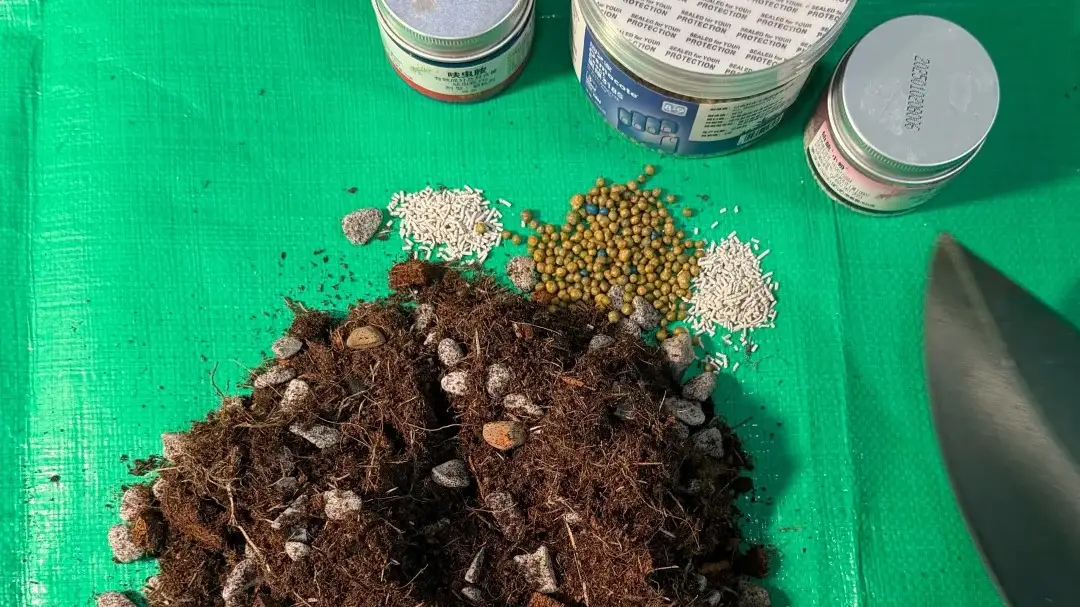
Once the plant is growing steadily and the pot has dried down, I may fertilize when I water. I still do this within the same cautious rhythm I use for watering caladiums indoors, because fertilizer does not help much if the pot is staying wet for too long. I do not use the same thing every time. Sometimes I use a balanced fertilizer, and other times I rotate in potassium fulvate or monopotassium phosphate. This is simply my own routine, not a rule that every grower needs to copy.
The main point is timing. If the plant has healthy roots and is making leaves, it has a better chance of using the fertilizer. If the roots are still weak, I would rather keep the setup stable first: warm conditions, careful watering, and enough light. Strong feeding too early can make a stressed caladium worse instead of helping it grow faster.
So for this variety, my approach is simple: let it recover first, let it show active growth, and only then feed lightly. Frog in a Blender may be forgiving, but I still would not treat fertilizer as a shortcut.
Is Frog in a Blender Good for Beginners?
Based on my experience, I do think Frog in a Blender can be a good caladium for beginners. It has grown quickly for me, stayed mostly free of pest problems, and seemed more forgiving than some slower caladiums that make you wait a long time before showing any progress.
The part I appreciate most is that it gives feedback. When a plant grows actively, roots again after damage, or slowly builds a new tuber, it becomes easier to understand what is happening. For a beginner, that kind of visible progress can be more helpful than a very beautiful but slow variety that leaves you guessing.
I still would not call it impossible to mess up. Like other caladiums, it can struggle if the room is too cold, the soil stays wet for too long, or the plant is fertilized heavily before the roots are ready. A forgiving variety still needs basic stability.
But if someone wants a caladium that feels lively, tough, and not overly fussy, Frog in a Blender would be one I feel comfortable recommending. It is not just easy because it grows fast. It is easy because it seems willing to recover when the conditions are not perfect.
What I Would Watch With This Variety
Even though Frog in a Blender has felt forgiving in my setup, I would still be careful during the recovery stage. A broken or newly rooted caladium should not be treated like a strong, established plant.
The main thing I would avoid is pushing it too early. I would not rush fertilizer, keep the soil constantly wet, or keep pulling the plant out to check the roots. After moving from water back into soil, the plant needs time to settle and rebuild.
I would also judge slow top growth carefully. If the plant only makes one leaf at first, that does not automatically mean it has failed. With a recovering caladium, I look for the bigger pattern: whether the base stays firm, whether the roots continue working, and whether the plant is slowly rebuilding energy below the soil.
My Take After Growing Frog in a Blender
Frog in a Blender turned out to be more than a funny name in my collection. I expected a playful-looking caladium, but I ended up respecting it more for its speed and resilience.
The broken plant recovery stayed with me most. Seeing it root in water, move back into soil, and quietly form a small tuber made the plant feel tougher than it looked.
For me, this is a variety worth keeping because it gives visible progress without feeling too fussy. It is not just about the finished leaves. It is also about watching the plant respond, recover, and slowly rebuild itself.
FAQ
Want to Explore Other Caladium Varieties?
If you enjoy caladiums with playful patterns rather than clean solid color, you may also like my growing notes on Miss Muffet Caladium and Strawberry Star Caladium. They are different plants, but they are useful comparisons for pattern, container growth, and how each variety responds in real home conditions.
Browse All Caladium Varieties →