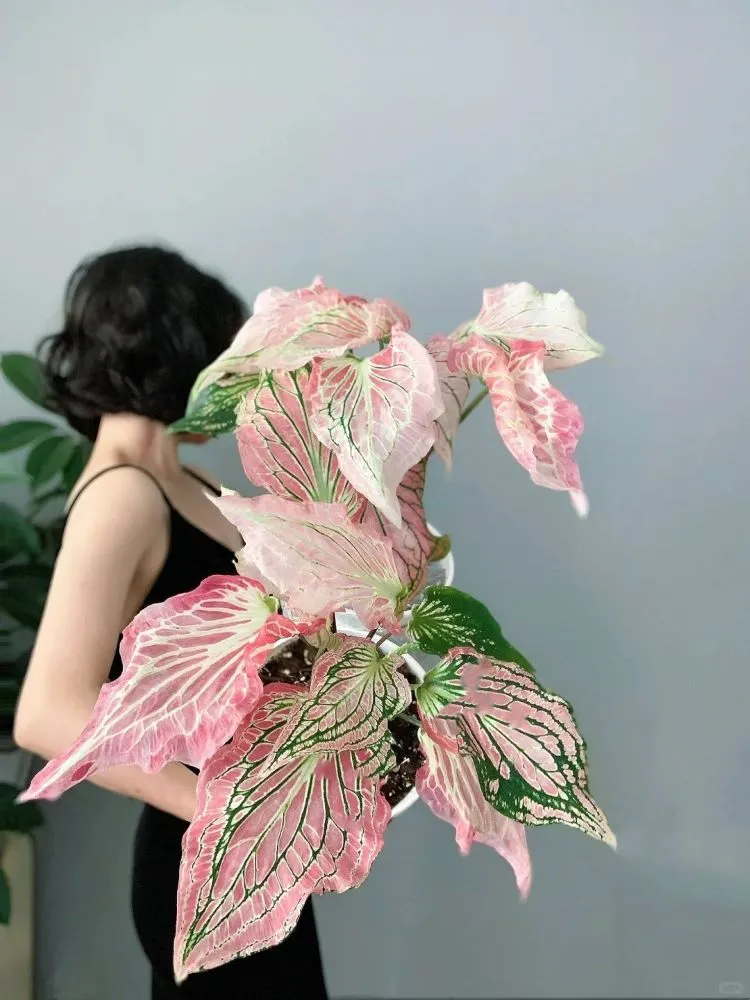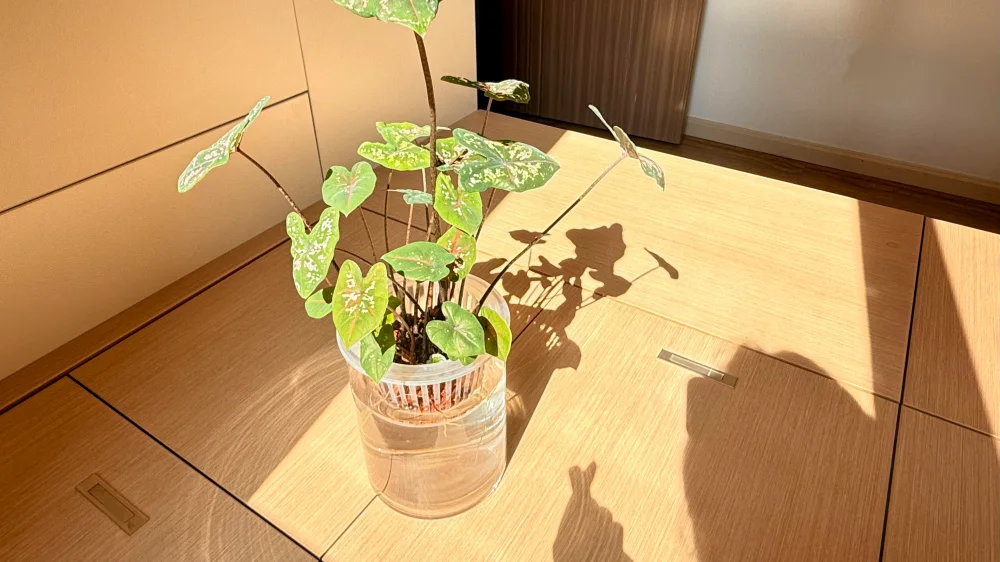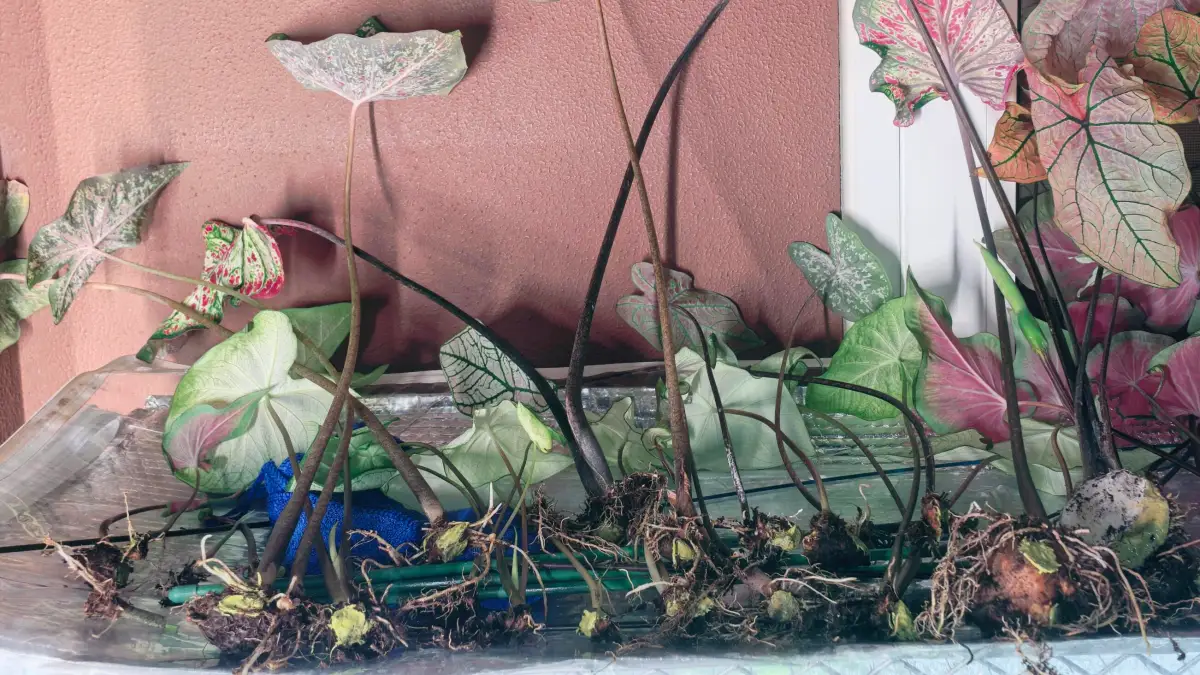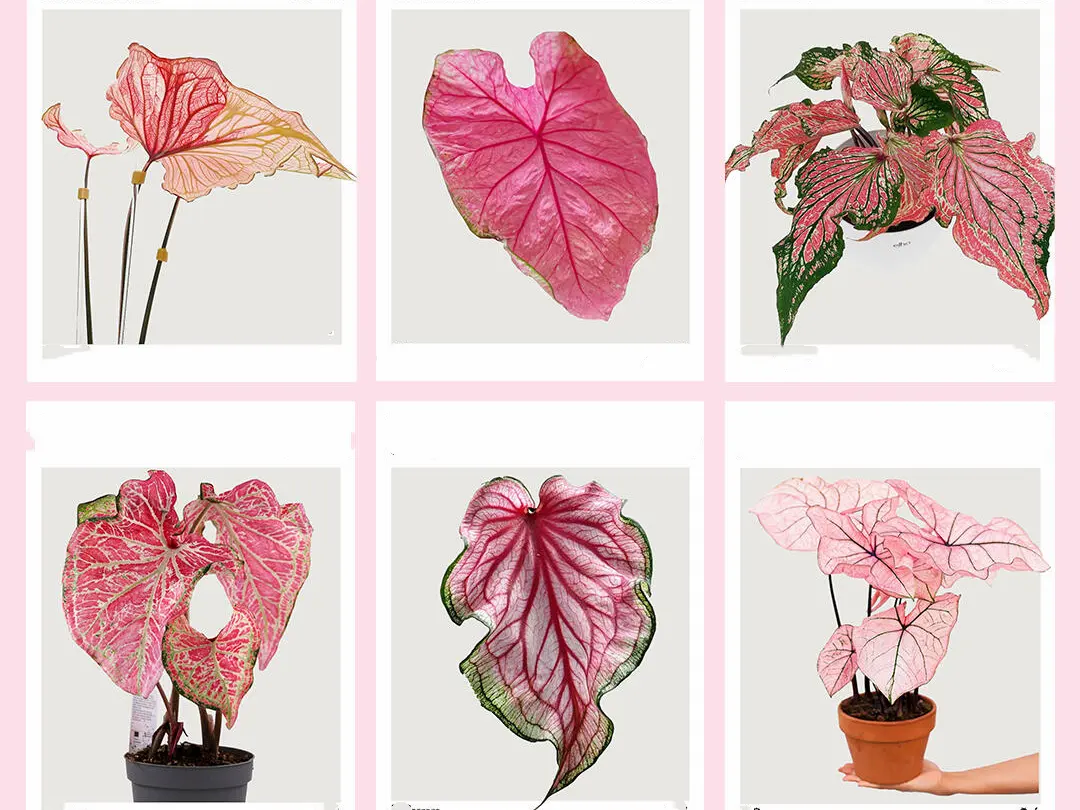
Pink caladiums are some of the easiest varieties to fall for. A soft pink leaf can look gentle and almost translucent, while a stronger pink leaf with red veins can feel bold and dramatic. Even when I tell myself I already have enough pink caladiums, a slightly different shade or pattern can still make me stop and look again.
But pink caladiums are also surprisingly easy to confuse. Some have mostly pink leaves, while others are only pink in the center, along the veins, or mixed with green and white patterns. In seller photos, those differences can look very clear, but once the plant grows in a real pot, the line between “soft pink,” “veined pink,” and “pink-green patterned” can become much less obvious.
Light, temperature, leaf age, and tuber strength all change how a pink caladium looks. A new leaf may open pale, greenish, or less patterned than expected. A mature leaf may become warmer, clearer, or more strongly veined. In my indoor setup, especially with changing seasonal light, I try not to identify or judge a pink caladium from one leaf alone.
That is why I use this guide as a comparison tool, not as a perfect identification chart. I am looking at 13 pink caladium varieties by the way the pink actually shows up: soft and translucent, strong-veined, patterned, or compact enough for smaller indoor spaces. The goal is not to decide which one is the “best pink caladium,” but to make the differences easier to see before choosing one.
What I Mean by “Pink” in This Guide
I am using “pink caladium” in a broad visual sense here. Some varieties have mostly pink leaves, while others are pink-veined, pink-centered, or pink-and-green patterned. They can all be useful to compare, but I would not treat them as the same kind of pink.
For this article, I care less about whether a variety fits a perfect label and more about how the pink actually appears in a pot: soft and translucent, strong-veined, patterned, or compact enough for a small indoor space.
Some pink caladium names may also be used differently by different sellers. For example, Pink Symphony and Thai Beauty are sometimes discussed very closely, so I would compare the actual mature leaves and seller labels before treating them as completely separate plants.
The 13 Pink Caladiums in This Comparison
I would not compare pink caladiums only by asking which one is “the pinkest.” Some varieties look soft and translucent, some are bright and compact, and some are only partly pink but still belong in the pink group because the pink pattern is the main visual reason people want them.
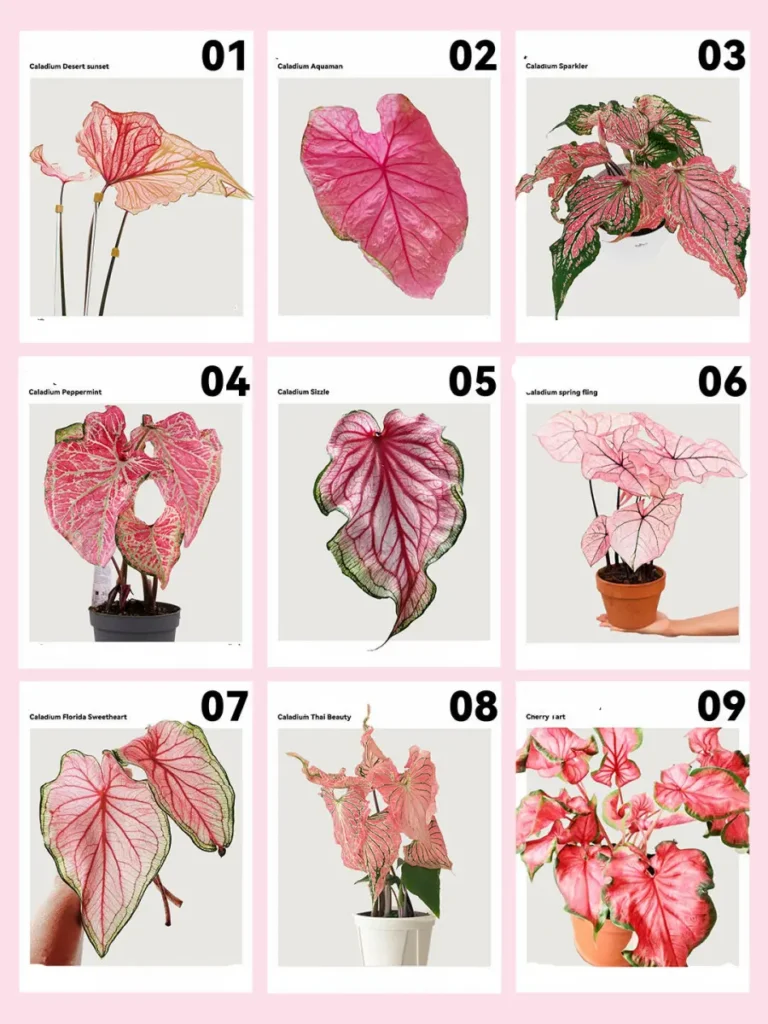
Here are the 13 pink caladium varieties I would compare first.
| Variety | Pink Type | What I Would Notice |
|---|---|---|
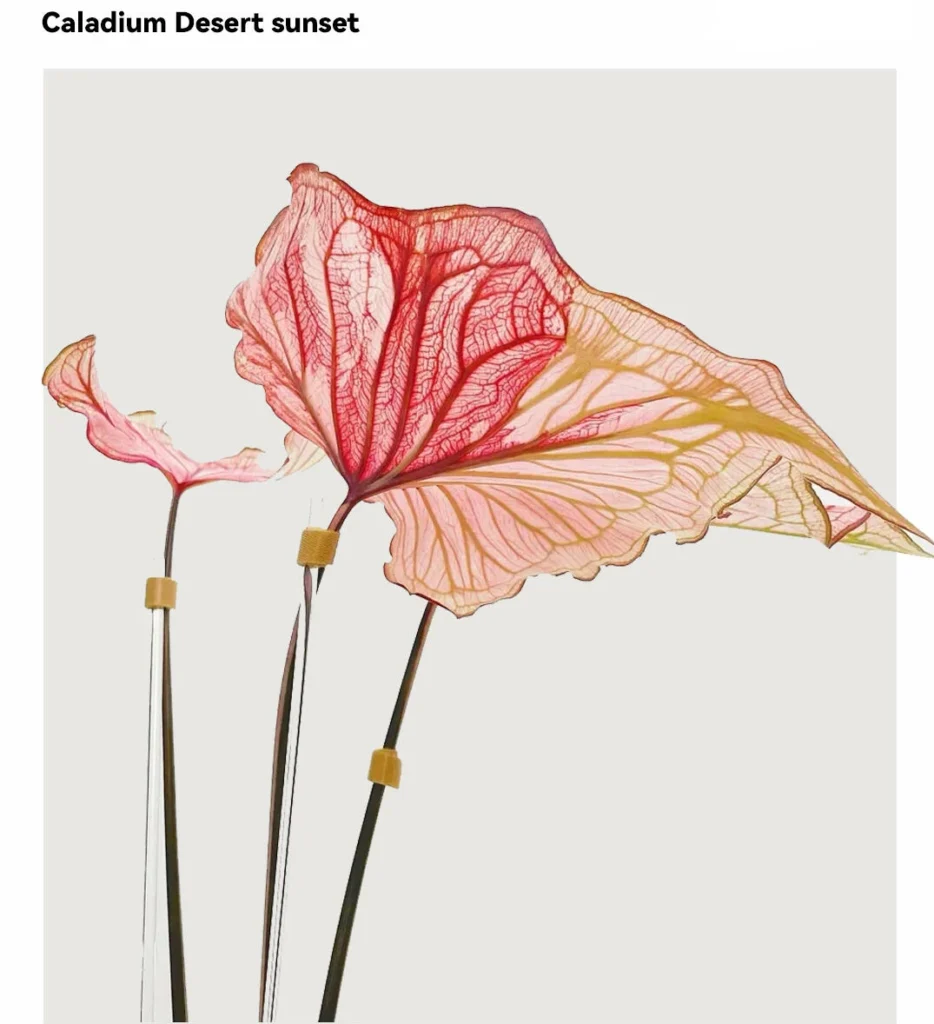
| Desert Sunset | Warm peach-pink / sunset pink | More coral or peach-toned than classic baby pink. I would look at whether the warm color stays clear as the leaf matures. |
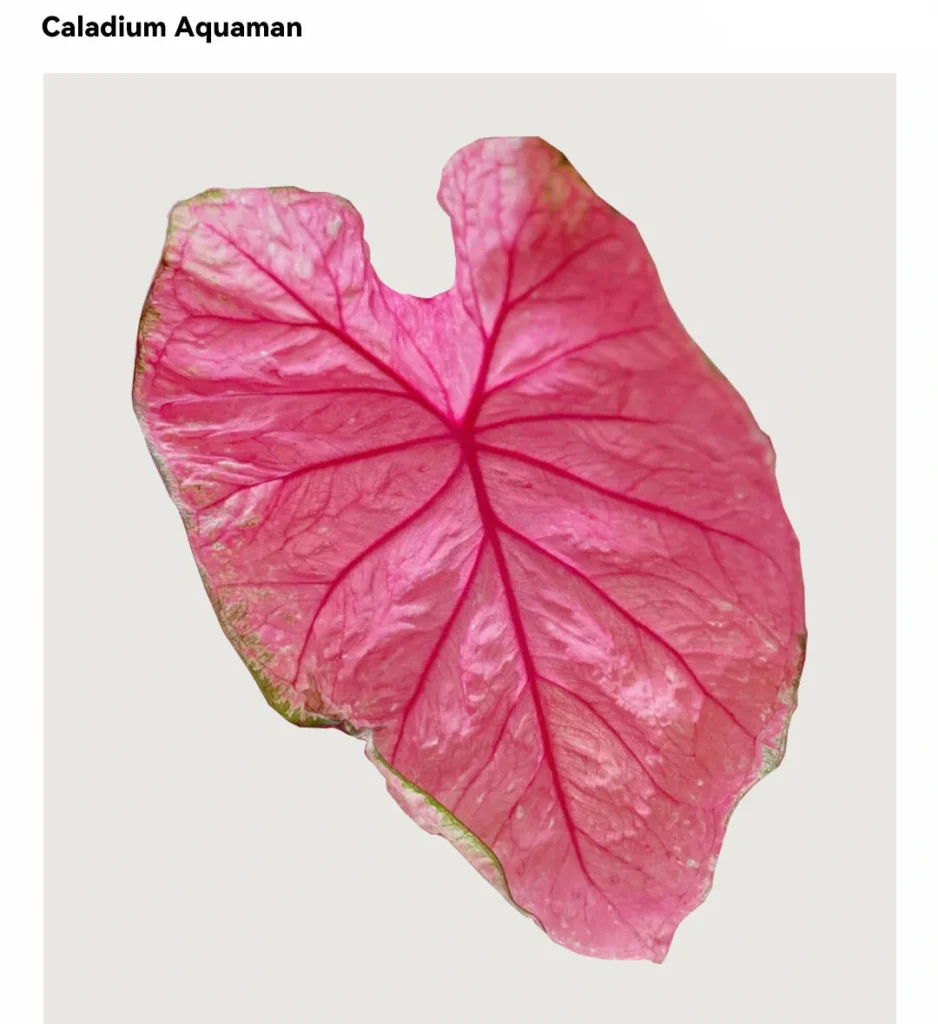
| Aquaman | Clear pink with veins | The pink surface matters, but the vein color gives the leaf structure. I would compare mature leaves, not just young ones. |
| Sparkler | Pink and green patterned | More lively and mixed than a soft pink caladium. I would include it as a patterned pink type, not a clean pink leaf. |
| Peppermint | Pink, white, and green patterned | Bright and decorative, but not a solid pink type. I would check how much green or white shows on the whole plant. |
| Sizzle | Pink-white with strong veins | More dramatic and veined than quiet pastel pinks. I would look at the vein contrast and whether the leaf still reads pink overall. |
| Spring Fling | Soft pastel pink | A gentler pink type, useful if you prefer a softer color palette instead of a bold hot pink look. |
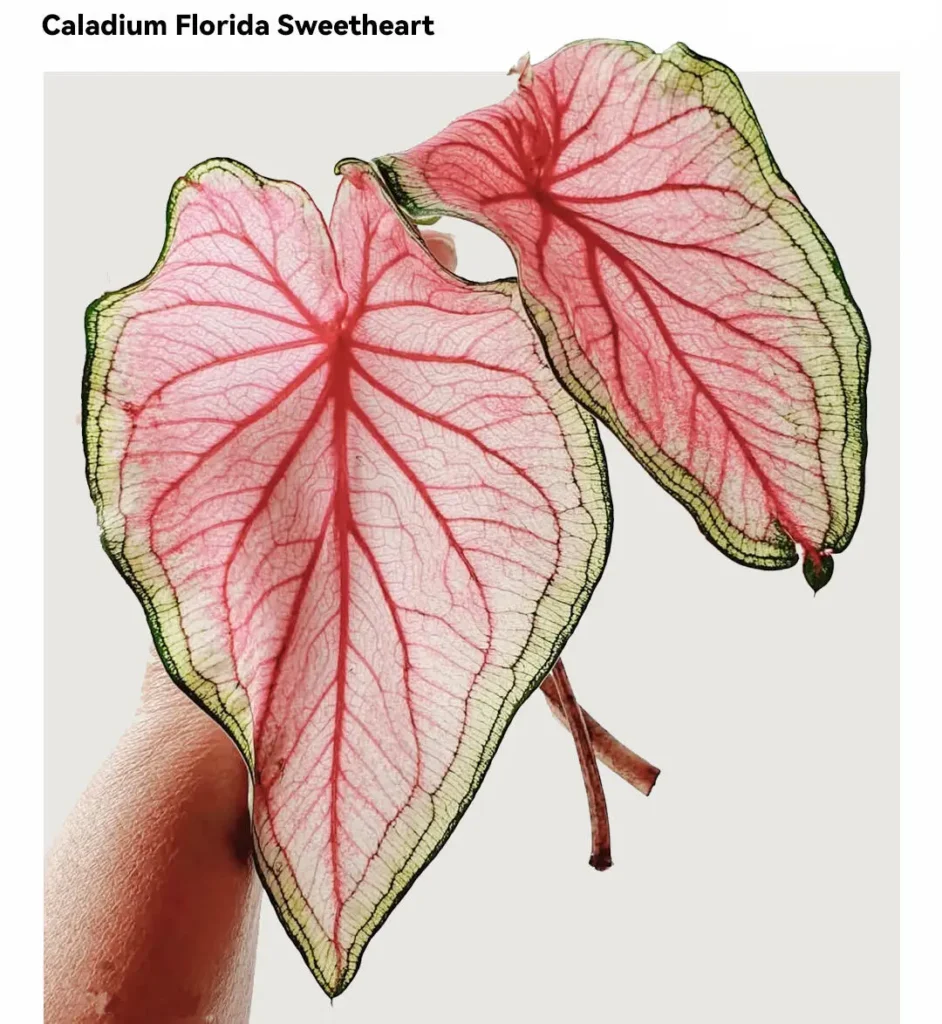
| Florida Sweetheart | Bright compact pink | One of the better choices if you want strong pink in a smaller plant. I would still watch size because tuber strength and light can change the final look. |
| Thai Beauty | Narrow pink patterned type | Useful if you like pink color with a slimmer, strap-like habit. I would compare leaf shape as much as color. |
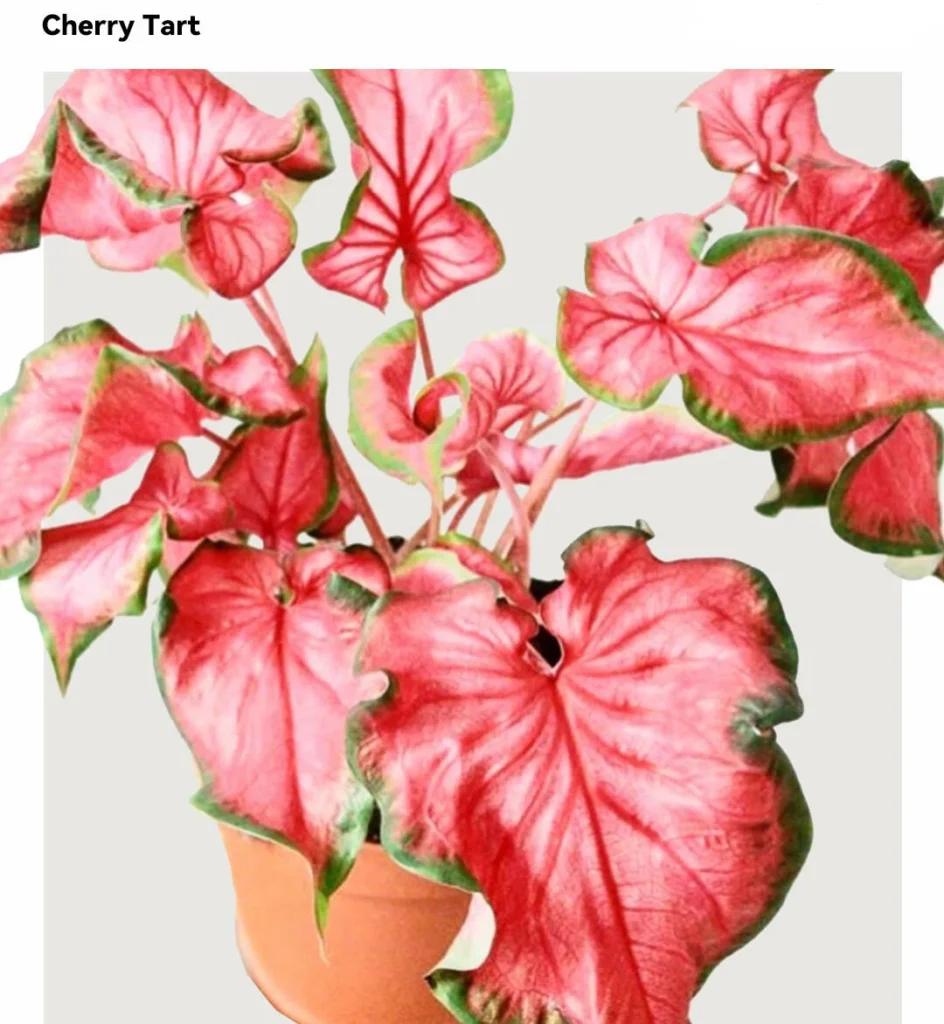
| Cherry Tart | Bright cherry pink | More saturated and sweet-looking than pale pink types. I would choose it for a stronger pink impression. |
| Carolyn Whorton | Bold pink with red veins | Stronger, larger, and more classic than many soft pink types. The red veins give it a more dramatic structure. |
| Pink Splash | Pink and green splash pattern | Belongs here as a patterned pink type, not a pure pink leaf. I would look at whether the splash pattern stays attractive across several leaves. |
| Pink Symphony | Soft translucent pink | Compact, delicate, and useful for small indoor spaces. I would watch how the pink develops as the leaf hardens. |
| Pink Beauty | Soft blush pink with green markings | A gentler pink type with a soft center and green variation. I would include it with the softer pink group, but not as a clean solid-pink caladium. |
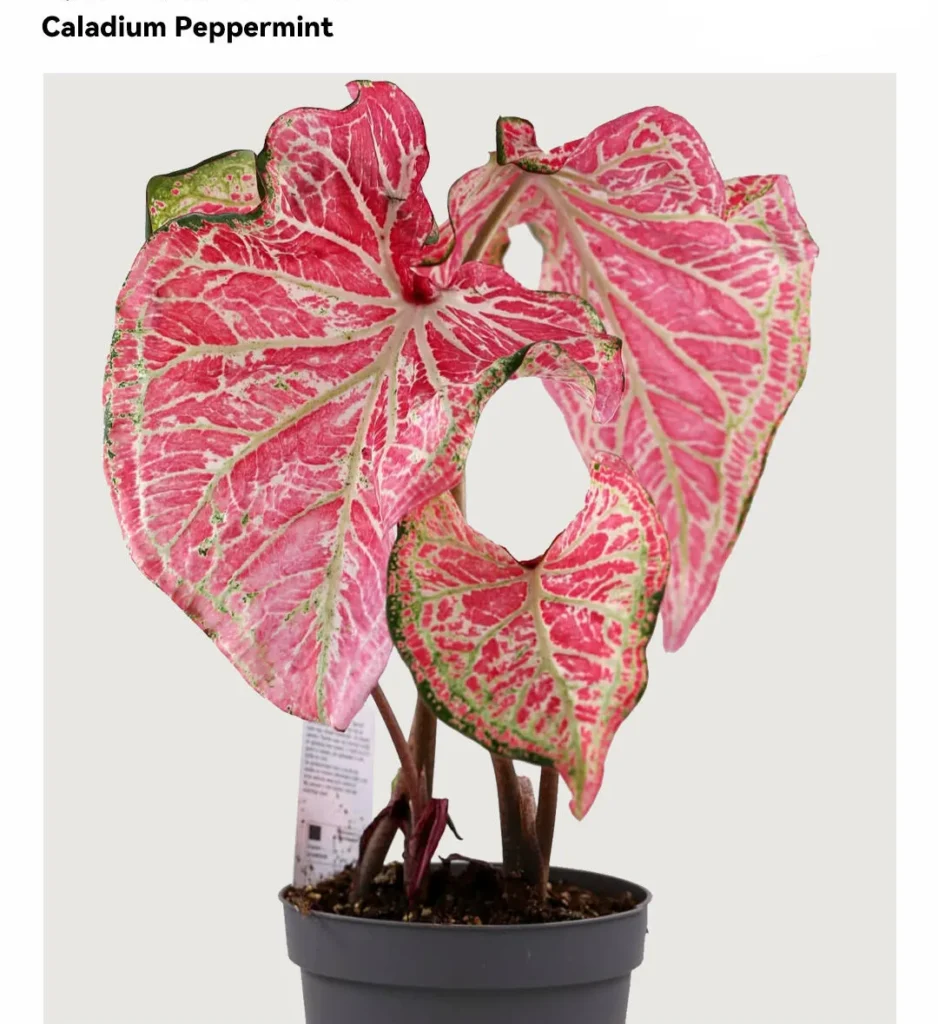
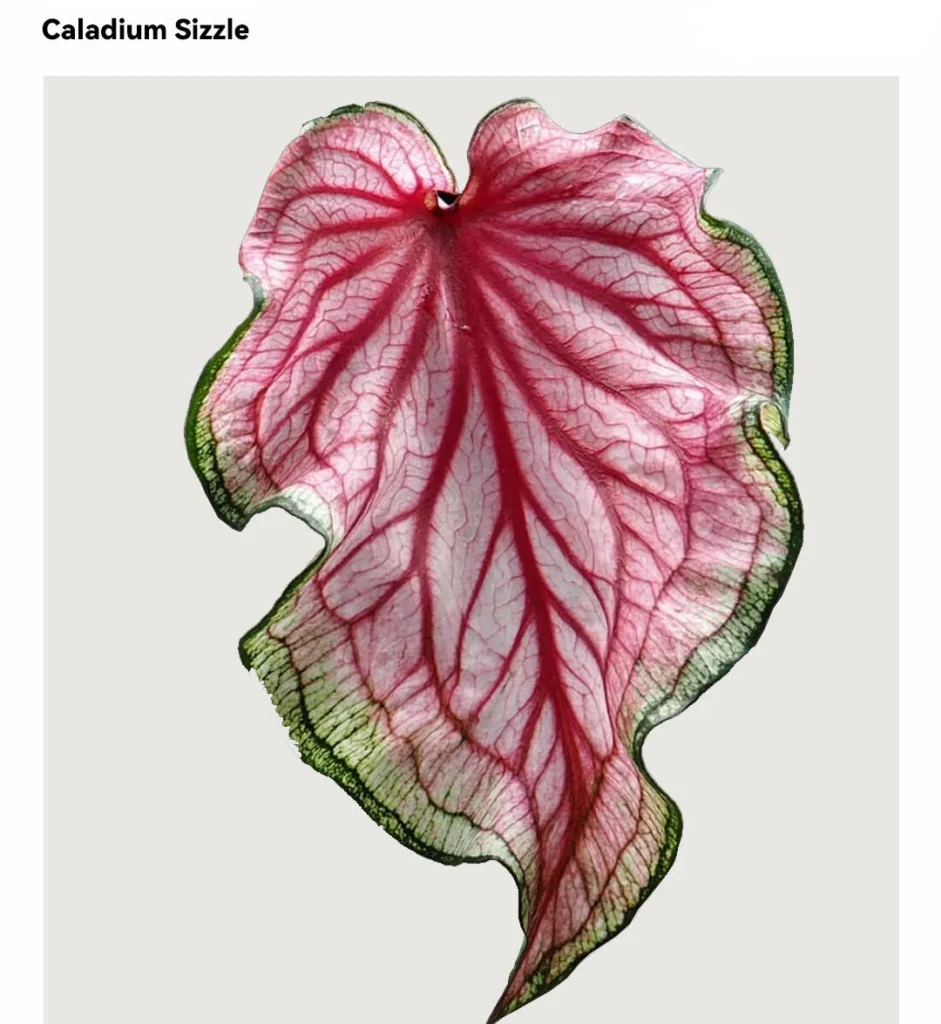
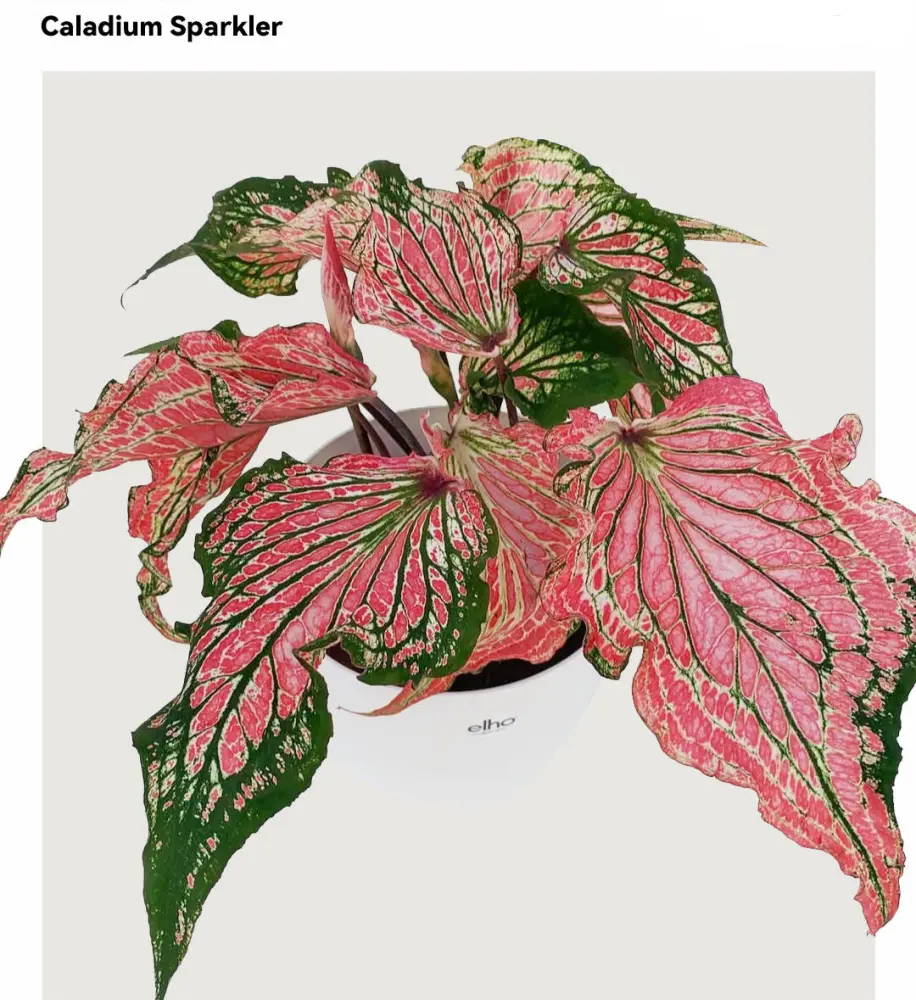
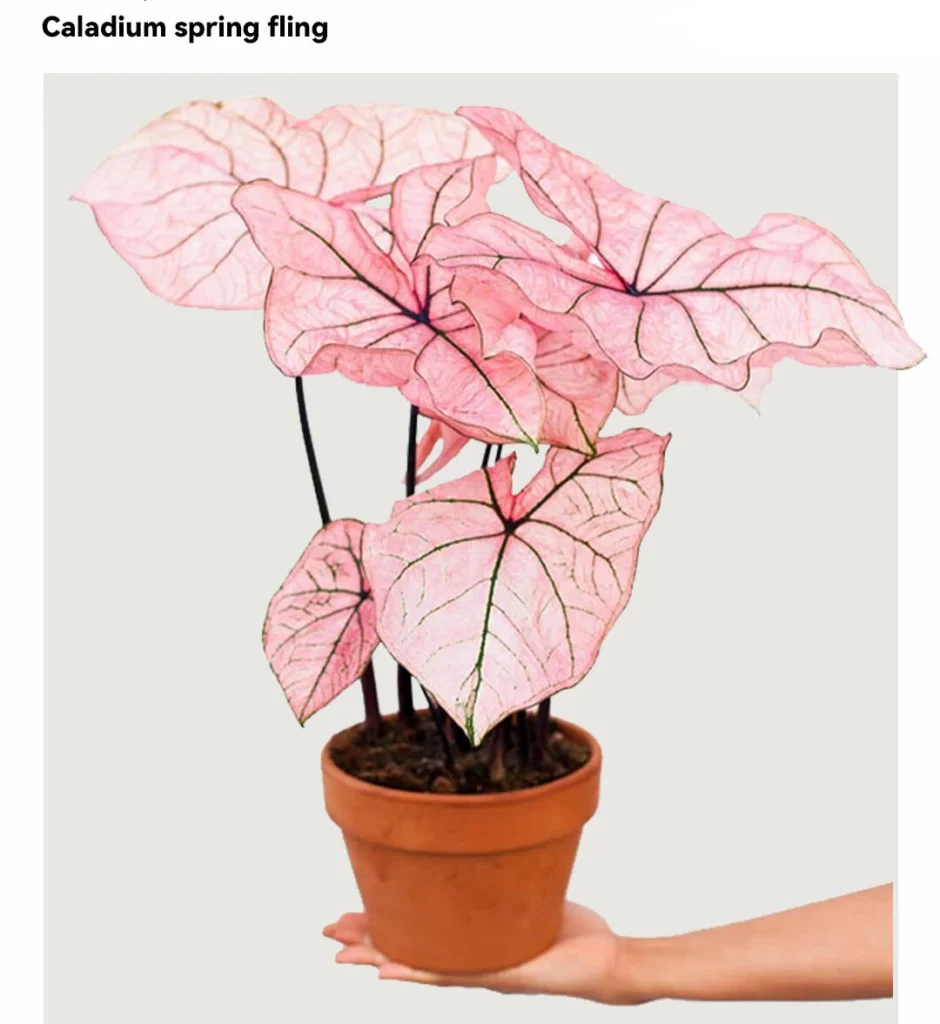
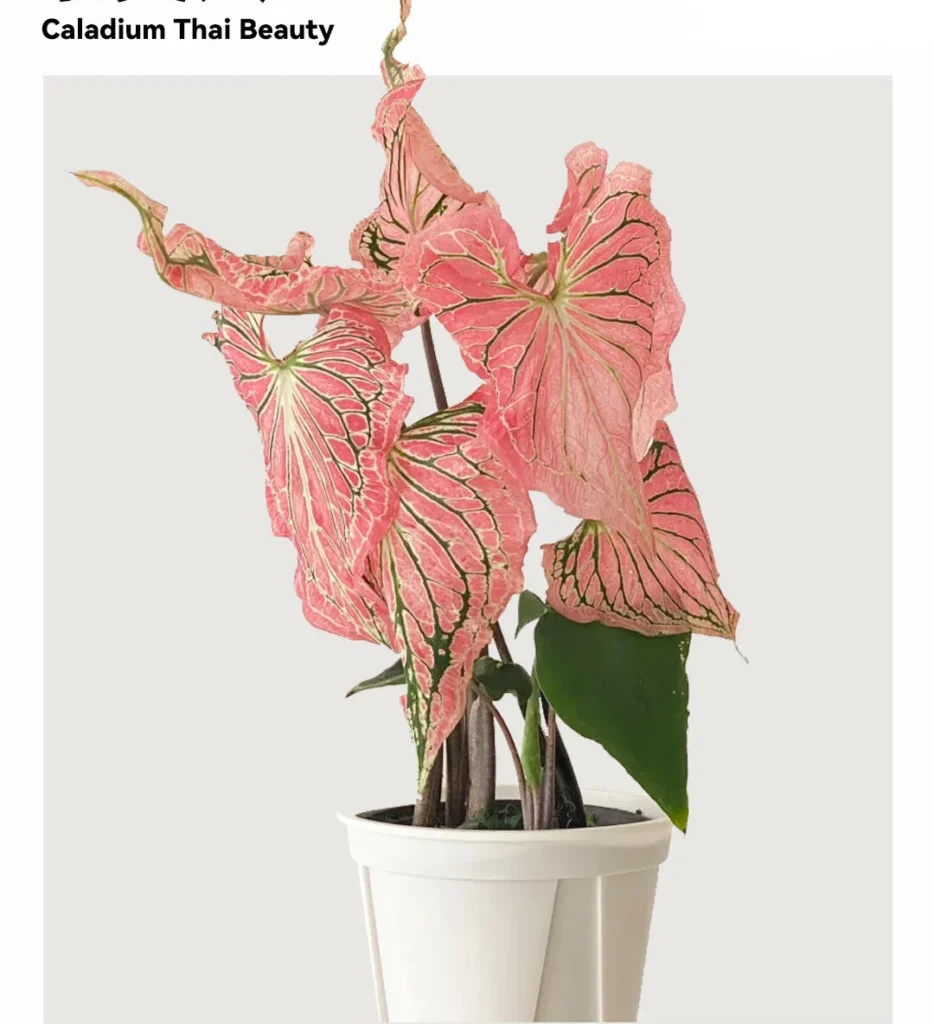
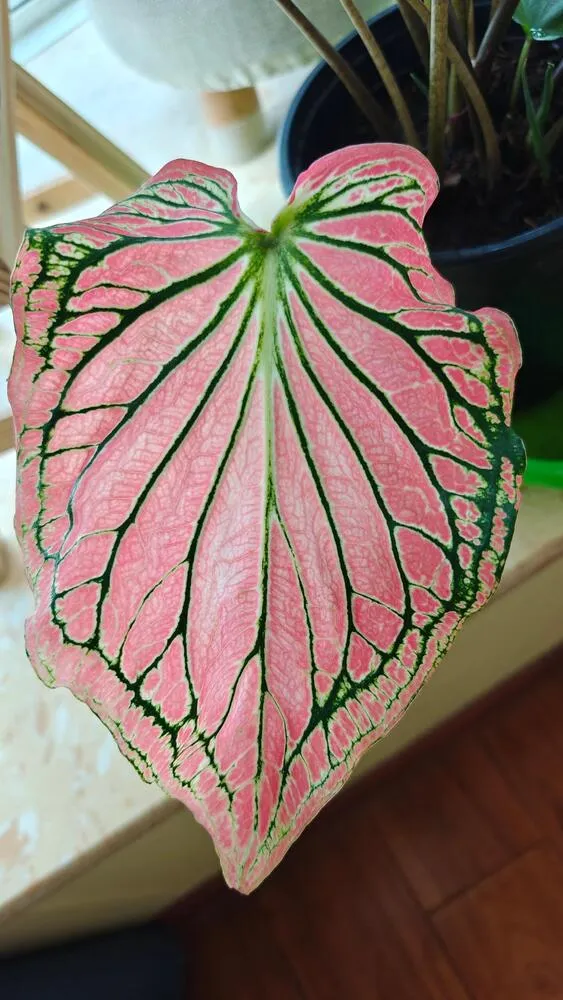
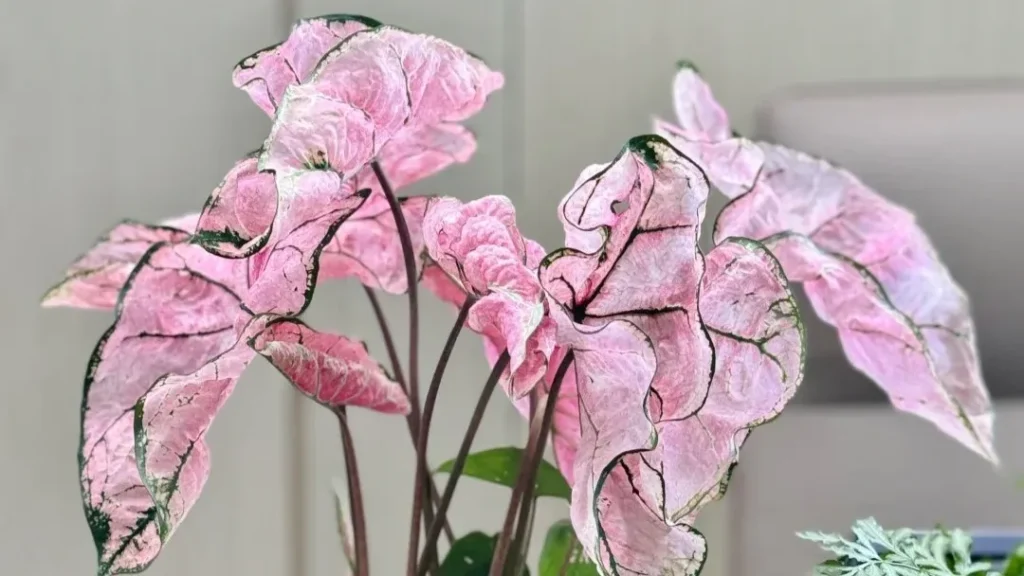
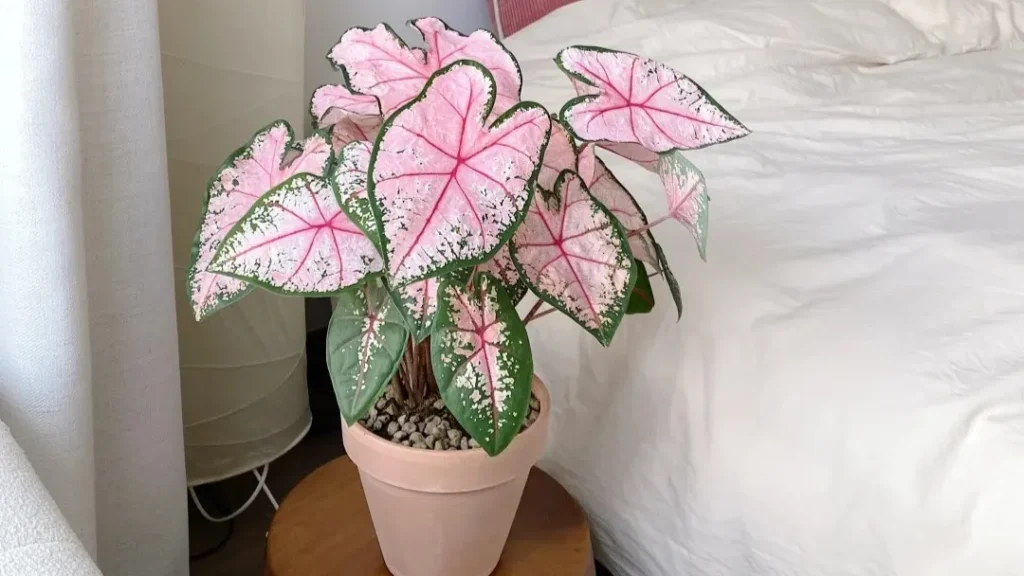
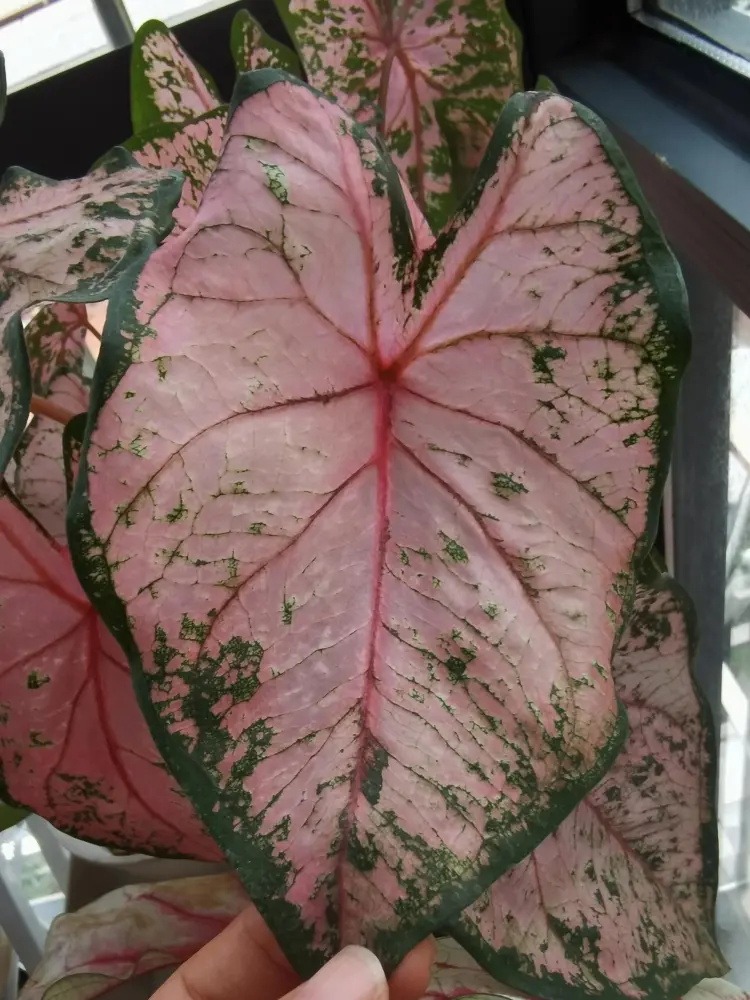
The main difference between these varieties is not just how much pink they have, but what role the pink plays. In some, pink is the main leaf color. In others, pink works through veins, splashes, edges, or contrast with green and white. That is the distinction I would keep in mind before choosing one.
The Four Pink Looks That Feel Most Different to Me
Once I stop looking at the names alone, these varieties fall into four useful groups: soft pink, strong-veined pink, patterned pink, and compact pink types for smaller spaces.
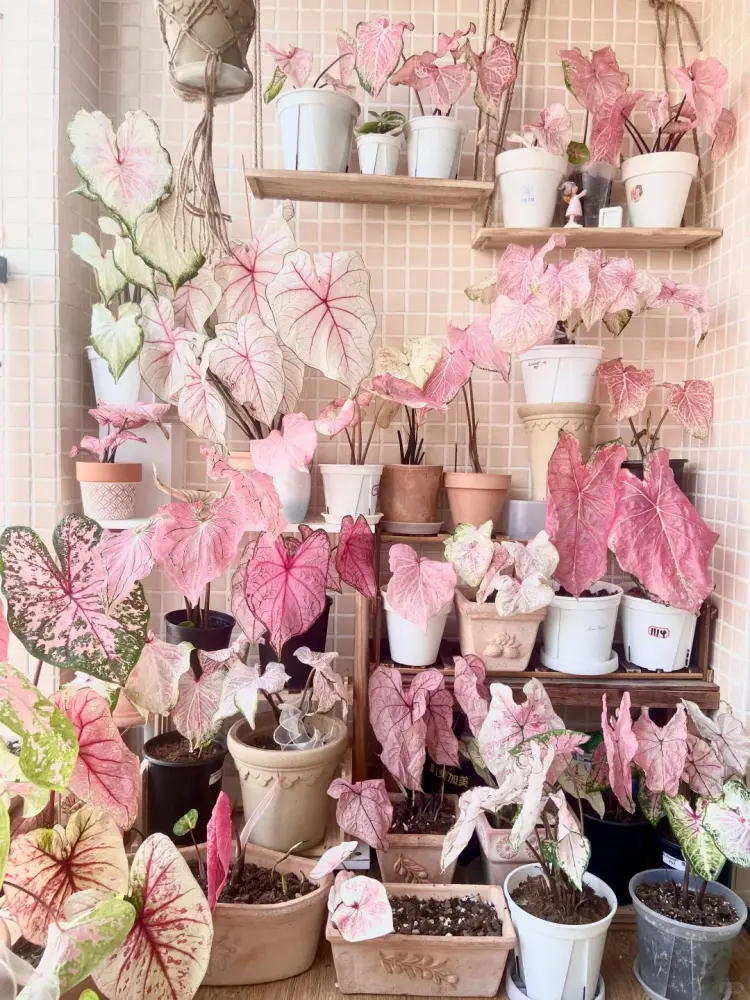
Soft and Translucent Pink Types
For the softer pink group, I would compare Pink Symphony, Pink Beauty, Spring Fling, and Desert Sunset first.
These are the pink caladiums I would choose if I wanted something gentle rather than loud. The appeal is not only how pink the leaf is, but how clean and light the color feels once the leaf matures. A soft pink caladium can look almost translucent in the right light, especially when the leaf is still thin and fresh.
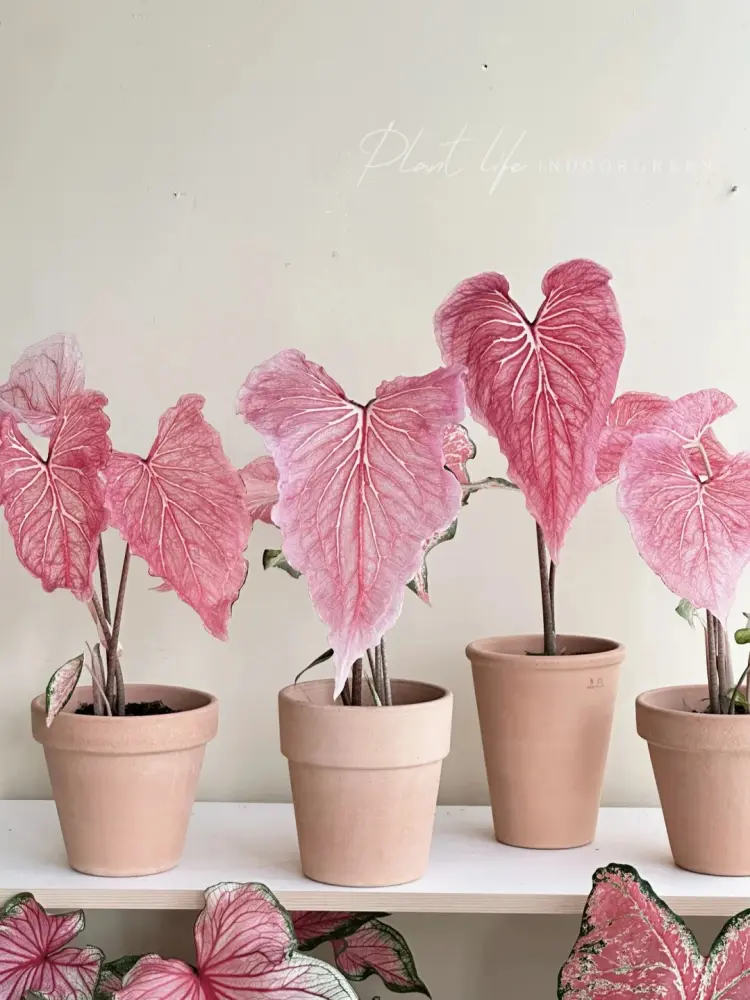
For this group, I care more about softness and balance than the strongest possible pink. If the color looks clean and the plant keeps a light, airy feeling in the pot, that is already the kind of pink effect I would want from these varieties.
Strong Pink Vein Types
For stronger veined pink caladiums, I would compare Carolyn Whorton, Aquaman, Sizzle, Cherry Tart, and Florida Sweetheart.
This group has more structure. The leaf may still read as pink overall, but the veins do a lot of the visual work. Red, dark pink, or stronger central veins can make the plant feel more dramatic than the softer pastel types.
I usually think of these as better choices if someone wants a pink caladium with presence. They do not feel as quiet as Pink Symphony or Spring Fling. In a pot, the veins help define the leaf shape, especially when the plant has several mature leaves open at once.
The thing I would watch here is balance. Strong veins can make a pink caladium more interesting, but if the veins overpower the leaf or the pink surface looks dull, the plant can feel heavier than I expected.
Pink and Green Patterned Types
For patterned pink caladiums, I would put Pink Splash, Sparkler, Peppermint, and Thai Beauty together.
These are not pure pink caladiums. I include them because pink is a major part of the look, but the green, white, or mixed pattern is just as important. They are better for someone who likes movement and variation, not someone who wants a clean mostly-pink leaf.
This group can be the hardest to judge from one photo. A single leaf may look very pink, while another leaf on the same plant may show more green or white. For these varieties, I would want to see the whole plant if possible, because one beautiful patterned leaf does not always show how the plant will feel in a pot over time.
Compact Pink Types for Small Spaces
For smaller indoor spaces, I would compare Florida Sweetheart, Pink Symphony, Thai Beauty, and Spring Fling first.
This group matters to me because not every grower has room for a large, dramatic caladium. In an indoor setup, especially on a windowsill, shelf, or small plant stand, a compact pink caladium can be easier to enjoy than a variety that quickly becomes too wide for the space.
That said, I would not promise that any caladium will stay small forever. Tuber size can affect leaf size, and warmth, light, and the growing season can all change the final look. A compact variety can still grow larger than expected in a strong setup, while a larger type may stay smaller if the tuber is weak or the room is not warm enough.
For small-space pink caladiums, I look for three things: a plant that keeps a pleasing shape, leaves that do not crowd each other too badly, and color that still looks good under normal indoor light. In that sense, compact growth is not just about size. It is also about whether the plant still feels balanced in a container.
Why Pink Leaves Do Not Stay the Same
Pink caladiums can change a lot between the first leaf and the later leaves. I try not to judge a variety from the first new leaf, especially after planting, shipping, repotting, or moving the pot to a new light position.
The first thing I watch is whether the leaf is still hardening. A new leaf may open pale, greenish, or less patterned than expected, then become clearer after a few days. If the next two or three leaves still look dull, then I start looking at the growing conditions instead of blaming one immature leaf.
Light is usually the biggest reason pink changes indoors. In weak light, pink can turn grayish, muted, or more green than I expected. In rooms that stay dim for much of the year, a caladium grow light indoors can be more useful than trying to push the plant into harsh sun. Too much hot light, especially near glass, can fade the leaf, dry the edges, or make the plant look stressed.
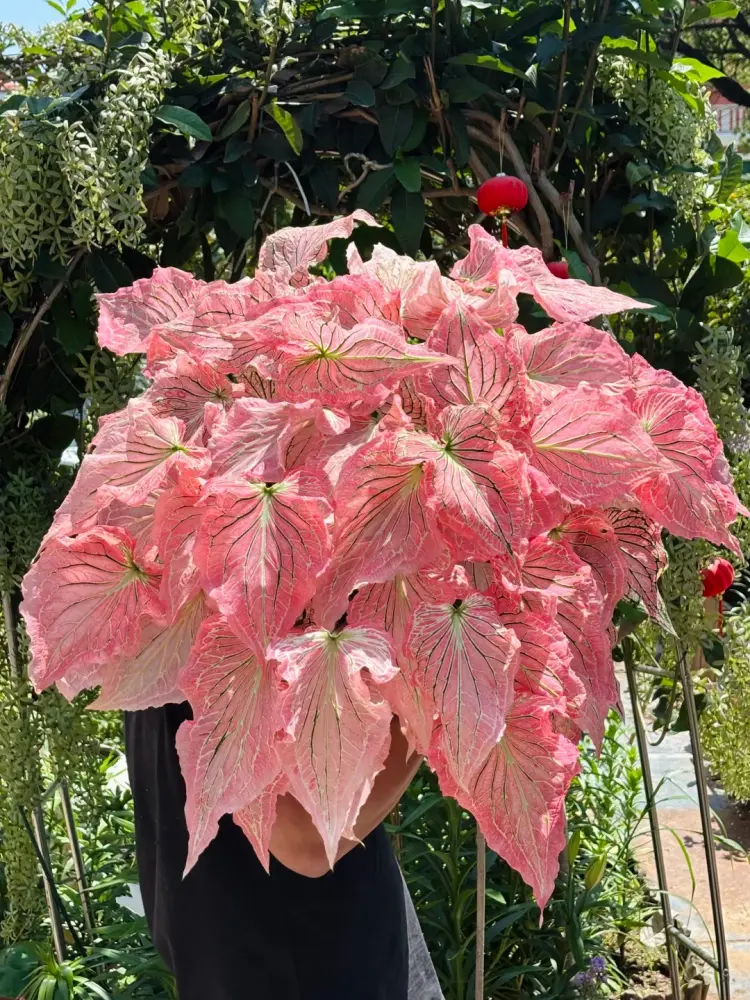
Temperature matters too. In my Pacific Northwest indoor setup, pink caladiums usually look more confident when the room is warm and the plant is actively growing. When the season shifts cooler, the same variety may push smaller leaves, slower growth, or less clear color.
So when a pink caladium does not look like the photo, I ask three things first: Is this a young leaf? Is the plant getting enough bright indirect light? And is the plant warm and active enough to grow properly? Those answers usually tell me more than the name alone.
What I Would Pay Attention to Before Choosing One
If I were choosing a pink caladium now, I would not start with the strongest color alone. I would first decide what kind of pink I actually want: soft and translucent, bright and compact, strong-veined, or patterned with green and white.
For a small windowsill or shelf, I would lean toward compact types like Pink Symphony, Florida Sweetheart, Spring Fling, or Thai Beauty. For a bolder container, I would compare stronger veined varieties like Carolyn Whorton, Sizzle, Aquaman, or Cherry Tart. For a more playful look, I would consider Pink Splash, Sparkler, or Peppermint.
The longer I grow caladiums, the less I care about finding the “best” pink variety. I care more about whether the color still looks good after several leaves mature, whether the plant fits the space, and whether the whole pot feels balanced in normal indoor light.
FAQ
Want to Compare More Caladium Varieties?
If you want to compare color groups beyond pink, you may also like my guide to red and black caladiums. For a wider overview, the Caladium Varieties page groups caladiums by leaf type, color pattern, size, and growth habit.
Browse All Caladium Varieties →