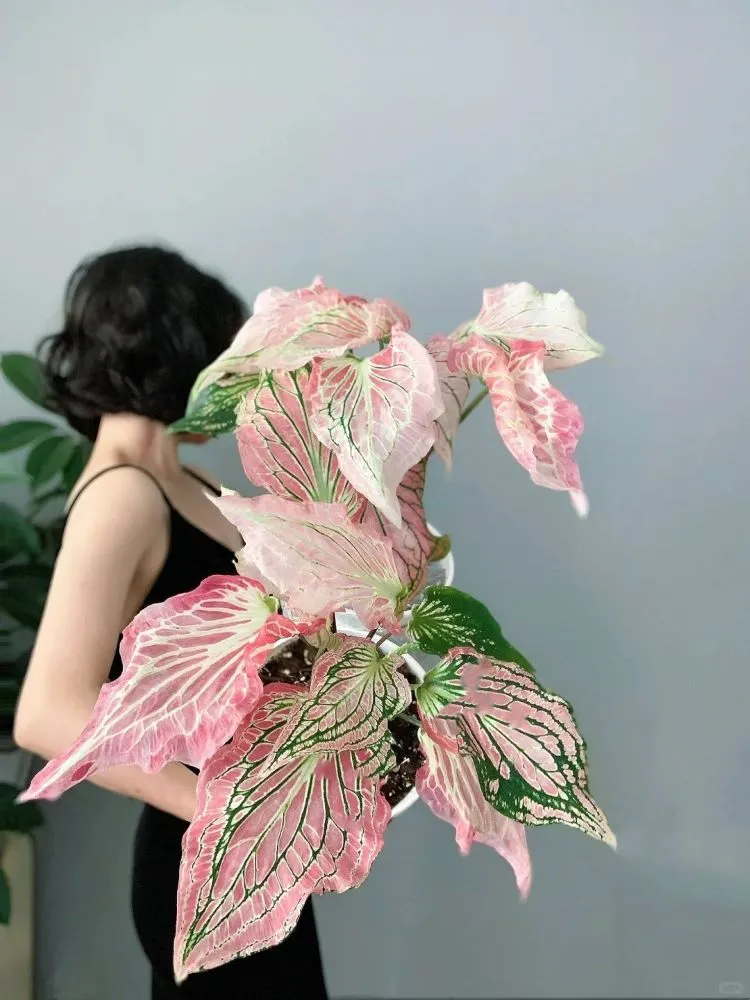
When people search for red and black caladiums, they are usually not looking for a normal red leaf. They want something darker, moodier, and more dramatic — the kind of caladium that looks almost smoky, burgundy, or black-veined instead of bright and cheerful.
But in real growing conditions, most “black” caladiums are not truly black. The dark effect usually comes from a mix of deep red, burgundy, dark green margins, purple-black veins, or blackened edges. The same leaf can also look very different depending on light, leaf age, camera exposure, and whether the photo was taken from the best possible angle.
This is especially true with Thai-market and dark-series caladiums. Some names are stable enough to recognize, while others feel more like market names or seller labels than fixed official cultivar names. I would not judge these plants by the name alone, and I would be careful with any listing that only shows one dramatic close-up.
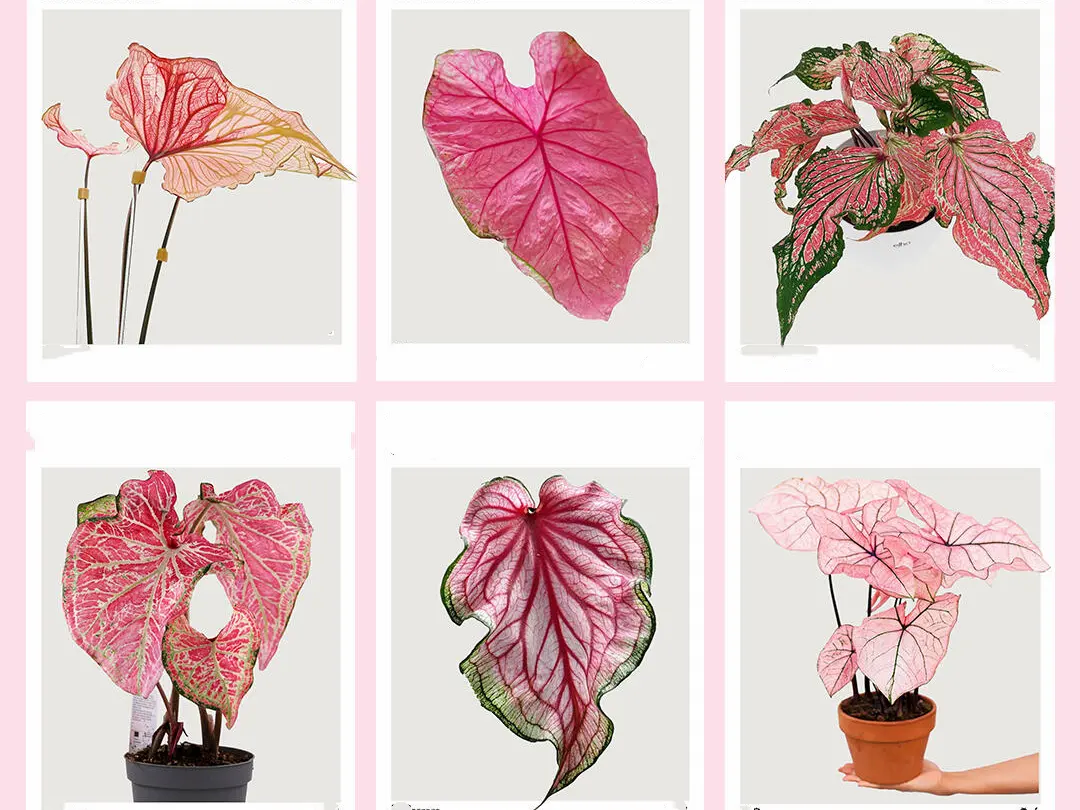
For a more familiar red-caladium reference point, I would also compare these darker names with varieties I have grown or discussed more closely, such as Postman Joyner Caladium, Red Flash Caladium, and Frieda Hemple Caladium. They are not the same as the darker market names in this guide, but they help show how red centers, green margins, and darker edges can behave in real containers.
A Quick Note About These 18 Names
Before comparing these 18 dark caladium names, I want to be careful about how I describe them. Some are easier to recognize in English, while others seem to come from smaller seller circles, translated listings, or Thai-market caladium collections.
Because of that, I would not treat every name in this list as an official cultivar name. For rare or newly circulated caladiums, spelling can vary, and the same plant may appear under slightly different names from different sellers.
That is why I use English name / market name in this guide instead of official name. If I were buying one of these plants, I would care less about how dramatic the name sounds and more about mature leaves, normal-light photos, and whether the seller uses the name consistently.
The 18 Dark Red and Black Caladium Names I Would Compare
I would use this list as a comparison starting point, not as a final identification chart. Some names are more stable than others, and for the rarer Thai-market types, I would still want to see mature leaves before trusting the label.
| # | English Name / Market Name I Would Use | What I Would Check |
|---|---|---|
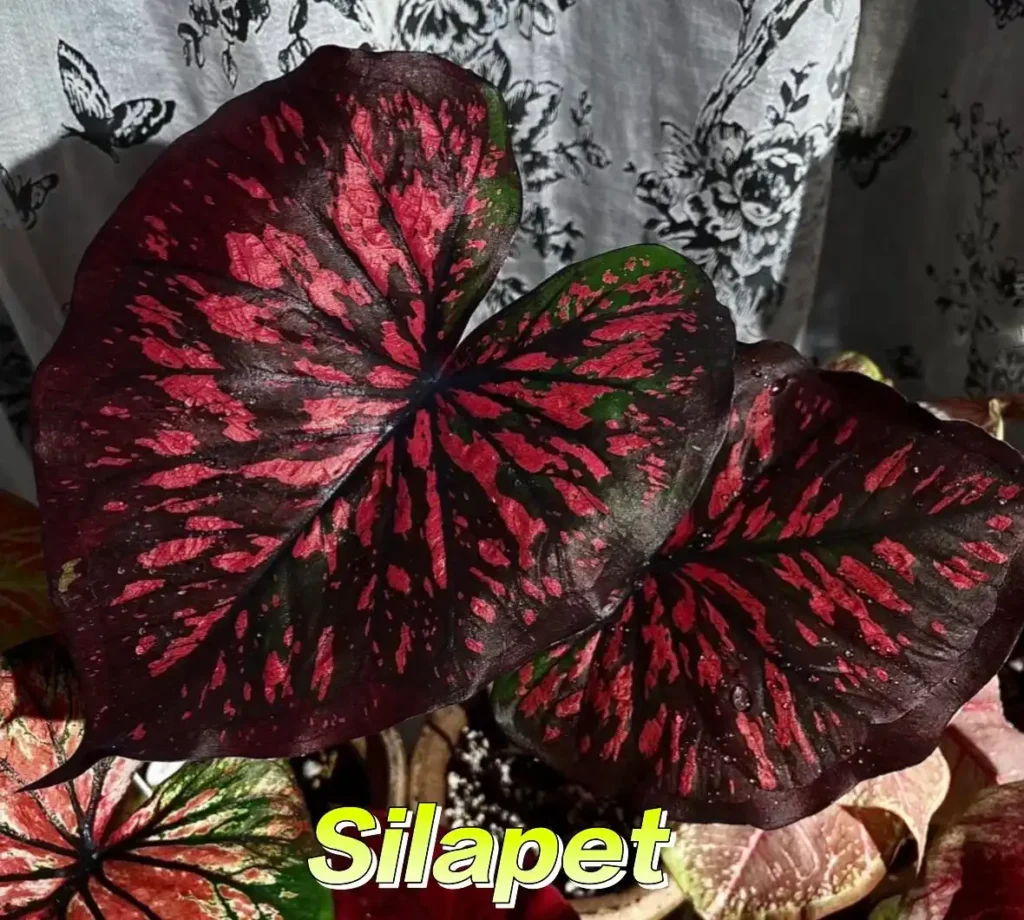
| 1 | Sila Phet / Sila Petch | Whether the dark veining stays strong on mature leaves |
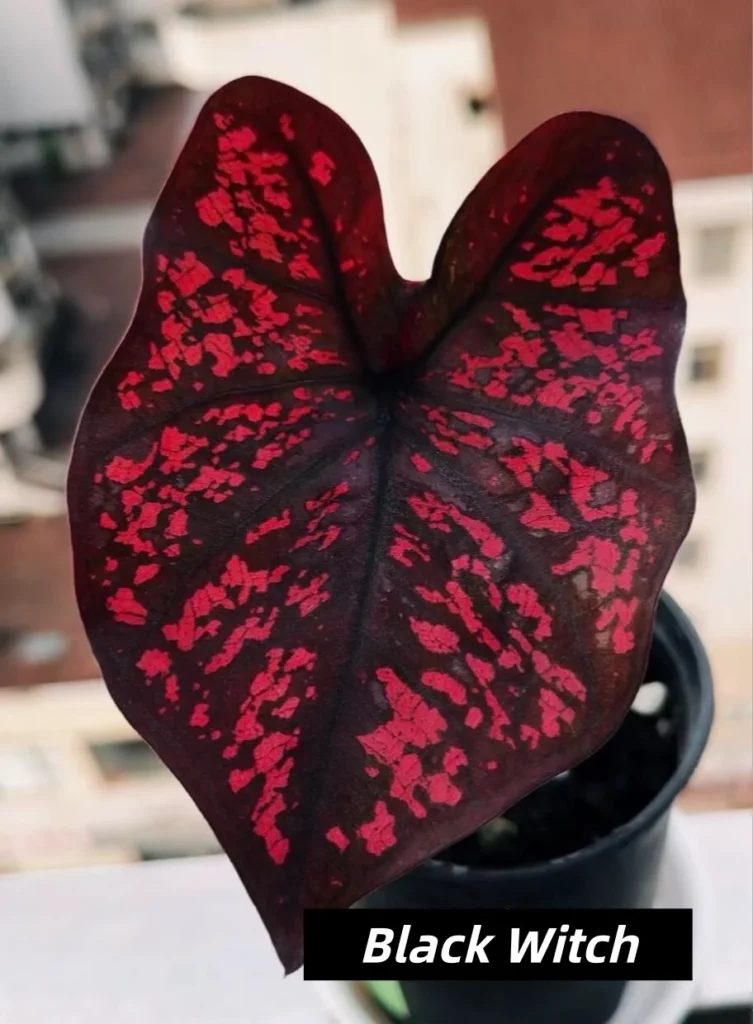
| 2 | Black Witch | Whether it is truly dark or just photographed in shadow |
| 3 | Devil’s Eye | Center color, vein darkness, and mature leaf contrast |
| 4 | Lava Glow | Red-purple depth and whether it keeps color indoors |
| 5 | Diamond Princess | Whether the pale areas and dark veins are stable |
| 6 | Rahu Omjan | Smoky dark red color and whether the mature leaves keep that depth |
| 7 | Mona Lisa / Red Monalisa | Speckled red-pink pattern and dark veining |
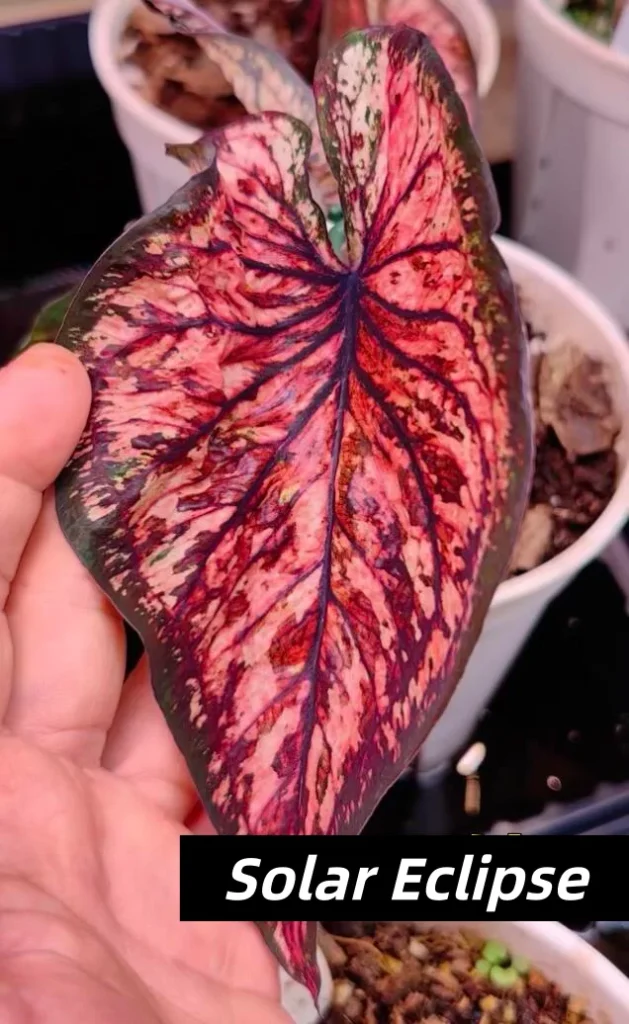
| 8 | Solar Eclipse | Strong dark veins and red-pink contrast |
| 9 | Lunar Eclipse / Moon Eclipse | Whether it is darker than Solar Eclipse or simply listed under a different name |
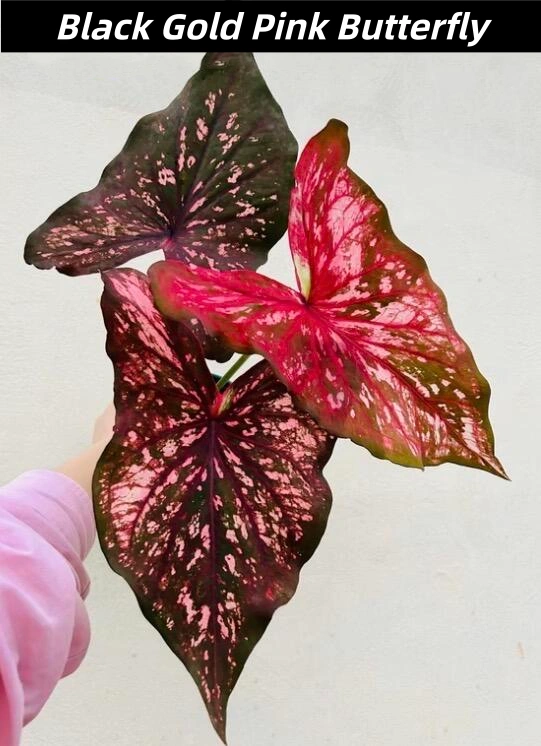
| 10 | Black Gold Pink Butterfly | Pink speckles against a dark leaf base |
| 11 | Lady Lux | Seller label and spelling consistency, because the name may vary |
| 12 | Gothic Lolita / Punk Girl | Dark vein structure and a stronger gothic-style color mood |
| 13 | Spider Man / Spiderman | Red striping or web-like vein effect |
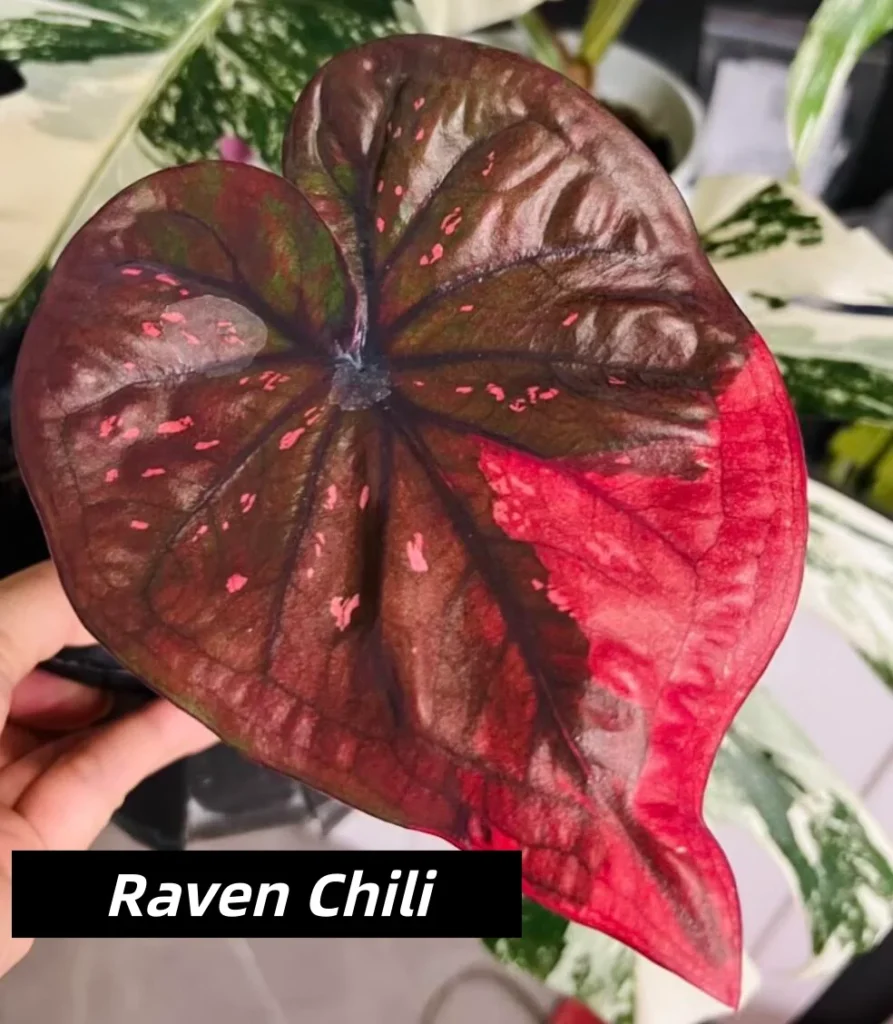
| 14 | Raven Chili | Whether the leaf reads burgundy-black or simply red |
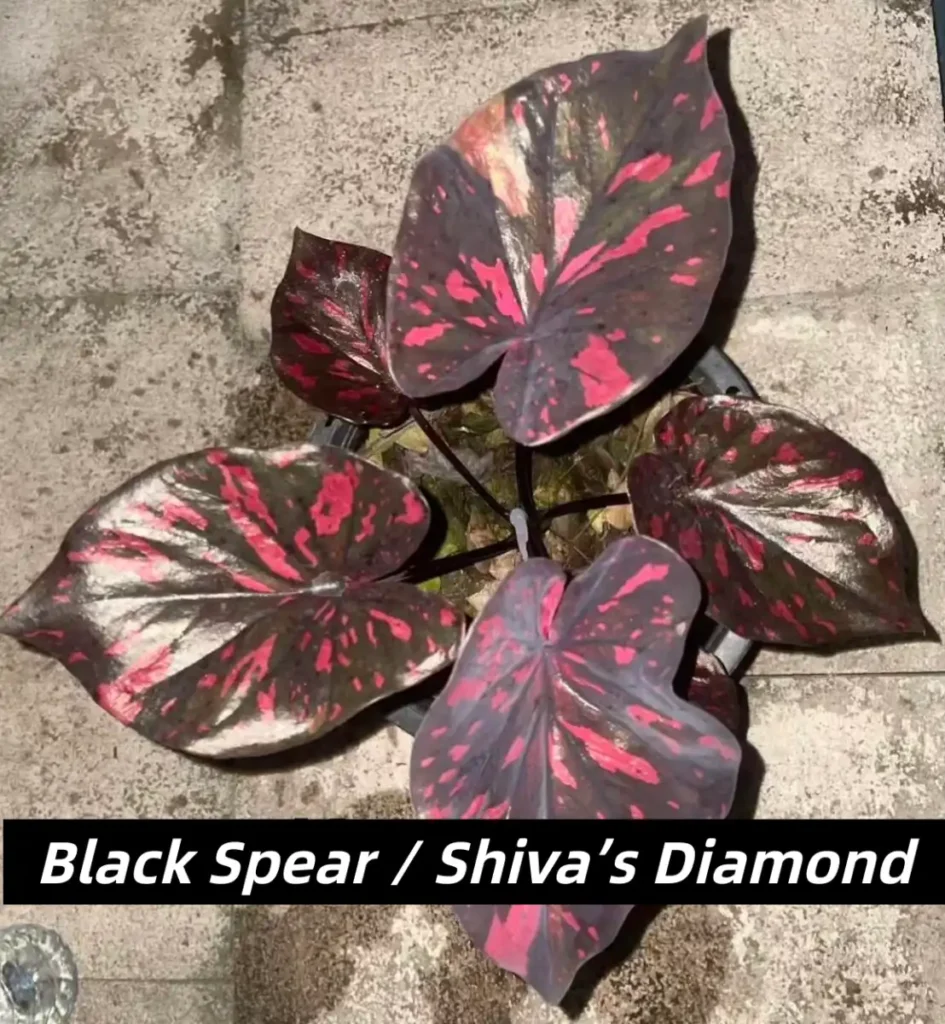
| 15 | Black Spear / Shiva’s Diamond | Narrow dark shape, dark base, and seller consistency |
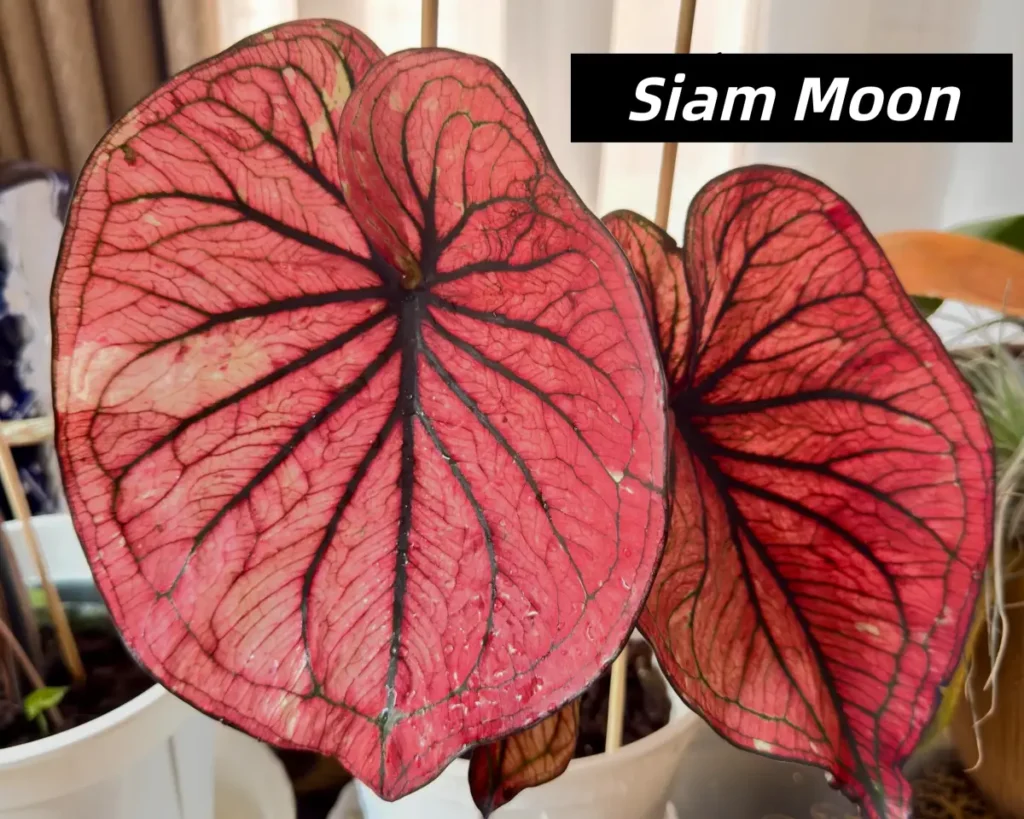
| 16 | Siam Moon | Dark moon-like pattern and how clearly the contrast holds on mature leaves |
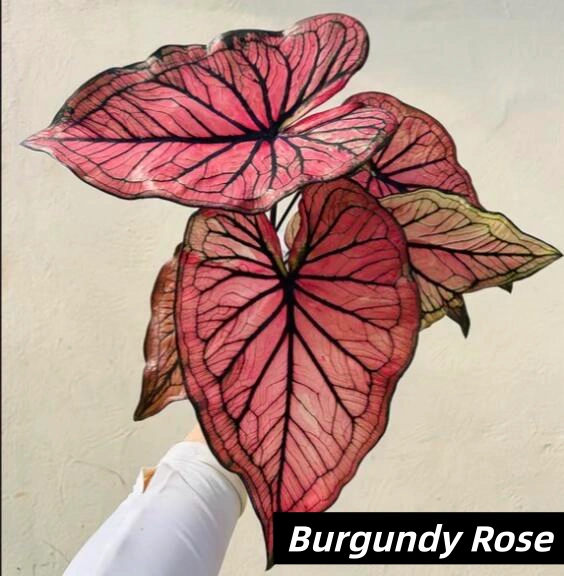
| 17 | Burgundy Rose | Burgundy tone rather than bright red |
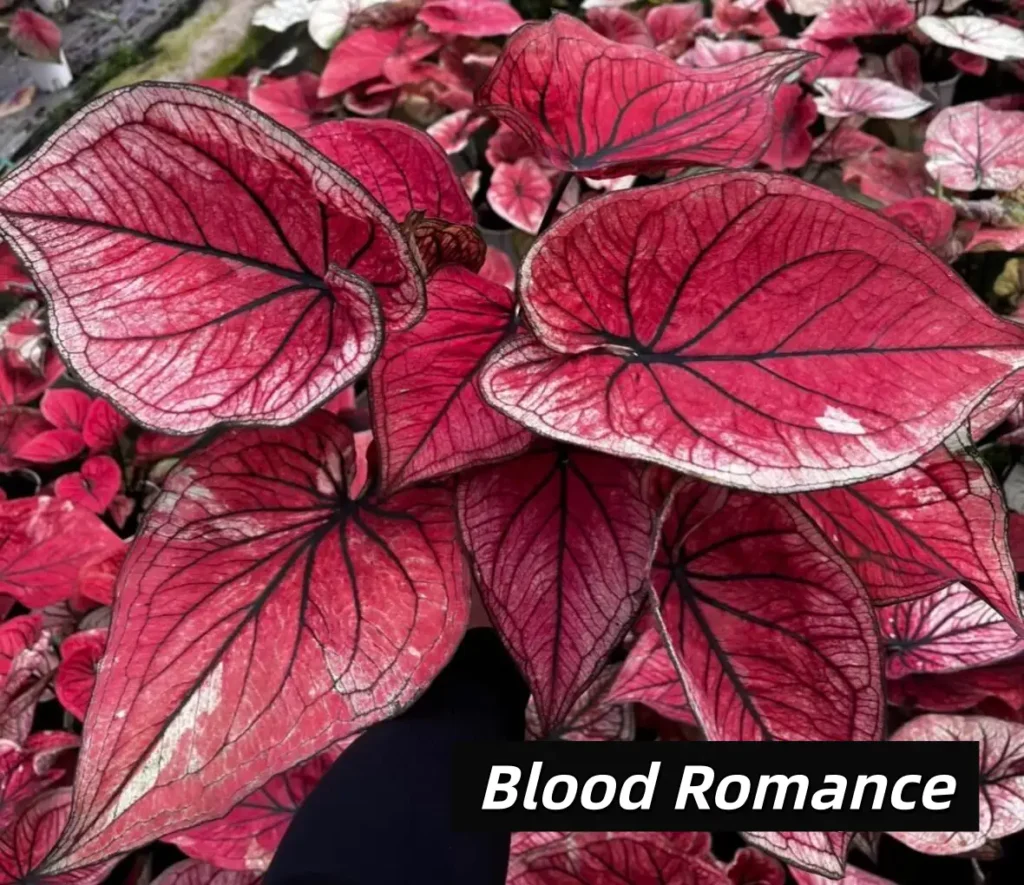
| 18 | Blood Romance | Softer blood-red mood, less black but still dark and romantic |
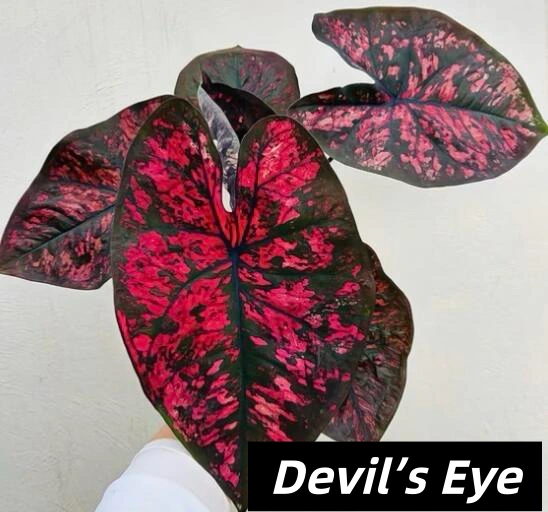
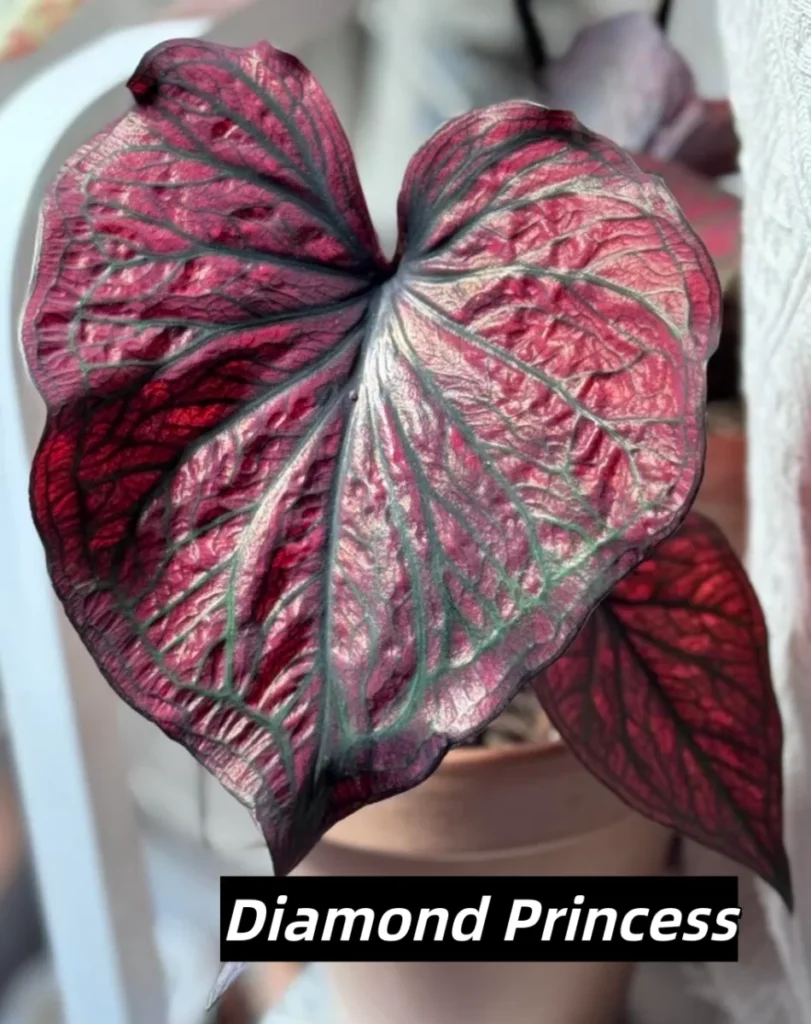
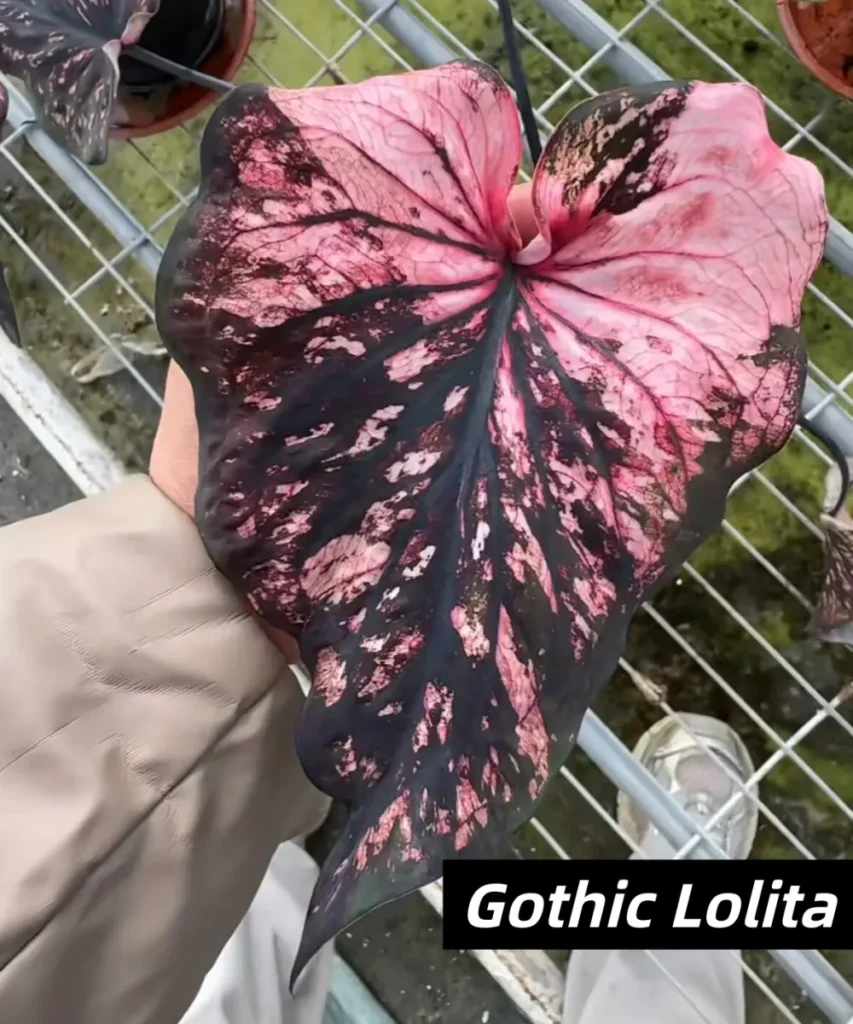
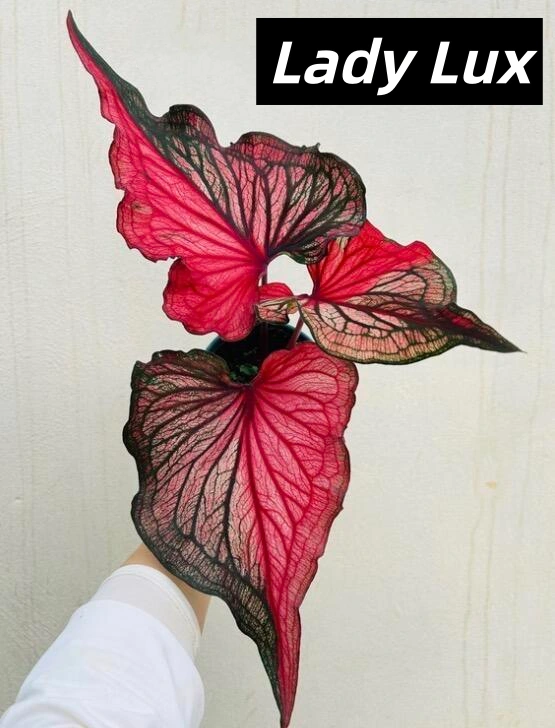
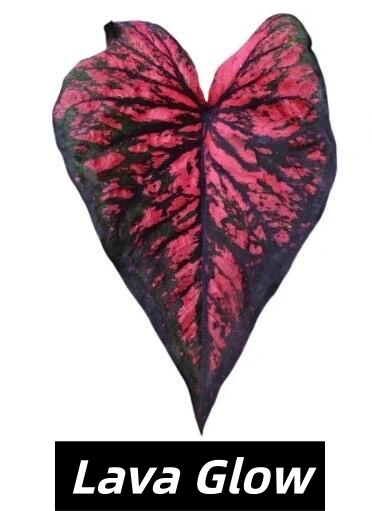
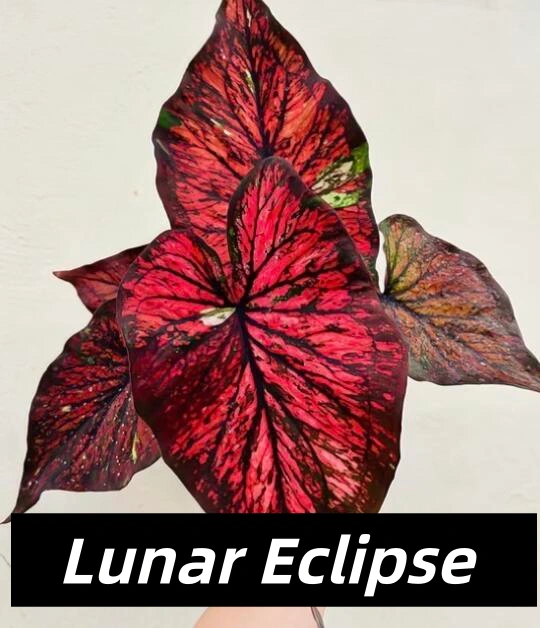
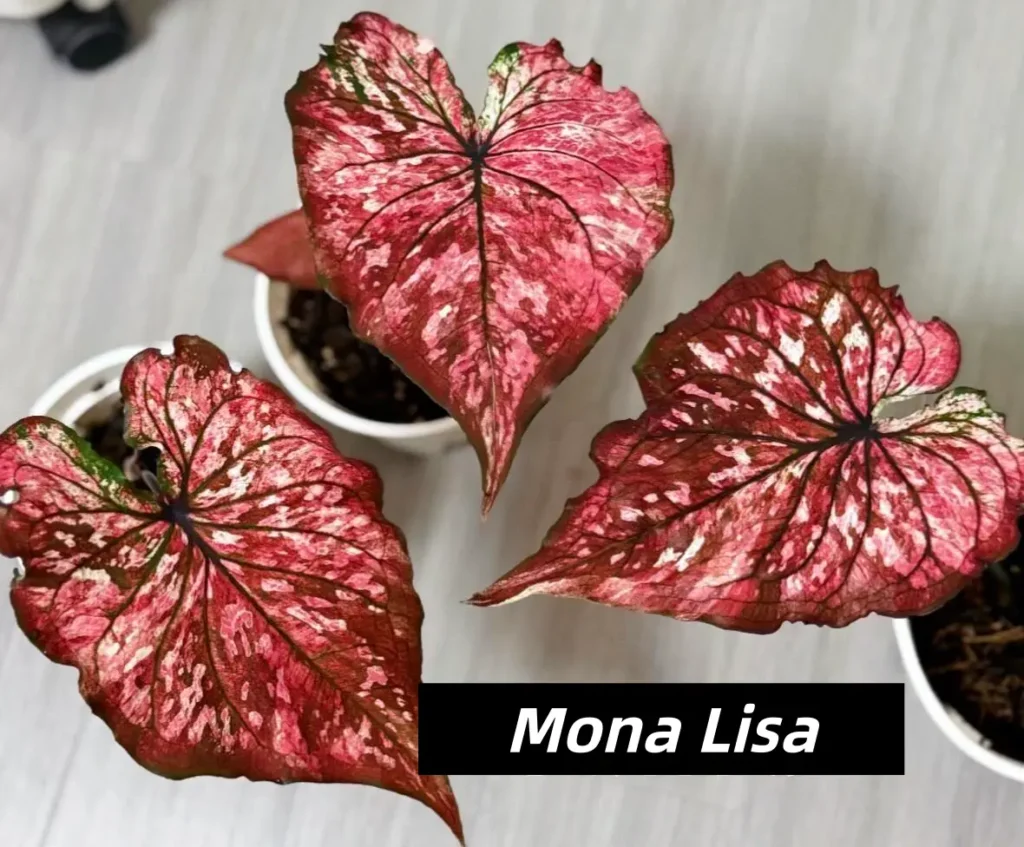
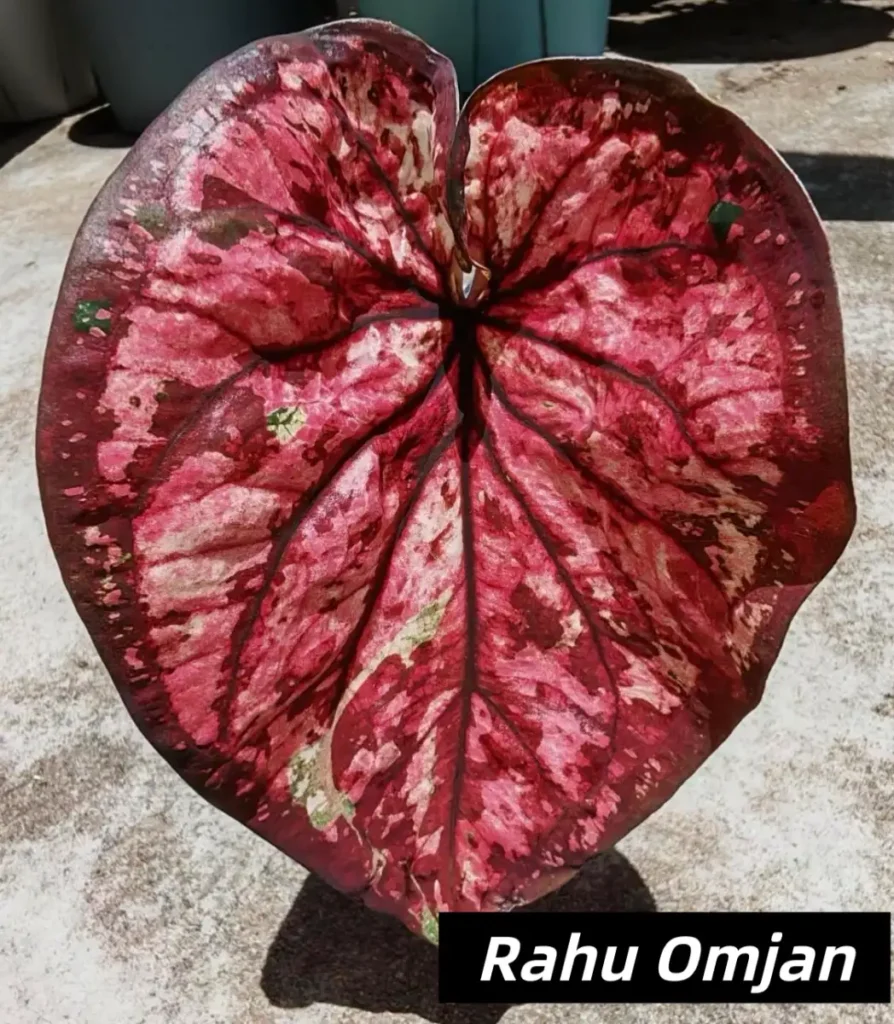
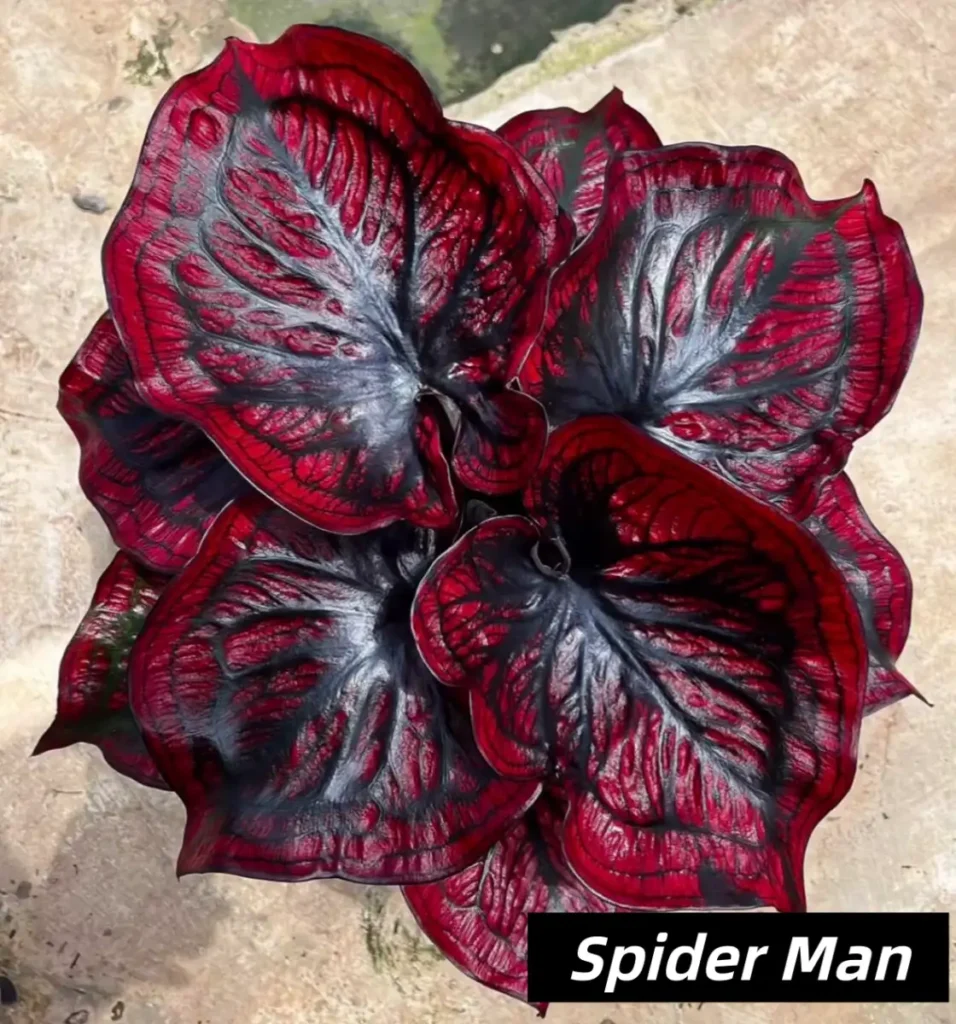
I would not rank these only by how dramatic the name sounds. A name like Black Witch or Devil’s Eye may sound darker than the plant appears in real life, while a variety with a softer name may develop stronger dark veining as the leaf matures. Mature leaves matter more than the label.
How I Would Group These Dark Caladiums
Instead of treating all 18 names as the same kind of “red and black caladium,” I find it more useful to group them by the kind of dark effect they show: deep burgundy color, black veining, web-like markings, or pink speckles against a darker base.
Dark Red and Burgundy Types
For this group, I would compare names like Lava Glow, Rahu Omjan, Raven Chili, Burgundy Rose, Blood Romance, and Black Witch.
These are the kinds of caladiums I would not expect to look truly black. I would look at the depth of the red instead: whether the leaf stays bright red, becomes wine-colored, or develops a darker burgundy tone as it matures.
The real beauty in this group is usually not a perfectly black leaf. It is the weight of the mature color. A dark red caladium can look much richer once the leaf has settled, but weak indoor light can also make the color dull rather than dramatic. That is why I would rather see mature leaves in normal light than one heavily shadowed photo.
This is also where more familiar red varieties can be useful as a comparison. Red Flash Caladium gives a bolder red impression, while Frieda Hemple Caladium feels cleaner and more classic. Darker market names should still be judged against real mature leaves, not just against the drama of their names.
Black-Veined or Web-Like Types
For the black-veined group, I would compare Solar Eclipse, Lunar Eclipse, Gothic Lolita, Spider Man, Devil’s Eye, and Mona Lisa.
Here, the dark effect usually comes from the vein structure, not from the whole leaf being black. The leaf may have red, pink, or green areas, but the darker veins create a sharper, more dramatic pattern. This is the group that can look especially striking in close-up photos.
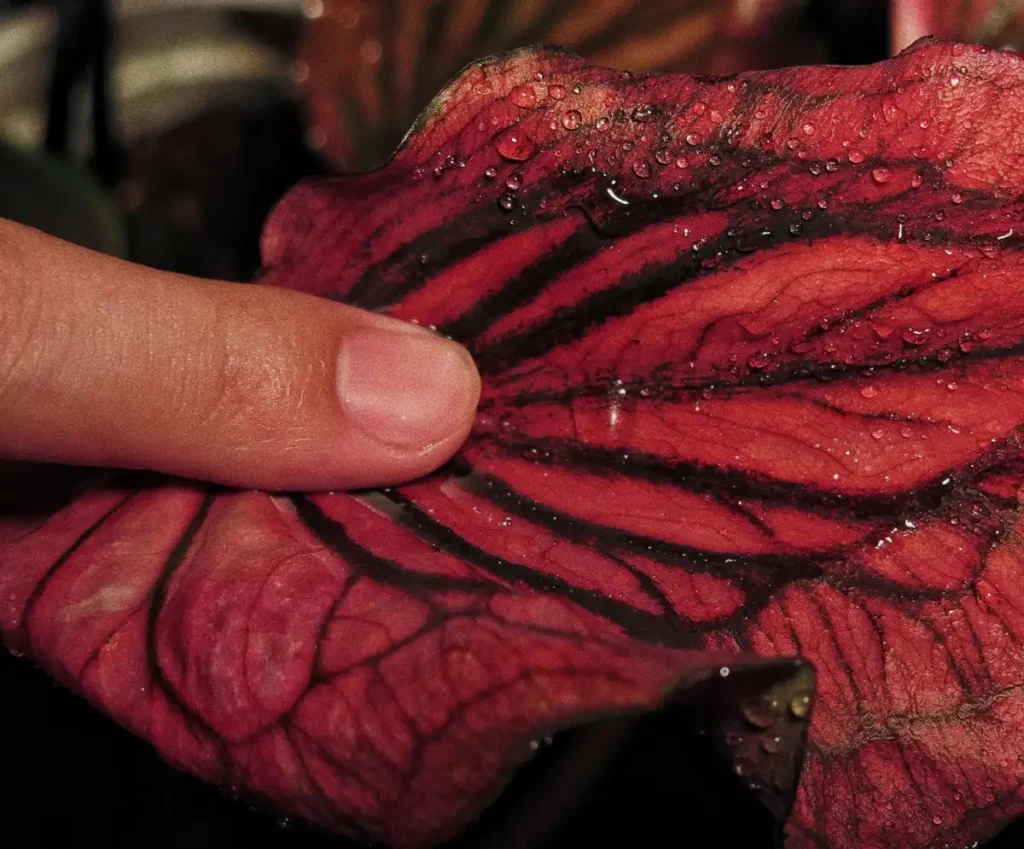
But I would still be cautious. Young leaves may not show the final pattern clearly, and some dark lines can fade, soften, or look less bold under different light. Before buying, I would want to see whether the black-veined effect stays visible on mature leaves, not just on one perfect new leaf.
Speckled Dark Pink and Black Types
For speckled dark types, I would look at Black Gold Pink Butterfly, Diamond Princess, Mona Lisa, and Blood Romance.
These are more about contrast than pure darkness. The visual interest comes from pink, red, or pale speckles sitting against a darker leaf base. Some leaves may lean more pink and decorative, while others may look darker and moodier.
This is also the group where I would avoid judging from a single best leaf. Speckled caladiums can vary a lot from leaf to leaf on the same plant. I would want to see the whole plant if possible, because one dramatic speckled leaf may not represent the overall look.
Names I Would Double-Check Before Buying
The names I would double-check most carefully are Lady Lux, Black Spear / Shiva’s Diamond, Diamond Princess, Blood Romance, and Raven Chili.
This does not mean they are bad plants. It only means I would be more careful with the label. For rare Thai-market caladiums, English spelling can vary, and some names may be seller names rather than stable cultivar names in the wider English market.
Before buying one of these, I would want to see the original seller label, several photos of the same plant, and mature leaves under normal light. With dark caladiums, the name can sound very dramatic, but the actual leaf tells me much more.
Why Seller Photos Can Make Dark Caladiums Look More Dramatic
Seller photos can be useful, but I would be careful with dark caladiums. Red, burgundy, and black-veined leaves can look much deeper depending on lighting, exposure, and camera settings. A plant that looks almost black in one listing may look softer, redder, or greener once it is growing at home.
Strong side light or backlight can make dark veins stand out. Low exposure can make the whole leaf look heavier. Extra saturation can make red areas look richer than they appear in normal indoor light. None of these things means the plant is fake, but they do mean one dramatic photo is not enough for me.
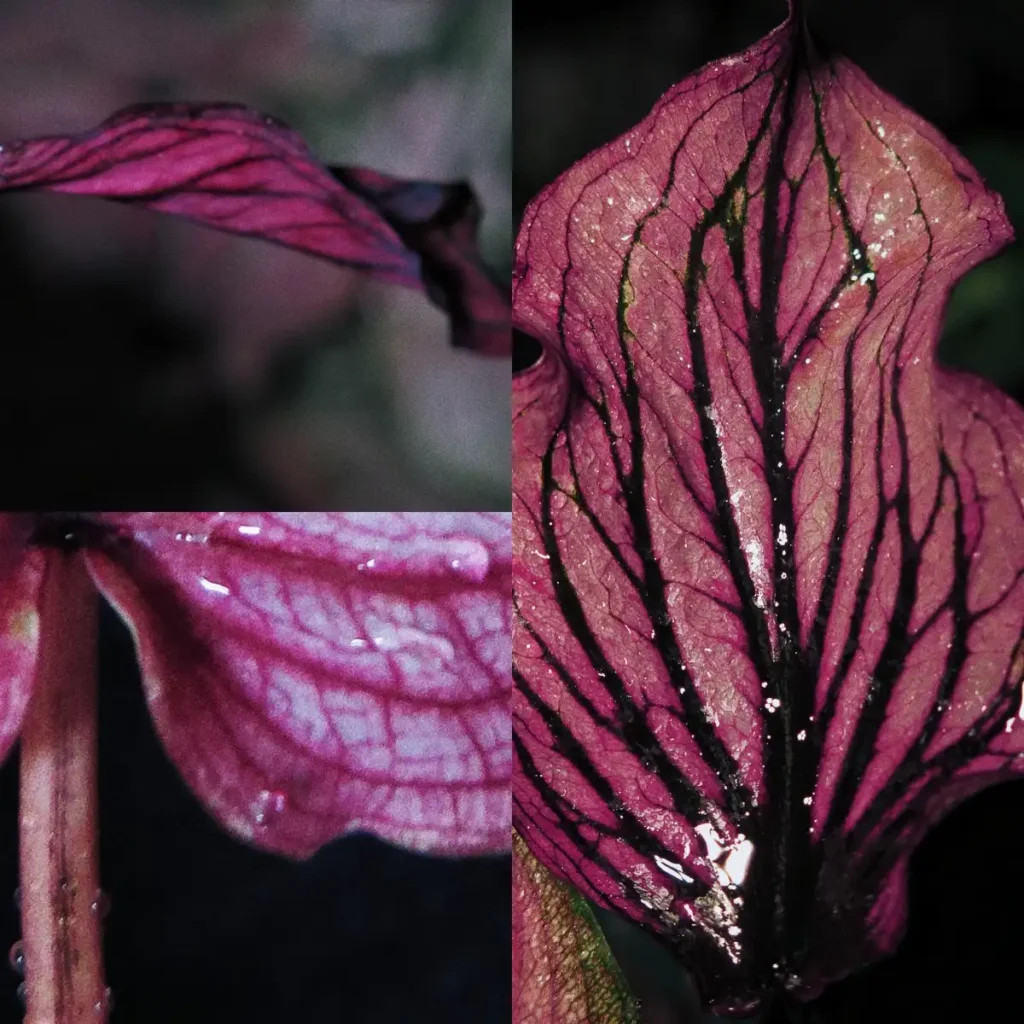
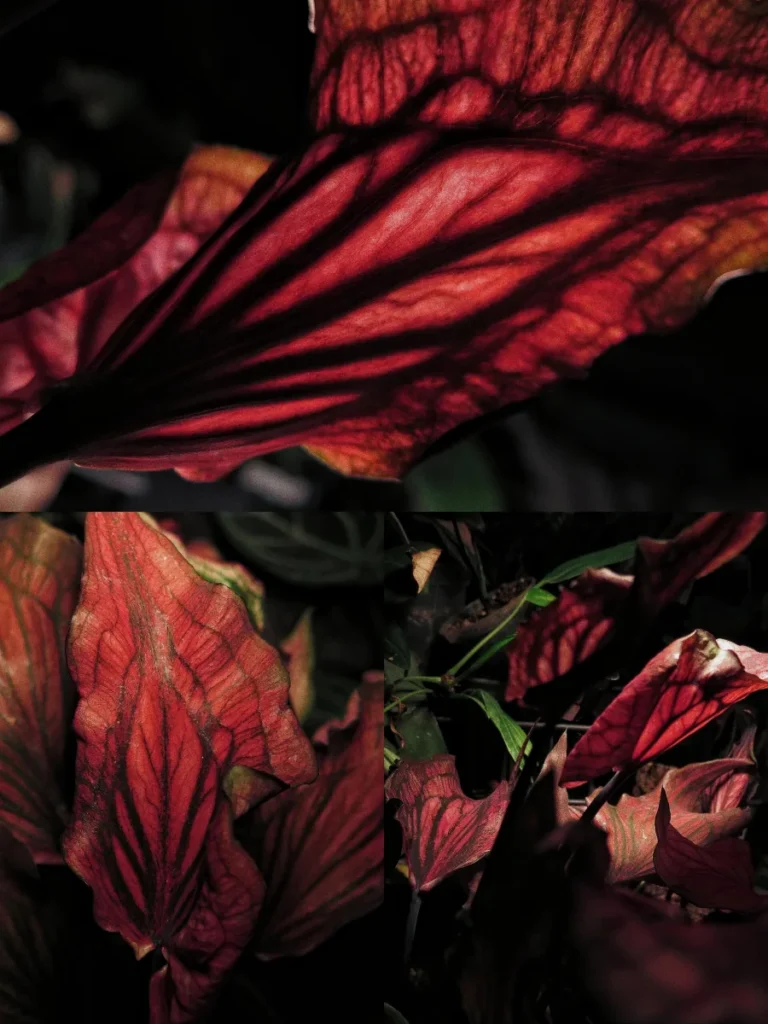
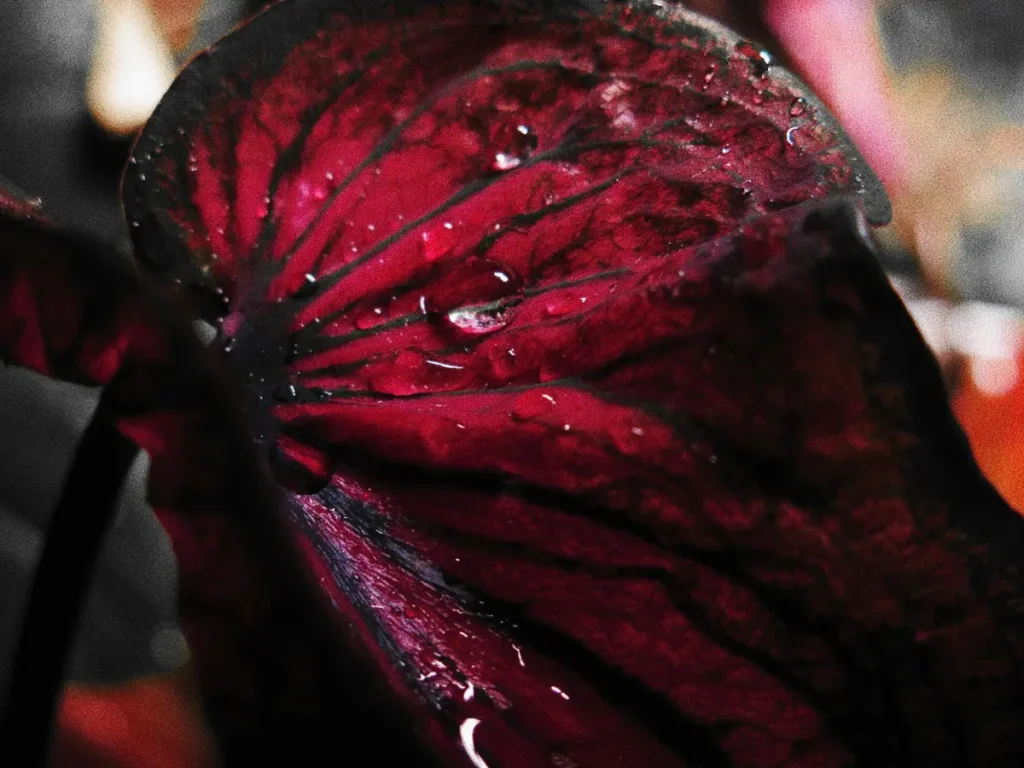
I also look at leaf age. A new leaf, a mature leaf, and the “best” leaf on the plant may all look different. Before I trust a dark caladium photo, I want to see more than one leaf, more than one light condition, and ideally the whole plant instead of only one perfect close-up.
How Light Changes Red and Black Caladiums Indoors
Dark caladiums are not the same as low-light caladiums. This is one of the easiest mistakes to make. Because the leaves look deep red, burgundy, or almost black-veined, it can be tempting to place them in a darker corner and expect the color to stay dramatic. In my indoor setup, that usually is not how caladiums behave.
Red and dark-leaved caladiums still need enough brightness to keep their color active. I would give them bright indirect light rather than deep shade. In weak indoor light, the plant may survive for a while, but the leaves can look duller, smaller, or slower than expected. If the plant becomes slow rather than richly colored, I would treat it more like a caladium not growing issue than a desirable dark-color effect.
At the same time, I would not push these plants into harsh direct sun just because stronger light makes the red look more intense. Too much hot sun, especially through glass, can dry the leaf edges, fade the color, or leave the plant looking stressed. A dramatic red-black leaf is only beautiful when the leaf is still healthy.
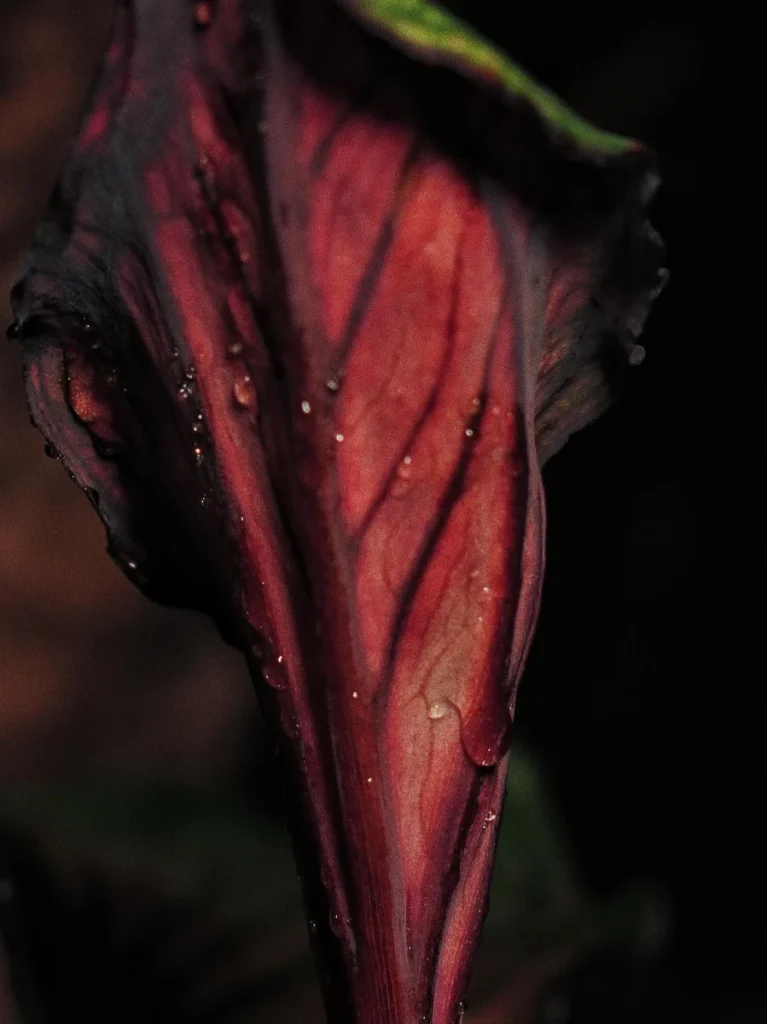
For my own containers, I think of light as a balance: bright enough to support strong color, but not so harsh that the leaf surface gets damaged. In the darker part of the year, or in a room where the plant never gets enough natural brightness, I would rather adjust the placement or use a caladium grow light indoors than keep a dark caladium struggling in a corner.
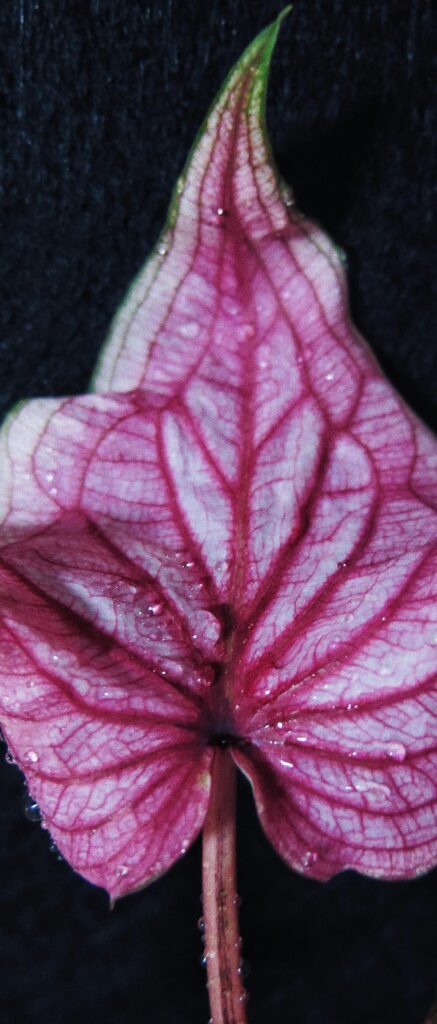
So when I judge a red and black caladium indoors, I do not only ask whether the color looks dark. I also ask whether the plant is still growing, whether the leaves are opening normally, and whether the edges stay soft instead of dry or burnt. In containers, I still watch the pot and watering rhythm closely, because weak roots or constantly wet soil can make a dramatic-looking plant decline quickly. That is closer to how I water caladiums indoors now.
The Part I Would Not Forget Before Buying One
Dark red and black caladiums are very tempting, but this is also one of the messier naming groups. Some names are easier to recognize, while others feel more like market names, seller labels, or translated names that may appear with different spellings. That does not make them less interesting, but it does mean I would slow down before buying.
For me, the most important thing is not whether a caladium has the darkest name. I care more about how the mature leaves look in ordinary light, whether the pattern stays strong across more than one leaf, and whether the whole plant still looks good outside of one perfect close-up.
I also do not think true black is the real goal. The better dark caladiums usually have layers: burgundy red, smoky green, blackish veins, purple-black edges, or dark speckling that changes as the leaf matures. That layered look is more interesting to me than a leaf that only appears black because of shadow or editing.
So I would treat these 18 names as a starting point, not a final shopping list. If you like dark red leaves, black veins, purple-black edges, or moody Thai-market caladiums, they are worth comparing. But before choosing one, I would want to see more than one photo, more than one leaf, and ideally a mature plant growing in normal light.
FAQ
Want to Explore Other Caladium Varieties?
If you want to compare darker red caladiums with more familiar red varieties, you may also like my notes on Postman Joyner Caladium, Red Flash Caladium, and Frieda Hemple Caladium. They are useful references for seeing how red centers, green margins, and darker leaf edges behave in containers.
Browse All Caladium Varieties →