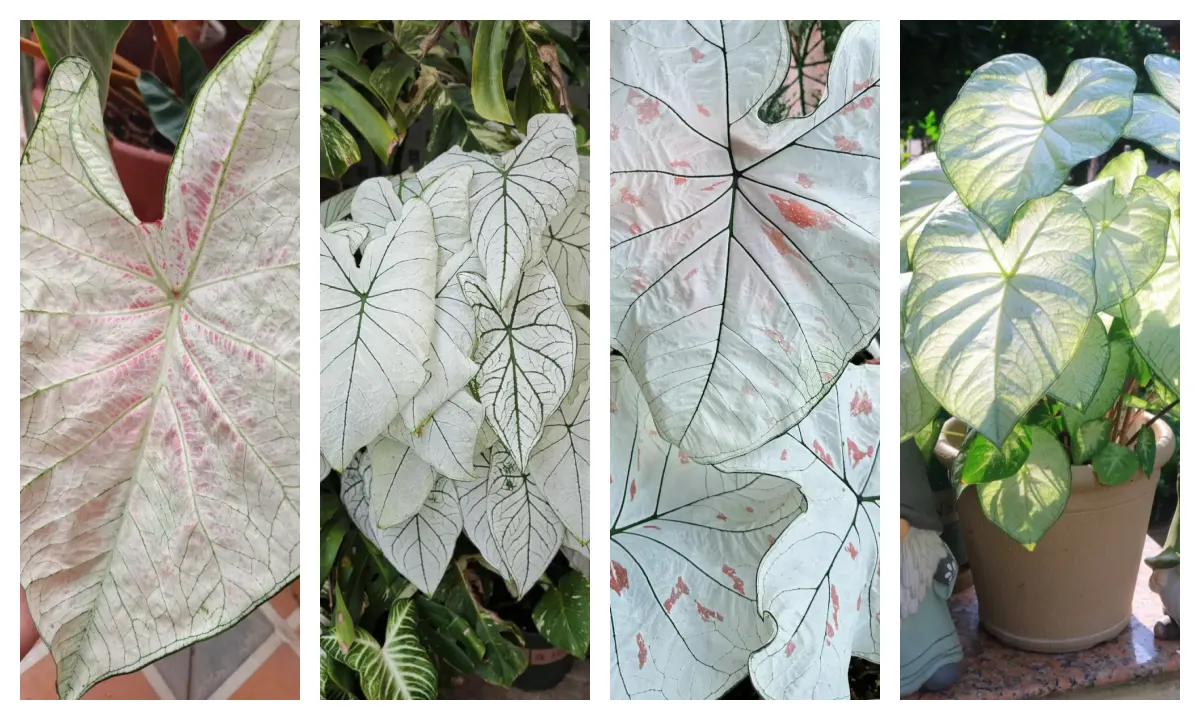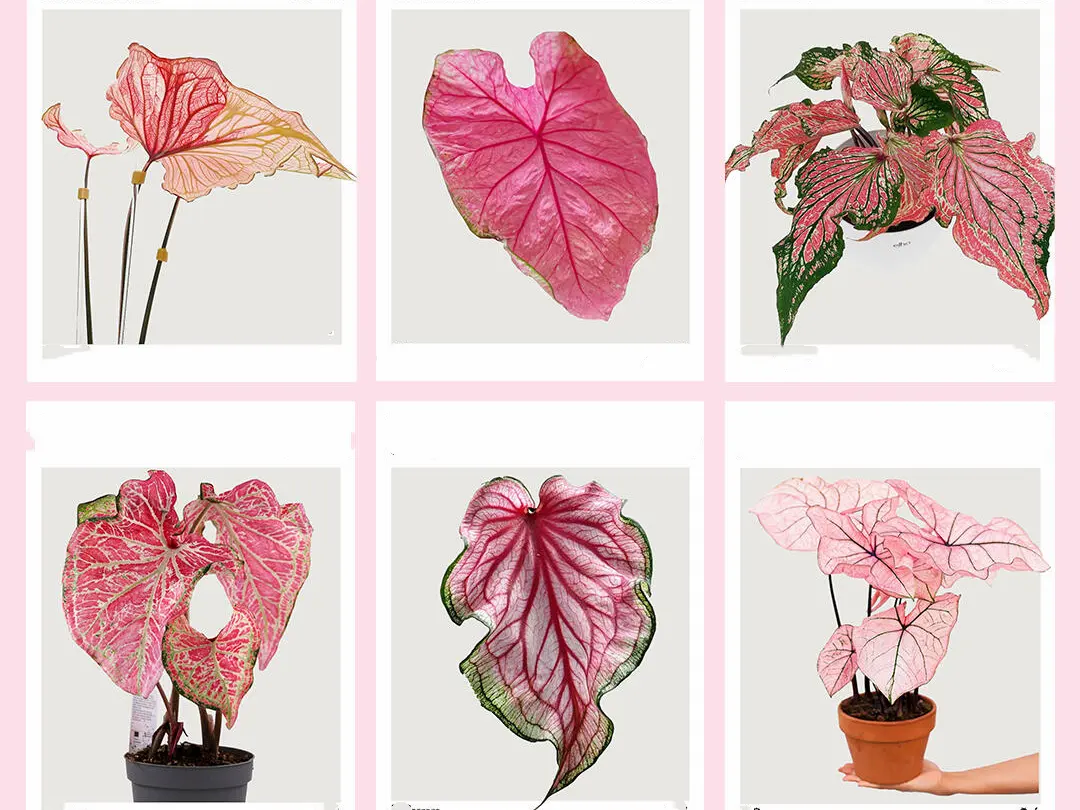
Every year, around late fall, it happens almost overnight.
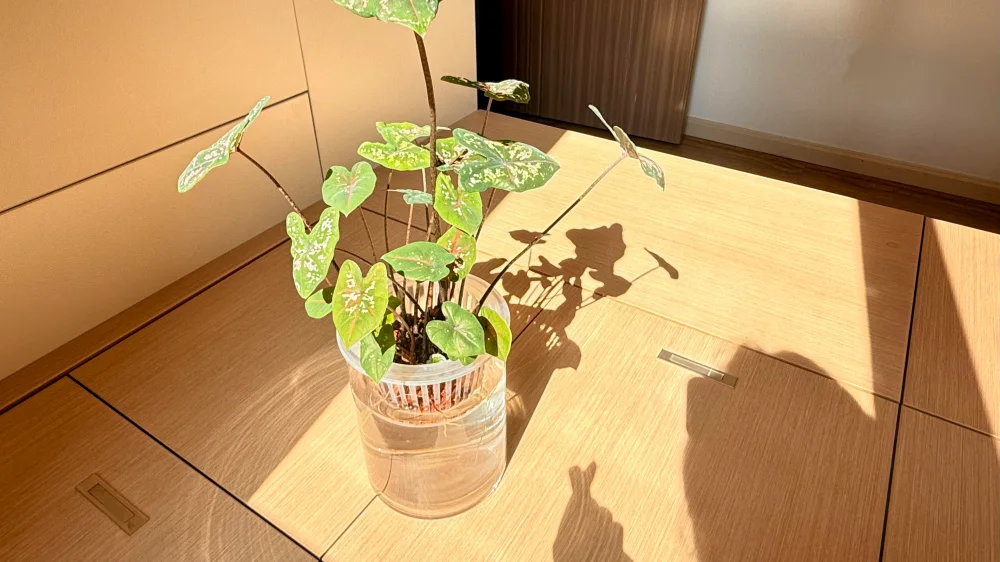
The temperature in my apartment is still above 20°C (68°F). The caladiums are sitting by the balcony window. Light doesn’t feel dramatically different. Nothing seems extreme. And yet, the stems begin to collapse and the leaves droop — and if you’re trying to tell “normal seasonal collapse” from a real issue, this is the closest overlap with caladium leaves drooping. Some shrink inward. Others fade quickly and fall.
The first time I saw this, I thought something was wrong — the exact “am I losing this plant?” panic I wrote about in is my caladium dying.
I checked the soil and adjusted watering — and looking back, this is why I now follow a seasonal approach to how to water caladiums instead of reacting to one droopy day. I moved pots closer to the window. I even wondered if I had triggered rot. But after repeating this pattern for several seasons, I realized something important:
It wasn’t damage.
It was dormancy.
Wintering over caladiums — at least in a cooler indoor climate like the Pacific Northwest — isn’t about protecting them from freezing. It’s about recognizing when the plant has already decided to slow down, even if your room is still warm.
And fighting that rhythm often creates more problems than letting it happen.
What Confused Me About That First Winter
What confused me most wasn’t the drooping itself. It was the timing.
The room was still warm. Daytime temperatures stayed above 20°C (68°F). The plants were indoors, protected from frost. In my mind, dormancy was something triggered by cold — something that happened outdoors after the first real chill.
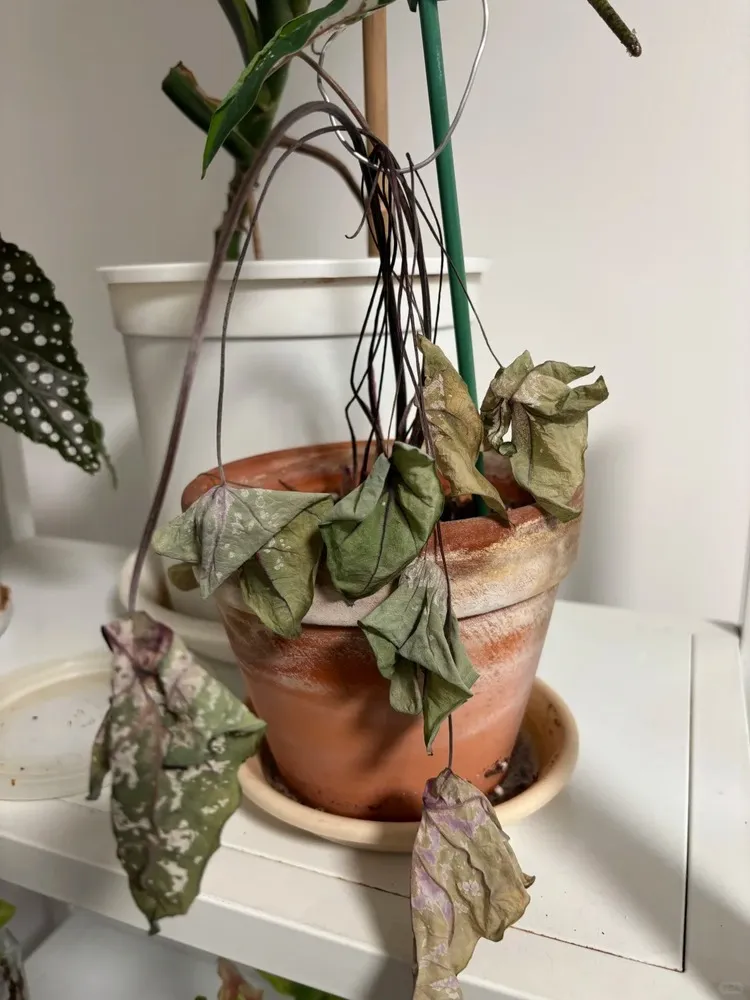
So when the stems collapsed and leaves began to decline, I didn’t interpret it as a seasonal shift. I interpreted it as a care mistake.
I assumed that as long as temperature remained stable, the plant would continue growing. I underestimated how much light duration — not just intensity — controls caladium rhythm. Even by a bright window, the days were already shorter. The plant had registered the change before I did.
Looking back, my mistake wasn’t watering too much or too little. It was assuming that indoor warmth could override seasonal light cycles. I was responding to visible symptoms, not to the plant’s actual growth pattern.
That shift in understanding changed how I approach winter entirely.
I Tried to Prevent Dormancy — It Didn’t End Well
The following year, I decided I wouldn’t let them rest.
I converted my plant shelf into a makeshift insulated cabinet. Added grow lights. Sealed the sides. Tried to keep warmth consistent. Even ran heating and AC strategically to maintain stable indoor conditions.
I was determined to “override winter.”
For a while, they stayed green.
But the growth wasn’t strong. Leaves were thinner. Colors dulled slightly. Stems looked weaker. And then something else showed up — spider mites.
Red spider mites thrive in warm, dry indoor winter air.
By forcing continued growth, I had unintentionally created the perfect environment for pests.
That winter taught me something important:
Caladiums can survive forced growth.
But survival isn’t the same as thriving.
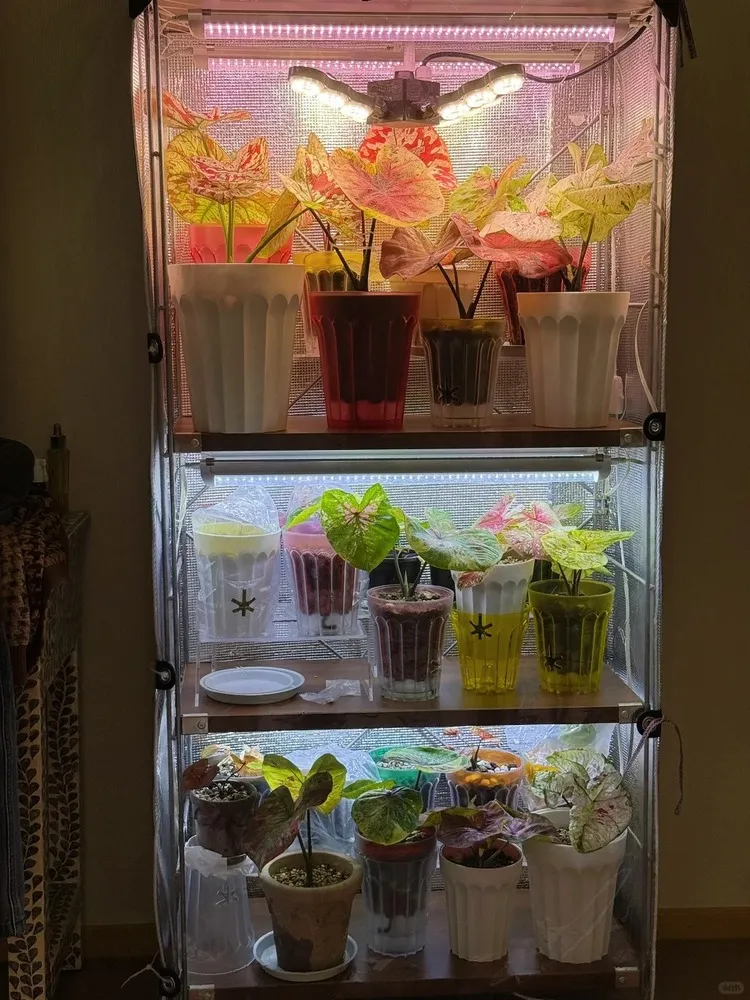
Caption suggestion:
My attempt to prevent dormancy: insulated shelf with grow lights. Growth continued — but pests followed.
When I Know It’s Time to Let Them Rest
Now, I don’t fight it anymore.
I watch for signs:
- New leaves become smaller.
- Petioles thin out.
- Growth slows dramatically.
- Soil stays wet longer between waterings.
- Overall posture softens.
Even if the room is warm, the light duration has already changed. The plant knows.
I no longer interpret drooping as an emergency. I interpret it as a signal.
Option 1 — Letting Them Go Dormant in the Pot
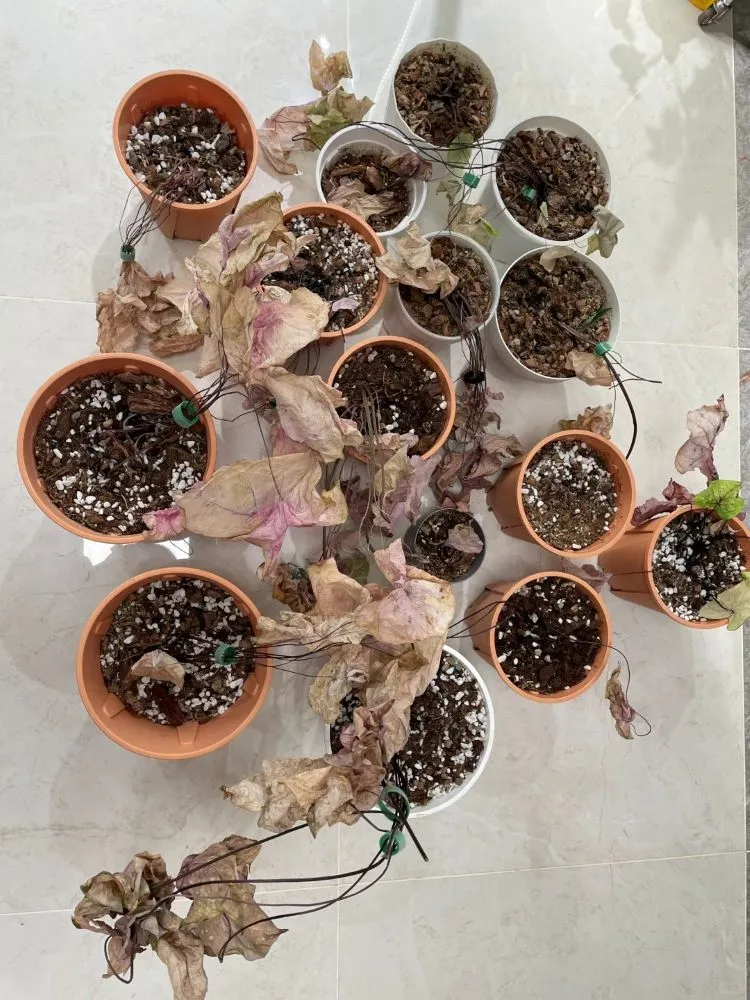
Most of the time, I let the plant go dormant in the same container. Instead of stopping water abruptly, I reduce it gradually as growth slows. I also avoid cutting all leaves at once, since the foliage continues feeding the tuber until it fully declines.
Once the leaves have collapsed and naturally faded, I stop watering almost entirely and move the pot to a stable indoor area. I don’t provide supplemental light, and I don’t fertilize during this period. The goal isn’t to maintain growth — it’s to allow the plant to complete its seasonal cycle.
Over several winters, I’ve noticed that plants given a full rest tend to return more vigorously in spring. New leaves emerge thicker, colors appear more saturated, and overall structure feels stronger. I don’t have controlled data to prove this — only repeated seasonal observation.
For me, dormancy isn’t plant death. It’s a recovery phase.
Option 2 — Lifting and Storing the Tubers
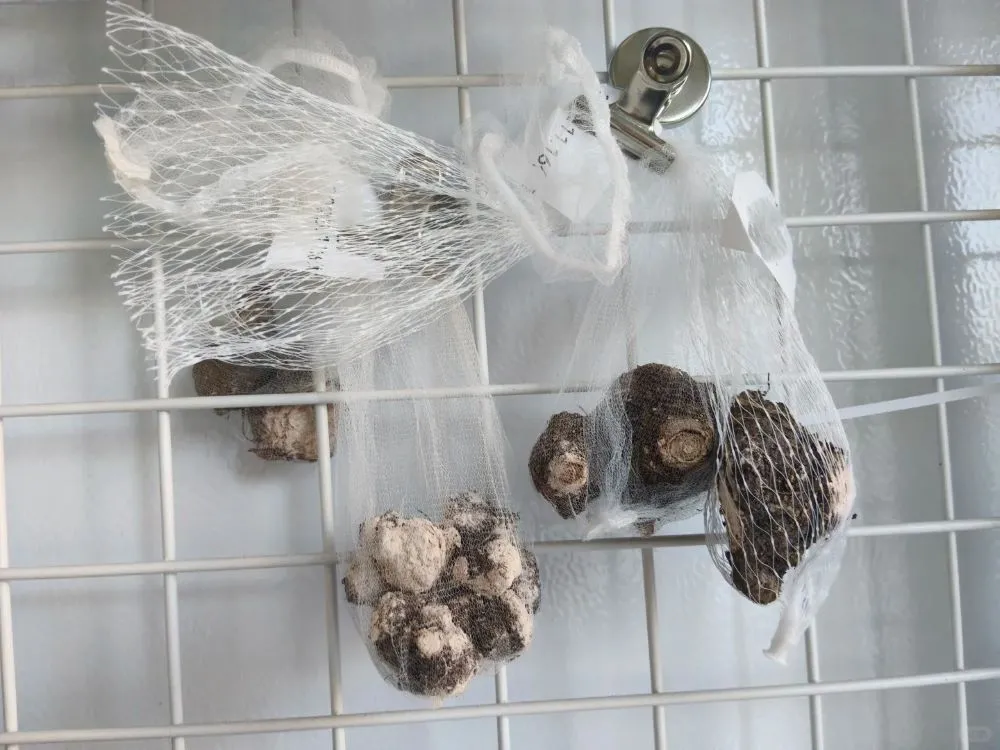
I don’t lift every year. But there are situations where I choose to dig them up.
Usually when:
- The pot is too large and holds moisture all winter.
- The soil mix was too dense during the growing season.
- I’ve had rot issues before.
- I want to refresh the medium completely next spring.
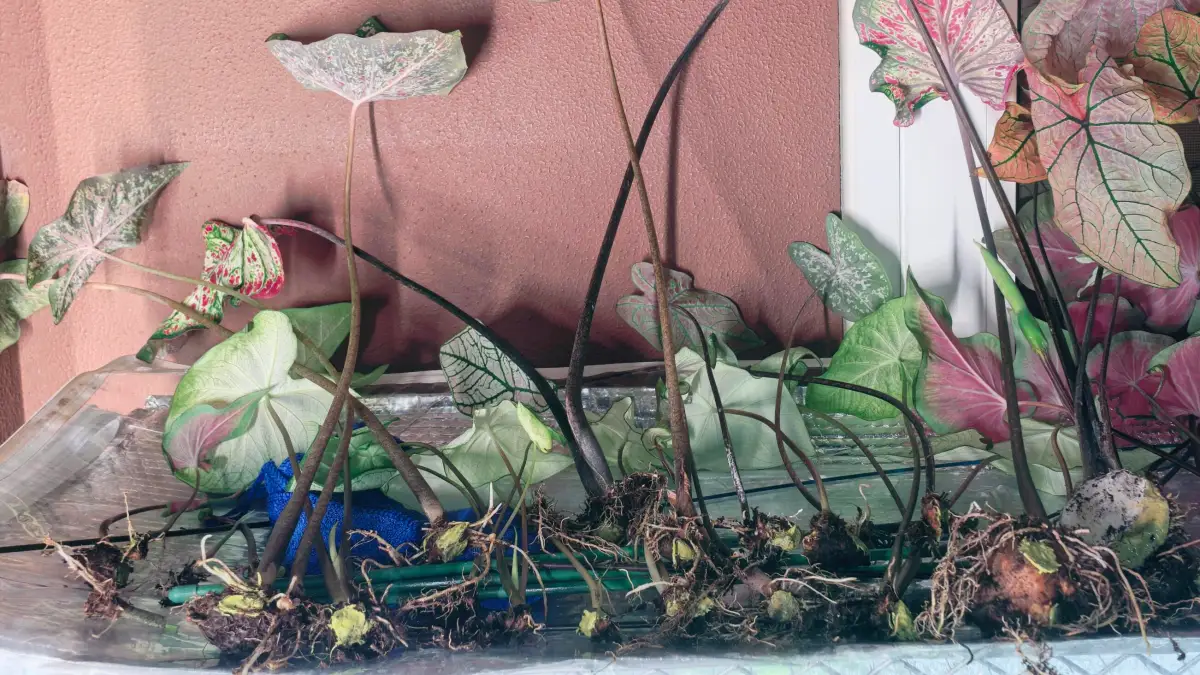
In those cases, I let the foliage decline naturally first. I don’t dig while leaves are still actively feeding the tuber.
Once the stems collapse and the soil dries slightly, I remove the tuber, clean it gently, and allow it to dry fully before storage.
I keep stored tubers in a stable indoor environment — not the garage.
In my first year, I underestimated how cold garages can get in the Pacific Northwest. Some tubers failed to sprout in spring after weeks of colder storage — the same pattern I describe in caladium bulbs not sprouting.
Now I keep them inside the house, where temperature remains consistently above 15°C (59°F).
I won’t go into detailed storage steps here — I won’t go into detailed storage steps here — I keep the full set of bulb notes and links organized in my Caladium Bulbs guide. This decision is less about how to store, and more about when it makes sense to lift them at all.
A Simple Framework I Use Now
If most of these are happening:
- Light hours are clearly shorter.
- Growth has slowed significantly.
- Leaves are naturally declining.
- Soil is staying wet longer.
- Pest pressure increases.
I choose dormancy.
Not because I failed.
But because the plant is finished for the season.
FAQ
Dormancy isn’t only about cold — it’s about seasonal rhythm.
Cutting too early doesn’t speed up dormancy — it just interrupts the plant’s natural transition.
But maintaining active growth through winter required strong supplemental light and stable warmth. Even then, the growth wasn’t as strong, and I dealt with spider mites during that period. For me, forcing continuous growth created more problems than letting the plant rest.
Survival is possible. Thriving is different.
There isn’t one correct method — only what fits your environment.
Still not sure what your plant is telling you?
If yellowing, drooping, or root issues keep showing up across different plants, I’ve organized my real-world observations and fixes in one place.
Go to Problems Hub →