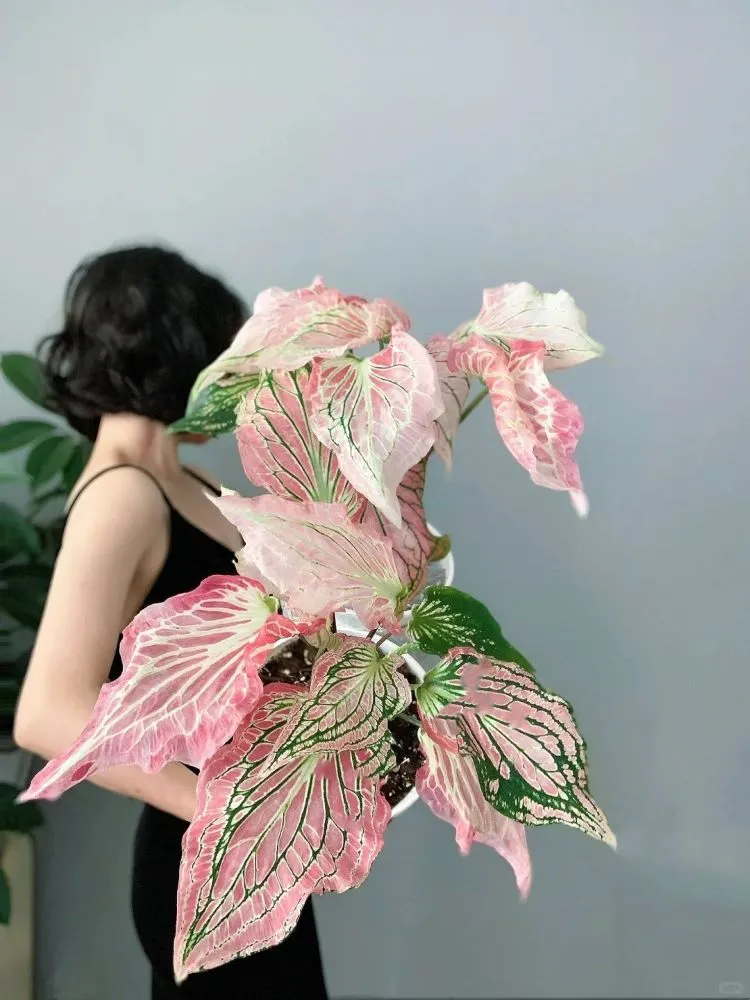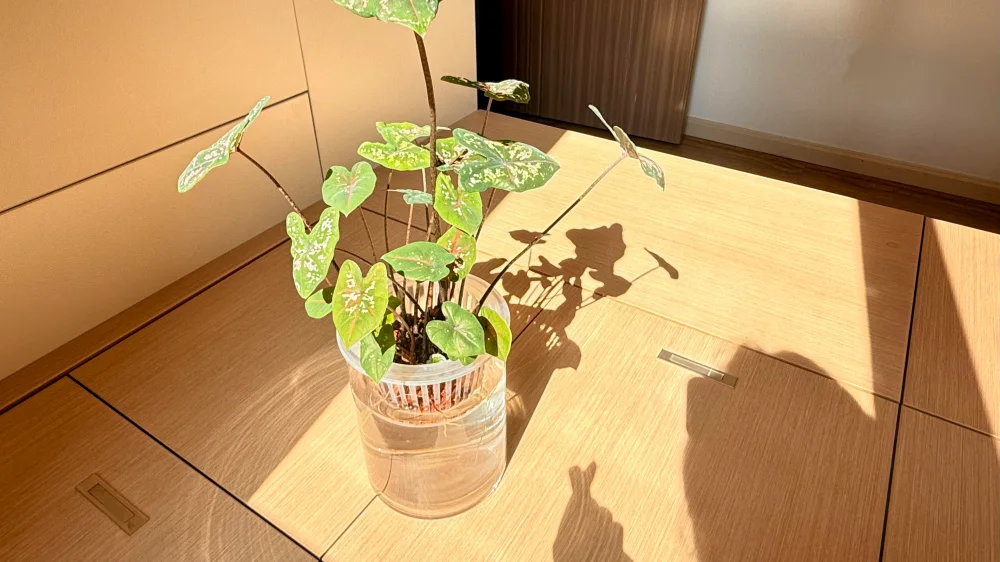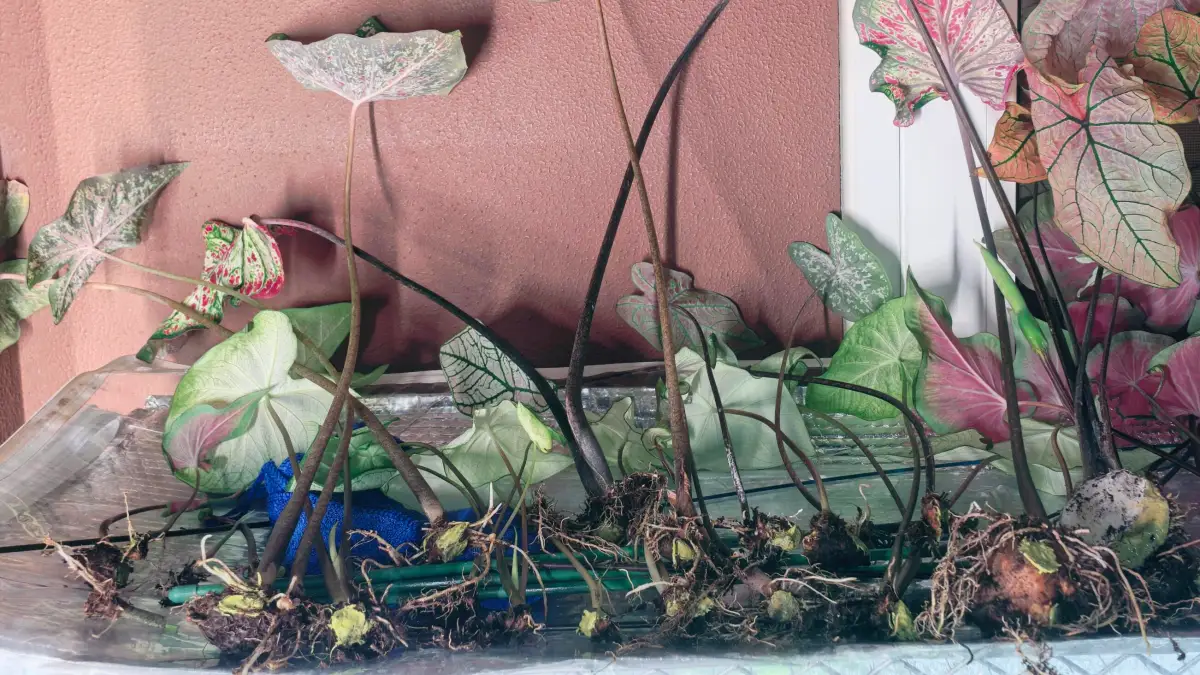
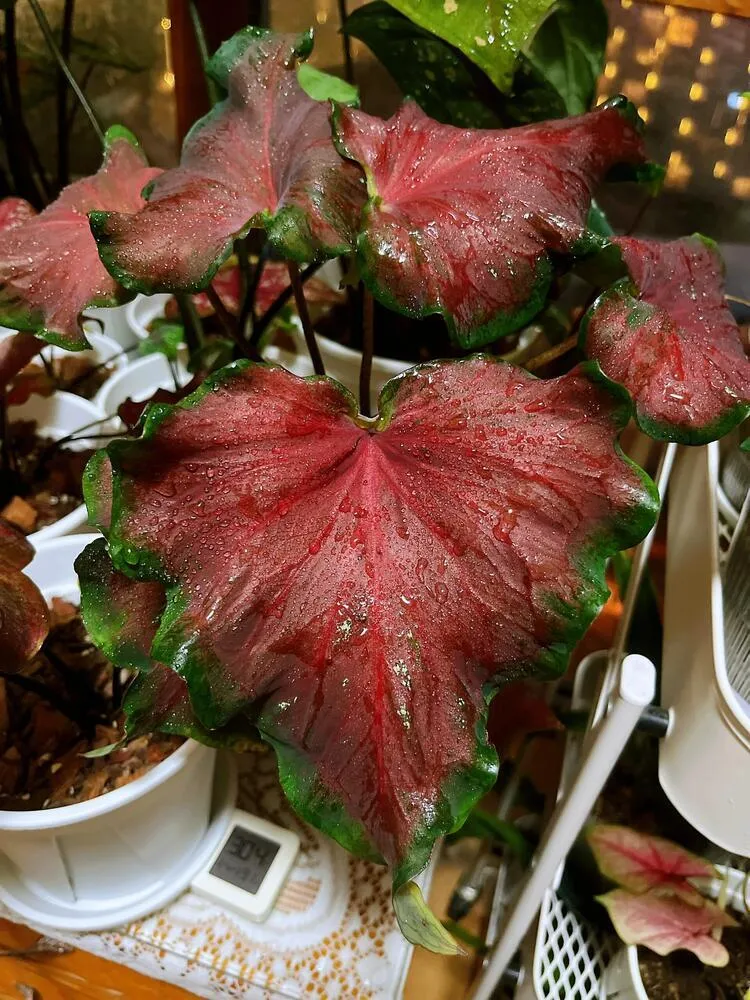
When I first saw Red Ruffles, what stood out immediately was the color. Instead of the bright pinks or high-contrast patterns that many caladium varieties show, this one has a much deeper, almost vintage red tone. The color feels slightly muted, closer to an old garden palette than the flashy modern hybrids that dominate most displays.
Because of that, Red Ruffles doesn’t try to steal attention right away. It’s more low-key and understated. But when you place it among other caladiums, that retro tone actually makes it stand out in a different way. The darker red leaves give the plant a slightly old-fashioned charm, the kind of variety that feels calm and classic rather than dramatic. What makes it interesting isn’t just the color, but the combination of compact growth, thicker leaves, and a softer drooping shape that feels very different from larger, flashier caladiums.
The Unique Leaf Shape of Red Ruffles
One of the most distinctive features of Red Ruffles is its leaf shape. Unlike many caladium varieties that hold their leaves upright, the leaves of Red Ruffles tend to grow slightly drooping, giving the plant a softer and more relaxed appearance. That natural habit looks quite different from situations where caladium leaves are drooping because something is wrong.
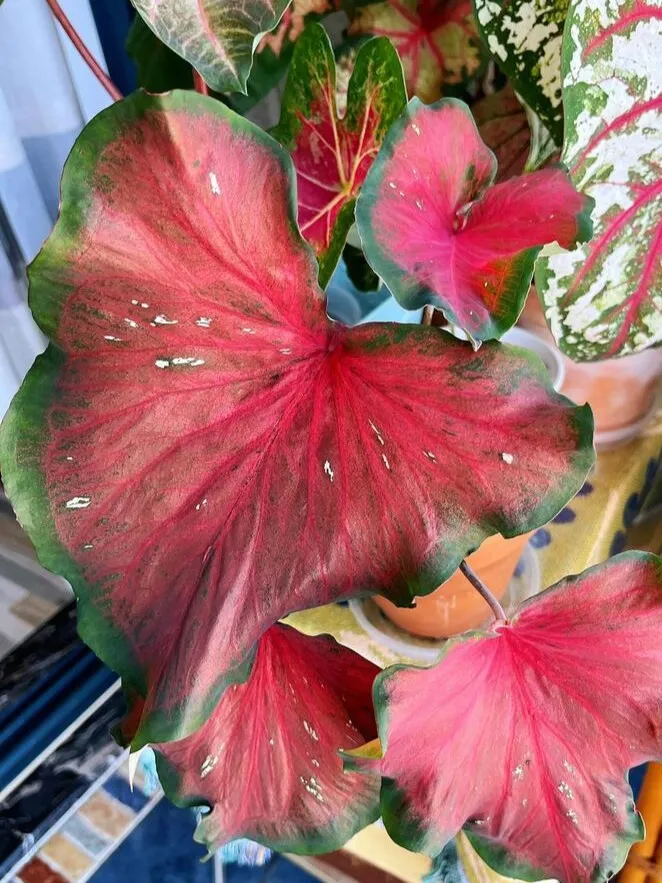
The edges of the leaves are also subtly ruffled, which is where the variety gets its name. Instead of smooth margins, the leaf edges have gentle waves that add texture and movement to the plant. When several leaves grow together, this ruffled structure creates a layered look that feels quite different from the flatter leaves seen on many other caladiums.
Another noticeable trait is the thicker leaf texture. Compared to some thin-leaved caladium varieties, the foliage of Red Ruffles feels sturdier and more substantial. Together, the slightly drooping shape, ruffled edges, and thicker texture give Red Ruffles a softer, more relaxed look than many upright caladium varieties.
A Small Caladium That Doesn’t Take Much Space
Compared with many large fancy-leaf caladium varieties, Red Ruffles stays relatively small and compact. That also reminded me that final leaf size is not just about the variety itself, but also about factors I discussed in my article on caladium bulb size vs leaf size. While tall types like Red Flash can grow quite high with long petioles and oversized leaves, Red Ruffles tends to remain much more restrained in its overall size.
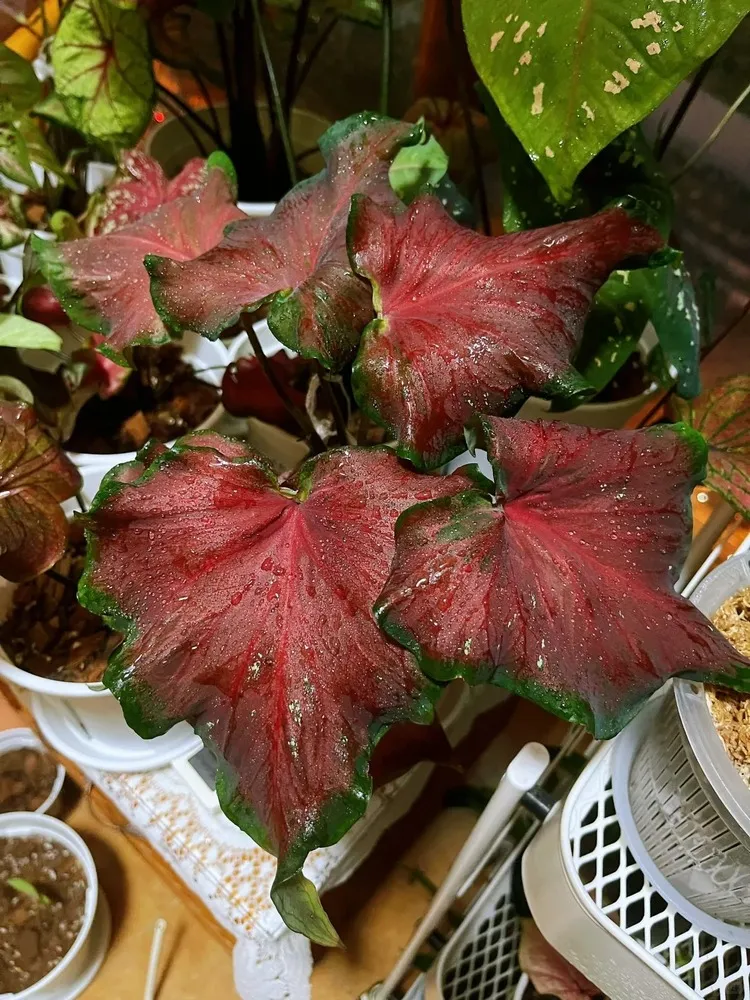
In most container settings, the plant stays on the smaller side, with shorter stems and noticeably smaller leaves than tall varieties like Red Flash, with noticeably smaller leaves and a more compact structure. Because of this growth habit, it doesn’t dominate the space around it and can fit easily into mixed plantings or smaller garden areas.
This compact size also makes Red Ruffles a very practical choice for container growing. It works well in pots, balcony planters, or smaller garden beds where large caladium varieties might feel overwhelming.
And honestly, not every caladium needs to be huge to look beautiful. Sometimes a smaller plant with interesting color and texture can add just as much character to a planting space.
Why It Pairs Well With Taller Caladiums
Because Red Ruffles stays relatively compact, it works surprisingly well when planted together with taller caladium varieties. Instead of competing for attention, its smaller size allows it to act as a natural foreground plant.
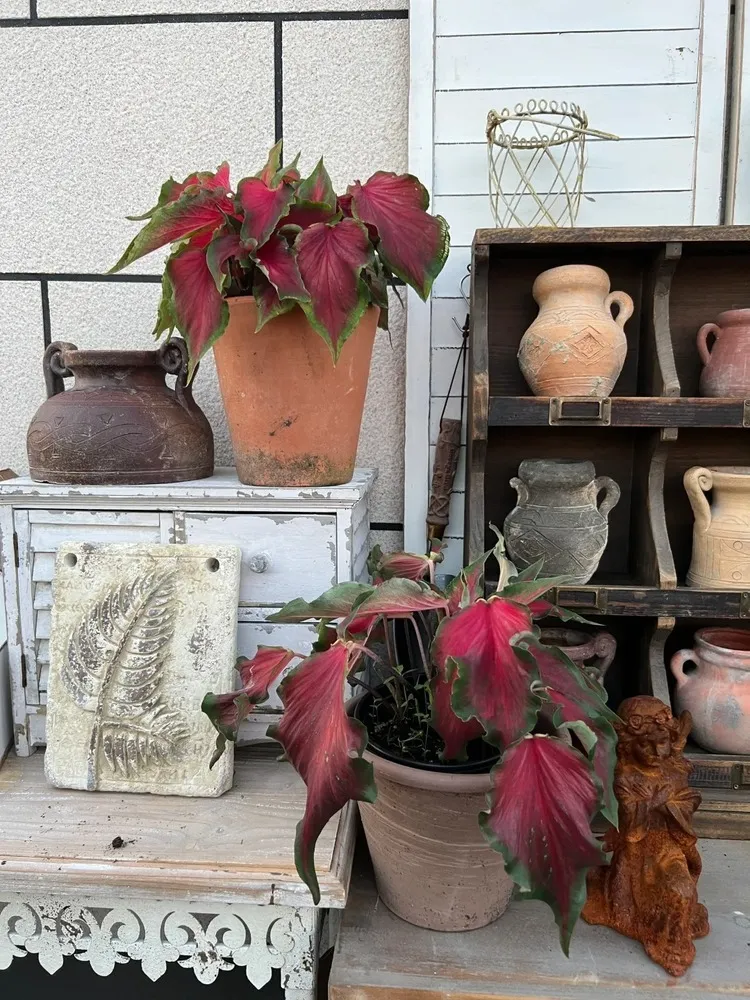
In mixed plantings, taller varieties such as large fancy-leaf caladiums can sit toward the back, where their long stems and big leaves create height and structure. Red Ruffles, on the other hand, fits nicely in the front, filling the lower space without blocking the plants behind it.
This combination creates a more layered planting effect, where different heights and leaf shapes add depth to the arrangement. The slightly drooping leaves of Red Ruffles also soften the look of the planting, making the overall display feel more balanced rather than crowded.
In that sense, Red Ruffles works less like a centerpiece and more like a supporting plant that helps the whole composition look better.
Is Red Ruffles Sun Tolerant?
One thing I noticed about Red Ruffles is that its leaves feel noticeably thicker than many delicate caladium varieties. That slightly heavier leaf texture seems to make a difference when the plant receives stronger light.
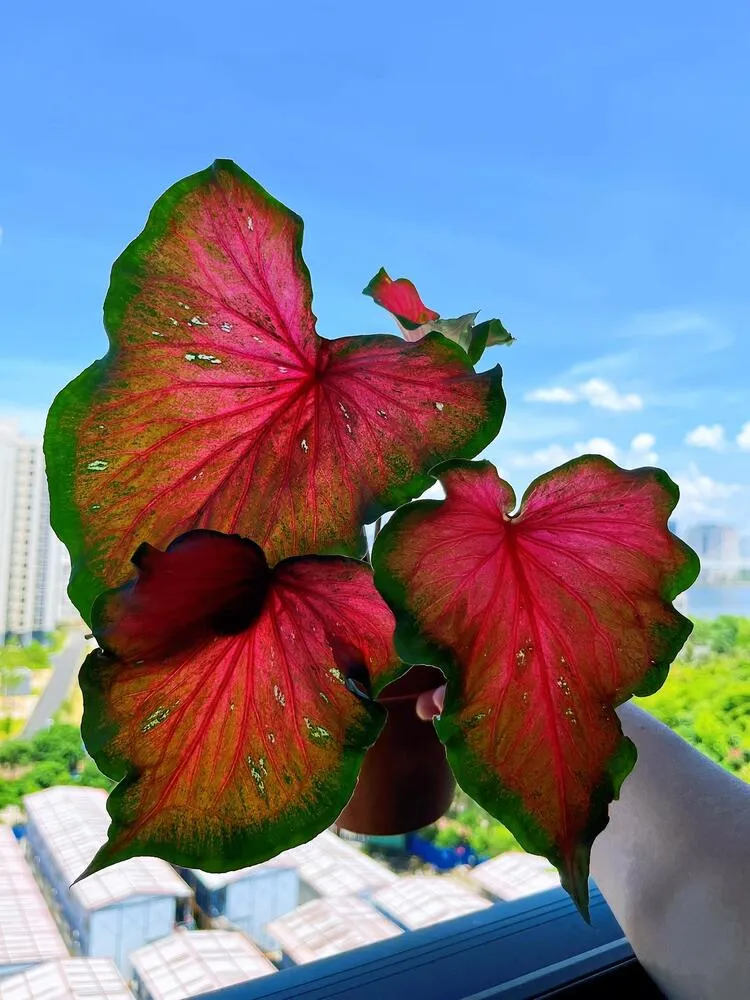
Some caladiums with very thin leaves can struggle when exposed to brighter conditions, especially during warm afternoons. Indoors, questions like this often overlap with how I think about caladium grow lights indoors and how different varieties respond to stronger light. Red Ruffles, however, appears to handle stronger light a bit better. The thicker foliage doesn’t wilt as easily, and the leaves tend to keep their shape even when the plant receives more sun than typical shade-loving varieties.
That doesn’t mean it needs intense sun all day, but compared with many thin-leaf caladium types, Red Ruffles seems more tolerant of brighter conditions. The sturdier leaf structure likely plays a role in how comfortably it adapts to those environments.
Who Will Like Red Ruffles Most
Red Ruffles isn’t the kind of caladium that immediately steals the spotlight with bright colors or oversized leaves. Instead, it has a quieter personality that appeals to growers who appreciate more subtle plants.
Gardeners who enjoy a vintage color palette will probably find this variety especially appealing. The deeper red tones feel more muted and classic compared with the bright pinks and high-contrast patterns seen in many modern caladium hybrids.
It’s also a good choice for people who don’t want extremely large caladium plants. Because Red Ruffles stays relatively compact, it fits easily into smaller containers, balcony plantings, or mixed arrangements where space is limited.
In many ways, Red Ruffles has a calm presence in the garden. It doesn’t try to be the loudest caladium in the garden, but its texture, color, and relaxed leaf shape give it a distinctive charm that becomes more noticeable the longer you look at it.
Is Red Ruffles Worth Growing?
Overall, Red Ruffles is a charming choice for growers who prefer something a little different from the typical bright caladium varieties. Its compact growth, deep vintage red color, and textured ruffled leaves give the plant a distinctive personality without taking up much space.
The slightly thicker foliage also seems to help it handle brighter conditions better than many thin-leaf types, making it a bit more flexible in where it can be grown.
For growers who appreciate subtle colors and compact plants, Red Ruffles is a surprisingly charming caladium.
FAQ
Want to Explore Other Caladium Varieties?
Understanding caladiums starts with seeing how each variety behaves.
Browse All Caladium Varieties →