Red Flash is one of those caladium varieties that many growers eventually try at least once. It’s considered a classic — widely grown, vigorous, and generally very easy to keep healthy in containers or garden beds. It’s considered a classic — widely grown, vigorous, and generally very easy to keep healthy in containers or garden beds.
When I started growing Red Flash, what surprised me most wasn’t just how strong the plant was, but how consistent the leaves looked. With some caladium varieties, every new leaf can look a little different. The colors shift, the veins spread differently, and the pattern changes slightly each time a leaf opens.
Red Flash behaves very differently.
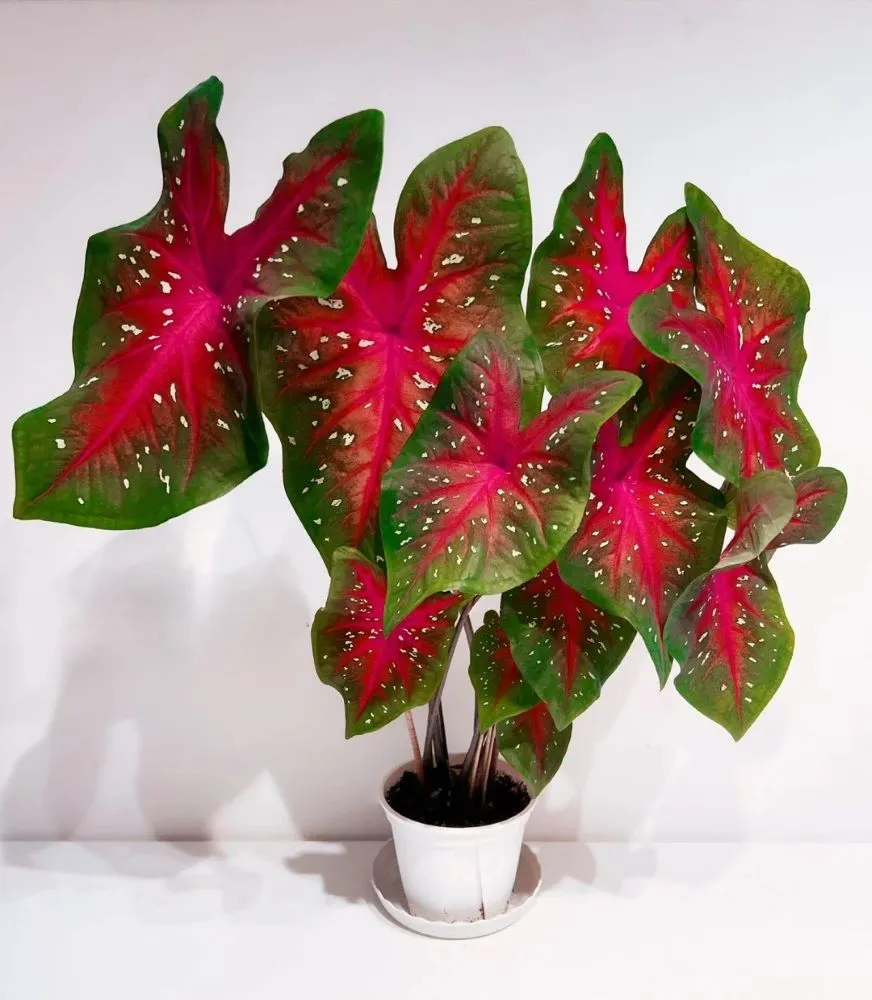
Once the plant settles in, the leaves tend to follow almost the same pattern over and over again. The deep red center, strong veins, and dark green margins appear with remarkable stability. No matter whether the leaf is slightly smaller or larger, the overall pattern remains nearly identical.
That consistency is one of the reasons Red Flash has remained a classic caladium variety for decades.
What Makes Red Flash Caladium So Distinct
Red Flash is a tall, bold caladium that immediately stands out once the plant begins to mature. Compared with many compact varieties, the stems tend to grow higher and the leaves become noticeably larger, often creating a dramatic canopy of foliage.
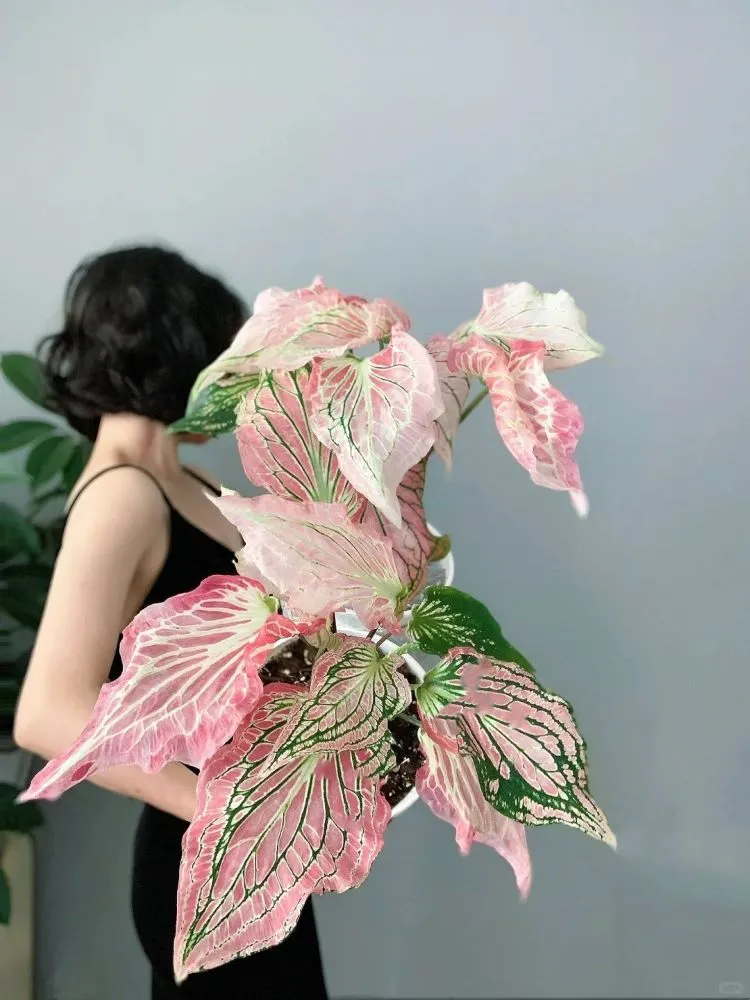
The leaf pattern is classic and very recognizable. Most leaves show a deep red center with strong red veins radiating outward, surrounded by a dark green margin near the edges. When several leaves open at once, the contrast between the rich red center and the darker green border becomes especially striking.
But what really makes Red Flash distinct isn’t just the color — it’s the consistency of the pattern.
Some caladium varieties produce leaves that look slightly different each time a new one emerges. The veins may spread differently, the red center may shift shape, or the margins may vary in width. Red Flash behaves very differently.
Once the plant is established, almost every new leaf follows the same visual structure. The red center, the branching veins, and the green border repeat with remarkable stability. Even when the leaves grow larger or slightly smaller, the overall pattern remains nearly identical.
Because of that reliability, Red Flash is one of the easiest caladium varieties to recognize at a glance.
How Big Red Flash Can Actually Grow
One thing that quickly becomes obvious when growing Red Flash caladium is how large the plant can become once it is fully established. It also matches what I’ve seen more broadly about caladium bulb size vs leaf size — stronger bulbs usually support much larger foliage. Compared with many compact caladium varieties, Red Flash tends to develop a much taller structure with noticeably bigger leaves.
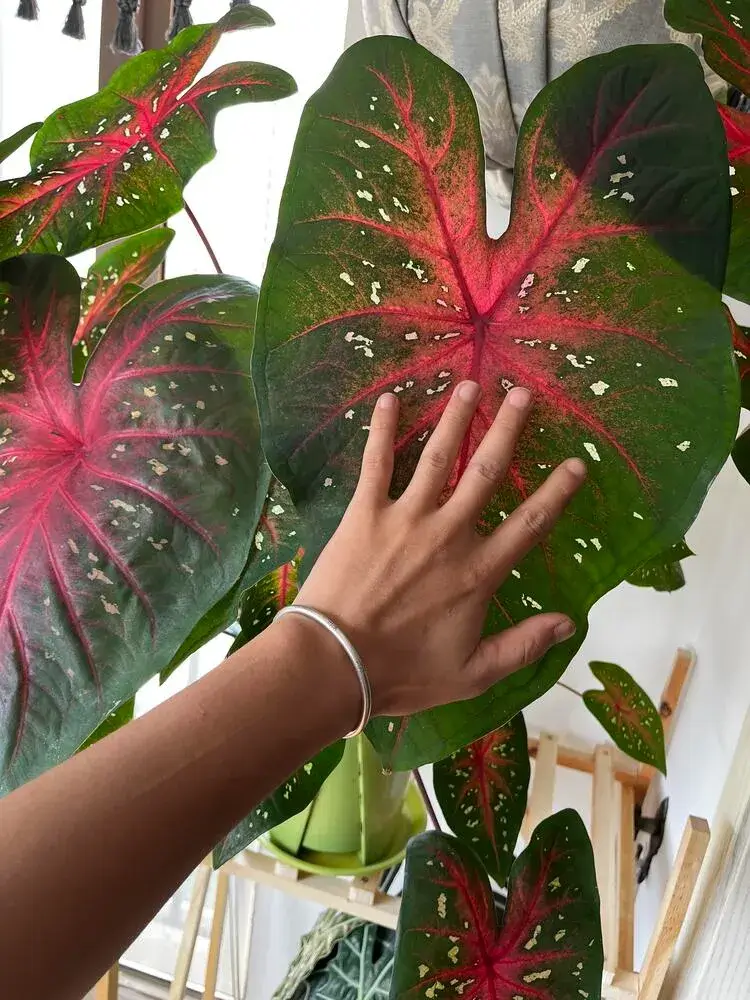
In my own containers, the plant can easily grow to over 60 cm (about 24 inches) tall. The leaf stems grow long and upright, lifting the foliage well above the pot. As more leaves emerge, the plant starts to form a layered canopy rather than a low, dense cluster.
The leaves themselves can also become quite impressive. Mature plants often produce large, wide leaves with strong red centers and bold veins that make the entire plant look dramatic from a distance.
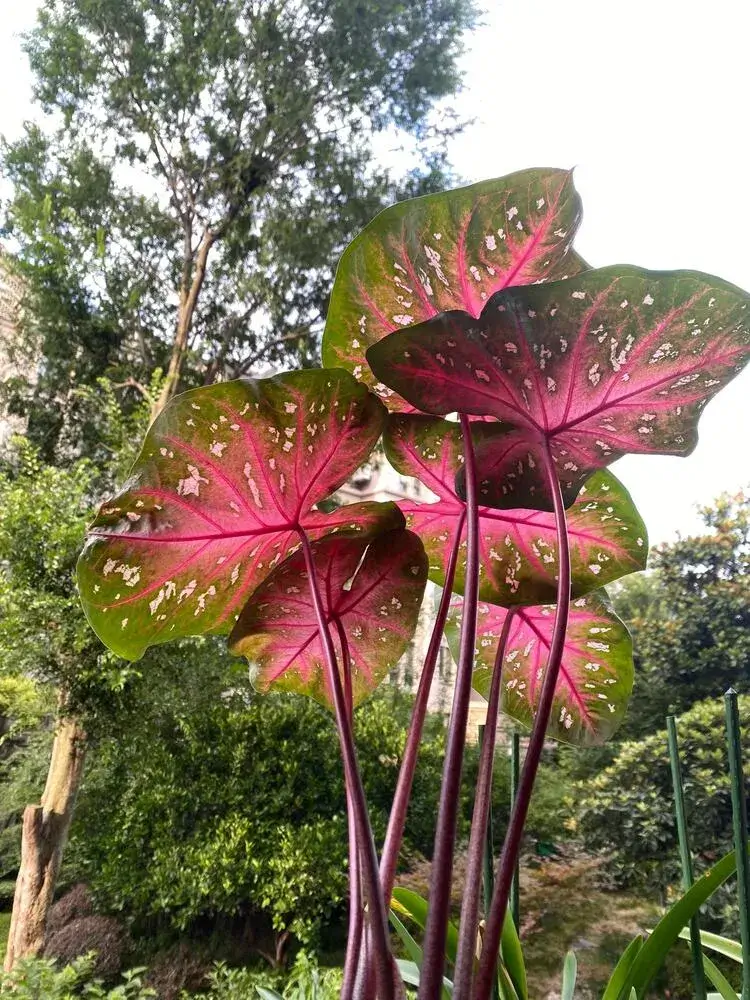
Many caladium varieties stay relatively low and compact, especially strap-leaf types. Red Flash is different — it behaves much more like a tall, large-leaf caladium. Once the tuber becomes strong enough, the plant naturally pushes the stems higher and the leaves grow significantly larger.
Because of this upright structure, a healthy Red Flash can quickly become one of the most visually dominant plants in a container or shaded garden corner.
My Current Red Flash Plant
Right now my Red Flash caladium is in one of the healthiest stages since I started growing it. The plant is actively producing new growth, and the overall structure feels much stronger than when I first planted the tuber.
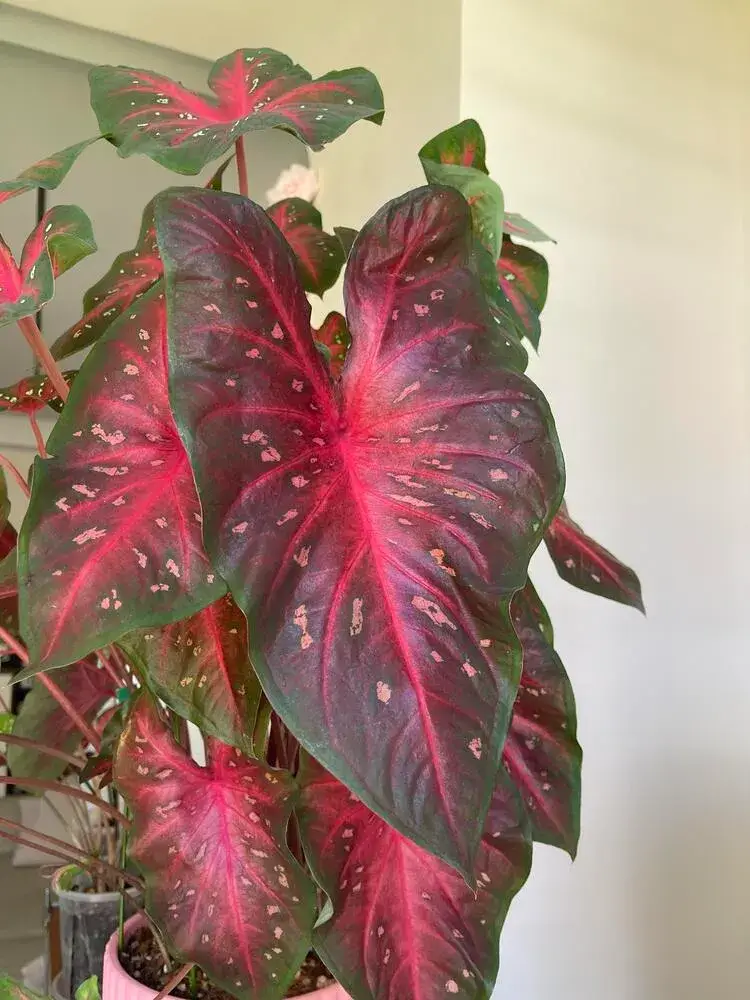
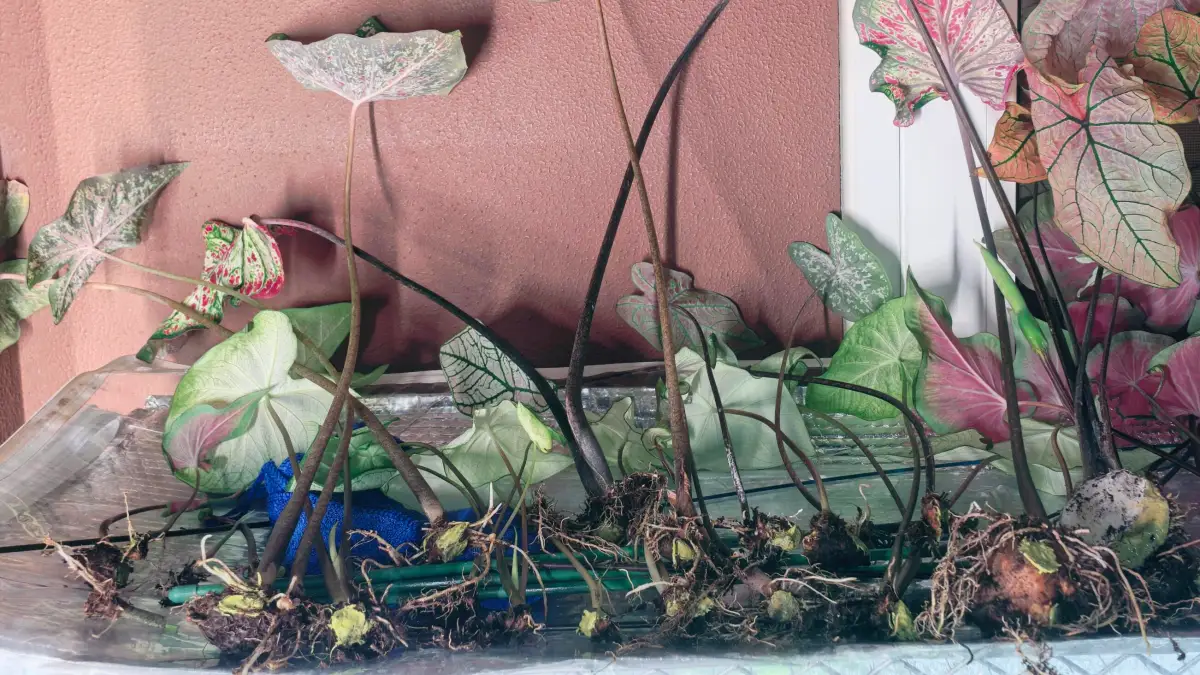
The most noticeable change is the condition of the tuber. Over time it has become thick, firm, and noticeably larger. When I gently checked the soil around it, the tuber felt very solid and well developed — a good sign that the plant has been storing enough energy to support new growth.
Because the tuber has strengthened, the plant is now pushing out multiple new shoots. This is the opposite of what I usually worry about when a caladium is not growing and seems stuck for too long. Several growth points have appeared at the same time, which means the plant is preparing to produce more leaves during the current growing cycle.
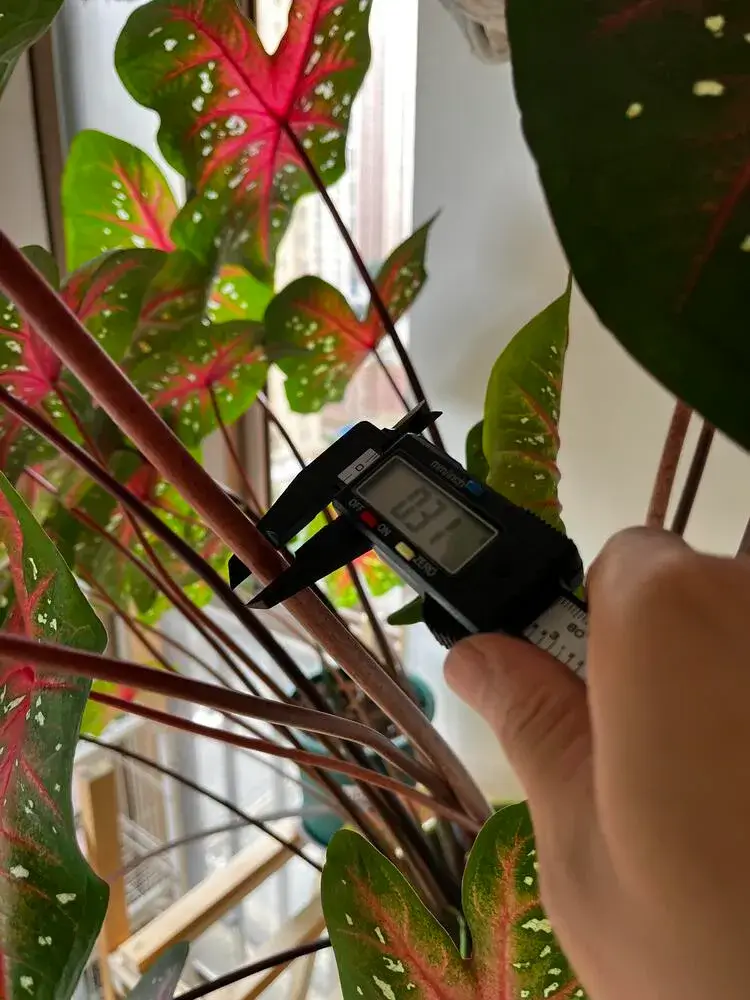
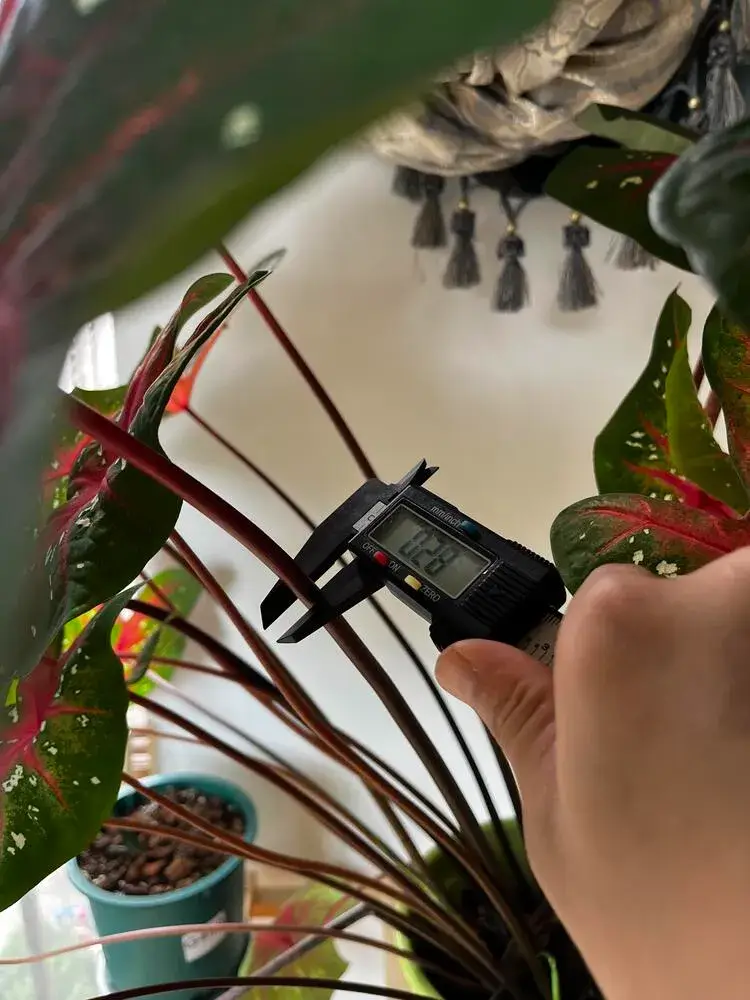
This stage is usually when Red Flash caladium begins to show its full potential. Once the tuber becomes strong enough, the plant tends to grow faster, produce larger leaves, and maintain a much more stable growth rhythm.
Why Some Red Flash Plants Produce Larger Leaves
One thing I noticed while growing Red Flash caladium is that leaf size doesn’t always increase the way people expect.
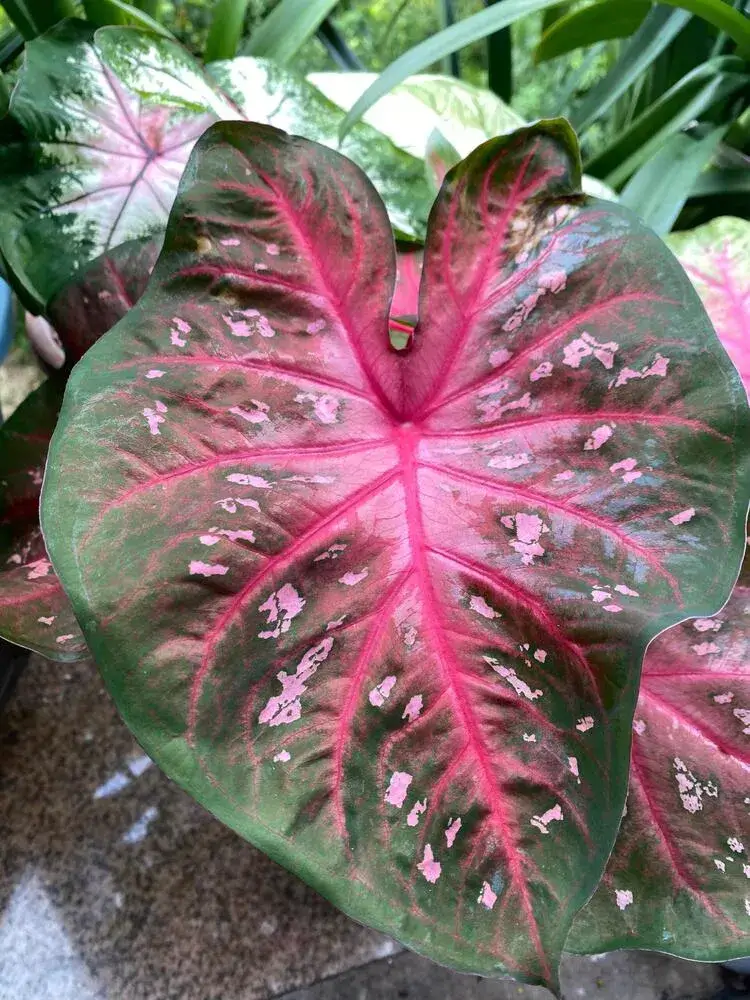
At one point I accidentally cut one of the stems, and not long after that, a new shoot appeared with a noticeably larger leaf. For a while I assumed that cutting the stem had somehow triggered the plant to produce bigger leaves.
But after watching the plant closely for several more weeks, the pattern became clearer.
It wasn’t really the cutting that mattered. What actually made the difference was the overall strength of the plant. Once a Red Flash tuber becomes mature and starts producing strong, large leaves, the new shoots that emerge from the same plant tend to follow the same pattern.
In other words, if a plant is already producing large leaves, the next growth points will often produce large leaves as well. The size of the new foliage is more closely related to the plant’s maturity and stored energy than to whether a stem was cut.
After realizing this, I stopped worrying about pruning or manipulating the stems. For Red Flash caladium, letting the plant grow strong and allowing the tuber to develop naturally seems to be what really determines leaf size.
What Helped My Red Flash Grow Stronger
Over time, I stopped trying to follow generic caladium care advice and instead paid attention to what actually helped my Red Flash caladium grow stronger. A few small adjustments made a noticeable difference in how the plant developed.
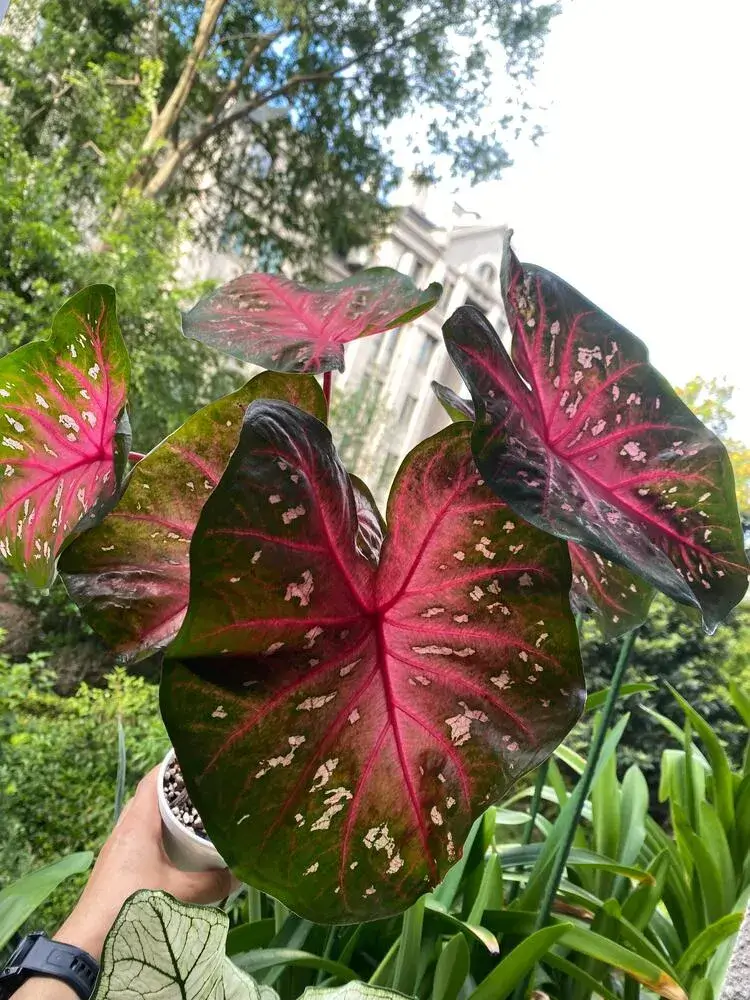
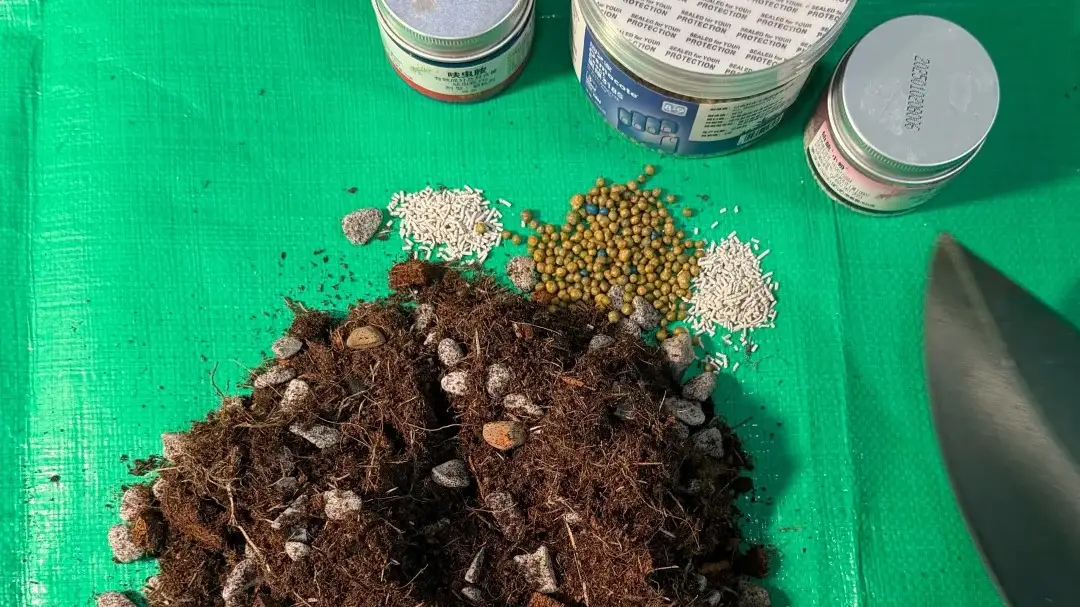
First was the pot. I eventually switched the plant into a breathable ceramic pot. The container allows better airflow around the soil, which seems to help prevent the roots from staying overly wet. Since making that change, the plant has grown much more steadily.
The second factor was repotting rhythm. Early on I realized that moving a small plant directly into a large container isn’t ideal. When the pot is too big, the soil holds moisture for too long — the same reason I’ve become much more careful about how to water caladiums in different pot sizes. Now I prefer to let the roots fill the pot first and only move the plant up gradually.
The third factor was fertilizer. Red Flash clearly responds well to regular feeding, but heavy fertilizing isn’t necessary. Instead of applying strong fertilizer occasionally, I prefer a lighter approach. I usually add a very diluted balanced fertilizer almost every time I water. This “thin but frequent” feeding seems to support steady leaf growth without stressing the plant.
Light also played a role, especially when I was growing it indoors for part of the season, which is why I wrote separately about caladium grow lights indoors.
A Small Trick for Managing Too Many Leaves
One thing I’ve occasionally noticed with Red Flash caladium is that when the plant produces too many leaves at once, the new leaves sometimes start to come out smaller. The plant looks full, but the overall leaf size can gradually decrease.
Instead of cutting the leaves off immediately, I sometimes use a small trick that seems to help the plant redirect its energy. I gently bend one of the older stems so that the leaf gradually wilts rather than removing it right away.
From what I’ve observed, this allows the plant to reabsorb some of the nutrients from the aging leaf. Over time, the energy appears to move back toward the tuber, which helps it become stronger and slightly larger.
Once the tuber gains more stored energy, the next growth cycle often produces larger and stronger leaves. It’s a small adjustment, but in my experience it helps maintain the overall strength of the plant without aggressively pruning it.
Is Red Flash a Good Caladium for Beginners?
Overall, Red Flash caladium is one of the easier varieties to grow. The plant is vigorous, the leaf pattern is very stable, and once the tuber becomes strong it tends to produce large, dramatic leaves quite reliably.
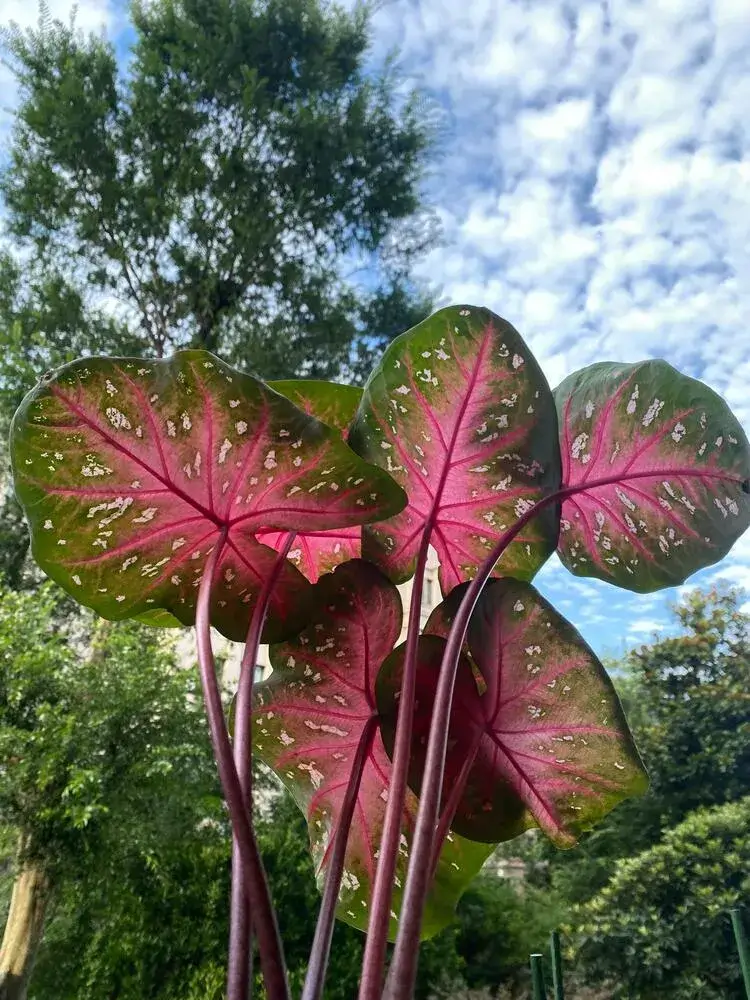
In my experience, it’s also a fairly forgiving plant. As long as the container drains well and the plant receives regular feeding, it usually grows steadily throughout the season.
The main thing to watch is that when the plant produces too many leaves at once, the newer leaves can sometimes become smaller. Regular feeding and allowing the tuber to strengthen over time usually helps balance the growth.
For growers who want a bold, reliable caladium with dramatic leaves, Red Flash remains one of the easiest and most rewarding varieties to grow.
FAQ
Want to Explore Other Caladium Varieties?
Red Flash is one of the most classic caladium varieties, but there are many others with unique colors and leaf patterns. If you’d like to discover more, explore the full collection below.
Browse All Caladium Varieties →