Postman Joyner did not impress me only because it was red. Many caladiums have a red center and green edge, and at first glance, this variety can look like another classic red-and-green caladium. Compared with a brighter red variety like Red Flash Caladium, Postman Joyner became more interesting to me as the leaves matured and the edges darkened.
What changed my opinion was how the leaves developed later. On my plant, the leaf edges started to curl slightly, and the green margin gradually became darker. In some light, that outer edge looked almost purple-black instead of plain green. That made the whole plant feel deeper, moodier, and more interesting than I expected.
When I placed it near my other caladiums, Postman Joyner stood out in a different way. It was not soft like a pink variety or bright like a white-and-red one. Its charm felt more mature — dark red, framed by a deepening edge, with a stronger presence than I first noticed.
This is only my observation from growing Postman Joyner in a container, not a fixed rule for every plant. But in my setup, it became one of those caladiums that looked better with time, especially as the leaves matured and the edges darkened.
What Postman Joyner Looks Like in Real Life
Postman Joyner has the kind of red-and-green pattern that can look simple at first, but it is not flat. The center of the leaf is red, sometimes deep enough to feel almost velvety, while the green margin gives the whole leaf a clear frame.
What makes it different from a brighter red caladium is the mood of the color. On my plant, the red did not feel sweet or cheerful. It felt deeper, more classic, and a little more serious, especially on mature leaves.
The green margin keeps the red center from looking like one solid block of color. It gives the leaf structure and makes the center stand out more clearly. Even before the edges became darker, this frame was part of what made the plant easy to notice.
The Leaf Change I Noticed: Green Edges Turning Darker
The most interesting change on my Postman Joyner was not the red center, but the edge. As the leaf matured, the green margin started to darken. In some light, it looked almost purple-black instead of plain green. That made the plant feel less like a simple red-and-green caladium and more like a darker, more dramatic variety.
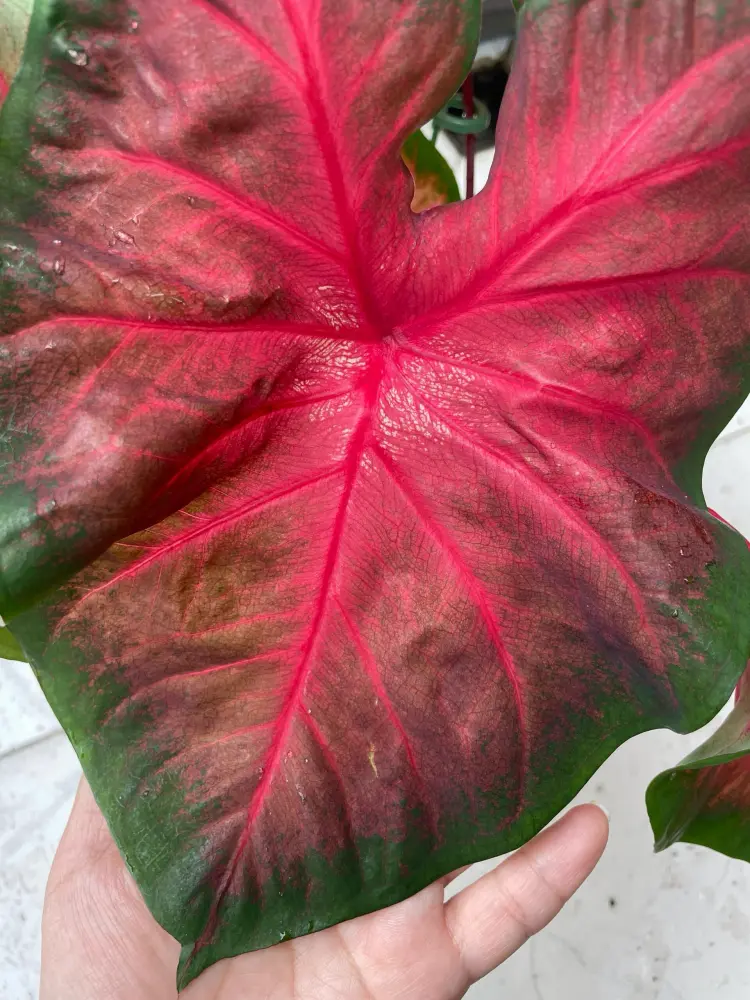
I also noticed some slight curling along the leaf edge as the color deepened. On this plant, that curled edge made the darker margin look even more noticeable, almost like the leaf had developed a shadowed frame around the red center.
But I would still be careful with this observation. A darker edge can be part of how a mature leaf looks on my plant, but curled or damaged edges are not always just a normal color change. If the edge becomes dry, crispy, or burnt-looking, I would start thinking about light or moisture stress instead.
The same applies if the plant is drooping while the pot still feels wet. In that case, I would not blame the variety or keep watering automatically. I would go back to the same basic checks first: soil moisture, drying time, leaf firmness, and root condition.
So I treat the darker edge as an interesting mature trait, but not as a reason to ignore stress signs. If the curling becomes stronger, the edges turn crispy, or the plant starts looking weak, I would compare it with common caladium leaves curling down or caladium leaves drooping patterns before assuming everything is normal.
Postman Joyner vs Frieda Hemple: Why These Two Red Caladiums Are Easy to Confuse
Postman Joyner and Frieda Hemple are easy to confuse because both belong to the classic red caladium look. They can both show a red center with a green edge, and in a quick product photo, that basic pattern can make them seem almost the same.
I would not identify either one from a single young leaf alone. Young leaves, lighting, camera color, and growing conditions can all change how sharp the red-and-green contrast looks. I would rather compare mature leaves grown under similar light.
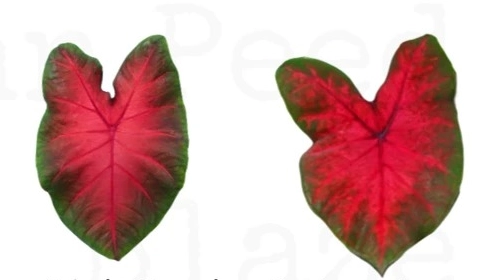
In my eyes, Frieda Hemple often looks cleaner and more defined. The red center tends to feel clearer, and the green border looks more separate from the red area. Postman Joyner, on the other hand, can feel darker and more blended as the leaf matures. The edge may deepen, and the red center can look more velvety than bright.
| Feature | Postman Joyner | Frieda Hemple |
|---|---|---|
| Main look | Deep red center with green margin | Red center with green margin |
| Color mood | Darker, more mature, sometimes velvety | Cleaner, brighter, more defined |
| Edge impression | Green margin may look darker or more blended | Green border usually looks clearer |
| Mature leaf effect | Can feel deeper and more dramatic | Usually keeps a sharper red-green contrast |
| My advice | Compare mature leaves under similar light | Compare mature leaves under similar light |
For me, the difference is less about one single color and more about the overall feeling of the leaf. Frieda Hemple reads as a cleaner red-and-green caladium, while Postman Joyner has a heavier, darker presence when the leaf develops well. That is why I would treat them as similar, but not interchangeable.
How I Would Grow Postman Joyner Indoors
I would not grow Postman Joyner in a dark corner. A red caladium like this needs enough light to keep the color rich. In my indoor setup, I would give it bright indirect light, and if the room becomes too dim, I would rather adjust the placement or use a caladium grow light indoors than expect the red color to stay strong on weak light alone.
At the same time, I would not treat it like a plant that can handle wet soil just because it looks bold and strong. In a container, I still pay attention to how long the pot stays moist. My approach is closer to how I water caladiums indoors: I watch the pot, the drying time, and the plant’s response instead of following a fixed schedule.
If I kept Postman Joyner near a window, I would also watch temperature and airflow. A bright window can be useful, but a cold window edge or still, damp air can slow the plant down. If the red color becomes dull and the plant stops pushing new leaves, I would treat it like a caladium not growing problem and check the whole setup before trying to force more growth.
Why This Variety Stayed in My Collection
Postman Joyner stayed in my collection because it has a role that my softer caladiums do not fill. It is not pastel, delicate, or sweet. It has a darker presence, and that makes it useful when I want contrast beside pink or white varieties.
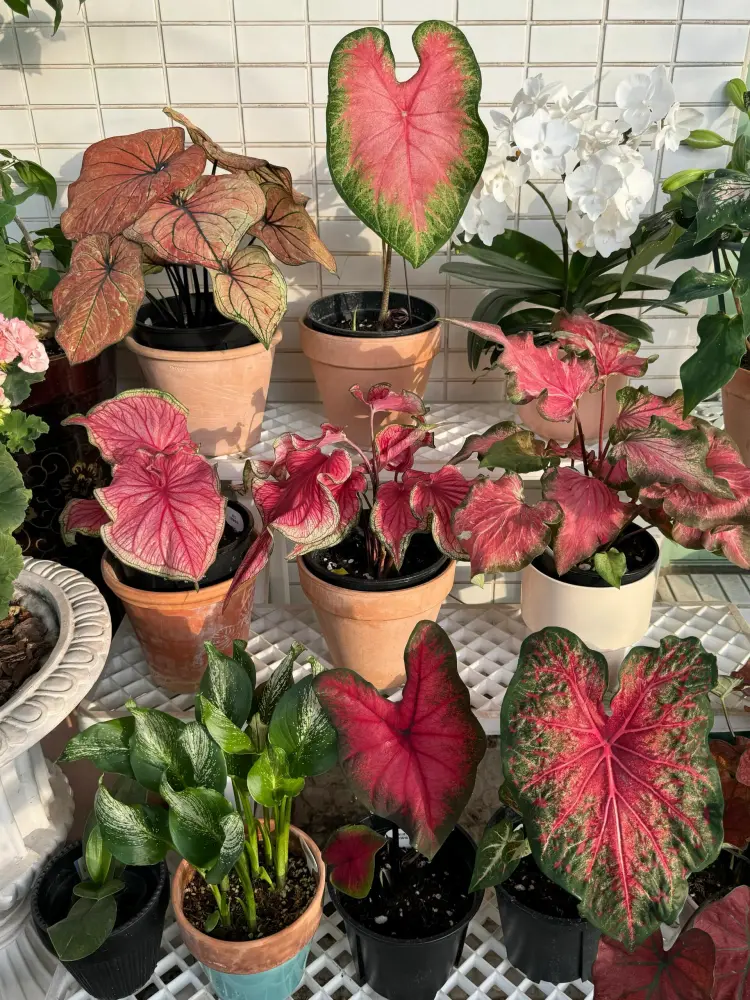
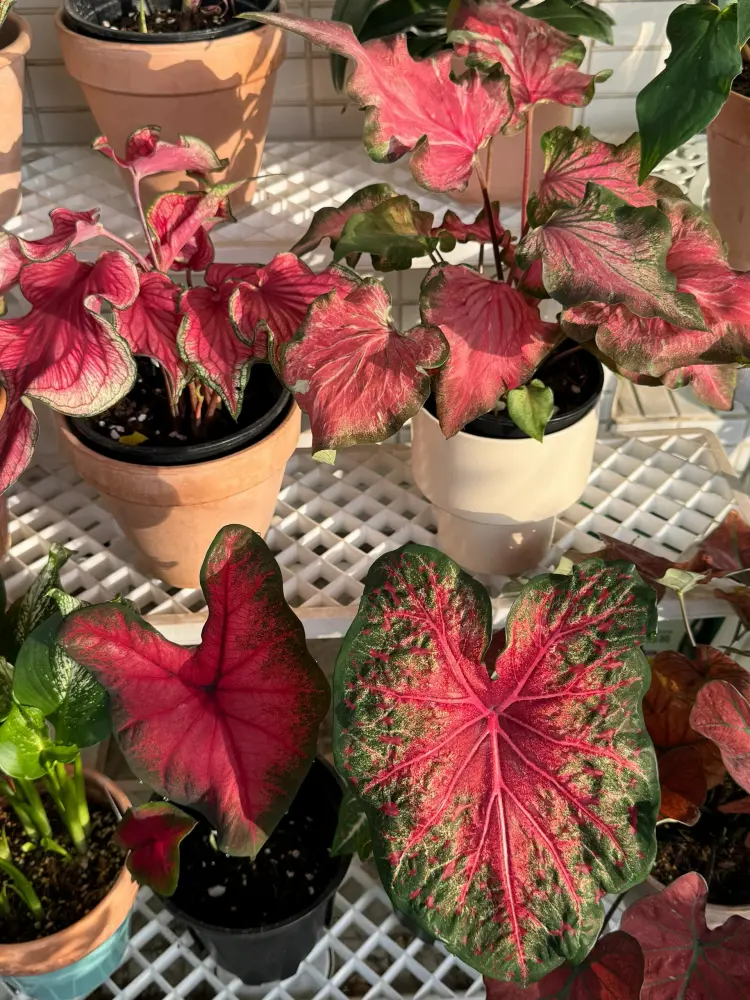
What I like most is that it became more interesting with time. The mature leaves gave the plant more depth than I expected, and the darker edge made the red center feel stronger.
I would recommend it to someone who likes classic red caladiums but wants something with a heavier, more mature mood. It may not be the loudest plant in the room, but once the leaves develop well, it is hard to overlook.
FAQ
Want to Explore Other Caladium Varieties?
If you enjoy red caladiums, you may also like my growing notes on Red Flash Caladium and Red Ruffles Caladium. They show different sides of red caladium color, from bolder leaf contrast to smaller, more compact red foliage.
Browse All Caladium Varieties →