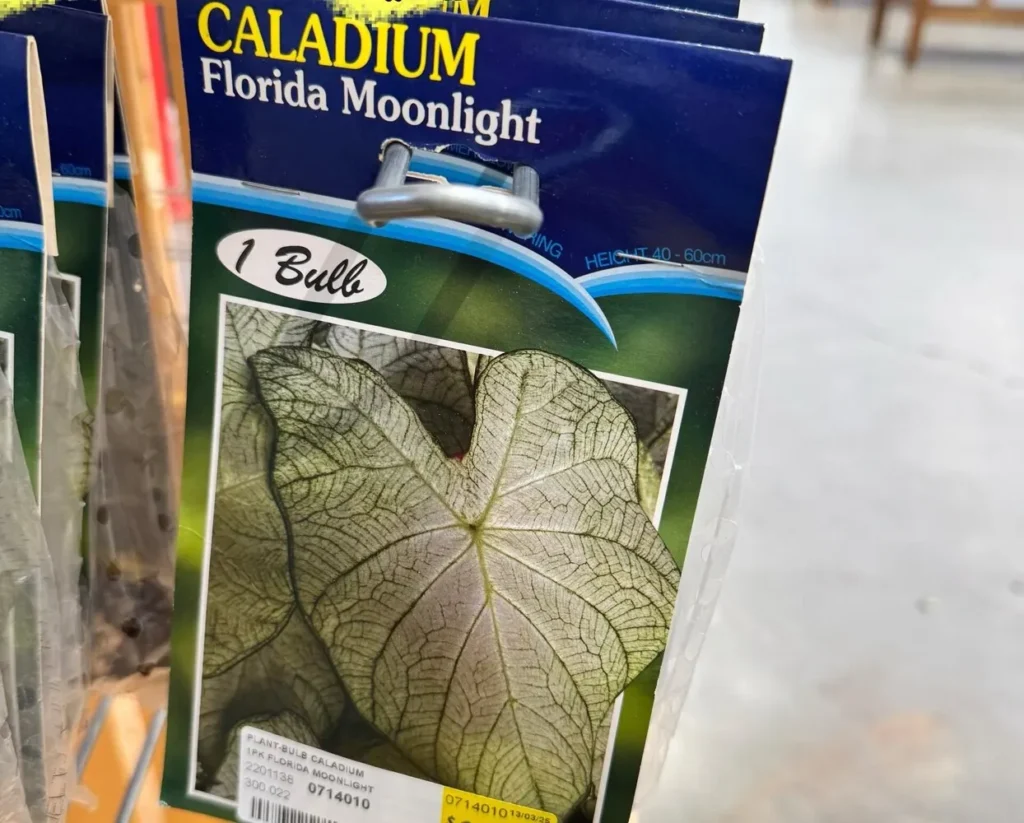
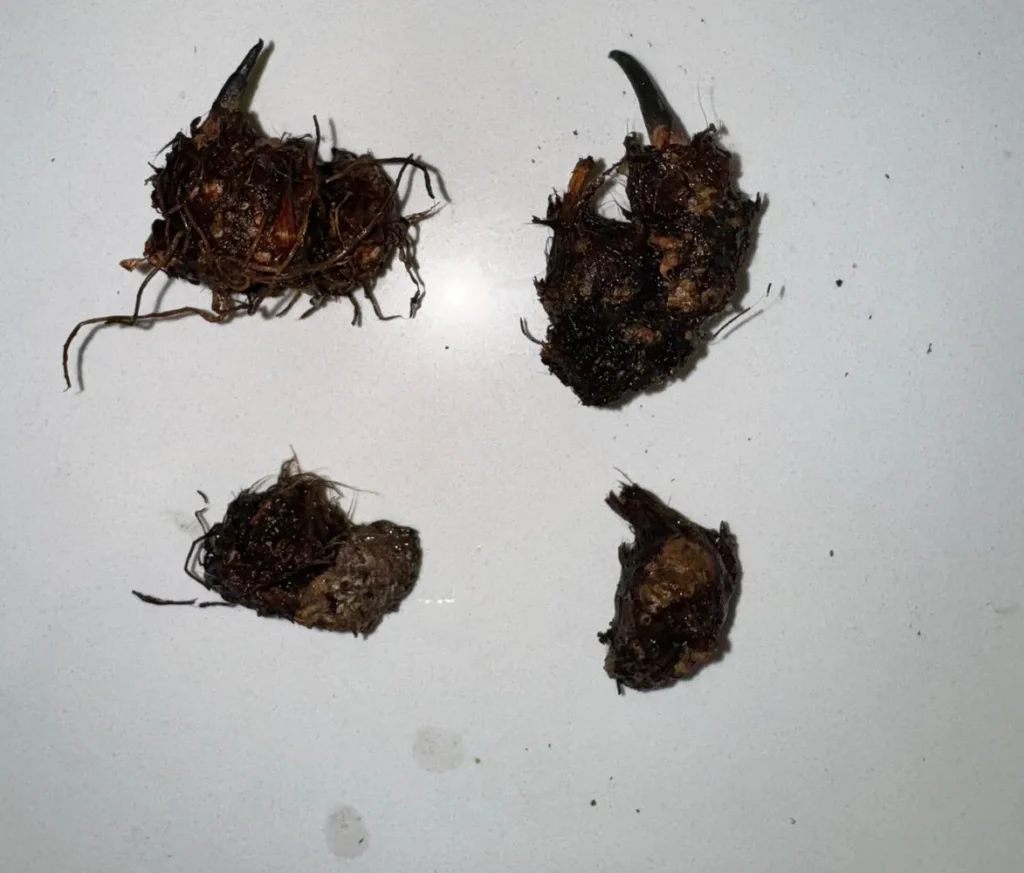
I had wanted to grow Florida Moonlight caladium for a long time, so when I found a bag of four bulbs at a local plant shop in early March, I brought them home without much hesitation. I planted all four in pots, and within about a week, the first sprouts had already started to show after planting them the same way I usually do in my guide on how to plant caladium bulbs. In the end, three of the four bulbs grew, which felt encouraging, but also realistic enough to remind me that one caladium bulb may sprout while another doesn’t, even in the same bag.
What follows is simply my first-month impression of Florida Moonlight in pots — how quickly it emerged, how evenly the bulbs performed, and what the young leaves actually looked like once they opened.
How Fast Florida Moonlight Sprouted for Me
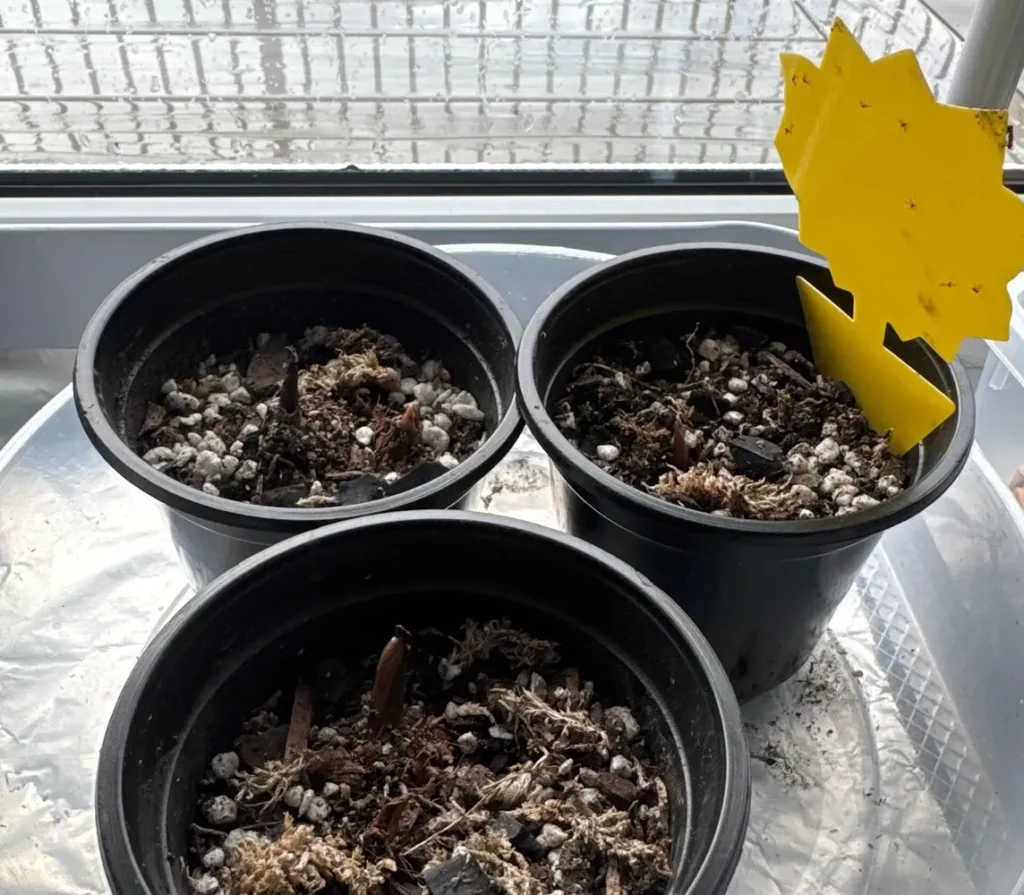
In my case, Florida Moonlight showed signs of growth fairly quickly after planting. The first small sprouts became visible at around week 1, which meant the bulbs did not stay hidden in the soil for very long once they were planted with the right side up. That early emergence made it easier to tell that at least some of the bulbs were active and settling in well.
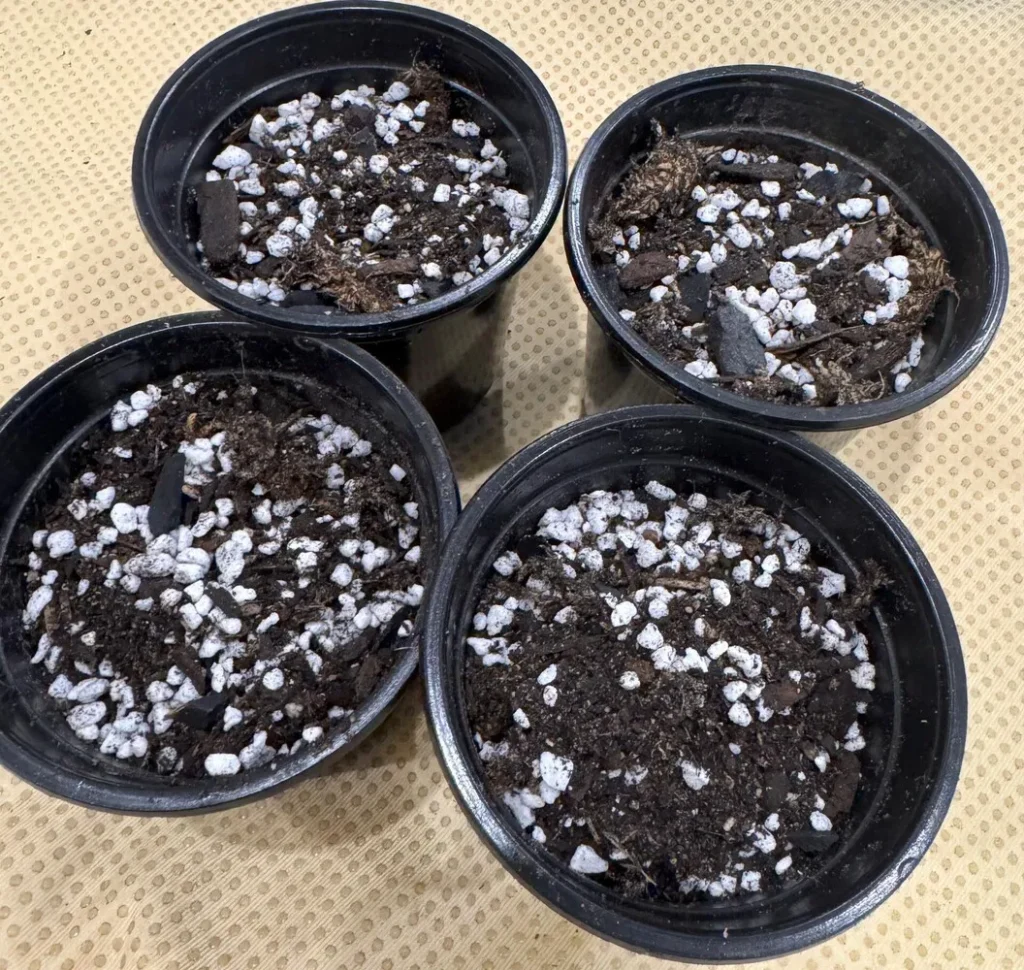
By week 3, the growth had moved beyond simple sprouting. At that point, I was already watching the pots more carefully, because once caladiums move into active top growth, how I water caladiums starts to matter much more than it did right after planting.
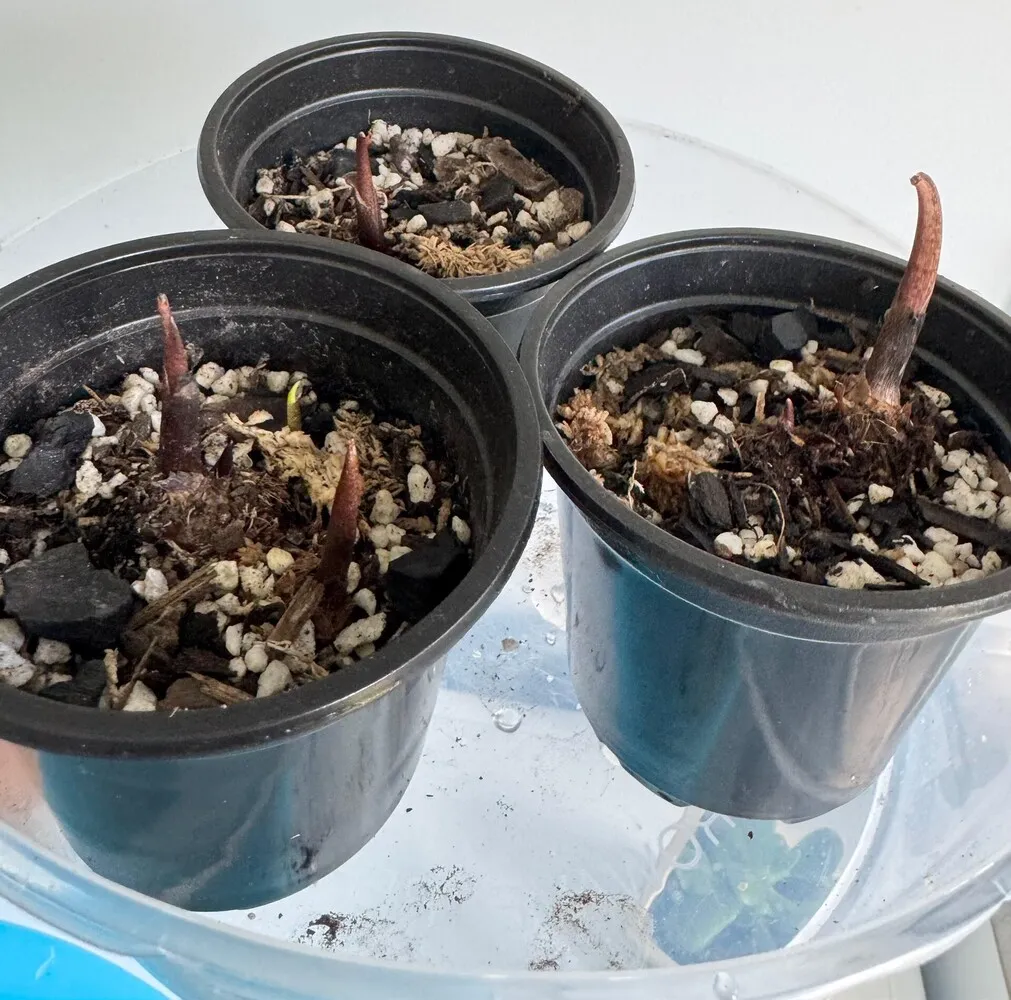
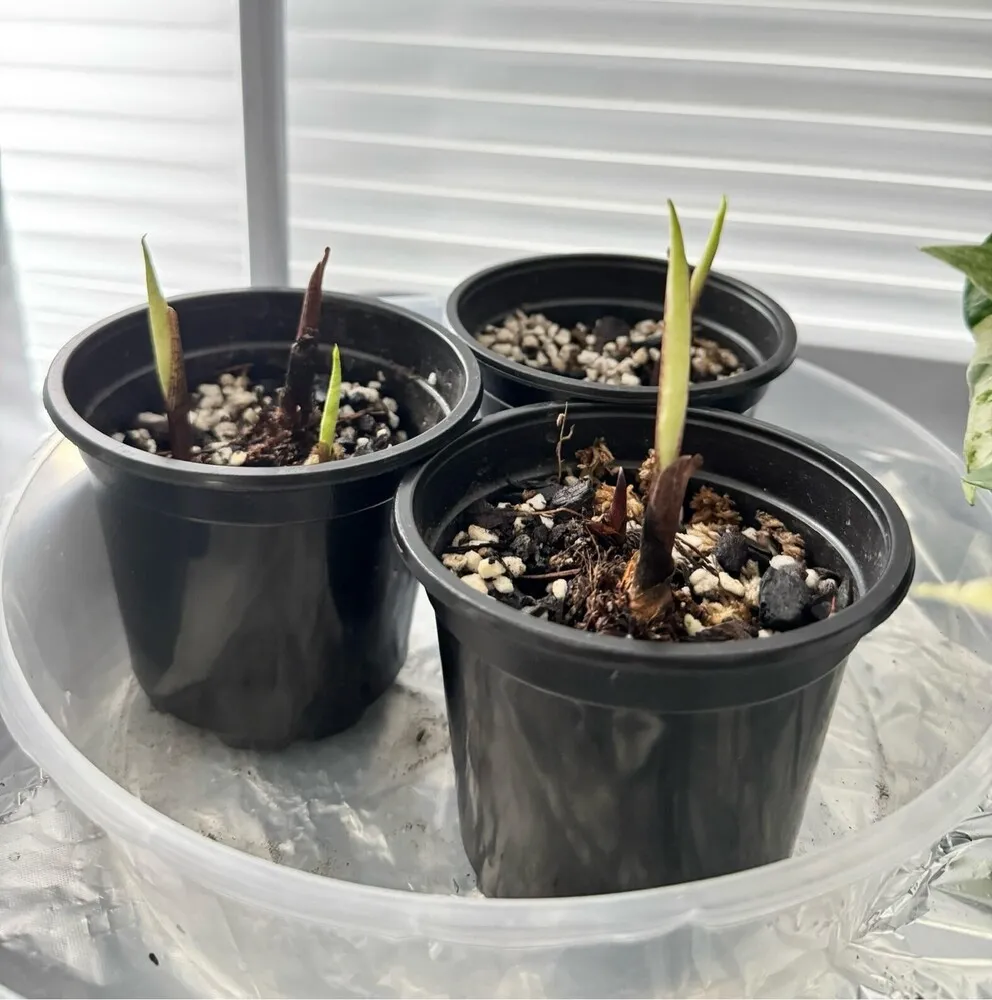
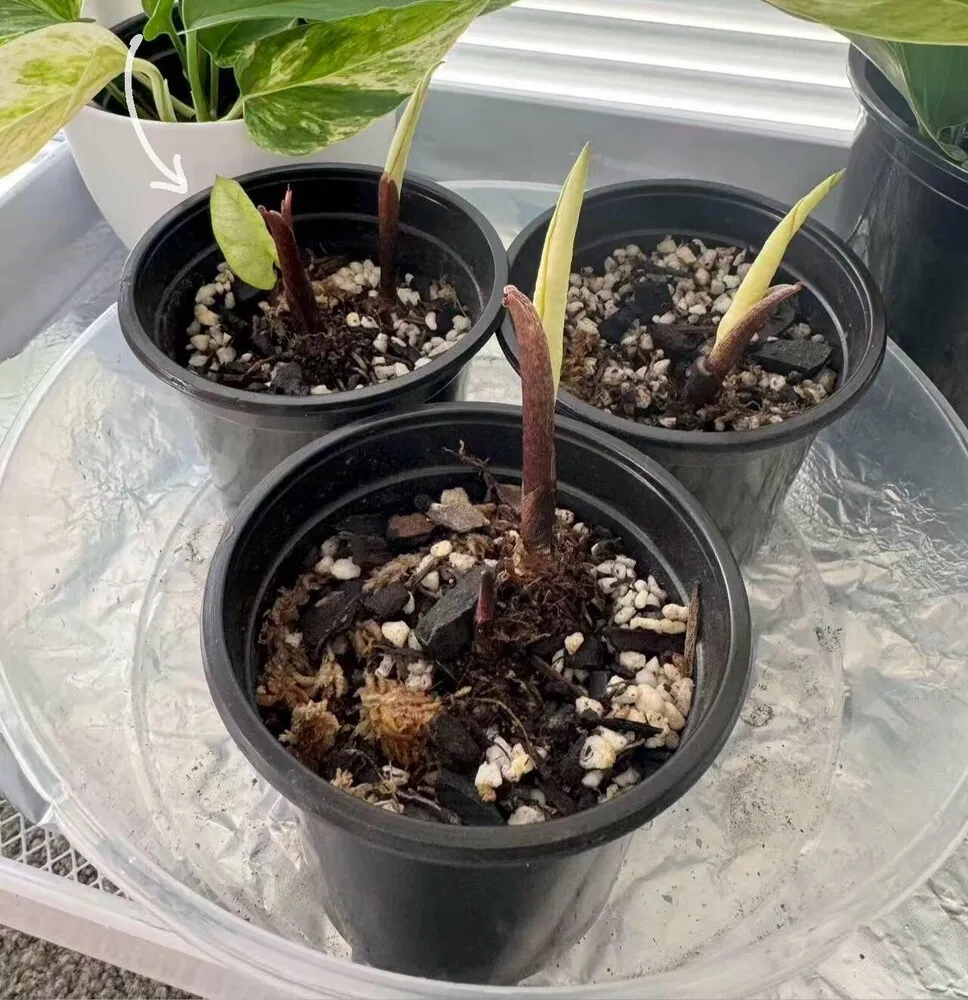
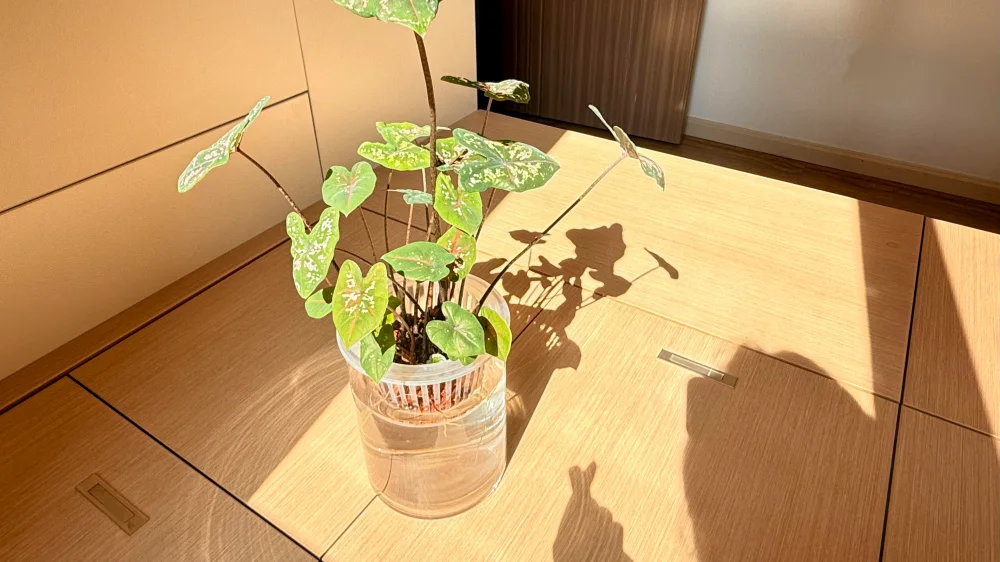
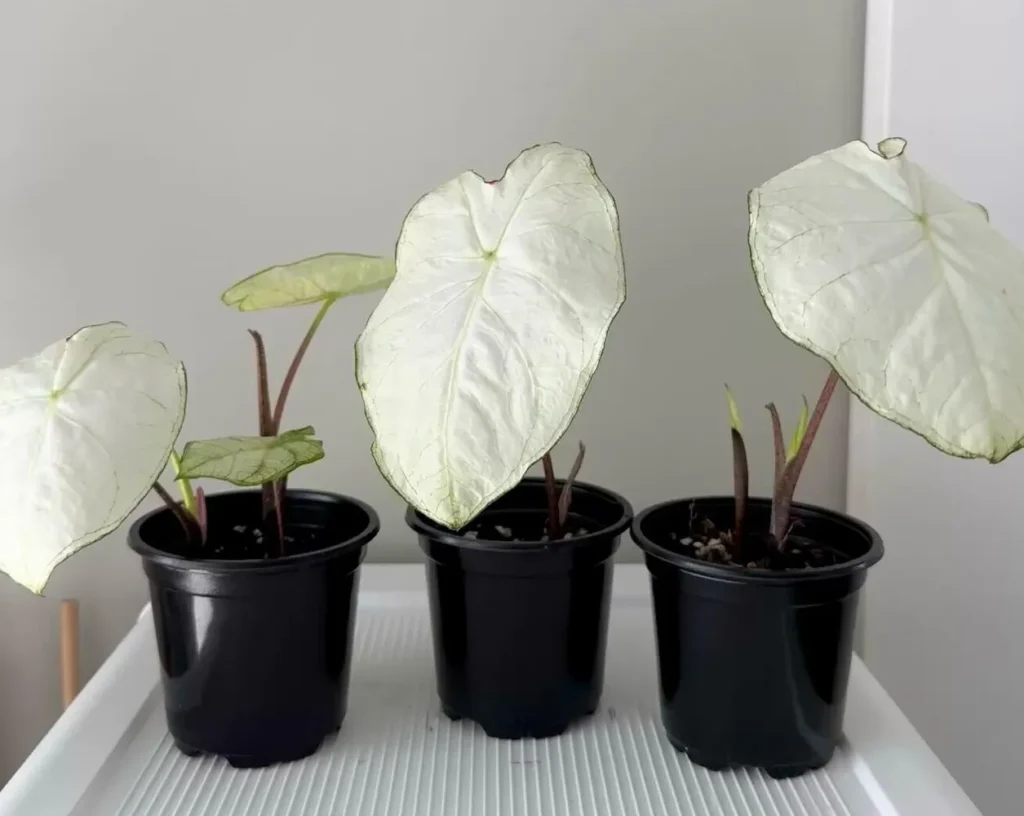
By week 4, several leaves were already up, with additional new growth still pushing behind them. The pot looked visibly fuller than it had just a week earlier, and the pace of change suggested that Florida Moonlight was not a slow-starting variety under these conditions.
Not Every Bulb Performed the Same
The four bulbs in the same bag did not perform equally. Out of the four I planted, three established and began growing, while one never really got going. That difference showed up early enough to remind me that even bulbs sold together should not be expected to behave identically.
In practice, caladium bulb batches can be uneven. One bulb may sprout quickly, another may lag behind, and another may fail altogether, especially when the bulbs are not perfectly uniform in size and growing points.
For me, that did not automatically make Florida Moonlight seem unreliable. It simply made the result feel more realistic. Growing a bag of bulbs is never quite the same as buying four guaranteed plants.
What the Leaves Actually Looked Like in Real Life
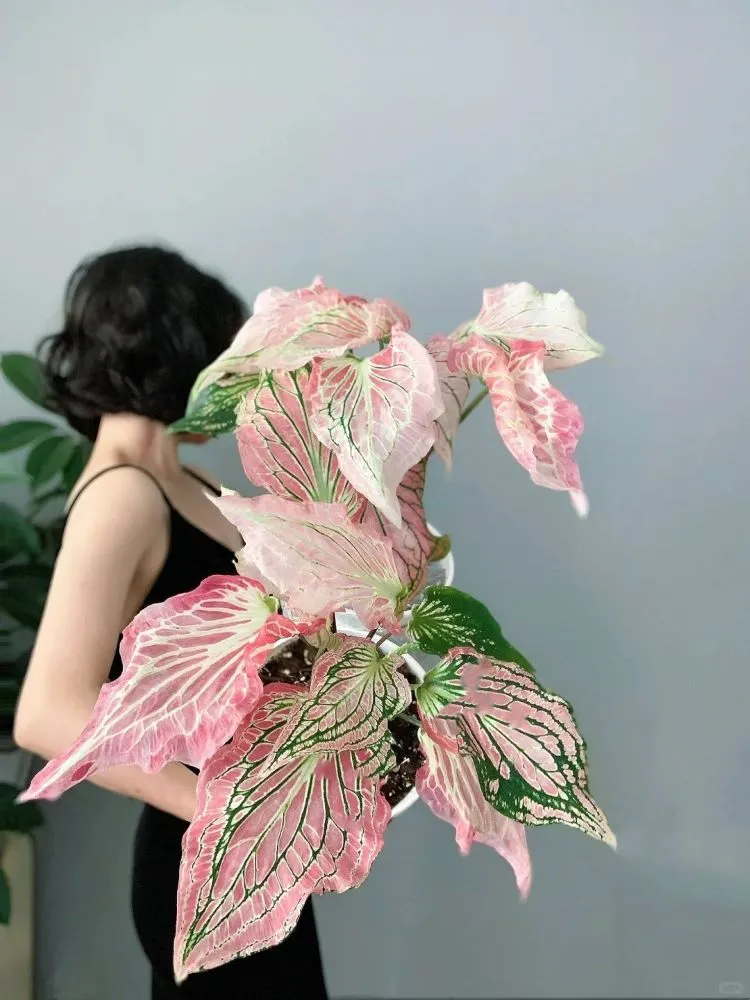
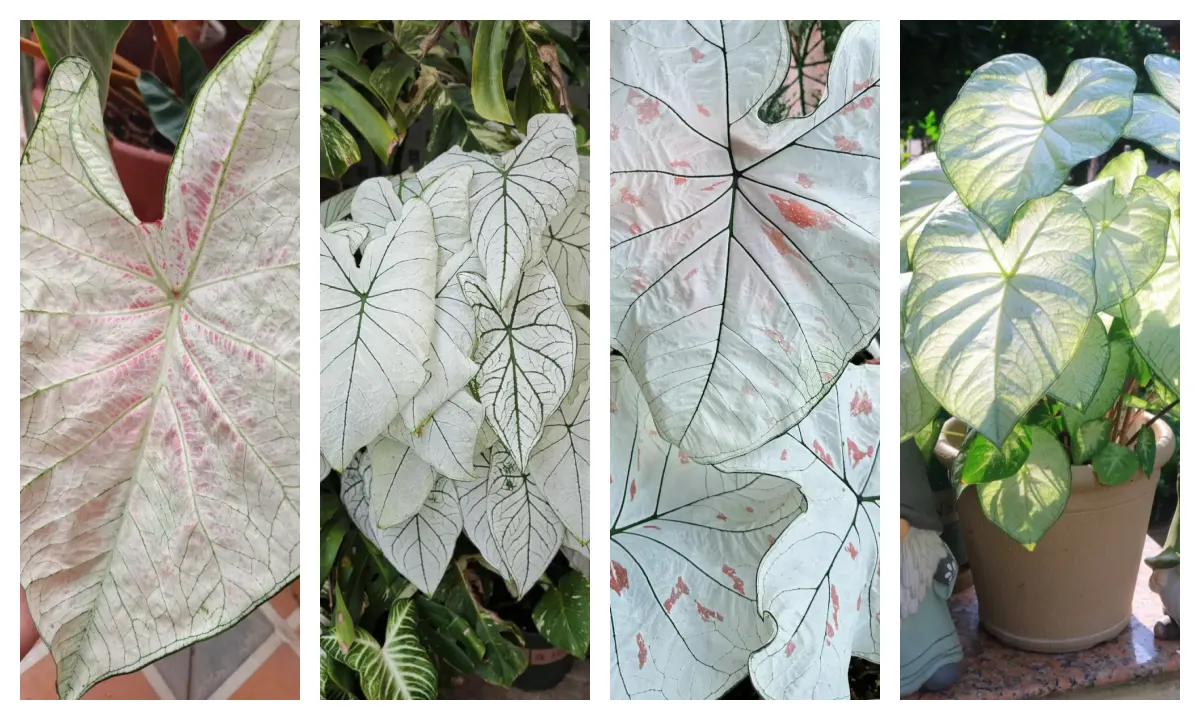
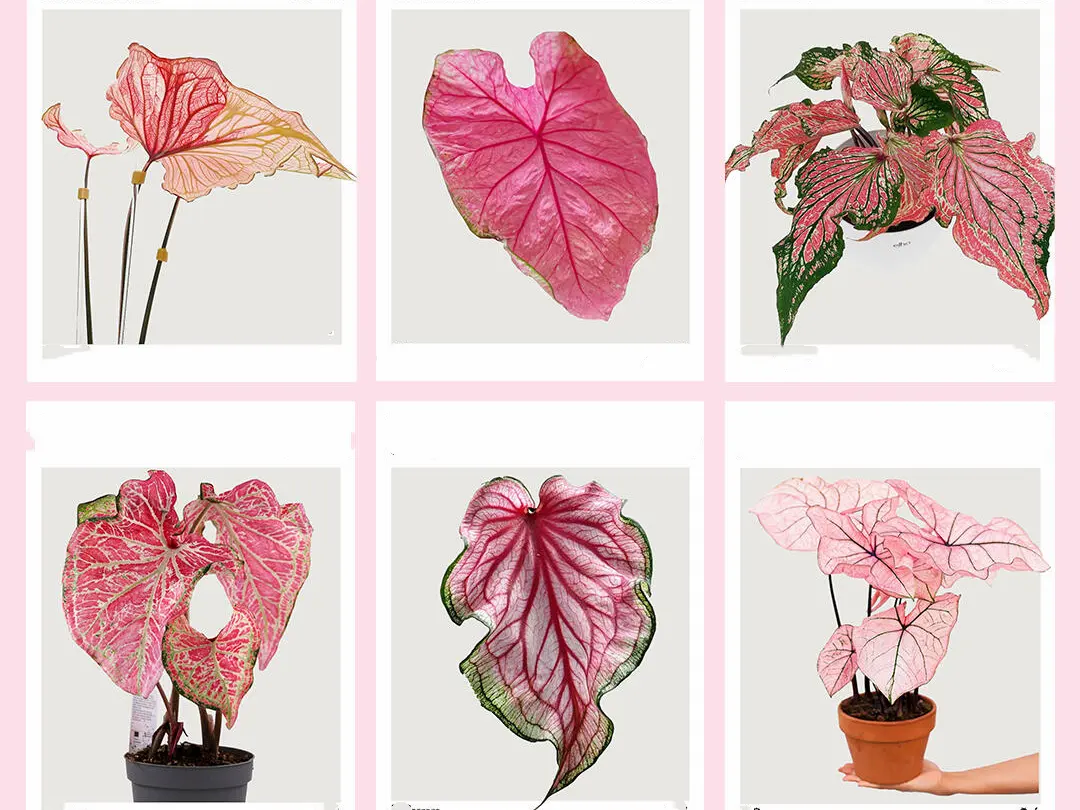
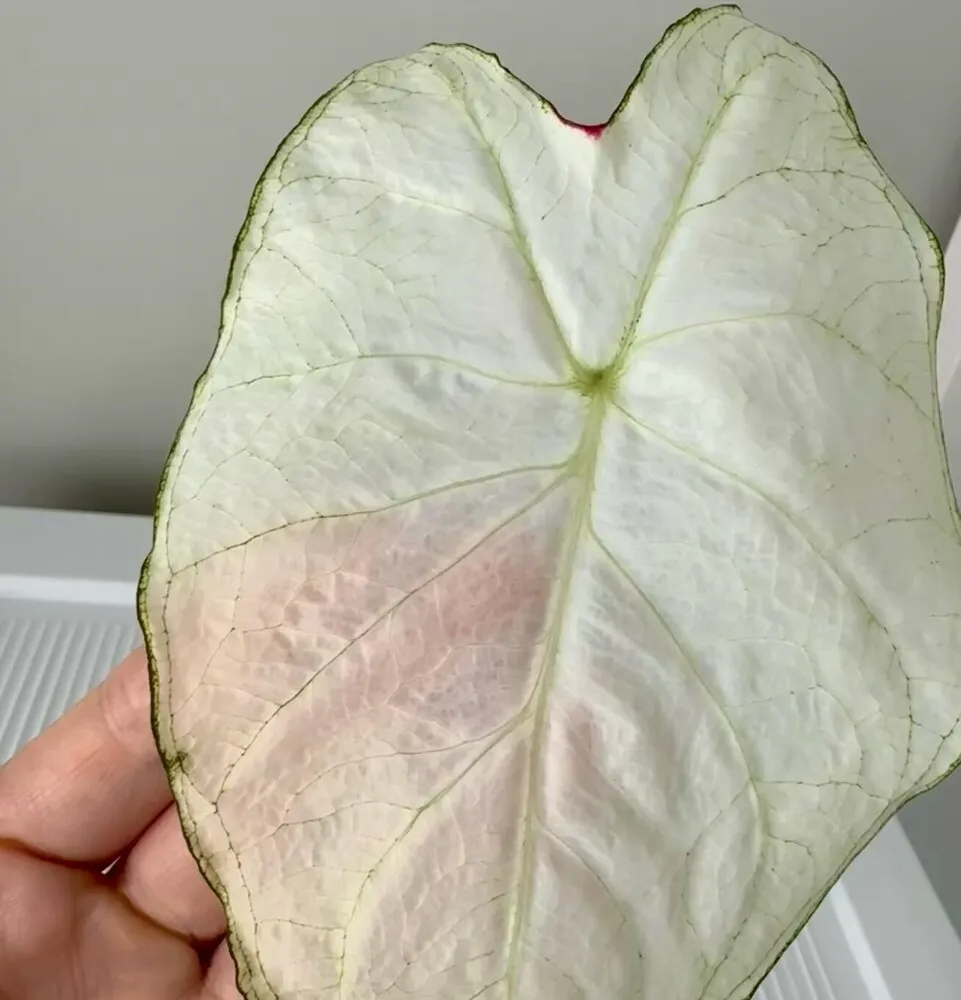
What I liked most about Florida Moonlight was not a bold pattern or strong contrast, but the overall clarity of the leaves once they started to open. In real life, the foliage looked like a soft pale green rather than a sharp or high-drama color. The effect felt clean and fresh, especially compared with bright pink varieties like Florida Sweetheart or red varieties like Red Flash that stand out much more through contrast.
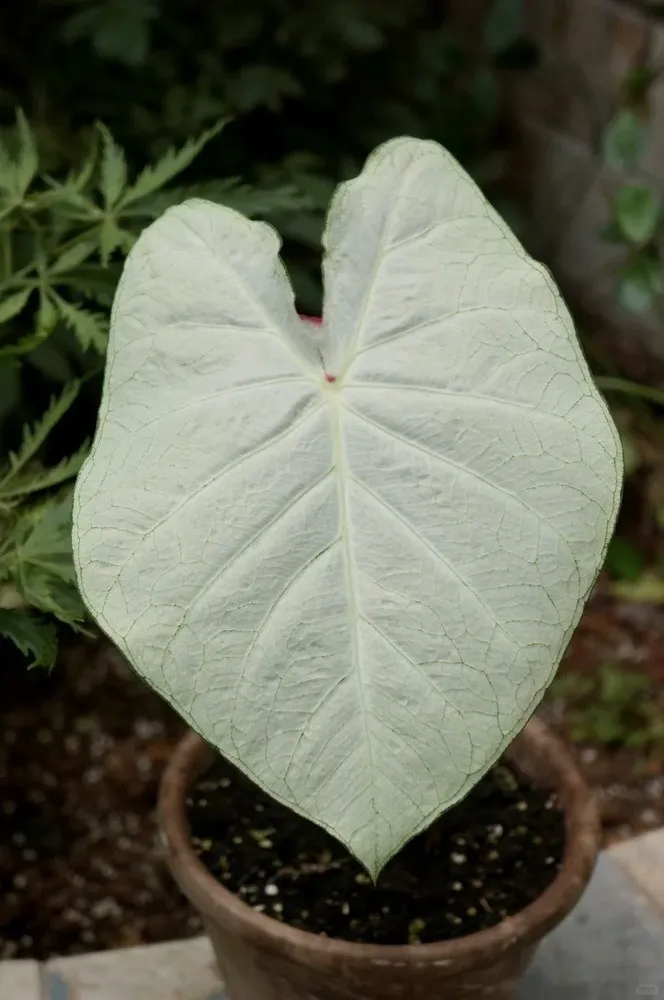
The leaves also had a slightly translucent quality that was much easier to appreciate in person than in photos. When light passed through them, they seemed to hold a quiet glow instead of a flashy shine. That made the plant feel more luminous than colorful, which is a different kind of beauty than I usually expect from caladiums.
What surprised me was that the young leaves looked delicate without looking weak or washed out. They had a gentle, almost glassy softness, but they still felt visually present. To me, that is really the appeal of Florida Moonlight: not dramatic contrast, but a clean, pale look that already feels distinct even in the first few leaves.
Who I Think Florida Moonlight Is Best For
I think Florida Moonlight will appeal most to growers who enjoy subtler foliage rather than strong contrast. If you like caladiums that look clean, pale, and slightly luminous instead of bold and heavily patterned, this variety makes a strong early impression, though it may appeal to you for different reasons than White Christmas.
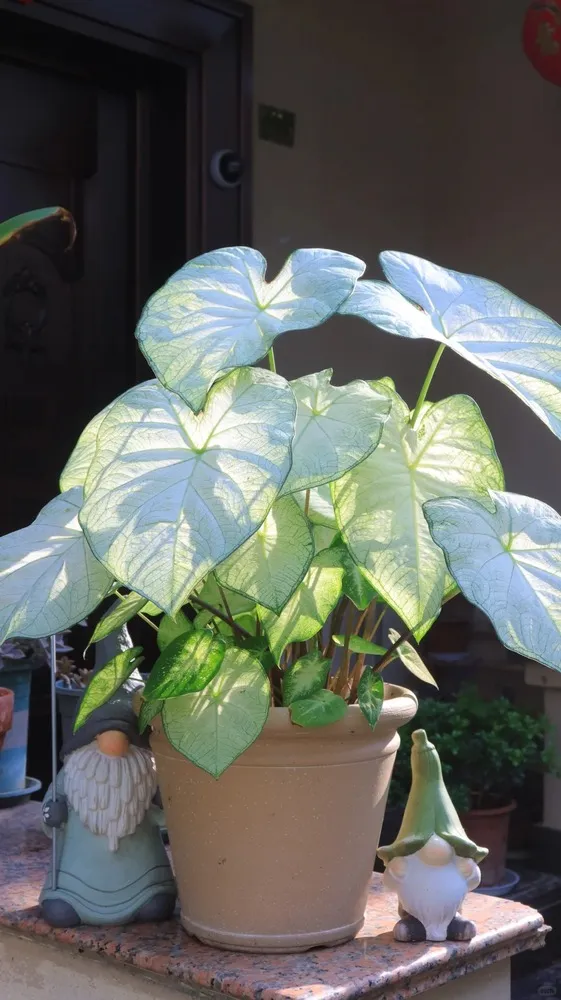
It may also suit people who want quicker visual feedback from bulbs. At least in my case, it did not stay hidden for long, and that made the first month feel much more engaging than varieties that take longer to show themselves above the soil.
On the other hand, if you mainly want dramatic color contrast right away, Florida Moonlight may feel quieter than some pink, red, or strongly veined caladiums. Its appeal is gentler, and that is probably the main reason someone will either really like it or pass it by.
What I Can Say After One Month — And What I Still Can’t
After one month, I feel fairly confident saying that Florida Moonlight is not a silent starter. In my pots, it sprouted reasonably fast, gave visible early progress, and already showed the soft, luminous leaf quality that makes this variety distinct.
What I still cannot say yet is how large it will get over a full season, whether the active shoots will stay balanced, or how the pot will look once it fully fills in. I also still want to see whether that clean pale color stays consistent in stronger summer light or under the kind of indoor setup I described in my guide to caladium grow lights indoors. So my impression is positive, but still partial — I think I understand its early behavior now, but not yet its full-season personality.
FAQ
Want to Explore Other Caladium Varieties?
Florida Sweetheart is just one of many caladium varieties that behave differently in containers. If you’re curious how other types compare, you can browse the full collection of varieties below.
Browse All Caladium Varieties →