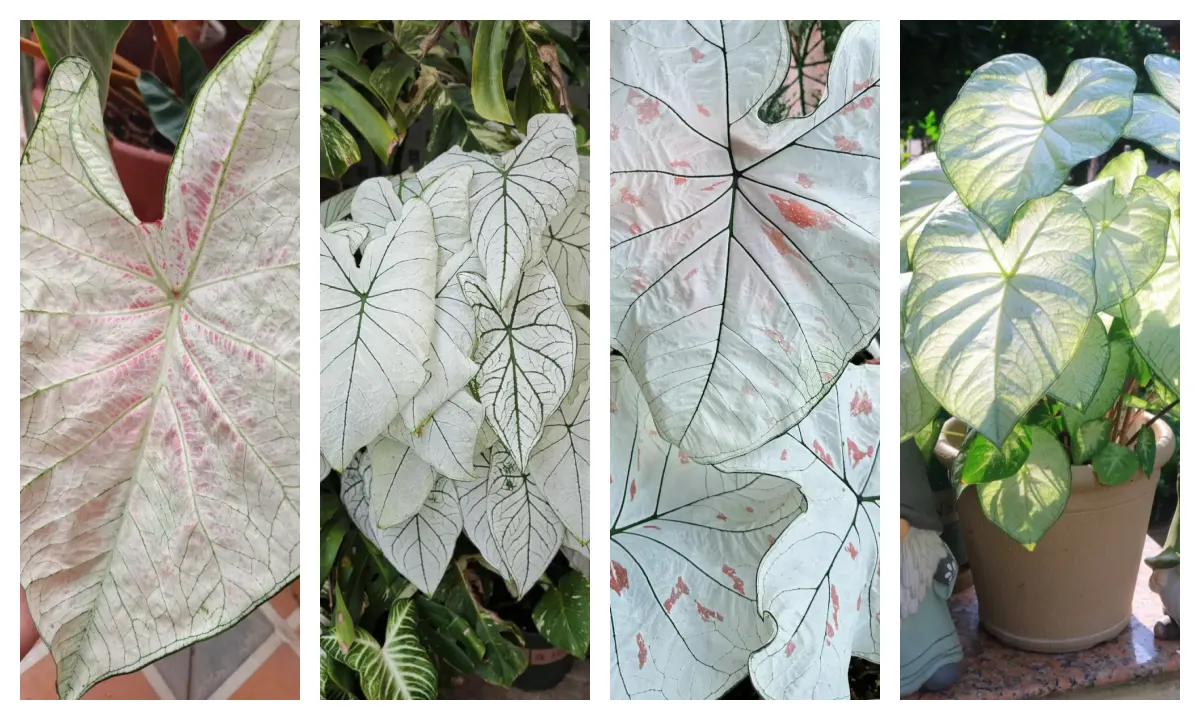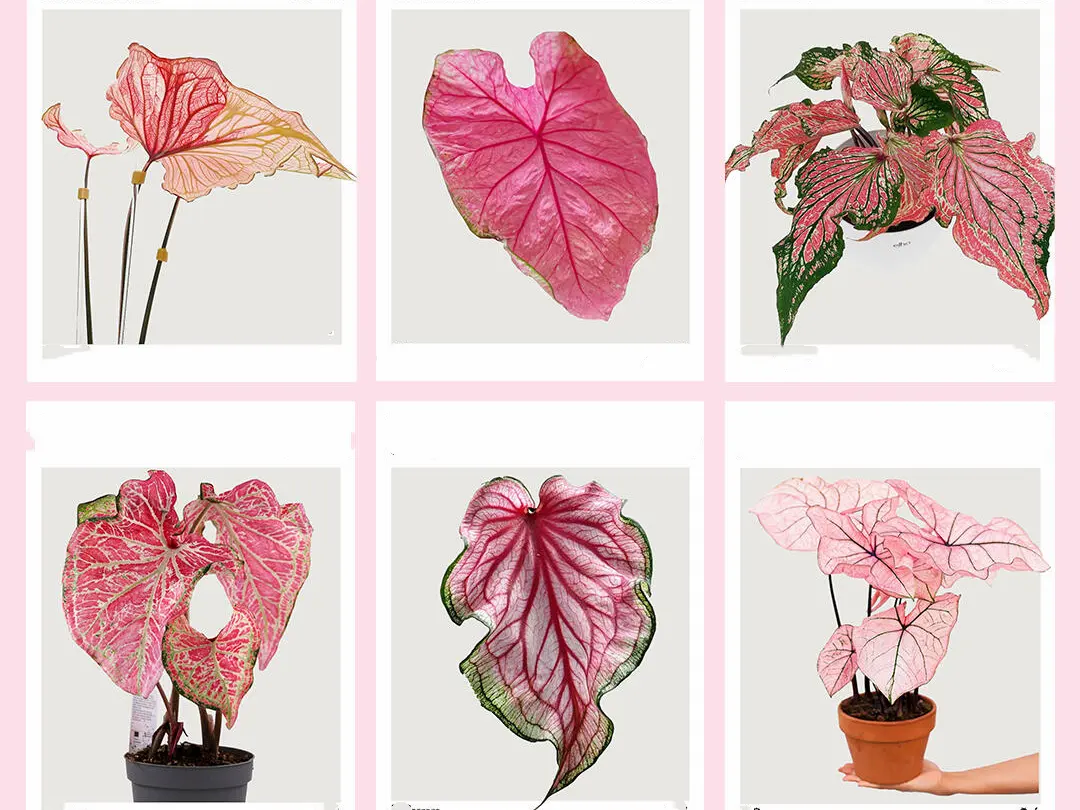
If a new caladium leaf has been growing for weeks, reached full size, developed strong color — but still refuses to open, this is usually confusing and frustrating.
In my case, this leaf took nearly a month to grow. The size was already complete, the color was fully developed, and the plant itself showed no signs of stress. Yet the leaf remained tightly curled from the moment it emerged.
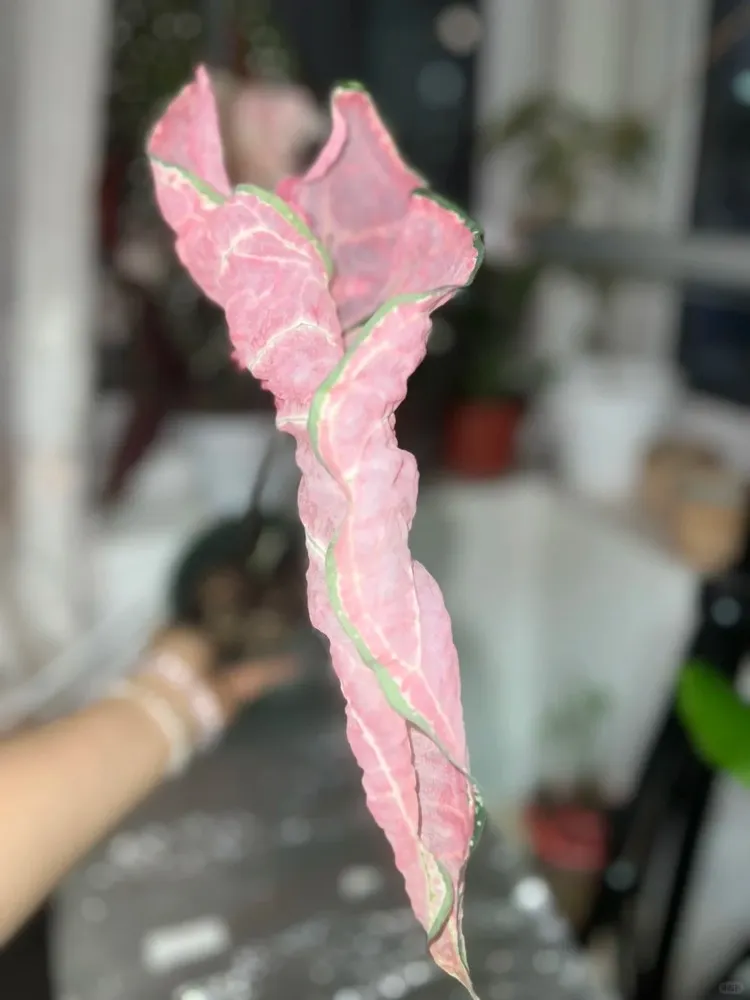
What made this situation clearer was what happened next:
the plant continued growing and started pushing out the next leaf.
This matters, because it tells us something important.
The plant itself did not stall or decline. The growth cycle continued normally. The issue was limited to this specific leaf, not the entire plant.
Over time, I’ve seen this pattern repeat, especially with pink and light-colored caladium varieties. When the days leading up to leaf unfurling are cloudy, dim, or lacking sufficient humidity, some leaves never complete the unfurling process — even though they continue to grow in size and color.
This article focuses on that situation:
new caladium leaves that grow normally but fail to unfurl, despite the plant continuing to produce new growth.
Before looking at solutions, it’s important to understand why this happens, and why some leaves do not recover once the unfurling stage is missed.
This Is Not Dormancy — and Not a Failed Leaf
When a new caladium leaf stays curled, it’s easy to assume the plant is going dormant or that the leaf has failed. In most indoor cases, neither is true.
Dormancy affects the entire plant. When caladiums enter dormancy, new growth stops and existing leaves decline. If your plant is still pushing new leaves, dormancy is not what you’re seeing.
This leaf also isn’t a growth failure. It has already reached full size and developed normal color and structure. What didn’t happen is the final step: unfurling.
Leaf growth and leaf unfurling are separate stages. A leaf can finish growing but remain curled if conditions aren’t right during the short unfurling period. When that window is missed, the plant often continues with the next leaf instead of correcting the previous one. If you’re seeing curled leaves plus yellowing or weakness, this becomes a different diagnosis — see is my caladium dying?
When a Caladium Leaf Misses Its Unfurling Window
Leaf unfurling in caladiums is not a gradual, open-ended process. It happens within a short window, and once that window passes, the leaf usually does not recover.
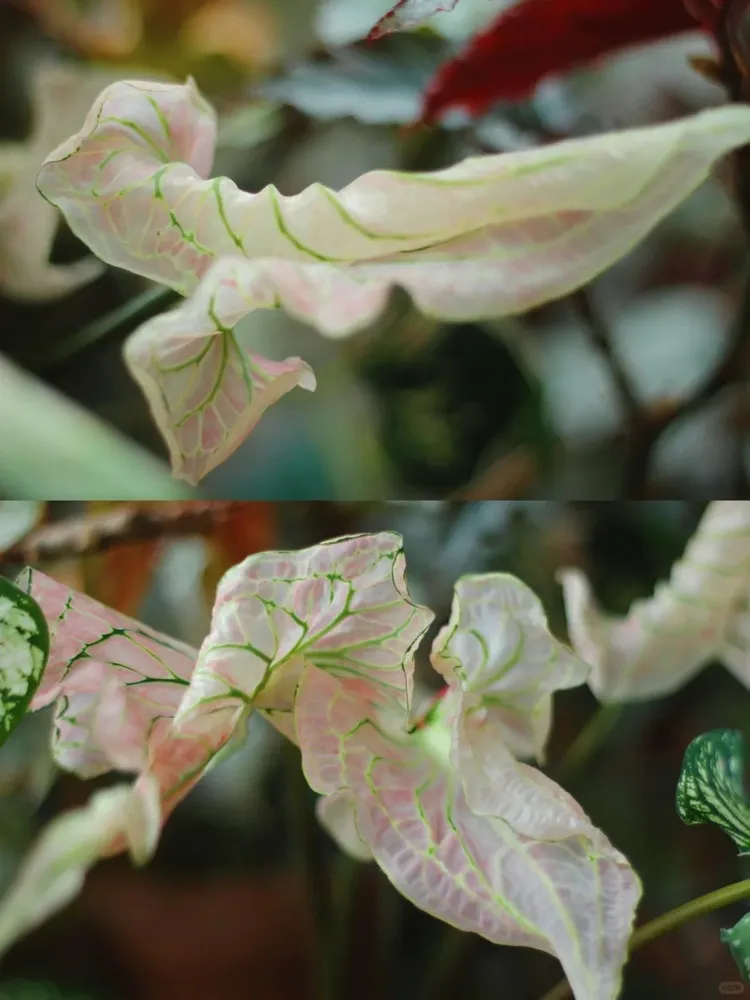
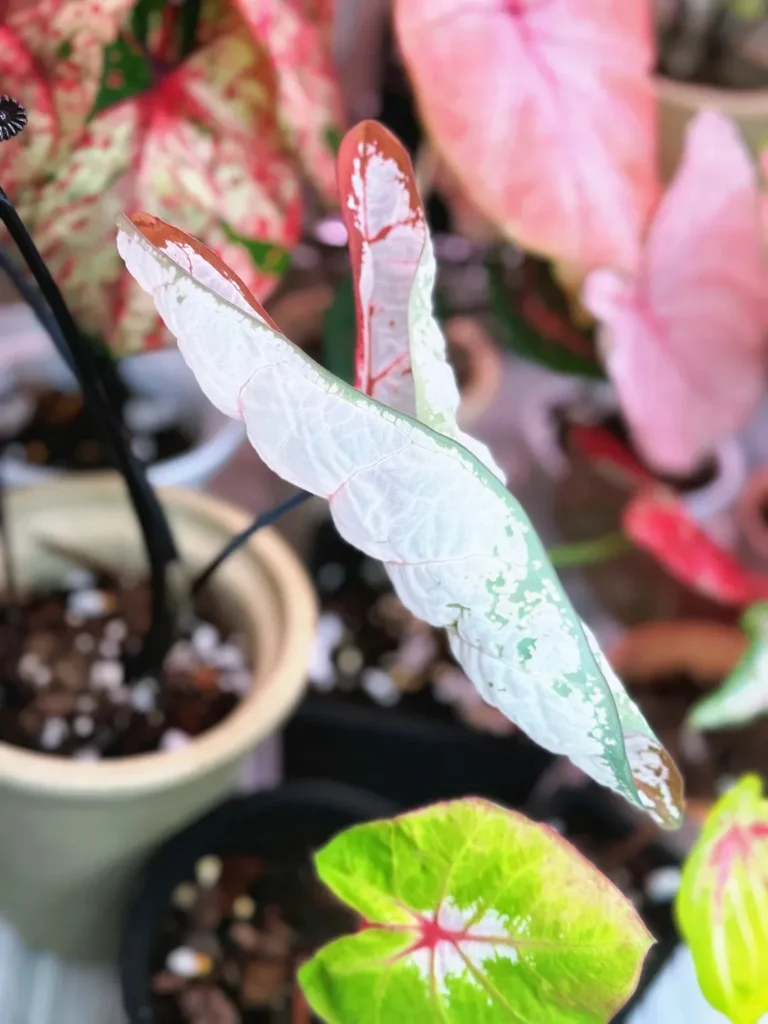
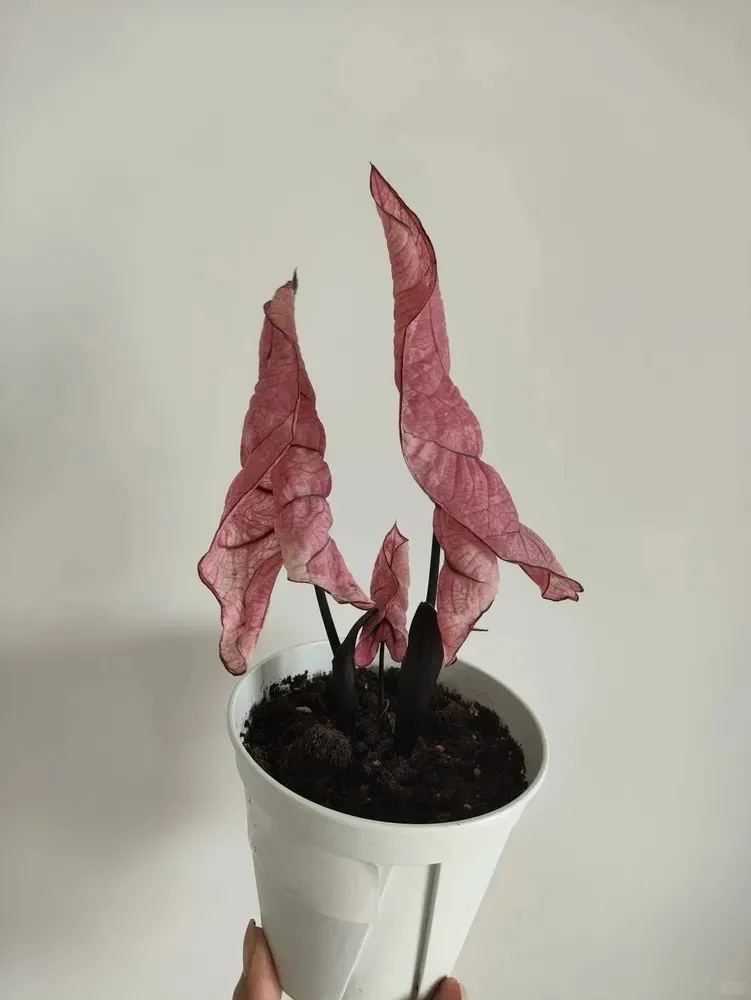
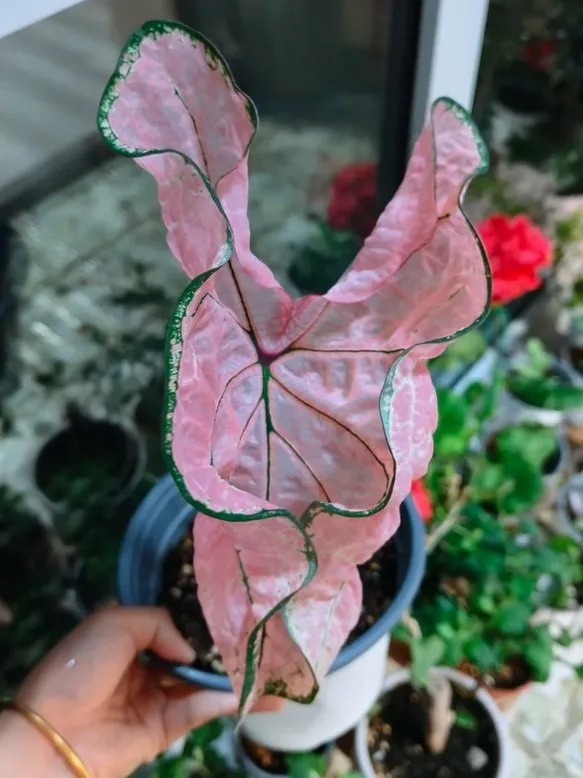
In most cases, the critical period is the 3–7 days before the leaf would normally open. During this time, the leaf is already formed, but still flexible enough to flatten and stabilize. This stage is far more sensitive to environmental conditions than the earlier growth phase.
If humidity is too low, nights are too cool, or light levels drop during this short period, the plant may delay unfurling. But it does not delay indefinitely.
Once conditions remain insufficient for long enough, the plant effectively abandons the unfurling process. The leaf continues to exist, may even continue gaining color, but stays curled. The plant then redirects energy toward the next leaf instead of revisiting the previous one.
This is why timing matters more than averages. A plant can receive “adequate” light and care overall, yet still produce a permanently curled leaf if the unfurling window coincides with several dim, cool, or low-humidity days. In my experience, extended cloudy periods right before unfurling are often enough for a leaf to miss this window entirely.
Understanding this timing explains why some curled leaves never open, even after conditions improve — and why waiting alone rarely changes their shape.
The Most Common Situations Where Leaves Stay Curled
Cool Nights Slow Cell Expansion (Not Growth)
Night temperatures around 16–18°C (60–65°F) often fall into a gray zone for caladiums.
At this range, the plant can still grow. New leaves continue to emerge, and size development doesn’t stop. What slows down is cell expansion, which is necessary for a leaf to fully flatten.
The result is a leaf that keeps growing but never completes its unfurling. This is why curled leaves often appear even when the plant otherwise looks healthy.
Humidity That’s Fine for Growth, but Not for Unfurling
Indoor humidity can be sufficient for leaf emergence, but still too low for leaf unfurling.
In these conditions, the sequence often looks like this:
the leaf grows → expansion pauses → the leaf stays curled.
This happens because unfurling requires a brief period of higher moisture availability. If the air is just dry enough to limit that step, the leaf may stall in its curled form without showing obvious stress.
Bright Days, Dark Timing
Light conditions can be misleading.
A plant may receive adequate light most of the time, but unfurling depends heavily on timing, not averages. If the days right before a leaf is ready to open are dim or heavily overcast, the plant may not have enough energy to support the sudden increase in transpiration that comes with unfurling.
When this happens, the leaf often remains curled permanently — even if light levels improve later.
This is an easy factor to miss, and one that many general care guides never mention.
Why the Plant Often Just Grows the Next Leaf
Once a leaf misses its unfurling stage, the plant rarely tries to correct it.
From the plant’s perspective, energy is better spent on producing the next leaf under hopefully better conditions than revisiting one that failed to finish unfolding. As a result, the plant continues growing forward rather than repairing the previous leaf.
This is why curled leaves often remain unchanged while new leaves emerge normally — and why waiting longer doesn’t usually lead to improvement.
What This Article Is Not About
This article focuses on one specific situation:
new caladium leaves that grow to full size but never unfurl.
It does not cover other types of leaf curling that follow different mechanisms and require different diagnosis.
In particular, this article does not address:
- Leaves that curl downward after already opening
- Edge or margin curling on otherwise flat leaves
- Curling caused by short-term stress on fully expanded leaves
Those patterns are usually related to ongoing environmental stress — such as water balance, heat, light intensity, or airflow — and they behave very differently from unfurling failure.
To keep the diagnosis clear, these cases are better treated separately.
If your caladium’s leaves are curling downward rather than staying rolled from emergence, see:
Why Caladium Leaves Curl Downward Indoors
Separating these situations makes it easier to read what your plant is actually responding to, instead of applying the wrong explanation to the wrong symptom.
FAQ
Still not sure what your plant is telling you?
If yellowing, drooping, or root issues keep showing up across different plants, I’ve organized my real-world observations and fixes in one place.
Go to Problems Hub →