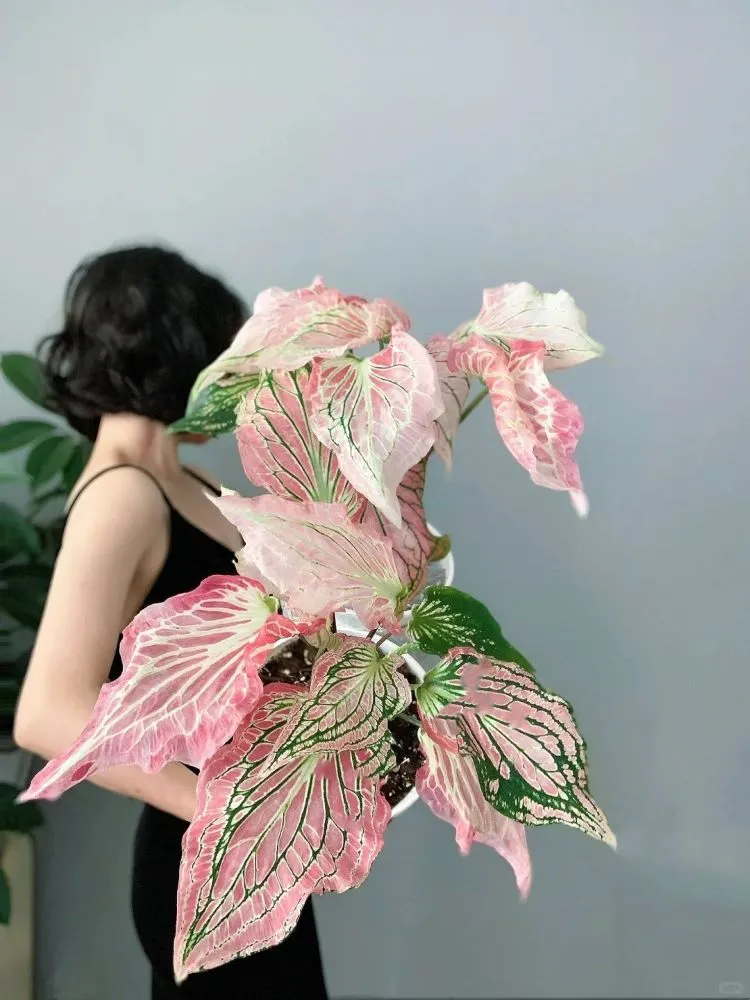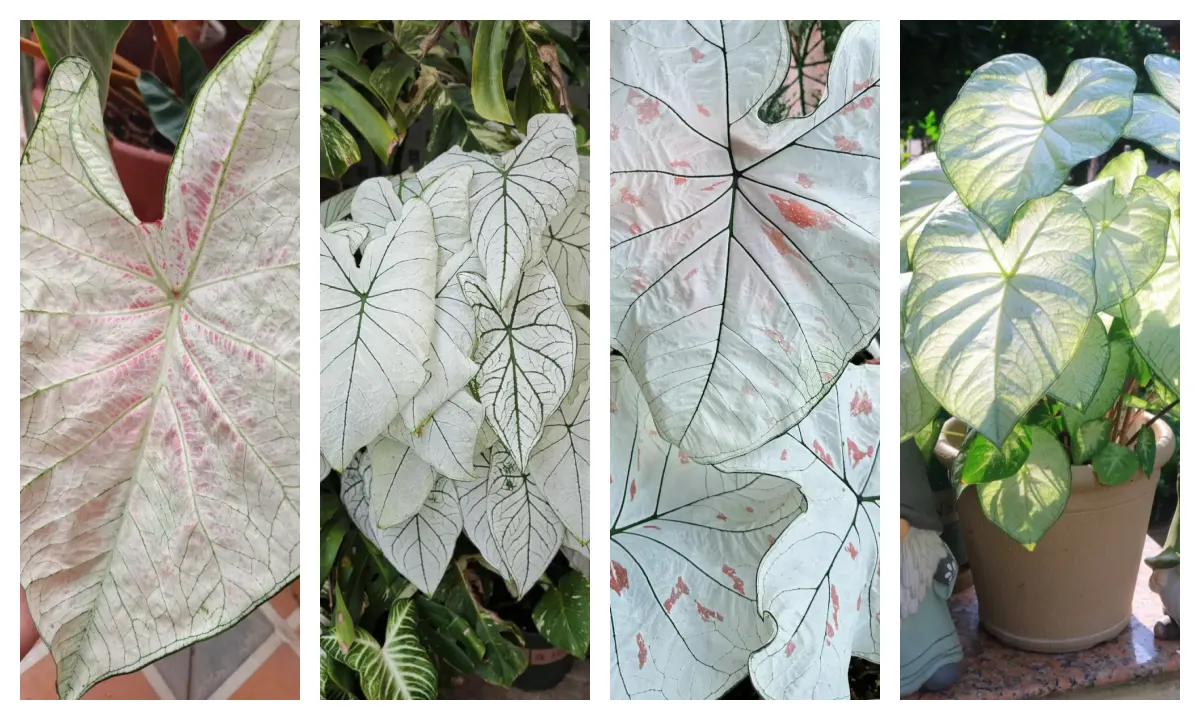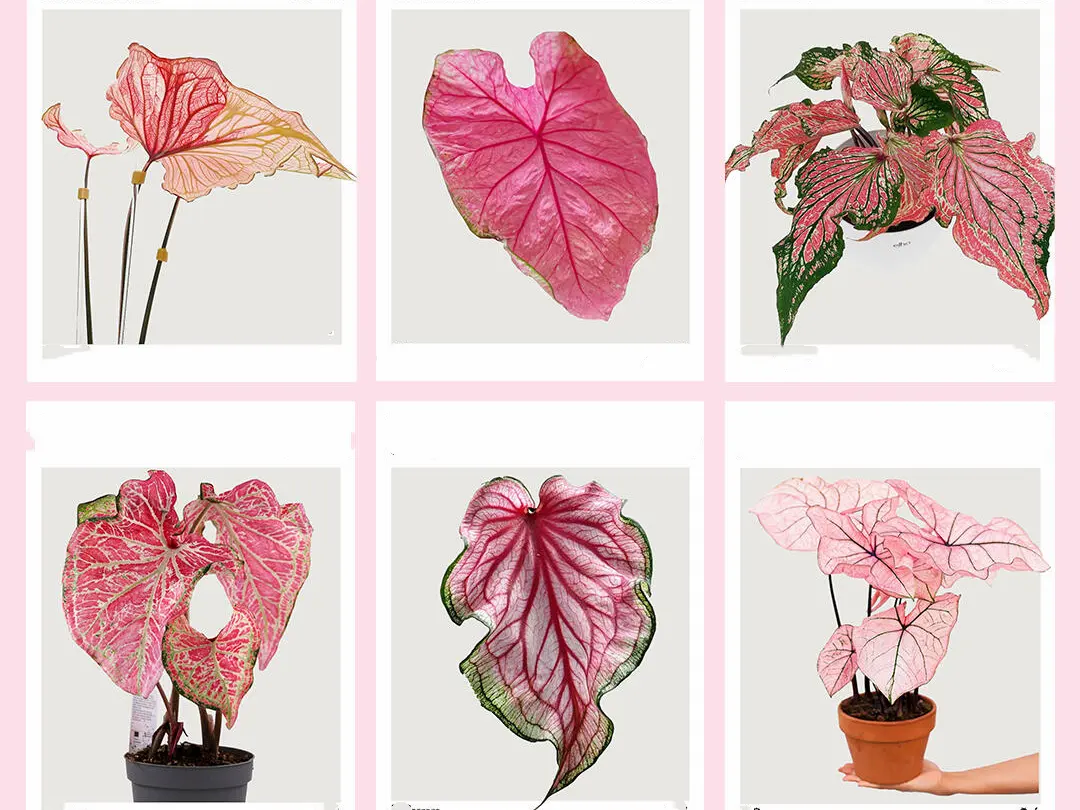
When I first saw Florida Sweetheart caladium in catalog photos, the plant looked almost unreal — bright pink leaves, strong contrast, and perfectly shaped heart-like foliage. The color appeared intense and stable, as if every leaf would look exactly the same no matter where it was grown.
But after growing this variety in containers for over a year, I realized things aren’t quite that simple.
In real patio or indoor conditions, the pink color shifts more than most catalog photos suggest. Light levels, pot size, and watering rhythm all influence how the plant develops, especially if you’re growing caladiums indoors under conditions like the ones I described in my guide to caladium grow lights indoors. A leaf that looks vividly pink in morning sun can appear softer in shade, and a container that stays too wet can slow the whole plant down.
After watching Florida Sweetheart through a full growing cycle, I started to see that the color people expect from catalog photos depends far more on light balance and container conditions than most plant guides mention.
What Florida Sweetheart Caladium Actually Looks Like
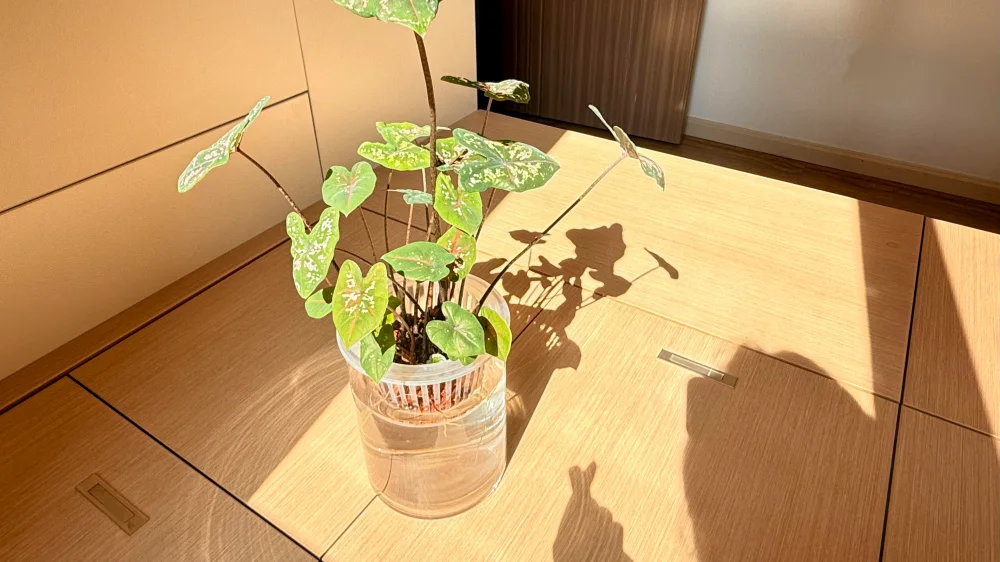
Florida Sweetheart is surprisingly delicate when you see it in person. The plant stays relatively compact, with slender stems and small heart-shaped leaves that feel much lighter than many other caladium varieties.
Most leaves show a soft pink center with deeper pink veins spreading outward from the base, framed by a narrow green edge. From a distance the plant looks gently pink rather than intensely colored.
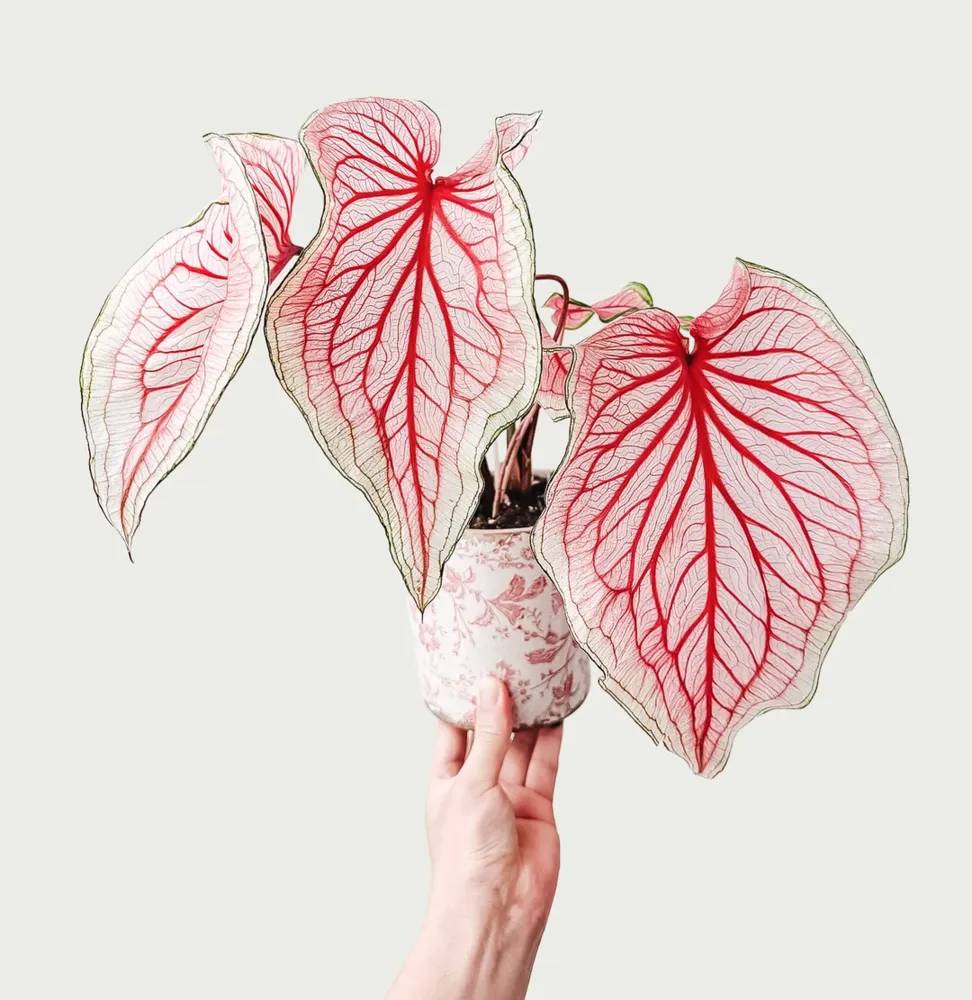
What stood out most to me while growing it was how thin and translucent the leaves are. In morning light the veins become much more visible and the pink tones brighten noticeably. When sunlight passes through the leaf from behind, the whole plant almost glows.
This slightly translucent texture is one of the biggest differences between Florida Sweetheart and many thicker-leaved caladium varieties. Instead of looking bold and heavy, the foliage feels light — almost like thin fabric catching the light.
What surprised me most when growing it, though, was how thin and translucent the leaves are. In the morning light, the leaves almost glow — the veins become more visible and the pink tones appear brighter than they do in shade. When sunlight passes through the leaf from behind, the whole plant takes on a soft, luminous quality.
That lightweight, slightly translucent texture is what makes Florida Sweetheart feel different from many other caladium varieties. Instead of looking bold and heavy, the leaves feel almost like thin fabric catching the light.
How the Color Changed After a Full Growing Season
When I first received my Florida Sweetheart caladium, the plant looked much softer in color than I expected. The leaves were smaller, and the pink center appeared quite light, almost washed out compared with the vivid catalog photos I had seen online. At that stage, the plant looked pleasant but not particularly striking.
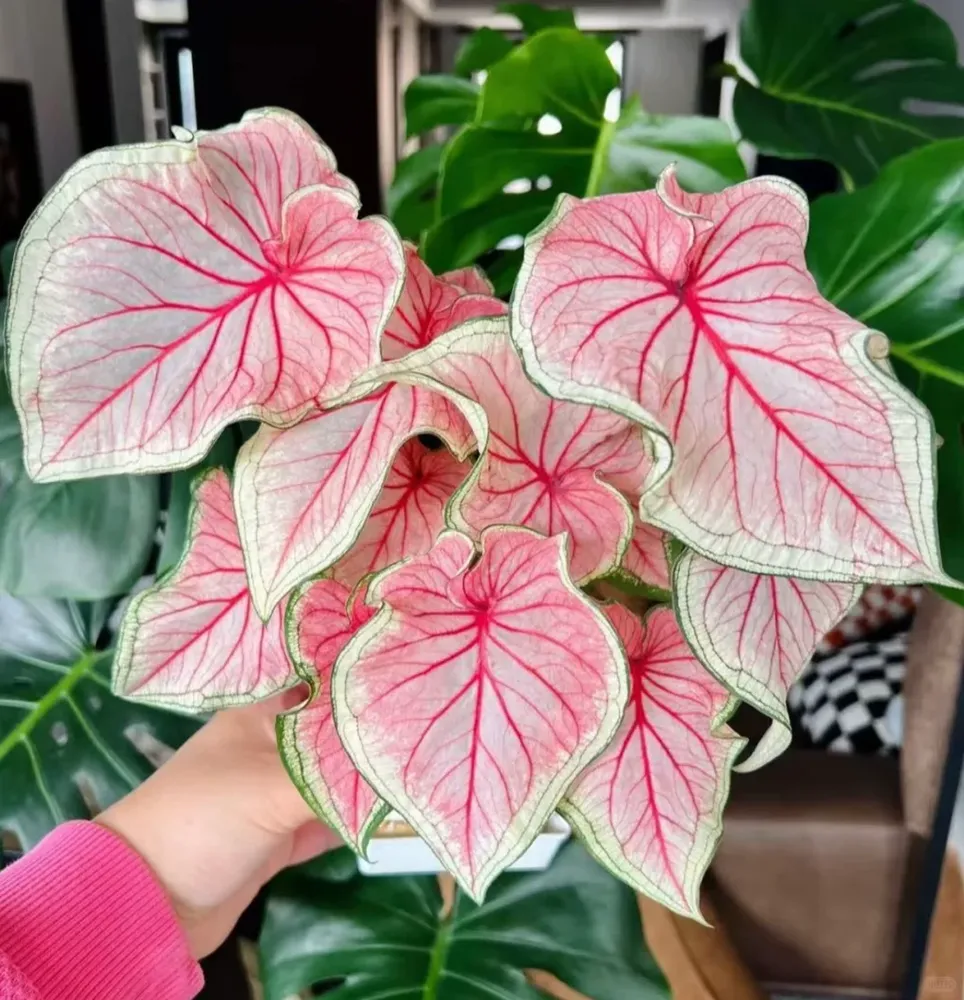
Over the course of the growing season, that gradually changed.
As the plant settled into its container and pushed out new leaves, the foliage became noticeably larger and the pink tones started to deepen. The veins grew more defined, and the contrast between the pink center and the green edges became clearer. By the end of the season, the plant looked far closer to the vibrant pink caladium I had originally imagined.
One thing I also noticed while photographing the plant is that the color can appear different depending on the surroundings. The photo is straight from the camera with no filters, although the green background sometimes makes the plant appear slightly less pink in pictures than it looks in person. In real light, especially in the morning sun, the pink tones are usually brighter than what the camera captures.
Watching the color deepen over time was a reminder that many caladium varieties don’t show their best color immediately. As the plant settled into its container and produced stronger leaves, the pink tones became more confident and consistent. Sometimes a caladium simply needs a full growing season to show what it’s really capable of.
The Mistake That Almost Killed My Sweetheart Caladium
The biggest setback I had with Florida Sweetheart happened not long after I moved. At the time, I repotted the plant into a larger container, thinking it would give the tuber more room to grow. Around the same period, the weather turned unusually humid and rainy for weeks. Between the oversized pot and the constant moisture in the air, the soil stayed wet far longer than it should have.
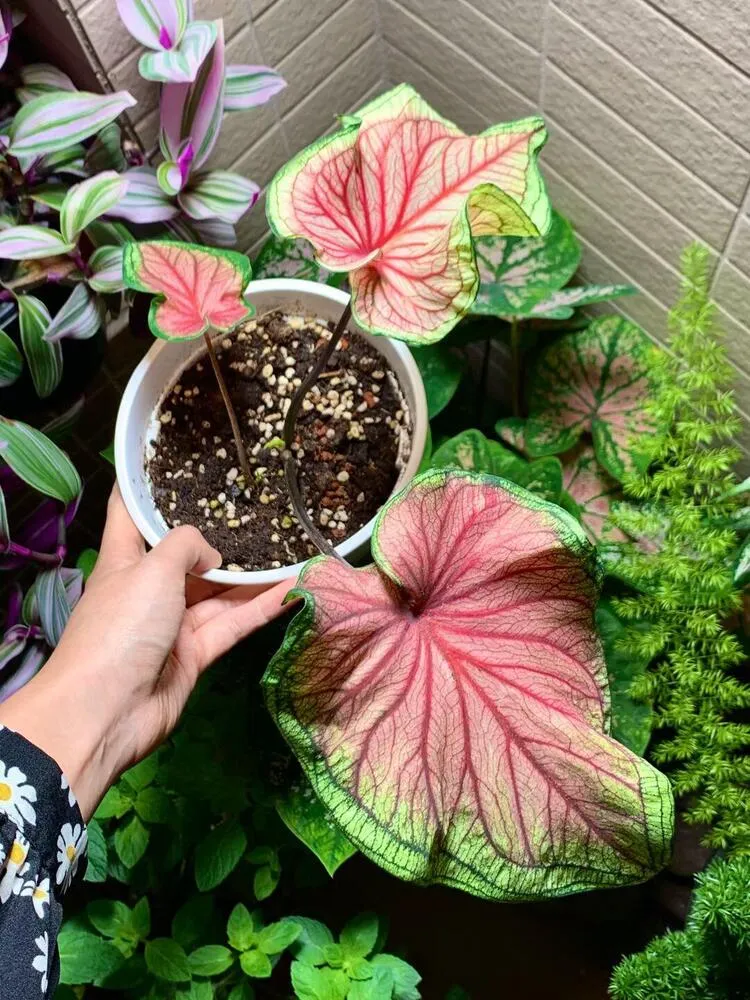
At first the plant looked fine, but gradually the leaves started to lose their energy. New growth slowed down, older leaves looked weaker, and the overall color became dull — the kind of pattern I now recognize in a caladium not growing properly. The soil never really had a chance to dry properly, and the roots were likely sitting in conditions that were far too damp.
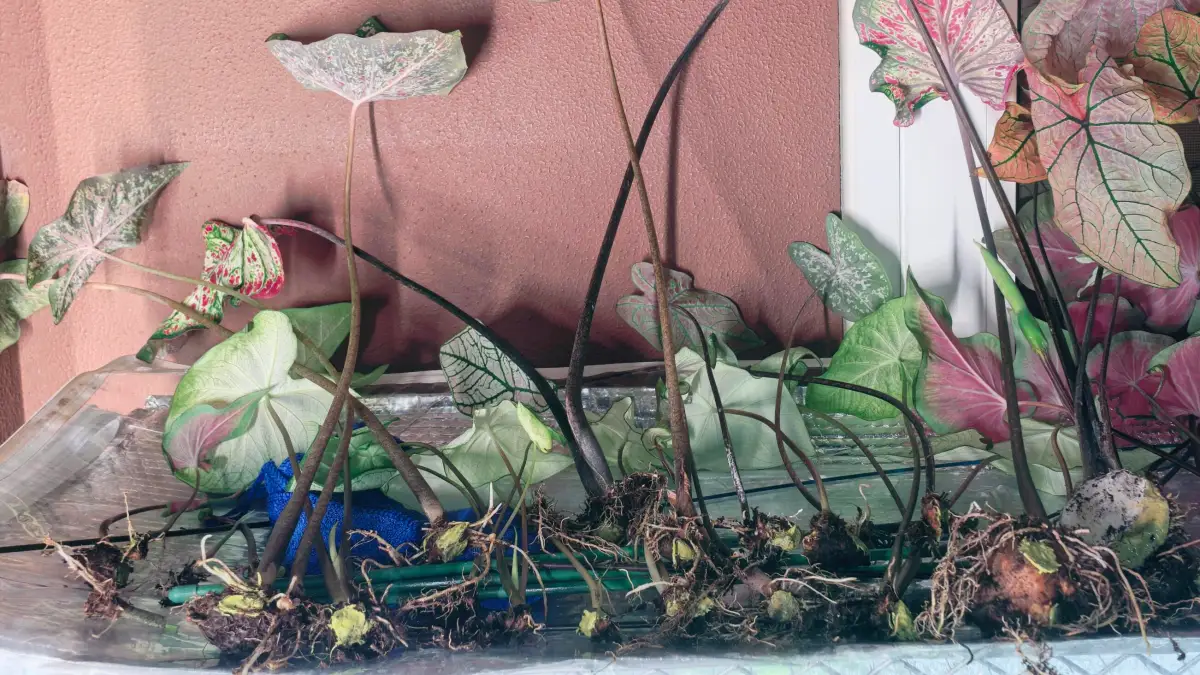
Eventually I made a decision that felt drastic at the time: I cut off all the leaves.
The plant was reduced to nothing but the tuber resting in the soil. For a while it looked like I had completely ruined it — exactly the kind of stage that makes you wonder, is my caladium dying? But after the cooler months passed and the temperature began to rise again, new shoots started pushing up from the tuber. The new leaves that appeared the following winter were actually stronger and noticeably pinker than before.
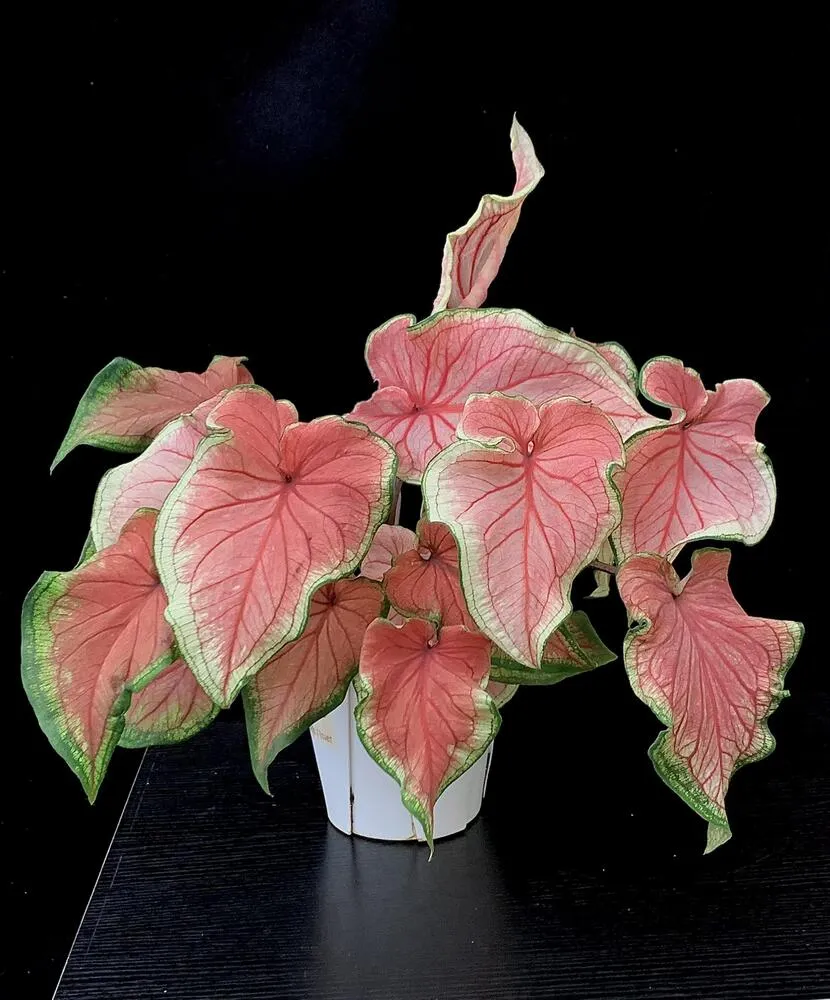
Looking back, cutting the plant back completely turned out to be the reset it needed. Sometimes a stressed caladium recovers better when the plant is allowed to start over rather than trying to keep struggling leaves alive.
What Finally Brought the Pink Color Back
After that difficult season, I stopped trying to follow generic caladium care advice and instead paid closer attention to how this particular plant reacted in my containers. Over time, three adjustments made the biggest difference in bringing the bright pink color back.
After that difficult season, I stopped trying to follow generic caladium care advice and paid closer attention to how this plant behaved in my containers. Over time, three things made the biggest difference in bringing the pink color back.
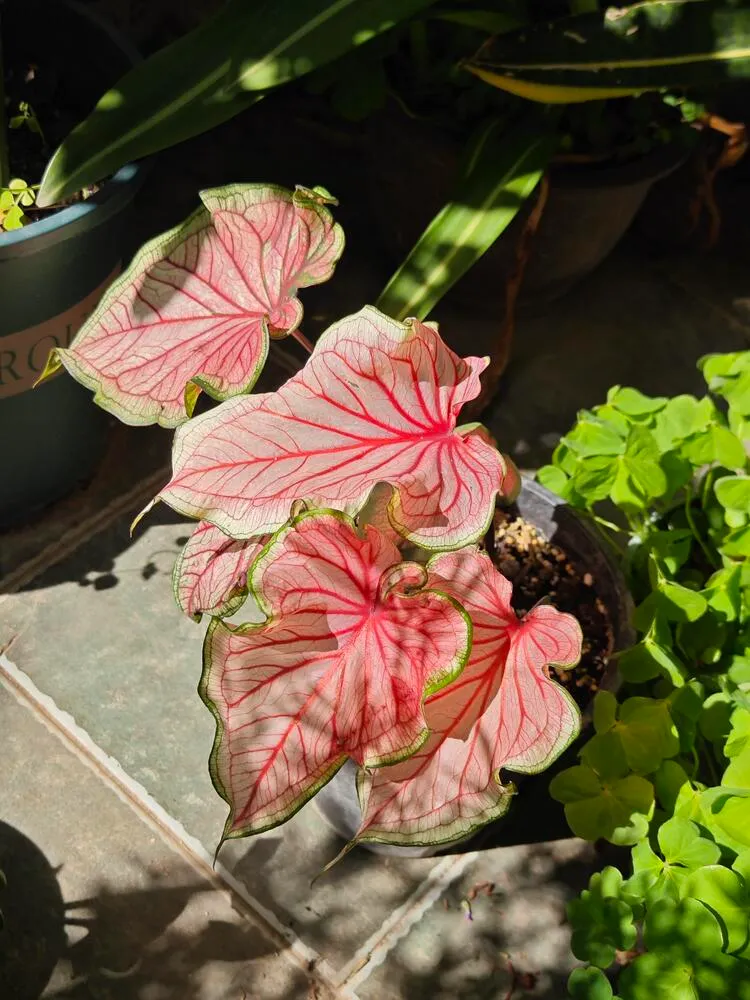
First, light. Florida Sweetheart clearly benefits from some direct sun, but not all day. In my setup the plant receives about two to three hours of morning sunlight, with bright indirect light for the rest of the day. That seems to be enough to strengthen the pink tones without stressing the thin leaves.
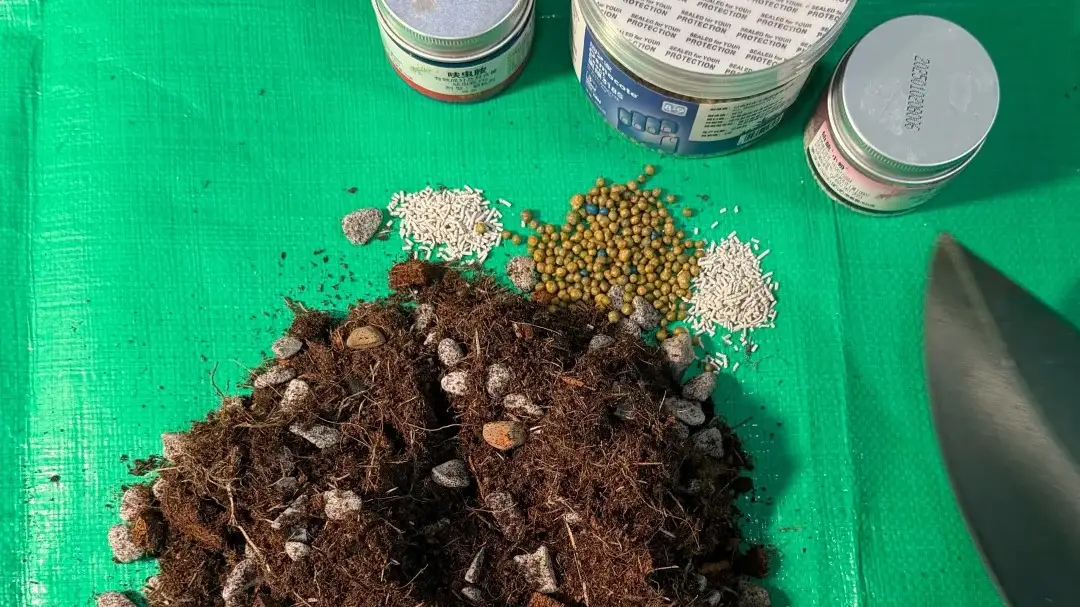
Second, pot size. I learned the hard way that caladiums don’t always like large containers. When the pot is too big, the soil holds moisture longer than the roots can handle. Keeping the plant in a slightly smaller pot made the soil dry more evenly and the growth became much healthier.
Third, watering rhythm. Instead of watering on a fixed schedule, I now let the soil dry slightly before watering thoroughly again — very close to the approach I described in my guide on how to water caladiums. One simple trick that helps is lifting the pot — when the container feels noticeably lighter, it’s usually time to water.
Once these three factors were balanced, the plant gradually began producing larger leaves and noticeably stronger pink color.
Is Florida Sweetheart a Good Caladium for Containers?
From my experience, Florida Sweetheart works surprisingly well as a container caladium. The plant tends to stay relatively compact, with slender stems and smaller heart-shaped leaves that don’t overwhelm a pot. When the color develops properly, the soft pink center and deeper pink veins give the plant a light, almost dreamy appearance that stands out nicely on balconies or patios.
At the same time, this variety is a bit sensitive to growing conditions. It doesn’t respond well to constantly wet soil, and if the light is too low, the pink tones can fade and the leaves may appear greener than expected. Finding the right balance between light and moisture makes a noticeable difference in how the plant performs.
When the balance between light and watering is right, Florida Sweetheart easily becomes one of the most charming pink caladium varieties to grow in pots.
FAQ
Want to Explore Other Caladium Varieties?
Florida Sweetheart is just one of many caladium varieties that behave differently in containers. If you’re curious how other types compare, you can browse the full collection of varieties below.
Browse All Caladium Varieties →