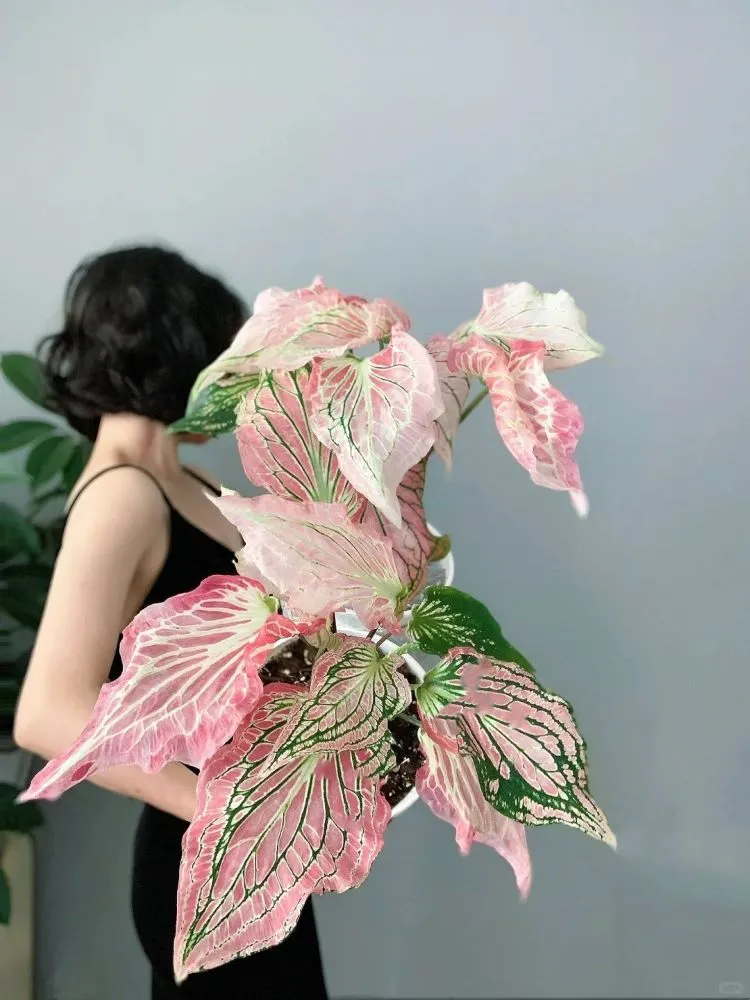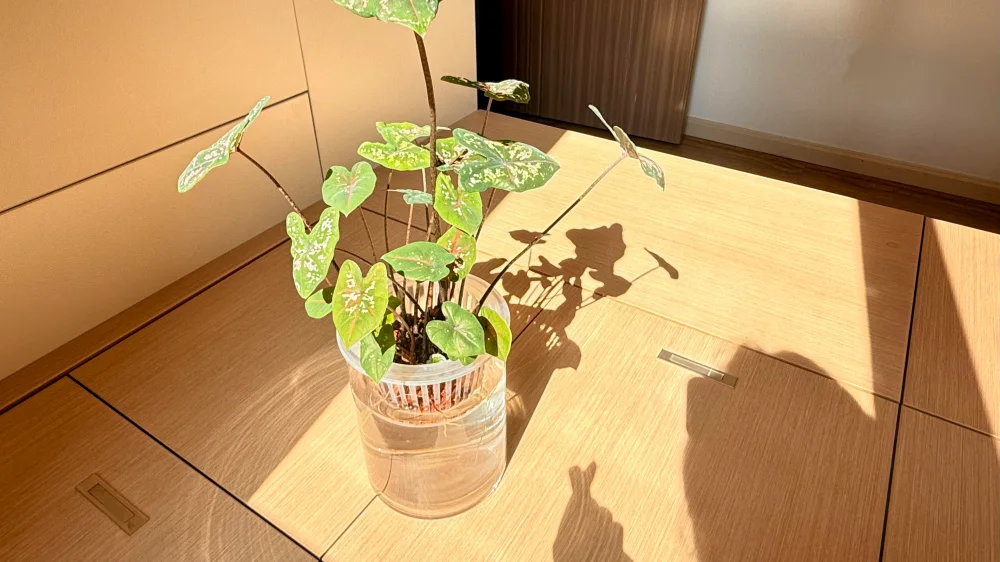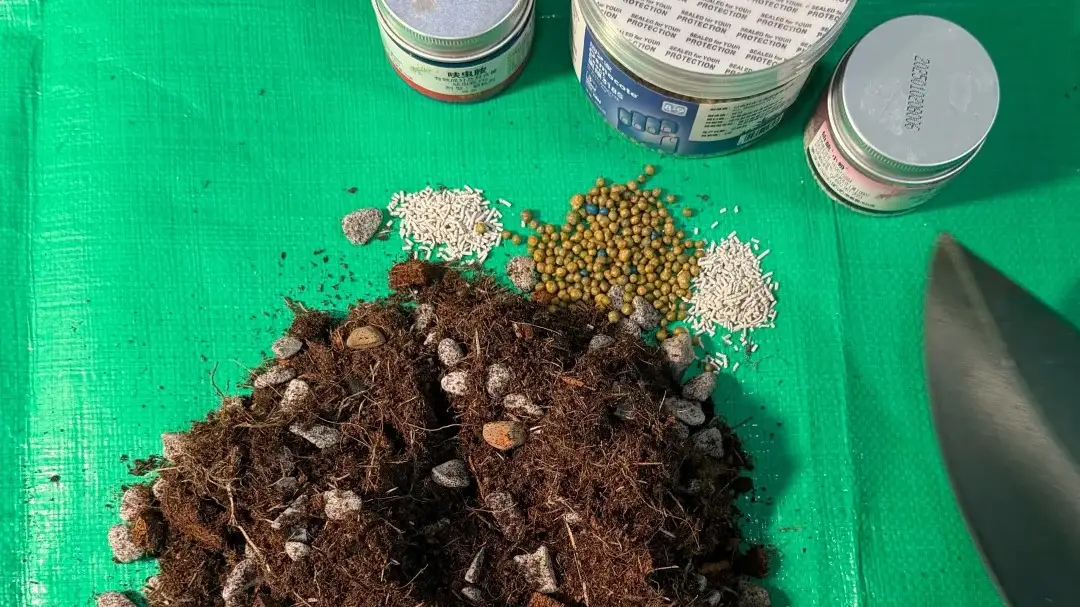
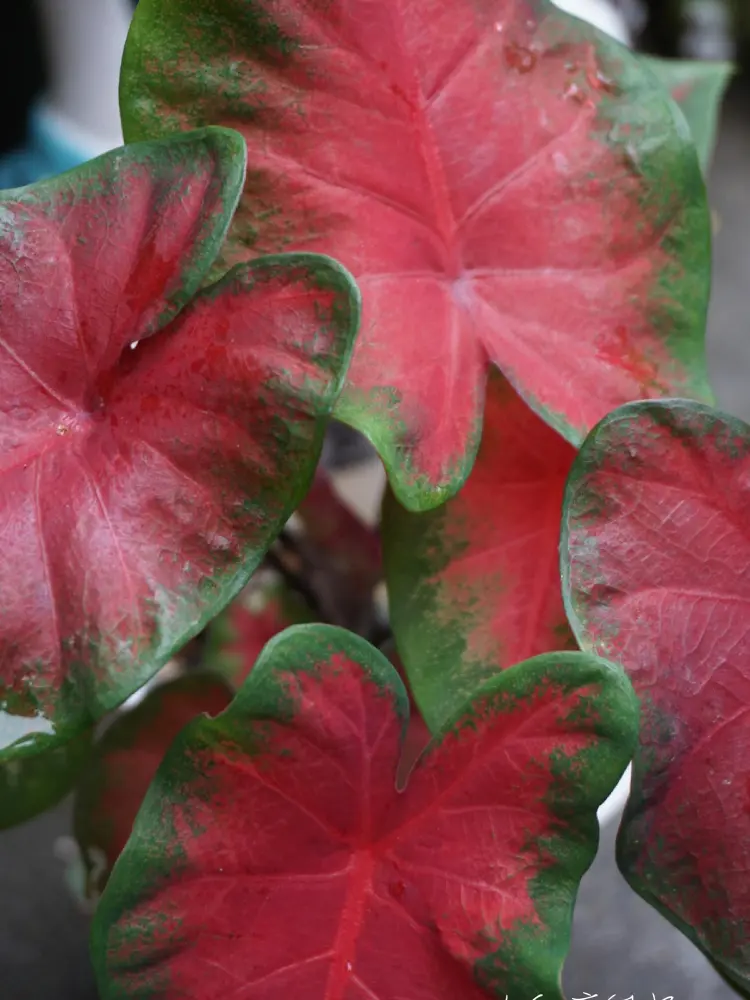
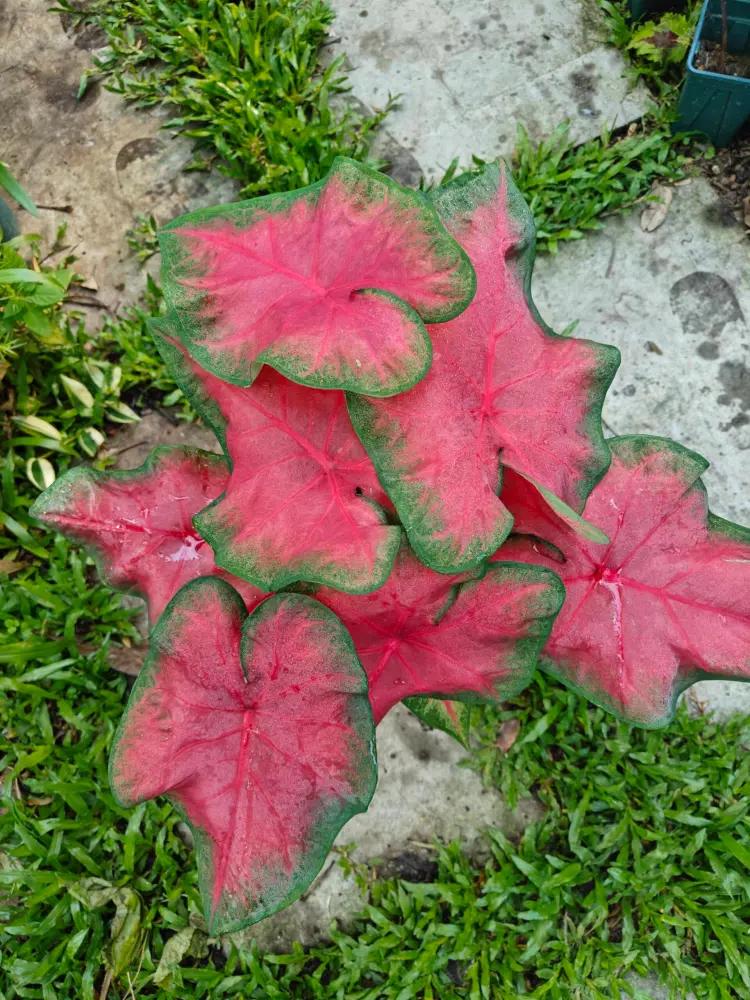
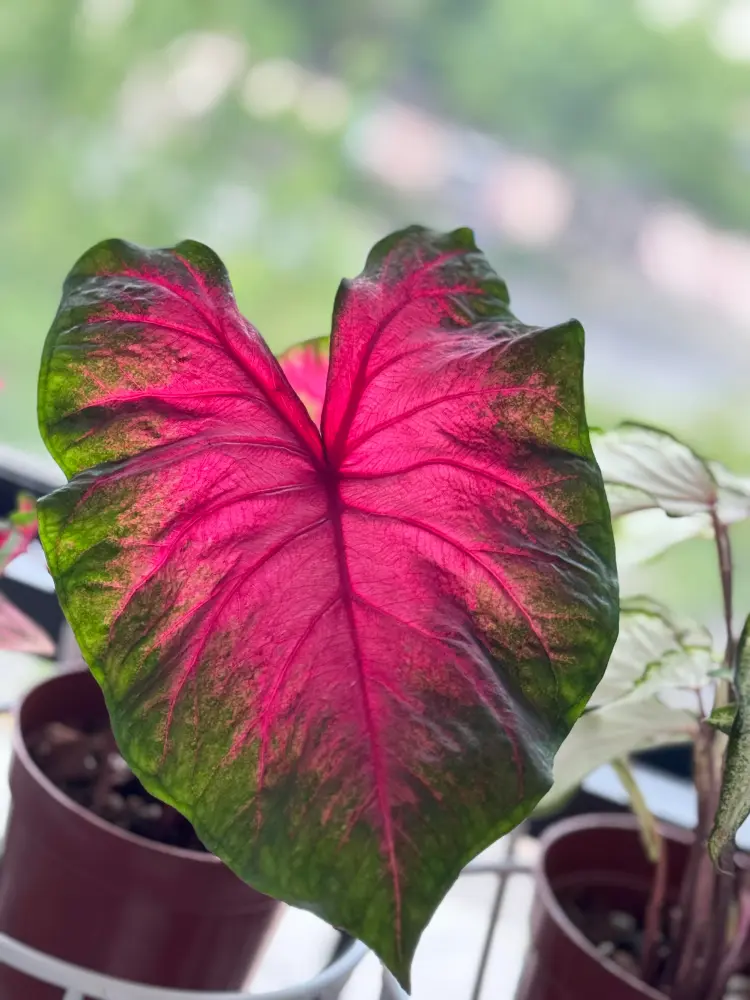
Frieda Hemple looks like a classic red caladium at first: a strong red center, a green margin, and clean heart-shaped leaves. It has that familiar red-and-green pattern many people expect from older caladium varieties.
But the more I grew it, the more I noticed that its color did not feel fixed. Under stronger sunlight, the leaves had an almost metallic look, as if the red surface was catching the light. In softer indirect light, the same plant felt calmer and more painterly, closer to an oil painting than a glossy red leaf.
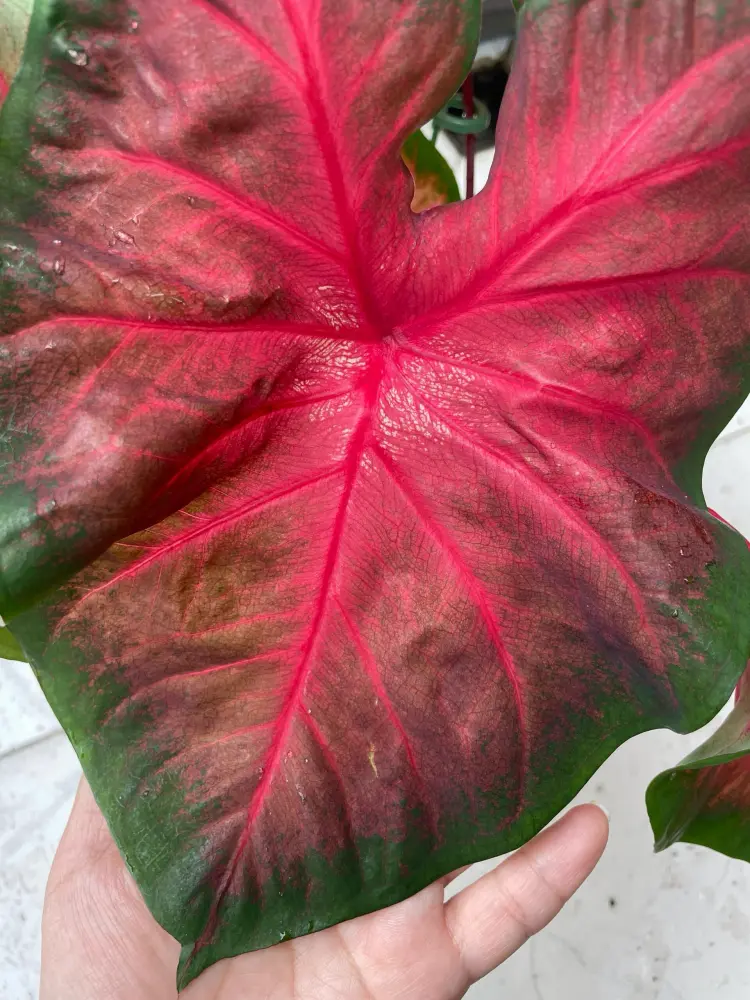
The young plant surprised me too. At one stage, I even found the back of the leaf more interesting than the front, especially when sunlight passed through it and brought out the warm red tones.
This is only my observation from growing Frieda Hemple in a container, not a formal way to identify the variety. But in my setup, it became more interesting once I stopped looking at it as just another red-and-green caladium and started noticing how much the leaf texture changed with light.
What Frieda Hemple Looks Like in Real Life
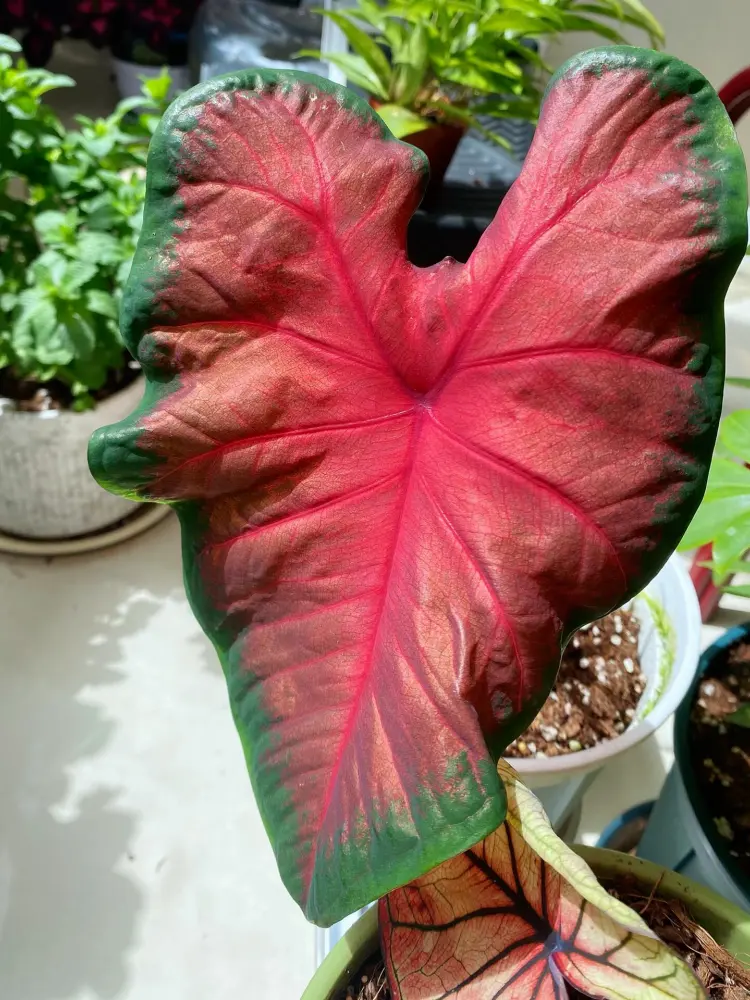
Frieda Hemple has a cleaner red-and-green look than some darker red caladiums. The red center is the main focus, while the green margin frames the leaf clearly. It does not feel as blended or heavy as Postman Joyner. The charm is in how direct and classic the pattern looks.
On mature leaves, the red area can look broad and confident without becoming messy. The green edge stays visible enough to give the leaf structure, so the whole plant has a clear heart-shaped red center rather than a heavily mottled or shadowed look.
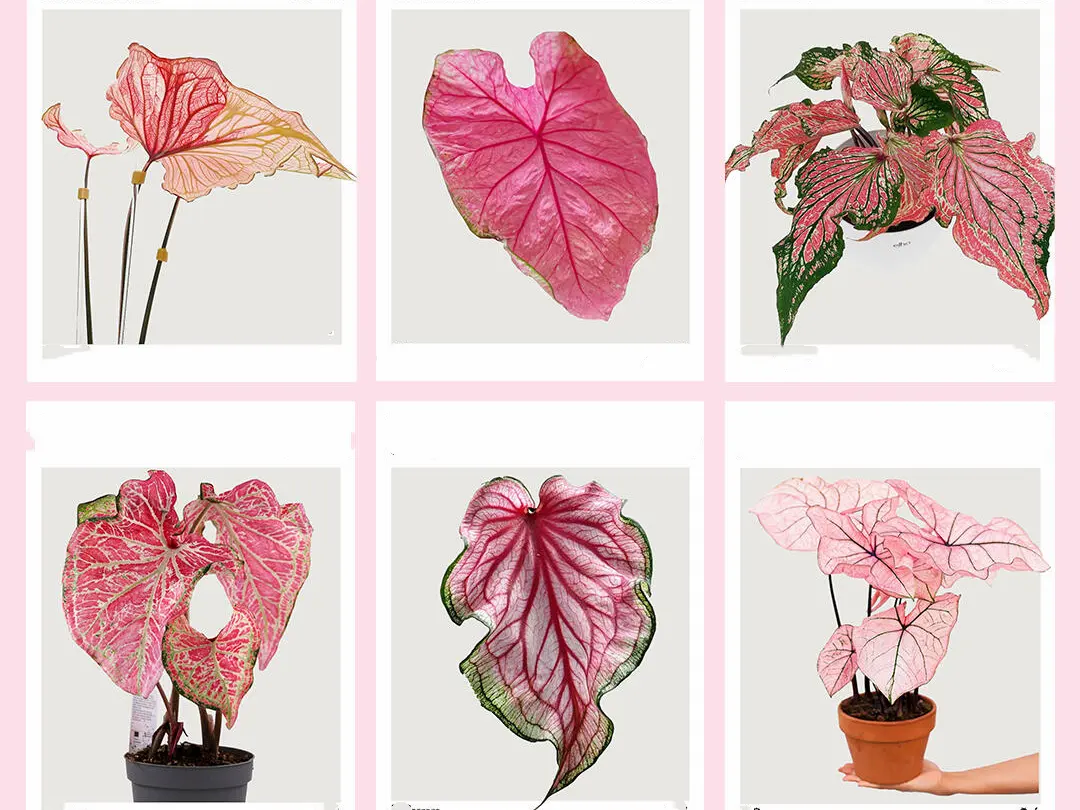
Compared with softer pink caladiums, Frieda Hemple feels more straightforward. It is not delicate or pastel. It has a stronger, more traditional red caladium presence, which is exactly why it works well as a classic variety in a mixed collection.
Sunlight vs Indirect Light: The Texture Change I Notice
The most interesting part of Frieda Hemple for me is how different it looks under different light. In stronger light, the red surface can look almost metallic, especially when the leaf catches the sun at an angle. It is not that the leaf becomes a completely different color, but the surface reflects light in a way that makes the red feel sharper and more polished.
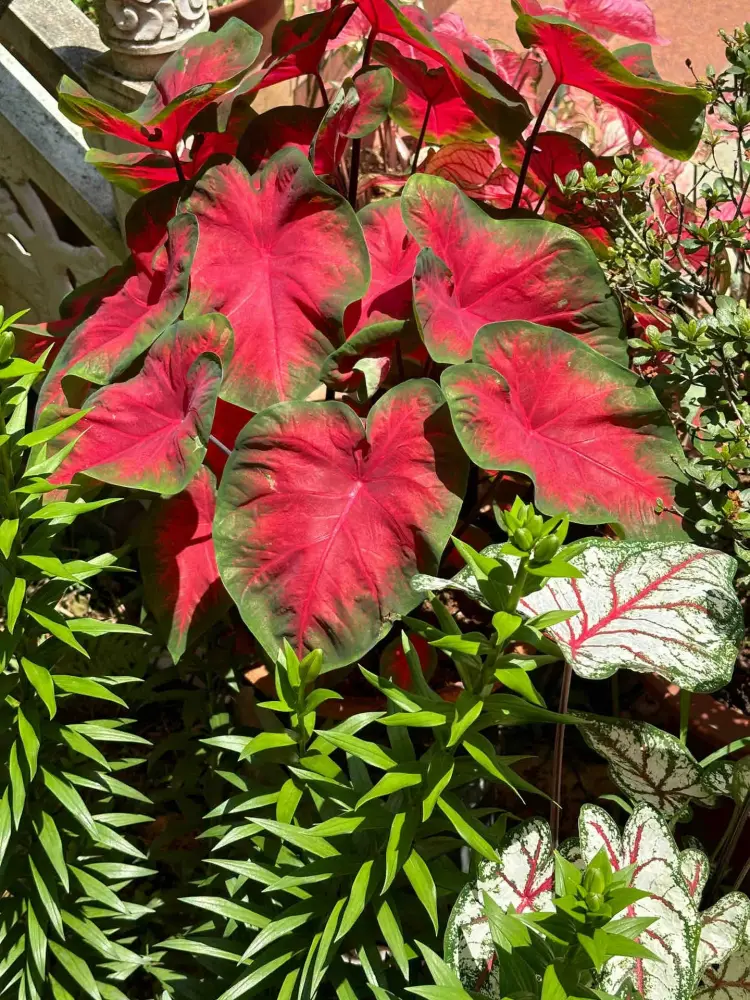
In softer indirect light, the same plant feels much calmer. The red and green look less shiny and more painterly, almost as if the color has been brushed onto the leaf instead of reflected from it. This is the version of Frieda Hemple that feels more like an oil painting to me.
I noticed this even more when the plant was still young. At one stage, the back of the leaf looked more interesting than the front, especially in sunlight. The red tones showed through in a softer way, and the whole leaf felt warmer and more layered.
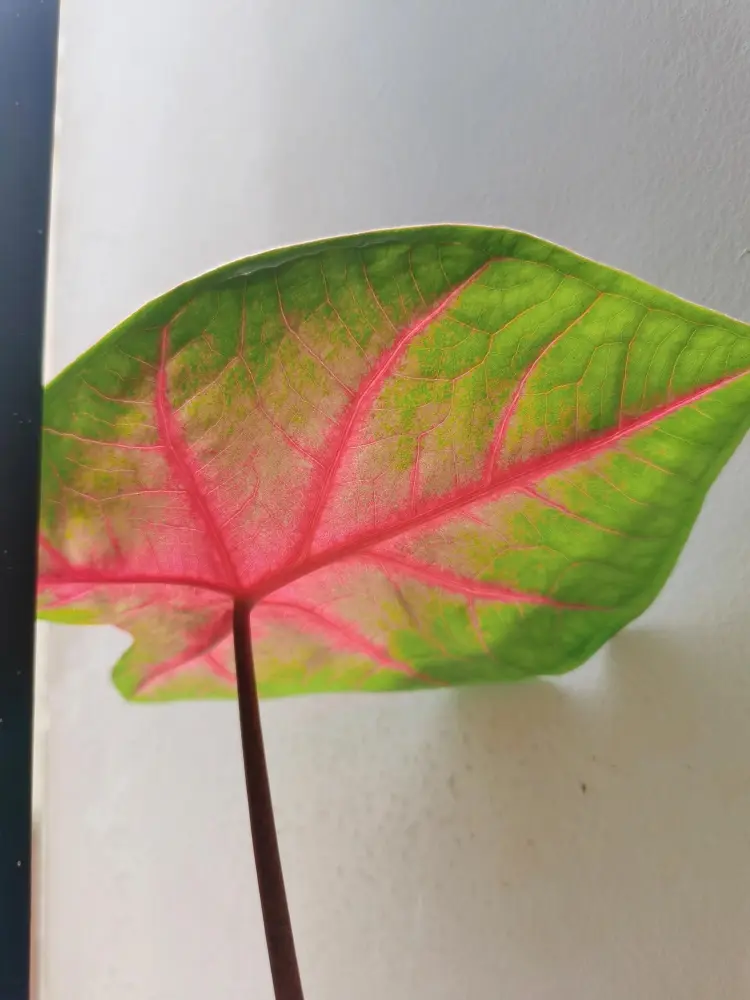
I would not use this as a reason to push Frieda Hemple into harsh sun, though. The texture may look beautiful when sunlight catches the leaf, but caladium leaves can still burn, fade, or dry at the edges if the light is too strong or the pot gets too hot. For me, this is more about observing how the plant responds to light, not forcing it into the strongest sun possible.
Frieda Hemple vs Postman Joyner vs Florida Cardinal
If I had to compare Frieda Hemple with other red caladiums, I would put Postman Joyner Caladium and Florida Cardinal beside it first. They all share the classic red-center and green-edge look, so it is easy to confuse them in seller photos or when the leaves are still young.
But they do not give me the same feeling in real life. Frieda Hemple looks cleaner to me. The red center is more direct, and the green border usually feels clearer. Postman Joyner feels darker and more blended, especially as the leaf matures and the edge becomes deeper. Florida Cardinal often reads brighter and more straightforward, with a stronger “classic red caladium” effect.
| Feature | Frieda Hemple | Postman Joyner | Florida Cardinal |
|---|---|---|---|
| Main look | Clean red center with green margin | Darker red center with green margin | Bright red center with green edge |
| Color mood | Classic, clean, defined | Darker, heavier, more blended | Brighter, more direct |
| Edge impression | Clearer green border | Edge can look darker or more shadowed | Usually cleaner red-green contrast |
| Easy to confuse? | Yes | Yes | Yes |
| Best way to compare | Mature leaves under similar light | Mature leaves under similar light | Mature leaves under similar light |
I would not identify any of them from one product photo alone. Camera color, leaf age, and light can make red caladiums look more similar than they really are. For me, the safest comparison is still mature leaves placed under similar light, especially if I am looking at the red center, the width of the green edge, and whether the colors feel clean or blended.
How I Would Grow Frieda Hemple Indoors
I would not grow Frieda Hemple in a dark corner if I wanted the red color to stay strong. In my indoor setup, I would give it bright indirect light and watch how the leaf surface responds. If the room becomes too dim, I would rather adjust the placement or use a caladium grow light indoors than expect the red center to stay rich on weak light alone.
A little gentle sunlight can make Frieda Hemple look beautiful, especially when the leaf catches the light and shows that metallic surface. But I would still be careful with long, hot direct sun behind glass. The color may look stronger for a while, but the leaf edges can dry or stress if the pot gets too warm.
Watering is the other part I would watch closely in a container. Frieda Hemple looks strong because of its bold red leaves, but that does not mean I would keep the pot constantly wet. I would follow the same basic rhythm I use for watering caladiums indoors: let the pot dry down enough, then water properly instead of giving frequent small amounts.
If Frieda Hemple starts looking dull, slow, or smaller than expected, I would check the whole setup before blaming the variety. Weak light, cool nights near a window, or a pot that stays wet too long can all slow it down. In that situation, I would treat it more like a caladium not growing problem and adjust the conditions before trying to force new growth.
What I Learned When Storing the Tubers
Because I keep many potted plants at home, I do not always overwinter every caladium in its pot. With Frieda Hemple, I chose to store the tubers instead. This was partly a space decision, not because I think digging up tubers is always the best method for every grower.
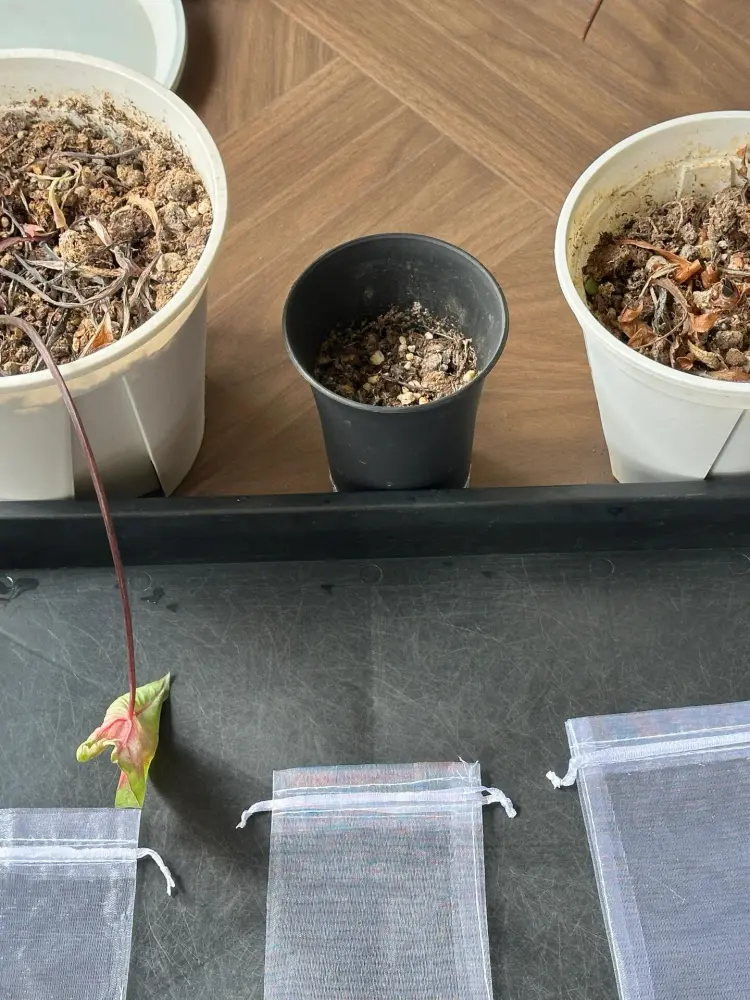
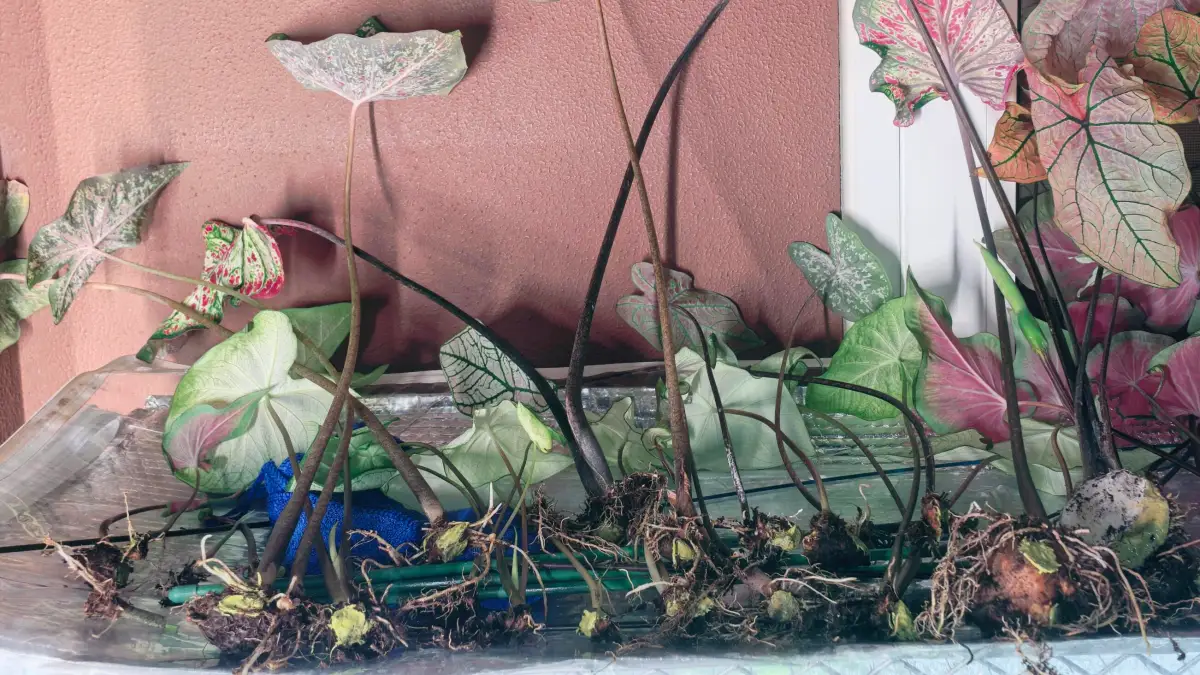
After I stopped watering and let the plant slow down, I dug up the tubers, removed the old roots and leaf remains, and placed them in a small mesh bag. I then let them dry completely before storing them in a shaded, well-ventilated place. The goal was not to keep them damp or active, but to let them rest safely until the next warm growing season.
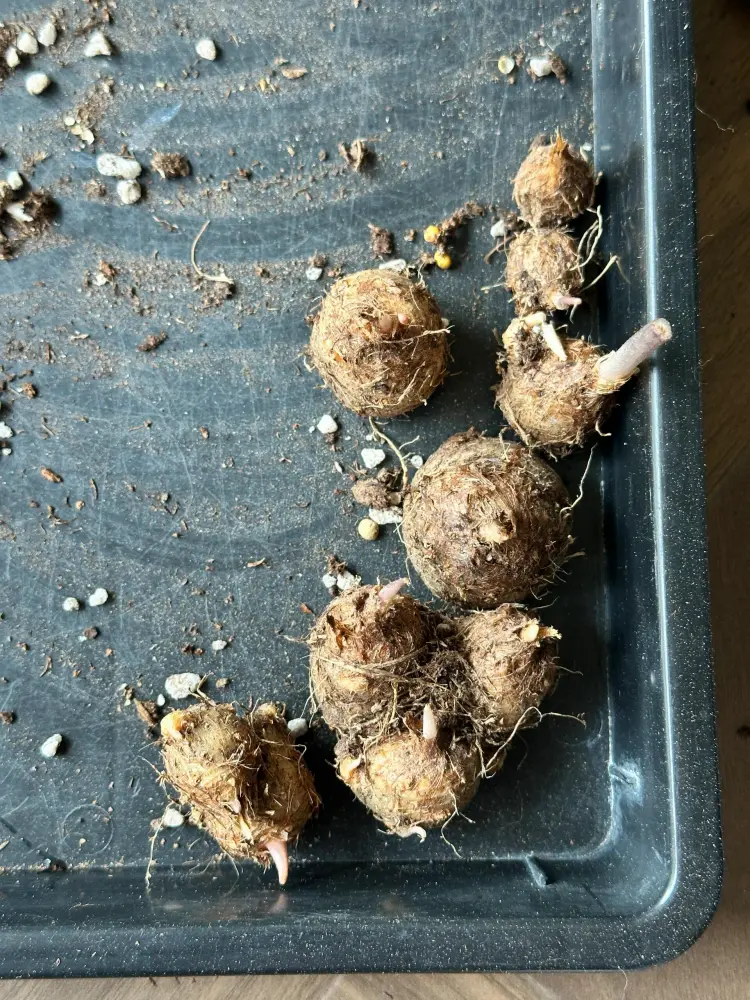
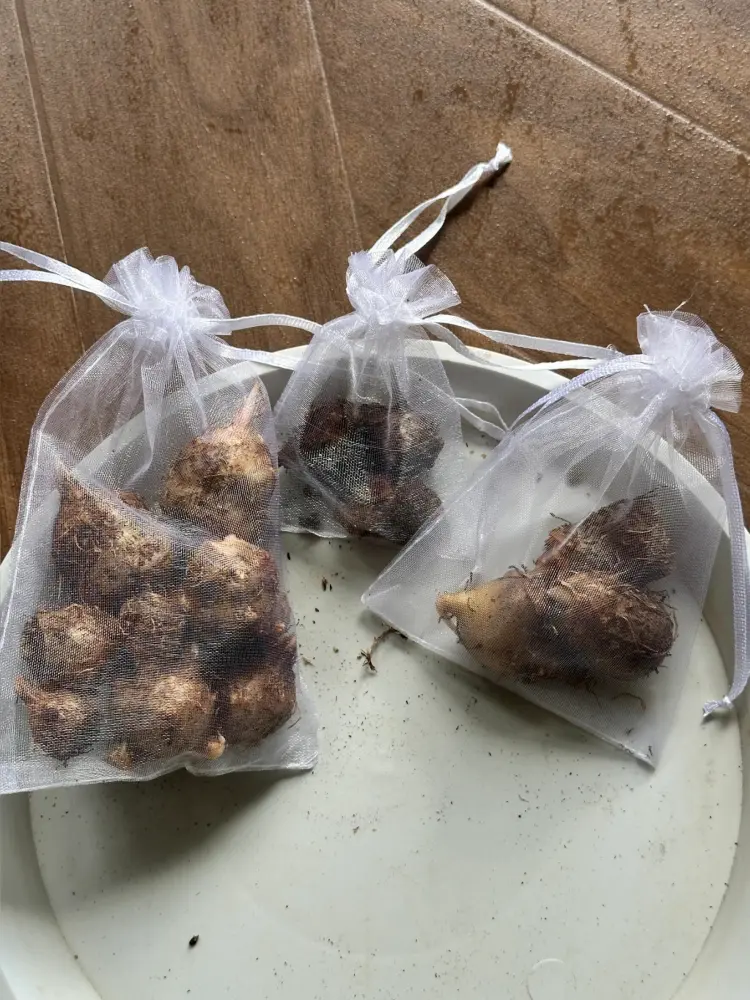
One thing I would not skip again is gloves. Caladium tissue can be irritating, and cleaning tubers with bare hands can make your skin hurt afterward. It is such a small step, but it makes the whole process much easier and safer.
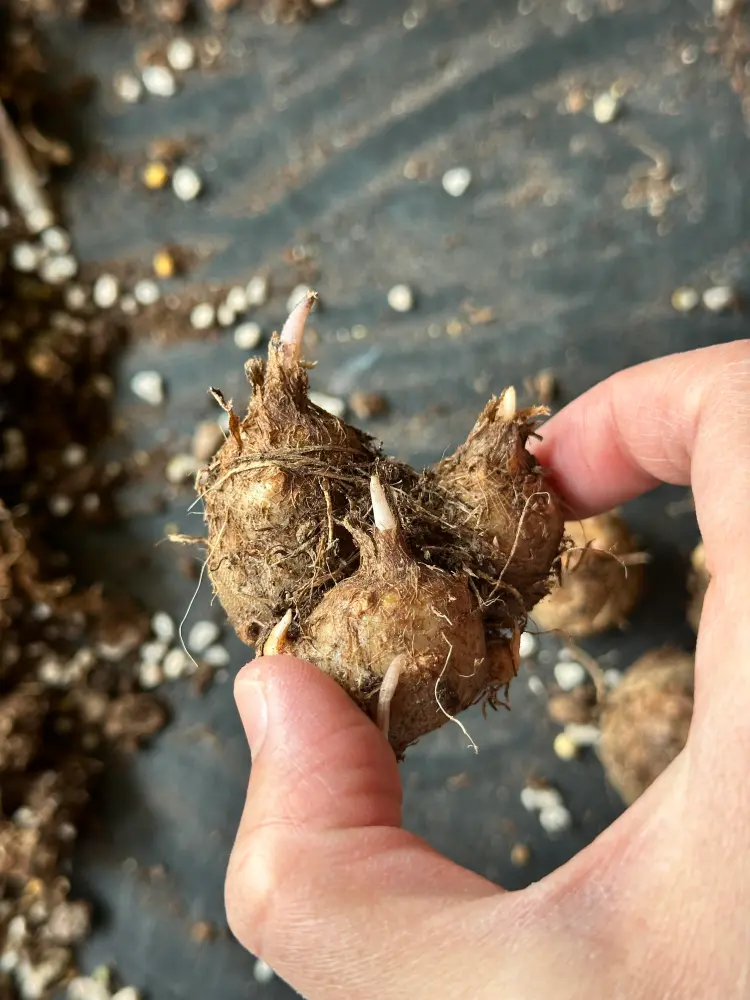
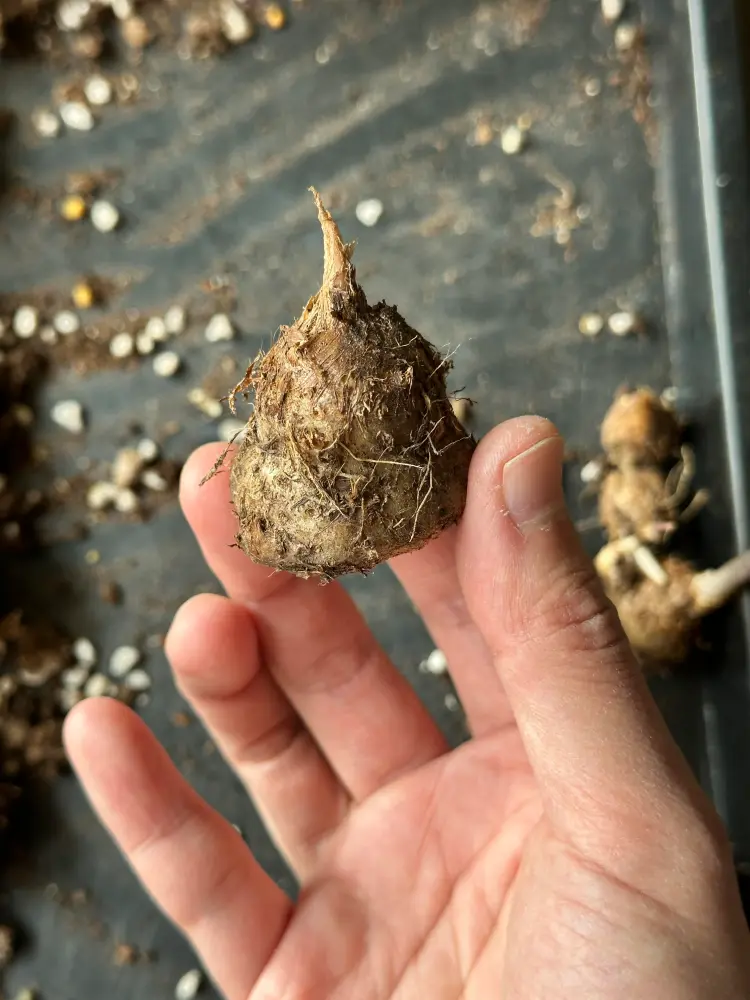
For beginners, I would still be more conservative. If you are not sure how dry the tuber should be, or if you are worried about rot during storage, leaving the tuber in the pot to rest may feel less risky. I have a separate guide on how I store caladium bulbs over winter, but I would still treat digging and storage as one option, not the only correct method.
For me, storing Frieda Hemple as a tuber felt practical because I needed to clear pot space. But if I had fewer plants or felt unsure about storage, I might simply winter over caladiums indoors in their pots and let them rest until the next warm season.
Why Frieda Hemple Grew on Me Over Time
Frieda Hemple is not the strangest caladium in my collection, and it is not trying to be. Its beauty is more classic than unusual: a clean red center, a clear green margin, and a shape that feels familiar in the best way.
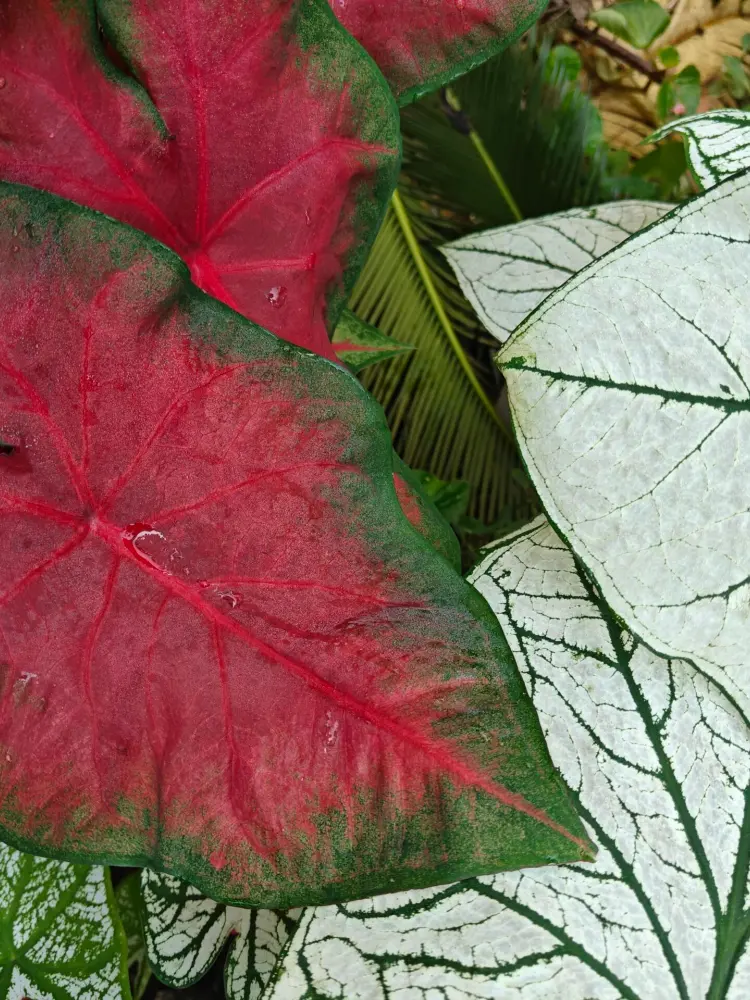
What made me appreciate it more over time was not just the red color, but how much personality the leaves gained under different light. The plant looked stronger in sun, softer in indirect light, and more layered than I expected from a simple red-and-green caladium.
I would recommend Frieda Hemple to someone who likes clean red-centered caladiums and wants a classic variety rather than something overly unusual. It is direct, steady, and easy to understand visually, but not boring once you spend time watching it.
FAQ
Want to Explore Other Caladium Varieties?
If you want to keep comparing red caladiums, you may also like my notes on Postman Joyner Caladium and Red Flash Caladium. They do not look exactly the same as Frieda Hemple, but they are helpful if you want to compare red centers, green margins, and how different red varieties behave in containers.
Browse All Caladium Varieties →