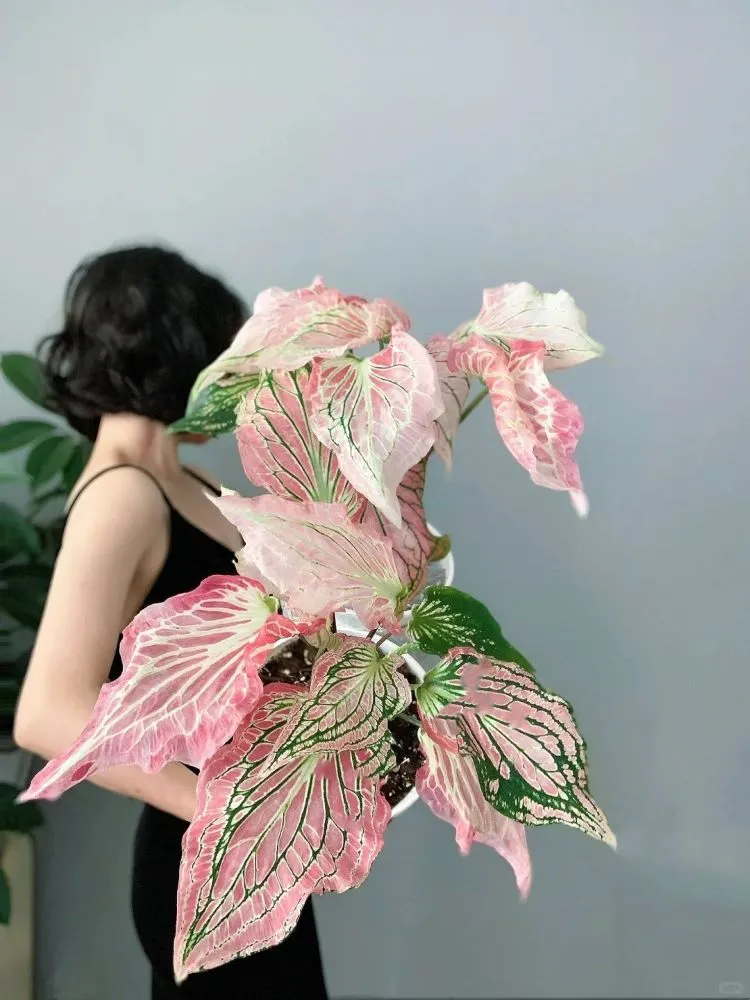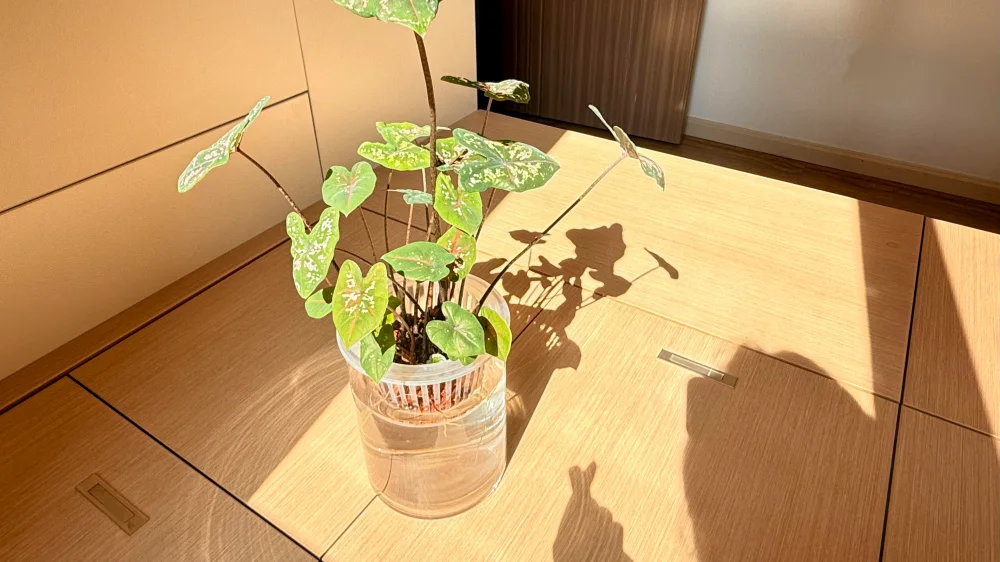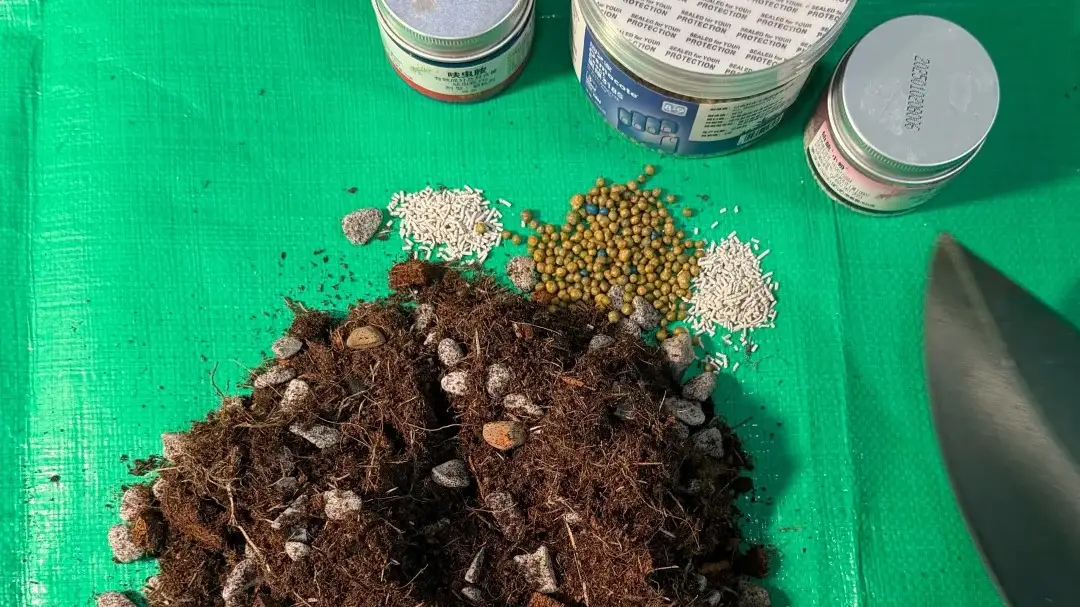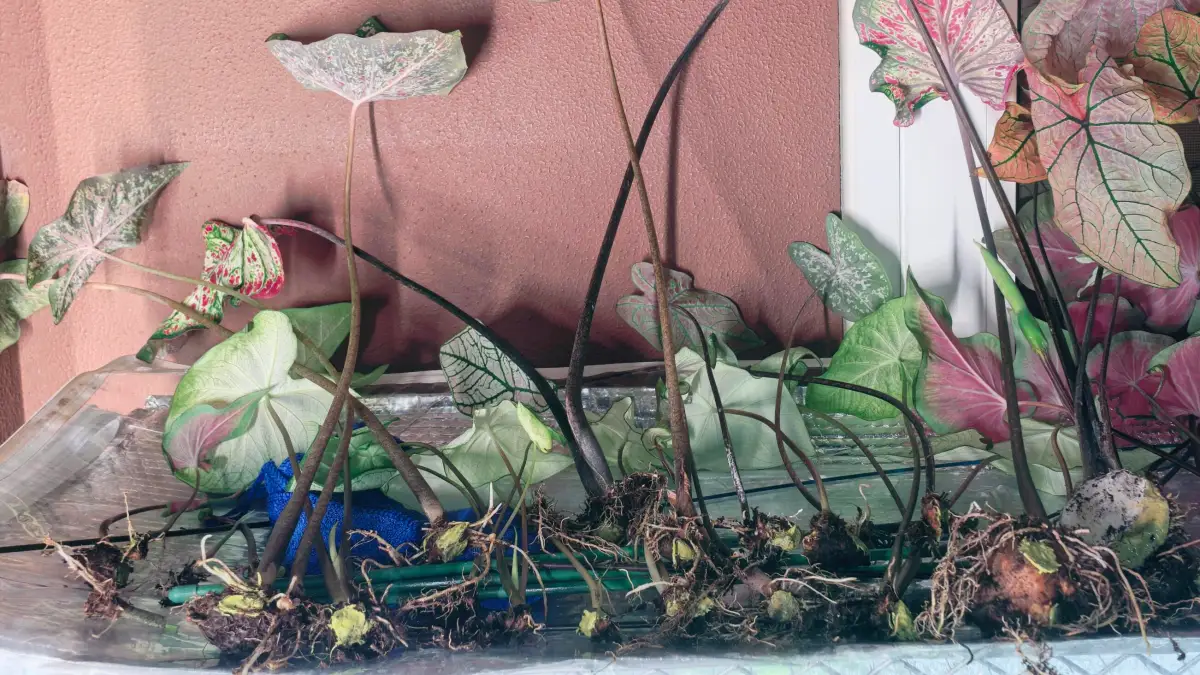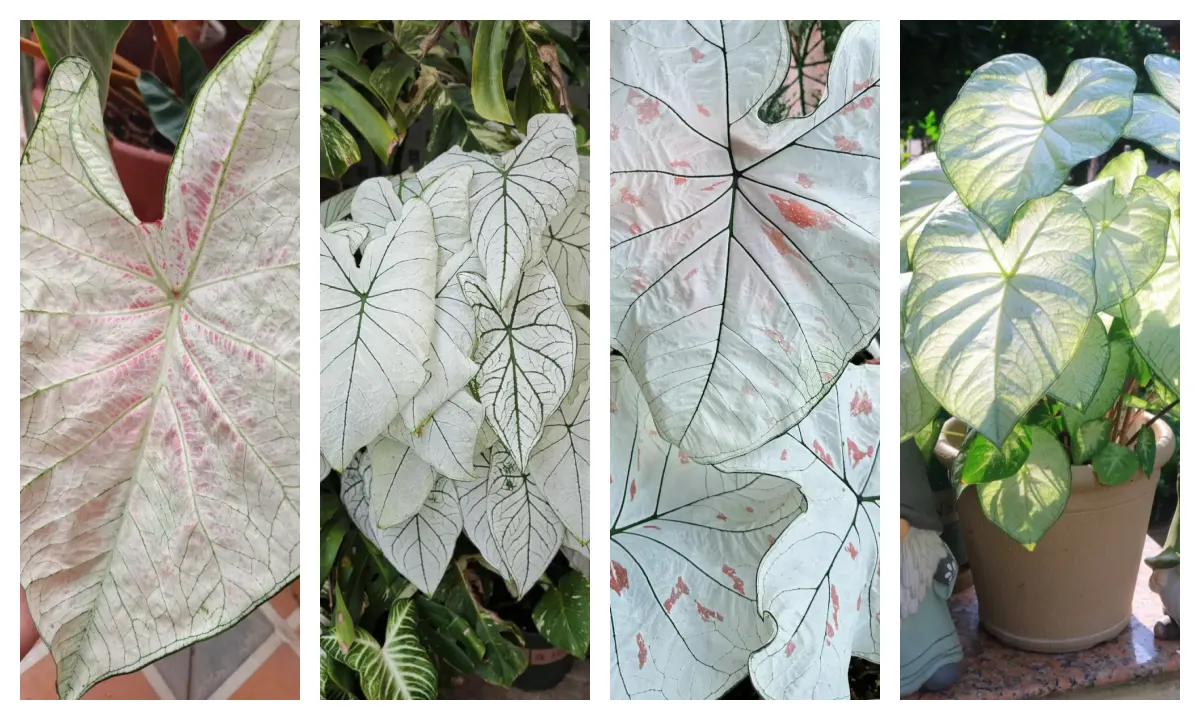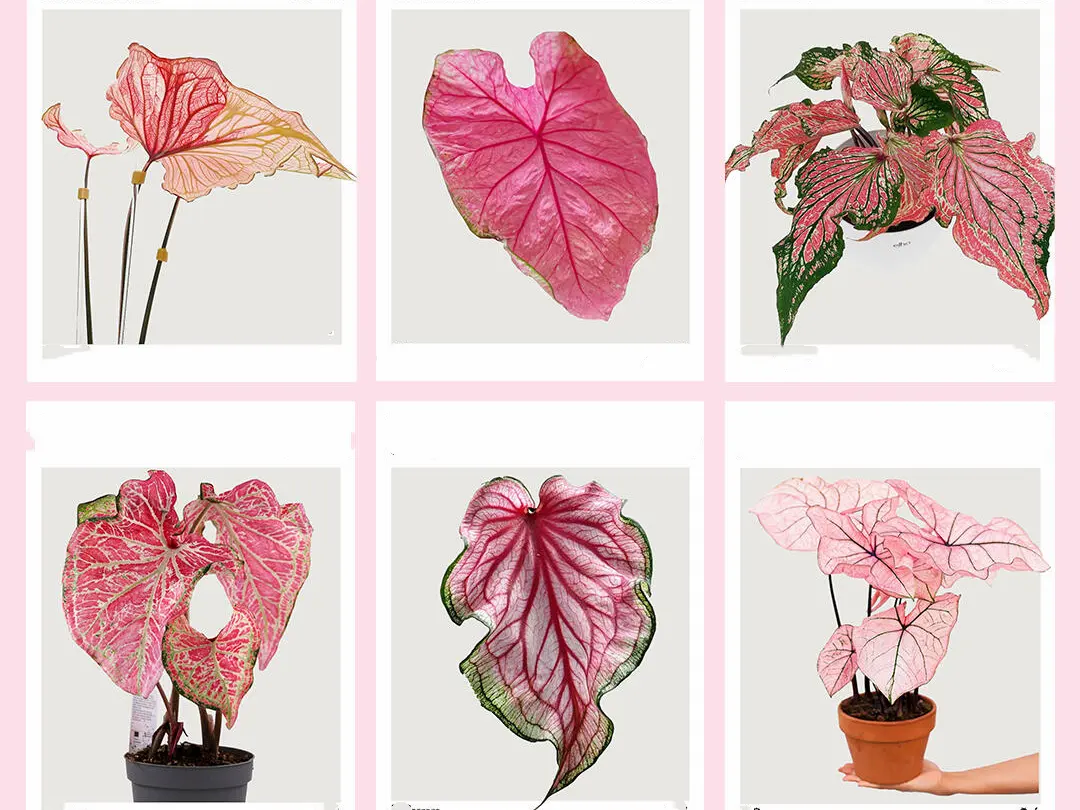
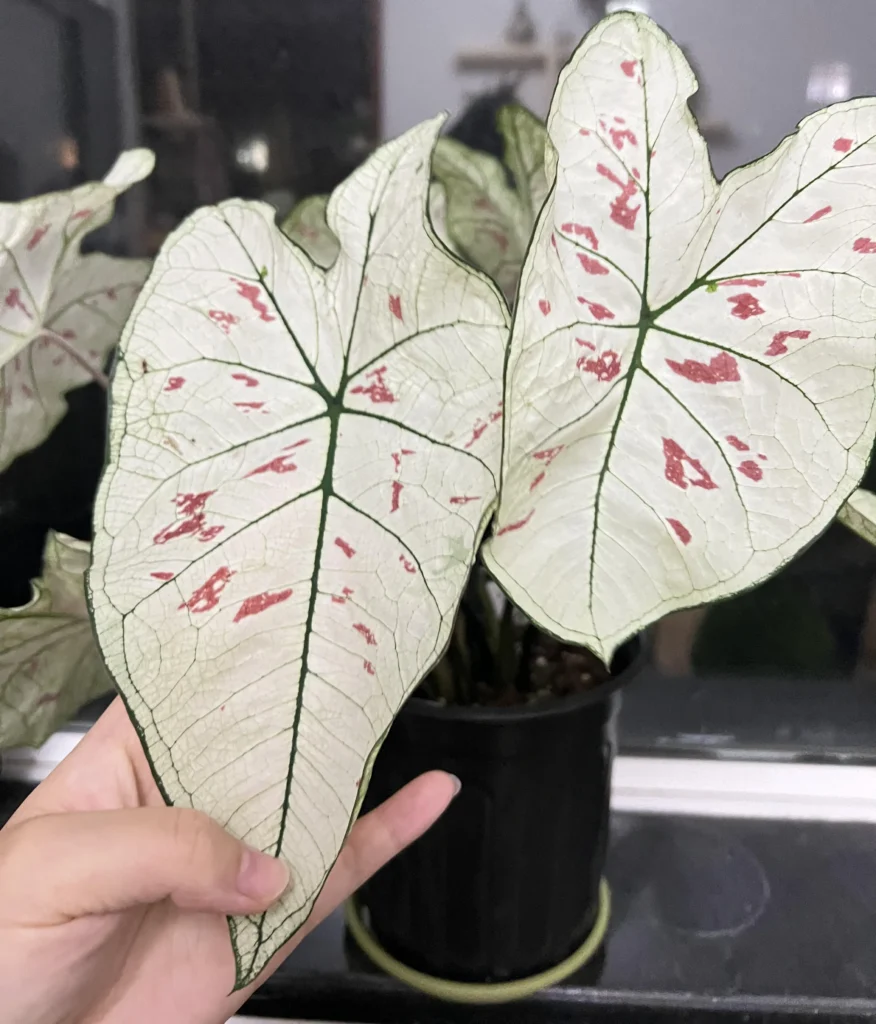
When I first saw Strawberry Star caladium, I bought it almost instantly. At the time, I was already drawn to lighter caladiums, especially the ones that felt softer and cleaner rather than loud. Strawberry Star stood out even within that group. The color looked more like a freshly cut strawberry — pale, juicy, and slightly translucent, with green edging that made the leaf feel brighter instead of heavier. It was not dramatic in the usual sense, but it had the kind of softness that made me stop and look twice.
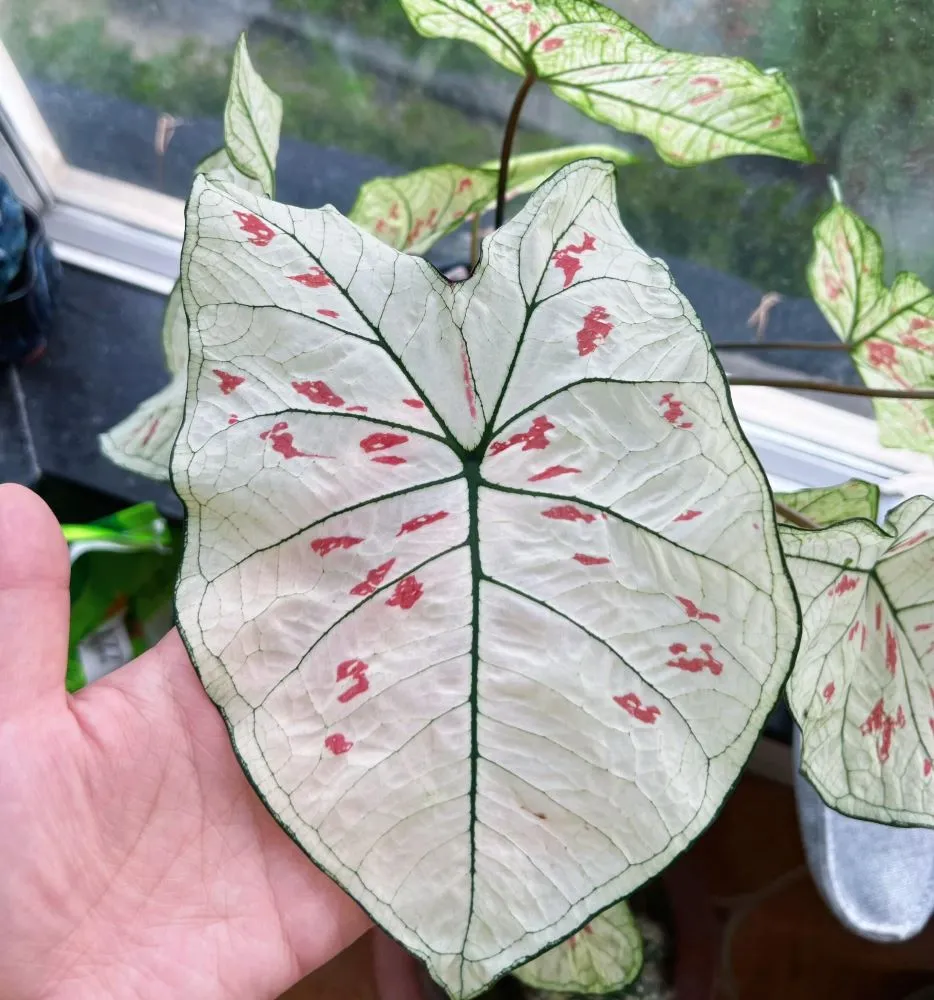
And when it finally arrived, it was even more beautiful than I expected. Some plants disappoint a little once they are out of the seller’s lighting and filters. This one did the opposite. The leaves looked fresher, more delicate, and somehow more convincing in person. That was why I had such high hopes for it from the beginning — not just because it was pretty, but because it felt like one of those varieties that could become unforgettable if it settled in well.
What this plant taught me
- Drooping did not always mean thirst.
- The hardest part was reading the pot during slow-drying indoor weather.
- A larger terracotta pot did not fix stress once the plant was already unstable.
- New leaves told me more about recovery than the damaged old ones did.
What Went Wrong in My Indoor Setup
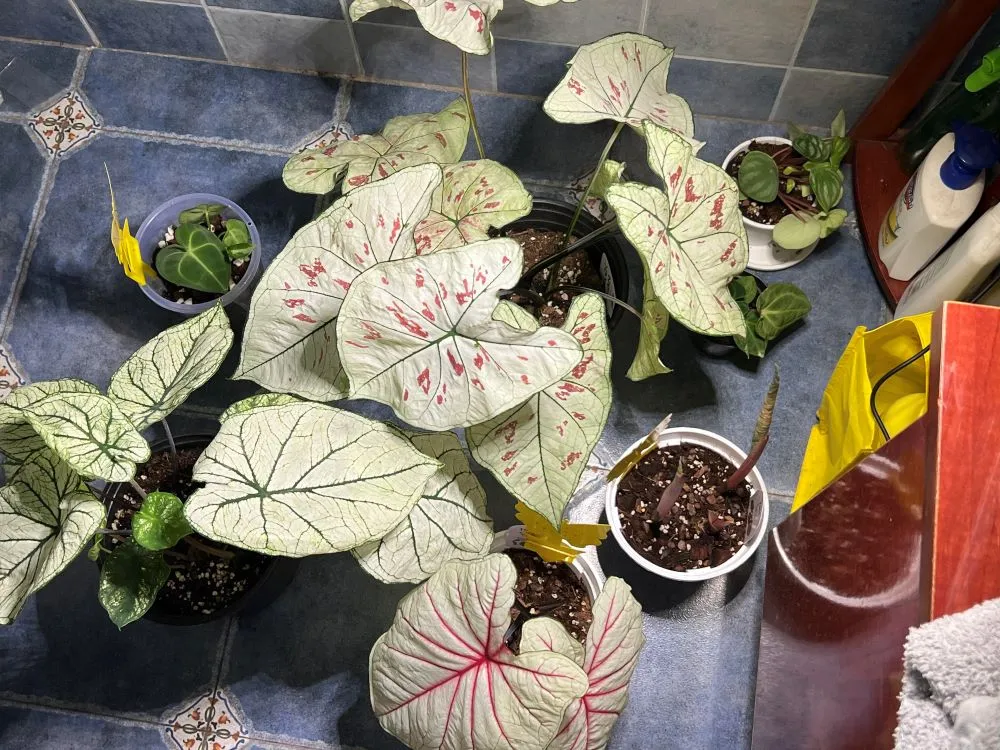
The trouble started during one of those long damp stretches that always make indoor growing harder for me. The light stayed flat, the air felt heavy, and nothing dried as quickly as I wanted it to. That was when Strawberry Star started drooping.
What made it difficult was that I was already nervous about overwatering, so I hesitated to water even when the plant looked weak. But then when I finally did water, it sometimes seemed to perk up a little. That only made the situation harder to read. I could not tell whether I was dealing with thirst, slow root stress, or both. So I kept second-guessing myself — waiting too long, then watering, then worrying I had made the wrong call again.
Later I added a grow light and extra airflow after watering, trying to help it push through that slow, wet stretch indoors. In a way, it did survive that period. The plant did make it through nearly a month of that kind of weather without fully collapsing. But surviving that stretch turned out to be different from actually recovering. Even once the weather became brighter and warmer again, it still did not rebound the way I expected.
That was when I made the next move that I thought would help: I repotted it into a larger terracotta pot. I hoped the extra space and more breathable material would improve the situation. Instead, the decline became more obvious. After watering, the flopping was heavier rather than lighter. More leaves started collapsing, the edges began to crisp and burn, and the whole plant looked increasingly unstable. I even tried staking it upright, but by then the support was mostly cosmetic. It could hold the leaves up for a moment, but it was not solving the problem underneath.
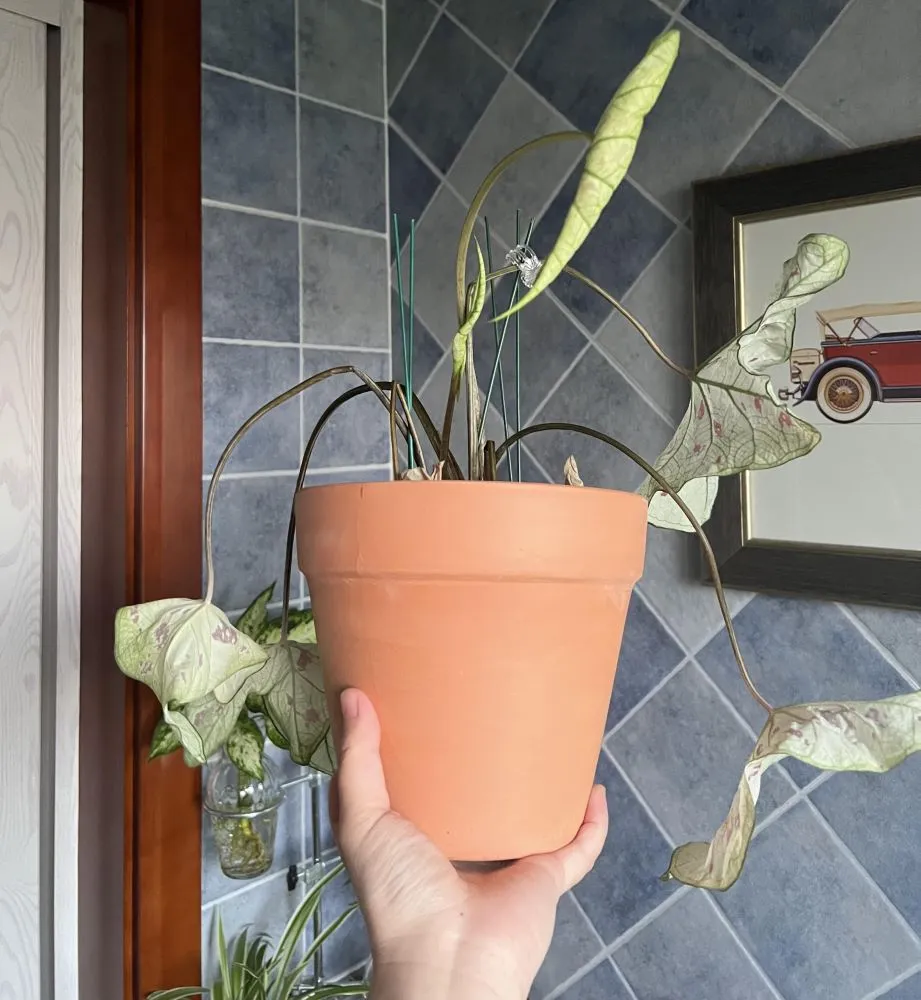
That whole stretch taught me that this was not a simple case of “needs more water” or “needs less water.” In my indoor setup, especially during slow-drying weather, Strawberry Star became much harder to read than its beautiful leaves had led me to expect.
What the Plant Was Actually Telling Me
Looking back, the biggest mistake I made was trying to reduce the whole situation to a simple answer. I kept asking whether Strawberry Star wanted more water or less water, when the real problem was that the root zone had become much harder to read in a slow-drying indoor setup.
The drooping was not necessarily a clean sign of thirst. In a slow-drying indoor setup, especially during a long damp stretch, the root zone can become much harder to read. The top of the pot may not look alarming, but the lower part of the pot can still be drying far too slowly underneath. In that kind of situation, watering may seem to help for a moment, yet the plant can still remain unstable because the real problem is not only moisture itself, but how slowly that moisture is leaving the pot.
That is why I no longer think of this variety as something I can describe with easy phrases like “it likes water” or “it likes sun” and stop there. Those descriptions are too flat to be useful. What mattered much more in my experience was how the plant reacted to the entire container environment — the pace of drying, the airflow around the pot, the weight of the soil mass, and how quickly the roots could move back into a fresher rhythm after watering.
So to me, Strawberry Star feels less like a difficult plant in the absolute sense and more like a variety that reacts very clearly to container conditions. When the setup stays fresh, bright, and breathable enough, it can look beautiful. But when the environment turns slow, damp, and harder to read, it starts sending signals that are much easier to misinterpret than I expected.
How I Knew It Was Still Recoverable
At its worst, Strawberry Star looked bad enough that I thought I might lose the whole plant. The older leaves were flopping, the edges were burning, and the whole thing no longer looked ornamental in any meaningful sense. But one thing stopped me from giving up on it completely: new leaves were still coming.
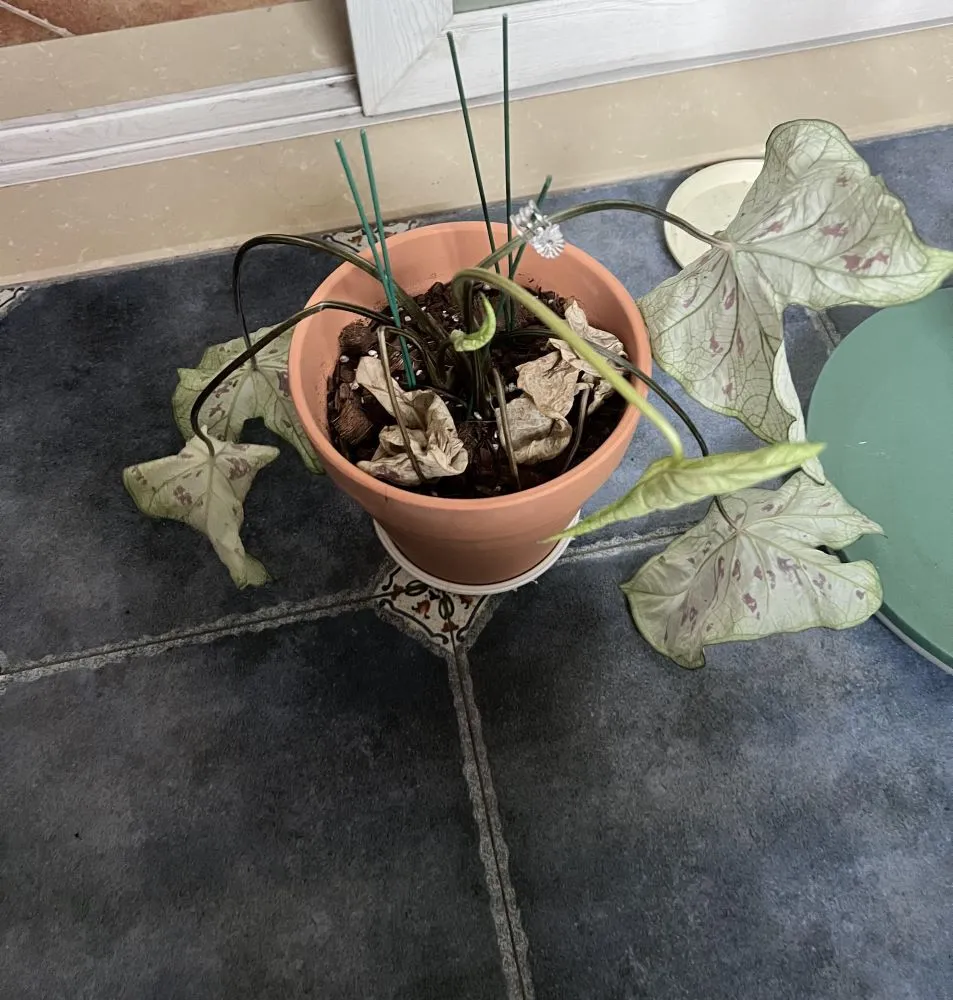
That mattered much more than the condition of the older leaves. The old leaves looked awful, but as long as the plant was still pushing new growth, I no longer felt comfortable treating it as finished. That was the shift that helped me read it more clearly. A caladium can look terrible above the soil and still have enough life left underneath to rebuild.
So for me, the sign of recovery was never that the damaged leaves stood back up or started looking beautiful again. They did not. The real sign was that the plant kept replacing them. Over time, the old leaves mattered less simply because the newer ones slowly took over. The recovery was gradual, not dramatic, but it was real. What had looked like a lost plant eventually turned back into a smaller, healthier pot of growth.
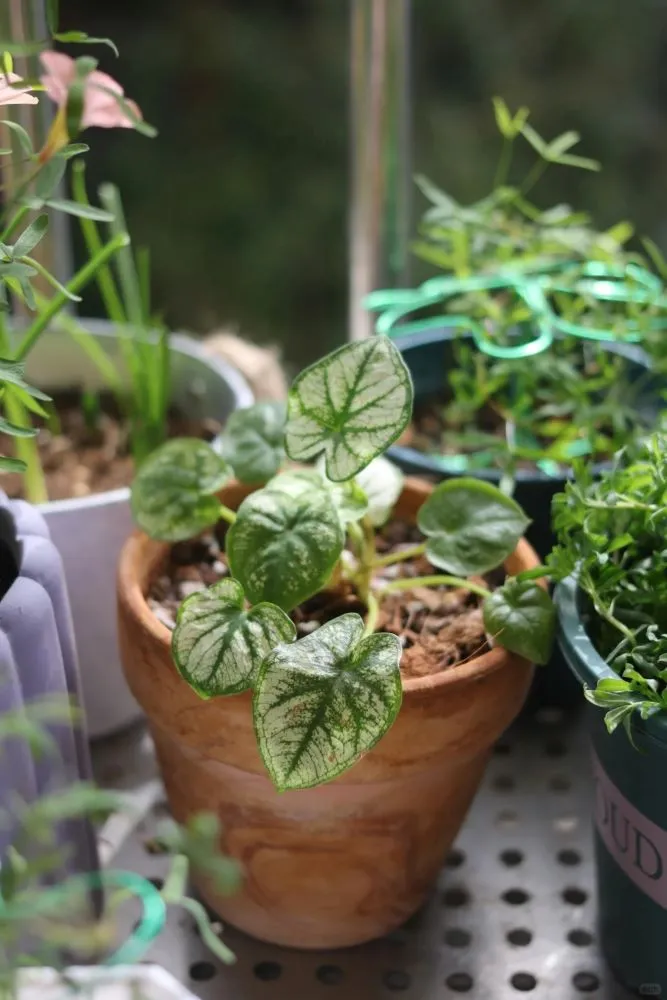
That is probably the most useful thing this variety taught me: ugly old leaves do not always mean the whole plant is beyond saving. If new leaves are still emerging, I pay much more attention to that than to whether the older foliage still looks presentable.
Is It Still Worth Growing?
I think it is — but not because it stays perfect.
To me, Strawberry Star is worth growing because when it looks good, it has a softness that is genuinely hard to replace. But I would not call it a very forgiving, low-attention caladium. If what you want most is a plant that is easy to read and unlikely to punish small mistakes, this may not be the one I would choose first.
But if you do not mind paying attention, adjusting as conditions shift, and learning from a plant that reacts clearly to its setup, then I think Strawberry Star becomes much more convincing. Not because it is effortless, but because it rewards closer observation in a way that many prettier-on-paper plants never quite do.
FAQ
Want to Explore Other Caladium Varieties?
Florida Sweetheart is just one of many caladium varieties that behave differently in containers. If you’re curious how other types compare, you can browse the full collection of varieties below.
Browse All Caladium Varieties →