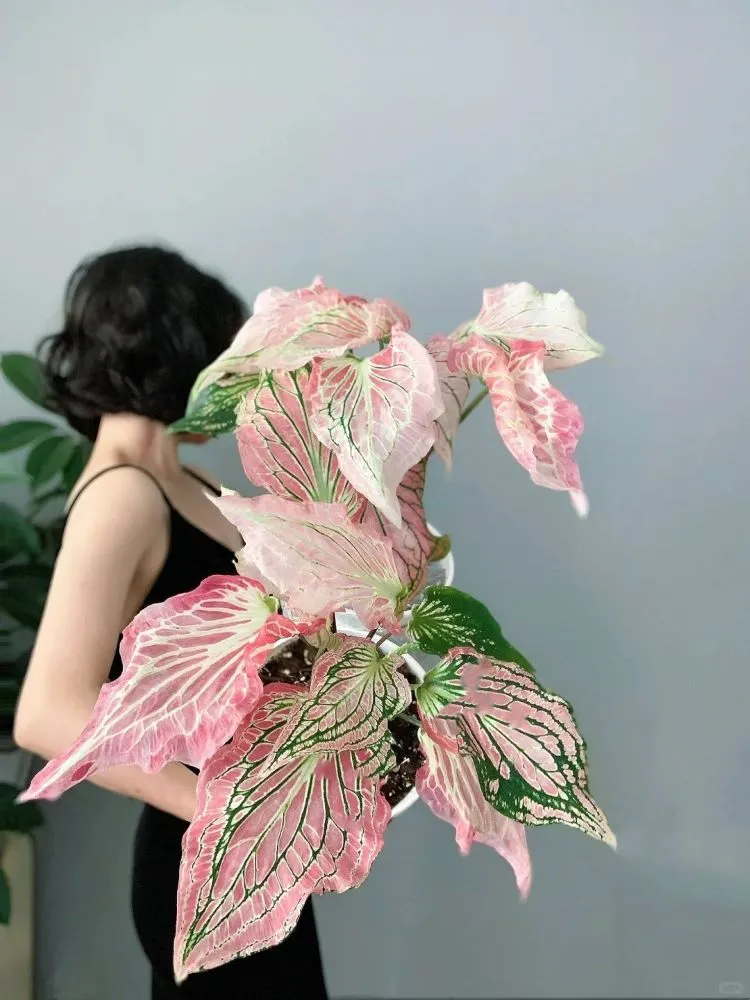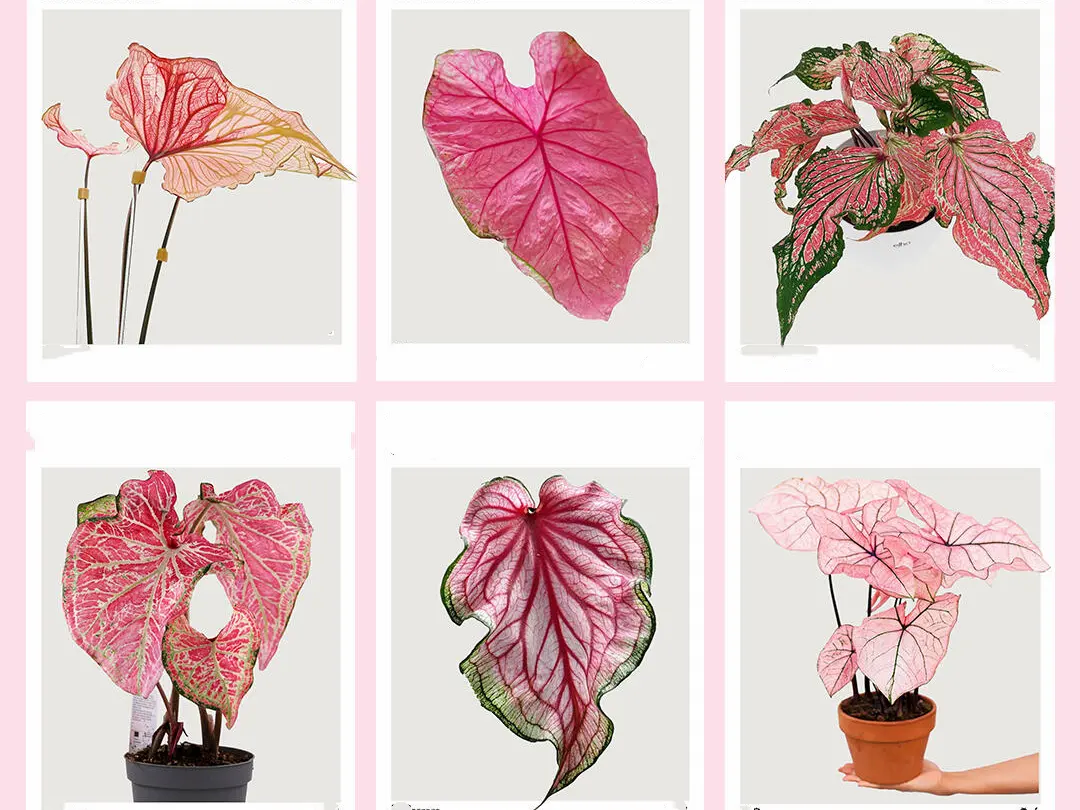
Rosebud is another red-and-green caladium, but it does not feel harsh or overly bright to me. The pink center and green margin could easily look too strong on a larger plant, but on Rosebud, the whole effect feels softer and more charming.
What makes it memorable is the balance between color and size. It has enough contrast to stand out, but the plant itself feels neat and compact rather than dramatic. That makes it easier to enjoy indoors, especially if you do not have room for a large, spreading caladium.
This is only my observation from growing Rosebud in a container, not a rule for every plant in every climate. But in a small indoor setup, it has felt like one of the easier pink-heart caladiums to place.
What Rosebud Looks Like in Real Life
Rosebud has the classic pink-heart look that many people associate with softer caladium varieties. The center of the leaf carries a rose-pink to pink-red tone, while the green margin frames the color and keeps the whole leaf from looking too intense.
What makes it work for me is the transition between the colors. The pink center does not usually jump straight into the green edge. There is often a paler area, sometimes close to white, around the center or along the veins. That softer transition makes the red-and-green combination feel gentler than it sounds.
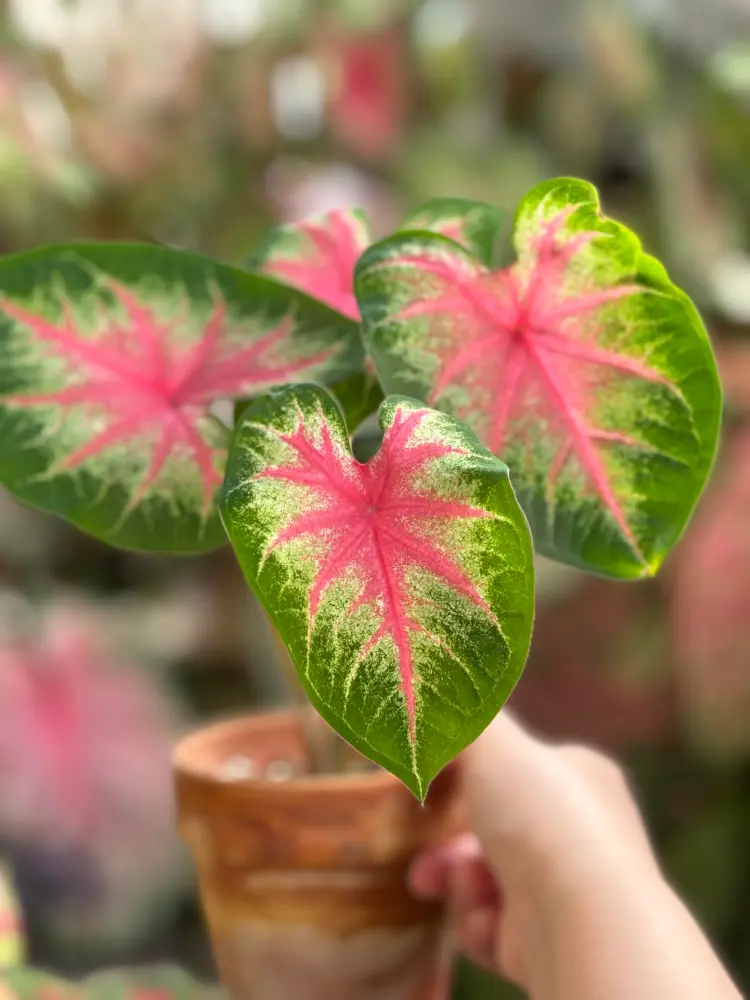
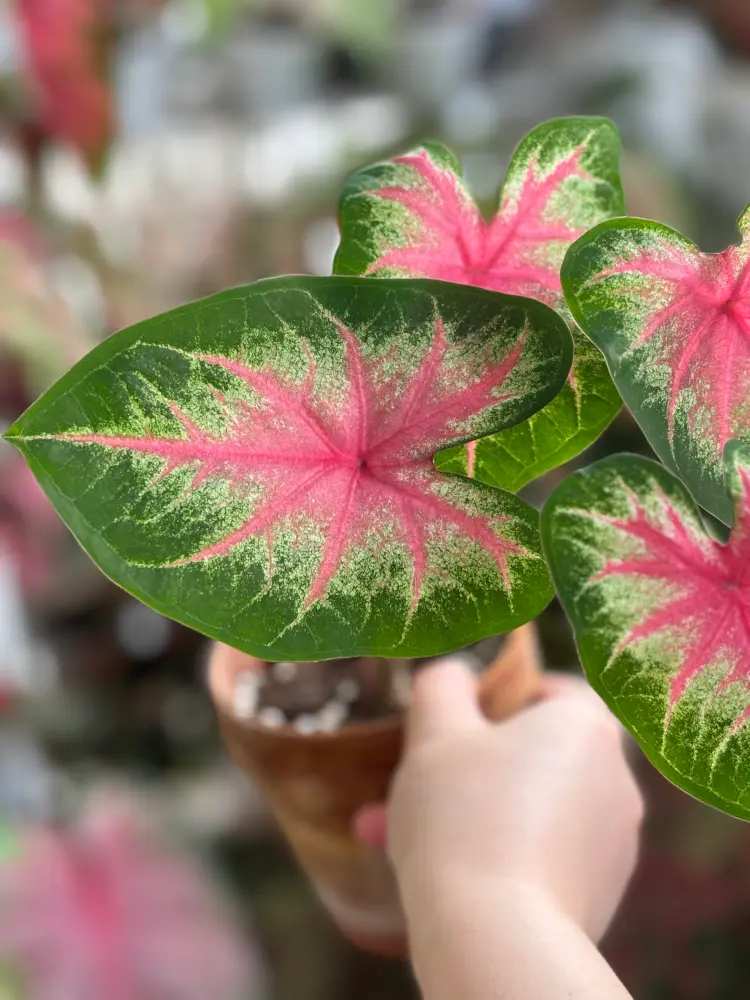
The detail I would pay attention to is the balance between the pink center, the pale transition, and the green edge. Rosebud does not look like a flat red-and-green leaf. The softer middle area gives the pattern more depth and makes the leaf easier to recognize when it is mature.
Why Rosebud Works Well in a Small Indoor Space
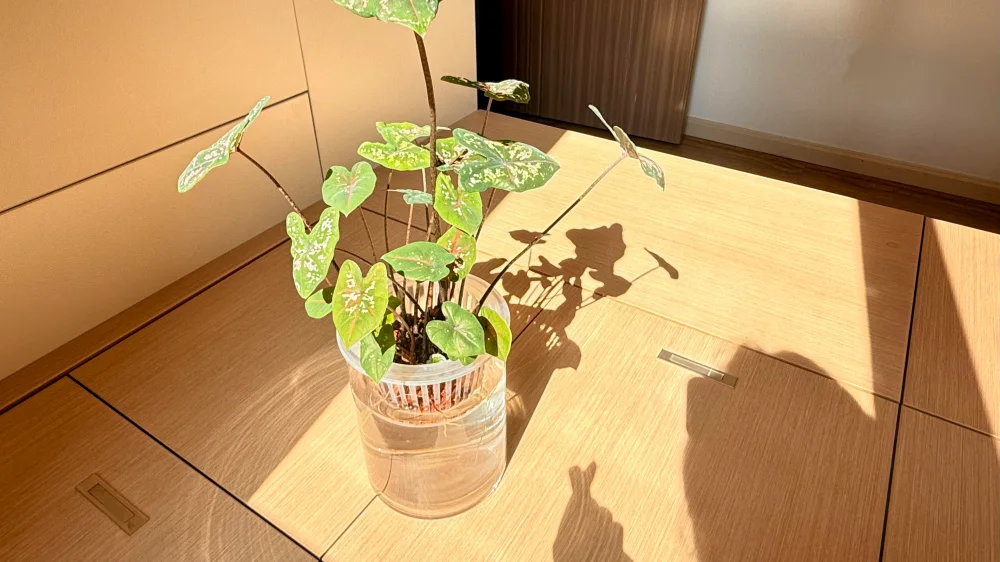
One of the reasons I like Rosebud is that it feels easier to place indoors than many larger caladiums. Some fancy-leaf caladiums can become wide very quickly, especially when they are grown from strong tubers. Rosebud, at least in my container setup, has a more compact presence.
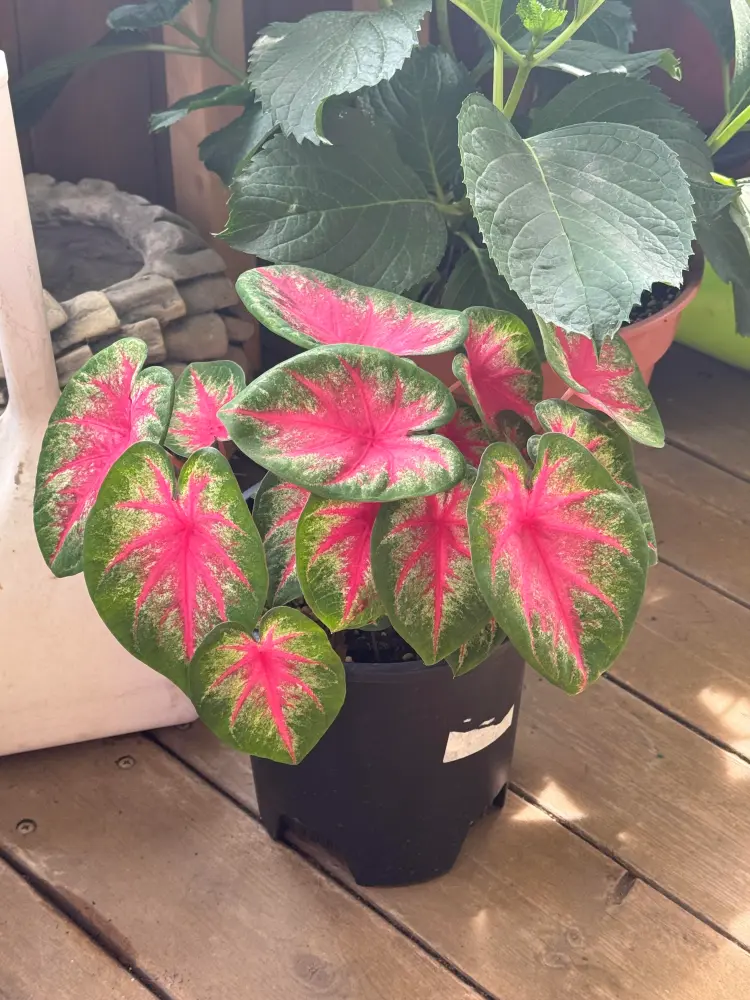
That makes it a good candidate for a bright windowsill, a small plant shelf, or a corner where a large caladium would feel too crowded. It still gives the color and pattern I want from a caladium, but it does not demand as much visual or physical space.
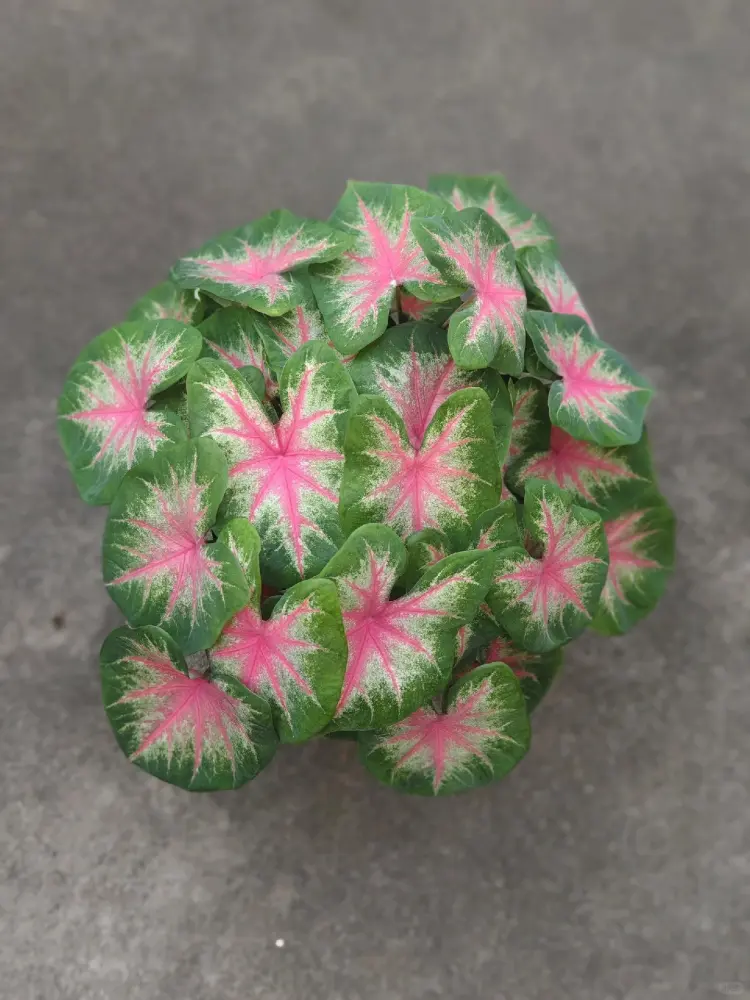
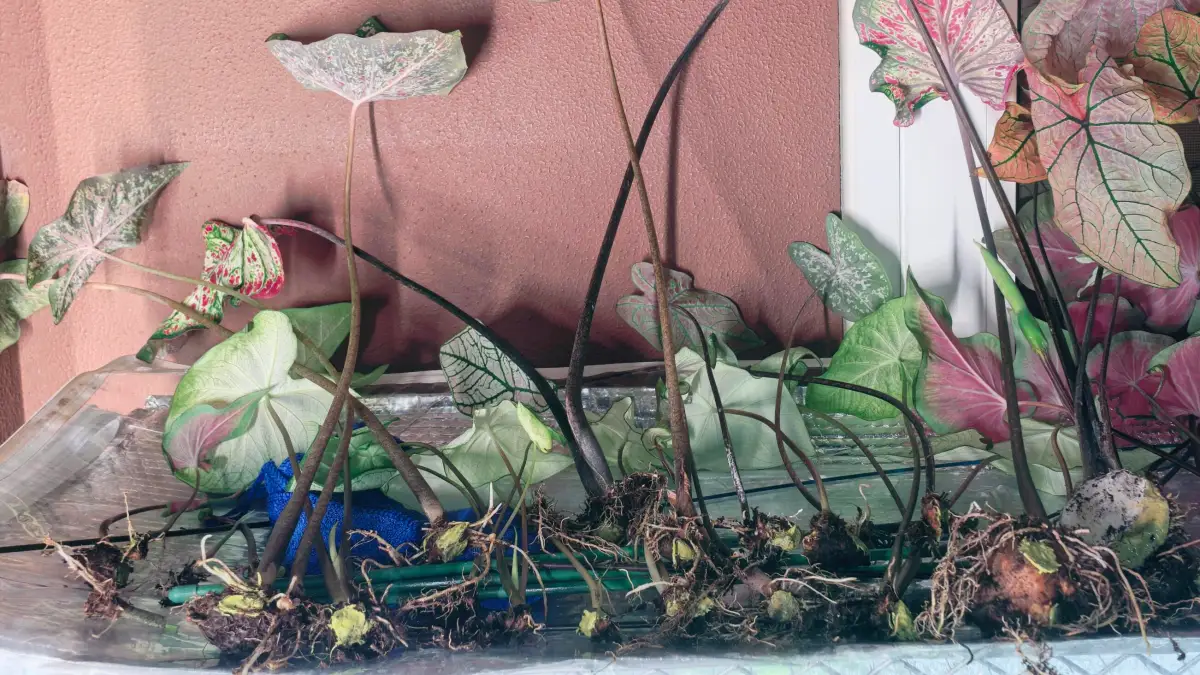
I would not promise that Rosebud will always stay tiny. Caladium size still depends on the tuber, warmth, light, feeding, and how long the growing season lasts. I have seen how much caladium bulb size can affect leaf size, so a strong tuber in ideal conditions can always produce a fuller plant than expected.
But compared with the large, dramatic caladiums that quickly take over a pot, Rosebud feels more manageable. For indoor growers who want a compact caladium with color, but do not have room for huge leaves, that smaller scale is part of its appeal.
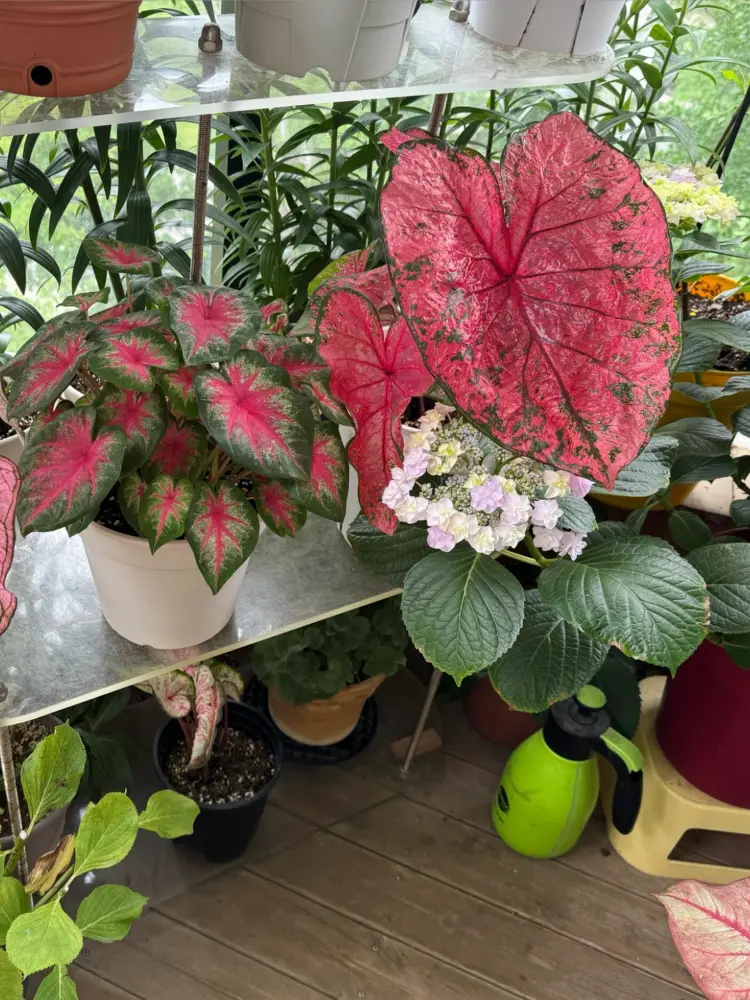
Rosebud vs Rose Glow: Why These Two Pink-Heart Caladiums Are Easy to Confuse
Rosebud and Rose Glow are easy to mix up because they share the same general color idea: a pink center, a pale white or light area around the middle, and a green margin. In photos, especially seller photos, that combination can make them look almost interchangeable at first glance.
I would still treat them as separate names unless the seller clearly says otherwise. To me, Rosebud feels more like a classic pink-heart caladium: softer, smaller-looking, and a little more old-fashioned in a charming way. Rose Glow, by comparison, seems to emphasize the “glow” effect more — a brighter pink center surrounded by a frosty white halo.
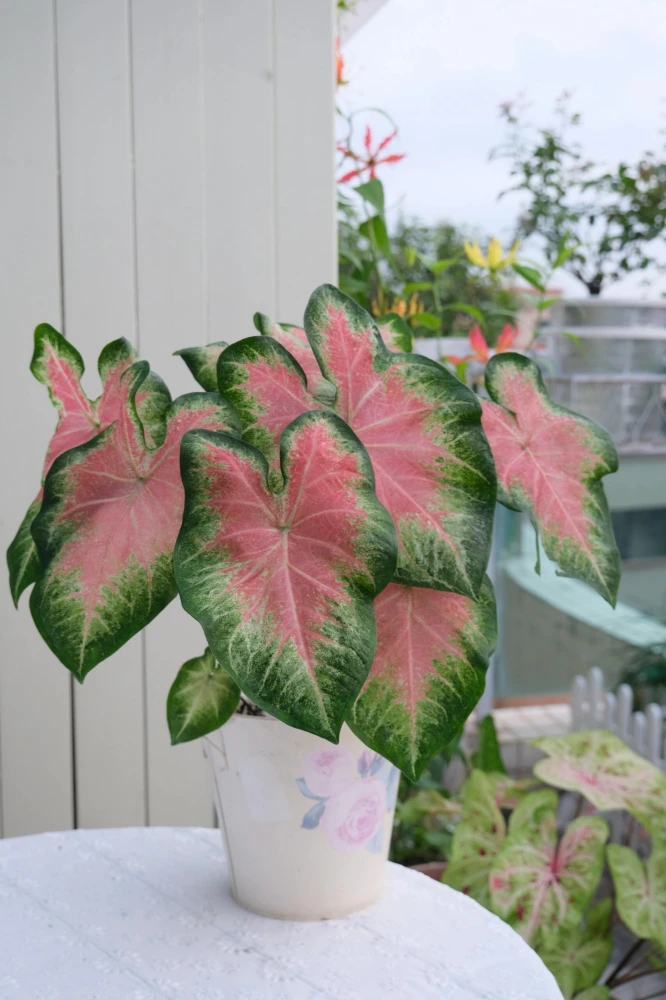
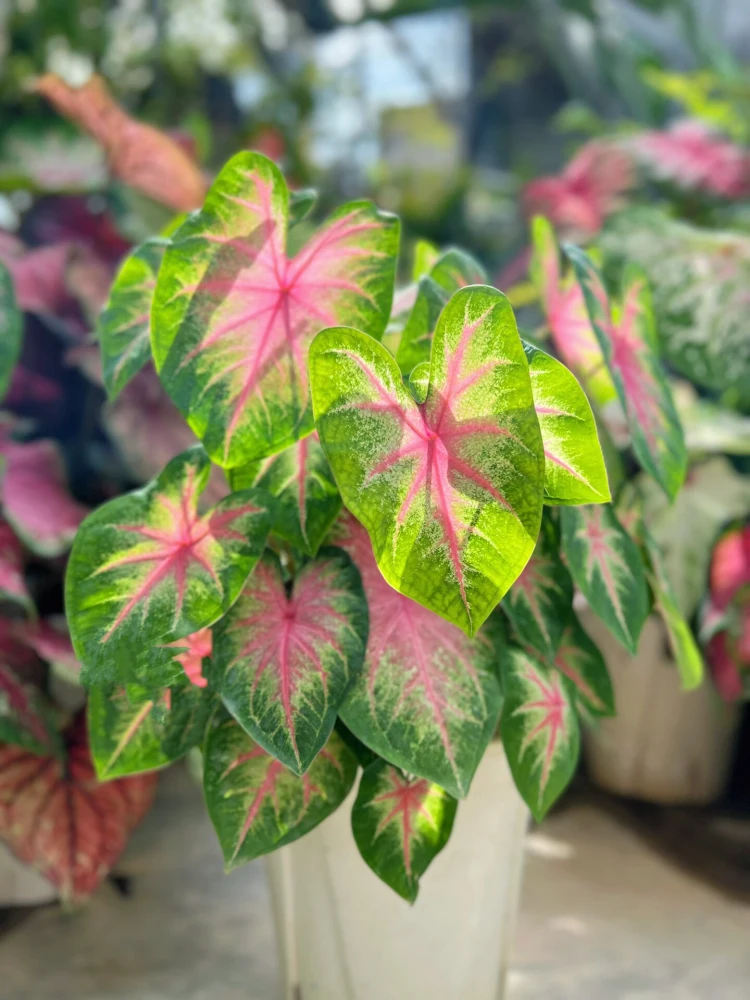
| Feature | Rosebud | Rose Glow |
|---|---|---|
| Main look | Pink heart, pale transition, green margin | Bright pink center with a frosty white halo |
| Overall feeling | Softer, classic, cute | Brighter, more glowing |
| Easy to confuse? | Yes | Yes |
| My advice | Compare mature leaves | Compare mature leaves |
This is why I would not identify either plant from a single young leaf or a heavily edited product photo. The safest way is to compare mature leaves grown under similar light. The center color, the width of the green margin, and the pale area around the pink center usually tell more than the name on the label.
How I Would Grow Rosebud on a Windowsill
I would treat Rosebud as a bright-window caladium, not a dark-corner plant. Its compact size makes it easy to place on a windowsill, but the color still needs enough light to stay clear. In a room with weak natural light, I would either move it closer to a brighter spot or use a caladium grow light indoors rather than expect the plant to hold its best color in dim conditions.
At the same time, I would not put it in harsh direct sun for long periods, especially behind hot glass. Rosebud may be small and cute, but the leaves are still thin caladium leaves. Strong midday sun through a window can stress the foliage faster than people expect.
The other thing I would watch is temperature. A bright windowsill can still be a poor spot if it gets cold at night. In my climate, windows can feel much cooler in the evening and early morning, especially outside the warm growing season. I would rather keep Rosebud slightly back from cold glass than let the pot sit in a chilly edge zone.
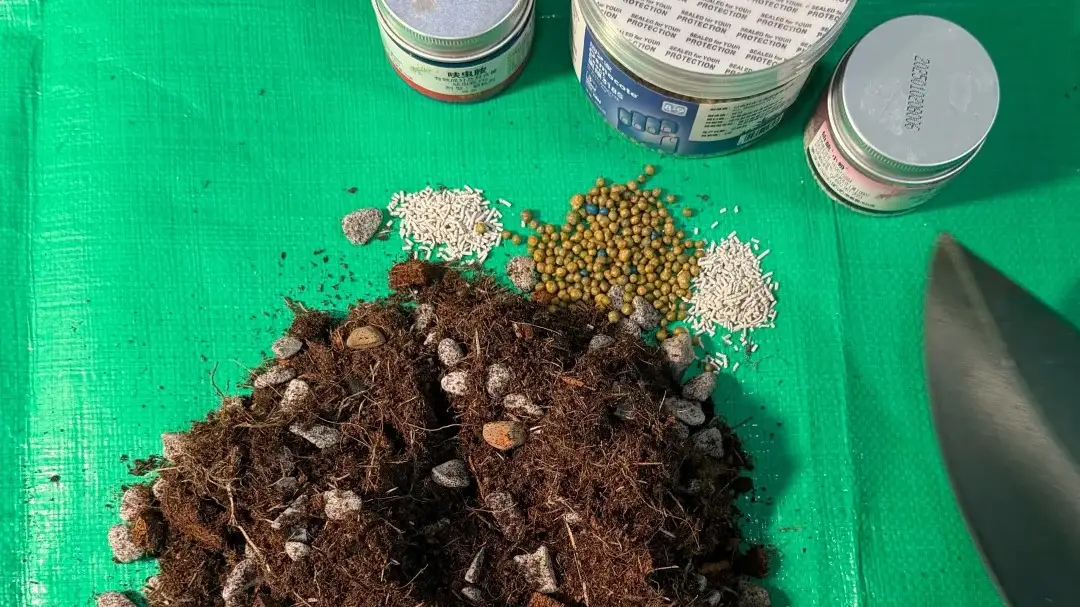
Watering also changes quickly in a small pot. A compact caladium can dry faster than a large container, but that does not mean I would keep giving it small splashes of water all the time. I would still follow the same basic rhythm I use for watering caladiums indoors: let the pot dry down enough, then water properly instead of keeping the mix constantly damp.
If Rosebud starts making smaller leaves, weaker color, or very slow growth, I would look at the whole setup before blaming the variety. Weak light, cool nights, a tired tuber, or inconsistent watering can all make a compact caladium stall. In that situation, I would treat it more like a caladium not growing problem and check the growing conditions before trying to force new leaves.
Why Rosebud Stayed in My Small-Space Collection
Rosebud stayed in my collection because it fills a very specific role. It gives me the pink-heart caladium look without asking for the space or visual attention that a larger variety would need.
I would choose it for someone who likes red-and-green caladiums but wants something softer, smaller, and easier to live with indoors. It is not the most dramatic plant in the room, but that is part of why it works.
For me, Rosebud is a reminder that a caladium does not have to be huge to be worth growing. Sometimes the right small plant fits a space better than a spectacular one.
FAQ
Want to Explore Other Caladium Varieties?
If you like compact or softer pink caladiums, you may also enjoy my growing notes on Pink Symphony Caladium and Pink Splash Caladium. They do not look the same as Rosebud, but they are useful comparisons for pink color, leaf pattern, and container growth indoors.
Browse All Caladium Varieties →